

“Come to me, all you who are weary and burdened, and I will give you rest.” Matthew 11:28
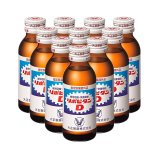
Long before Red Bull begin to “give you wings,” as they boast in their current advertising campaign, energy drinks were common in Japan. In a country renown for its industrious labor force and late-night drinkers who often get by on minimal sleep, Japan offers a wide selection of high-powered beverages to keep its workers operating at peak efficiency. Energy drinks in Japan were initially packaged in small brown bottles and sold as quasi-medicinal remedies readily available for people on the go. The exhausted businessman, the tired student, the fatigued housewife, the late-night partier or the weary traveler can purchase immediate energy at any convenience store, train station kiosk or drugstore for a reasonable price.
Loaded with caffeine, these drinks are often advertised as healthy supplements full of vitamins, minerals and various vegetable extracts. A key ingredient in almost all Japanese energy drinks is taurine, an amino acid-like chemical substance that is naturally found in meat, fish and dairy products. Unlike caffeine, which is a noted stimulant, taurine is actually a sedative that serves to reduce feelings of anxiety and therefore, theoretically improves productivity. Most energy drinks sold abroad focus more on caffeine content, but the Japanese versions are generally more complex and are advertised as “nutritional” or “medicinal” in order to attract a wider spectrum of consumers.
Lipovitan is one of the oldest and most popular brands of energy drinks marketed in Japan and was first sold in 1962 as an herbal “energizing tonic.” In ad campaigns, it strategically targeted sleepy, tired workers enduring long shifts in the midst of a booming post-war economy. Energy drinks eventually spread to other parts of Asia, until one enterprising businessman took the concept and developed the Red Bull brand for the European market, which eventually spread to North America. However, coffee continues as the most popular form of quick energy in Japan and can be purchased anywhere in both hot and cold versions through vending machines located throughout the country. Caffeine-boosted soft drinks are also widely advertised and more recently, an increasing number of alcoholic drinks are now infused with energy-producing additives. All these beverages come with a promise to increase energy, focus and improve performance.
Considering the chronic state of tiredness that seems to be common for many in Japan, it is no surprise that one of the most popular Bible verses frequently featured by churches in their bulletins, websites or billboards is Matthew 11:28. “Come to me, all you who are weary and burdened, and I will give you rest.” A sense of weariness or tiredness seems to permeate the very fabric of Japanese society, which expresses itself in many forms, but the graver danger goes well beyond just physical and mental exhaustion. The popularity of this verse identifies a troubling condition that no energy drink can alleviate and offers a far more substantive, life-altering remedy.
As both the Son of God and the Son of Man, Jesus fully understood the complexities and the desperate needs of the human heart. His life-changing offer of rest was not just to people suffering from physical and emotional exhaustion, but to those who were worn down by the greater burdens of sin and shame. Jesus aptly compared these burdens to a “yoke,” (v. 29) which controls or enslaves beasts of burden to a difficult task. But unlike an energy drink, which provides only a very temporary solution for a very temporary problem, Jesus offers to take our yoke upon Himself which came in the form of a cross. In so doing, Jesus provides not an energy drink, but eternal, life-giving water so we will never thirst again (John 4:14).

 Ippo Ippo