

“God is not human, that he should lie, not a human being, that he should change his mind.”
Numbers 23:19a
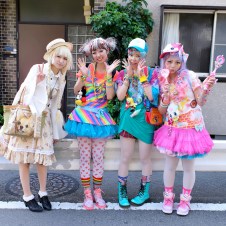
A common characteristic of Japan is a proclivity towards uniformity, which probably accounts for the rapid rise and spread of some rather unique cultural fads. Our first memorable experience of this phenomenon was the ubiquitous appearance of the frilled-neck lizard, an odd species of reptile native to Australia. For reasons unknown to us, this particular creature caught the attention of some advertiser in Japan and within weeks, these strange lizards were seen everywhere in TV commercials and posters and sold as stuffed animals. Then just as suddenly as it appeared, the frilled-neck lizard quietly faded off the scene as Japan moved on to the next popular thing. This experience taught us that Japan is a land of passing fads.
Teenage schoolgirls and young women are probably the biggest trendsetters behind many of the fads that frequently sweep through the nation. New ideas often catch on quickly among the young female segment of society who march in step with the latest passing fancy that ranges anywhere from the most recent popular singing group to strange new fashions and anything else in between. In the area of fashion, we have observed the rise and fall of some interesting styles like the “kogal,” “Lolita” and “ganguro,” that, like the frill-necked lizard, have quickly come and gone. Kogal fashion basically consisted of school girl outfits of short skirts and bulky, rolled up socks held in place by a special glue. Following that and going in a slightly different direction, Lolita fashion was characterized by an abundance of frills, ruffles, makeup, hairstyle and anything that cultivated a child-like image. There are also corollaries of the Lolita style known as “gothic Lolita” and “punk Lolita.” Ganguro fashion calls for an overdone tan (the term means literally “intensely black”), extreme hair dye colors and contrasting pale makeup as a reactionary form to the traditional Japanese image of beauty.
But Japanese fads also originate from other demographic groups and manifest themselves in different forms. For example, the “tamagotchi” (meaning “egg watch”) craze captured the vast majority of school-aged children in the 90s who were driven to purchase and obsessively play a mini egg-shaped computer game featuring an electronic “pet.” These virtual pets had to be fed, played with and cleaned on a regular basis or else they would die. Some children were obviously upset by this irreversible outcome so one innovative temple created a virtual cemetery for these “dead” pets and set up a hotline to console distraught children. However, the zeal for these devices continued unabated until the next fad eventually replaced them. The ensuing hyper excitement over baby pandas, the widespread following to wear Ugg boots, the sudden omnipresence of okra in cuisine, the craze in designer bags and people sporting chapatsu (茶髪) or “tea colored hair” are just a few examples of fads that have made their brief marks on Japanese culture.
Sometimes I am tempted to reflect on these changes as I advance in years and acquire a different perspective of time and culture. From such a vantage point, I’ve observed that inconsistency and inequality are traits that characterize human culture as a whole and are not limited to any particular nationality. These traits manifest themselves in different forms, but serve as key reminders that while we may be made in the image of God, we have significantly strayed from the character and nature of God. Perhaps this is why the author of Numbers, who had observed the disobedient fickleness of God’s people, described God as “not human, that he should lie, not a human being, that he should change his mind.” (Numbers 23:19a). This consistency in character is also used to describe Jesus, who “is the same yesterday and today and forever.” (Hebrews 13:8) God, and the character he expects from us, is not a passing fad.

 Ippo Ippo