
Big Cleaning

“Wash away all my iniquity and cleanse me from my sin.” Psalm 51:2

大扫除(中国传统民俗之一)_搜狗百科

A major end of year ritual for many Japanese is “ōsōji” (大掃除), which means “big cleaning.” It involves a thorough cleaning of one’s residence, a practice that has obvious practical benefits and has quasi spiritual origins. In ancient times, according to Shinto beliefs, it was considered important to purify one’s home of clutter and dust in order to welcome the kami or local gods with the coming of a new year. This annual ablution represents a hopeful beginning for the next year with the removal of any accumulated dirt and negative energy remaining from the previous year. During our early years in Japan, it was customary to observe neighbors cleaning their windows, beating the dust out of carpets draped over laundry poles and dragging tatami mats and futons outside to air in the sun. Although hidden from view, we surmised that many of these same neighbors were also dutifully scrubbing the inside of their houses from top to bottom.

The traditional practice of ōsōji has declined somewhat in recent years, but the term has expanded to include other “big cleaning” activities. For example, it is quite common for schools to promote periodic ōsōjis to give the school and school grounds a solid cleaning, deploying students and teachers for a substantial portion of the labor. Everyone is expected to pitch in and help. Neighborhoods routinely host fall and spring ōsōji events to clean up local parks and public areas. On these designated days, an army of residents assemble at the appointed time to pull weeds, trim bushes, pick up trash, rake leaves, sweep sidewalks and take on any menial task that helps beautify their immediate area. This activity also serves to promote a sense of community and provides an opportunity to build positive relationships with one’s neighbors. Businesses and churches also schedule such cooperative cleaning days as an unstated responsibility for all those whose lives center upon those respective facilities.

The Japanese have a high value on hygiene and cleanliness that encourages them to generally embrace the tradition of ōsōji and its various manifestations. However, probably only a few of the participants are aware of the ancient spiritual aspects that once shaped this now common practice. We ourselves implemented the custom of ōsōji at our organizational headquarters and at the churches where we served. Besides the obvious objective of improving and cleaning one’s immediate environment, we came to equally appreciate the esprit de corps it often fostered.

The concept of “big cleaning” has very important spiritual overtones throughout Scripture, in both prescribed ceremonial practices and the state of one’s heart before a holy, sinless God. Such cleaning frequently includes the nuance of purification, where the primary objective is not just physical, but spiritual in nature. Even a cursory reading of the Old Testament reveals that although there are many physical purification rites expected of God’s people, the ultimate objective of these ceremonies was to nurture a pure heart for God that produced a holy pattern in one’s life.

But here is where a huge dilemma presents itself. No one is clean and there is no available ceremony through which one could become truly clean. The author of Proverbs (20:9) drives this point home when he declares, “Who can say, ‘I have kept my heart pure; I am clean and without sin?’” The obvious answer to this question is “no one.” This means that all those rituals were not instituted as a means to an end, but rather, to reveal our critical need for a “big cleaning” of our hearts that only Jesus could provide. – the ultimate ōsōji.

Crime

“When the sentence for a crime is not quickly carried out, people’s hearts are filled with schemes to do wrong.”  Ecclesiastes 8:12

crime

We were still newbies to Japan when my wife absentmindedly left her newly purchased bike unlocked in the designated parking area of the local supermarket. She returned shortly afterwards to sadly discover that her bike had been stolen, which we duly reported to the local police. We had been operating under the impression that crime was not a major concern in Japan, which is generally true, except when it comes to bicycles as we learned later. Despite this unfortunate incident, we continued to walk the streets at night without fear and often left our house or car unlocked (but not our bikes!).

Japan’s crime rate is indeed remarkably low when compared to other first world countries. For example, according to recent statistics, the rate of violent crime in the United States is 148 times higher than that of Japan. The overall crime rate in Japan is just a fourth of what is recorded in the U.S. This statistical contrast is also reflected in the respective prison populations of both countries, where the number of incarcerated people in the States is fourteen times higher than that of Japan. The most frequent crime in Japan is theft, which makes up more than 70 percent of all illegal activities.

Sociologists point to a number of likely reasons for this vast disparity in criminal incidents between Japan and other modern nations. Some of the more obvious factors are a very visible police presence, widespread community cooperation, a heavy emphasis on teaching moral values in school curriculums and very strict gun control laws. But there are other, more subtle influences present in Japanese culture that serve to effectively suppress criminal activities. One is the power of shame that is deeply rooted in many Asian nations. In contrast to guilt, which underlies much of Western culture and conduct, shame is driven and shaped by outward societal forces that demand conformity from all its members to an unwritten code. The possibility of incurring shame on one’s family, class, company or social circle serves as a powerful deterrent to a significant amount of misconduct and unacceptable behavior. The low crime statistics in Japan are also partially explained by the incredibly high conviction rate of 99 percent in all state prosecutions. Although many are of a dubious nature, confessions comprise a stunning 89 percent of convictions, which helps keep law breakers off the streets and out of trouble.

While we may certainly admire the low crime rate in Japan, none of these elements that keep illegal behavior in check actually address the more important issues of the heart where all criminal aspirations and activities originate. The Psalmist clearly states this connection when he prays, “Do not let my heart be drawn to what is evil so that I take part in wicked deeds.” (Psalm 141:4) This prayer is an accurate acknowledgement that all crime is essentially a spiritual problem. However, this is particularly a challenging truth to communicate in Japan because of the common translation for the word “sin,” which is “tsumi” (罪) in Japanese.

Within the term tsumi, the concepts of crime and sin are used interchangeably, which creates an unfortunate confusion. In normal usage, crime refers to an infraction of societal laws, whereas sin involves the breaking of God’s laws, which is far more serious in nature. The ultimate solution to crime is a belief in the Gospel, or the Good News of Jesus Christ, and a necessary prerequisite to that is an honest appraisal of one’s sinful heart before a holy, just God. Herein lies a significant problem in Japan with the word tsumi. Very few Japanese are willing to think of themselves as sinners because they have not broken any laws (crime) and fail to grasp they have broken the eternal laws of God (sin). Crime may be minimal in Japan, but sin remains unchecked.

Bentō Boxes

“In vain you rise early and stay up late, toiling for food to eat…” Psalm 127:2a

Bento box

My generation has made its fair share of contributions to American culture and one of these was the advancement in lunchbox décor. With the invention of the television, the bland monochromatic colors of previous lunchboxes gave way to colorful depictions of popular TV shows and cartoons. For example, I vividly recall my Lone Ranger box accompanying me to the school lunchroom everyday where it competed with the Jetsons, Davy Crockett, Superman, Yogi Bear and a host of other beloved characters portrayed on other kids’ lunchboxes. However, the boring contents of my lunch, which consisted primarily of a PBJ or a bologna sandwich, some carrot sticks, an apple and a thermos of milk remained relatively unchanged. Unknown to me at that time, on the other side of the world, the Japanese had already developed a separate lunch box culture centuries earlier. It was called an obentō.

An obentō is an individual-sized portion and well-balanced meal designed for easy transport and consumption. It consists of a starch such as rice or noodles, a protein (meat, fish), some kind of vegetable and, often, a fruit side dish. It traditionally includes a set of chopsticks and comes in both disposable or reusable containers that are divided into smaller compartments. The more durable boxes are sold in many forms ranging from expensive hand-crafted lacquerware to plastic cutesy boxes in the shape of trains or a favorite anime character. The actual term, bentō (弁当), is derived from the Japanese word for “convenient” and is often prefaced with an “o” used in honorific speech patterns.

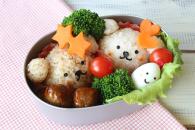
These Japanese lunch boxes are sold throughout Japan in convenience stores, train stations, grocery stores and specialty bentō shops. The general cost of a bentō is often less than US $5, but there are pricier versions that include more expensive or larger amounts of food. Japanese wives and mothers are generally responsible for preparing their children’s or husband’s bentō, which is a task they take quite seriously. Among mothers, there is an unspoken competition in designing and creating a visually attractive and nutritious meal. The ingredients are often prepared the night before and then assembled in the morning. Great care is given to include certain color combinations and many mothers take the extra time to shape and decorate food to resemble people, flowers, animals or favorite cartoon characters to the delight of their children. In Japan, the contents of a child’s lunch box, fair or not, is often viewed as a reflection of their parental care, which can put considerable pressure on some mothers who are overly preoccupied with such expectations.

As an adult, I now better appreciate my mother’s selfless labor in preparing my lunch every day, but I don’t think she put the same amount of effort into it as we witnessed in Japan. Preparing lunches is one thing, but the pressure to daily provide and prepare food for one’s family is no small feat that is a challenge in every culture. However, there is an important perspective that should be kept in mind in the midst of such responsibilities. That being, God is the ultimate provider for whatever is placed upon our table, cooked on our stove, stored in our pantry, cooled in our refrigerator or packed away in a lunch box.

Feasting is a common motif in the Bible and it is often used to describe intimate and joyous fellowship with God who provides all that we need as represented by the abundance of the banquet He spreads before us (Isaiah 25:6). We labor and strive for such things on earth, and in so doing, we are foolishly tempted to think we alone are responsible for such matters. But He who faithfully provided manna for His people in the wilderness calls us to seek His kingdom above all else because He shall provide for our needs (Matthew 6:33). You may have the best obentō before you, but an eternal feast awaits us.

Apprenticeship

“The things you have heard me say in the presence of many witnesses entrust to reliable people who will also be qualified to teach others.”  II Timothy 2:2

apprentice

Every culture has a vested interest in transferring knowledge from one generation to the next as part of the essential process of preserving its own uniqueness. This passing of the torch often involves the retention of certain skills and expertise that acquire considerable time and effort to acquire. For this reason, the concept of apprenticeship was widely practiced for centuries in certain trades and crafts to ensure the continuity of valuable services, goods, information and techniques. Much of this transference of knowledge occurred within a semi-indentured form of relationship from an acknowledged master to a novice. But over the last century, these former feudalistic and austere tendencies of ancient apprenticeship practices have largely given way to a modern system of employment that allows for much more individual freedom. Despite this shift, Japan still retains a certain element of apprenticeship that is more obvious in certain vocations.

This proclivity in Japan towards acquiring a particular skill through a rigorous, time demanding and low paying training program was brought to our attention a few years ago by a long-time friend. Trained in the field of medicine, this individual was seeking a complete change in life and had settled upon making customized surfboards for a living. When we inquired about the process, we learned that our friend would receive a very minimal salary and was expected to devote long hours for several years with hardly any days off for the privilege of mastering this modern craft. This apprenticeship-like arrangement for mastering a particular skill was very similar to what we had heard about master sword makers, professional sushi chefs, tea ceremony teachers, kabuki actors, trained calligraphers and other areas where one desires to become an expert in certain arts and crafts.

For example, if someone wants to become a recognized sushi chef in a high-end restaurant, they usually must start at the bottom washing dishes. Then, after a period of time, they may be entrusted with the correct preparation of the rice and eventually, they begin their more formal apprenticeship training using knives. The whole process may require up to a decade under strictly guided tutelage. Upon completion of their contractual service, these former apprentices are recognized as fully trained professionals and are qualified to start their own business or seek employment elsewhere.

The concept of biblical discipleship in many aspects mirrors the idea of apprenticeship in its objectives, but certainly not in many of its methods. The goal is to train others in godliness, faithfulness and truth and Jesus provided a pattern of a newer and improved model of discipleship that was built on love. A disciple, called a deshi (弟子) in Japanese, is generally an individual who is committed to certain goals. To achieve their objectives, they follow someone wiser and more experienced who is commonly referred to as a sensei (先生), or teacher in Japanese. This was similar to the strategy Paul laid out to his own disciple, Timothy, who was exhorted to implement the same patterns with other like-minded and reliable God followers who would, hopefully, influence others. (II Timothy 2:2) Heavenly and eternal objectives should spur us to apprentice ourselves to others more mature than ourselves, who can assist us in our spiritual journey. Assuming that we are good pupils, we should also aspire to become good teachers. In the way of the Cross, the deshi becomes the sensei, all by the grace of God.

The Value of Cuteness

“Your beauty should not come from outward adornment.”  I Peter 3:3a

Kawaii

Although we all seem to intuitively grasp the subtle difference in nuance between “cute” and “beautiful,” it is actually a concept that is quite difficult to explain. Japan certainly has a deep appreciation of beauty, which is demonstrated in the diverse mediums of music, traditional arts, cultural ceremonies, fashion, nature and personal physical appearances. But when the idea of cuteness is closely examined, it seems to lurk somewhere else on the spectrum of beauty, including other components that sets it apart as a slightly different value. This vague quality referred to as “cuteness” is highly treasured in Japan and drives many current cultural trends.

Known as “kawaii” (かわいい or 可愛い), this popularly used word is typically translated as “cute,” “loveable” or “adorable.” One often hears excited exclamations of “kawaii!” uttered by giddy young girls in an exaggerated inflection to describe a variety of objects, mannerisms and people. Kawaii has rapidly become one of the most overused words in the Japanese language and it should not be confused with similar sounding terms “kowai” (scary) or “kawaisō” (pitiable) which can lead to some humorous but humiliating language mistakes.

Kawaii comes in many forms in Japan. For example, there are cute forms of handwriting that many girls try to emulate. There is a plethora of kawaii merchandise on sale everywhere often featuring cute anime characters that are typically accompanied by hearts, flowers or rainbows. Cute pop idols seem to appear and disappear overnight, sporting kawaii fashion styles and employing cutesy mannerisms that are soon mimicked by their adoring fans. Kawaii mascots seem to be omnipresent, decorating planes, station platforms, businesses, post offices and other public places. Following this trend, each prefecture in Japan has developed and marketed its own cute mascot to promote tourism in their respective area. This cuteness phenomenon has spread to such an extent that many sociologists claim that kawaii has overtaken the traditional values of beauty and refinement in Japan. Others say that kawaii has even pushed aside some of the more violent elements in Japanese society and serves as a visible indicator of Japan’s steady drift towards a more pacifist national psyche.

Such sweeping generalizations are quite difficult to quantify, but the recent value of kawaii, now firmly embedded in Japanese culture, provides a form of evidence of the younger generation’s unhealthy preoccupation with seemingly shallow and temporal matters. Of course, this tendency to get things out of balance as to how one perceives people or things is certainly not unique to Japan. How we define and value beauty takes many forms around the world and the popularity of kawaii is just one example in how our priorities can become easily skewed.

This is where the concept of beauty seems to take on a different value that requires a closer inspection and a greater appreciation. Genuine beauty delves below the surface to deeper qualities that Peter hints at when he advises wives that their “beauty should not come from outward adornment.” (I Peter 3:3a) Beauty is certainly a sought-after quality, but it seems to have different layers to it, with some being eternal in nature while others are merely temporal. This contrast indicates that we may be tempted to focus on external elements like makeup, fashion, hairstyle or physical attributes as essential components of beauty, but godly character, actions and attitudes comprise the true essence of real beauty that God Himself treasures. That kind of beauty lasts forever, long after cuteness will be forgotten.

Looking Up

“I know that there is nothing better for people than to be happy and to do good while they live.”    Ecclesiastes 3:12

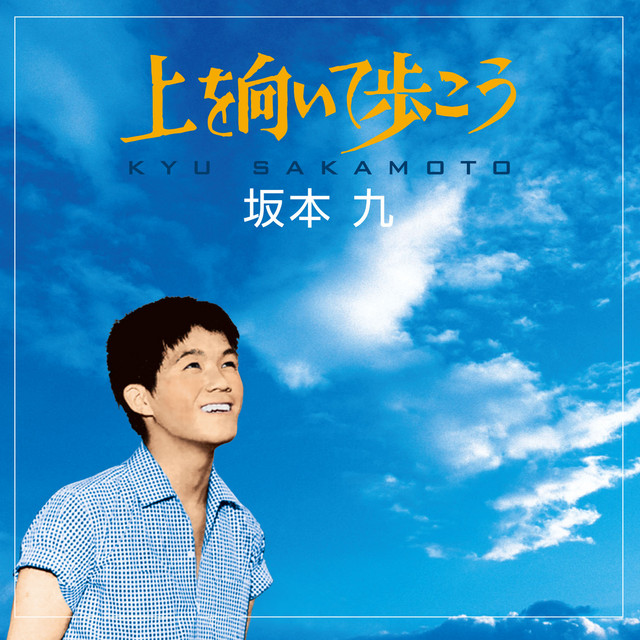
Although Japanese artists have produced quite a variety of quality music, only one Japanese song can claim the honor of rising to the number one spot on the U.S. pop chart. That notable achievement was accomplished in 1963 by the song entitled “Sukiyaki.” The melody of this famous song was composed by Nakamura Hachidai and the lyrics were written by Ei Rokusuke. However, it was the singer, Sakamoto Kyu, who propelled the song to popular heights within Japan and eventually overseas. His jaunty singing style along with powerful interludes of whistling compelled listeners to join in by humming or tapping their feet in rhythm.

Oddly enough, the commonly accepted Western title, “Sukiyaki,” has absolutely no relevance to the actual lyrics of the song. Sukiyaki is a popular dish consisting of thinly sliced beef and vegetables cooked in a pot on the table. In contrast, the lyrics of the song speak vaguely of a lost love that strikes a responsive chord in the hearts of Japanese. The song testifies of deep personal loss, which accounts for its renewed popularity fifty years later among survivors of the 2011 Great East Japan Earthquake.

The actual Japanese title, “Ue o Muite Arukō” (上を向いて歩こう), means “I Look Up When I Walk.” The lyrics are simple, but penetrating, as seen in the following excerpt:

I look up when I walk,

So that tears won’t fall.

Remembering those spring days,

But I am all alone tonight.

Happiness lies beyond the clouds.

Happiness lies in the shadow of the stars.

Sadness lurks in the shadow of the moon.

The phrase that is sung repeatedly throughout the song is “hitori bochi no yoru,” meaning “I am all alone tonight.” It speaks of a profound sense of loneliness where happiness remains elusive, existing somewhere beyond the clouds or hidden in the shadows of the stars and moon. The melancholic words of someone who has to look up to keep tears from falling are heightened even further if one is aware of the tragic circumstances surrounding the death of the singer Sakamoto Kyu. At the young age of 43, along with 519 other passengers, his life was cut short in a tragic aircraft disaster. Japan Airlines flight 123 slammed into the side of a mountain in Gunma Prefecture on August 12, 1963, making it the deadliest single crash in aviation history.

Almost everyone aspires to achieve happiness, but this pursuit often ends with disappointment when it proves to be unobtainable. Ei Rokusuke, the author of the lyrics to Sukiyaki, actually penned the words to the song following his disappointment over the failed outcome of the 1960 protests of the U.S./Japan Security Treaty. This one incident verified that happiness can indeed be stymied by any number of blocked goals and easily lead to heartache and sadness. Happiness is understandably a longing of the human heart, but as the author of Ecclesiastes reminds us (3:12), it is a heavenly gift from God that can only be obtained as we look up to Him while walking on this earth. In contrast to the words of Sukiyaki, we are surely not alone.

You can listen to Sukiyaki at: https://www.youtube.com/watch?v=C35DrtPlUbc  Feel free to whistle along.

Rail Pass

“Jesus traveled about from one town and village to another, proclaiming the good news of the kingdom of God.”

Luke 8: 1

Rail Pass

Trains are widely regarded as the cheapest and simplest form of travel for newcomers when they visit Japan. This popular form of transport is greatly facilitated by the purchase of what is known as a rail pass that is only available for visitors to Japan. These passes are sold online at a reasonable cost in 1-3 week increments and are a tremendous bargain designed to maximize one’s time in Japan.

But before hopping on a Japanese train, it is good to be aware of what is considered to be good manners for passengers. For example, it is customary to wait for all the passengers to disembark from the train before boarding. Once on board, set your smart phone to silent mode and avoid talking on the phone while in transit. Eating on a train is generally considered to be impolite except on the bullet trains, which typically involve a longer journey. Courteous behavior calls for one to be mindful of their seating posture so as not to take up too much room or inconvenience other passengers. Any bags should be placed or carried in such a way to not interfere with the movement of others entering or attempting to leave the train. In addition, one should avoid using priority seats set aside for the handicapped, elderly or pregnant women.

It is good to keep these tips in mind, but one must also understand that riding on a train in Japan is much more than getting from one point to another and observing proper etiquette. While Japan is famous for the sheer volume of passengers its transportation system accommodates, and the amazing network of rail lines, it also offers a number of unique entertaining train experiences for all ages. In fact, a prime-time TV show, called the NHK Railway Journal, regularly features some of these fascinating train lines. For example, there is a “Pokémon with You” train line in Iwate Prefecture full of Pikachu images and hosts several creative play areas designed to please young fans of this famous cartoon. The “Toreiyu Tsubasa” bullet train, that travels between Fukushima and Yamagata Prefectures, offers artfully decorated footbaths for passengers to soak tired feet while enjoying the beautiful scenery on the journey. The “Sagano Romantic Train” near Kyoto features large glass viewing areas and one fully open car to enhance the breathtaking views of the picturesque countryside and exquisite foliage for which the area is famous. Children are thrilled to ride on the “Hello Kitty Shinkansen” bullet train, “Thomas the Tank Engine” train, and the “SL Ginga” steam locomotive or other “character trains” as they are commonly called. A popular train among adults is the “High Rail 1375” which runs through Nagano Prefecture and ascends to the height of 1,375 meters (4,511 feet). The route of this train includes panoramic mountain scenes or star gazing at night and even an onboard mini planetarium.

Travel seems to be a necessary element in biblical events, particularly in the Books of the Pentateuch, which feature the birth of the nation Israel, and in the Book of Acts, which focuses on the birth of the church. Jesus’ ministry was also characterized by extensive travel as he went from town to town to share the good news of the kingdom of God. (Luke 8:1) Of course, travel was much more difficult in those days without the convenience, comfort and speed of modern trains. Perhaps this is why the concept of travel is a common metaphor when applied to characterizing the people of God and how we are to relate to the world around us. Many Bible translations use the term “sojourner” to describe our position in our present life. The word melds together the ideas of foreigner, temporality and movement. A biblical sojourner then is someone who has been granted a “rail pass” to temporarily engage in this present world, fulfilling the purposes of God, while remembering that another, more perfect world is our final destination. All aboard!

Special Delivery

“Carry each other’s burdens, and in this way you will fulfill the law of Christ.”  Galatians 6:2

1200px-toyota_qd200_201

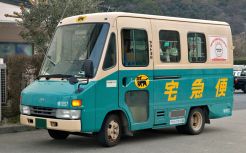
Often unnoticed by the casual visitor to Japan, takkyūbin provides an amazing assistance in a country famous for its punctuality and efficiency. Takkyūbin (宅急便) means “speedy home delivery” and it furnishes a complimentary service to Japan’s outstanding public transportation system by offering a better alternative to transporting cumbersome baggage on trains, subways and buses. A customer simply fills out a standard form that includes the shipping address, and their luggage is promptly picked up at their home. It is then delivered the next day within a designated two-hour window for a very reasonable fee (roughly $17). This remarkable service is available throughout Japan to every major Japanese transportation hub and each individual residence. While the transport of luggage meets a huge need, people increasingly use takkyūbin to send all kinds of goods across the country because of its convenience, low cost and dependability.

The concept of takkyūbin originated in 1975 when Yamato Transport, an established shipping firm, decided to extend its services across the country to every address. Such a massive expansion was quite an ambitious undertaking, but due to its high standards and reliability, the company’s new services were enthusiastically received. Yamato now boasts of a workforce of almost 200,000 employees manning roughly 45,000 vehicles in hundreds of offices scattered throughout the country. Its distinctive logo is that of a yellow oval centered on a black cat carrying a kitten in its mouth, representing the company’s promise to take care of items entrusted to them. Therefore, the company is often colloquially referred to as “Kuroneko,” meaning “black cat.”

Although Yamato now has other competitors, its popular services are so ubiquitous that the term coined by the company, takkyūbin, has largely replaced the previous term, takuhaibin, in everyday language. This changed usage pattern was further established when the famous Studio Ghibli anime film, “Kiki’s Delivery Service,” was released in 1985. Co-produced by Yamato, the popular movie used the word takkyūbin in its title and featured a black cat as one of the characters.

The business of takkyūbin was created to deal with the logistical problem of transporting physical burdens, but there are burdens of a vastly different nature that no commercial enterprise can ever resolve. In general, a burden can be simply defined as “a load that one must carry” and such encumbrances are considered to be heavy or challenging to bear. A burden can be physical in nature, but it can also be anything that invites stress, pain, anxiety, or hardship as we bear it for ourselves or for the sake of others. The Bible addresses quite a variety of such burdens offering different solutions.

The daily burdens of life are often very difficult, if not impossible to carry alone, as Moses himself recognized in his leadership role when he complained to God: “I cannot carry all these people by myself; the burden is too heavy for me.” (Numbers 11:14) The Psalmist spoke of another type of burden when he lamented, “My guilt has overwhelmed me like a burden too heavy to bear.” (Psalm 38:4)

Thankfully, God “daily bears our burdens” (Psalm 68:19) and Jesus invites us to lay our heavy load upon His shoulders that will in turn provide genuine rest of a spiritual nature that we all crave. (Matthew 11:28-30) But to the degree that we are able and available, we are exhorted to help carry the burdens of others, which exemplifies the heart of God and the nature of the church. (Galatians 6:2) We all need help with our baggage.

Unlucky #4

“Have nothing to do with godless myths and old wives’ tales; rather, train yourself to be godly.” I Timothy 4:7

unlucky 4

When I occasionally ventured downtown with my parents as a child and entered an elevator in a skyscraper, I often noticed a curious thing: there was no 13th floor in many of the buildings. When I pointed out this anomaly to my parents, they explained that there was actually a 13th floor, but because many people considered the number to be unlucky, it was commonly omitted from the selection of buttons indicating floor levels. Despite this widely held belief, my grandfather, who was a bit of a contrarian, decided to name his ranch “Lucky 13.” We consequently used the brand L13 to identify all his cattle so this particular number was vividly branded in my memory.

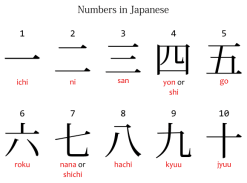
Instead of the number thirteen, Japanese traditionally considered the number 4 to be very unlucky because it can be pronounced as “shi” (四), which is also used for the word “death” (死), even though the Chinese characters identifying them are quite different. Like America, where the number 13 was often omitted, many hospitals and hotels in Japan similarly skipped the number 4 when indicating floors in their buildings. “Tetraphobia” is an actual psychological term coined to describe the practice of avoiding instances of the digit 4 as this ancient superstition also exists in other parts of Asia. This unfounded fear can be applied in numerous ways, such as avoiding the mention of the number four around an ill family member, giving four of something as a gift or scheduling something important on April 4th, the fourth day of the fourth month.

Like other cultures, there are many other superstitions that linger in Japan. For example, whistling at night may invite snakes to come out. You should hide your thumbs if a funeral hearse passes nearby. Children are warned to cover their belly buttons in a thunder storm. Chopsticks should never be placed upright in a bowl of rice. A person’s name should not be written in red ink. It is not advisable to kill a spider in the morning, but it is expedient to do so at night. A person should avoid cutting fingernails or toenails in the evening. One should avoid sleeping with his head positioned towards the north. Food is not to be passed chopstick-to-chopstick. The list continues and each of these forbidden actions could possibly invite death or adverse circumstances due to their connections with other terms, mythological stories or current cultural practices. Go to the following link for a further explanation: https://www.cotoclub.com/16-common-japanese-superstitions/.

In mentoring his young disciple Timothy, Paul advised him to avoid dwelling on such myths and superstitions in the course of his ministry (I Timothy 4:7). Instead, he was encouraged to focus on godly character and truth in his own life and in shepherding others. As a mature believer, Paul understood that superstitions are essentially grounded in fear instead of faith and the proponents of such an approach to life cling to a faulty understanding of God that must be discarded. While God is certainly to be feared (Deuteronomy 10:12), He is not a whimsical, cosmic being who can be induced or manipulated to protect us from life’s calamities. This God is not limited by any temples we may erect to contain Him, idols we may form to worship Him or any silly practices we may promote to control Him. This was the message Paul preached to the superstitious Greeks on Mars Hill who needed to correctly understand the vastness, power and nature of God (Acts 17). This is the truth that needs to be branded on our hearts and heeded while living in a world full of misinformation and deceit.

Gods on Parade

“No one can reveal it to the king except the gods, and they do not live among humans.” Daniel 2:11b

Osaka,,Japan,-,July,25,2017:,The,Traditional,And,Historical

The festival crowd cheered enthusiastically at the sight of the local shrine’s mikoshi as it snaked its way along the town’s designated parade route. The uniformly clad bearers of the mikoshi swayed in a set pattern as they chanted in unison “wasshoi” (和緒一), which aptly means “together in harmony.” With rhythmic precision, they shouldered an ornate miniature replica of the nearby Shinto shrine, known as an omikoshi (the additional “o” is honorific) on two long poles for transport. According to tradition, a mikoshi temporarily houses the local deity of the area who will, hopefully, ward off any potential misfortune or evil and invite happiness to the local residents.

The word mikoshi (神輿) is a combination of the Chinese characters for “god” and a “palanquin,” which was historically used to transport people of noble rank. But in this case, the occupant of the palanquin is considered to be a god, who is being taken for a tour of his community. Shintoism is the indigenous, pantheistic religion of Japan where gods are regarded as being everywhere and in everything. This ancient religion teaches that there are roughly 8 million gods who watch over Japan (that number is specifically chosen because it is similar to the term used for infinity). Since these gods, or spirits known as kami (神), are believed to be everywhere, they are usually venerated in shrines scattered throughout Japan in scenic locations where such gods are believed to dwell.

The typical mikoshi may weigh as much as a ton and is typically carried by a team of around 30-50 people who are specially trained in how to transport it. The bearers follow a traditionally prescribed choreography unique to their area, stopping at key points along the route, which in some cases includes entering a nearby body of water such as a river, lake or ocean. One or two scantily clad men often stand on the palanquin with the omikoshi shouting out instructions to the transporters below adding to the overall spectacle. A carving of a phoenix, as an ancient symbol of good fortune, hope and peace, usually occupies the top of a mikoshi. The heaviest omikoshi on record weighs 4.5 tons and requires a massive team of 300 people to carry it.

From the beginning of time, mankind has superstitiously sought the favor of gods through numerous means shaped by their varied perceptions of the gods they worship. A low or inaccurate understanding of God perceives Him as someone who can be bent to one’s will through prescribed acts or rituals in order to receive favor in the form of wealth, power, health, influence or progeny. Such gods often come in the form of idols constructed by men who then absurdly bow before these objects, pleading “Save me! You are my god!” (Isaiah 44:17) Such foolish thinking and actions are mocked repeatedly in Scripture and stand in contrast to the God who made the heavens and earth, who “does whatever pleases Him” (Psalm 115:3) and exists far beyond the attempted manipulations of men who strive to limit Him to their own advantage.

The wise men of the Babylonian court in Daniel’s era had a partially correct view of God (Daniel 2:11) as they perceived Him as beyond their control, but they erred in regarding God as disengaged from the activities of humans. In contrast to this, the entire Book of Daniel testifies of a transcendent but involved, all-powerful, all-knowing God who cannot be confined to a mikoshi and moved at a whim to incur blessing. This God dwells above the nations, all history and the universe itself, moving according to His counsel alone. This means that we are merely bystanders, and at best worshipers, but never transporters.