Convenience Stores

“But godliness with contentment is great gain.“                               I Timothy 6:6

konbini2

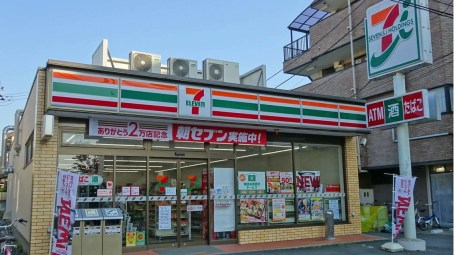
In recent years, Japan has assimilated many English words into its vocabulary, often altering them and then pouring a distinctive new meaning into the newly created term. A prime example of this is the word “konbini,” which is a derivative of the word “convenience.” Konbini are essentially the modern variation of local mom and pop stores, which used to service most of Japan but are now rapidly moving towards extinction. Numbering over 50,000 stores in Japan, konbini are still increasing at a torrid pace and these stores are aptly named as they truly provide a convenient service to the local communities.

In America, we are accustomed to a plethora of snacks and a few basic commodities being sold where we purchase gasoline, but the konbini stands on its own, offering a wide variety of services and products within its limited space. Did you forget your lunch? The konbini offers a wide selection of both hot and cold foods, with much of it prepared on site. Do you need to pay your utility bills? Just hand over your invoice and the required cash to the person working at the register. Traveling to the airport by public transportation and don’t want to lug your heavy suitcase on crowded trains? Drop it off at the konbini, pay the fee and your baggage will be waiting for you at the airport the next day. Need some extra cash or a copy of an important document? Every konbini has its own ATM and copy machine. Is there a movie, play or concert you want to attend? Tickets for upcoming events can be easily purchased at the konbini. Need a café latte and a pastry to get you through your day? No problem. The konbini is there to serve you. The staff at each konbini are well trained and immediately spring into action whenever a customer approaches the counter needing service.

For the weary traveler seeking a pit stop or for those walking in the neighborhood, clean toilet facilities are a standard and very welcome feature. For the local patron who walks or bikes to the konbini, most of the basic essentials found in a large grocery store are kept in stock and sold 24/7. Young neighborhood children are safe on their own to purchase last minute items for a busy mom while neighbors and groups of students mingle inside or outside of the store. The konbini is increasingly playing an important role within the local community.

A word somewhat linked to convenience is the word “contentment,” which is a virtue closely associated with godliness. While the konbini provides an invaluable service of convenience to individuals and the community, its popular emergence reveals our desire for a world where everything is readily available within reach of our fingertips and in plentiful supply. Convenience is normally a good thing, but in this life we will inevitably experience inconvenience, when we lack certain items or services. If we are not on guard, this disparity between our desires and reality can subtly lead to feelings of discontentment when we are inconvenienced. Contentment, not convenience, should be at the top of our “shopping list,” as it reflects a faith in God to provide whatever we need, whenever we need it. Such a perspective is not for sale at the local konbini, but is worth all we have to offer.

Reading the Air

“The purposes of a person’s heart are deep waters, but one who has insight draws them out.”  Proverbs 20:5

014k359f

The Japanese have a phrase空気を読む (kūki o yomu) which translates literally as “reading the air.” It means to have an accurate perception of a given situation despite minimal verbal communication. In other words, a person who is good at reading the air has the ability to grasp what is left unsaid. This obviously presents quite the challenge to westerners who are more accustomed to direct communication patterns and are already significantly handicapped by having to operate in a language that is not their own.

The usage of the seemingly simple Japanese word for “yes” orはい (hai) reflects this concept. “Hai” in Japanese can mean anything, ranging from “Yes, I agree with you” to “Yes, I hear you.” Obviously, there is a world of difference between these two nuances, so one must read the air of the context in which it was said in order to discern the speaker’s intended meaning. I recall my initial struggles as an inexperienced missionary leading meetings in Japanese where I often failed to read the air. For example, I might mistakenly interpret everyone’s silent response on a particular topic as meaning they either had no opinion or that everyone was in agreement with me (I wish!). This inevitably led to a few misunderstandings, but people were generally very gracious and forgiving in such situations.

Someone who doesn’t read the air very well and misunderstands a particular social situation is conversely labeled as being a 空気読めない (kūki yomenai) person. Such people typically fail to take a hint, lack common sense, or neglect to read a person’s body language, which causes them to respond inappropriately. Younger Japanese now commonly use the abbreviation KY (Kūki Yomenai) in text messages and social media to describe such individuals. If someone is particularly bad at reading the air, he or she might be called a SKY, which stands for Super Kūki Yomenai!

Communication patterns and language naturally vary from culture to culture, but discerning matters of the heart, calls for a different set of skills that can be quite difficult to master. The desire to be fully understood by others is a longing we all have in common, but the harsh reality is that we often fail to understand ourselves, much less others. Motives, intentions, thoughts and feelings run much deeper than mere spoken words and actions, and are consequently, harder to interpret. Nonetheless, they are essential components in the communication process that we dare not neglect. As the writer of Proverbs points out, great insight is required to discern these deeper matters of the heart and such skills ultimately come from God. Therefore, we would be wise to turn to Him for help. Without His enablement, we would all be SKY people.

A Healthy Ascent

“I have set before you life and death, blessings and curses. Now choose life, so that you and your children may live…”                     Deuteronomy 30:19b

Escalator

When we regularly navigated the labyrinthine transportation system of Tokyo comprised of trains, subways, monorails and buses, we were faced with a frequent choice: take the stairs or the escalator. We seemed to be always going either up or down as we traversed the Tokyo underground, scurrying to make our connections. The stairs are obviously the healthier choice and some stairways are even clearly numbered with the amount of calories one burns with each step as a clever attempt to promote more exercise. However, escalators are generally quicker and require minimal effort so they are usually the more attractive option for most commuters.

Japanese escalator etiquette gives one further choices as users are expected to obediently stand on the left side of the escalator as it goes up so others in a hurry can climb unimpeded on the right side. However, this unwritten rule is only true for East Japan, as inexplicably, escalator users in West Japan dutifully stand on the opposite side. But now this standard practice of escalator manners is being called into question with an increase of accidents and injuries. New public campaigns are currently instructing users to simply stand still and hold onto the rail after boarding the escalator. If the previous combination of riding/climbing comes to an end, we may have to reconsider our choice in the stairs versus escalator dilemma and take the slower, but healthier, stairs alternative.

As we all know, life is routinely full of choices and they are usually of a much weightier nature than Japan’s stairs versus escalator quandary. Moses spoke of such decisions at the end of his life when he summoned the nation of Israel one final time before his impending death. After reviewing their poor choices in the past that led to disastrous consequences, Moses exhorted the people of God to reflect on such things and from that moment forward, to choose life over death. Such crucial decisions can unwittingly incur the wrath of God or in contrast, invite His blessing, which is what we truly desire. Therefore, Moses entreated them to “choose life, so that you and your children may live and that you may love the Lord your God, listen to his voice, and hold fast to him. For the Lord your God is life.” That is indeed a healthy choice.

Funerals & Finality

“Just as people are destined to die once, and after that to face judgment.”                   Hebrews 9:27

Funeral

As I joined the immediate family in the crematorium, I was rather surprised when chopsticks were solemnly distributed to everyone present. “We’ve just eaten,” I thought to myself. “What are these for?” My question was soon answered as the partially cremated remains of the deceased were wheeled into the room and we proceeded to carefully place the bones, from the feet up, into the provided urn. I stole an irked glance at my more experienced senior coworker who had inexplicably neglected to communicate this unusual detail in Japanese funeral procedures.

Japanese funerals are, from beginning to end, quite different from the traditional funeral practices of the West. The differences are partially due to the Buddhist emphasis which views death as merely a passage from one life to the next, but that does not account for all the peculiarities of Japanese funeral procedures. For example, the deceased receives a new Buddhist name (called a kaimyō) in Chinese characters, with the length of the name determined by the amount of money donated to the temple. All participants at the ceremony are expected to wear black and bring a gift of money in a special envelope. In many funerals, the attendees will be expected to offer incense to the dead and make prayers on his or her behalf to assist them in their journey. The casket is surrounded by flowers, traditionally chrysanthemums, with a large picture of the deceased loved one prominently displayed. When the ceremony is over and the priest has finished the chants from a Buddhist sutra, each participant will then place a flower in the casket before it is closed. Only the immediate family and a few close friends will accompany the body to the crematorium, usually riding together on a chartered bus.

Instead of the American practice of embalming, the corpse is placed on dry ice and minimal makeup is applied to restore a natural appearance. The body is dressed in formal attire and placed in a simple wooden casket since it too will be incinerated. In some cases, a few favorite items of the deceased will be placed in the casket to accompany the deceased on their final journey.

Japanese funerals are actually comprised of many different ceremonies, beginning with a wake, known as an otsuya, or “passing of the night,” followed by the main funeral and then a final service at the crematorium. The funeral urn is then taken home and eventually placed in the family grave or some other alternative. Depending on local customs and the desires of the family, smaller ceremonies are subsequently conducted by priests on the 7th, 49th and 100th days commemorating the deceased’s death. Escalating costs of funerals coupled with shrinking families and a rapidly aging population are creating significant changes in the funeral industry, altering some of these traditional practices.

While ceremonies related to death vary from culture to culture, every funeral serves as a stark reminder of our finiteness in light of eternity. We should certainly mourn the loss of a loved one, but such events also provide a valuable opportunity to reflect on our own status before a Holy God who holds our destiny, both in this present life and the one to come, in the palm of His hand. In the West, we are embedded in a culture that worships at the altars of youth, beauty and strength, but all of these things will eventually fade, no matter how much we strive to deny it. This is why the author of Ecclesiastes wisely said: “It is better to go to a house of mourning than to go to a house of feasting, for death is the destiny of everyone; the living should take this to heart.” (7:2) While all of us would certainly prefer to dwell in the house of feasting, it is in the house of mourning that we are more prone to ponder on the deeper things of God, including His defeat of death through the power of the cross.

Counting Time

“Teach us to number our days, that we may gain a heart of wisdom.”   Psalm 90:12

Reiwa era

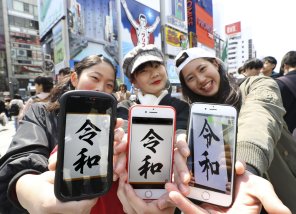
On May 1st of this year, one era ended in Japan and a new one began, now referred to as the Reiwa Era. This major change was precipitated by the abdication of the elderly Emperor Akihito, who was succeeded by his son Naruhito, to ascend to the Chrysanthemum Throne. On that day, Naruhito became the 126th emperor of Japan, and in keeping with several hundred years of tradition, the ceremony was bound by ancient protocols that have guided the oldest continuous hereditary monarchy in the world, supposedly dating back to 660 BC.

This transfer in leadership ushered in a new era now known as Reiwa (令和), roughly translated as “beautiful harmony.” There are actually five eras in modern Japanese history known as Meiji (1868-1912), Taisho (1912-1926), Showa (1926-1989), Heisei (1989-2019) and the newly established Reiwa Era (2019-?). This change in eras also impacts how time is measured in Japan. For example, instead of the Gregorian calendar year of 2019, we are now in Reiwa Year 1. However, when it comes to counting months and days, nothing has changed, which makes things a bit confusing for those unaccustomed to the Japanese dating system. Following this system, I was born in Showa 28, November 2nd in case you were curious about my age! The order of the dating system also begins with the year, followed by the month and then the day. This traditional pattern for marking the passing of years is still meticulously maintained by city and government offices in their record keeping, but it is steadily falling out of practice among the general population.

Calculating the passage of time is important for many reasons, but in Psalm 90, Moses prayed for wisdom in how to count days, not years. Since we are all bound by time and its demands upon our lives, it is imperative to reflect upon its daily impact and how this ties into God’s eternal purposes for us. After all, God alone stands apart from time, where a thousand years are like a day to Him, according to verse four of the same Psalm. Therefore, like Moses, we should seek God’s assistance in numbering our days with the intent of making each one count for eternity, because faithfulness is rooted in the daily choices we make. To make the right choices, we need God’s timeless and infallible perspective. He alone can teach us to count correctly.

Fake Food

“My food,” said Jesus, “is to do the will of him who sent me and to finish his work.”            John 4:34

fake food samples2

Unable to read the menu, I managed to coax the waitress to the front of the restaurant through a series of charades and broken Japanese and pointed to what I wanted to order. Enclosed in a glass case was the entire food repertoire appealingly displayed, but none of it was real. Known as shokuhin sampuru (食品サンプル), or “food samples,” these are exact replicas of dishes offered by the restaurant.

The production of these food models has evolved into an art form over time and it was initially pioneered in the late 1920s by Japanese artisans who used paraffin for their creations. These fake food samples enabled customers to order food without the use of menus, but over time, paraffin proved to be an inadequate medium as the colors slowly faded when exposed to heat or sunlight. Now constructed using a synthetic resin called polyvinyl chloride, these shokuhin sampuru can last indefinitely. This improvement in technique has unwittingly hurt the fake food industry so it has tried to expand its market outside of Japan.

There is a great deal of craftsmanship required to produce these fake food models, so plastic food manufacturers fiercely guard their trade secrets to protect their share of the market. Models are often custom tailored to the individual menus of each restaurant, which makes them quite expensive. Most customers are unaware that the plastic food they casually survey behind the glass typically cost the proprietor of the restaurant several thousand dollars. Their attention is naturally focused on satisfying their hunger and hopefully, something on the menu will fill that need.

What then is real food? Ask a man, and he might say steak and potatoes. Ask a vegan, and they might say quinoa and kale. Ask a Japanese, and they might say rice and fish. But when Jesus was asked a similar question, He gave a totally different reply. He said: “My food is to do the will of him who sent me and to finish his work.” Obviously, Jesus was not talking about real food, or even plastic food, but a different kind of nourishment that is essential for our spiritual well-being. While we are certainly flesh and blood beings that need physical nourishment, our spiritual natures require sustenance as well. We were created to fill the purposes of God, not just fill the physical desires or needs of the flesh. As Jesus famously expressed in the Sermon on the Mount, we are to hunger and thirst after righteousness (Matt. 5:6). We need both physical and spiritual food as part of a healthy diet. At the same time, we need to be cautious of the many “fake foods” that can entice us away from the greater things of God. Bon appetit!

My Protection

“Blessed are all who take refuge in him.”    Psalm 2:12

omamori2

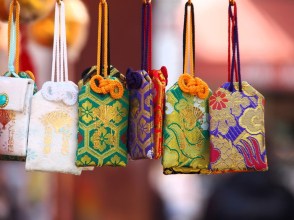
During my first taxi ride in Japan, I couldn’t help but notice an elaborate ornament swinging back and forth on the rear view mirror as the driver navigated through traffic. I later learned that this and a whole array of similar talismans or amulets are called “omamori” (お守り), which literally means “protection.” These small good luck charms are typically made from paper or wood and are usually protected inside an ornate bag along with a written prayer. They are sold at temples and shrines throughout the country with the promise that they will bring good fortune or protection to the bearer, but cynics largely view them as a clever means to raise money.

These omamori can be spotted on bags, hanging in cars, attached to various objects and are even used as cellphone straps. They come in many shapes, sizes and colors and different ones are advertised to possess different powers. Some offer businessmen success in the financial realm while others promise students a good outcome in their test scores. Other omamori guarantee general prosperity, protection from evil, happiness, traffic safety, good health, fertility, and a happy love life. The simple thought behind such charms is that the power and strength of the gods is somehow invested in these brocaded bags so they are not to be opened, as the blessing could be released and thereby lost.

It is generally understood that the shelf life of an omamori is only good for one year, which means a replacement must be purchased, conveniently bringing additional revenue to the local shrine or temple. These “expired” good luck charms must be properly disposed of, usually by burning, preferably at the place they were originally purchased. Eager to grab a share of the enormous profits in the good luck industry, it is now common for stores to sell generic omamori featuring the images of Hello Kitty, Mickey Mouse, Snoopy and other popular characters.

The search to obtain protection from harm or to procure good fortune is a natural inclination of the human heart. Such a quest can take many forms and it is often shaped by our culture, circumstances and worldview. But all such attempts to manipulate one’s personal future are doomed to failure because they are based on the false assumption that we are in control of our own fate. We all seek desired outcomes in life that avoid pain and bring pleasure, but it is arrogant to think that we are in control of such matters, or that we possess the discernment to always know what is actually good or bad for us. Our uncomfortableness with the unpredictability of life is in fact a reminder that we should seek protection and refuge in God, who is our only omamori, or real source of protection. Everything else is a mere trinket.

Clean Living

“Who may ascend the mountain of the Lord? The one who has clean hands and a pure heart.”                    Psalm 24:3-4a

Water purification 2

Whoever coined the phrase “cleanliness is next to godliness” would have loved Japan. Every morning, like clockwork, one can witness innumerable home owners and shop keepers vigilantly removing every trace of offending dirt, trash or stray leaf that invaded their designated territory overnight. Venture into the nearby train station, and there you can observe an army of cleaning personnel engaged in the never-ending task of mopping floors, polishing walls and windows and wiping down escalator handrails. Outside, white gloved taxi drivers maintain spotlessly clean vehicles for their customers and inside, the Japan Rail staff scurry around tidying up bullet trains in under seven minutes . To acquire these important life skills, students are required to clean their own classrooms and scrub the hallways as a part of their school curriculum.

Neighborhoods periodically schedule an o-sōji (大掃除), or “big cleanup” using volunteers to spruce up their local parks and common areas. Local churches and many small businesses follow the same pattern by routinely putting o-sōji’s on their calendar and everyone is expected to participate. Perhaps some of this emphasis on cleanliness is derived from the Shinto religion, which places great emphasis on purity, where visitors are encouraged to wash their hands and face before entering a shrine to worship. This practice, referred to as “harae” (祓), is a form of purification that attempts to establish a pure soul and mind in the worshipper. This is done through a symbolic washing with water or by having a Shinto priest shake a carefully constructed wand of white paper streamers over a person, place or object for good fortune. The rudimentary idea is that if you want to enter the presence of the gods and seek their blessing on you or your possessions, cleanliness is a prerequisite.

As the psalmist meditated on the holiness and purity of God, he wondered how it was possible for anyone to approach the Creator of the Universe, in whom not the slightest trace of impurity or defilement existed. Such a quest seems impossible, like the scaling of a lofty, inaccessible mountaintop. Only those with clean hands and a pure heart dare to attempt such a climb, but the uniform testimony of scripture is that no one has such qualifications as no one is without sin (Romans 3:23). In addition, no religious ritual can remedy this shortcoming. Thankfully, by the grace of God, in spite of our dirty hands and impure hearts, we are able to enter into God’s presence through the death and resurrection of His Son, the Lord Jesus Christ, who serves as the appointed mediator between God and man. (I Timothy 2:5) His cross testifies of the love of God to redeem us and an empty tomb provides proof of His power to make that a reality. Cleanliness is indeed next to godliness, but only God can provide the cleaning we so desperately need.

Play Ball!

“Therefore encourage one another and build each other up.”       I Thessalonians 5:11

baseball

“Take me out to the ball game” may be the universal chorus sung during the seventh inning stretch by baseball fans across America, but no such tradition exists in Japan. Called yakyū (野球) or bēsubōru in Japanese, baseball has been a staple of the Japanese sports scene since it was first introduced to the country in 1872. However, it is interesting to observe how the same game, with essentially the same rules, has been contextualized to fit a different culture.

For example, in America, which is recognized as the birthplace of baseball, an individual player’s independence and achievements are enthusiastically recognized and celebrated, even at times to the possible detriment of the team. However, in Japan, the team comes before everything else so players are expected to dutifully align their personal goals and ambitions to the overall purposes of the team. This is probably why the annual national high school baseball championship is so wildly popular. Instead of a collection of individual all-stars, the regional champions from Japan’s 47 prefectures intensely compete against other teams over a two-week span to bring glory to their school.

When we attended our first professional baseball game in Japan, we soon learned that cheering in Japan, in contrast to America, is a finely orchestrated event. Each team had its own cheering section full of rabid fans equipped with drums, ‘thunder sticks’ and trumpets that made noise nonstop in cadence under the direction of a leader whenever their team was up to bat. The respective cheering sections for each team knew all the cheers by heart and enthusiastically chanted them at the top of their voices in an effort to exhort each player to do his best so that their team might win.

In the New Testament, the church is given a number of “one another” commands that are intended to build up the body of Christ and promote spiritual maturity among fellow believers. Among these are “love one another,” “pray for one another,” “forgive one another,” “accept one another” and in I Thessalonians 5:11 we are exhorted to “encourage one another.” Encouragement is a powerful means to spur others on to greater deeds done with nobler motives, but sadly, we fail to put this into practice as often as we should. Perhaps the prideful desire to have our own efforts or accomplishments recognized gets in the way of our extending deserved (and needed!) encouragement to others.

It’s no secret in the world of sports that the home team has an inherent advantage in a contest since it is playing in front of its own fan base who fervently exhorts their team to perform well. Seen in these terms, cheering can have a real impact on the outcome of a game. Of course, we can’t always be on the winning team in the world of sports, but it’s comforting to know that we are all members of a team that will ultimately triumph to God’s glory. As part of that worthy objective, we are commanded to cheer for one another and lay aside our fleshly desire for personal recognition. Let’s play ball!

Swimming Upstream

“Let perseverance finish its work so that you may be mature and complete, not lacking anything.”        James 1:4

koinoboriThe koinobori fluttered in the spring breeze on the flag pole as a visible reminder that Kodomo no Hi (子供の日), or Children’s Day, was coming soon. Every May 5th, Japanese celebrate this national holiday by attaching bright, colorful streamers in the shape of carp called “koi” to express their well wishes for children. “Nobori” means “climbing” or “ascending”, so juxtaposed the words “koi” and “nobori” are translated to “carp streamers”. The Japanese greatly admire koi since they are a spirited fish that fight their way upstream, demonstrating courage and determination to attain a difficult goal. This imagery is captured by the flapping carp-shaped streamers on flag poles throughout Japan.

Originally, the number of koi flown was determined by the number of males within a household. The father was typically represented by the largest, black colored carp at the top. But in modern times, all the members of the family are now included on the pole, with a pink or red flag standing for the mother.

The koinobori expresses hope that the children of that household will grow up healthy and strong like carp swimming upstream. Larger versions of koinobori are raised in school grounds or near community centers and the timing often coincides with the blooming of nearby cherry trees, adding to the festive atmosphere. Everyone desires their children to be strong and healthy, like vigorous carp swimming upstream, but such qualities are often obtained through the challenges of adversity. It is certainly much easier to swim downstream and float with the current, but this does not produce the needed life attributes of perseverance, self-control, endurance and determination.

Many well-intentioned parents, in their zeal to protect their children to the exclusion of everything else, unwittingly obstruct such needed development and stunt their children’s growth. Swimming upstream may seem counter intuitive to our natural inclination to take the easy route, but it serves to produce strong and healthy children who are better prepared to face the inevitable challenges of life.

God desires the same for His children and as a result, wisely introduces trials, obstacles and hardships into our lives to make us strong. The goal is to help us mature and reach the full potential of all that He has created us to be and do. The Apostle James (James 1:2-4) reminds us that perseverance is a means to a very worthwhile end but many times it is hard to appreciate such long term benefits as we struggle against the current. It is therefore good to recall that we do not swim alone in such efforts and that we are not without aid as we press forward in the circumstances of life. These are truths we must pass on to the next generation as they wrestle with their own challenges and move towards the worthy goal of maturity in Christ.