Together

“Glorify the Lord with me; let us exalt his name together.” Psalm 34:3

Together

We had not been in Japan very long before we soon came to understand that Japanese place a high value on doing things together. This concept of togetherness manifests itself in many forms and it is drilled into behavioral patterns from early childhood. The Japanese term often used to describe this value is isshoni (一緒に), which means basically, “together” or “at the same time.” However, isshoni goes much deeper than the West’s typical concept of teamwork, which promotes the idea of togetherness primarily as a means to a desired end. In Japan, isshoni is considered an objective in itself, where togetherness is almost always preferred over doing things alone or in isolation. The general propensity in the West is to tackle problems and seek solutions as individuals. This independence from others theoretically sets a person free from group entanglements that might otherwise hold them back from reaching their desired goals. But in contrast, Japan views the process of isshoni as a necessary process for identifying and achieving lasting objectives.

With this overall purpose in mind, children are frequently clumped together into groups called “gumi” for sports, clubs, activities and various projects, which in turn encourages everyone to perceive their identity as a member of a particular group. As these children steadily advance toward adulthood, the concept of isshoni continues to play a vital role in business structures, various social routines, neighborhood activities and even leisure times. However, the steady erosion of the extended family in Japan has had the opposite effect as it promotes increased isolation and a marked departure from the traditions of isshoni. Therefore, to strengthen the moral fabric of the nation, the Japanese government actively promotes policies that enhance isshoni activities among families and communities. One example of this is the popular and publicly sponsored children’s TV program aptly titled “Okaasan to Issho” (Together with My Mom) that my wife and daughter were invited to join on one memorable occasion when the show was filmed locally.  

When I was given the opportunity to preach my first sermon many years ago, I spoke from Psalm 133, which starts out, “How good and pleasant it is when God’s people live together in unity.” That particular passage powerfully spoke to me in my younger days and continues to impact my life after many years of ministry. As a relatively young believer when I prepared that initial sermon, I realized that I had been positively influenced by my Christian college community and the many godly members of a new church plant I attended. Collectively, the people God had graciously placed into my life played a critical role in shaping my values, ministry skills and personal choices that remain with me to this day. Unknown to me, many of the higher aspects of isshoni were imprinted on my heart even then as part of God’s redemptive and sanctifying work in my life. As God exists in a Trinitarian relationship, it should come as no surprise that He graciously uses community to accomplish His purposes in us and through us. God is an Isshoni God and isshoni we serve His purposes together. Isshoni may not be an end in itself, but it is certainly instrumental in facilitating our true goal, which is to “exalt his name together.” (Psalm 34:3)

Japanese Fads

“God is not human, that he should lie, not a human being, that he should change his mind.”

Numbers 23:19a

Fads

A common characteristic of Japan is a proclivity towards uniformity, which probably accounts for the rapid rise and spread of some rather unique cultural fads. Our first memorable experience of this phenomenon was the ubiquitous appearance of the frilled-neck lizard, an odd species of reptile native to Australia. For reasons unknown to us, this particular creature caught the attention of some advertiser in Japan and within weeks, these strange lizards were seen everywhere in TV commercials and posters and sold as stuffed animals. Then just as suddenly as it appeared, the frilled-neck lizard quietly faded off the scene as Japan moved on to the next popular thing. This experience taught us that Japan is a land of passing fads.

Teenage schoolgirls and young women are probably the biggest trendsetters behind many of the fads that frequently sweep through the nation. New ideas often catch on quickly among the young female segment of society who march in step with the latest passing fancy that ranges anywhere from the most recent popular singing group to strange new fashions and anything else in between. In the area of fashion, we have observed the rise and fall of some interesting styles like the “kogal,” “Lolita” and “ganguro,” that, like the frill-necked lizard, have quickly come and gone. Kogal fashion basically consisted of school girl outfits of short skirts and bulky, rolled up socks held in place by a special glue. Following that and going in a slightly different direction, Lolita fashion was characterized by an abundance of frills, ruffles, makeup, hairstyle and anything that cultivated a child-like image. There are also corollaries of the Lolita style known as “gothic Lolita” and “punk Lolita.” Ganguro fashion calls for an overdone tan (the term means literally “intensely black”), extreme hair dye colors and contrasting pale makeup as a reactionary form to the traditional Japanese image of beauty.

But Japanese fads also originate from other demographic groups and manifest themselves in different forms. For example, the “tamagotchi” (meaning “egg watch”) craze captured the vast majority of school-aged children in the 90s who were driven to purchase and obsessively play a mini egg-shaped computer game featuring an electronic “pet.” These virtual pets had to be fed, played with and cleaned on a regular basis or else they would die. Some children were obviously upset by this irreversible outcome so one innovative temple created a virtual cemetery for these “dead” pets and set up a hotline to console distraught children. However, the zeal for these devices continued unabated until the next fad eventually replaced them. The ensuing hyper excitement over baby pandas, the widespread following to wear Ugg boots, the sudden omnipresence of okra in cuisine, the craze in designer bags and people sporting chapatsu (茶髪) or “tea colored hair” are just a few examples of fads that have made their brief marks on Japanese culture.

Sometimes I am tempted to reflect on these changes as I advance in years and acquire a different perspective of time and culture. From such a vantage point, I’ve observed that inconsistency and inequality are traits that characterize human culture as a whole and are not limited to any particular nationality. These traits manifest themselves in different forms, but serve as key reminders that while we may be made in the image of God, we have significantly strayed from the character and nature of God. Perhaps this is why the author of Numbers, who had observed the disobedient fickleness of God’s people, described God as “not human, that he should lie, not a human being, that he should change his mind.” (Numbers 23:19a). This consistency in character is also used to describe Jesus, who “is the same yesterday and today and forever.” (Hebrews 13:8) God, and the character he expects from us, is not a passing fad.

Left Side–Right Side

“He guides me along the right paths for his name’s sake.” Psalm 23:3

Helyhatározók gyakorlása – Vidám tanár

In light of certain studies, some neuroscientists claim that people are apt to be either left-side or right-side dominant in their brain. As a result, this tendency may have significant impact on a person’s personality, preferences, and capabilities. While this concept is still subject to debate, we often felt like right-brain people operating in a left-brain world while living in Japan. As newcomers, we knew to expect differences in language and culture, but a steering wheel located on the right side of the car just felt wrong initially. This departure from our “normal” was to be expected because everyone drives on the left-hand side of the road in Japan. Therefore, as part of our eventual transition, we soon learned to shift gears with our left hand, remembered we were crossing traffic when making right hand turns and ceased activating our windshield wipers when attempting to a make a turn (they are opposite).

This mental transition from a right-side world to a left-side world took time, but we eventually mastered it. We did so to such a degree that now we may occasionally start out driving on the wrong side of the road in America under certain conditions, particularly if there is no oncoming traffic to help orientate our brains. Unfortunately, the juxtaposition of the windshield wiper and turn signal controls still proves to be a stumbling block at times if our thoughts drift to Japan while driving. We have also entertained more than a few people when we mistakenly attempted to enter the driver’s door when getting into their car as a passenger.

There are many theories that attempt to explain why one particular side of the road is preferred for traveling, but it is interesting to observe that even though roughly 90 percent of the general population is right-handed, fully one-third of the world routinely employs a left-hand traffic system. Specifically, 165 countries drive on the right and 75 countries drive on the left. A closer examination of the details reveals that a large percentage of the left side dominant countries were formerly part of the British Empire so that partially explains a left side orientation. However, this does not account for countries like Japan that were never under British influence. Historians can prove that the propensity to maintain a left side traffic flow in Japan goes back to at least the Edo Period (1603-1868) and the establishment of the Japanese railroad system in the late 1800s locked this pattern into place.

Every sovereign country is certainly entitled to legislate the flow of traffic within its own borders. In a similar manner, a sovereign God who created this world and all of its inhabitants, has ordained the paths and the manner in which we should walk as we live out our lives here on Earth. Since these rules of the road are eternal in nature and intended for our good, we would do well to know and diligently observe them. Time and time again, Scripture teaches us that God delights in guiding us along a determined path that will provide us blessing and safety from evil, both in this life and in the world to come.

As one travels the world, it is interesting to note the variety and disparity of rules that regulate the lives of the respective citizens in different countries. As citizens of a heavenly country, God has called us to walk along the right paths He has ordained for us as we seek to successfully navigate the roads of life before us. Each country has determined the correct side of the road on a national basis, but there is no uniformity in such matters on an international level. But in things of an eternal nature, we must carefully observe God’s rules of the road.

Energy to Go

“Come to me, all you who are weary and burdened, and I will give you rest.”     Matthew 11:28

Energy drink

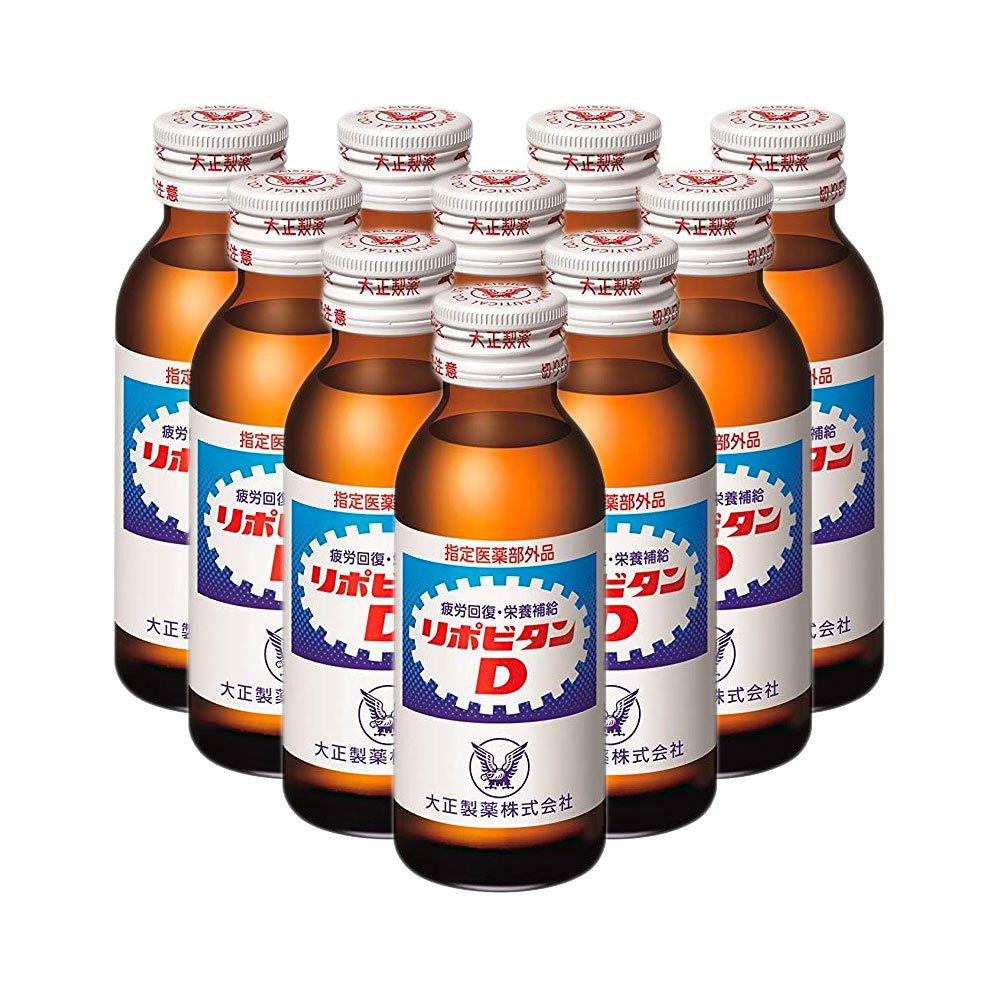
Long before Red Bull begin to “give you wings,” as they boast in their current advertising campaign, energy drinks were common in Japan. In a country renown for its industrious labor force and late-night drinkers who often get by on minimal sleep, Japan offers a wide selection of high-powered beverages to keep its workers operating at peak efficiency. Energy drinks in Japan were initially packaged in small brown bottles and sold as quasi-medicinal remedies readily available for people on the go. The exhausted businessman, the tired student, the fatigued housewife, the late-night partier or the weary traveler can purchase immediate energy at any convenience store, train station kiosk or drugstore for a reasonable price.

Loaded with caffeine, these drinks are often advertised as healthy supplements full of vitamins, minerals and various vegetable extracts. A key ingredient in almost all Japanese energy drinks is taurine, an amino acid-like chemical substance that is naturally found in meat, fish and dairy products. Unlike caffeine, which is a noted stimulant, taurine is actually a sedative that serves to reduce feelings of anxiety and therefore, theoretically improves productivity. Most energy drinks sold abroad focus more on caffeine content, but the Japanese versions are generally more complex and are advertised as “nutritional” or “medicinal” in order to attract a wider spectrum of consumers.

Lipovitan is one of the oldest and most popular brands of energy drinks marketed in Japan and was first sold in 1962 as an herbal “energizing tonic.” In ad campaigns, it strategically targeted sleepy, tired workers enduring long shifts in the midst of a booming post-war economy. Energy drinks eventually spread to other parts of Asia, until one enterprising businessman took the concept and developed the Red Bull brand for the European market, which eventually spread to North America. However, coffee continues as the most popular form of quick energy in Japan and can be purchased anywhere in both hot and cold versions through vending machines located throughout the country. Caffeine-boosted soft drinks are also widely advertised and more recently, an increasing number of alcoholic drinks are now infused with energy-producing additives. All these beverages come with a promise to increase energy, focus and improve performance.

Considering the chronic state of tiredness that seems to be common for many in Japan, it is no surprise that one of the most popular Bible verses frequently featured by churches in their bulletins, websites or billboards is Matthew 11:28. “Come to me, all you who are weary and burdened, and I will give you rest.” A sense of weariness or tiredness seems to permeate the very fabric of Japanese society, which expresses itself in many forms, but the graver danger goes well beyond just physical and mental exhaustion. The popularity of this verse identifies a troubling condition that no energy drink can alleviate and offers a far more substantive, life-altering remedy.

As both the Son of God and the Son of Man, Jesus fully understood the complexities and the desperate needs of the human heart. His life-changing offer of rest was not just to people suffering from physical and emotional exhaustion, but to those who were worn down by the greater burdens of sin and shame. Jesus aptly compared these burdens to a “yoke,” (v. 29) which controls or enslaves beasts of burden to a difficult task. But unlike an energy drink, which provides only a very temporary solution for a very temporary problem, Jesus offers to take our yoke upon Himself which came in the form of a cross. In so doing, Jesus provides not an energy drink, but eternal, life-giving water so we will never thirst again (John 4:14).

Learning to Count

“Suppose one of you wants to build a tower. Won’t you first sit down and estimate the cost?”

Luke 14:28a

numbers

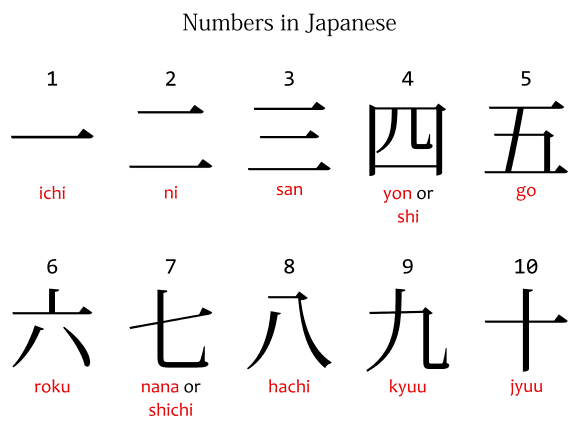
Learning to count is usually one of the first objectives in acquiring a foreign language, but mastery of this seemingly simple task is no small feat in Japanese. It is much more challenging than English, which simply utilizes ordinal numbers (1,2,3…) to indicate the quantity of something or cardinal numbers (1st, 2nd, 3rd…) to point out the position of something in a list. That’s it. But Japanese takes counting to an entirely different level that can easily befuddle the novice learner. For starters, it doesn’t help that Japanese employs two different basic numbering systems, with one based on ancient Chinese called “kango” (漢語) and another, known as “wago” (和語), with Japanese origins. Using the kango system, 1,2,3 becomes ichi, ni, san, but the same numbers transform into hitotsu, futatsu, mitsu using the wago counting system. This is where the fun begins.

 Wago is basically a generic means for counting objects that don’t exceed ten in number, but kango is usually combined with an assortment of “counters” that vary according to the object being counted. For example, if you are counting long, cylindrical objects like pencils, a “hon” (本) is combined with each number so the simple 1, 2, 3 in kango becomes ippon, nihon, sanbon and so forth. Flat, thin objects like paper are indicated by the counter “mai” (枚) so 1, 2, 3 pieces of paper becomes ichimai, nimai, sanmai. Small objects use the counter “ko” (個) and large objects are “dai” (台). Small animals are “hiki” (匹), but large animals are “” (頭). Pairs of socks are counted using “soku” (足), birds are numbered by “wa” (羽) and bowls or cups of liquid are indicated by the counter “hai” (杯). Altogether, there are approximately five hundred Japanese counters, although many are rarely used.

To add to this confusion, there are many other aberrations to keep in mind when counting in Japanese. An additional quirk is the frequent substitution of the numbers 4, 7 and 9 with an alternative word. The typical word for four is “shi,” which is the same pronunciation for the word death (死), so people often use “yon” as a substitute. Along the same line, the number nine is “ku” in Japanese, which can also mean “suffering” (苦), so that is often replaced with “kyū.” The number seven (shichi) sounds very similar to the number eight (hachi) so it often becomes “nana”.

Counting in Japanese is obviously a difficult challenge, but there is another form of counting that is even more formidable. As Jesus’ influence continued to grow, which in turn attracted more followers, it became necessary for Him to identify those who were fully committed to pursuing the whole purposes of God. Therefore, Jesus gave two parables in Luke 14 where He encouraged potential disciples to count the possible cost of abandoning their comfortable lives in order to follow Him. Such a radical commitment could estrange them from family, incur the loss of personal possessions and even be life threatening. Rather than blindly entering into such a life-changing commitment, Jesus wanted His followers to consciously calculate the risks and sacrifices that may be demanded of them in their new faith journey. They would learn soon enough that taking up one’s cross to follow Jesus was both a difficult and dangerous form of counting. But those who learned to count in such terms in this life accrued a heavenly treasure in the world to come.

Big Cleaning

“Wash away all my iniquity and cleanse me from my sin.” Psalm 51:2

大扫除(中国传统民俗之一)_搜狗百科

A major end of year ritual for many Japanese is “ōsōji” (大掃除), which means “big cleaning.” It involves a thorough cleaning of one’s residence, a practice that has obvious practical benefits and has quasi spiritual origins. In ancient times, according to Shinto beliefs, it was considered important to purify one’s home of clutter and dust in order to welcome the kami or local gods with the coming of a new year. This annual ablution represents a hopeful beginning for the next year with the removal of any accumulated dirt and negative energy remaining from the previous year. During our early years in Japan, it was customary to observe neighbors cleaning their windows, beating the dust out of carpets draped over laundry poles and dragging tatami mats and futons outside to air in the sun. Although hidden from view, we surmised that many of these same neighbors were also dutifully scrubbing the inside of their houses from top to bottom.

The traditional practice of ōsōji has declined somewhat in recent years, but the term has expanded to include other “big cleaning” activities. For example, it is quite common for schools to promote periodic ōsōjis to give the school and school grounds a solid cleaning, deploying students and teachers for a substantial portion of the labor. Everyone is expected to pitch in and help. Neighborhoods routinely host fall and spring ōsōji events to clean up local parks and public areas. On these designated days, an army of residents assemble at the appointed time to pull weeds, trim bushes, pick up trash, rake leaves, sweep sidewalks and take on any menial task that helps beautify their immediate area. This activity also serves to promote a sense of community and provides an opportunity to build positive relationships with one’s neighbors. Businesses and churches also schedule such cooperative cleaning days as an unstated responsibility for all those whose lives center upon those respective facilities.

The Japanese have a high value on hygiene and cleanliness that encourages them to generally embrace the tradition of ōsōji and its various manifestations. However, probably only a few of the participants are aware of the ancient spiritual aspects that once shaped this now common practice. We ourselves implemented the custom of ōsōji at our organizational headquarters and at the churches where we served. Besides the obvious objective of improving and cleaning one’s immediate environment, we came to equally appreciate the esprit de corps it often fostered.

The concept of “big cleaning” has very important spiritual overtones throughout Scripture, in both prescribed ceremonial practices and the state of one’s heart before a holy, sinless God. Such cleaning frequently includes the nuance of purification, where the primary objective is not just physical, but spiritual in nature. Even a cursory reading of the Old Testament reveals that although there are many physical purification rites expected of God’s people, the ultimate objective of these ceremonies was to nurture a pure heart for God that produced a holy pattern in one’s life.

But here is where a huge dilemma presents itself. No one is clean and there is no available ceremony through which one could become truly clean. The author of Proverbs (20:9) drives this point home when he declares, “Who can say, ‘I have kept my heart pure; I am clean and without sin?’” The obvious answer to this question is “no one.” This means that all those rituals were not instituted as a means to an end, but rather, to reveal our critical need for a “big cleaning” of our hearts that only Jesus could provide. – the ultimate ōsōji.

Crime

“When the sentence for a crime is not quickly carried out, people’s hearts are filled with schemes to do wrong.”  Ecclesiastes 8:12

crime

We were still newbies to Japan when my wife absentmindedly left her newly purchased bike unlocked in the designated parking area of the local supermarket. She returned shortly afterwards to sadly discover that her bike had been stolen, which we duly reported to the local police. We had been operating under the impression that crime was not a major concern in Japan, which is generally true, except when it comes to bicycles as we learned later. Despite this unfortunate incident, we continued to walk the streets at night without fear and often left our house or car unlocked (but not our bikes!).

Japan’s crime rate is indeed remarkably low when compared to other first world countries. For example, according to recent statistics, the rate of violent crime in the United States is 148 times higher than that of Japan. The overall crime rate in Japan is just a fourth of what is recorded in the U.S. This statistical contrast is also reflected in the respective prison populations of both countries, where the number of incarcerated people in the States is fourteen times higher than that of Japan. The most frequent crime in Japan is theft, which makes up more than 70 percent of all illegal activities.

Sociologists point to a number of likely reasons for this vast disparity in criminal incidents between Japan and other modern nations. Some of the more obvious factors are a very visible police presence, widespread community cooperation, a heavy emphasis on teaching moral values in school curriculums and very strict gun control laws. But there are other, more subtle influences present in Japanese culture that serve to effectively suppress criminal activities. One is the power of shame that is deeply rooted in many Asian nations. In contrast to guilt, which underlies much of Western culture and conduct, shame is driven and shaped by outward societal forces that demand conformity from all its members to an unwritten code. The possibility of incurring shame on one’s family, class, company or social circle serves as a powerful deterrent to a significant amount of misconduct and unacceptable behavior. The low crime statistics in Japan are also partially explained by the incredibly high conviction rate of 99 percent in all state prosecutions. Although many are of a dubious nature, confessions comprise a stunning 89 percent of convictions, which helps keep law breakers off the streets and out of trouble.

While we may certainly admire the low crime rate in Japan, none of these elements that keep illegal behavior in check actually address the more important issues of the heart where all criminal aspirations and activities originate. The Psalmist clearly states this connection when he prays, “Do not let my heart be drawn to what is evil so that I take part in wicked deeds.” (Psalm 141:4) This prayer is an accurate acknowledgement that all crime is essentially a spiritual problem. However, this is particularly a challenging truth to communicate in Japan because of the common translation for the word “sin,” which is “tsumi” (罪) in Japanese.

Within the term tsumi, the concepts of crime and sin are used interchangeably, which creates an unfortunate confusion. In normal usage, crime refers to an infraction of societal laws, whereas sin involves the breaking of God’s laws, which is far more serious in nature. The ultimate solution to crime is a belief in the Gospel, or the Good News of Jesus Christ, and a necessary prerequisite to that is an honest appraisal of one’s sinful heart before a holy, just God. Herein lies a significant problem in Japan with the word tsumi. Very few Japanese are willing to think of themselves as sinners because they have not broken any laws (crime) and fail to grasp they have broken the eternal laws of God (sin). Crime may be minimal in Japan, but sin remains unchecked.

Bentō Boxes

“In vain you rise early and stay up late, toiling for food to eat…” Psalm 127:2a

Bento box

My generation has made its fair share of contributions to American culture and one of these was the advancement in lunchbox décor. With the invention of the television, the bland monochromatic colors of previous lunchboxes gave way to colorful depictions of popular TV shows and cartoons. For example, I vividly recall my Lone Ranger box accompanying me to the school lunchroom everyday where it competed with the Jetsons, Davy Crockett, Superman, Yogi Bear and a host of other beloved characters portrayed on other kids’ lunchboxes. However, the boring contents of my lunch, which consisted primarily of a PBJ or a bologna sandwich, some carrot sticks, an apple and a thermos of milk remained relatively unchanged. Unknown to me at that time, on the other side of the world, the Japanese had already developed a separate lunch box culture centuries earlier. It was called an obentō.

An obentō is an individual-sized portion and well-balanced meal designed for easy transport and consumption. It consists of a starch such as rice or noodles, a protein (meat, fish), some kind of vegetable and, often, a fruit side dish. It traditionally includes a set of chopsticks and comes in both disposable or reusable containers that are divided into smaller compartments. The more durable boxes are sold in many forms ranging from expensive hand-crafted lacquerware to plastic cutesy boxes in the shape of trains or a favorite anime character. The actual term, bentō (弁当), is derived from the Japanese word for “convenient” and is often prefaced with an “o” used in honorific speech patterns.

These Japanese lunch boxes are sold throughout Japan in convenience stores, train stations, grocery stores and specialty bentō shops. The general cost of a bentō is often less than US $5, but there are pricier versions that include more expensive or larger amounts of food. Japanese wives and mothers are generally responsible for preparing their children’s or husband’s bentō, which is a task they take quite seriously. Among mothers, there is an unspoken competition in designing and creating a visually attractive and nutritious meal. The ingredients are often prepared the night before and then assembled in the morning. Great care is given to include certain color combinations and many mothers take the extra time to shape and decorate food to resemble people, flowers, animals or favorite cartoon characters to the delight of their children. In Japan, the contents of a child’s lunch box, fair or not, is often viewed as a reflection of their parental care, which can put considerable pressure on some mothers who are overly preoccupied with such expectations.

As an adult, I now better appreciate my mother’s selfless labor in preparing my lunch every day, but I don’t think she put the same amount of effort into it as we witnessed in Japan. Preparing lunches is one thing, but the pressure to daily provide and prepare food for one’s family is no small feat that is a challenge in every culture. However, there is an important perspective that should be kept in mind in the midst of such responsibilities. That being, God is the ultimate provider for whatever is placed upon our table, cooked on our stove, stored in our pantry, cooled in our refrigerator or packed away in a lunch box.

Feasting is a common motif in the Bible and it is often used to describe intimate and joyous fellowship with God who provides all that we need as represented by the abundance of the banquet He spreads before us (Isaiah 25:6). We labor and strive for such things on earth, and in so doing, we are foolishly tempted to think we alone are responsible for such matters. But He who faithfully provided manna for His people in the wilderness calls us to seek His kingdom above all else because He shall provide for our needs (Matthew 6:33). You may have the best obentō before you, but an eternal feast awaits us.

Apprenticeship

“The things you have heard me say in the presence of many witnesses entrust to reliable people who will also be qualified to teach others.”  II Timothy 2:2

apprentice

Every culture has a vested interest in transferring knowledge from one generation to the next as part of the essential process of preserving its own uniqueness. This passing of the torch often involves the retention of certain skills and expertise that acquire considerable time and effort to acquire. For this reason, the concept of apprenticeship was widely practiced for centuries in certain trades and crafts to ensure the continuity of valuable services, goods, information and techniques. Much of this transference of knowledge occurred within a semi-indentured form of relationship from an acknowledged master to a novice. But over the last century, these former feudalistic and austere tendencies of ancient apprenticeship practices have largely given way to a modern system of employment that allows for much more individual freedom. Despite this shift, Japan still retains a certain element of apprenticeship that is more obvious in certain vocations.

This proclivity in Japan towards acquiring a particular skill through a rigorous, time demanding and low paying training program was brought to our attention a few years ago by a long-time friend. Trained in the field of medicine, this individual was seeking a complete change in life and had settled upon making customized surfboards for a living. When we inquired about the process, we learned that our friend would receive a very minimal salary and was expected to devote long hours for several years with hardly any days off for the privilege of mastering this modern craft. This apprenticeship-like arrangement for mastering a particular skill was very similar to what we had heard about master sword makers, professional sushi chefs, tea ceremony teachers, kabuki actors, trained calligraphers and other areas where one desires to become an expert in certain arts and crafts.

For example, if someone wants to become a recognized sushi chef in a high-end restaurant, they usually must start at the bottom washing dishes. Then, after a period of time, they may be entrusted with the correct preparation of the rice and eventually, they begin their more formal apprenticeship training using knives. The whole process may require up to a decade under strictly guided tutelage. Upon completion of their contractual service, these former apprentices are recognized as fully trained professionals and are qualified to start their own business or seek employment elsewhere.

The concept of biblical discipleship in many aspects mirrors the idea of apprenticeship in its objectives, but certainly not in many of its methods. The goal is to train others in godliness, faithfulness and truth and Jesus provided a pattern of a newer and improved model of discipleship that was built on love. A disciple, called a deshi (弟子) in Japanese, is generally an individual who is committed to certain goals. To achieve their objectives, they follow someone wiser and more experienced who is commonly referred to as a sensei (先生), or teacher in Japanese. This was similar to the strategy Paul laid out to his own disciple, Timothy, who was exhorted to implement the same patterns with other like-minded and reliable God followers who would, hopefully, influence others. (II Timothy 2:2) Heavenly and eternal objectives should spur us to apprentice ourselves to others more mature than ourselves, who can assist us in our spiritual journey. Assuming that we are good pupils, we should also aspire to become good teachers. In the way of the Cross, the deshi becomes the sensei, all by the grace of God.

The Value of Cuteness

“Your beauty should not come from outward adornment.”  I Peter 3:3a

Kawaii

Although we all seem to intuitively grasp the subtle difference in nuance between “cute” and “beautiful,” it is actually a concept that is quite difficult to explain. Japan certainly has a deep appreciation of beauty, which is demonstrated in the diverse mediums of music, traditional arts, cultural ceremonies, fashion, nature and personal physical appearances. But when the idea of cuteness is closely examined, it seems to lurk somewhere else on the spectrum of beauty, including other components that sets it apart as a slightly different value. This vague quality referred to as “cuteness” is highly treasured in Japan and drives many current cultural trends.

Known as “kawaii” (かわいい or 可愛い), this popularly used word is typically translated as “cute,” “loveable” or “adorable.” One often hears excited exclamations of “kawaii!” uttered by giddy young girls in an exaggerated inflection to describe a variety of objects, mannerisms and people. Kawaii has rapidly become one of the most overused words in the Japanese language and it should not be confused with similar sounding terms “kowai” (scary) or “kawaisō” (pitiable) which can lead to some humorous but humiliating language mistakes.

Kawaii comes in many forms in Japan. For example, there are cute forms of handwriting that many girls try to emulate. There is a plethora of kawaii merchandise on sale everywhere often featuring cute anime characters that are typically accompanied by hearts, flowers or rainbows. Cute pop idols seem to appear and disappear overnight, sporting kawaii fashion styles and employing cutesy mannerisms that are soon mimicked by their adoring fans. Kawaii mascots seem to be omnipresent, decorating planes, station platforms, businesses, post offices and other public places. Following this trend, each prefecture in Japan has developed and marketed its own cute mascot to promote tourism in their respective area. This cuteness phenomenon has spread to such an extent that many sociologists claim that kawaii has overtaken the traditional values of beauty and refinement in Japan. Others say that kawaii has even pushed aside some of the more violent elements in Japanese society and serves as a visible indicator of Japan’s steady drift towards a more pacifist national psyche.

Such sweeping generalizations are quite difficult to quantify, but the recent value of kawaii, now firmly embedded in Japanese culture, provides a form of evidence of the younger generation’s unhealthy preoccupation with seemingly shallow and temporal matters. Of course, this tendency to get things out of balance as to how one perceives people or things is certainly not unique to Japan. How we define and value beauty takes many forms around the world and the popularity of kawaii is just one example in how our priorities can become easily skewed.

This is where the concept of beauty seems to take on a different value that requires a closer inspection and a greater appreciation. Genuine beauty delves below the surface to deeper qualities that Peter hints at when he advises wives that their “beauty should not come from outward adornment.” (I Peter 3:3a) Beauty is certainly a sought-after quality, but it seems to have different layers to it, with some being eternal in nature while others are merely temporal. This contrast indicates that we may be tempted to focus on external elements like makeup, fashion, hairstyle or physical attributes as essential components of beauty, but godly character, actions and attitudes comprise the true essence of real beauty that God Himself treasures. That kind of beauty lasts forever, long after cuteness will be forgotten.