

“In those days it was not safe to travel about,” II Chronicles 15:5a

Long before the advent of the popular minivan and SUV, my wife adapted her bike to fill basically the same purposes, at a greatly reduced cost. Strapping a baby on her back, with our oldest son sitting behind her in a child seat and our middle child riding in another seat attached to the handlebars, she would head off to the local grocery store to do our shopping. She rode what is commonly called a mamachari, which is translated as a “mom bicycle,” getting its name from the slang terms for mother and bike. A mamachari is a basic bike that typically comes equipped with a chain guard, fenders, a dynamo light, a basket, a simple lock and a rear rack. These inexpensive bikes are extremely practical for transporting small children and local purchases over short distances. They are popular not just with moms, but also with businessmen commuting to work, students heading to school and elderly people running local errands.
There are over 80 million bicycles (called jitensha—自転車) in Japan, which ranks among the top worldwide in bikes per capita. Oddly, though, Japan is not known as being a particularly bike-friendly nation. Bicycle lanes are almost non-existent, forcing pedestrians, bicyclists and cars to often share the same space. In addition, designated parking areas for bikes located near stations and shopping areas are often grossly inadequate. Even then, fees are routinely charged for such services and hefty fines levied for parking violations. Thievery is uncommon in Japan, but bikes seem to be an exception to this rule, with the majority of bikes stolen for reasons of convenience rather than profit. We learned this lesson the hard way many years ago when my wife’s newly purchased bike was swiped from a public parking lot in front of a large department store. To combat such crimes, everyone is now required to register their bike with the police for a one-time fee.
Japan is a country that has rules for many things and this also includes bikes. The use of cell phones, umbrellas and headphones while cycling is prohibited, as well as any kind of alcoholic consumption prior to bicycling, due to the safety risks these activities invite. Riding on sidewalks is also illegal, but these rules are often conveniently ignored by the general populace and usually overlooked by the police. In a safety-conscious country, it is interesting to observe that helmets are optional but their usage is gradually becoming more prevalent among school children. E-bikes (electric bikes) have been quite common for a number of years among young mothers who use them year-round to taxi their children to and from day care centers. I have been left in a trail of dust on many occasions by a mom or elderly woman zipping by me as I strenuously labored to climb a steep hill on my more conventional bike.
Travel takes many forms and each one is accompanied by its own set of risks. Each time a person ventures forth from his or her home via bike, bus, car, train or plane, they are entering into additional circumstances where many elements are beyond their control. King Asa of Judah was confronted by such perils during his tumultuous reign when it was said, “In those days it was not safe to travel about.” (II Chronicles 15:5a) Despite having at his disposal an army comprised of over half a million fighting men (II Chronicles 14:8) and having achieved many great victories, King Asa and his people continued to be vulnerable to a multitude of dangers. Although he undertook many additional measures to secure his kingdom and protect his subjects, King Asa is primarily praised for grasping the limitations of his power and leaning into God who can “help the powerless against the mighty.” (v.11) While it is common sense to take practical measures to protect ourselves while traveling, no helmet, safety belt or life preserver can provide the safeguard we really need.

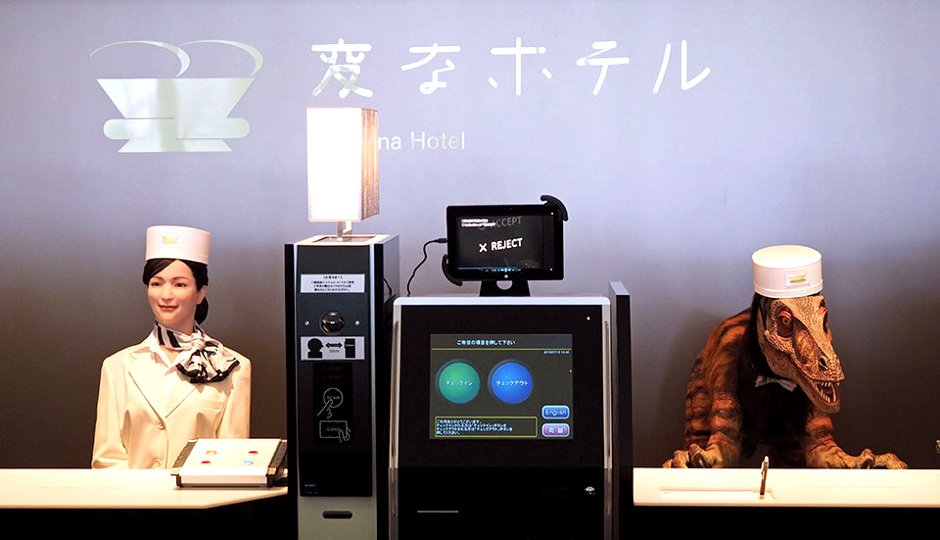 Opened in 2015, the Henn Na Hotel chain in Japan (translated “Weird Hotel”) is largely staffed by robots. Upon entering this unique hotel, guests are initially greeted in the lobby by a female-faced android, followed by a multilingual dinosaur proceeding to check them in. Another robot soon appears to transport the guest’s luggage to their assigned room and a face recognition system conveniently unlocks the door. An assortment of other robots fill various work roles in this impressive semi-automated lodging. However, half of the robotic labor force was recently “laid off” as some of the robots tended to create more work rather than reduce it. Innovation to improve the efficiency and capacity of robots continues to progress, not just within this hotel chain, but throughout Japan where robots are increasingly utilized.
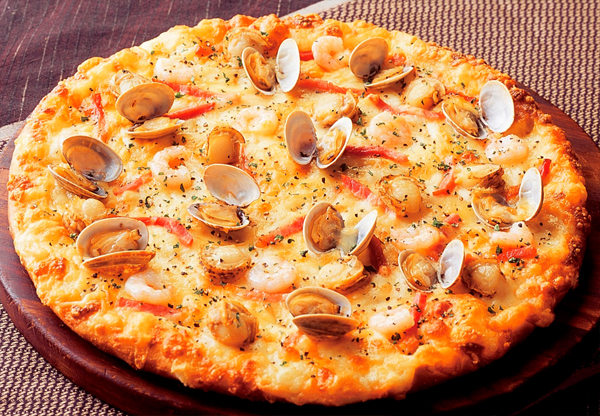 After a few months in Japan, I was starving for some familiar American junk food. McDonald’s (pronounced “Makudonarudo”) was already fairly common at that time, but my friends and I were particularly hungry for pizza. When someone informed us that there was a Shakey’s Pizza located downtown that offered an all-you-can-eat buffet for only ¥500, we immediately organized an expedition to satisfy our pent-up cravings. Upon arrival, we strategically located ourselves at a table closest to the serving counter so we could be the first to pounce on the fresh pizzas as they were brought out. A couple of minutes later, when a pizza was pulled out of the oven and sliced up for the waiting customers, we sprang into action. To our dismay, the main topping on this particular pizza was corn, so we reluctantly returned to our table to wait for a better offering. Shortly afterwards, we leapt into action when another pizza was served, but this one was covered with octopus tentacles so again, we took a pass. The next one looked like a cheese pizza which we hungrily scooped up, but one bite revealed the “cheese” was actually mayonnaise! We were eventually rewarded with some pizzas that looked and tasted more familiar, but that day served as a reminder that common foods back home may be mixed with some uncommon ingredients in Japan.
 Christmas was drawing near and as newcomers to our neighborhood, we thought it would be a nice gesture to take a gift of homemade Christmas cookies to each of our neighbors. We should have known better. Within hours of dispensing our holiday goodies, our doorbell started ringing. It was payback time. Through our unsolicited gifts, we had unintentionally obligated our neighbors to correspond in kind. Therefore, several of them responded to our meager gift by reciprocating with something of equal value. In Japan, no one wants to be put in the awkward position of indebtedness to someone else.
 Ippo Ippo