

“Now there was no water for the community, and the people gathered in opposition to Moses and Aaron.” Numbers 20:22
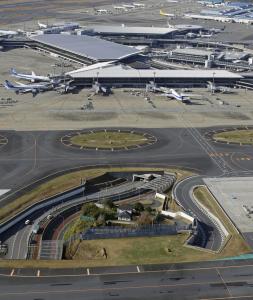
In the middle of Narita Airport, Japan’s busiest air transportation hub, sits an isolated building on a piece of farmland, like a tiny island lost in a vast ocean. This plot of land, like a few others scattered within the massive airport complex, is one of the few remaining holdovers from a decades-long fight against the airfield’s construction, known as the Sanrizuka Struggle. Our first personal experience with this prolonged controversy was back in the 1980s when we took a bus to Narita Airport to fly home to America. At that time, we were unexpectedly stopped by heavily armed police near the airport, allowing them to board and examine each passenger’s identification and belongings before entering the contested area.
This ongoing conflict traces its origin to the rapid expansion of Japan’s airline travel and the realization that Tokyo’s Haneda Airport would soon reach its capacity to keep up with ever-growing demands. As a result, the government decided in 1966 to construct an additional international airport near Tokyo. The predominantly agricultural area of Sanrizuka in Chiba Prefecture was chosen as the site for this ambitious venture. The imperial family owned and offered a substantial amount of farmland in the designated region, so it was assumed that loyal local farmers and residents would quietly fall in line and support the project. That proved to be a huge miscalculation.
An unanticipated series of clashes led by farmers, local residents and various left-leaning groups quickly united under a common cause and soon escalated to open conflict. Significant delays to the construction project shortly followed and even a number of fatalities occurred as the strife continued to intensify. The failure of the government to adequately consult the people who would be directly impacted by the project, coupled with its aggressive efforts to displace them from their land, further served to heighten tensions and deepen mistrust. However, in spite of the many delays and violent clashes between opposing sides, the airport finally began operations in May 1978. Even now, almost fifty years later, vestiges of this once forceful resistance are still visible as evidenced by a small handful of intractable landowners whose isolated properties stubbornly cling to their existence within the extensive airport complex.
Opposition to the construction of the Narita Airport enlisted passionate sympathizers on both sides which led to a prolonged and destructive conflict. The nature of such oppositional efforts can be obscure when they occur, but history can sometimes provide a helpful perspective and may serve to identify which side’s cause was just or misguided. However, an accurate appraisal of some struggles, even with the passing of time, is often difficult to discern. But this is certainly not true for the majority of conflicts recorded in the Bible that typically involve a stark contrast between good and evil.
The turmoil between tribes, individuals, families and nations are typically recorded in the Bible in a bifurcated manner to warn God’s people of the folly of opposing God in comparison to the benefits of obeying Him. This dichotomy is captured clearly in Numbers 22 when the Israelites lacked water to quench their thirst, which drove them to openly oppose the leadership of Moses and Aaron. While securing water for themselves and their livestock was certainly a valid concern, the people’s knee-jerk reaction was to foolishly oppose God and His appointed leaders. Their flagrant disobedience serves as a reminder that we live in a world that tends to divide all too quickly into opposing camps, but we must choose our sides carefully and make sure that our objectives align with God’s.
 Ippo Ippo