Kanji of the Year

“The Word became flesh and made his dwelling among us.” John 1:14a

The year 2024 was a relatively good year for Japan. Athletically, its Olympic athletes placed third in the overall medal count. In addition, superstar Japanese baseball player, Shohei Ohtani, was the overwhelming choice for MVP in the Major League Baseball after a record-breaking season. But there was also a downside element to the year as the country’s ruling political party was caught up in a major financial scandal. On top of this bad news, skyrocketing inflation negatively impacted many household budgets. Taken together, these events explain why the general populace collectively chose the Chinese character kin (金), meaning “gold” or “money,” to represent the year. Every year a single kanji, or Chinese character, is identified through a national ballot sponsored by the Japanese Kanji Proficiency Society to symbolize the major events that transpired that year. The results of this survey are annually announced on December 12 at the Kiyomizu Temple in Kyōto.

According to historical records, kanji (漢字) were introduced to Japan around the fifth century AD from China and quickly became the mainstay of the country’s writing system. Over time, Japan also incorporated two other phonetic systems, or alphabets, known as hiragana and katakana. Over 2,000 kanji are now commonly used and they are best described as ideograms that represent specific concepts. Many of these kanji are rather complex to write. However, hiragana and katakana are much simpler and fewer in number. There are only 46 hiragana which are normally written in combination with kanji for Japanese words and an equal number of katakana are used for foreign loanwords and names.

One of the most memorable “kanji of the year” selections was kizuna (絆), meaning “bonds” or “relationships,” which was chosen in 2011 following the devastating East Japan earthquake, tsunami and nuclear disaster. During that time period, people from across Japan and around the world united on many levels to help one another in the midst of great loss. In that same year, the women’s national football team won its first FIFA World Cup through selfless teamwork, so kizuna was a very appropriate choice in light of those developments. In a different vein, the kanji for war, translated as “sen” (戦), has actually been chosen twice. Once in 2001 when the terrorist attack on the US Trade Towers on 9/11 dominated current affairs and again in 2022, following Russia’s invasion of Ukraine. Most appropriately, matsu (末), meaning “end,” was the kanji of the year in 1999 as one century came to an end and a new one began.

Sometimes it takes just a single word to powerfully capture one’s thoughts, feelings or experiences during a critical juncture in our lives. On rare occasions, one word can convey such a depth of meaning that it resonates within our souls and expresses multiple profound nuances all at once. In writing his account of Jesus’ life, the Apostle John employed this concept when he introduced Jesus as the “Word” at the beginning of his Gospel. The very God who is depicted in Genesis as the One who spoke the entire universe into being is now interacting intimately with all mankind through the incarnation of His Only Son. As John so eloquently expressed it: “The Word became flesh and made his dwelling among us.” In taking up residence among men, Jesus changed history forever. God has spoken and acted. Forgiveness and salvation are now freely available. This “Word” or “Kotoba” (言葉) should be on everyone’s lips as the appropriate kanji for the ages and exalted forevermore.

Gestures

“but God has surely listened and has heard my prayer.” Psalm 66:19

The neatly folded strips of paper carefully arrayed in the temple grounds fluttered in the gentle breeze like hundreds of white-winged butterflies moving in unison. Written on them were the prayers or predictions for visitors who sought a change in their fortune or a glimpse of their future. Good health. New love. Success in business. Physical protection. High test score. Well-paying job. Recovery of a lost item. Healthy children. Nice housing. Profitable investments. The list of wants and needs by the serious believer to even the most casual devotee are both varied and endless. Everybody wants something for a minimal investment.

Known as omikuji (御御籤), these strips of paper offering guidance or predictions, are available throughout Japan in both Shinto shrines and Buddhist temples. Meaning literally “sacred lot,” omikuji are acquired by contributing a small donation. They are particularly popular around New Year’s when people are keen to ascertain their fortune for the coming year. The omikuji, with their previously recorded transcriptions, are dutifully placed in a special box and from there randomly chosen by a fortune seeker. These days it is now quite common to purchase omikuji dispensed through conveniently located vending machines. Possible fortunes written on the omikuji fall within the following categories:

  • Great blessing (dai kichi)
  • Blessing (kichi)
  • Small blessing (shō-kichi)
  • Half-blessing (han-kichi)
  • Future blessing (sue-kichi)
  • Future small blessing (sue-shō-kichi)
  • Misfortune (kyō)

If a person is unfortunate to draw an omikuji that portends bad news, they are likely to rid themselves of the ill fortune by attaching the paper to a nearby pine tree or a specially prepared place within the temple or shrine grounds alongside other unfavorable predictions. The desired outcome is that the bad luck, in an obvious play on words, will wait (待つmatsu) by the tree (松matsu) rather than attach itself to the bearer. If the fortune is good, the owner may likewise choose to leave their omikuji in a designated sacred area for greater effect or take it home for good luck.

The power of the omikuji is considered to be effective for only one year, at which time it must be properly destroyed. The origin of omikuji is traditionally dated back to the Heian period to a monk named Ryōgen, who lived from 912-985, but the custom started to flourish in the Kamakura period (1185-1333) as omikuji were increasingly used for making decisions.

Having been made in the image of God, the natural inclination of the human heart from the beginning of time is to seek communion with God. Not only do we have practical needs that we want filled, as social creatures, we also long to be seen and heard by an all-knowing and all-caring God. As a result, we tend to create and maintain inadequate traditions to facilitate communication with God (or gods). In Japan, omikuji is a popular form to enhance dialogue between mortals and the immortal. But the Bible does not portray a God who needs to be coerced or helped in communicating with His creation. Instead, by His very nature, God delights to hear our prayers and act upon them because of His boundless love for us. Such care is not random, limited by time and certainly cannot be manipulated. As the psalmist testifies: “God has surely listened and has heard my prayer.” (Psalm 66:19)

Obon

Remember Jesus Christ, raised from the dead, descended from David. This is my gospel.”                II Timothy 2:8

The festive atmosphere associated with the local bon odori beckoned our young family to join in, but we held back, wondering if we should participate in this unfamiliar cultural activity. However, the sound of laughter and merry music were like a magnet pulling us in as we watched neighbors of all ages dancing in rhythm while wearing colorful, traditional attire. From previous research, we understood that the celebration historically centered on acknowledging the return of one’s dead ancestors. However, the majority of the participants were probably unaware of the festival’s origins. Over the years, obon had steadily evolved into a quasi-family reunion where people return to their ancestral homes to pay homage to their deceased ancestors and reconnect with family.

The exact etymology of the term bon (盆) remains unclear and the “o” is an honorific prefix that was added at some point. This annual celebration primarily traces its roots outside of Japan, as it includes elements of Buddhism and Daoism. Many scholars believe “bon” is actually a transliteration of an ancient Sanskrit word. Similar festivals in other cultures are commonly called “lantern festivals” and that same terminology is sometimes used in association with obon practices in Japan. The Japan version usually spans a three-day period in the middle of August, but the exact starting date differs slightly from region to region. Obon is generally regarded as a time when ancestral spirits visit their respective household altars and graves, which prompts relatives to make preparations to welcome them back. Such preparations will include the gathering of family members, cleaning family graves and stocking them with food and flowers. In addition, communities throughout Japan host obon dances, called bon odori to invite the spirits home. The participants in the dance typically wear a yukata, which is a light cotton kimono, and in addition to dancing, they enjoy simple carnival games and local foods served for the crowd.

At the outset of obon, small fires are often lit to guide the spirits home and at the conclusion of the three days another fire is used to send the spirits back. Some localities may sponsor a much larger communal fire for the same purpose while others customarily place floating lanterns in bodies of water to help the spirits return to their world. People who have lost a family member within the past year may give special attention to the annual obon preparations and take extra measures to attend.

Although few Japanese believe in the religious overtones of obon, many continue to dutifully follow the traditions handed down to them by their family and everyone enjoys the rare three-day break from work routines. Technically, obon is not a public holiday, but most businesses give their employees the time off, which in turn results in massive transportation issues with large numbers of people seeking to travel home at the same time.

While it is a good thing to acknowledge and express thankfulness for the lives of ancestors who contributed to our present existence, we must be careful in where we draw the lines in such activities. Well-intended celebrations and ceremonies centered on deceased loved ones can easily spill over into alternative forms of idolatry that the Scriptures clearly forbid. For example, attending a graveside ceremony can be an acceptable sign of respect and love, but the offering of food or incense to the dead crosses a line that morphs into an act of worship and betrays our devotion to the One True God. But there is one exception to this practice who we much clearly remember and honor. (II Timothy 2:8) Jesus Christ was truly raised from the dead. This is our gospel. His life and death are worth celebrating and sharing.

Honorifics

“So in Christ Jesus you are all children of God through faith.”        Galatians 3:26

Every society utilizes standardized language patterns and cultural behaviors to help identify an individual’s place within society and Japan is no exception to this rule. Visible in children’s playgrounds, educational institutions, corporate structures and family interactions, these social and language cues serve to govern life. More importantly, they help to facilitate community. In Japan, this common practice can be clearly seen in the use of honorifics embedded in daily communication. Generally known as keishō (敬称), certain suffixes or prefixes are routinely utilized when referring to or addressing others in conversation.

The suffix of “san” (さん), attached to a person’s name, is by far the most common honorific employed in every day speech. San is typically translated as “Mr., Mrs., Ms. or Miss” and is generally used as a title of respect between adult equals in both formal and informal contexts. It is also applied to senior family members such as fathers, mothers, aunts, uncles and grandparents as a sign of respect. A higher level of esteem is indicated through the suffix “sama” (様), which is applied to people of greater status within society, a group or an organization. This particular honorific is also customarily utilized in formal correspondence and standardly attached to the addressee’s name on an envelope.

In contrast to san and sama, the suffixes kun (君) and chan (ちゃん) are informally used for a generally younger demographic and tend to be more gender specific. For example, kun is often attached to the name of younger men or boys by an older speaker or someone within the same age group. Kun can also indicate a junior status within the workplace or an academic circle. Both males and females may refer to someone using the kun suffix if they feel an emotional or other attachment to the individual. Unlike the designation kun which is commonly applied to boys, chan is most frequently used for girls, small children, babies, female friends or for women who seem young in the eyes of the speaker. Among young people, chan can connotate a close relationship or a feeling of affinity. In addition, “o” and “go” are often used as honorific prefixes to nouns that indicate certain positions such as a customer or a doctor.

Titles such as senpai, kōhai and sensei are neither suffixes nor prefixes, but rather, honorific terms which are frequently used to indicate relationship. A senpai (先輩) is a senior colleague or classmate because of their age or experience and literally means “former born.” Opposite of a senpai is a kōhai (後輩), who is a junior in the relationship within an informal hierarchy commonly found in schools, clubs and businesses. Probably the most common honorific term is sensei (先生) which is not an age indicator but rather, highlights an individual’s level of expertise within their respective field, such as a doctor, an artist or a scholar. Sensei is usually translated as “teacher,” as some kind of teaching role is often involved.

The world in which we live sometimes seems to be overly preoccupied with separating people into categories that can often produce negative results such as prejudice, discrimination, injustice and intolerance. But the New Testament clearly teaches that all such prejudicial constructs and categories that typically divide us are abolished at the foot of the cross. It is not our skin color, gender, economic status or occupation that earns us any favor with God, but solely our faith in what He has done through His Son Jesus. Manmade efforts to create and foster community are no longer needed when we become children of God. (Galatians 3:26) Through the grace and work of God, everyone has a seat at the table.

Tunnels

“In his hand are the depths of the earth, and the mountain peaks belong to him.” Psalm 95:4

Soon after we arrived in Japan in 1984, we noticed several flashy billboards dotting the countryside of Hokkaido featuring a sleek bullet train racing through a tunnel under the ocean. The signs heralded a coming new age in transportation with the construction of the Seikan Tunnel. When completed, this remarkable tunnel would dramatically improve access to Japan’s northernmost island by traversing the large body of water known as the Tsugaru Strait located between Japan’s two largest islands, Honshῡ and Hokkaidō. In a country crisscrossed by tunnels because of its widespread mountainous terrain, the Seikan Tunnel was championed as the ultimate in engineering achievement, incorporating the latest in Japanese technology and financed by a booming economy.

According to historical records, Japan’s first man-made tunnel was built almost 400 years ago. By March 2024, the number of tunnels in Japan had skyrocketed to 10,922, second only to China. Although difficult and expensive to build, tunnels provide shortcuts that can significantly reduce travel time. Throughout the country, cars and trains now routinely pass through vast stretches of roads and rails embedded in an ever-expanding underground network. Japan has become one of the world’s leaders in tunnel construction technology and can boast of several achievements in this area. For example, the Gotthard Base Tunnel bored through the Alps in Switzerland is officially the longest tunnel in the world, but the Seikan Tunnel is recognized as the longest undersea tunnel at 33.5 miles (54 km).* Japan also set the standard for underwater tunnels by digging the first undersea railroad tunnel in 1942 and more recently, the world’s longest undersea road tunnel spanning the Tokyo Bay.

It actually took a natural disaster in 1954 to stimulate a plan for building a previously inconceivable tunnel that would link up Japan’s main island of Honshῡ with Hokkaidō. At that time, a powerful typhoon swept through these same two islands and sank five ferry boats resulting in the tragic loss of 1,430 lives. Amidst national grief, the Japanese public clamored for a safer means of transportation between these two population centers. Due to unstable weather patterns and geographic conditions, a bridge seemed too risky so the novel concept of constructing a tunnel was eventually proposed and adopted. Construction started for the ambitious project in 1971 and the first train passengers made the historic journey 17 years later through this man-made wonder. The tunnel now accommodates approximately fifty trains per day and from 2016 special tracks were installed for high-speed bullet trains. Ironically, since the innovative idea of building the Seikan Tunnel was first proposed, flights to Hokkaido have become much more common, faster and notably cheaper, prompting most people to fly rather than take a train. However, preliminary plans are now being considered for constructing another tunnel specifically designed for cars and trucks.

The increasing advancement of civilization and accompanying technology have led to even more ambitious projects as mankind continues to extend its dominion over the earth. While some such exploits extend to the heavens, they also take us to the depths of the earth reflecting the ingenuity and industriousness of man. But these efforts pale in comparison to the works of God as the Psalmist notes in wonder: “My frame was not hidden from you when I was made in the secret place, when I was woven together in the depths of the earth.” (Psalm 139:15) We may applaud the achievements of men who build tunnels in the depths of the earth, but only God can build people.

* The Seikan Tunnel is officially longer than the Chunnel, connecting England and France, but the Chunnel has a longer underwater segment.

Judo

“Learn from me, for I am gentle and humble in heart” Matthew 11:29

Many popular activities trace their origin to Japanese culture which is certainly true of jῡdō. This well-known martial arts sport was established as recently as 1882 by Jigorō Kanō, a Japanese educator and athlete. Often referred to as the “Father of Jῡdō,” Kanō incorporated various ancient self-defense techniques to create the present form of jῡdō which is now standardized throughout the world. He also coined the term jῡdō (柔道) for his new sport, which means “gentle way” because instead of employing weapons in combat, jῡdō is centered on using an opponent’s strength as a tactical advantage. The basic object of a jῡdō practitioner is to throw an opponent to the ground or subdue them through various grappling techniques. The inclusion of the Chinese character 道, normally translated as “way” or “road,” indicates a deeper philosophical nuance of the sport where the participant focuses not just on improvement in athletic skills but also on mental, emotional and moral growth. This holistic approach to training has obvious appeal to the Japanese psyche and accounts for the sport’s rapid growth and popularity in Japan. 

Jῡdō eventually became an Olympic sport in 1964. Japan immediately dominated, winning a total of 84 medals following the sport’s inclusion. At the most recent Olympics held in Tokyo, Japan amassed twelve medals in jῡdō, nine of them gold. Jῡdō athletes now traditionally wear a white uniform known as a jūdōgi which was also developed and standardized by Kanō.  

Although Japan still dominates the sport of jῡdō in competition on the world stage, the number of actual participants in the sport in Japan has declined precipitously in recent years to such a degree that France has taken the lead on an international level. Japanese children in particular have been dropping out at an alarming rate due to the excessive pressure to win, the frequency of injuries in the sport, and its extremely intense training regimen. Some fear that the sport known for being the “gentle way” of athletic competition has lost its way as the goal of winning at all costs has eclipsed the more subtle values envisioned by its founder.

At first glance it seems to be a contradiction in terms to label a sport that involves the defeat of an opponent as being a “gentle way.” But in comparison to some of the other martial arts that train their acolytes in the use of weapons and teach them to inflict pain, jῡdō does seem to offer a less violent alternative in its techniques and objectives. This description of the sport reminds us that “gentle” is a somewhat relative term and the key to understanding its intended meaning depends significantly on the context.

Jesus’ followers are also called to adopt a gentle way as we are instructed in Ephesians 4:2 to “be completely humble and gentle; be patient, bearing with one another in love.” Obviously, such a challenging mandate has nothing to do with combat procedures but rather, points to a lifestyle that should characterize God’s people as they seek to flesh out His heavenly values within earthly relationships. Fortunately, we have a sterling example of what such spiritual combat looks like in Jesus Himself, who beckoned us to “learn from me, for I am gentle and humble in heart.” (Matthew 11:29) There is truly a gentle way for us to master that honors God and accomplishes His eternal purposes.

Tōkyō

“Come, let us build ourselves a city… otherwise we will be scattered.”                            Genesis 11:4

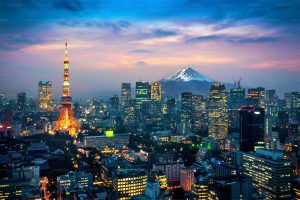
We were somewhat daunted by our initial challenge of driving across Tōkyō after living many years in the more sparsely populated areas of the country. Despite our apprehensions, we pressed forward through the endless maze of skyscrapers and high-rises crammed against one another, blindly trusting our car navigation system to take us safely across a vast sea of humanity. With a population over 37 million people, Greater Tōkyō is recognized as the largest metropolitan center on earth today and also in history. It boasts the busiest intersection in the world at Shibuya, where up to 3,000 pedestrians cross at a time and the busiest train station at Shinjuku that accommodates an average of 3.6 million passengers per day. As Japan’s capital, economic, educational and cultural center, Tōkyō also serves as the nation’s international gateway for millions more visiting the country on an annual basis. The city is a unique blend of the ultramodern with its bright lights, fast pace and creative architecture, while preserving its traditional heritage evidenced by the many historical temples scattered throughout the city and the ancient imperial palace located at its center.

Tōkyō traces its history to a small fishing village called Edo that in 1603 became the seat of the newly formed Tokugawa shogunate when power was centralized throughout Japan. As a result, this once sleepy town began to prosper and rapidly expanded its influence. With the eventual collapse of the shogunate two centuries later and the empowerment of the emperor under the Meiji Restoration, the name Edo was changed to Tōkyō (東京), meaning “Eastern Capital.” Presently, Greater Tōkyō consists of 62 municipalities that includes 23 wards, 26 cities, 5 towns and 8 villages that were absorbed by the ever-increasing sprawl of the original city. Some of Tōkyō’s more famous districts include Ginza, Shibuya, Asakusa, Roppongi, Akihabara, Harajuku and Odaiba, with each one featuring certain attractions that appeal to both international and local visitors.

Despite its immensity, Tōkyō is surprisingly recognized as one of the world’s most livable cities and is regularly listed among the safest places to visit or live. Foreign influences are also conspicuous with many tourists flocking to visit Disney Land, Disney Sea or to dine at one of the many five-star restaurants boasting cuisine from around the world. International customers also enjoy the privilege of tax-free shopping in the many name brand luxury stores. The Tōkyō Tower, another popular tourist attraction, was inspired by the Eiffel Tower but is now dwarfed by the Tōkyō Sky Tree, the second tallest structure in the world. All of these activities are made possible by an incredible transportation system that efficiently moves up to 40 million passengers per day to every corner of this modern urban miracle.

From the lofty perch afforded by the Sky Tree, one cannot help but marvel at the sheer vastness of Tōkyō, the masses of people that call it home and the incredible infrastructure needed to sustain it all. Everywhere you look there are people. It serves as a reminder that God loves people and that one of His initial commands to mankind was to “be fruitful and increase in number; fill the earth and subdue it.” (Genesis 1:28) The record of Genesis traces the partial fulfillment of this decree but also humanity’s intentional refusal to disperse when they said to themselves “Come, let us build ourselves a city… otherwise we will be scattered.” (Genesis 11:4) Their stated objective was to “make a name” for themselves (Genesis 11:4) signifying their self-reliance and deliberate independence from God. Therefore, God intervened and forcibly dispersed them by confusing their language. (Genesis 11:7) This does not mean that God opposes the establishment of cities but rather, He desires nothing to come between Him and people who are created in His image. Tōkyō and all its inhabitants are His.

My Home

My Father’s house has many rooms…I am going there to prepare a place for you.” John 14:2

My Home

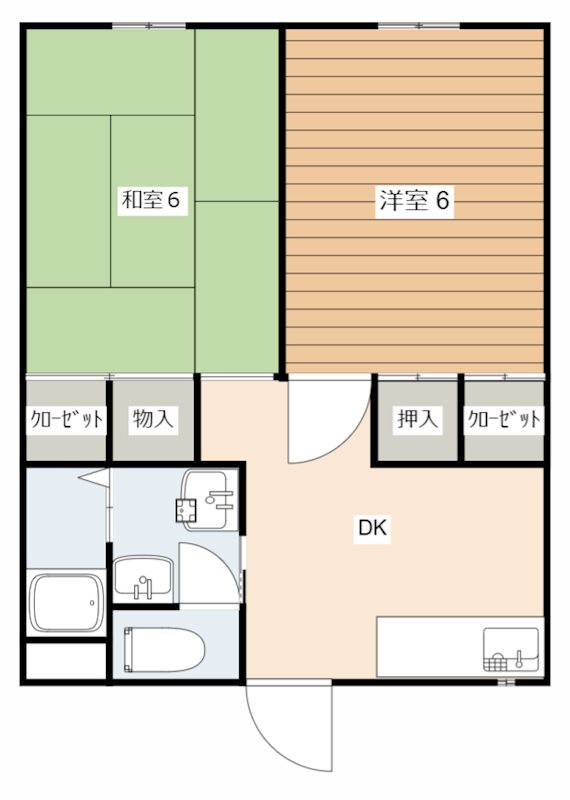
We opened the door of our first home in Japan with great anticipation and curiosity. Upon entering, we immediately encountered the first of many differences between American and Japanese housing. We stood in the tiny cubicle known as the genkan (entry way), where we were promptly instructed to take off our shoes, place them in the nearby getabako (shoe cupboard) and step into the provided slippers. From there we proceeded to explore our new domicile. The overall dimensions underwhelmed us since all the rooms, particularly the kitchen, seemed tiny compared to the American apartment we had recently vacated. There was no sink in the apartment, except for the one in the kitchen, and the single toilet was located far from the bathing area in the coldest corner of the house. The placement of the toy-like washing machine seemed to be an afterthought and the total closet space in the apartment was minimal. Fortunately, we had few possessions at the time and only one child. Going upstairs, we were surprised to discover that the standard tatami (straw) mats we expected to find had been replaced with hard flooring to accommodate the growing Japanese trend of using western furniture.

As the years slipped by, our first apartment in Japan was eventually demolished along with several other places where we previously lived. Understandably, those rather dated edifices gave way to newer, better built, better equipped and better insulated housing alternatives that are presently more common in Japan. This progression explained why older buildings in our neighborhood were routinely torn down and the remaining rubble was then expeditiously hauled away to accommodate a younger generation with different expectations. Ever increasing property prices facilitated the pace of these changes as the land was considered to be far more valuable than the structures previously built upon them.

Current Japanese housing reflects a blend of past patterns with modern conveniences, advanced building materials and newer styles. One indicator of this transition is the usage of the Japanese terms washitsu (和室Japanese style room) and yōshitsu (洋室western style room) to help identify the composition of a particular Japanese home. Likewise, the size or nature of all housing units are usually indicated by placing a numeral in front of the acronyms LDK or DK, which stand for Living/Dining/Kitchen areas or the more space restricted Dining/Kitchen version. The numeral juxtaposed in front of the acronym specifies the number of additional rooms which vary in size. A 4LDK then is a housing unit that has four rooms in addition to a living room, dining room and kitchen area. The size of individual rooms is often indicated by the number of tatami mats (roughly 3 ft x 6 ft) that can fit in the room. However, the number of square meters is now increasingly used as a substitute measurement. Advertisements for a housing unit may include the presence of a balcony, available parking space(s), existence of a special storage area (monōki), accessibility to public transportation and the year the unit was constructed.

Food, clothing and shelter are universally considered to be basic human necessities within the context of a supporting community. As Jesus prepared His followers for His impending departure, He unexpectedly gave them a wonderful promise of an eternal home that they probably did not immediately grasp (John 14:2). Jesus was going to prepare a place for them in the very presence of God for all eternity. Of course, this would only be possible at great cost through the cross, but all who believed in Him would be welcome to reside there. Our present homes on earth come in many forms, but they are all impermanent and inadequate. My home in heaven is forever where I will enjoy unparalleled communion with God and His people. That’s an edifice that will never be torn down.

Wheels

“So I went down to the potter’s house, and I saw him working at the wheel.” Jeremiah 18:3

Wheels

Japan is a land of many unique happenings, including an interesting historical oddity when the general usage of the wheel was banned during the Edo Period (1603-1867). This unusual law was reputedly enacted by Tokugawa Ieyasu, a powerful shogun (a supreme military leader), following a century of brutal conflict that culminated with the ascendency of the Tokugawa clan to absolute rule. Numerous theories have been proposed to account for this unusual measure involving the restriction of wheels, but it is probably a combination of two major factors. One theory is that a law prohibiting the usage of wheels throughout Japan likely discouraged competing feudal lords from opposing the shogunate rule since the ability to swiftly transport warriors, weaponry and supplies would be significantly hampered. Other historians conjecture that the mountainous terrain characteristic of Japan made wheels difficult to use unless a network of roads was constructed, which would require a huge financial outlay by the governmental authorities. Therefore, nobility were usually carried in palanquins and all supplies were transported by human labor under the rule of subsequent shoguns.

It is believed that the origins of the wheel in Japan came via China at some point in the sixth or seventh century. In other parts of the world, wheels were customarily convenient to use where there was an expanse of level ground or in major urban areas. But they often proved to be impractical in the predominant mountainous landscape of Japan. Therefore, the transportation of goods over long distances was usually done on major rivers or by sea faring ships that hugged the coastlines. The term “wheel” in Japanese is kuruma, but now the word is more commonly used for a car. The Japanese character for kuruma (車) is frequently incorporated in words denoting numerous forms of transportation that involve wheels, such as bicycles, carts, trains, wheelbarrows and unicycles.

In this modern era, it is admittedly hard to imagine a Japan without wheels. The preponderance of cars, motorcycles, planes, trains, buses, bicycles and other forms of transit all use wheels. Wheels are now considered to be essential to the clockwork precision by which people and materials are easily moved from one end of the country to the other. The ancient network of roads, like the famous Tōkaidō, that were originally constructed for travelers on foot or horseback, eventually gave way to modern transportation routes featuring the predominance of the wheel.

Wheels have other purposes besides transportation as the prophet Jeremiah pointed out through his powerful analogy centered on a potter’s wheel. In chapter 18 of the Book of Jeremiah, God is compared to a potter who takes a lump of clay, representing His people, and expertly reshapes it into a vessel suited for His eternal purposes. This illustration is a helpful reminder that each of us is a unique creation in the hands of God as He forms us into useful vessels to reflect His glory. Such a process is often painful as it calls for deconstruction of the clay vessel before it is reconstructed into something much more serviceable for the Master’s purposes. A wheel is intended to take us to places where we want to go and similarly, as pieces of clay on the Heavenly Potter’s wheel, we are lovingly prepared for the places where God leads and for the things He desires. (verse 4) This is one wheel that should never be outlawed but instead, be embraced in faith by every child of God.

Teachers

“Not only was the Teacher wise, but he also imparted knowledge to the people.” Ecclesiastes 12:9

Teacher

In 1984 a surprisingly popular film, The Karate Kid, hit the theaters with a unique storyline centered on a confused American teenager who was trained in karate by an older Japanese man using rather unconventional methods. While the movie was certainly entertaining, it had an additional impact of introducing the Japanese concept of “sensei” to American culture. In his role as a sensei, Mr. Miyagi passed on his knowledge of karate to his young apprentice, who in turn slowly grasped not only martial arts skills, but how a Japanese sensei is quite different from a normal teacher. In general terms, a sensei is used as a title of respect for someone who has accumulated extensive training and knowledge in a particular skill or art form and then passes on that expertise to a willing learner.

The literal translation of sensei (先生) is a “person born before another,” which gives way to the wider meaning of “one who comes before.” This broader application of the term implies a mutually understood relationship where one member is regarded as a superior and the other as an inferior. This disparity in status is not grounded in intrinsic worth, but rather, on the possession of certain skills, experiences and knowledge. When the word sensei is actively employed across various social, artistic, religious and financial constructs, it usually includes doctors, pastors, musicians, traditional craftsmen, politicians, martial arts instructors, experts in tea ceremonies and, of course, educators.

The opposite word for sensei is deshi, who is regarded as the student or apprentice in the instructional relationship. However, there are times when these relational or social lines are not clearly fixed but are contingent upon peculiar circumstances. For example, when we studied at our organization’s Japanese language school, we respectfully referred to our teachers as sensei. But if the teacher was a Christian and we attended the same church, he or she would dutifully acknowledge us in public as sensei because of our pastoral training and position. We were both sensei, but only within certain contexts. In the course of ministry, we sometimes pushed back against this somewhat artificial divide when applied to clergy and laity. We frequently encouraged church members to drop the honorary suffix of sensei when referring to us but due to deeply established patterns, many found such changes to be very difficult to implement. Perhaps The Karate Kid best captures these traditional nuances in a couple of widely used quotes by Mr. Miyagi who attempts to explain his sensei role to his new pupil in fractured English.

“No such thing as bad student, only bad teacher. Teacher say, student do.”

“We make sacred pact. I promise teach karate; you promise learn. I say, you do, no questions.”

Inherent within the concept of teacher in nearly every culture are the elements of instruction and authority, which are embedded in a mutually understood relationship. This important role can then be readily applied to God Himself who is depicted as a teacher by the patriarch Job in confronting the criticisms of his so-called friends (Job 36:22). Since God is the Creator and sustainer of this universe, it naturally follows that He is uniquely qualified to instruct us in how to successfully live within His perfectly established parameters. However, God also chooses to delegate this role to others who can instruct us in godliness based upon their understanding of His Word and their spiritual character cultivated in their personal walk with God. Among these recognized sensei in the Bible is the one who is aptly referred to as “the Teacher” in the Book of Ecclesiastes and commonly identified as King Solomon. (Ecclesiastes 1:1) Solomon certainly had authority as the King of Israel, but his deep understanding of the things of God and his willingness to pass that wisdom on to others set him apart from the other kings who followed. Sadly, Solomon eventually disqualified himself as a teacher as he strayed from the precepts he had taught others. We must choose our sensei carefully and follow in God’s ways.