The Virtue of Gaman

“Let perseverance finish its work so that you may be mature and complete, not lacking anything.”   James 1:4

Gaman2

My wife was in extreme agony from labor pain as we anticipated the imminent arrival of our second child. Desperate for relief, we called the nurse for assistance and she simply replied “gaman dekinai?” The word gaman was new to us, but judging by the nurse’s response, we could tell she wasn’t going to do anything. Later, we learned that gaman (我慢) means “to endure the seemingly unbearable with patience and dignity.” Sometimes it is translated as “perseverance” or “patience, but these words don’t do justice to the complexity of the concept in the Japanese context.

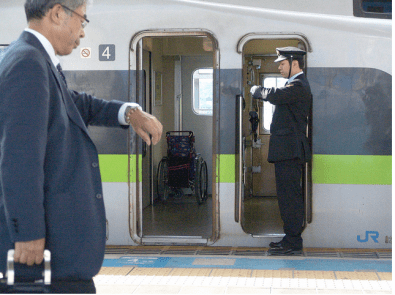
Gaman is considered a virtue in Japan, as it is an indicator of maturity and strength in the face of difficult circumstances. The objective is to bear hardship without complaint and thereby cause minimal inconvenience for those around you. This admired character attribute is evident when Japanese silently squash themselves into packed trains, work extremely long hours, endure brutal sports drills or sit in unheated classrooms. When one perseveres in a negative relationship at home, work or school, he is exercising gaman. When one waits patiently in a long checkout line or in a queue to board public transportation, she is demonstrating the power of gaman. Visitors to Japan may observe these responses in action and mistakenly assume Japanese lack assertiveness or initiative. In so doing, they fail to understand the value of gaman which undergirds all of Japanese society, enabling it to function in an orderly manner. This is why gaman is a common character trait among Japanese heroes who typically overcome huge obstacles while stoically enduring injustice and pain to ultimately triumph.

But gaman does have a dark side. It can impose unrealistic pressure on individuals to conform to expectations at the expense of their own physical or psychological health. It can squash self-expression and the free exchange of ideas that may facilitate corporate or personal growth. Japan’s orderly society comes with a cost and if the virtue of gaman is allowed to reign unchecked, other problems inevitably emerge.

Perseverance is extolled as a godly characteristic in the Scriptures and its practice is also a gateway to other virtues that should characterize God’s people. There is much to be admired in the similar concept of gaman, but we must be careful not to let it falsely shape the nobler attribute of perseverance. Their respective goals and the means for achieving them can be significantly different. Biblical perseverance has God at its center and the goal is to glorify Him through our faith-filled responses regardless of our circumstances. Although gaman promotes the worthy goal of maintaining an orderly community or company, it often comes at the expense of the individual and tends to neglect God altogether. The Bible character Job is perhaps the greatest example of perseverance (James 5:11) and how it eclipses the lesser virtue of gaman. Through his powerful testimony, we learn how Job endured the seemingly unbearable with patience and dignity but his actions are not to be confused with gaman. While Job’s amazing perseverance did bless those around him and generations to follow, his ultimate goal was to worship God through his faith filled response. That is worth emulating.

Bonsai

“That person is like a tree planted by streams of water, which yields its fruit in season and whose leaf does not wither—whatever they do prospers.”                    Psalm 1:3

bonsai

To celebrate our ten-year wedding anniversary a number of years ago, my wife and I decided to purchase a bonsai tree as a gift to ourselves and as a symbol of our marriage. Thirty-two years later, I’m happy to report that our marriage is still intact, but the same cannot be said for our bonsai, which suffered from neglect and had an untimely death. Through that experience, we learned the hard way that bonsai trees require a considerable amount of care and expertise in order to thrive.

Bonsai means literally “tray planting” as it is planted in a portable, ceramic container (i.e. “tray”) in order to control its growth. Bonsai care is actually an art form that involves cultivating a miniature tree to mimic the shape and scale of a full sized tree. This process requires pruning and root reduction using special tools under optimal water, nutrient and light conditions. Visiting a quality bonsai exhibition is like attending a famous art display. The artistic effects are stunning and the variety of trees that can be successfully cultivated as bonsai is equally impressive. One of the oldest known living bonsai trees, believed to be over 500 years old, was cared for by the Tokugawa shogun Iemitsu and is now kept as part of the Tokyo Imperial Palace collection. Obviously, this ancient Japanese ruler knew far more about bonsai care than we did!

In the natural world, trees need a steady supply of water and nutrients in order to grow and produce fruit. The same is true for God’s people who are to grow spiritually and in turn, produce spiritual fruit (Galatians 5:22-23). Quality time in God’s Word, fellowship with other like-minded saints, meaningful worship and an active prayer life are the essential elements to cultivate godliness, much like a tree strategically planted by a flowing stream.

However, bonsai are purposefully removed from their normal environment as they require intentional nurturing under the hands of a skilled gardener. The natural propensities of the bonsai are shaped and redirected by outside forces, while life giving nutrients, water and sunlight are meticulously provided in carefully measured amounts. Under the watchful eye and care of the bonsai master, a common tree can become a unique object of beauty bringing glory to its creator. This is not unlike the analogy in John 15, where Jesus compared us to branches that must abide in Him as the vine, but are meticulously nurtured by God. Ultimately, like a carefully maintained bonsai, we are to submit to the purposes of our Master and in turn, produce fruit to honor Him.

Bowing

“Come, let us bow down in worship, let us kneel before the Lord our Maker;”                 Psalm 95:6

Bowing

The scene was almost comical as I observed two men greeting each other at the airport. Wanting to adapt to Japanese ways, the foreigner bowed awkwardly, but the Japanese businessman, seeking to accommodate his guest, thrust out his hand expectantly waiting for a handshake. As that brief encounter unfolded before me, I reflected on how much culture had shifted in modern Japan.

Bowing, known as “ojigi” (お辞儀) in Japanese, is still the primary form of greeting throughout Japan. It looks rather simple, but there are actually a number of subtleties involved. The timing, degree and length of the bow depends upon the nature of the relationship. The position of the hands is also different for men and women. A general rule of thumb is that an inferior typically bows longer, deeper and more frequently than the superior.

There are actually three main types of bowing that have specific names with set angles (15˚, 30˚, 45˚), which are determined by the depth of respect one intends to demonstrate. But there is one additional extreme form of bowing known as “dogeza” (土下座) for very serious circumstances where one shows utter acquiescence by getting on his hands and knees and placing his face to the ground. Mastering the finer nuances of these bows is no small task, which is why many companies in the service industry include correct bowing procedures in their training regimen for new recruits.

But with the opening of its doors to the West, Japan has also incorporated some western greeting customs. This now includes handshakes, even between Japanese in some situations, but the closer physical contact of hugging is still not common practice. My wife and I have become so used to the custom of bowing that we have often caught ourselves bowing to people in phone calls, even though they can’t see us! Bowing is essentially a sign of respect that conveys a simple greeting, an expression of gratitude or the acknowledgement of an apology. The very act of lowering one’s head in bowing indicates humility and a recognition of your appreciation for the relationship.

Although the forms varied, bowing was common practice in ancient cultures where there was a significant difference between the superior and the subordinate. For example, when one approached a king, emperor or feudal lord, he did so with eyes lowered and head bowed as an outward sign of reverence and obedience. The same should be true as we approach the Living God, who created the universe and holds our lives in the palm of His hand. This is why bowing is so closely associated with worship. According to Scripture, all the families on earth (Psalm 22:7) and even kings and nations (Psalm 72:11) will one day prostrate themselves in dogeza form before God, acknowledging His majesty and authority over them. If we bow before the sovereigns of this earth, how much more should we humble ourselves before the King of Kings and offer Him our full allegiance and worship.

Convenience Stores

“But godliness with contentment is great gain.“                               I Timothy 6:6

konbini2

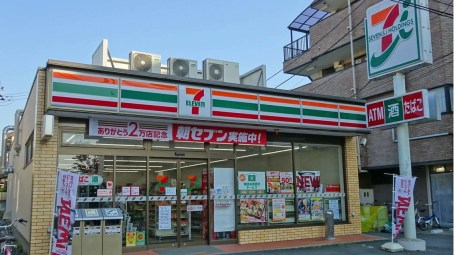
In recent years, Japan has assimilated many English words into its vocabulary, often altering them and then pouring a distinctive new meaning into the newly created term. A prime example of this is the word “konbini,” which is a derivative of the word “convenience.” Konbini are essentially the modern variation of local mom and pop stores, which used to service most of Japan but are now rapidly moving towards extinction. Numbering over 50,000 stores in Japan, konbini are still increasing at a torrid pace and these stores are aptly named as they truly provide a convenient service to the local communities.

In America, we are accustomed to a plethora of snacks and a few basic commodities being sold where we purchase gasoline, but the konbini stands on its own, offering a wide variety of services and products within its limited space. Did you forget your lunch? The konbini offers a wide selection of both hot and cold foods, with much of it prepared on site. Do you need to pay your utility bills? Just hand over your invoice and the required cash to the person working at the register. Traveling to the airport by public transportation and don’t want to lug your heavy suitcase on crowded trains? Drop it off at the konbini, pay the fee and your baggage will be waiting for you at the airport the next day. Need some extra cash or a copy of an important document? Every konbini has its own ATM and copy machine. Is there a movie, play or concert you want to attend? Tickets for upcoming events can be easily purchased at the konbini. Need a café latte and a pastry to get you through your day? No problem. The konbini is there to serve you. The staff at each konbini are well trained and immediately spring into action whenever a customer approaches the counter needing service.

For the weary traveler seeking a pit stop or for those walking in the neighborhood, clean toilet facilities are a standard and very welcome feature. For the local patron who walks or bikes to the konbini, most of the basic essentials found in a large grocery store are kept in stock and sold 24/7. Young neighborhood children are safe on their own to purchase last minute items for a busy mom while neighbors and groups of students mingle inside or outside of the store. The konbini is increasingly playing an important role within the local community.

A word somewhat linked to convenience is the word “contentment,” which is a virtue closely associated with godliness. While the konbini provides an invaluable service of convenience to individuals and the community, its popular emergence reveals our desire for a world where everything is readily available within reach of our fingertips and in plentiful supply. Convenience is normally a good thing, but in this life we will inevitably experience inconvenience, when we lack certain items or services. If we are not on guard, this disparity between our desires and reality can subtly lead to feelings of discontentment when we are inconvenienced. Contentment, not convenience, should be at the top of our “shopping list,” as it reflects a faith in God to provide whatever we need, whenever we need it. Such a perspective is not for sale at the local konbini, but is worth all we have to offer.

Reading the Air

“The purposes of a person’s heart are deep waters, but one who has insight draws them out.”  Proverbs 20:5

014k359f

The Japanese have a phrase空気を読む (kūki o yomu) which translates literally as “reading the air.” It means to have an accurate perception of a given situation despite minimal verbal communication. In other words, a person who is good at reading the air has the ability to grasp what is left unsaid. This obviously presents quite the challenge to westerners who are more accustomed to direct communication patterns and are already significantly handicapped by having to operate in a language that is not their own.

The usage of the seemingly simple Japanese word for “yes” orはい (hai) reflects this concept. “Hai” in Japanese can mean anything, ranging from “Yes, I agree with you” to “Yes, I hear you.” Obviously, there is a world of difference between these two nuances, so one must read the air of the context in which it was said in order to discern the speaker’s intended meaning. I recall my initial struggles as an inexperienced missionary leading meetings in Japanese where I often failed to read the air. For example, I might mistakenly interpret everyone’s silent response on a particular topic as meaning they either had no opinion or that everyone was in agreement with me (I wish!). This inevitably led to a few misunderstandings, but people were generally very gracious and forgiving in such situations.

Someone who doesn’t read the air very well and misunderstands a particular social situation is conversely labeled as being a 空気読めない (kūki yomenai) person. Such people typically fail to take a hint, lack common sense, or neglect to read a person’s body language, which causes them to respond inappropriately. Younger Japanese now commonly use the abbreviation KY (Kūki Yomenai) in text messages and social media to describe such individuals. If someone is particularly bad at reading the air, he or she might be called a SKY, which stands for Super Kūki Yomenai!

Communication patterns and language naturally vary from culture to culture, but discerning matters of the heart, calls for a different set of skills that can be quite difficult to master. The desire to be fully understood by others is a longing we all have in common, but the harsh reality is that we often fail to understand ourselves, much less others. Motives, intentions, thoughts and feelings run much deeper than mere spoken words and actions, and are consequently, harder to interpret. Nonetheless, they are essential components in the communication process that we dare not neglect. As the writer of Proverbs points out, great insight is required to discern these deeper matters of the heart and such skills ultimately come from God. Therefore, we would be wise to turn to Him for help. Without His enablement, we would all be SKY people.

A Healthy Ascent

“I have set before you life and death, blessings and curses. Now choose life, so that you and your children may live…”                     Deuteronomy 30:19b

Escalator

When we regularly navigated the labyrinthine transportation system of Tokyo comprised of trains, subways, monorails and buses, we were faced with a frequent choice: take the stairs or the escalator. We seemed to be always going either up or down as we traversed the Tokyo underground, scurrying to make our connections. The stairs are obviously the healthier choice and some stairways are even clearly numbered with the amount of calories one burns with each step as a clever attempt to promote more exercise. However, escalators are generally quicker and require minimal effort so they are usually the more attractive option for most commuters.

Japanese escalator etiquette gives one further choices as users are expected to obediently stand on the left side of the escalator as it goes up so others in a hurry can climb unimpeded on the right side. However, this unwritten rule is only true for East Japan, as inexplicably, escalator users in West Japan dutifully stand on the opposite side. But now this standard practice of escalator manners is being called into question with an increase of accidents and injuries. New public campaigns are currently instructing users to simply stand still and hold onto the rail after boarding the escalator. If the previous combination of riding/climbing comes to an end, we may have to reconsider our choice in the stairs versus escalator dilemma and take the slower, but healthier, stairs alternative.

As we all know, life is routinely full of choices and they are usually of a much weightier nature than Japan’s stairs versus escalator quandary. Moses spoke of such decisions at the end of his life when he summoned the nation of Israel one final time before his impending death. After reviewing their poor choices in the past that led to disastrous consequences, Moses exhorted the people of God to reflect on such things and from that moment forward, to choose life over death. Such crucial decisions can unwittingly incur the wrath of God or in contrast, invite His blessing, which is what we truly desire. Therefore, Moses entreated them to “choose life, so that you and your children may live and that you may love the Lord your God, listen to his voice, and hold fast to him. For the Lord your God is life.” That is indeed a healthy choice.

Funerals & Finality

“Just as people are destined to die once, and after that to face judgment.”                   Hebrews 9:27

Funeral

As I joined the immediate family in the crematorium, I was rather surprised when chopsticks were solemnly distributed to everyone present. “We’ve just eaten,” I thought to myself. “What are these for?” My question was soon answered as the partially cremated remains of the deceased were wheeled into the room and we proceeded to carefully place the bones, from the feet up, into the provided urn. I stole an irked glance at my more experienced senior coworker who had inexplicably neglected to communicate this unusual detail in Japanese funeral procedures.

Japanese funerals are, from beginning to end, quite different from the traditional funeral practices of the West. The differences are partially due to the Buddhist emphasis which views death as merely a passage from one life to the next, but that does not account for all the peculiarities of Japanese funeral procedures. For example, the deceased receives a new Buddhist name (called a kaimyō) in Chinese characters, with the length of the name determined by the amount of money donated to the temple. All participants at the ceremony are expected to wear black and bring a gift of money in a special envelope. In many funerals, the attendees will be expected to offer incense to the dead and make prayers on his or her behalf to assist them in their journey. The casket is surrounded by flowers, traditionally chrysanthemums, with a large picture of the deceased loved one prominently displayed. When the ceremony is over and the priest has finished the chants from a Buddhist sutra, each participant will then place a flower in the casket before it is closed. Only the immediate family and a few close friends will accompany the body to the crematorium, usually riding together on a chartered bus.

Instead of the American practice of embalming, the corpse is placed on dry ice and minimal makeup is applied to restore a natural appearance. The body is dressed in formal attire and placed in a simple wooden casket since it too will be incinerated. In some cases, a few favorite items of the deceased will be placed in the casket to accompany the deceased on their final journey.

Japanese funerals are actually comprised of many different ceremonies, beginning with a wake, known as an otsuya, or “passing of the night,” followed by the main funeral and then a final service at the crematorium. The funeral urn is then taken home and eventually placed in the family grave or some other alternative. Depending on local customs and the desires of the family, smaller ceremonies are subsequently conducted by priests on the 7th, 49th and 100th days commemorating the deceased’s death. Escalating costs of funerals coupled with shrinking families and a rapidly aging population are creating significant changes in the funeral industry, altering some of these traditional practices.

While ceremonies related to death vary from culture to culture, every funeral serves as a stark reminder of our finiteness in light of eternity. We should certainly mourn the loss of a loved one, but such events also provide a valuable opportunity to reflect on our own status before a Holy God who holds our destiny, both in this present life and the one to come, in the palm of His hand. In the West, we are embedded in a culture that worships at the altars of youth, beauty and strength, but all of these things will eventually fade, no matter how much we strive to deny it. This is why the author of Ecclesiastes wisely said: “It is better to go to a house of mourning than to go to a house of feasting, for death is the destiny of everyone; the living should take this to heart.” (7:2) While all of us would certainly prefer to dwell in the house of feasting, it is in the house of mourning that we are more prone to ponder on the deeper things of God, including His defeat of death through the power of the cross.

Counting Time

“Teach us to number our days, that we may gain a heart of wisdom.”   Psalm 90:12

Reiwa era

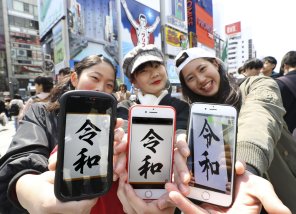
On May 1st of this year, one era ended in Japan and a new one began, now referred to as the Reiwa Era. This major change was precipitated by the abdication of the elderly Emperor Akihito, who was succeeded by his son Naruhito, to ascend to the Chrysanthemum Throne. On that day, Naruhito became the 126th emperor of Japan, and in keeping with several hundred years of tradition, the ceremony was bound by ancient protocols that have guided the oldest continuous hereditary monarchy in the world, supposedly dating back to 660 BC.

This transfer in leadership ushered in a new era now known as Reiwa (令和), roughly translated as “beautiful harmony.” There are actually five eras in modern Japanese history known as Meiji (1868-1912), Taisho (1912-1926), Showa (1926-1989), Heisei (1989-2019) and the newly established Reiwa Era (2019-?). This change in eras also impacts how time is measured in Japan. For example, instead of the Gregorian calendar year of 2019, we are now in Reiwa Year 1. However, when it comes to counting months and days, nothing has changed, which makes things a bit confusing for those unaccustomed to the Japanese dating system. Following this system, I was born in Showa 28, November 2nd in case you were curious about my age! The order of the dating system also begins with the year, followed by the month and then the day. This traditional pattern for marking the passing of years is still meticulously maintained by city and government offices in their record keeping, but it is steadily falling out of practice among the general population.

Calculating the passage of time is important for many reasons, but in Psalm 90, Moses prayed for wisdom in how to count days, not years. Since we are all bound by time and its demands upon our lives, it is imperative to reflect upon its daily impact and how this ties into God’s eternal purposes for us. After all, God alone stands apart from time, where a thousand years are like a day to Him, according to verse four of the same Psalm. Therefore, like Moses, we should seek God’s assistance in numbering our days with the intent of making each one count for eternity, because faithfulness is rooted in the daily choices we make. To make the right choices, we need God’s timeless and infallible perspective. He alone can teach us to count correctly.

Fake Food

“My food,” said Jesus, “is to do the will of him who sent me and to finish his work.”            John 4:34

fake food samples2

Unable to read the menu, I managed to coax the waitress to the front of the restaurant through a series of charades and broken Japanese and pointed to what I wanted to order. Enclosed in a glass case was the entire food repertoire appealingly displayed, but none of it was real. Known as shokuhin sampuru (食品サンプル), or “food samples,” these are exact replicas of dishes offered by the restaurant.

The production of these food models has evolved into an art form over time and it was initially pioneered in the late 1920s by Japanese artisans who used paraffin for their creations. These fake food samples enabled customers to order food without the use of menus, but over time, paraffin proved to be an inadequate medium as the colors slowly faded when exposed to heat or sunlight. Now constructed using a synthetic resin called polyvinyl chloride, these shokuhin sampuru can last indefinitely. This improvement in technique has unwittingly hurt the fake food industry so it has tried to expand its market outside of Japan.

There is a great deal of craftsmanship required to produce these fake food models, so plastic food manufacturers fiercely guard their trade secrets to protect their share of the market. Models are often custom tailored to the individual menus of each restaurant, which makes them quite expensive. Most customers are unaware that the plastic food they casually survey behind the glass typically cost the proprietor of the restaurant several thousand dollars. Their attention is naturally focused on satisfying their hunger and hopefully, something on the menu will fill that need.

What then is real food? Ask a man, and he might say steak and potatoes. Ask a vegan, and they might say quinoa and kale. Ask a Japanese, and they might say rice and fish. But when Jesus was asked a similar question, He gave a totally different reply. He said: “My food is to do the will of him who sent me and to finish his work.” Obviously, Jesus was not talking about real food, or even plastic food, but a different kind of nourishment that is essential for our spiritual well-being. While we are certainly flesh and blood beings that need physical nourishment, our spiritual natures require sustenance as well. We were created to fill the purposes of God, not just fill the physical desires or needs of the flesh. As Jesus famously expressed in the Sermon on the Mount, we are to hunger and thirst after righteousness (Matt. 5:6). We need both physical and spiritual food as part of a healthy diet. At the same time, we need to be cautious of the many “fake foods” that can entice us away from the greater things of God. Bon appetit!

My Protection

“Blessed are all who take refuge in him.”    Psalm 2:12

omamori2

During my first taxi ride in Japan, I couldn’t help but notice an elaborate ornament swinging back and forth on the rear view mirror as the driver navigated through traffic. I later learned that this and a whole array of similar talismans or amulets are called “omamori” (お守り), which literally means “protection.” These small good luck charms are typically made from paper or wood and are usually protected inside an ornate bag along with a written prayer. They are sold at temples and shrines throughout the country with the promise that they will bring good fortune or protection to the bearer, but cynics largely view them as a clever means to raise money.

These omamori can be spotted on bags, hanging in cars, attached to various objects and are even used as cellphone straps. They come in many shapes, sizes and colors and different ones are advertised to possess different powers. Some offer businessmen success in the financial realm while others promise students a good outcome in their test scores. Other omamori guarantee general prosperity, protection from evil, happiness, traffic safety, good health, fertility, and a happy love life. The simple thought behind such charms is that the power and strength of the gods is somehow invested in these brocaded bags so they are not to be opened, as the blessing could be released and thereby lost.

It is generally understood that the shelf life of an omamori is only good for one year, which means a replacement must be purchased, conveniently bringing additional revenue to the local shrine or temple. These “expired” good luck charms must be properly disposed of, usually by burning, preferably at the place they were originally purchased. Eager to grab a share of the enormous profits in the good luck industry, it is now common for stores to sell generic omamori featuring the images of Hello Kitty, Mickey Mouse, Snoopy and other popular characters.

The search to obtain protection from harm or to procure good fortune is a natural inclination of the human heart. Such a quest can take many forms and it is often shaped by our culture, circumstances and worldview. But all such attempts to manipulate one’s personal future are doomed to failure because they are based on the false assumption that we are in control of our own fate. We all seek desired outcomes in life that avoid pain and bring pleasure, but it is arrogant to think that we are in control of such matters, or that we possess the discernment to always know what is actually good or bad for us. Our uncomfortableness with the unpredictability of life is in fact a reminder that we should seek protection and refuge in God, who is our only omamori, or real source of protection. Everything else is a mere trinket.