An Uncluttered Life

“Let us throw off everything that hinders and the sin that so easily entangles. And let us run with perseverance the race marked out for us.”  Hebrews 12:1b

Clutter

The United States and many other countries have a problem, so a diminutive, young Japanese woman is ready to help. Her name is Marie Kondo and she is an expert in assisting people to declutter their lives. She recently rocketed to fame through her popular book, “The Life-Changing Magic of Tidying Up” and is now recognized worldwide as an organizing consultant. In countless seminars, and now through a Netflix TV series, Ms. Kondo preaches that if one tidies their personal space, it will transform their life. She explains that her philosophy of organization is partly inspired by the Japanese Shinto religion, with its emphasis on purity and cleanliness.

Popularly called the “KonMari” method, Marie Kondo’s approach to decluttering basically consists of gathering all of one’s possessions, one category at a time, and keeping only the items that “spark joy” in the owner. The items that remain are then neatly organized in a system to help maintain an uncluttered lifestyle. However, I must confess that my understanding of this methodology is still incomplete because most men, like myself, probably have a few old T-shirts that bring them “joy”, but such items likely spark different feelings from their wives! Perhaps Marie has an answer for this marital dilemma somewhere within the pages of her book.

Some popular US TV reality shows, particularly Hoarders, offer a revealing glimpse into the psychological depth and physical extremes a cluttered lifestyle can reach if left unchecked. But such extremes do not discount the real need for the majority of us to rid our lives of unneeded possessions that steadily fill our closets, drawers, garages and even rented storage units. While this appears to be an escalating problem in affluent countries, the greater need for decluttering occurs on a spiritual level and is common to all cultures. Left unchecked, overt sin, materialism, worry, jealousy, bitterness, anger and a host of other heart issues can dominate our lives, weigh us down and prevent us from running our spiritual race well, as the author of Hebrews points out.

Jesus warned His followers often about the danger of a life focused on possessions or anything else that could potentially distract us from our heavenly calling to pursue God and the things He values (Matthew 6:19-34). Marie Kondo likes to say “Tidy your space, transform your life,” which is certainly true on a limited, physical level. However, eternal, life-changing transformation, is a work of God that goes hand in hand with a heart set on accruing eternal treasure.

For more information on Marie Kondo, check out the following trailer:  https://www.youtube.com/watch?v=WvyeapVBLWY

Snow Country

“Wash me, and I will be whiter than snow.” Psalm51:7b

Snow CountryWhen we experienced our first major snowfall in northern Japan as new missionaries, we took lots of pictures and videos thinking, “This is a lot of snow!” However, with each successive snowfall over the following months and many rolls of film later, we finally grasped what a “lot of snow” really was. As a snow country novice raised in Texas, I was clueless. We had been forewarned about what to expect by our senior colleagues, but that was no substitute for actually experiencing firsthand drastic winter conditions. Over twenty feet of snow per year is a LOT of snow.

Northern Japan actually boasts of having the top two snowiest cities in the world, Aomori City and Sapporo, the later in which we resided for many years. The major city of Sapporo spends almost 200 million dollars every winter for snow removal as it struggles to keep 3,355 miles of public roads and sidewalks clear for vehicles and pedestrians. Gigantic snow removal machines prowl the city streets at night like nocturnal animals carving out tunnels as they battle the icy elements. Over the course of winter, enormous snow mountains several stories high begin to emerge throughout the city in the form of ancient ziggurats, standing as dramatic monuments to the challenges of winter weather.

Individuals are armed with their own weapons for winter warfare, which are conveniently sold in most stores. These would include snow shovels in various sizes and colors, snow blowers, and the so called “mama dump,” which is a large two-handed scoop used for hauling away the unwanted snow. Many houses now come with heated parking spaces, eliminating the need for snow removal; snow melting machines are also quite common. These innovations are quite useful since places to dump all the white stuff are scarce and highly contested. Families are keen to live next door to local parks where their kids can play, but these locations are also highly coveted as a dumping ground by veteran snow removers. Playground equipment soon disappears, eventually reemerging in the spring.

One important lesson we learned early in our snow removal career was to ALWAYS leave one’s snow shovel standing upright in the snow to avoid losing it during the next blizzard. The same principle applies to anything of value, as it will quickly disappear in an unexpected snowstorm and will likely remain lost until the spring, when the accumulated snow finally recedes.

Like objects hidden in the snow, the most blatant and ugliest of sins can be hidden from public view. Certainly no one but God knows the depravity of our hearts. Fresh snowfalls may cover a multitude of eyesores, but they eventually melt away revealing the unsightly reality that often lays beneath. This is why the Psalmist prays not to have his sins covered by snow, but to be white like snow. There is a huge difference between these two approaches. True repentance and holy living is not just a cover up or denial of past misdeeds, but rather, a complete forgiveness based upon the amazing power of the cross. While men can remove snow, only God can remove sin.

Obligatory Chocolate

“I am obligated both to Greeks and non-Greeks, both to the wise and the foolish.”         Romans 1:14

Valentines3

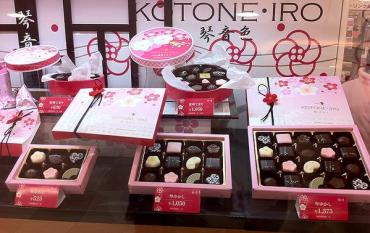
A beautiful arrangement of various chocolates greeted me as I walked into the store, reminding me that Valentine’s Day was right around the corner. If you thought romance was in the air, you would be entirely mistaken. What was on display is actually known as “giri choco” (義理チョコ), which means literally “obligation chocolate.” This chocolate is normally purchased by women and given to their male colleagues, casual acquaintances and others as an expression of their friendship or gratitude. Romantic feelings have nothing to do with it. Giri choco is customarily given by women to the men in their life circles to help them feel appreciated during the nation-wide celebration. But there is another sub-category called “cho-giri choco” meaning “ultra-obligation chocolate.” This is given to certain men solely out of duty because you feel trapped by social circumstances to include them.

It is important to note that giri choco is not to be confused with “honmei choco” (本命チョコ), which is “true feeling chocolate” and is normally given to husbands, boyfriends or even prospective boyfriends. Honmei choco is traditionally a higher grade of chocolate that often comes in special shapes, arranged artistically in ornate confectionary boxes and is considerably more expensive.

The subtle differences between these two types of chocolates helps the recipient to avoid getting his signals crossed and misinterpreting the giver’s intent. While men are the primary recipients of chocolate in Japan on Valentine’s Day, they are certainly not off the hook. In order to sell more chocolate, the National Confectionary Association cleverly designated March 14 as “White Day,” when men must reciprocate by giving chocolate (often white chocolate), cookies, flowers or other small gifts to the women who gave them chocolate exactly one month earlier. Obligation flows in both directions; no one escapes.

“Giri” is a very important value among the Japanese, although it can at times feel oppressive and has even been described as the “burden hardest to bear.” Obligation is certainly a lower form of motivation, but there are good and bad aspects to it that should not be confused. An example of obligation as a good thing can be found in the Bible, when the Apostle Paul gladly accepted the obligation to preach the gospel to others, not viewing it as a burden, but rather as an incredible privilege (Romans 1:15-17). But sometimes even the noblest forms of obligation can subtly morph into patterns of legalism and undermine the very freedoms Jesus purchased on the cross at great cost to Himself. The fine line separating freedom and obligation can at times be hard to discern, but God has provided His Spirit to help us distinguish these matters so that we might offer up our best to Him. After all, Jesus did not enter our world to redeem us because of obligation, but rather, out of love. That is a gift worth celebrating and imitating.

Superheroes

“The Lord will fight for you; you need only to be still.”             Exodus 14:14

Godzilla & UltramanIn 1954, Godzilla emerged ferociously from the depths of the ocean, paving the way for other monsters, known as “kaijū” (怪獣), who seemed to be oddly obsessed with destroying downtown Tokyo. Pronounced in Japanese as “Gojira,” this famous cinematic creature actually gets his name from combining the Japanese words for gorilla (gorira) and whale (kujira), representing his unique size, power and aquatic origin. Following in the path of Godzilla, other kaijū have routinely made their way to the shores of Japan to wreak havoc as well.

To combat these monsters, super villains, and aliens bent on mass destruction, a steady stream of superheroes was invented to rescue the terrorized masses in Japan. In so doing, a whole new entertainment industry came into being creating hordes of fans worldwide. Millions of plastic toys representing both good guy and bad guy genres, were also sold with several populating our own toy box. Ultraman and his pals, known as the Ultra Crusaders, were among the first in a long line of superheroes called upon to save Earth, making their first appearance in 1966. Each Ultra Crusader possessed specific super powers used to protect the planet and fight the perpetrators of evil. However, these particular superheroes had their limitations as they could only stay on Earth for a few minutes before their solar powered energy was used up, forcing them to return to space to recharge.

The Ultra Crusaders were later assisted in this never ending task by a series of other superheroes such as the Power Rangers (known initially as the “Super Sentai”), Sailor Moon and her teenage girl gang, Transformer action figures, and the Kamen Riders, who had insect-like heads and battled the bad guys from motorcycles. Astro Boy, a powerful android with human emotions in the shape of a boy, actually outdates them all as he initially got his start as a comic book hero in 1952. Astro Boy is now remembered not just for his impeccable resume in fighting evil, but he is also credited for launching the huge anime and manga industry that exists today.

Even in a world without such fanciful monsters, it is not uncommon to look for a hero of some sort to save us from whatever crisis we may be currently facing. Like the terrorized masses of Tokyo fleeing the path of the latest kaijū bent on destruction, we realize we are helpless to solve our problems or achieve security without the assistance of Someone greater than ourselves. We need a superhero. We need someone who will fight for us. Similar to the panic stricken Israelites who were trapped between the Red Sea and the army of Pharaoh seeking their destruction, we cry out for someone to intervene on our behalf. However, such help does not come in the form of a fictional superhero who must pause to recharge his batteries or deal with other limitations. Instead, we have the Almighty God, the Maker Heaven and Earth, fighting on our behalf and victory is already assured. The only required response from us is “to be still” and trust Him.

Hidden Art

“As the heavens are higher than the earth, so are my ways higher than your ways and my thoughts than your thoughts.” Isaiah 55:9

rice paddy art

The gathered crowd responded with amazement when they reached the top of the viewing platform and looked down. Once formerly hidden from their view on ground level, everyone could now see a massive work of art beautifully laid out in the midst of what initially appeared to be an ordinary rice paddy. As the spectators gazed with wonder, they were dutifully informed that in previous months, local farmers, townspeople and students had worked hard to produce the masterpiece now spread before them based on that year’s chosen theme. A simple rice paddy had become an art canvas and it pulled in thousands of visitors every year to this small rural village.

Rice field art, known as “tambo art” in Japanese, was initiated in 1993 by the villagers of Inakadate, located in Aomori Prefecture, as a means to revitalize their local economy by attracting tourists. Using rice seedlings of varying color in a designated rice field, the town folk have created incredible pictures which evolved in scale and complexity as their skills steadily improved with each passing year. Themes from past productions represent a wide variety of genres, ranging from Japanese folklore characters, iconic places, famous people and popular movies. The artwork can only be seen from an elevated observation deck cleverly constructed to imitate a castle tower. Every year over 100,000 visitors travel off the beaten pathway to take in this unusual sight.

Unless the artwork is pointed out to them, out of town travelers passing by on nearby roads are oblivious to its existence as the pictures can only be seen from a higher perspective. In the spiritual realm, the same is true in everyday life as events can easily pass by on a seemingly endless continuum where one seldom catches a glimpse of their possible eternal significance. As flesh and blood creatures, our perspective is often limited to what we can actually see and experience in the world around us, but the Creator of the Universe knows no such limitations. His ways, purposes and actions may remain hidden from our sight, but we are promised that one day, equipped with a heavenly perspective, all these things will be revealed to us. Until we ascend that elevated platform where we gain a better view, we are called to live by faith, trusting God’s masterful handiwork in the midst of what we do not presently understand.

Go to the link Japanese Rice Paddy Art to learn more about the phenomenon of tambo art and be sure to check out the embedded video for a short history lesson.

Sleeping on Trains

“In peace I will lie down and sleep, for you alone, Lord, make me dwell in safety.” Psalm 4:8

men-sleeping-on-train

As I made my way across Tokyo to my destination, I quietly congratulated myself for securing a seat on a very crowded commuter train. However, I soon had misgivings about my good fortune when a stranger’s head awkwardly started to nestle on my right shoulder and the passenger slumped on my left began to snore. Momentarily trapped by my weary traveling companions, I studied the other passengers on the train. Approximately half of them were in a semi-comatose state and the others, while awake, were equally detached from life around them as they silently focused on their mobile devices. For a moment, it felt like I had mistakenly boarded a zombie train in an apocalyptic world and I would soon become one of them!

This scenario is actually quite common in Japan, which explains why it is often described as a nation of sleep deprived people. Multiple surveys confirm this assessment, revealing that Japanese workers average only six hours and 22 minutes of sleep on work nights—the lowest in any industrial nation. Therefore, it is not unusual to see people taking catnaps in cars, restaurants, public transportation, classrooms and park benches as they try to catch a few moments of rest so they can press on with the unrelenting demands of life. The Japanese word for “nap” is 居眠り(inemuri) which means literally “sleeping while present,” a description that underscores one’s ongoing attempt to engage with life while at the same time momentarily checking out. Such napping is often considered a sign of diligence in Japan and is quietly accepted by employers and fellow citizens as an unavoidable fact of life. This propensity to sleeping in opportune moments on trains can create comical scenes often posted on social media. Many have even mastered the art of sleeping while in a standing position and almost everyone seems to intuitively know when to stir from their slumber as their stop approaches.

Obviously, continued sleep deprivation is not a healthy habit for anyone, but sometimes it is unavoidable due to the demands of family, health issues or work responsibilities. Some of these elements are beyond our control and can lead to chronic sleeplessness. However, there is often a spiritual aspect to this problem that we should keep in mind. That’s why we must frequently remind ourselves that God reigns supreme in the affairs of our lives so we should learn to rest in Him. Framed in these terms, sleep becomes almost a spiritual exercise as once again we place our burdens of the day and worries for tomorrow in the hands of a loving, all powerful God. That can lead to true rest.

Safety First!

“The Lord is my rock, my fortress and my deliverer; my God is my rock, in whom I take refuge, my shield and the horn of my salvation, my stronghold.”  safety first   Psalm 18:2


安全第一, meaning “Safety First,” is a sign commonly posted near construction sites and other locations where accidents could possibly occur. To make safety a priority in these areas, a small army of traffic directors are regularly employed throughout Japan to help drivers, bicyclists and pedestrians safely navigate around potential hazards. Since Japan is also a land frequented by natural disasters, emergency drills are routinely conducted to guide people in their response in the event of an earthquake, tsunami, typhoon, landslide or volcanic eruption. Evacuation routes and emergency shelters are clearly identified in every city and roles are assigned to minimize the loss of life when there is an emergency. To increase public awareness of such matters, September 1 is designated as Japan’s Disaster Prevention Day (防災の日). On that day, emergency drills are practiced across the country in memory of the Great Kanto Earthquake of 1923, when over 100,000 residents in the Greater Tokyo area perished.

Despite this propensity towards natural disasters, Japan is surprisingly acknowledged to be one of the safest countries in the world, largely due to its diligent efforts to promote safety. Currently, only New Zealand and Iceland rank higher as “safe” destinations for tourists. This focus on safety is to be commended, particularly for those living in Japan, but the pursuit of safety to the exclusion of other worthy goals can possibly invite dangers of a different sort. For example, Japan also has a reputation as being a risk averse society, where any danger or possible unwanted results are avoided at all costs. While such an approach to life is certainly understandable, it can foster an unhealthy imbalance and lead to consequences that are equally unsatisfactory.

As Christians, we are called to live somewhere in the middle as we flesh out life on a daily basis. Unfortunately, there are no guaranteed outcomes when it comes to such matters as raising children, standing against the tide of a self-centered culture or sharing one’s faith in an ungodly world. Our natural inclination is to seek safety and security, but God has not promised such things to us in this life. Instead, we are called to walk by faith in a world fraught with dangers and uncontrollable results. While we must take reasonable measures to protect ourselves from undue harm, our safety, reputations, families and jobs are ultimately in God’s hands. He is our Rock, our Fortress, our Refuge and our Shield. We would be unwise to place our trust in anything else.

A Dangerous Morsel

“The words of a gossip are like choice morsels; they go down to the inmost parts.”                                                                                                                                                                Proverbs 18:8

Diners at the sushi restaurant admired the paper-thin slices of raw pufferfish sashimi artfully arranged before them on the platter in the shape of a chrysanthemum, while naively ignoring its potential danger. One tiny mistake by the highly trained sushi chef could result in the death of those enjoying this popular Japanese delicacy. A poisonous neurotoxin, located primarily in the liver and ovaries of the pufferfish, is 1,200 times more lethal than cyanide, with no known antidote. More than one hundred people die annually from eating improperly prepared pufferfish, known as “fugu” in Japanese.

Some fugu aficionados actually choose to dine at specialty sushi restaurants where microscopic portions of the poison are purposefully not removed by the chef so that the consumer can experience a bit of a buzz or tingling sensation. As a precaution in such cases, the chef is required to sample the sushi to verify that it is safe. Due to its deadly toxicity, the government has banned the sale of whole pufferfish to the general public and it is the only food the emperor of Japan is forbidden by law to eat in order to ensure his safety.

The Scriptures point to the existence of other dangerous morsels parallel the peculiar culinary habits of eating fugu. The Book of Proverbs compares gossip or slander to a delicious morsel that can be appealing to our sense of taste or sight, but produces deadly effects when consumed. It begins when our sinful nature tempts us to listen to the reports of others’ misfortunes or misdeeds in the form of gossip, which may or may not be grounded in truth. The ingestion of such morsels can produce deep wounds in both the listener and the person who is the center of such malicious gossip. Like a deadly toxin, it has the potential to penetrate one’s inmost being and as a consequence, destroy relationships and reputations. This is why we are instructed to put a guard on our hearts, restricting our diet to things that are true, right, holy and honoring to God. Just as there are healthy and unhealthy food choices we must make every day, gossip has harmful effects on the lives of those who choose to consume it.

Vending Machines

“Who, then, are those who fear the Lord? He will instruct them in the ways they should choose.”    Psalm 25:12

vending machine

Shortly after completing my laborious climb to the peak of Mt. Fuji, Japan’s tallest mountain, I spotted a small and very steep service road to the top. On this perilous route that was more of a path than a road, I noticed a large object slowly and laboriously being transported to the top of the mountain. Out of curiosity, I lingered to learn what could be so important. Emergency equipment of some sort? Water and food for weary travelers? Building materials for shelter from the extreme elements? The heavily perspiring workmen eventually reached the top of the mountain and removed the tarp covering the mysterious object, revealing … a Coca Cola vending machine! Only in Japan, I thought to myself.

Somehow it seemed appropriate to have a vending machine occupying one of the most iconic and yet most inaccessible locations in Japan. There are roughly 5.5 million vending machines scattered across the country, making it the highest number of vending machines per capita in the world. Vandalism is generally not a problem in Japan, so these machines can be located in very isolated situations, ready to quench someone’s thirst or satiate various other needs. Like peddlers marketing their wares to a passerby, it is not unusual to see as many as a dozen or more lined up together in some locations. Japanese vending machines offer a variety of choices and products ranging from drinks (both hot and cold), candy, rice, fruit, soup, hamburgers, ice cream, gum, noodles, beer, books, flowers, cigarettes, toys, toiletries, masks, underwear and even good luck charms. Choice and convenience are obviously the underlying values associated with the placement and plethora of these machines throughout Japan.

As we live in an age of consumerism, we are bombarded daily with possible alternatives of what to eat, wear and do. Unfortunately, this may lead us to falsely conclude that life centers exclusively on our personal preferences. Indeed, such a multiplicity of choices is generally a morally neutral transaction and benign in its consequences. However, a propensity to make decisions based solely upon our personal preferences may encourage us to leave God totally out of the equation when it comes to other, more significant choices. Like items in a vending machine, the scale of importance of these decisions can vary greatly, but they should all be based upon our reverence for God and what He deems to be important. After all, our goal in this life is to please Him, not ourselves, so our choices should reflect that value. It is therefore comforting to remember that as we take time to consult God in the myriad of options before us, He has graciously promised to instruct and guide us in such matters. Ultimately, these choices count for eternity and shape us to serve God’s perfect purposes.


Masks


“Nothing in all creation is hidden from God’s sight. Everything is uncovered and laid bare before the eyes of him to whom we must give account.”   Hebrews 4:13

As maskI boarded a crowded train one morning in Tokyo I felt like I had stumbled into the middle of a hospital operating theater.  Almost everyone was wearing a surgical mask. Obviously, the flu season was at its height in Japan so people were taking precautionary measures to protect both themselves and others from the spread of unwanted germs.  In allergy season, the usage of such masks is even more widespread as newer versions claim to block out pollens that cause many victims to suffer. Due to increasing demand, masks are now sold in various shapes, sizes, colors, materials and even aromas, with sales tripling in the past decade.  Witnessing such a phenomenon, outsiders might wrongly jump to the conclusion that Japanese are germaphobes, but that is largely not the case. The usage of such masks primarily reflects their consideration of others as they press on with the daily demands of life, despite not feeling well.

However, sociologists have recently identified an additional reason for the Japanese propensity to wear surgical masks in public, referring to it as “mask dependency”.  Many people, particularly those in their 30s and 40s, will only venture into the public square if they can hide behind a mask and headphones. Wearing a mask enables them to shut out others while mingling among the unavoidable masses of humanity in crowded cities.  Young women may also use masks when they don’t have time to apply makeup, but others may don a mask to cover self-perceived flaws or imperfections that might invite hurtful stares and comments. In such cases, masks become like a security blanket and can easily be used to keep other people at arms’ length, reflecting similar trends in social media.  Wearing a mask allows a person to function with a large degree of anonymity while still participating in the required routines of life.

While those who refuse to veil their faces in public may find this tendency a bit odd, they overlook their own hypocrisies as they practice this on a daily basis in their relationship with God.  Like Adam and Eve covering themselves with makeshift clothing after their disobedience, we are all naturally inclined to hide our faults and failures, foolishly believing that the masks we put on to deceive others will be equally effective with God. However, Scripture reminds us that “everything is uncovered and laid bare before the eyes of him to whom we must give account.”  This is both a terrifying and reassuring truth. But it also serves as a warning about the masks we might be tempted to wear, not just before people, but before our Creator, who sees and knows everything.