Firm Foundations

“Everyone who hears these words of mine and puts them into practice is like a wise man who built his house on the rock.” Matthew 7:24
Foundations4

Due to the frequency of earthquakes in Japan, a lot of attention in building construction is given to the design and materials used for foundations. Even the simplest of houses requires construction techniques that are quite different from what we normally observe in the West. In addition, they are quite labor intensive, which adds to a building’s overall price tag. Several disasters and the subsequent collapse of numerous buildings in the past prompted the government to eventually enact strict anti-seismic structural standards that are constantly upgraded as technology improves. The building codes for skyscrapers are even more stringent, employing specially designed shock absorbers known as isolators embedded throughout the structure. Such modifications are developed through detailed research and placed according to precise calculations. Because of these many innovations, Japan is now considered to be among the world’s leaders in earthquake-resistant technology.

Of course the research behind all of this progress and the special materials and labor used to erect these buildings significantly raises construction costs. This has tempted some unscrupulous companies to take illegal shortcuts. The most famous of these scandals came to light in 2005 when it was discovered that the Aneha Architectural Design Company had falsified earthquake design calculations, violating numerous building codes in order to cut expenses. Hidetsugu Aneha admitted that due to pressure from developers, many of his building designs intentionally concealed potentially catastrophic defects, solely for the purpose of saving investors money. As a result, several newly constructed hotels were abandoned and many condominium owners had to vacate their recently purchased residences due to safety concerns. Many of these empty structures still stand as a dubious testimony to the dishonesty and greed of man.

Foundations are important. Therefore, Jesus used this subject as a powerful illustration at the conclusion of His famous message known as the Sermon on the Mount. After Jesus initially taught the gathered crowd some of God’s kingdom values known as the Beatitudes, He then proceeded to elaborate on these concepts through addressing the subjects of persecution, hypocrisy, reconciliation, retribution, pursuit of wealth, worry, judging others and the importance of prayer. Jesus then concludes His talk by using the analogy of two foundations and two builders. One builder was described as being “wise” and the other was depicted as being “foolish.” The wise builder constructed his house on rock which withstood the destructive elements of nature. However, the foolish builder used sand under his foundation, which ended in disaster under the same climatic elements. The intended lesson was that we must carefully choose what we build our lives upon. To put it simply, a life not built upon God’s values invites destruction. But those who deliberately center their lives around God’s Word and heed His instructions, reap eternal life. To avoid a disaster, choose your foundation carefully.

Souvenirs

“These stones are to be a memorial to the people of Israel forever.” Joshua 4:7b

omiyageOne of the first words I learned to spell as a child was not “cat,” “hat,” “run” or something similarly simple, but rather, the longer word “souvenirs.” During our long family summer road trips, traveling in an unairconditioned car across the vast expanses of America, the junior members of our family were always hot, desperately bored and hungry. In my childlike mind, the all-encompassing solution to this chronic problem was found in the word “souvenirs.” This mindset was developed after I had been duly instructed by my all-knowing older brother and sister to be on the lookout for souvenirs signs. Once one was spotted, the usual strategy was to launch into an immediate chorus begging our parents to stop and curtail our suffering. From experience, we knew that places that sold souvenirs were always air conditioned, had public restrooms (a selling point to our mother), sold candy and ice cream and, more importantly, stocked lots of toys and trinkets called “souvenirs” to take our minds off of our unending misery. Looking back, I seriously doubt if I could spell the word “souvenirs,” but I knew it began and ended with an “s” and was a long word that represented something I had to have!

Although the Japanese word omiyage (お土産*; more frequently written asおみやげ) is translated as “souvenir,” it serves a very different purpose from what I learned as a child. In the West we generally buy souvenirs for ourselves as memories of special vacations or getaways, but the Japanese are expected to buy them as gifts for their family, friends and colleagues. Stores and shops throughout Japan cater to this tourist tradition by offering a wide variety of local produce, cookies, sweets and other regionally unique culinary creations. Each omiyage comes especially gift wrapped in paper indicating the area, town or special attraction where it was purchased and thus provides evidence of one’s trip. The omiyage is a subtle reminder that you were thinking of the recipient while you were gone and additionally serves as a partial compensation for any inconveniences you may have caused by your absence.

In the Book of Joshua, an interesting event (Joshua 4) is recorded marking the end of a forty-year road trip through the wilderness following the nation’s rebellion against God (Numbers 13-14). According to the instructions by Joshua, a representative was chosen from each of the twelve tribes of Israel to carry a stone from the middle of the dry Jordan river bed after the entire nation had miraculously crossed over to the other side. With these stones, they proceeded to build a memorial in the promised land that served as a type of omiyage of their journey. Its purpose was to provide a standing reminder to both present and future generations of the faithfulness of God. Perhaps this is a good example to keep in mind ourselves when we are called to trust God in new and deeper ways as we cross “rivers” standing between us and the promises of God. These are faith stories worth remembering, worth thanking God for and certainly worth passing on to the next generation as they collect their own omiyage.

*Although the word is usually translated as “souvenir,” it means literally “product of the land.”

Record Keeping

“However, do not rejoice that the spirits submit to you, but rejoice that your names are written in heaven.” Luke 10:20

construction record3

Japanese seem to have a particular affinity for record keeping. We first noticed this tendency at construction sites, where a worker would routinely pose in front of a project for a picture while holding a chalk board. On that board would be written the date and a brief description of the work they had just completed. The job might involve something as minor as repairing a pothole in the road, but photographic evidence of the completed project was duly recorded. The picture was then probably submitted with a report and filed somewhere with millions of other similar items within the black hole of Japanese archives.

Recording and keeping essential information is a mainstay of modern civilization, but Japan appears to have a particular penchant for this activity. For example, parents are expected to submit regular reports confirming that their children completed assigned homework. During the summer, such reports are expanded to include personal hygiene practices and chores around the house to ensure the maintenance of important routines during school holidays. Zealous new parents can purchase “baby diaries” to record essential information, such as the frequency of diaper changes, bottle feedings, daily temperatures, physical growth, appearance of teeth and the introduction of different foods into the baby’s diet.

Precise record keeping is considered essential for tracking even the most minor lost items. Upon being turned in, the items are routinely tagged, numbered, and documented with the hope of returning them to the rightful owner. Minutes are scrupulously taken at every meeting and there seems to be a form for everything that must be completed and then put on file. As a young church planter, I soon discovered that I was expected to keep a record of everything that took place at the church for future reference. In so doing, I also became a cog in the vast machine storing information for generations to come.

When the seventy-two disciples Jesus sent out returned from their initial ministry experience, they were understandably excited to report the details of what they had seen and experienced (Luke 10). As we constantly engage with life, experiencing its highs and lows, we are naturally inclined to become preoccupied with the details of this world and, consequently, often fail to appreciate the significance of the world to come. This is where Jesus’ reply to His early followers (“do not rejoice that the spirits submit to you, but rejoice that your names are written in heaven” Luke 10:20) serves to put such things in perspective and helps us not to lose sight of the forest of eternity as we wander among the trees of daily life. While we may be inclined to get overly excited or overly disappointed with the details of this life, we should never forget that our names are recorded for eternity in heaven. This means that all that we do, all that we value and all that we experience is grounded in an eternal relationship with God that can never be erased. Our lives have meaning and all that we offer up to God in our worship of Him is recorded for eternity. That is certainly a cause for much rejoicing.

Aliens

Consequently, you are no longer foreigners and strangers, but fellow citizens with God’s people and also members of his household,”  Ephesians 2:19

Gaijin

When we arrived in Japan for the first time in 1984, airport immigration officials directed us, along with the other obvious foreigners, to proceed towards the sign marked “ALIENS.” Such was our introduction to Japan. While we were not creatures from another planet, it was abundantly clear to us from the outset that in Japan, we were different. We had expected to stand out in the crowds due to our size, hair color and speech (and my nose!), but we soon realized that we were permanently relegated to a class of non-Japanese known as “gaijin.” Everywhere we went, people typically stared at us, adults wanted to touch our kids’ blond hair and Japanese children excitedly pointed their fingers at us while declaring the obvious, that we were “gaijin.”

The term gaijin (外人) means literally “outside person” and since Japan is an island nation comprised of one predominate ethnic group speaking a uniform language, it is understandable why, historically, all non-Japanese were considered to be outsiders. The Japanese concept of group consciousness also factors into this perception, where one is either “in” or “out” when social and relational lines are routinely drawn within daily interactions.

However, globalization is rapidly changing such attitudes toward the outside world as Japan’s isolation is increasingly penetrated by the onslaught of modern communication and travel. The world has come to Japan. Foreigners are no longer considered a novelty and as a result, we are now rarely singled out as “gaijin.” The finger pointing has largely ceased and the more polite term “gaikokujin” has replaced the somewhat pejorative label of “gaijin.” Foreigners now comprise almost 2% of the population and that percentage will likely continue to increase as Japan becomes steadily more dependent on outside workers to supplement its rapidly shrinking labor force. This is good news for foreigners seeking employment and an improved social status within Japan.

One of the many amazing aspects of the gospel, or the Good News of Jesus Christ, is its power to break down the tribalistic tendencies of mankind that often lead to self-destruction. Our natural inclination is to splinter into warring factions along social, racial, cultural, national, economic and ethnic lines. But the good news is that God took on flesh through His Son and entered into a divided world to offer reconciliation between not only men, but more importantly, between God and men. All of us were gaijin, outside of the presence of God, but now we are offered citizenship in His eternal kingdom and welcomed as family members into His household. Through the cross, the lines that once divided us have been redrawn. We are aliens no more and that is truly Good News!

Business Cards

“You have searched me, Lord, and you know me.” Psalm 139:1

Meishi3

Following a subtle bow of acknowledgement, I pretended to study the information on the card I now held politely with both hands. As the situation demanded, I feigned proper interest in the card and the individual I received it from did the same with mine as we engaged in what I call the “meishi dance”. A meishi (名刺) is a Japanese business card which is routinely exchanged in initial encounters, particularly in business relationships. The work I was currently engaged in involved meeting hundreds of individuals, so over the course of time, I had accumulated quite a stack of meishi along with a jumbled collection of faces those cards represented.

Like many other customs in Japan, there is an established protocol for the exchange of meishi. To fully grasp the subtleties of the meishi dance, it is important to bear in mind that each card serves as an extension of the person whose information is recorded on it. Therefore, the meishi itself should be treated with respect which in turn, has bearing on how the card is received. For example, it is best to stand erect when receiving or presenting a meishi and the information on it must face the recipient, holding the card carefully in the corners so it can be easily read. A respectful bow should precede the passing of the meishi and the card should be received with both hands. The information recorded on the meishi should then be carefully studied, particularly noting titles or status. If you are in a meeting where everyone is seated, the card(s) should be placed in front of you on the table for reference. Upon receiving someone’s meishi, you should never treat it disrespectfully like jamming it into your pocket or writing notes on it. Many businessmen carry around mini cases for protecting their own meishi and for the temporary storage of those they receive.

There is, of course, a limitation as to how much information a person can include on a meishi, even if both sides of the card are used. In brief social or business interactions, our capacity for absorbing details and even caring about the individual standing before us is restricted by our time, energy, mood, circumstances and intellect. But not so with God. The psalmist marvels at the extent that God intimately knows us, not just through observable actions, but from probing our thoughts and intentions from the moment we were conceived up to the minute when we draw our final breath.

This means that I am infinitely more than just a few scraps of information recorded on a card collecting dust in someone’s file. I am a creation of the God of the Universe who knows me far, far more than my most faithful friend, closest relative or intimate love interest and He genuinely and passionately treasures me. Such knowledge and care should provoke me to respond, not in feigned interest, but to bow in adoration and obedience. Perhaps in response, it is best to observe the protocol modeled by the same psalmist in Psalm 139. This is a meishi dance worth emulating:

  • I praise you because I am fearfully and wonderfully made; your works are wonderful. (14)
  • How precious to me are your thoughts, God! How vast is the sum of them! (17)
  • Search me, God, and know my heart; test me and know my anxious thoughts. (23) 
  • See if there is any offensive way in me, and lead me in the way everlasting. (24)

Slipper Etiquette

“You hypocrites! You clean the outside of the cup and dish, but inside they are full of greed and self-indulgence.”  Matthew 23:25

Slippers

Shame can occur in many forms in Japan, but a rather comical and fairly common shame-related incident is for a guest to absentmindedly wear slippers designated exclusively for the toilet area into other parts of the house. This is considered to be a significant faux pas in Japanese culture, but even though it is acutely embarrassing for the unwitting perpetrator, it is usually ignored by polite hosts. However, to grasp the import of this particular incident, one must understand the broader concept of slipper etiquette in Japan and the values that undergird it.

Every house and even the tiniest apartments in Japan have at their entrance a space called the “genkan.” It might be referred to it as an “entry way” or something similar in western culture, but the purpose of the genkan is very specific. It is the designated area that separates outside dirt or uncleanness from the interior of one’s living area because it is unthinkable in Japan to wear shoes used outdoors into a house. Therefore, shoes are customarily removed in the lower part of the genkan while being careful not to step on the “contaminated” floor in socked feet. Following this initial maneuver, one is then expected to step up to the elevated portion of the genkan into slippers that are provided by the host. Usually, the host will then proceed to turn your shoes to face the door in the lower half of the genkan for your eventual departure. However, all this is only the first phase of proper slipper etiquette.

A general rule of thumb for successfully adapting to different customs in a foreign culture is to observe and copy the locals. The same applies to entering someone’s house as a guest and knowing where it is okay to walk in your provided slippers, as there can be subtle differences in application. For example, the common practice is NOT to wear slippers on tatami mats (woven straw flooring), a porch, balcony or in the toilet area. Different slippers are usually provided for the bathroom since that area represents another degree of uncleanness that should not be carried into other parts of the house. Separate slippers for a porch area are usually conveniently located at the entrance should someone chose to venture from the “clean” area of the house.

While it is not practical for companies and businesses to restrict employees or customers from entering their premises in outside shoes, it is surprising to observe that public schools, churches, hospitals, public baths and some hotels typically maintain the practice of expecting people to take off their shoes at the entrance. To facilitate this on a large scale, an array of small lockers or cubby holes are located nearby for the temporary storage of outside shoes and a steady supply of clean slippers are provided for general use.

In the Old Testament, God’s chosen people, the Jews, were well drilled on ceremonial law and as a result, they were fastidious in their efforts to ensure cleanliness in the external aspects of their daily lives. However, as Jesus strongly pointed out, this emphasis on external cleanliness often failed to carry over to the far more important dimension of moral cleanness. In fact, Jesus was quite outspoken in his criticism of this hypocrisy because matters of the heart or soul always outweigh superficial, external activities. The prophet Isaiah was keenly aware of this inconsistency when he cried out “Woe to me. I am ruined! For I am a man of unclean lips, and I live among a people of unclean lips, and my eyes have seen the King, the Lord Almighty.” (Isaiah 6:5) This verse is a vivid reminder that while it is a good thing to keep dirt out of one’s house, we should be far more diligent to avoid defilement in our lives.

A High Place

“He makes my feet like the feet of a deer; he causes me to stand on the heights.”            Psalm 18:33

high ground 2

The importance of being located near a high place or “takadai” (高台) in a tsunami prone area became vividly real to us shortly after we arrived to assist with relief efforts following the cataclysmic Great East Japan Earthquake of 2011. At the bottom of one particular set of stairs leading up a steep hill in a tsunami ravished town, we were puzzled to discover a jumble of carts typically used for transporting small children. When we raised our eyes to survey the landscape below us, we soon noticed what remained of a Japanese preschool that had been obliterated just a few days earlier by the massive onslaught of water. Then we understood the mystery of the jumbled carts. Following the siren warnings of a coming tsunami, teachers at that school had obviously snatched up all the children in their care and fled to the nearest takadai for safety. Later, we were thankful to learn that only one child from that particular school perished that day, but stories up and down the coast were far more sobering.

As many of the towns and villages in that part of Japan are forced to hug the coastline due to adjacent mountains, inhabitants can become easily trapped by an incoming tsunami. Therefore, it is important to know where a nearby takadai is located and how to access it. Evacuation signs to higher ground are common place in these areas and sets of stairs that often seemingly lead to nowhere are part of the proactive measures taken to save lives in the event of another disaster.

Much of the energy on those ravaged coastlines continues to be focused on ensuring the safety of residents against future calamities. In some localities, major construction projects are raising the level of towns while leveling nearby mountains for fill dirt, that in turn become alternative sites for rebuilding on higher ground. Crumbled seawalls are also being demolished and reconstructed according to taller specifications, as the general aim is to move everything higher. The quest for a takadai understandably seems to be the preoccupation of most surviving local residents who seek to rebuild their homes, businesses, schools and hospitals on higher ground. There they would have assurance of safety, security, normalcy, and more importantly, a measure of control over their lives which they dramatically lost on March 11, 2011.

Under such circumstances, one can easily understand the desire to obtain a takadai, but an imbalanced pursuit of safety and security in a world full of potential threats can actually lead us astray. As we struggle with the inevitable challenges of life, we may be tempted, apart from God, to seek “higher ground” upon which to build our lives, with safety and security being our sole objectives. God does not guarantee such things in our present life but instead, we are exhorted to flee to Him when life seems dangerous or out of control. He alone is our takadai or higher ground. There is no place safer.

Family for Rent

“Whoever does God’s will is my brother and sister and mother.”   Mark 3:35

rental family

Without warning, Mrs. Tanaka’s* husband left her a year ago and consequently, she struggled to move forward with her shattered life as a young, single mother. She felt abandoned and longed for someone to lean on, and her young daughter needed a father figure in her life. In addition, the kindergarten where Mrs. Tanaka was hoping to enter her child was more inclined to accept children of married couples. Determined to get help, she contacted a professional rental family agency or rentaru kazoku (レンタル家族) to provide a substitute father.

Mrs. Tanaka’s case is not unusual. Estrangement, illness, abuse and death can leave huge gaps within families. Therefore, a new industry has sprung up in Japan to fill these needs. Actors and actresses are hired out by agencies to clients like Mrs. Tanaka to temporarily stand in as substitute parents, spouses, friends or coworkers at one-off social events like weddings. Depending on the situation and need, they may fill a designated role for extended periods of time. For example, an elderly woman may periodically want a substitute grandchild to take out shopping. A bride-to-be longs for a substitute father to walk her down the aisle in her dream wedding. A businessman estranged from his family might rent a part-time wife and child to ease his loneliness. A single woman with marriage-obsessed parents may temporarily rent a fake boyfriend or fiancée to escape their unwanted pressure. The list of social situations lending themselves to recruiting suitable substitutes is surprisingly quite extensive in a society that tends to emphasize appearance over substance.

A single actor can actually play multiple roles in several families at the same time as part of their profession, but it can be extremely difficult to keep personal feelings in check in every situation. However, these role players are instructed to do their best to promote positive outcomes in each assignment and ideally, eventually make themselves redundant in the client’s life. Of course, client dependency is a possible hazard in the family rental business as the customer may desire more from the fabricated relationship than the rental person is able or willing to provide.

The creation of the rentaru kazoku industry is an achingly sad testimony of the many genuinely hurting people who long for healthy, satisfying relationships, which of course is not a problem restricted to Japan. Real families and friends can inevitably disappoint us, so it is only natural to turn to substitutes or other inadequate alternatives to ease our pain. Such wounds are not easily eradicated, but God has offered an amazing life-giving, life-healing relationship through His Son. Jesus welcomes us in our brokenness in a broken world and promises to receive us like a beloved family member if we turn to Him and seek His will. There is no pretense in this relationship and no fees are charged as membership into this exclusive family was purchased at the cross. While God does not promise to redeem all of our earthly relationships, acceptance into His forever family is an amazing gift that is not to be taken lightly. It also means we are members of an extended spiritual family that can bring tremendous comfort in this life and in the world to come.

*Fictitious name and situation

Lost & Found

“if they find lost property…they must return…the lost property they found.”             Leviticus 6:3-5

Wasuremono

Following my usual morning routine, I inserted money into the local vending machine to purchase a can of ice coffee before heading off to work for the day. Later on, I realized to my chagrin that I had neglected to retrieve my ¥900 change, worth almost nine dollars, from the vending machine. When I returned home almost twelve hours later, I checked the vending machine out of curiosity and was pleasantly surprised to discover my money still waiting for me untouched in the coin return. Such stories are actually not unusual in Japan.

Everyday throughout the country, literally thousands of misplaced wallets, cell phones, keys, bikes, umbrellas, bags etc. are turned in by conscientious Japanese at collection points conveniently located in stores, train stations and local police boxes. These lost articles, known as “wasuremono” (忘れ物) or literally “forgotten item,” are dutifully collected, tagged and stored for a period of time with the hope of returning them to their rightful owner. Signs are posted everywhere reminding people not to forget personal items which still inevitably occurs, but fortunately, the Japanese are extremely diligent in returning other people’s property. Amazingly this widespread practice of honesty extends even to lost money, where roughly 75 percent of the cash that is reported as wasuremono is eventually returned to the owner. The Japanese typically keep detailed records of such matters so they know that 26.7 million items were reported to police departments in 2015, highlighting the widespread extent of this practice and also the challenge of practically dealing with it.

Although many are not aware of it, Japan actually has a “Lost Property Law” prompting citizens who find lost items to turn them into the police. Even though they are entitled to a proportional reward from the owner, most people would decline any remuneration if it was offered to them. In cases where the owner is not located within three months, the finder is entitled to keep the lost article as a variation of the more traditional “finders keepers” approach. The question naturally arises as to why Japanese are so diligent in this practice of returning misplaced items when compared to many other cultures. The most likely answer is probably rooted in the moral education commonly taught and practiced in schools and then reinforced in countless ways on the public consciousness.

Many Japanese would consider keeping a lost item to be the moral equivalent of stealing, which aligns closely with scriptural teaching on this topic (Leviticus 6). The concept of “lostness” actually taps into a deep, yet central theological theme pointing to our need for a Savior. In Isaiah 53:6, the whole of mankind is described as sheep that “have gone astray,” wandering away from the purposes and heart of God, their Shepherd. This theme is reiterated in other passages and powerfully illustrated by Jesus Himself through three parables in Luke 15 where He uses the analogy of a lost sheep, a lost coin and a lost son to teach about His Heavenly Father’s passion for restoring what is lost, namely us. In fact, Jesus identifies this as being the very purpose of His coming to Earth when He said “For the Son of Man came to seek and to save the lost” (Luke 19:10). This means that God has by grace enacted His own “Lost Property Law” when He offered His Son on a cross, so that we might be restored to God, our rightful owner. As the famous line of the hymn “Amazing Grace” so aptly phrases it, “I once was lost, but now I’m found.

Punctuality

“There is a time for everything, and a season for every activity under the heavens.” Ecclesiastes 3:1

Punctuality

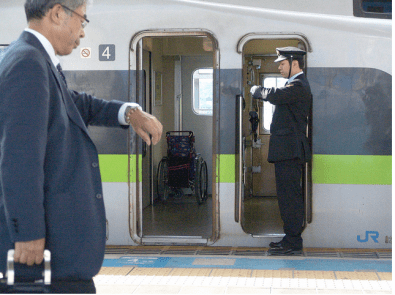
Japan has a well-earned reputation as a country where things run on time. For example, thousands of trains every day across the country, routinely pull into their assigned stations exactly on schedule. Customers send packages or luggage through a nationwide delivery service and then choose a date and four-hour window in which they want their item delivered, which usually occurs without fail. At construction sites for buildings or roadwork, signs are posted notifying when the job will be completed and they are seldom wrong. Fast food service seems effortlessly fast in Japan and repairmen show up as promised on time, if not early.

In the rare cases where a scheduled appointment is broken, service is slow or a train pulls into a station late, extensive apologies are usually expressed with the promise to do better in the future. When a train is unavoidably delayed due to an earthquake or a tragic suicide on the tracks, causing thousands to be inconveniently delayed, rail officials will diligently hand out “late notes” to affected commuters to cover their tardiness at work. One train recently departed from the station 25 seconds early, which became quite a scandal in Japan and called for new measures to prevent a repeat of such a disastrous scenario.

This seemingly obsessive focus on punctuality drives employees to arrive, not just on time at their place of work, but to actually get there early, so they can begin their job precisely as scheduled. No one quite knows when this meticulous focus on time began in Japanese culture, but it was certainly invigorated when Japan joined the family of nations in the 19th century and later took on even greater importance as part of the rebuilding process following WWII. However, companies are discovering that an emphasis on punctuality doesn’t always correspond with increased efficiency. Others who endure endless mind-numbing meetings wonder why there is such a preoccupation with starting on time, but almost an indifference with ending such meetings on time.

To the outsider, Japan seems like a well-oiled machine, where everything works and runs as planned, which for the most part, is a really admirable characteristic. It is a helpful reminder that God is a God of order, who has created a universe that is governed and measured by time. Although He Himself is not bound to the restraints of time, it is one of many resources placed at our disposal and we are expected to be wise stewards as to how we use it. This does not excuse an imbalanced obsession with time, but should rather encourage us to treat each hour, each day and each year as a gift from God that we should use for His eternal purposes and not for our own. We serve the Master of the Universe, and as such we are not slaves to time but rather, time exists to serve us. May we use it wisely.