Record Keeping

“However, do not rejoice that the spirits submit to you, but rejoice that your names are written in heaven.” Luke 10:20

construction record3

Japanese seem to have a particular affinity for record keeping. We first noticed this tendency at construction sites, where a worker would routinely pose in front of a project for a picture while holding a chalk board. On that board would be written the date and a brief description of the work they had just completed. The job might involve something as minor as repairing a pothole in the road, but photographic evidence of the completed project was duly recorded. The picture was then probably submitted with a report and filed somewhere with millions of other similar items within the black hole of Japanese archives.

Recording and keeping essential information is a mainstay of modern civilization, but Japan appears to have a particular penchant for this activity. For example, parents are expected to submit regular reports confirming that their children completed assigned homework. During the summer, such reports are expanded to include personal hygiene practices and chores around the house to ensure the maintenance of important routines during school holidays. Zealous new parents can purchase “baby diaries” to record essential information, such as the frequency of diaper changes, bottle feedings, daily temperatures, physical growth, appearance of teeth and the introduction of different foods into the baby’s diet.

Precise record keeping is considered essential for tracking even the most minor lost items. Upon being turned in, the items are routinely tagged, numbered, and documented with the hope of returning them to the rightful owner. Minutes are scrupulously taken at every meeting and there seems to be a form for everything that must be completed and then put on file. As a young church planter, I soon discovered that I was expected to keep a record of everything that took place at the church for future reference. In so doing, I also became a cog in the vast machine storing information for generations to come.

When the seventy-two disciples Jesus sent out returned from their initial ministry experience, they were understandably excited to report the details of what they had seen and experienced (Luke 10). As we constantly engage with life, experiencing its highs and lows, we are naturally inclined to become preoccupied with the details of this world and, consequently, often fail to appreciate the significance of the world to come. This is where Jesus’ reply to His early followers (“do not rejoice that the spirits submit to you, but rejoice that your names are written in heaven” Luke 10:20) serves to put such things in perspective and helps us not to lose sight of the forest of eternity as we wander among the trees of daily life. While we may be inclined to get overly excited or overly disappointed with the details of this life, we should never forget that our names are recorded for eternity in heaven. This means that all that we do, all that we value and all that we experience is grounded in an eternal relationship with God that can never be erased. Our lives have meaning and all that we offer up to God in our worship of Him is recorded for eternity. That is certainly a cause for much rejoicing.

Aliens

Consequently, you are no longer foreigners and strangers, but fellow citizens with God’s people and also members of his household,”  Ephesians 2:19

Gaijin

When we arrived in Japan for the first time in 1984, airport immigration officials directed us, along with the other obvious foreigners, to proceed towards the sign marked “ALIENS.” Such was our introduction to Japan. While we were not creatures from another planet, it was abundantly clear to us from the outset that in Japan, we were different. We had expected to stand out in the crowds due to our size, hair color and speech (and my nose!), but we soon realized that we were permanently relegated to a class of non-Japanese known as “gaijin.” Everywhere we went, people typically stared at us, adults wanted to touch our kids’ blond hair and Japanese children excitedly pointed their fingers at us while declaring the obvious, that we were “gaijin.”

The term gaijin (外人) means literally “outside person” and since Japan is an island nation comprised of one predominate ethnic group speaking a uniform language, it is understandable why, historically, all non-Japanese were considered to be outsiders. The Japanese concept of group consciousness also factors into this perception, where one is either “in” or “out” when social and relational lines are routinely drawn within daily interactions.

However, globalization is rapidly changing such attitudes toward the outside world as Japan’s isolation is increasingly penetrated by the onslaught of modern communication and travel. The world has come to Japan. Foreigners are no longer considered a novelty and as a result, we are now rarely singled out as “gaijin.” The finger pointing has largely ceased and the more polite term “gaikokujin” has replaced the somewhat pejorative label of “gaijin.” Foreigners now comprise almost 2% of the population and that percentage will likely continue to increase as Japan becomes steadily more dependent on outside workers to supplement its rapidly shrinking labor force. This is good news for foreigners seeking employment and an improved social status within Japan.

One of the many amazing aspects of the gospel, or the Good News of Jesus Christ, is its power to break down the tribalistic tendencies of mankind that often lead to self-destruction. Our natural inclination is to splinter into warring factions along social, racial, cultural, national, economic and ethnic lines. But the good news is that God took on flesh through His Son and entered into a divided world to offer reconciliation between not only men, but more importantly, between God and men. All of us were gaijin, outside of the presence of God, but now we are offered citizenship in His eternal kingdom and welcomed as family members into His household. Through the cross, the lines that once divided us have been redrawn. We are aliens no more and that is truly Good News!

Slipper Etiquette

“You hypocrites! You clean the outside of the cup and dish, but inside they are full of greed and self-indulgence.”  Matthew 23:25

Slippers

Shame can occur in many forms in Japan, but a rather comical and fairly common shame-related incident is for a guest to absentmindedly wear slippers designated exclusively for the toilet area into other parts of the house. This is considered to be a significant faux pas in Japanese culture, but even though it is acutely embarrassing for the unwitting perpetrator, it is usually ignored by polite hosts. However, to grasp the import of this particular incident, one must understand the broader concept of slipper etiquette in Japan and the values that undergird it.

Every house and even the tiniest apartments in Japan have at their entrance a space called the “genkan.” It might be referred to it as an “entry way” or something similar in western culture, but the purpose of the genkan is very specific. It is the designated area that separates outside dirt or uncleanness from the interior of one’s living area because it is unthinkable in Japan to wear shoes used outdoors into a house. Therefore, shoes are customarily removed in the lower part of the genkan while being careful not to step on the “contaminated” floor in socked feet. Following this initial maneuver, one is then expected to step up to the elevated portion of the genkan into slippers that are provided by the host. Usually, the host will then proceed to turn your shoes to face the door in the lower half of the genkan for your eventual departure. However, all this is only the first phase of proper slipper etiquette.

A general rule of thumb for successfully adapting to different customs in a foreign culture is to observe and copy the locals. The same applies to entering someone’s house as a guest and knowing where it is okay to walk in your provided slippers, as there can be subtle differences in application. For example, the common practice is NOT to wear slippers on tatami mats (woven straw flooring), a porch, balcony or in the toilet area. Different slippers are usually provided for the bathroom since that area represents another degree of uncleanness that should not be carried into other parts of the house. Separate slippers for a porch area are usually conveniently located at the entrance should someone chose to venture from the “clean” area of the house.

While it is not practical for companies and businesses to restrict employees or customers from entering their premises in outside shoes, it is surprising to observe that public schools, churches, hospitals, public baths and some hotels typically maintain the practice of expecting people to take off their shoes at the entrance. To facilitate this on a large scale, an array of small lockers or cubby holes are located nearby for the temporary storage of outside shoes and a steady supply of clean slippers are provided for general use.

In the Old Testament, God’s chosen people, the Jews, were well drilled on ceremonial law and as a result, they were fastidious in their efforts to ensure cleanliness in the external aspects of their daily lives. However, as Jesus strongly pointed out, this emphasis on external cleanliness often failed to carry over to the far more important dimension of moral cleanness. In fact, Jesus was quite outspoken in his criticism of this hypocrisy because matters of the heart or soul always outweigh superficial, external activities. The prophet Isaiah was keenly aware of this inconsistency when he cried out “Woe to me. I am ruined! For I am a man of unclean lips, and I live among a people of unclean lips, and my eyes have seen the King, the Lord Almighty.” (Isaiah 6:5) This verse is a vivid reminder that while it is a good thing to keep dirt out of one’s house, we should be far more diligent to avoid defilement in our lives.

Folded with a Purpose

“I praise you because I am fearfully and wonderfully made; your works are wonderful, I know that full well.”             Psalm 139:14

Origami2

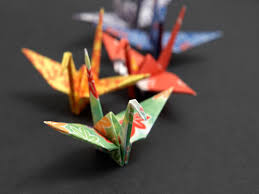
A basic handicraft enjoyed throughout Japan by both young and old is origami (折り紙). Originating from the words ori, meaning “fold,” and kami, meaning “paper,” origami is simple enough for an unlearned novice or child, yet sufficiently challenging for the most trained expert. The goal of origami is to transform a simple piece of paper through a series of folds into a finished sculpture. Before it is manipulated into a work of art, all origami begins as a square sheet of paper which is sold in packages at most local stores.

Modern origami procedures generally discourage cutting, gluing or marking the paper, unlike older Japanese versions that permitted such actions. When Japan began to import ideas and technology from the West in the 1800s, the present style of origami gradually became common practice. This pattern came largely through German influence, which had its own style of art and rules connected with paper folding.

Japanese origami dates back to at least 1680 when it was briefly referred to in a short poem by Ihara Saikaku. Since then, it has evolved into various types, with some actually having moving parts. Another category is called “modular origami,” which requires assembling multiple origami creations to form a larger object. The practice of paper folding has even been applied to currency: “moneygami” converts ordinary paper money into intricate works of art.

Perhaps the most beloved origami model is the Japanese crane, which is traditionally associated with mythical powers of health, luck or long life. According to Japanese legend, the gods will grant extended life or good fortune to anyone who folds a thousand cranes. Literally hundreds of these thousand-crane-strands are typically hung in the atomic bombing peace memorial sites, representing a desire for peace and prayers for the souls who perished nearby.

The skill and craftsmanship required to produce the more intricate forms of origami is stunning, but it doesn’t begin to compare with the incredible creativity and power on display in the life of every human being on this planet. The psalmist marveled at the work of God when considering his own mortal frame and in turn responded in praise of His Creator. We were “folded” with a purpose, and that is to honor God in the unique way that He has created each one of us. We are His works of art, demonstrating God’s favor upon us.

Family for Rent

“Whoever does God’s will is my brother and sister and mother.”   Mark 3:35

rental family

Without warning, Mrs. Tanaka’s* husband left her a year ago and consequently, she struggled to move forward with her shattered life as a young, single mother. She felt abandoned and longed for someone to lean on, and her young daughter needed a father figure in her life. In addition, the kindergarten where Mrs. Tanaka was hoping to enter her child was more inclined to accept children of married couples. Determined to get help, she contacted a professional rental family agency or rentaru kazoku (レンタル家族) to provide a substitute father.

Mrs. Tanaka’s case is not unusual. Estrangement, illness, abuse and death can leave huge gaps within families. Therefore, a new industry has sprung up in Japan to fill these needs. Actors and actresses are hired out by agencies to clients like Mrs. Tanaka to temporarily stand in as substitute parents, spouses, friends or coworkers at one-off social events like weddings. Depending on the situation and need, they may fill a designated role for extended periods of time. For example, an elderly woman may periodically want a substitute grandchild to take out shopping. A bride-to-be longs for a substitute father to walk her down the aisle in her dream wedding. A businessman estranged from his family might rent a part-time wife and child to ease his loneliness. A single woman with marriage-obsessed parents may temporarily rent a fake boyfriend or fiancée to escape their unwanted pressure. The list of social situations lending themselves to recruiting suitable substitutes is surprisingly quite extensive in a society that tends to emphasize appearance over substance.

A single actor can actually play multiple roles in several families at the same time as part of their profession, but it can be extremely difficult to keep personal feelings in check in every situation. However, these role players are instructed to do their best to promote positive outcomes in each assignment and ideally, eventually make themselves redundant in the client’s life. Of course, client dependency is a possible hazard in the family rental business as the customer may desire more from the fabricated relationship than the rental person is able or willing to provide.

The creation of the rentaru kazoku industry is an achingly sad testimony of the many genuinely hurting people who long for healthy, satisfying relationships, which of course is not a problem restricted to Japan. Real families and friends can inevitably disappoint us, so it is only natural to turn to substitutes or other inadequate alternatives to ease our pain. Such wounds are not easily eradicated, but God has offered an amazing life-giving, life-healing relationship through His Son. Jesus welcomes us in our brokenness in a broken world and promises to receive us like a beloved family member if we turn to Him and seek His will. There is no pretense in this relationship and no fees are charged as membership into this exclusive family was purchased at the cross. While God does not promise to redeem all of our earthly relationships, acceptance into His forever family is an amazing gift that is not to be taken lightly. It also means we are members of an extended spiritual family that can bring tremendous comfort in this life and in the world to come.

*Fictitious name and situation

Lost & Found

“if they find lost property…they must return…the lost property they found.”             Leviticus 6:3-5

Wasuremono

Following my usual morning routine, I inserted money into the local vending machine to purchase a can of ice coffee before heading off to work for the day. Later on, I realized to my chagrin that I had neglected to retrieve my ¥900 change, worth almost nine dollars, from the vending machine. When I returned home almost twelve hours later, I checked the vending machine out of curiosity and was pleasantly surprised to discover my money still waiting for me untouched in the coin return. Such stories are actually not unusual in Japan.

Everyday throughout the country, literally thousands of misplaced wallets, cell phones, keys, bikes, umbrellas, bags etc. are turned in by conscientious Japanese at collection points conveniently located in stores, train stations and local police boxes. These lost articles, known as “wasuremono” (忘れ物) or literally “forgotten item,” are dutifully collected, tagged and stored for a period of time with the hope of returning them to their rightful owner. Signs are posted everywhere reminding people not to forget personal items which still inevitably occurs, but fortunately, the Japanese are extremely diligent in returning other people’s property. Amazingly this widespread practice of honesty extends even to lost money, where roughly 75 percent of the cash that is reported as wasuremono is eventually returned to the owner. The Japanese typically keep detailed records of such matters so they know that 26.7 million items were reported to police departments in 2015, highlighting the widespread extent of this practice and also the challenge of practically dealing with it.

Although many are not aware of it, Japan actually has a “Lost Property Law” prompting citizens who find lost items to turn them into the police. Even though they are entitled to a proportional reward from the owner, most people would decline any remuneration if it was offered to them. In cases where the owner is not located within three months, the finder is entitled to keep the lost article as a variation of the more traditional “finders keepers” approach. The question naturally arises as to why Japanese are so diligent in this practice of returning misplaced items when compared to many other cultures. The most likely answer is probably rooted in the moral education commonly taught and practiced in schools and then reinforced in countless ways on the public consciousness.

Many Japanese would consider keeping a lost item to be the moral equivalent of stealing, which aligns closely with scriptural teaching on this topic (Leviticus 6). The concept of “lostness” actually taps into a deep, yet central theological theme pointing to our need for a Savior. In Isaiah 53:6, the whole of mankind is described as sheep that “have gone astray,” wandering away from the purposes and heart of God, their Shepherd. This theme is reiterated in other passages and powerfully illustrated by Jesus Himself through three parables in Luke 15 where He uses the analogy of a lost sheep, a lost coin and a lost son to teach about His Heavenly Father’s passion for restoring what is lost, namely us. In fact, Jesus identifies this as being the very purpose of His coming to Earth when He said “For the Son of Man came to seek and to save the lost” (Luke 19:10). This means that God has by grace enacted His own “Lost Property Law” when He offered His Son on a cross, so that we might be restored to God, our rightful owner. As the famous line of the hymn “Amazing Grace” so aptly phrases it, “I once was lost, but now I’m found.

Punctuality

“There is a time for everything, and a season for every activity under the heavens.” Ecclesiastes 3:1

Punctuality

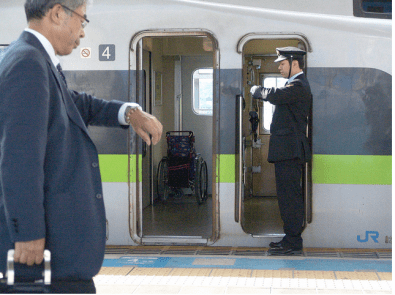
Japan has a well-earned reputation as a country where things run on time. For example, thousands of trains every day across the country, routinely pull into their assigned stations exactly on schedule. Customers send packages or luggage through a nationwide delivery service and then choose a date and four-hour window in which they want their item delivered, which usually occurs without fail. At construction sites for buildings or roadwork, signs are posted notifying when the job will be completed and they are seldom wrong. Fast food service seems effortlessly fast in Japan and repairmen show up as promised on time, if not early.

In the rare cases where a scheduled appointment is broken, service is slow or a train pulls into a station late, extensive apologies are usually expressed with the promise to do better in the future. When a train is unavoidably delayed due to an earthquake or a tragic suicide on the tracks, causing thousands to be inconveniently delayed, rail officials will diligently hand out “late notes” to affected commuters to cover their tardiness at work. One train recently departed from the station 25 seconds early, which became quite a scandal in Japan and called for new measures to prevent a repeat of such a disastrous scenario.

This seemingly obsessive focus on punctuality drives employees to arrive, not just on time at their place of work, but to actually get there early, so they can begin their job precisely as scheduled. No one quite knows when this meticulous focus on time began in Japanese culture, but it was certainly invigorated when Japan joined the family of nations in the 19th century and later took on even greater importance as part of the rebuilding process following WWII. However, companies are discovering that an emphasis on punctuality doesn’t always correspond with increased efficiency. Others who endure endless mind-numbing meetings wonder why there is such a preoccupation with starting on time, but almost an indifference with ending such meetings on time.

To the outsider, Japan seems like a well-oiled machine, where everything works and runs as planned, which for the most part, is a really admirable characteristic. It is a helpful reminder that God is a God of order, who has created a universe that is governed and measured by time. Although He Himself is not bound to the restraints of time, it is one of many resources placed at our disposal and we are expected to be wise stewards as to how we use it. This does not excuse an imbalanced obsession with time, but should rather encourage us to treat each hour, each day and each year as a gift from God that we should use for His eternal purposes and not for our own. We serve the Master of the Universe, and as such we are not slaves to time but rather, time exists to serve us. May we use it wisely.


The Virtue of Gaman

“Let perseverance finish its work so that you may be mature and complete, not lacking anything.”   James 1:4

Gaman2

My wife was in extreme agony from labor pain as we anticipated the imminent arrival of our second child. Desperate for relief, we called the nurse for assistance and she simply replied “gaman dekinai?” The word gaman was new to us, but judging by the nurse’s response, we could tell she wasn’t going to do anything. Later, we learned that gaman (我慢) means “to endure the seemingly unbearable with patience and dignity.” Sometimes it is translated as “perseverance” or “patience, but these words don’t do justice to the complexity of the concept in the Japanese context.

Gaman is considered a virtue in Japan, as it is an indicator of maturity and strength in the face of difficult circumstances. The objective is to bear hardship without complaint and thereby cause minimal inconvenience for those around you. This admired character attribute is evident when Japanese silently squash themselves into packed trains, work extremely long hours, endure brutal sports drills or sit in unheated classrooms. When one perseveres in a negative relationship at home, work or school, he is exercising gaman. When one waits patiently in a long checkout line or in a queue to board public transportation, she is demonstrating the power of gaman. Visitors to Japan may observe these responses in action and mistakenly assume Japanese lack assertiveness or initiative. In so doing, they fail to understand the value of gaman which undergirds all of Japanese society, enabling it to function in an orderly manner. This is why gaman is a common character trait among Japanese heroes who typically overcome huge obstacles while stoically enduring injustice and pain to ultimately triumph.

But gaman does have a dark side. It can impose unrealistic pressure on individuals to conform to expectations at the expense of their own physical or psychological health. It can squash self-expression and the free exchange of ideas that may facilitate corporate or personal growth. Japan’s orderly society comes with a cost and if the virtue of gaman is allowed to reign unchecked, other problems inevitably emerge.

Perseverance is extolled as a godly characteristic in the Scriptures and its practice is also a gateway to other virtues that should characterize God’s people. There is much to be admired in the similar concept of gaman, but we must be careful not to let it falsely shape the nobler attribute of perseverance. Their respective goals and the means for achieving them can be significantly different. Biblical perseverance has God at its center and the goal is to glorify Him through our faith-filled responses regardless of our circumstances. Although gaman promotes the worthy goal of maintaining an orderly community or company, it often comes at the expense of the individual and tends to neglect God altogether. The Bible character Job is perhaps the greatest example of perseverance (James 5:11) and how it eclipses the lesser virtue of gaman. Through his powerful testimony, we learn how Job endured the seemingly unbearable with patience and dignity but his actions are not to be confused with gaman. While Job’s amazing perseverance did bless those around him and generations to follow, his ultimate goal was to worship God through his faith filled response. That is worth emulating.

Bonsai

“That person is like a tree planted by streams of water, which yields its fruit in season and whose leaf does not wither—whatever they do prospers.”                    Psalm 1:3

bonsai

To celebrate our ten-year wedding anniversary a number of years ago, my wife and I decided to purchase a bonsai tree as a gift to ourselves and as a symbol of our marriage. Thirty-two years later, I’m happy to report that our marriage is still intact, but the same cannot be said for our bonsai, which suffered from neglect and had an untimely death. Through that experience, we learned the hard way that bonsai trees require a considerable amount of care and expertise in order to thrive.

Bonsai means literally “tray planting” as it is planted in a portable, ceramic container (i.e. “tray”) in order to control its growth. Bonsai care is actually an art form that involves cultivating a miniature tree to mimic the shape and scale of a full sized tree. This process requires pruning and root reduction using special tools under optimal water, nutrient and light conditions. Visiting a quality bonsai exhibition is like attending a famous art display. The artistic effects are stunning and the variety of trees that can be successfully cultivated as bonsai is equally impressive. One of the oldest known living bonsai trees, believed to be over 500 years old, was cared for by the Tokugawa shogun Iemitsu and is now kept as part of the Tokyo Imperial Palace collection. Obviously, this ancient Japanese ruler knew far more about bonsai care than we did!

In the natural world, trees need a steady supply of water and nutrients in order to grow and produce fruit. The same is true for God’s people who are to grow spiritually and in turn, produce spiritual fruit (Galatians 5:22-23). Quality time in God’s Word, fellowship with other like-minded saints, meaningful worship and an active prayer life are the essential elements to cultivate godliness, much like a tree strategically planted by a flowing stream.

However, bonsai are purposefully removed from their normal environment as they require intentional nurturing under the hands of a skilled gardener. The natural propensities of the bonsai are shaped and redirected by outside forces, while life giving nutrients, water and sunlight are meticulously provided in carefully measured amounts. Under the watchful eye and care of the bonsai master, a common tree can become a unique object of beauty bringing glory to its creator. This is not unlike the analogy in John 15, where Jesus compared us to branches that must abide in Him as the vine, but are meticulously nurtured by God. Ultimately, like a carefully maintained bonsai, we are to submit to the purposes of our Master and in turn, produce fruit to honor Him.

Bowing

“Come, let us bow down in worship, let us kneel before the Lord our Maker;”                 Psalm 95:6

Bowing

The scene was almost comical as I observed two men greeting each other at the airport. Wanting to adapt to Japanese ways, the foreigner bowed awkwardly, but the Japanese businessman, seeking to accommodate his guest, thrust out his hand expectantly waiting for a handshake. As that brief encounter unfolded before me, I reflected on how much culture had shifted in modern Japan.

Bowing, known as “ojigi” (お辞儀) in Japanese, is still the primary form of greeting throughout Japan. It looks rather simple, but there are actually a number of subtleties involved. The timing, degree and length of the bow depends upon the nature of the relationship. The position of the hands is also different for men and women. A general rule of thumb is that an inferior typically bows longer, deeper and more frequently than the superior.

There are actually three main types of bowing that have specific names with set angles (15˚, 30˚, 45˚), which are determined by the depth of respect one intends to demonstrate. But there is one additional extreme form of bowing known as “dogeza” (土下座) for very serious circumstances where one shows utter acquiescence by getting on his hands and knees and placing his face to the ground. Mastering the finer nuances of these bows is no small task, which is why many companies in the service industry include correct bowing procedures in their training regimen for new recruits.

But with the opening of its doors to the West, Japan has also incorporated some western greeting customs. This now includes handshakes, even between Japanese in some situations, but the closer physical contact of hugging is still not common practice. My wife and I have become so used to the custom of bowing that we have often caught ourselves bowing to people in phone calls, even though they can’t see us! Bowing is essentially a sign of respect that conveys a simple greeting, an expression of gratitude or the acknowledgement of an apology. The very act of lowering one’s head in bowing indicates humility and a recognition of your appreciation for the relationship.

Although the forms varied, bowing was common practice in ancient cultures where there was a significant difference between the superior and the subordinate. For example, when one approached a king, emperor or feudal lord, he did so with eyes lowered and head bowed as an outward sign of reverence and obedience. The same should be true as we approach the Living God, who created the universe and holds our lives in the palm of His hand. This is why bowing is so closely associated with worship. According to Scripture, all the families on earth (Psalm 22:7) and even kings and nations (Psalm 72:11) will one day prostrate themselves in dogeza form before God, acknowledging His majesty and authority over them. If we bow before the sovereigns of this earth, how much more should we humble ourselves before the King of Kings and offer Him our full allegiance and worship.