
Counting Time

“Teach us to number our days, that we may gain a heart of wisdom.”   Psalm 90:12
Reiwa era

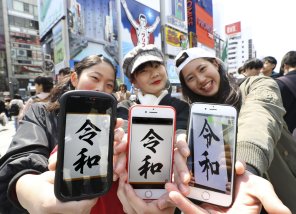
On May 1st of this year, one era ended in Japan and a new one began, now referred to as the Reiwa Era. This major change was precipitated by the abdication of the elderly Emperor Akihito, who was succeeded by his son Naruhito, to ascend to the Chrysanthemum Throne. On that day, Naruhito became the 126th emperor of Japan, and in keeping with several hundred years of tradition, the ceremony was bound by ancient protocols that have guided the oldest continuous hereditary monarchy in the world, supposedly dating back to 660 BC.

This transfer in leadership ushered in a new era now known as Reiwa (令和), roughly translated as “beautiful harmony.” There are actually five eras in modern Japanese history known as Meiji (1868-1912), Taisho (1912-1926), Showa (1926-1989), Heisei (1989-2019) and the newly established Reiwa Era (2019-?). This change in eras also impacts how time is measured in Japan. For example, instead of the Gregorian calendar year of 2019, we are now in Reiwa Year 1. However, when it comes to counting months and days, nothing has changed, which makes things a bit confusing for those unaccustomed to the Japanese dating system. Following this system, I was born in Showa 28, November 2nd in case you were curious about my age! The order of the dating system also begins with the year, followed by the month and then the day. This traditional pattern for marking the passing of years is still meticulously maintained by city and government offices in their record keeping, but it is steadily falling out of practice among the general population.

Calculating the passage of time is important for many reasons, but in Psalm 90, Moses prayed for wisdom in how to count days, not years. Since we are all bound by time and its demands upon our lives, it is imperative to reflect upon its daily impact and how this ties into God’s eternal purposes for us. After all, God alone stands apart from time, where a thousand years are like a day to Him, according to verse four of the same Psalm. Therefore, like Moses, we should seek God’s assistance in numbering our days with the intent of making each one count for eternity, because faithfulness is rooted in the daily choices we make. To make the right choices, we need God’s timeless and infallible perspective. He alone can teach us to count correctly.

Fake Food

“My food,” said Jesus, “is to do the will of him who sent me and to finish his work.”            John 4:34

fake food samples2

Unable to read the menu, I managed to coax the waitress to the front of the restaurant through a series of charades and broken Japanese and pointed to what I wanted to order. Enclosed in a glass case was the entire food repertoire appealingly displayed, but none of it was real. Known as shokuhin sampuru (食品サンプル), or “food samples,” these are exact replicas of dishes offered by the restaurant.

The production of these food models has evolved into an art form over time and it was initially pioneered in the late 1920s by Japanese artisans who used paraffin for their creations. These fake food samples enabled customers to order food without the use of menus, but over time, paraffin proved to be an inadequate medium as the colors slowly faded when exposed to heat or sunlight. Now constructed using a synthetic resin called polyvinyl chloride, these shokuhin sampuru can last indefinitely. This improvement in technique has unwittingly hurt the fake food industry so it has tried to expand its market outside of Japan.

There is a great deal of craftsmanship required to produce these fake food models, so plastic food manufacturers fiercely guard their trade secrets to protect their share of the market. Models are often custom tailored to the individual menus of each restaurant, which makes them quite expensive. Most customers are unaware that the plastic food they casually survey behind the glass typically cost the proprietor of the restaurant several thousand dollars. Their attention is naturally focused on satisfying their hunger and hopefully, something on the menu will fill that need.

What then is real food? Ask a man, and he might say steak and potatoes. Ask a vegan, and they might say quinoa and kale. Ask a Japanese, and they might say rice and fish. But when Jesus was asked a similar question, He gave a totally different reply. He said: “My food is to do the will of him who sent me and to finish his work.” Obviously, Jesus was not talking about real food, or even plastic food, but a different kind of nourishment that is essential for our spiritual well-being. While we are certainly flesh and blood beings that need physical nourishment, our spiritual natures require sustenance as well. We were created to fill the purposes of God, not just fill the physical desires or needs of the flesh. As Jesus famously expressed in the Sermon on the Mount, we are to hunger and thirst after righteousness (Matt. 5:6). We need both physical and spiritual food as part of a healthy diet. At the same time, we need to be cautious of the many “fake foods” that can entice us away from the greater things of God. Bon appetit!

My Protection

“Blessed are all who take refuge in him.”    Psalm 2:12

omamori2

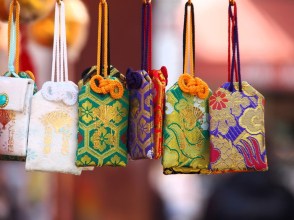
During my first taxi ride in Japan, I couldn’t help but notice an elaborate ornament swinging back and forth on the rear view mirror as the driver navigated through traffic. I later learned that this and a whole array of similar talismans or amulets are called “omamori” (お守り), which literally means “protection.” These small good luck charms are typically made from paper or wood and are usually protected inside an ornate bag along with a written prayer. They are sold at temples and shrines throughout the country with the promise that they will bring good fortune or protection to the bearer, but cynics largely view them as a clever means to raise money.

These omamori can be spotted on bags, hanging in cars, attached to various objects and are even used as cellphone straps. They come in many shapes, sizes and colors and different ones are advertised to possess different powers. Some offer businessmen success in the financial realm while others promise students a good outcome in their test scores. Other omamori guarantee general prosperity, protection from evil, happiness, traffic safety, good health, fertility, and a happy love life. The simple thought behind such charms is that the power and strength of the gods is somehow invested in these brocaded bags so they are not to be opened, as the blessing could be released and thereby lost.

It is generally understood that the shelf life of an omamori is only good for one year, which means a replacement must be purchased, conveniently bringing additional revenue to the local shrine or temple. These “expired” good luck charms must be properly disposed of, usually by burning, preferably at the place they were originally purchased. Eager to grab a share of the enormous profits in the good luck industry, it is now common for stores to sell generic omamori featuring the images of Hello Kitty, Mickey Mouse, Snoopy and other popular characters.

The search to obtain protection from harm or to procure good fortune is a natural inclination of the human heart. Such a quest can take many forms and it is often shaped by our culture, circumstances and worldview. But all such attempts to manipulate one’s personal future are doomed to failure because they are based on the false assumption that we are in control of our own fate. We all seek desired outcomes in life that avoid pain and bring pleasure, but it is arrogant to think that we are in control of such matters, or that we possess the discernment to always know what is actually good or bad for us. Our uncomfortableness with the unpredictability of life is in fact a reminder that we should seek protection and refuge in God, who is our only omamori, or real source of protection. Everything else is a mere trinket.

Clean Living

“Who may ascend the mountain of the Lord? The one who has clean hands and a pure heart.”                    Psalm 24:3-4a

Water purification 2

Whoever coined the phrase “cleanliness is next to godliness” would have loved Japan. Every morning, like clockwork, one can witness innumerable home owners and shop keepers vigilantly removing every trace of offending dirt, trash or stray leaf that invaded their designated territory overnight. Venture into the nearby train station, and there you can observe an army of cleaning personnel engaged in the never-ending task of mopping floors, polishing walls and windows and wiping down escalator handrails. Outside, white gloved taxi drivers maintain spotlessly clean vehicles for their customers and inside, the Japan Rail staff scurry around tidying up bullet trains in under seven minutes . To acquire these important life skills, students are required to clean their own classrooms and scrub the hallways as a part of their school curriculum.

Neighborhoods periodically schedule an o-sōji (大掃除), or “big cleanup” using volunteers to spruce up their local parks and common areas. Local churches and many small businesses follow the same pattern by routinely putting o-sōji’s on their calendar and everyone is expected to participate. Perhaps some of this emphasis on cleanliness is derived from the Shinto religion, which places great emphasis on purity, where visitors are encouraged to wash their hands and face before entering a shrine to worship. This practice, referred to as “harae” (祓), is a form of purification that attempts to establish a pure soul and mind in the worshipper. This is done through a symbolic washing with water or by having a Shinto priest shake a carefully constructed wand of white paper streamers over a person, place or object for good fortune. The rudimentary idea is that if you want to enter the presence of the gods and seek their blessing on you or your possessions, cleanliness is a prerequisite.

As the psalmist meditated on the holiness and purity of God, he wondered how it was possible for anyone to approach the Creator of the Universe, in whom not the slightest trace of impurity or defilement existed. Such a quest seems impossible, like the scaling of a lofty, inaccessible mountaintop. Only those with clean hands and a pure heart dare to attempt such a climb, but the uniform testimony of scripture is that no one has such qualifications as no one is without sin (Romans 3:23). In addition, no religious ritual can remedy this shortcoming. Thankfully, by the grace of God, in spite of our dirty hands and impure hearts, we are able to enter into God’s presence through the death and resurrection of His Son, the Lord Jesus Christ, who serves as the appointed mediator between God and man. (I Timothy 2:5) His cross testifies of the love of God to redeem us and an empty tomb provides proof of His power to make that a reality. Cleanliness is indeed next to godliness, but only God can provide the cleaning we so desperately need.

Play Ball!

“Therefore encourage one another and build each other up.”       I Thessalonians 5:11

baseball

“Take me out to the ball game” may be the universal chorus sung during the seventh inning stretch by baseball fans across America, but no such tradition exists in Japan. Called yakyū (野球) or bēsubōru in Japanese, baseball has been a staple of the Japanese sports scene since it was first introduced to the country in 1872. However, it is interesting to observe how the same game, with essentially the same rules, has been contextualized to fit a different culture.

For example, in America, which is recognized as the birthplace of baseball, an individual player’s independence and achievements are enthusiastically recognized and celebrated, even at times to the possible detriment of the team. However, in Japan, the team comes before everything else so players are expected to dutifully align their personal goals and ambitions to the overall purposes of the team. This is probably why the annual national high school baseball championship is so wildly popular. Instead of a collection of individual all-stars, the regional champions from Japan’s 47 prefectures intensely compete against other teams over a two-week span to bring glory to their school.

When we attended our first professional baseball game in Japan, we soon learned that cheering in Japan, in contrast to America, is a finely orchestrated event. Each team had its own cheering section full of rabid fans equipped with drums, ‘thunder sticks’ and trumpets that made noise nonstop in cadence under the direction of a leader whenever their team was up to bat. The respective cheering sections for each team knew all the cheers by heart and enthusiastically chanted them at the top of their voices in an effort to exhort each player to do his best so that their team might win.

In the New Testament, the church is given a number of “one another” commands that are intended to build up the body of Christ and promote spiritual maturity among fellow believers. Among these are “love one another,” “pray for one another,” “forgive one another,” “accept one another” and in I Thessalonians 5:11 we are exhorted to “encourage one another.” Encouragement is a powerful means to spur others on to greater deeds done with nobler motives, but sadly, we fail to put this into practice as often as we should. Perhaps the prideful desire to have our own efforts or accomplishments recognized gets in the way of our extending deserved (and needed!) encouragement to others.

It’s no secret in the world of sports that the home team has an inherent advantage in a contest since it is playing in front of its own fan base who fervently exhorts their team to perform well. Seen in these terms, cheering can have a real impact on the outcome of a game. Of course, we can’t always be on the winning team in the world of sports, but it’s comforting to know that we are all members of a team that will ultimately triumph to God’s glory. As part of that worthy objective, we are commanded to cheer for one another and lay aside our fleshly desire for personal recognition. Let’s play ball!

Swimming Upstream

“Let perseverance finish its work so that you may be mature and complete, not lacking anything.”        James 1:4

koinoboriThe koinobori fluttered in the spring breeze on the flag pole as a visible reminder that Kodomo no Hi (子供の日), or Children’s Day, was coming soon. Every May 5th, Japanese celebrate this national holiday by attaching bright, colorful streamers in the shape of carp called “koi” to express their well wishes for children. “Nobori” means “climbing” or “ascending”, so juxtaposed the words “koi” and “nobori” are translated to “carp streamers”. The Japanese greatly admire koi since they are a spirited fish that fight their way upstream, demonstrating courage and determination to attain a difficult goal. This imagery is captured by the flapping carp-shaped streamers on flag poles throughout Japan.

Originally, the number of koi flown was determined by the number of males within a household. The father was typically represented by the largest, black colored carp at the top. But in modern times, all the members of the family are now included on the pole, with a pink or red flag standing for the mother.

The koinobori expresses hope that the children of that household will grow up healthy and strong like carp swimming upstream. Larger versions of koinobori are raised in school grounds or near community centers and the timing often coincides with the blooming of nearby cherry trees, adding to the festive atmosphere. Everyone desires their children to be strong and healthy, like vigorous carp swimming upstream, but such qualities are often obtained through the challenges of adversity. It is certainly much easier to swim downstream and float with the current, but this does not produce the needed life attributes of perseverance, self-control, endurance and determination.

Many well-intentioned parents, in their zeal to protect their children to the exclusion of everything else, unwittingly obstruct such needed development and stunt their children’s growth. Swimming upstream may seem counter intuitive to our natural inclination to take the easy route, but it serves to produce strong and healthy children who are better prepared to face the inevitable challenges of life.

God desires the same for His children and as a result, wisely introduces trials, obstacles and hardships into our lives to make us strong. The goal is to help us mature and reach the full potential of all that He has created us to be and do. The Apostle James (James 1:2-4) reminds us that perseverance is a means to a very worthwhile end but many times it is hard to appreciate such long term benefits as we struggle against the current. It is therefore good to recall that we do not swim alone in such efforts and that we are not without aid as we press forward in the circumstances of life. These are truths we must pass on to the next generation as they wrestle with their own challenges and move towards the worthy goal of maturity in Christ.

Sorting Out the Trash


“But whatever were gains to me I now consider loss for the sake of Christ. What is more, I consider everything a loss because of the surpassing worth of knowing Christ Jesus my Lord.”             Philippians 3:7-8a

gomi3

Everyday life in Japan can present quite a few challenges for newcomers. For example, the correct separation of the trash (called “gomi” in Japanese) is a ritual that foreigners must learn in order to live in harmony with their neighbors and demonstrate cultural sensitivity.

In Japan, gomi is classified into many different categories. Herein lies the immediate challenge for a novice. First of all, it is essential to know the basic genres of gomi, which are burnable, unburnable and recyclable. In addition, there is often a separate category for clean plastics and another one for hazardous waste items like batteries, thermometers etc. Additional fees are charged for the pickup of larger stuff ranging from furniture to refrigerators. Collection days for differing categories of gomi, using specific collection bags, vary according to one’s local neighborhood and city regulations. The list of rules defining such matters is endless. For example, aerosol cans must be carefully punctured, newspapers and clean milk cartons should be tied up with a specific string, fluorescent tubes must be placed in their original boxes and branches must be bundled in tidy piles not exceeding a certain length etc. etc.

The classification of certain items can differ from area to area and the breakdown of recyclable categories can be even more complicated. Thick pamphlets are produced and duly distributed to insure compliance and protect well-intentioned people from folly. Any gomi that is incorrectly prepared or deposited on the wrong day is rejected by the trash collectors with a large X sticker, with the expectation that the gomi transgressor will shamefully haul it back home. As a consequence of all these regulations, everyone maintains multiple garbage cans in their homes designated for different types of gomi. All members of the household are well drilled on what gomi goes out on what day and everyone (incredibly) cooperates.

In Philippians 3, the Apostle Paul gave great advice about sorting out “trash” of a different sort that we would do well to heed. He testified that there are many things this world has to offer that we may be tempted to value or collect, but we must constantly evaluate them with a heavenly perspective. Upon closer inspection, they pale in value when compared to the eternal worth of knowing Jesus. Like sorting out the trash, we need to be good stewards of what has been entrusted to us while also exercising diligence in disposing of anything in our lives not closely aligned with God’s purposes.

Scattered Petals

“He has made everything beautiful in its time. He has also set eternity in the human heart; yet no one can fathom what God has done from beginning to end.”            Ecclesiastes 3:11

cherry blossoms 6

The normally clear, flowing stream below me was covered with a carpet of freshly fallen cherry blossoms slowly making their way downstream. While maintaining my perch on an ancient footbridge, I raised my gaze to an equally mesmerizing random cascade of petals falling from the trees lining the water’s edge. The incredibly beautiful blossoms from only a week ago were now quickly scattering like snowflakes in the wind, affirming once again the brevity and fragility of all things. Thoughts on life, death and renewal seemed to disperse to the edges of my mind like the scattered petals all around me.

The cherry blossom is the unofficial national flower of Japan; it permeates art, poetry and the national consciousness of the Japanese people on various levels. Called “sakura” (桜) in Japanese, this delicate flower explodes upon the landscape every spring throughout Japan. Its greatly anticipated arrival is celebrated as the cherry blossoms begin to bloom in the southernmost parts of Japan in mid-March and usually complete their annual cycle around early May in the northern prefecture of Hokkaido. The advent of the sakura is a major news event and thousands flock across Japan to nearby parks to picnic (called “hanami”) under these gorgeous trees. There they revel in the temporal beauty of cherry blossoms representing the renewed glories of spring.

The author of Ecclesiastes likewise marveled at the beauty of creation and in so doing his thoughts were drawn beyond himself to the Creator of all things. It is typically not easy to move from the shallow things of life to deeper, eternal thoughts, as so much seems to get in the way. Therefore, to assist us in this all important journey, God has endowed the world around us with visible reminders of His presence and benevolent care. Such displays are worth celebrating and reflecting upon as they have the power to draw us away from the mundane, or routines of this life, to the greater things of God. As God has placed eternity in our hearts, the beauty of this created world beckons us to slow down and meditate on His existence.

Obligatory Chocolate

“I am obligated both to Greeks and non-Greeks, both to the wise and the foolish.”         Romans 1:14

Valentines3

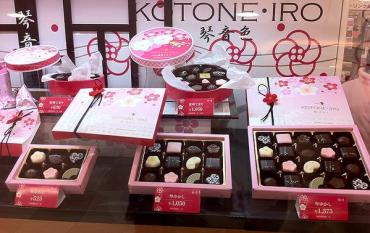
A beautiful arrangement of various chocolates greeted me as I walked into the store, reminding me that Valentine’s Day was right around the corner. If you thought romance was in the air, you would be entirely mistaken. What was on display is actually known as “giri choco” (義理チョコ), which means literally “obligation chocolate.” This chocolate is normally purchased by women and given to their male colleagues, casual acquaintances and others as an expression of their friendship or gratitude. Romantic feelings have nothing to do with it. Giri choco is customarily given by women to the men in their life circles to help them feel appreciated during the nation-wide celebration. But there is another sub-category called “cho-giri choco” meaning “ultra-obligation chocolate.” This is given to certain men solely out of duty because you feel trapped by social circumstances to include them.

It is important to note that giri choco is not to be confused with “honmei choco” (本命チョコ), which is “true feeling chocolate” and is normally given to husbands, boyfriends or even prospective boyfriends. Honmei choco is traditionally a higher grade of chocolate that often comes in special shapes, arranged artistically in ornate confectionary boxes and is considerably more expensive.

The subtle differences between these two types of chocolates helps the recipient to avoid getting his signals crossed and misinterpreting the giver’s intent. While men are the primary recipients of chocolate in Japan on Valentine’s Day, they are certainly not off the hook. In order to sell more chocolate, the National Confectionary Association cleverly designated March 14 as “White Day,” when men must reciprocate by giving chocolate (often white chocolate), cookies, flowers or other small gifts to the women who gave them chocolate exactly one month earlier. Obligation flows in both directions; no one escapes.

“Giri” is a very important value among the Japanese, although it can at times feel oppressive and has even been described as the “burden hardest to bear.” Obligation is certainly a lower form of motivation, but there are good and bad aspects to it that should not be confused. An example of obligation as a good thing can be found in the Bible, when the Apostle Paul gladly accepted the obligation to preach the gospel to others, not viewing it as a burden, but rather as an incredible privilege (Romans 1:15-17). But sometimes even the noblest forms of obligation can subtly morph into patterns of legalism and undermine the very freedoms Jesus purchased on the cross at great cost to Himself. The fine line separating freedom and obligation can at times be hard to discern, but God has provided His Spirit to help us distinguish these matters so that we might offer up our best to Him. After all, Jesus did not enter our world to redeem us because of obligation, but rather, out of love. That is a gift worth celebrating and imitating.

A Dangerous Morsel

“The words of a gossip are like choice morsels; they go down to the inmost parts.”                                                                                                                                                                Proverbs 18:8

Diners at the sushi restaurant admired the paper-thin slices of raw pufferfish sashimi artfully arranged before them on the platter in the shape of a chrysanthemum, while naively ignoring its potential danger. One tiny mistake by the highly trained sushi chef could result in the death of those enjoying this popular Japanese delicacy. A poisonous neurotoxin, located primarily in the liver and ovaries of the pufferfish, is 1,200 times more lethal than cyanide, with no known antidote. More than one hundred people die annually from eating improperly prepared pufferfish, known as “fugu” in Japanese.

Some fugu aficionados actually choose to dine at specialty sushi restaurants where microscopic portions of the poison are purposefully not removed by the chef so that the consumer can experience a bit of a buzz or tingling sensation. As a precaution in such cases, the chef is required to sample the sushi to verify that it is safe. Due to its deadly toxicity, the government has banned the sale of whole pufferfish to the general public and it is the only food the emperor of Japan is forbidden by law to eat in order to ensure his safety.

The Scriptures point to the existence of other dangerous morsels parallel the peculiar culinary habits of eating fugu. The Book of Proverbs compares gossip or slander to a delicious morsel that can be appealing to our sense of taste or sight, but produces deadly effects when consumed. It begins when our sinful nature tempts us to listen to the reports of others’ misfortunes or misdeeds in the form of gossip, which may or may not be grounded in truth. The ingestion of such morsels can produce deep wounds in both the listener and the person who is the center of such malicious gossip. Like a deadly toxin, it has the potential to penetrate one’s inmost being and as a consequence, destroy relationships and reputations. This is why we are instructed to put a guard on our hearts, restricting our diet to things that are true, right, holy and honoring to God. Just as there are healthy and unhealthy food choices we must make every day, gossip has harmful effects on the lives of those who choose to consume it.