
Ippo Ippo book release

Dear Ippo Ippo Steps subscribers,

I want to thank all of you who have followed my blogs. It has been my intention for quite some time to compile all of these thoughts on Japan into a single book which is now available to purchase through Amazon. Most of you are well acquainted by now with the phrase Ippo Ippo, which means “step by step” in Japanese. These simple words serve to capture the many experiences of my wife and I in Japan and reflect our extended sojourn among a people living in a land extremely different from our own. This book was written for those who want to know more about Japan and with that objective in mind, it attempts to creatively peel back some of the layers of a very unique country that currently attracts millions of curious visitors every year. Many cultural items distinctive to Japan are covered in the book and each is linked to a devotional thought rooted in the Bible. 

The following is a summary of the book by the lead pastor of our home church, Jason Wolin. “Mike McGinty offers a masterful bridge between the intricate traditions of the Land of the Rising Sun and the timeless truths of the Risen Son. Drawing from over 34 years of life and ministry in Japan, McGinty transforms everyday cultural observations, from the precision of a hanko personal seal to the stoicism of gaman, into profound spiritual lessons that resonate far beyond the Japanese archipelago. The book is structured with the accessibility of a travelogue and the depth of a seasoned theological devotional. Whether he is navigating the unspoken etiquette of Japanese slippers, the “meishi dance” of business card exchange, or the heartbreaking landscape of “empty foundations” following the 2011 tsunami, McGinty’s voice remains grounded, witty, and authentically humble. He captures the beautiful complexity of a nation where high-tech “Sound Princess” toilets and millions of vending machines coexist with ancient Shinto rituals and a deep-seated cultural longing for “reading the air.” Each of the 100+ vignettes pairs a unique Japanese concept with a relevant biblical passage, encouraging readers to walk “step by step” (ippo ippo) in their own faith journey. McGinty doesn’t just explain Japan; he uses its culture as a mirror to examine the human heart, our need for community, and God’s unwavering faithfulness. This is an essential read for missionaries, travelers, or any “sojourner” seeking to find God’s presence in the nuances of a foreign land. It is a truly enlightening, heart-stirring, and culturally rich guidebook for the soul.”

To order:

Click on this link to purchase the paperback version of the book on Amazon ($13).

Clink on this link to purchase the Kindle version of the book on Amazon ($5).


If you enjoy the book, please feel free to add a review on the Amazon site and pass this information on to your own circle of friends. Thanks so much!

P.S. I will also soon reformat the existing blogs on my site to make them more accessible and easy to find by topic.
Scary Phone Calls

But if it is by the Spirit of God that I drive out demons, then the kingdom of God has come upon you.”

Matthew 12:28

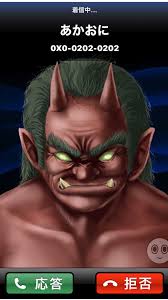
Do you, or someone you know, experience difficulty in getting your child to take a nap, brush their teeth or clean their room? If so, Japan has the perfect parenting app just for these kinds of situations. It’s called “Oni Kara Denwa” (鬼から電話), or “Phone Call from a Demon/Ogre.” This highly unusual, and rather controversial, concept straddles the line between creepy psychological abuse and facetious fun. However, the clear and laudable intention of this unique parenting approach is to promote better behavior among disobedient children. Surprisingly, over ten million desperate Japanese parents have downloaded the somewhat questionable Oni Kara Denwa app in an attempt to raise socially responsible children.

Oni, often translated as ogres or demons,are usually depicted in Japanese folklore and modern stories as malevolent, fearsome creatures who dispense misfortune or act as agents of divine justice when unwittingly provoked. Over the centuries, well-meaning parents have routinely tapped into these semi-benign stories by subtly invoking the threat of demons to their uncooperative children with the goal of promoting better behavior from them. For example, if one’s child refuses to do their homework, eat their vegetables, throws a tantrum, or is caught in the act of lying, a tech-savvy parent can just download the app and choose an ogre who seems best suited for that particular problem. The phone then rings, is handed over to the child, and the oni will proceed with warnings and threats in an attempt to scare the child towards improved conduct. The variety of characters available for such an assignment may include a number of characters ranging from traditional ogres to witches, ghosts, zombies, aliens, wolfmen, scary ninjas and even a frightful old hag. The content and tone of the threat will vary according to the conscripted character and the nature of the misbehavior. The app also employs the partly humorous, yet frightful facial expressions of a famous comedian known as Kintaro, as well as several animated creatures whose images are equally unsettling. 

The idea of employing fraudulent ogres to terrorize a child into better behavior seems to be an abhorrent and rather dubious parenting technique, particularly if one’s worldview includes the actual existence and activities of demons. Scriptures tell us that one of the identifying signs of the promised Messiah was that he would have unprecedented authority over both the physical and spiritual realms, enabling him to heal all manner of illnesses and cast out demons (Luke 7:18-23). Jesus himself testified that such an exhibition of power over evil was an important indicator of the imminence of God’s kingdom (Matthew 12:28). He further affirmed this truth through an analogy where he compared himself to one who “ties up the strong man,” in reference to Satan, in order to “plunder his house” (v.29). Possessing such knowledge, as children of God, we should not live in fear of darker entities and their evil intentions. Instead, we are repeatedly exhorted in the Scriptures to fear God, not because He is capricious and needs to be placated, but because He is worthy of our worship. Solomon arrived at the same conclusion noting: “Fear God and keep his commandments, for this is the duty of all mankind.” (Ecclesiastes 12:13) Therefore, rather than utilizing an app based on terror, we should revere our holy, omnipotent and omniscient Heavenly Father who desires our well-being above all else. We can approach Him anytime, anywhere, even without an app.

Gestures

“with a gesture of extreme devotion, she broke the flask and poured out the precious oil on him.”                                                                                                                      Mark 14:3b

A cursory glance through our old family photos soon reveals that the McGinty gene pool contains a number of unique features, including noses that often range in XL to XXL sizes. Living in Japan, a land typified by smaller noses, I sometimes felt a little self-conscious of this feature, so I was slightly offended one day when someone pointed to their nose while talking to me. I initially thought that the individual was singling my nose out, but after considering the context, I grasped that she was merely pointing to herself. In Japanese culture, it is common for a person to indicate themselves in a conversation by pointing to their own nose.

Every culture has an array of gestures to communicate certain things and Japan is no exception. For example, one of the more common hand signals in Japan is to cross one’s index fingers or forearms when facing someone indicating a response of “stop” or “no.” When wanting to make my way through a crowd, I soon learned to use a hand chop sort of motion to politely encourage people to move aside. If one is unsure of how to answer a question, a simple tilting of the head will convey their uncertainty to their conversation partner. Conversely, if the answer is a clear “yes,” or “okay” when talking to a group of people, you can make a big O with your arms while bringing your hands together above your head.

Below are a few gestures that are commonly used in Japan:

  • Asking for a favor or forgiveness—place your palms together in a praying motion in front of your chest
  • Beckoning someone to come—extend one hand with the palm down and move fingers back and forth
  • Indicating your answer is “no” or “something different”—hold an open hand at a 90° angle in front of your face and wave back and forth
  • Communicating that someone is smart or well educated—use two fingers to wiggle a pair of pretend glasses up and down
  • Counting—hold one hand open and fold in the thumb to indicate the number “one.” To indicate the number “two” fold in your index finger along with your thumb. Proceed in order with the other fingers when counting three, four and five.
  • Demonstrating anger—place your fists with the index fingers pointing up on both sides of your head which represent demon horns.
  • Expressing determination—Flex one arm while placing the opposite hand on the bicep
  • Signaling rejection or taunting— pull down your lower eyelid to expose the red underside and stick your tongue out. This particularly strange gesture is called akanbe or “red eye” in Japanese.

One of the more memorable gestures recorded in the Bible was the anointing of Jesus by Mary shortly before His crucifixion. Breaking open a flask of pure nard, representing a year’s wages, she poured the entire contents on Jesus’ head and feet (Mark 14:3-9). She then proceeded to wipe his feet with her hair which represented her glory as a woman. Mary’s sacrificial act of worship of her Lord, while misunderstood by others in the room, was commended by Jesus and is commemorated to this day. Unknowingly, she was preparing Jesus’ body for burial following God’s ultimate gesture, His Son’s death on a cross. Through this unparalleled event, God extends His hand to us, beckoning us to come to Him and believe.

Kanji of the Year

“The Word became flesh and made his dwelling among us.” John 1:14a

The year 2024 was a relatively good year for Japan. Athletically, its Olympic athletes placed third in the overall medal count. In addition, superstar Japanese baseball player, Shohei Ohtani, was the overwhelming choice for MVP in the Major League Baseball after a record-breaking season. But there was also a downside element to the year as the country’s ruling political party was caught up in a major financial scandal. On top of this bad news, skyrocketing inflation negatively impacted many household budgets. Taken together, these events explain why the general populace collectively chose the Chinese character kin (金), meaning “gold” or “money,” to represent the year. Every year a single kanji, or Chinese character, is identified through a national ballot sponsored by the Japanese Kanji Proficiency Society to symbolize the major events that transpired that year. The results of this survey are annually announced on December 12 at the Kiyomizu Temple in Kyōto.

According to historical records, kanji (漢字) were introduced to Japan around the fifth century AD from China and quickly became the mainstay of the country’s writing system. Over time, Japan also incorporated two other phonetic systems, or alphabets, known as hiragana and katakana. Over 2,000 kanji are now commonly used and they are best described as ideograms that represent specific concepts. Many of these kanji are rather complex to write. However, hiragana and katakana are much simpler and fewer in number. There are only 46 hiragana which are normally written in combination with kanji for Japanese words and an equal number of katakana are used for foreign loanwords and names.

One of the most memorable “kanji of the year” selections was kizuna (絆), meaning “bonds” or “relationships,” which was chosen in 2011 following the devastating East Japan earthquake, tsunami and nuclear disaster. During that time period, people from across Japan and around the world united on many levels to help one another in the midst of great loss. In that same year, the women’s national football team won its first FIFA World Cup through selfless teamwork, so kizuna was a very appropriate choice in light of those developments. In a different vein, the kanji for war, translated as “sen” (戦), has actually been chosen twice. Once in 2001 when the terrorist attack on the US Trade Towers on 9/11 dominated current affairs and again in 2022, following Russia’s invasion of Ukraine. Most appropriately, matsu (末), meaning “end,” was the kanji of the year in 1999 as one century came to an end and a new one began.

Sometimes it takes just a single word to powerfully capture one’s thoughts, feelings or experiences during a critical juncture in our lives. On rare occasions, one word can convey such a depth of meaning that it resonates within our souls and expresses multiple profound nuances all at once. In writing his account of Jesus’ life, the Apostle John employed this concept when he introduced Jesus as the “Word” at the beginning of his Gospel. The very God who is depicted in Genesis as the One who spoke the entire universe into being is now interacting intimately with all mankind through the incarnation of His Only Son. As John so eloquently expressed it: “The Word became flesh and made his dwelling among us.” In taking up residence among men, Jesus changed history forever. God has spoken and acted. Forgiveness and salvation are now freely available. This “Word” or “Kotoba” (言葉) should be on everyone’s lips as the appropriate kanji for the ages and exalted forevermore.

Omikuji

“but God has surely listened and has heard my prayer.” Psalm 66:19

The neatly folded strips of paper carefully arrayed in the temple grounds fluttered in the gentle breeze like hundreds of white-winged butterflies moving in unison. Written on them were the prayers or predictions for visitors who sought a change in their fortune or a glimpse of their future. Good health. New love. Success in business. Physical protection. High test score. Well-paying job. Recovery of a lost item. Healthy children. Nice housing. Profitable investments. The list of wants and needs by the serious believer to even the most casual devotee are both varied and endless. Everybody wants something for a minimal investment.

Known as omikuji (御御籤), these strips of paper offering guidance or predictions, are available throughout Japan in both Shinto shrines and Buddhist temples. Meaning literally “sacred lot,” omikuji are acquired by contributing a small donation. They are particularly popular around New Year’s when people are keen to ascertain their fortune for the coming year. The omikuji, with their previously recorded transcriptions, are dutifully placed in a special box and from there randomly chosen by a fortune seeker. These days it is now quite common to purchase omikuji dispensed through conveniently located vending machines. Possible fortunes written on the omikuji fall within the following categories:

  • Great blessing (dai kichi)
  • Blessing (kichi)
  • Small blessing (shō-kichi)
  • Half-blessing (han-kichi)
  • Future blessing (sue-kichi)
  • Future small blessing (sue-shō-kichi)
  • Misfortune (kyō)

If a person is unfortunate to draw an omikuji that portends bad news, they are likely to rid themselves of the ill fortune by attaching the paper to a nearby pine tree or a specially prepared place within the temple or shrine grounds alongside other unfavorable predictions. The desired outcome is that the bad luck, in an obvious play on words, will wait (待つmatsu) by the tree (松matsu) rather than attach itself to the bearer. If the fortune is good, the owner may likewise choose to leave their omikuji in a designated sacred area for greater effect or take it home for good luck.

The power of the omikuji is considered to be effective for only one year, at which time it must be properly destroyed. The origin of omikuji is traditionally dated back to the Heian period to a monk named Ryōgen, who lived from 912-985, but the custom started to flourish in the Kamakura period (1185-1333) as omikuji were increasingly used for making decisions.

Having been made in the image of God, the natural inclination of the human heart from the beginning of time is to seek communion with God. Not only do we have practical needs that we want filled, as social creatures, we also long to be seen and heard by an all-knowing and all-caring God. As a result, we tend to create and maintain inadequate traditions to facilitate communication with God (or gods). In Japan, omikuji is a popular form to enhance dialogue between mortals and the immortal. But the Bible does not portray a God who needs to be coerced or helped in communicating with His creation. Instead, by His very nature, God delights to hear our prayers and act upon them because of His boundless love for us. Such care is not random, limited by time and certainly cannot be manipulated. As the psalmist testifies: “God has surely listened and has heard my prayer.” (Psalm 66:19)

Honorifics

“So in Christ Jesus you are all children of God through faith.”        Galatians 3:26

Every society utilizes standardized language patterns and cultural behaviors to help identify an individual’s place within society and Japan is no exception to this rule. Visible in children’s playgrounds, educational institutions, corporate structures and family interactions, these social and language cues serve to govern life. More importantly, they help to facilitate community. In Japan, this common practice can be clearly seen in the use of honorifics embedded in daily communication. Generally known as keishō (敬称), certain suffixes or prefixes are routinely utilized when referring to or addressing others in conversation.

The suffix of “san” (さん), attached to a person’s name, is by far the most common honorific employed in every day speech. San is typically translated as “Mr., Mrs., Ms. or Miss” and is generally used as a title of respect between adult equals in both formal and informal contexts. It is also applied to senior family members such as fathers, mothers, aunts, uncles and grandparents as a sign of respect. A higher level of esteem is indicated through the suffix “sama” (様), which is applied to people of greater status within society, a group or an organization. This particular honorific is also customarily utilized in formal correspondence and standardly attached to the addressee’s name on an envelope.

In contrast to san and sama, the suffixes kun (君) and chan (ちゃん) are informally used for a generally younger demographic and tend to be more gender specific. For example, kun is often attached to the name of younger men or boys by an older speaker or someone within the same age group. Kun can also indicate a junior status within the workplace or an academic circle. Both males and females may refer to someone using the kun suffix if they feel an emotional or other attachment to the individual. Unlike the designation kun which is commonly applied to boys, chan is most frequently used for girls, small children, babies, female friends or for women who seem young in the eyes of the speaker. Among young people, chan can connotate a close relationship or a feeling of affinity. In addition, “o” and “go” are often used as honorific prefixes to nouns that indicate certain positions such as a customer or a doctor.

Titles such as senpai, kōhai and sensei are neither suffixes nor prefixes, but rather, honorific terms which are frequently used to indicate relationship. A senpai (先輩) is a senior colleague or classmate because of their age or experience and literally means “former born.” Opposite of a senpai is a kōhai (後輩), who is a junior in the relationship within an informal hierarchy commonly found in schools, clubs and businesses. Probably the most common honorific term is sensei (先生) which is not an age indicator but rather, highlights an individual’s level of expertise within their respective field, such as a doctor, an artist or a scholar. Sensei is usually translated as “teacher,” as some kind of teaching role is often involved.

The world in which we live sometimes seems to be overly preoccupied with separating people into categories that can often produce negative results such as prejudice, discrimination, injustice and intolerance. But the New Testament clearly teaches that all such prejudicial constructs and categories that typically divide us are abolished at the foot of the cross. It is not our skin color, gender, economic status or occupation that earns us any favor with God, but solely our faith in what He has done through His Son Jesus. Manmade efforts to create and foster community are no longer needed when we become children of God. (Galatians 3:26) Through the grace and work of God, everyone has a seat at the table.

Duty-Obligation

“Here is the conclusion of the matter: Fear God and keep his commandments, for this is the duty of all mankind.”                                                                                                          Ecclesiastes 12:13

duty2

Our home phone rang unexpectedly Sunday morning, about an hour before the service started for the church plant we were leading. I wondered who it could be… “Sumimasen, this is Mrs. Takahashi and I regret to inform you that I will be unable to attend church this morning.” A few minutes later the phone rang again. “Sumimasen, this is Mr. Sasaki and I’m sorry to say that none of our family will be at church today.” While I was disappointed by these sudden developments, I was also a bit mystified. I wondered why these church members felt compelled to let me know of their absence. I didn’t have to ponder long to arrive at an answer: Gimu (義務). Roughly translated as “obligation, duty or responsibility,” gimu is a powerful force in Japan that drives a tremendous amount of social interaction.

This vague sense of obligation is frequently imposed by rules and regulations associated with one’s occupation, social status or family position. Giri (義理) is a closely related word that captures a similar sense of duty arising from a person’s place in societal structure and focuses more on the burden or responsibility placed upon an individual. While closely linked to the concepts of loyalty, gratitude and indebtedness, gimu is a key element for maintaining social harmony in Japan. Its earlier manifestations were seen in the responsibilities samurai bore under their feudal lords who provided for their subjects in exchange for their unquestioning devotion. Centuries later, this value of gimu transferred easily to the Japanese workplace environment where new “masters” expected a subtler form of subjectivity. Gimu is often visible in family relationships too, with the prime example being an eldest son who is traditionally expected to shoulder certain responsibilities. The value of gimu is certainly present in the educational system, particularly in teacher-student relationships. Likewise, church can easily be perceived as a similar hierarchical structure, which accounts for the earlier response of our church members.

The awareness of owing something and being put in the position of repaying that obligation accounts for a lot of social behavior in Japan and can have a tremendous upside. However, the darker or more extreme side of gimu was embodied by World War II kamikaze pilots who sacrificed their lives in obligation to their country. But the power of gimu in recent history also inspired many employees at the doomed Fukushima power plant to heroically risk their lives to avert a nuclear disaster following the Great East Japan Earthquake in March 2011.

Another term, ninjō (人情), or the human emotion of sympathy and kindness, often comes into conflict with giri so this is a common theme found in Japanese literature. In a society where the concept of self is often defined through social interaction, an individual can understandably feel trapped between the pressure to fulfill his or her perceived duty and the desire to follow their own emotional impulses.

Duty, or the fulfillment of responsibilities, is certainly a biblical value, thus a substantial amount of teaching is devoted as to how these values should be played out within human relationships and social constructs in a way that honor God. But superseding all human social obligations is our duty to fear God and keep His commandments (Ecclesiastes 12:13). In fact, our duty to daily offer to God everything we are and everything we own cannot be separated from our duties to our fellow man. However, unlike giri, these are not a burden we have to bear; instead, they are the basis for harmony with others, flowing out of relational harmony with God. Stated more simply, our mandate or obligation is to love God and to love others (Luke 10:27). This is where gimu and ninjō seamlessly come together at the foot of the cross.

Haiku

“My heart is stirred by a noble theme as I recite my verses for the king; my tongue is the pen of a skillful writer.”      Psalm 45:1

haiku

Haiku (俳句) is Japan’s unique contribution to the many forms of poetic expression that writers traditionally use to convey creative thoughts. A haiku is a very simple style of poetry that aims to simply, but elegantly, capture a brief moment in time juxtaposing two different images. The overarching theme typically includes an element of nature as part of the cumulative objective to offer a sense of enlightenment to the reader.

A haiku consists of only three lines and a total of 17 syllables. The first and third lines are restricted to five syllables each and the middle line expands to seven syllables. Unlike many other forms of poetry, there is no rhyming in haiku as the primary goal is to use a minimum of words to evoke an impression of mystique, beauty or surprise. The Japanese haiku finds its historical roots in tanka poetry, which means “short song,” and consisted of 31 syllables. The great poet Matsuo Bashō (1644-1694) is considered to be the originator of the current haiku form. The following is a famous example of his work:

              An old silent pond

              A frog jumps into the pond—

              Splash! Silence again.

Besides its unique format, there are two additional elements that define a traditional Japanese haiku. One of these is called a kireji (切字), which means literally a “cutting word” and has no equivalent in English grammar. Such words serve to create a dramatic break or pause within the poem, adding structural support and balance. The second element, also introduced by the poet Bashō, is the inclusion of kigo (季語), or what roughly translates to a “season word.” All haiku include a seasonal phrase or word that serves to pull the diverse strands of the poem together. What follows is my amateur efforts at penning a haiku that succinctly depicts my diverse life:

              Dry Texas cacti

              Delicate cherry blossoms

              My home in this world

The Bible is full of poetry and poetic expressions that attempt to describe the unseen within the confines of our literal existence and human understanding. Whole books such as Job, Psalms, Proverbs, Ecclesiastes, Song of Solomon and Lamentations are largely poetic in content and comprise almost a third of the entire Old Testament when poetic portions from other books are included. God’s communication with man is often conveyed in poetic terms and countless biblical characters respond through songs employing metaphorical language to describe His deeds and relationship with man.

Complex and deeper patterns of communication seem almost necessary when the spiritual world and physical world intersect with one another. This explains why the poetic images and language centered on the shepherd motif in Psalm 23 can deeply penetrate our hearts and consciousness, enabling us to better grasp eternal truths. Poetry serves to elevate communication to a higher level when one’s “heart is stirred by a noble theme.” (Psalm 45:1) Common words and communication patterns seem grossly inadequate when speaking of the splendor of God or addressing God Himself.

Learning to Count

“Suppose one of you wants to build a tower. Won’t you first sit down and estimate the cost?”

Luke 14:28a

numbers

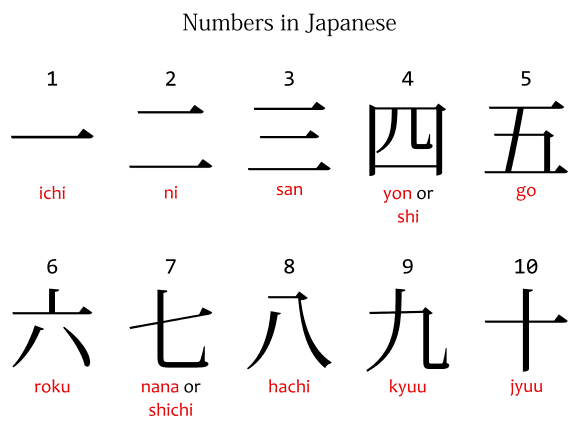
Learning to count is usually one of the first objectives in acquiring a foreign language, but mastery of this seemingly simple task is no small feat in Japanese. It is much more challenging than English, which simply utilizes ordinal numbers (1,2,3…) to indicate the quantity of something or cardinal numbers (1st, 2nd, 3rd…) to point out the position of something in a list. That’s it. But Japanese takes counting to an entirely different level that can easily befuddle the novice learner. For starters, it doesn’t help that Japanese employs two different basic numbering systems, with one based on ancient Chinese called “kango” (漢語) and another, known as “wago” (和語), with Japanese origins. Using the kango system, 1,2,3 becomes ichi, ni, san, but the same numbers transform into hitotsu, futatsu, mitsu using the wago counting system. This is where the fun begins.

 Wago is basically a generic means for counting objects that don’t exceed ten in number, but kango is usually combined with an assortment of “counters” that vary according to the object being counted. For example, if you are counting long, cylindrical objects like pencils, a “hon” (本) is combined with each number so the simple 1, 2, 3 in kango becomes ippon, nihon, sanbon and so forth. Flat, thin objects like paper are indicated by the counter “mai” (枚) so 1, 2, 3 pieces of paper becomes ichimai, nimai, sanmai. Small objects use the counter “ko” (個) and large objects are “dai” (台). Small animals are “hiki” (匹), but large animals are “” (頭). Pairs of socks are counted using “soku” (足), birds are numbered by “wa” (羽) and bowls or cups of liquid are indicated by the counter “hai” (杯). Altogether, there are approximately five hundred Japanese counters, although many are rarely used.

To add to this confusion, there are many other aberrations to keep in mind when counting in Japanese. An additional quirk is the frequent substitution of the numbers 4, 7 and 9 with an alternative word. The typical word for four is “shi,” which is the same pronunciation for the word death (死), so people often use “yon” as a substitute. Along the same line, the number nine is “ku” in Japanese, which can also mean “suffering” (苦), so that is often replaced with “kyū.” The number seven (shichi) sounds very similar to the number eight (hachi) so it often becomes “nana”.

Counting in Japanese is obviously a difficult challenge, but there is another form of counting that is even more formidable. As Jesus’ influence continued to grow, which in turn attracted more followers, it became necessary for Him to identify those who were fully committed to pursuing the whole purposes of God. Therefore, Jesus gave two parables in Luke 14 where He encouraged potential disciples to count the possible cost of abandoning their comfortable lives in order to follow Him. Such a radical commitment could estrange them from family, incur the loss of personal possessions and even be life threatening. Rather than blindly entering into such a life-changing commitment, Jesus wanted His followers to consciously calculate the risks and sacrifices that may be demanded of them in their new faith journey. They would learn soon enough that taking up one’s cross to follow Jesus was both a difficult and dangerous form of counting. But those who learned to count in such terms in this life accrued a heavenly treasure in the world to come.

When Yes Means No

“our message to you is not ‘Yes’ and ‘No.’” II Corinthians 1:18b

YesNo2Still a stranger to the unique ways of Japan, I visited the largest ski shop in Sapporo, completely unaware of the rabbit hole I was about to enter. It all began with a simple question: “Do you have any men’s ski boots in size 29 centimeters under ¥20,000?” (around $200) Much to my surprise and satisfaction, the salesman immediately replied “hai,” which I understood to mean, “yes.” I was then instructed to sit down while he disappeared in the back to retrieve the boots.

A few minutes later the salesman emerged triumphantly bearing a nice pair of men’s boots in the correct size, so I started to quietly congratulate myself on my successful shopping foray. But my premature celebration came to a screeching halt when I noticed the price tag dangling from one of the boots: ¥85,000! After catching my breath, I reminded the salesman of my meager ¥20,000 budget. Seemingly nonplussed by my intransigence, he proudly told me that they were willing to make the boots available at a special price of only ¥70,000. After a few more enquiries and direct negotiation with the manager, I soon learned that this was the ONLY pair of men’s ski boots the store had in my size. I was now trapped in a quasi life and death struggle as the bargaining continued. The price soon dropped to ¥60,000, and then ¥50,000 as I kept politely insisting that I only had ¥20,000 for the purchase. The store personnel probably thought this was a clever bargaining ploy on my part and didn’t fully grasp that I actually had only ¥20,000 for the purchase. By now I was just looking for an avenue to escape my predicament as all the salesmen repeatedly huddled together to discuss their strategy. Approximately one hour later and exhausted by the experience, I eventually walked out the front door with my new pair of ski boots purchased for only ¥20,000. I was completely befuddled as to what had transpired inside.

First of all, hai can simply mean “I hear you,” or “I acknowledge what you said.” So, the salesman never actually promised that the store had what I was looking for at the price I had requested. Secondly, to complicate things even further, it is considered impolite to tell a customer “no,” implying that they can’t help you. Unknown to me, I had unwittingly placed the store management in an awkward position of being unable to refuse my request. Upon further reflection, I think we all learned something that day as I was possibly the first foreigner to ever shop at their store. As the years went by, I continued to use those boots, which served as a reminder that “yes” can sometimes mean “no” and that I had much to learn about communication in Japan.

I seriously doubt that the Apostle Paul ever tried to purchase ski boots and was faced with a similar quandary, but he was charged on one occasion of inconsistency in his messaging. It appeared that his “yes” and “no” were in contradiction with one another as Paul had previously stated his intention to visit the Corinthian church on his way to Macedonia (II Corinthians 1). However, for reasons not stated, Paul was forced to cancel those plans which led to unfair criticisms of his character. After rebuffing these somewhat trivial arguments in his letter to the Corinthian Church, Paul used this theme to emphasize the surety of the promises of God in Christ. “For no matter how many promises God has made, they are ‘Yes’ in Christ.” (v.20) This is a great reminder that there can be confusion among people in communication, and there may even be confusion regarding one’s character, but God’s message and His plan of redemption through His Son are unequivocally clear. God’s “yes” in Christ is an eternal game changer for all who believe.