
Kanji of the Year

“The Word became flesh and made his dwelling among us.” John 1:14a

The year 2024 was a relatively good year for Japan. Athletically, its Olympic athletes placed third in the overall medal count. In addition, superstar Japanese baseball player, Shohei Ohtani, was the overwhelming choice for MVP in the Major League Baseball after a record-breaking season. But there was also a downside element to the year as the country’s ruling political party was caught up in a major financial scandal. On top of this bad news, skyrocketing inflation negatively impacted many household budgets. Taken together, these events explain why the general populace collectively chose the Chinese character kin (金), meaning “gold” or “money,” to represent the year. Every year a single kanji, or Chinese character, is identified through a national ballot sponsored by the Japanese Kanji Proficiency Society to symbolize the major events that transpired that year. The results of this survey are annually announced on December 12 at the Kiyomizu Temple in Kyōto.

According to historical records, kanji (漢字) were introduced to Japan around the fifth century AD from China and quickly became the mainstay of the country’s writing system. Over time, Japan also incorporated two other phonetic systems, or alphabets, known as hiragana and katakana. Over 2,000 kanji are now commonly used and they are best described as ideograms that represent specific concepts. Many of these kanji are rather complex to write. However, hiragana and katakana are much simpler and fewer in number. There are only 46 hiragana which are normally written in combination with kanji for Japanese words and an equal number of katakana are used for foreign loanwords and names.

One of the most memorable “kanji of the year” selections was kizuna (絆), meaning “bonds” or “relationships,” which was chosen in 2011 following the devastating East Japan earthquake, tsunami and nuclear disaster. During that time period, people from across Japan and around the world united on many levels to help one another in the midst of great loss. In that same year, the women’s national football team won its first FIFA World Cup through selfless teamwork, so kizuna was a very appropriate choice in light of those developments. In a different vein, the kanji for war, translated as “sen” (戦), has actually been chosen twice. Once in 2001 when the terrorist attack on the US Trade Towers on 9/11 dominated current affairs and again in 2022, following Russia’s invasion of Ukraine. Most appropriately, matsu (末), meaning “end,” was the kanji of the year in 1999 as one century came to an end and a new one began.

Sometimes it takes just a single word to powerfully capture one’s thoughts, feelings or experiences during a critical juncture in our lives. On rare occasions, one word can convey such a depth of meaning that it resonates within our souls and expresses multiple profound nuances all at once. In writing his account of Jesus’ life, the Apostle John employed this concept when he introduced Jesus as the “Word” at the beginning of his Gospel. The very God who is depicted in Genesis as the One who spoke the entire universe into being is now interacting intimately with all mankind through the incarnation of His Only Son. As John so eloquently expressed it: “The Word became flesh and made his dwelling among us.” In taking up residence among men, Jesus changed history forever. God has spoken and acted. Forgiveness and salvation are now freely available. This “Word” or “Kotoba” (言葉) should be on everyone’s lips as the appropriate kanji for the ages and exalted forevermore.

Omikuji

“but God has surely listened and has heard my prayer.” Psalm 66:19

The neatly folded strips of paper carefully arrayed in the temple grounds fluttered in the gentle breeze like hundreds of white-winged butterflies moving in unison. Written on them were the prayers or predictions for visitors who sought a change in their fortune or a glimpse of their future. Good health. New love. Success in business. Physical protection. High test score. Well-paying job. Recovery of a lost item. Healthy children. Nice housing. Profitable investments. The list of wants and needs by the serious believer to even the most casual devotee are both varied and endless. Everybody wants something for a minimal investment.

Known as omikuji (御御籤), these strips of paper offering guidance or predictions, are available throughout Japan in both Shinto shrines and Buddhist temples. Meaning literally “sacred lot,” omikuji are acquired by contributing a small donation. They are particularly popular around New Year’s when people are keen to ascertain their fortune for the coming year. The omikuji, with their previously recorded transcriptions, are dutifully placed in a special box and from there randomly chosen by a fortune seeker. These days it is now quite common to purchase omikuji dispensed through conveniently located vending machines. Possible fortunes written on the omikuji fall within the following categories:

  • Great blessing (dai kichi)
  • Blessing (kichi)
  • Small blessing (shō-kichi)
  • Half-blessing (han-kichi)
  • Future blessing (sue-kichi)
  • Future small blessing (sue-shō-kichi)
  • Misfortune (kyō)

If a person is unfortunate to draw an omikuji that portends bad news, they are likely to rid themselves of the ill fortune by attaching the paper to a nearby pine tree or a specially prepared place within the temple or shrine grounds alongside other unfavorable predictions. The desired outcome is that the bad luck, in an obvious play on words, will wait (待つmatsu) by the tree (松matsu) rather than attach itself to the bearer. If the fortune is good, the owner may likewise choose to leave their omikuji in a designated sacred area for greater effect or take it home for good luck.

The power of the omikuji is considered to be effective for only one year, at which time it must be properly destroyed. The origin of omikuji is traditionally dated back to the Heian period to a monk named Ryōgen, who lived from 912-985, but the custom started to flourish in the Kamakura period (1185-1333) as omikuji were increasingly used for making decisions.

Having been made in the image of God, the natural inclination of the human heart from the beginning of time is to seek communion with God. Not only do we have practical needs that we want filled, as social creatures, we also long to be seen and heard by an all-knowing and all-caring God. As a result, we tend to create and maintain inadequate traditions to facilitate communication with God (or gods). In Japan, omikuji is a popular form to enhance dialogue between mortals and the immortal. But the Bible does not portray a God who needs to be coerced or helped in communicating with His creation. Instead, by His very nature, God delights to hear our prayers and act upon them because of His boundless love for us. Such care is not random, limited by time and certainly cannot be manipulated. As the psalmist testifies: “God has surely listened and has heard my prayer.” (Psalm 66:19)

Honorifics

“So in Christ Jesus you are all children of God through faith.”        Galatians 3:26

Every society utilizes standardized language patterns and cultural behaviors to help identify an individual’s place within society and Japan is no exception to this rule. Visible in children’s playgrounds, educational institutions, corporate structures and family interactions, these social and language cues serve to govern life. More importantly, they help to facilitate community. In Japan, this common practice can be clearly seen in the use of honorifics embedded in daily communication. Generally known as keishō (敬称), certain suffixes or prefixes are routinely utilized when referring to or addressing others in conversation.

The suffix of “san” (さん), attached to a person’s name, is by far the most common honorific employed in every day speech. San is typically translated as “Mr., Mrs., Ms. or Miss” and is generally used as a title of respect between adult equals in both formal and informal contexts. It is also applied to senior family members such as fathers, mothers, aunts, uncles and grandparents as a sign of respect. A higher level of esteem is indicated through the suffix “sama” (様), which is applied to people of greater status within society, a group or an organization. This particular honorific is also customarily utilized in formal correspondence and standardly attached to the addressee’s name on an envelope.

In contrast to san and sama, the suffixes kun (君) and chan (ちゃん) are informally used for a generally younger demographic and tend to be more gender specific. For example, kun is often attached to the name of younger men or boys by an older speaker or someone within the same age group. Kun can also indicate a junior status within the workplace or an academic circle. Both males and females may refer to someone using the kun suffix if they feel an emotional or other attachment to the individual. Unlike the designation kun which is commonly applied to boys, chan is most frequently used for girls, small children, babies, female friends or for women who seem young in the eyes of the speaker. Among young people, chan can connotate a close relationship or a feeling of affinity. In addition, “o” and “go” are often used as honorific prefixes to nouns that indicate certain positions such as a customer or a doctor.

Titles such as senpai, kōhai and sensei are neither suffixes nor prefixes, but rather, honorific terms which are frequently used to indicate relationship. A senpai (先輩) is a senior colleague or classmate because of their age or experience and literally means “former born.” Opposite of a senpai is a kōhai (後輩), who is a junior in the relationship within an informal hierarchy commonly found in schools, clubs and businesses. Probably the most common honorific term is sensei (先生) which is not an age indicator but rather, highlights an individual’s level of expertise within their respective field, such as a doctor, an artist or a scholar. Sensei is usually translated as “teacher,” as some kind of teaching role is often involved.

The world in which we live sometimes seems to be overly preoccupied with separating people into categories that can often produce negative results such as prejudice, discrimination, injustice and intolerance. But the New Testament clearly teaches that all such prejudicial constructs and categories that typically divide us are abolished at the foot of the cross. It is not our skin color, gender, economic status or occupation that earns us any favor with God, but solely our faith in what He has done through His Son Jesus. Manmade efforts to create and foster community are no longer needed when we become children of God. (Galatians 3:26) Through the grace and work of God, everyone has a seat at the table.

Broken Pieces

Yet you, Lord, are our Father. We are the clay, you are the potter; we are all the work of your hand.”                                                                                                                          Isaiah 64:8

kintsugi

We often hear the phrase “beauty is in the eyes of the beholder.” This statement is certainly a valid assumption with regard to individual appraisals, but it is also true on a cultural level. A clear example of this concept can be seen in the unique Japanese pottery technique known as kintsugi (金継ぎ), which means “joining with gold.” Unlike normal pottery creations that strive for perfection and uniformity, kintsugi begins with brokenness. This ancient artform centers on joining broken pottery pieces together using a special lacquer-based glue mixed with powdered gold. The intended overall effect is to enhance the aesthetic appeal of the object despite its obvious repairs.

Kintsugi is a deliberate form of flawed beauty which captures the ancient Japanese aesthetic principle known as wabi-sabi, where the values of imperfection, transience and incompleteness are integral elements in artistic creation. For example, Japanese flower arrangements (ikebana), gardens, paintings and tea ceremonies often incorporate these rather unusual qualities.

The art of kintsugi serves as a visual reminder that we can turn life’s adversities and brokenness into something that is beautiful and resilient. Rather than attempting to hide or disguise damage, repairs are purposefully highlighted in this special artform. As such, kintsugi is a powerful object lesson that exhorts us to embrace our imperfections and find solace that our wounds, whatever they may be, can serve a worthwhile purpose. God can take broken people and broken plans to accomplish His perfect and eternal objectives.

A prime example of this is the captivating story portrayed in the Book of Esther. The events described in this brief book take place after the golden age of King Solomon had faded to a distant memory. The magnificent temple of God and Jerusalem have both been reduced to rubble and God’s people are enslaved in the foreign land of Persia. While this powerful story has many unexpected twists and turns as the plot unfolds, it shines a spotlight on God and His divine purposes without ever mentioning His name. It is a compelling tale of redemption, where God takes a broken people and restores them to prominence among the nations through a series of very unusual but exciting events. In this story a commoner named Esther becomes queen and her Jewish protector, Mordecai, is unexpectedly elevated to a position of authority second only to the king himself. “For such a time as this” (Esther 4:14), a young woman was sovereignly used by God to repair the fortunes of a shattered people to demonstrate to the surrounding nations God’s incredible handiwork of mercy and power. Like the art of kintsugi, God redeems what is broken and makes it even more beautiful in a fallen world.

It is good to recall that God is engaged in the business of redeeming people as broken objects and re-creating them as vessels of grace and beauty for His eternal purposes. “For such a time as this,” God reassembles the fragmented parts of our lives in ways unimaginable and often unseen, in order to bestow His unmerited blessings upon a needy world. Beauty is indeed in the eyes of the beholder and by the grace of God it comes from our broken pieces. As the master potter, God does all the work and He gets all the glory.

Duty-Obligation

“Here is the conclusion of the matter: Fear God and keep his commandments, for this is the duty of all mankind.”                                                                                                          Ecclesiastes 12:13

duty2

Our home phone rang unexpectedly Sunday morning, about an hour before the service started for the church plant we were leading. I wondered who it could be… “Sumimasen, this is Mrs. Takahashi and I regret to inform you that I will be unable to attend church this morning.” A few minutes later the phone rang again. “Sumimasen, this is Mr. Sasaki and I’m sorry to say that none of our family will be at church today.” While I was disappointed by these sudden developments, I was also a bit mystified. I wondered why these church members felt compelled to let me know of their absence. I didn’t have to ponder long to arrive at an answer: Gimu (義務). Roughly translated as “obligation, duty or responsibility,” gimu is a powerful force in Japan that drives a tremendous amount of social interaction.

This vague sense of obligation is frequently imposed by rules and regulations associated with one’s occupation, social status or family position. Giri (義理) is a closely related word that captures a similar sense of duty arising from a person’s place in societal structure and focuses more on the burden or responsibility placed upon an individual. While closely linked to the concepts of loyalty, gratitude and indebtedness, gimu is a key element for maintaining social harmony in Japan. Its earlier manifestations were seen in the responsibilities samurai bore under their feudal lords who provided for their subjects in exchange for their unquestioning devotion. Centuries later, this value of gimu transferred easily to the Japanese workplace environment where new “masters” expected a subtler form of subjectivity. Gimu is often visible in family relationships too, with the prime example being an eldest son who is traditionally expected to shoulder certain responsibilities. The value of gimu is certainly present in the educational system, particularly in teacher-student relationships. Likewise, church can easily be perceived as a similar hierarchical structure, which accounts for the earlier response of our church members.

The awareness of owing something and being put in the position of repaying that obligation accounts for a lot of social behavior in Japan and can have a tremendous upside. However, the darker or more extreme side of gimu was embodied by World War II kamikaze pilots who sacrificed their lives in obligation to their country. But the power of gimu in recent history also inspired many employees at the doomed Fukushima power plant to heroically risk their lives to avert a nuclear disaster following the Great East Japan Earthquake in March 2011.

Another term, ninjō (人情), or the human emotion of sympathy and kindness, often comes into conflict with giri so this is a common theme found in Japanese literature. In a society where the concept of self is often defined through social interaction, an individual can understandably feel trapped between the pressure to fulfill his or her perceived duty and the desire to follow their own emotional impulses.

Duty, or the fulfillment of responsibilities, is certainly a biblical value, thus a substantial amount of teaching is devoted as to how these values should be played out within human relationships and social constructs in a way that honor God. But superseding all human social obligations is our duty to fear God and keep His commandments (Ecclesiastes 12:13). In fact, our duty to daily offer to God everything we are and everything we own cannot be separated from our duties to our fellow man. However, unlike giri, these are not a burden we have to bear; instead, they are the basis for harmony with others, flowing out of relational harmony with God. Stated more simply, our mandate or obligation is to love God and to love others (Luke 10:27). This is where gimu and ninjō seamlessly come together at the foot of the cross.

Jizō Statues

“You, Lord, will keep the needy safe and will protect us forever from the wicked.”             Psalm 12:7

Jizo

My first encounter with jizō statues occurred while driving on a winding, forested road circling a scenic volcanic lake. The silent and gnome-like stone sentries along the road easily blended into their natural setting, but their conspicuous bright red clothing and caps managed to catch my attention. In spite of the frozen half-smiles fixed upon their faces, these solitary figures portrayed a sense of loneliness incongruent with their colorful attire. I had no idea what they were but it was obvious that these stone carvings served some sort of religious purpose. I later learned that they were called jizō (地蔵) or “womb of the earth,” but are often honorifically referred to as ojizō-sama.

Jizō are commonly found on minor roads, in temple gardens, along public footpaths and even outside of busy train stations. They are often housed within a primitive wooden hut to provide a symbolic protection from the elements. These statues are considered to be representatives of a Bosatsu, a Buddhist adherent who sacrificially postponed his own transition to Nirvana in order to aid others on their spiritual journey towards enlightenment. The Jizō variety of Bosatsu are regarded as the protectors of travelers and children, which accounts for their deliberate placement in areas associated with travel. Devotees often dress these jizō statues in red bibs and hats as red is believed to be a color that wards off evil or danger. Legends say that the jizō also protect children who have prematurely died from evil spirits by hiding them in their clothing, thus enabling them to complete their spiritual pilgrimage.

But these seemingly innocuous statues often hide a darker purpose designed to fill deep emotional wounds of women who have miscarried in pregnancy or have chosen to abort the life of their unborn child. Memorial services are offered for those who have experienced such loss in which prayers are offered to the jizō for a dead or unborn child. Such services also provide a form of emotional closure for the grieving or guilt-ridden parent. The origins of this custom may date back as far as the 14th century and is designed to assure the well-being of a child who did not have sufficient opportunity to accrue good karma on earth.

Gazing upon jizō statues, it is not hard to imagine the natural longing of the human heart to seek protection for one’s self or for a deceased loved one. After all, God is continually portrayed in Scriptures as the One who protects His people and several metaphors are used to capture this important concept. That is why God is frequently described as a rock, a hiding place, a stronghold, a shield and even as a mother hen guarding her chicks. But this also raises the question of who are the needy and from what do they need protection?

The Bible often singles out widows, the fatherless and foreigners who are in special need of protection because of their vulnerable social and economic status (Psalm 146:9). However, these examples of needy individuals serve to remind us that any of us at any given time can become weakened and left defenseless by dire circumstances in life or through the devious actions of others. Therefore, we all need a Protector to whom we can flee for safety that no stone statue can begin to provide. In stark contrast, the Maker of Heaven and Earth beckons us to turn to Him for whatever help we may need in whatever crisis we may face. As we travel through life, only God can “keep the needy safe and will protect us forever from the wicked.” (Psalm 12:7) He is no silent stone statue which is impotent to protect us.

Expensive Edibles

“The kingdom of heaven is like a merchant looking for fine pearls. When he found one of great value, he went away and sold everything he had and bought it.”                                                Matthew 13:45-46

Expensive tuna

The clamor slowly subsided at the Toyosu fish market auction on New Year’s Day in 2019 after a new record had just been set: 3.1 million US dollars for a gigantic bluefin tuna weighing 612 pounds. Businessman Kiyoshi Kimura, sometimes referred to as the “Tuna King,” was the dubious winner who paid more than five times the going rate for top grade tuna because of his desire to create more publicity for his chain of sushi restaurants.

In that same year, another record was set for the purchase of two Yubari King melons sold at the season’s initial auction in the city of Sapporo. The top tier of this particular melon commonly sells for $200 US, but a pair of them were bought for the exorbitant sum of $45,000. Yoshihiro Iwate, the president of Pocca Sapporo Food and Beverage, declared that the purchase was an expression of his company’s gratefulness to the agricultural industry and to the local melon farmers.

While these expenditures for such items seems wildly excessive, similar outrageous sums of money are often spent for other unique food products in Japan. For example, a single bunch of Ruby Roman grapes was recently auctioned off for $12,000 which meant that each individual grape was valued at $400. A single 12-ounce Kobe Beef steak that is served at a wagyu restaurant in Akasaka set a new world record with a $2,500 price tag. Japan now produces some of the world’s finest whisky, but a single bottle of Suntory’s Yamazaki 55, prized for its rarity and quality, sold in 2020 for over $800,000.

These astronomical prices for perishable, consumable commodities are, admittedly, difficult to understand. The factors of publicity, scarcity, labor intensity and appreciation tend to play significant roles in inflating product values. For example, purchasing the so-called top-of-the-line of a particular item brings with it widespread publicity which can easily be used to promote sales. Other items, like the special whisky and, increasingly, the overfished bluefin tuna, are scarce goods so the economics of the free market naturally drives those prices up. Cultivated products like the grapes, Kobe beef and melons only achieve their superior quality through intensive, costly labor that is considered a source of pride in a land that stereotypically strives for perfection. Then finally, Japan is a country where gift giving and expressing formal appreciation is a huge value, so such expensive gifts can serve to fill this influential social obligation.

The pursuit and discovery of an object of value is actually a biblical concept that Jesus employed in two parallel parables to teach a significant truth. In them Jesus communicated that the importance of the kingdom of heaven can be compared to a man selling all he had to acquire a treasure in a field or to obtain a pearl of great value. (Matthew 13:44-46) These two simple, but profound parables, served to shine a spotlight on what we should value in this present world as we reflect on the world to come. When put in these terms, it does seem unwise to invest the best of our time, money and efforts in things that have only temporal value. While it may be tempting to dine upon prize winning tuna, melons, steak and grapes, we should never forget that as the redeemed people of God, we will one day feast at His banquet table. There, we will never hunger or thirst again. The only food that will truly satisfy our souls is to be found in the presence of God, because of the mercy of God. When in eternity we dine at the feast of the Lamb, we will celebrate that we, too, “were bought at a price. Therefore honor God with your bodies.” (I Corinthians 6:20)

Cosplay

“Clothe yourselves with compassion, kindness, humility, gentleness and patience.” Colossians 3:12b

Cosplay

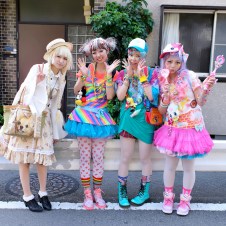
Although we had been told what to expect as we ventured into the fashionable Harajuku district of Tokyo, what we saw still caught us by surprise. As we waded through the crowds of shoppers, onlookers and performers on a pleasant Sunday afternoon, a veritable ocean of color and unparalleled array of fashion styles pummeled our senses. In particular, the popularity of cosplay was on display wherever our eyes wandered, which added to the gaiety of the general atmosphere. Now a world-wide phenomenon, the modern-day custom of cosplay can be traced back to Japan where the term was initially coined. It first appeared in an article by Nobuyuki Takahashi, after he participated in a science fiction convention accompanied by many costumed fans. In an attempt to verbally capture what he had witnessed, Takahashi took the two English words “costume” and “play” and amalgamated them to form a new Japanese word: “cosplay.” That unique term quickly caught on and is now commonly used for the act of dressing up to resemble famous characters from popular anime, manga, movies, video games and TV shows.

Many cosplay fans create their own costumes as they attempt to capture the appearance of a particular character. As part of the outfit, cosplay participants often try to emulate their chosen character’s persona and behavior. Social interaction between cosplay aficionados steadily increased and created a subculture that dominates certain locales and is promulgated through social media. The cosplay world has now mushroomed to such an extent that fans from around the world often participate in major conventions or events where they are judged by celebrity panels. Winners are chosen according to the craftmanship of their costume, accuracy, presentation and audience appeal.

Many cosplayers utilize a type of body suit as the base of their costume which is referred to as a “kigurumi” (着ぐるみ) which means literally “to wear a stuffed animal.”  Animegao (アニメ顔 or “anime face”), which refers to a mask that replicates the face of the character the participant is trying to portray, is becoming increasingly popular within the cosplay world. The more elaborate costumes can be quite expensive and demand a tremendous amount of skill to produce. The increasing popularity of cosplay has given rise to numerous business ventures to meet ever-growing demands and is said to generate over a quarter billion dollars in revenue per year in Japan.

From the dawn of time, clothing has been considered an essential human need, but clothing styles, colors and fabrics are constantly changing in accordance with cultural and generational preferences. However, there is another form of “clothing” that should always be the focal point of our wardrobe choices. The Apostle Paul urged the followers of Jesus to “Clothe yourselves with compassion, kindness, humility, gentleness and patience.” (Colossians 3:12b) He uses this metaphor in an even broader sense in Romans 13:14 where new believers are instructed to “Clothe yourselves with the Lord Jesus Christ.” This powerful imagery captures the thought that the virtues of our Savior should be the same qualities others will hopefully see in us. Just as cosplay fans try to emulate not just the appearance, but also the persona of their favorite character, our goal should be to reflect Jesus in all we say, think and do. But this is not a form of cosplay that we can manufacture or duplicate through our own efforts and God is ultimately the only Judge in such matters. He is also the only one who can truly remove our filthy rags of sinfulness through the cross and clothe us with His righteousness. That is our eternal garment.

Japanese Fads

“God is not human, that he should lie, not a human being, that he should change his mind.”

Numbers 23:19a

Fads

A common characteristic of Japan is a proclivity towards uniformity, which probably accounts for the rapid rise and spread of some rather unique cultural fads. Our first memorable experience of this phenomenon was the ubiquitous appearance of the frilled-neck lizard, an odd species of reptile native to Australia. For reasons unknown to us, this particular creature caught the attention of some advertiser in Japan and within weeks, these strange lizards were seen everywhere in TV commercials and posters and sold as stuffed animals. Then just as suddenly as it appeared, the frilled-neck lizard quietly faded off the scene as Japan moved on to the next popular thing. This experience taught us that Japan is a land of passing fads.

Teenage schoolgirls and young women are probably the biggest trendsetters behind many of the fads that frequently sweep through the nation. New ideas often catch on quickly among the young female segment of society who march in step with the latest passing fancy that ranges anywhere from the most recent popular singing group to strange new fashions and anything else in between. In the area of fashion, we have observed the rise and fall of some interesting styles like the “kogal,” “Lolita” and “ganguro,” that, like the frill-necked lizard, have quickly come and gone. Kogal fashion basically consisted of school girl outfits of short skirts and bulky, rolled up socks held in place by a special glue. Following that and going in a slightly different direction, Lolita fashion was characterized by an abundance of frills, ruffles, makeup, hairstyle and anything that cultivated a child-like image. There are also corollaries of the Lolita style known as “gothic Lolita” and “punk Lolita.” Ganguro fashion calls for an overdone tan (the term means literally “intensely black”), extreme hair dye colors and contrasting pale makeup as a reactionary form to the traditional Japanese image of beauty.

But Japanese fads also originate from other demographic groups and manifest themselves in different forms. For example, the “tamagotchi” (meaning “egg watch”) craze captured the vast majority of school-aged children in the 90s who were driven to purchase and obsessively play a mini egg-shaped computer game featuring an electronic “pet.” These virtual pets had to be fed, played with and cleaned on a regular basis or else they would die. Some children were obviously upset by this irreversible outcome so one innovative temple created a virtual cemetery for these “dead” pets and set up a hotline to console distraught children. However, the zeal for these devices continued unabated until the next fad eventually replaced them. The ensuing hyper excitement over baby pandas, the widespread following to wear Ugg boots, the sudden omnipresence of okra in cuisine, the craze in designer bags and people sporting chapatsu (茶髪) or “tea colored hair” are just a few examples of fads that have made their brief marks on Japanese culture.

Sometimes I am tempted to reflect on these changes as I advance in years and acquire a different perspective of time and culture. From such a vantage point, I’ve observed that inconsistency and inequality are traits that characterize human culture as a whole and are not limited to any particular nationality. These traits manifest themselves in different forms, but serve as key reminders that while we may be made in the image of God, we have significantly strayed from the character and nature of God. Perhaps this is why the author of Numbers, who had observed the disobedient fickleness of God’s people, described God as “not human, that he should lie, not a human being, that he should change his mind.” (Numbers 23:19a). This consistency in character is also used to describe Jesus, who “is the same yesterday and today and forever.” (Hebrews 13:8) God, and the character he expects from us, is not a passing fad.

Left Side–Right Side

“He guides me along the right paths for his name’s sake.” Psalm 23:3

Helyhatározók gyakorlása – Vidám tanár

In light of certain studies, some neuroscientists claim that people are apt to be either left-side or right-side dominant in their brain. As a result, this tendency may have significant impact on a person’s personality, preferences, and capabilities. While this concept is still subject to debate, we often felt like right-brain people operating in a left-brain world while living in Japan. As newcomers, we knew to expect differences in language and culture, but a steering wheel located on the right side of the car just felt wrong initially. This departure from our “normal” was to be expected because everyone drives on the left-hand side of the road in Japan. Therefore, as part of our eventual transition, we soon learned to shift gears with our left hand, remembered we were crossing traffic when making right hand turns and ceased activating our windshield wipers when attempting to a make a turn (they are opposite).

This mental transition from a right-side world to a left-side world took time, but we eventually mastered it. We did so to such a degree that now we may occasionally start out driving on the wrong side of the road in America under certain conditions, particularly if there is no oncoming traffic to help orientate our brains. Unfortunately, the juxtaposition of the windshield wiper and turn signal controls still proves to be a stumbling block at times if our thoughts drift to Japan while driving. We have also entertained more than a few people when we mistakenly attempted to enter the driver’s door when getting into their car as a passenger.

There are many theories that attempt to explain why one particular side of the road is preferred for traveling, but it is interesting to observe that even though roughly 90 percent of the general population is right-handed, fully one-third of the world routinely employs a left-hand traffic system. Specifically, 165 countries drive on the right and 75 countries drive on the left. A closer examination of the details reveals that a large percentage of the left side dominant countries were formerly part of the British Empire so that partially explains a left side orientation. However, this does not account for countries like Japan that were never under British influence. Historians can prove that the propensity to maintain a left side traffic flow in Japan goes back to at least the Edo Period (1603-1868) and the establishment of the Japanese railroad system in the late 1800s locked this pattern into place.

Every sovereign country is certainly entitled to legislate the flow of traffic within its own borders. In a similar manner, a sovereign God who created this world and all of its inhabitants, has ordained the paths and the manner in which we should walk as we live out our lives here on Earth. Since these rules of the road are eternal in nature and intended for our good, we would do well to know and diligently observe them. Time and time again, Scripture teaches us that God delights in guiding us along a determined path that will provide us blessing and safety from evil, both in this life and in the world to come.

As one travels the world, it is interesting to note the variety and disparity of rules that regulate the lives of the respective citizens in different countries. As citizens of a heavenly country, God has called us to walk along the right paths He has ordained for us as we seek to successfully navigate the roads of life before us. Each country has determined the correct side of the road on a national basis, but there is no uniformity in such matters on an international level. But in things of an eternal nature, we must carefully observe God’s rules of the road.