
Airport Opposition

“Now there was no water for the community, and the people gathered in opposition to Moses and Aaron.”                                                                                                                        Numbers 20:22
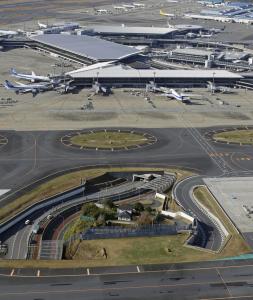
In the middle of Narita Airport, Japan’s busiest air transportation hub, sits an isolated building on a piece of farmland, like a tiny island lost in a vast ocean. This plot of land, like a few others scattered within the massive airport complex, is one of the few remaining holdovers from a decades-long fight against the airfield’s construction, known as the Sanrizuka Struggle. Our first personal experience with this prolonged controversy was back in the 1980s when we took a bus to Narita Airport to fly home to America. At that time, we were unexpectedly stopped by heavily armed police near the airport, allowing them to board and examine each passenger’s identification and belongings before entering the contested area.

This ongoing conflict traces its origin to the rapid expansion of Japan’s airline travel and the realization that Tokyo’s Haneda Airport would soon reach its capacity to keep up with ever-growing demands. As a result, the government decided in 1966 to construct an additional international airport near Tokyo. The predominantly agricultural area of Sanrizuka in Chiba Prefecture was chosen as the site for this ambitious venture. The imperial family owned and offered a substantial amount of farmland in the designated region, so it was assumed that loyal local farmers and residents would quietly fall in line and support the project. That proved to be a huge miscalculation.

An unanticipated series of clashes led by farmers, local residents and various left-leaning groups quickly united under a common cause and soon escalated to open conflict. Significant delays to the construction project shortly followed and even a number of fatalities occurred as the strife continued to intensify. The failure of the government to adequately consult the people who would be directly impacted by the project, coupled with its aggressive efforts to displace them from their land, further served to heighten tensions and deepen mistrust. However, in spite of the many delays and violent clashes between opposing sides, the airport finally began operations in May 1978. Even now, almost fifty years later, vestiges of this once forceful resistance are still visible as evidenced by a small handful of intractable landowners whose isolated properties stubbornly cling to their existence within the extensive airport complex.

Opposition to the construction of the Narita Airport enlisted passionate sympathizers on both sides which led to a prolonged and destructive conflict. The nature of such oppositional efforts can be obscure when they occur, but history can sometimes provide a helpful perspective and may serve to identify which side’s cause was just or misguided. However, an accurate appraisal of some struggles, even with the passing of time, is often difficult to discern. But this is certainly not true for the majority of conflicts recorded in the Bible that typically involve a stark contrast between good and evil.

The turmoil between tribes, individuals, families and nations are typically recorded in the Bible in a bifurcated manner to warn God’s people of the folly of opposing God in comparison to the benefits of obeying Him. This dichotomy is captured clearly in Numbers 22 when the Israelites lacked water to quench their thirst, which drove them to openly oppose the leadership of Moses and Aaron. While securing water for themselves and their livestock was certainly a valid concern, the people’s knee-jerk reaction was to foolishly oppose God and His appointed leaders. Their flagrant disobedience serves as a reminder that we live in a world that tends to divide all too quickly into opposing camps, but we must choose our sides carefully and make sure that our objectives align with God’s.

Tunnels

“In his hand are the depths of the earth, and the mountain peaks belong to him.” Psalm 95:4

Soon after we arrived in Japan in 1984, we noticed several flashy billboards dotting the countryside of Hokkaido featuring a sleek bullet train racing through a tunnel under the ocean. The signs heralded a coming new age in transportation with the construction of the Seikan Tunnel. When completed, this remarkable tunnel would dramatically improve access to Japan’s northernmost island by traversing the large body of water known as the Tsugaru Strait located between Japan’s two largest islands, Honshῡ and Hokkaidō. In a country crisscrossed by tunnels because of its widespread mountainous terrain, the Seikan Tunnel was championed as the ultimate in engineering achievement, incorporating the latest in Japanese technology and financed by a booming economy.

According to historical records, Japan’s first man-made tunnel was built almost 400 years ago. By March 2024, the number of tunnels in Japan had skyrocketed to 10,922, second only to China. Although difficult and expensive to build, tunnels provide shortcuts that can significantly reduce travel time. Throughout the country, cars and trains now routinely pass through vast stretches of roads and rails embedded in an ever-expanding underground network. Japan has become one of the world’s leaders in tunnel construction technology and can boast of several achievements in this area. For example, the Gotthard Base Tunnel bored through the Alps in Switzerland is officially the longest tunnel in the world, but the Seikan Tunnel is recognized as the longest undersea tunnel at 33.5 miles (54 km).* Japan also set the standard for underwater tunnels by digging the first undersea railroad tunnel in 1942 and more recently, the world’s longest undersea road tunnel spanning the Tokyo Bay.

It actually took a natural disaster in 1954 to stimulate a plan for building a previously inconceivable tunnel that would link up Japan’s main island of Honshῡ with Hokkaidō. At that time, a powerful typhoon swept through these same two islands and sank five ferry boats resulting in the tragic loss of 1,430 lives. Amidst national grief, the Japanese public clamored for a safer means of transportation between these two population centers. Due to unstable weather patterns and geographic conditions, a bridge seemed too risky so the novel concept of constructing a tunnel was eventually proposed and adopted. Construction started for the ambitious project in 1971 and the first train passengers made the historic journey 17 years later through this man-made wonder. The tunnel now accommodates approximately fifty trains per day and from 2016 special tracks were installed for high-speed bullet trains. Ironically, since the innovative idea of building the Seikan Tunnel was first proposed, flights to Hokkaido have become much more common, faster and notably cheaper, prompting most people to fly rather than take a train. However, preliminary plans are now being considered for constructing another tunnel specifically designed for cars and trucks.

The increasing advancement of civilization and accompanying technology have led to even more ambitious projects as mankind continues to extend its dominion over the earth. While some such exploits extend to the heavens, they also take us to the depths of the earth reflecting the ingenuity and industriousness of man. But these efforts pale in comparison to the works of God as the Psalmist notes in wonder: “My frame was not hidden from you when I was made in the secret place, when I was woven together in the depths of the earth.” (Psalm 139:15) We may applaud the achievements of men who build tunnels in the depths of the earth, but only God can build people.

* The Seikan Tunnel is officially longer than the Chunnel, connecting England and France, but the Chunnel has a longer underwater segment.

Tōkyō

“Come, let us build ourselves a city… otherwise we will be scattered.”                            Genesis 11:4

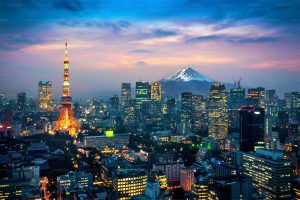
We were somewhat daunted by our initial challenge of driving across Tōkyō after living many years in the more sparsely populated areas of the country. Despite our apprehensions, we pressed forward through the endless maze of skyscrapers and high-rises crammed against one another, blindly trusting our car navigation system to take us safely across a vast sea of humanity. With a population over 37 million people, Greater Tōkyō is recognized as the largest metropolitan center on earth today and also in history. It boasts the busiest intersection in the world at Shibuya, where up to 3,000 pedestrians cross at a time and the busiest train station at Shinjuku that accommodates an average of 3.6 million passengers per day. As Japan’s capital, economic, educational and cultural center, Tōkyō also serves as the nation’s international gateway for millions more visiting the country on an annual basis. The city is a unique blend of the ultramodern with its bright lights, fast pace and creative architecture, while preserving its traditional heritage evidenced by the many historical temples scattered throughout the city and the ancient imperial palace located at its center.

Tōkyō traces its history to a small fishing village called Edo that in 1603 became the seat of the newly formed Tokugawa shogunate when power was centralized throughout Japan. As a result, this once sleepy town began to prosper and rapidly expanded its influence. With the eventual collapse of the shogunate two centuries later and the empowerment of the emperor under the Meiji Restoration, the name Edo was changed to Tōkyō (東京), meaning “Eastern Capital.” Presently, Greater Tōkyō consists of 62 municipalities that includes 23 wards, 26 cities, 5 towns and 8 villages that were absorbed by the ever-increasing sprawl of the original city. Some of Tōkyō’s more famous districts include Ginza, Shibuya, Asakusa, Roppongi, Akihabara, Harajuku and Odaiba, with each one featuring certain attractions that appeal to both international and local visitors.

Despite its immensity, Tōkyō is surprisingly recognized as one of the world’s most livable cities and is regularly listed among the safest places to visit or live. Foreign influences are also conspicuous with many tourists flocking to visit Disney Land, Disney Sea or to dine at one of the many five-star restaurants boasting cuisine from around the world. International customers also enjoy the privilege of tax-free shopping in the many name brand luxury stores. The Tōkyō Tower, another popular tourist attraction, was inspired by the Eiffel Tower but is now dwarfed by the Tōkyō Sky Tree, the second tallest structure in the world. All of these activities are made possible by an incredible transportation system that efficiently moves up to 40 million passengers per day to every corner of this modern urban miracle.

From the lofty perch afforded by the Sky Tree, one cannot help but marvel at the sheer vastness of Tōkyō, the masses of people that call it home and the incredible infrastructure needed to sustain it all. Everywhere you look there are people. It serves as a reminder that God loves people and that one of His initial commands to mankind was to “be fruitful and increase in number; fill the earth and subdue it.” (Genesis 1:28) The record of Genesis traces the partial fulfillment of this decree but also humanity’s intentional refusal to disperse when they said to themselves “Come, let us build ourselves a city… otherwise we will be scattered.” (Genesis 11:4) Their stated objective was to “make a name” for themselves (Genesis 11:4) signifying their self-reliance and deliberate independence from God. Therefore, God intervened and forcibly dispersed them by confusing their language. (Genesis 11:7) This does not mean that God opposes the establishment of cities but rather, He desires nothing to come between Him and people who are created in His image. Tōkyō and all its inhabitants are His.

Wheels

“So I went down to the potter’s house, and I saw him working at the wheel.” Jeremiah 18:3

Wheels

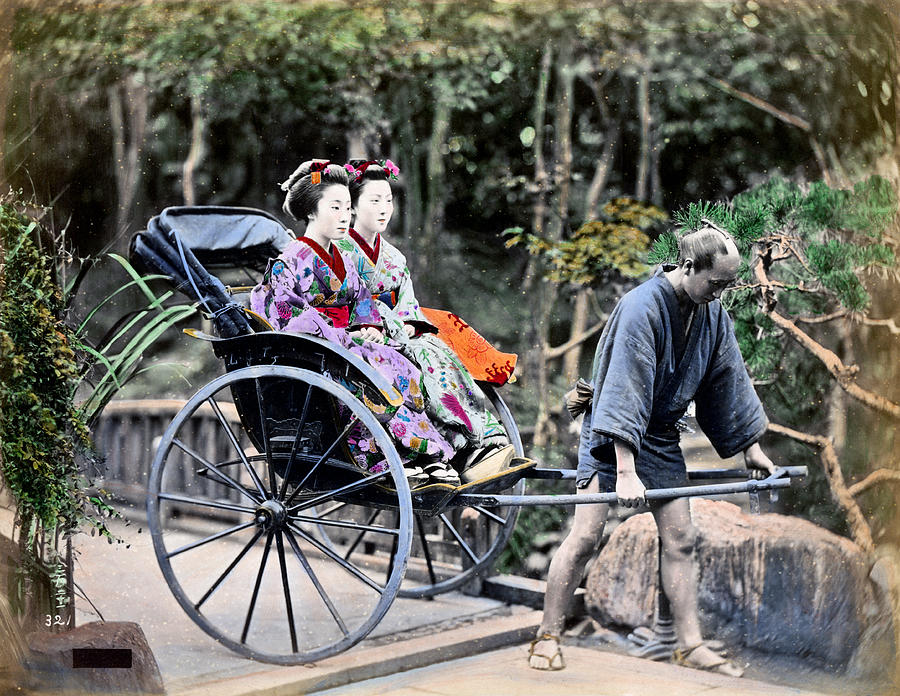
Japan is a land of many unique happenings, including an interesting historical oddity when the general usage of the wheel was banned during the Edo Period (1603-1867). This unusual law was reputedly enacted by Tokugawa Ieyasu, a powerful shogun (a supreme military leader), following a century of brutal conflict that culminated with the ascendency of the Tokugawa clan to absolute rule. Numerous theories have been proposed to account for this unusual measure involving the restriction of wheels, but it is probably a combination of two major factors. One theory is that a law prohibiting the usage of wheels throughout Japan likely discouraged competing feudal lords from opposing the shogunate rule since the ability to swiftly transport warriors, weaponry and supplies would be significantly hampered. Other historians conjecture that the mountainous terrain characteristic of Japan made wheels difficult to use unless a network of roads was constructed, which would require a huge financial outlay by the governmental authorities. Therefore, nobility were usually carried in palanquins and all supplies were transported by human labor under the rule of subsequent shoguns.

It is believed that the origins of the wheel in Japan came via China at some point in the sixth or seventh century. In other parts of the world, wheels were customarily convenient to use where there was an expanse of level ground or in major urban areas. But they often proved to be impractical in the predominant mountainous landscape of Japan. Therefore, the transportation of goods over long distances was usually done on major rivers or by sea faring ships that hugged the coastlines. The term “wheel” in Japanese is kuruma, but now the word is more commonly used for a car. The Japanese character for kuruma (車) is frequently incorporated in words denoting numerous forms of transportation that involve wheels, such as bicycles, carts, trains, wheelbarrows and unicycles.

In this modern era, it is admittedly hard to imagine a Japan without wheels. The preponderance of cars, motorcycles, planes, trains, buses, bicycles and other forms of transit all use wheels. Wheels are now considered to be essential to the clockwork precision by which people and materials are easily moved from one end of the country to the other. The ancient network of roads, like the famous Tōkaidō, that were originally constructed for travelers on foot or horseback, eventually gave way to modern transportation routes featuring the predominance of the wheel.

Wheels have other purposes besides transportation as the prophet Jeremiah pointed out through his powerful analogy centered on a potter’s wheel. In chapter 18 of the Book of Jeremiah, God is compared to a potter who takes a lump of clay, representing His people, and expertly reshapes it into a vessel suited for His eternal purposes. This illustration is a helpful reminder that each of us is a unique creation in the hands of God as He forms us into useful vessels to reflect His glory. Such a process is often painful as it calls for deconstruction of the clay vessel before it is reconstructed into something much more serviceable for the Master’s purposes. A wheel is intended to take us to places where we want to go and similarly, as pieces of clay on the Heavenly Potter’s wheel, we are lovingly prepared for the places where God leads and for the things He desires. (verse 4) This is one wheel that should never be outlawed but instead, be embraced in faith by every child of God.

47 Ronin

“Do not take revenge, my dear friends, but leave room for God’s wrath.” Romans 12:19a

47 Ronin

In 2013, Hollywood released the film “47 Ronin” which was loosely based on a famous event in Japan and starred Keanu Reeves. In the ensuing years, this well-chronicled historical incident gained notoriety through several plays and numerous movie versions. As the title indicates, the story centers around rōnin, or former samurai who have been relegated to social outcast status in Japan’s feudal class system.  This loss of prestige is usually due to the death or disgrace of a samurai’s master. Rōnin (浪人) literally means “wandering wave person” and the term is now commonly applied to other societal misfits or wanderers. In modern Japan, the word rōnin is frequently used to describe unemployed white-collar workers or high school graduates who have not been accepted by a university.

According to ancient traditions, a samurai was given the opportunity to commit seppuku (ritual suicide) upon the loss of his master rather than endure a life without honor or status as a rōnin. To do otherwise invited shame, but many rōnin became mercenaries, joined the merchant class or got involved in criminal activities. However, the story of the 47 rōnin was an extreme exception to this pattern.

The legendary tale of these unusual rōnin began with the forced seppuku of Asano Naganori, a minor feudal lord who had assaulted a powerful court official named Kira Yoshinaka in April 1701. However, contrary to accepted traditional patterns, 47 of Asano’s samurai refused to accept their fate and secretly vowed to avenge the death of their master. Led by a samurai named Ōishi, they agreed to disperse and take on ordinary roles as tradesmen and monks to lull their enemy into complacency. Over a year later, on January 31, 1703, the 47 rōnin broke through Kira’s lax defenses and succeeded in killing him, carrying out their intricate plan for vengeance. Knowing that authorities would not condone their vendetta, this band of dedicated rōnin proceeded to place Kira’s severed head on their master’s tomb in the Sengaku-ji Temple and then laid down their weapons in surrender. These infamous assailants were then ordered to commit seppuku, which only served to further cement their legendary status throughout Japan. As Asano’s devoted retainers, the 47 rōnin were ceremonially buried near their master, which over time, become a place of veneration due to their enduring example of loyalty, perseverance, honor and sacrifice.

Although there are many noble attributes associated with this famous tale, the darker motive of revenge primarily drives the narrative. While it is certainly true that the name and honor of Asano Naganori was restored through the heroic deeds of his loyal subjects, they too had something to gain. Their honor as samurai was preserved, a wrong was avenged and their names live on in history. But this does not overlook that the essence of revenge is basically rooted in selfishness where one tries to get even for a personal wrong suffered at the hands of corrupt or uncaring people. The core premise of revenge is that another form of evil must be used to counteract evil.

However, the Scriptures call us to pursue a higher alternative based on faith and grounded in the character of God. “Do not take revenge, my dear friends, but leave room for God’s wrath, for it is written: ‘It is mine to avenge; I will repay,’ says the Lord.” (Romans 12:19) The very act of revenge requires one to assume the role of God, dispensing justice and retribution based upon personal slights and a limited understanding of transpired events. We live in a world that seems dominated at times by injustice and lies, but we must remember that ultimate justice and truth are God’s exclusive domain. As an act of faith, we must leave these matters in His hands and to His Son, who was shamed like a rōnin but died on our behalf. The cross paradoxically represents both justice and injustice. It is an unprecedented story, with only one hero, who changed the course of not just history, but eternity.

Looking Up

“I know that there is nothing better for people than to be happy and to do good while they live.”    Ecclesiastes 3:12

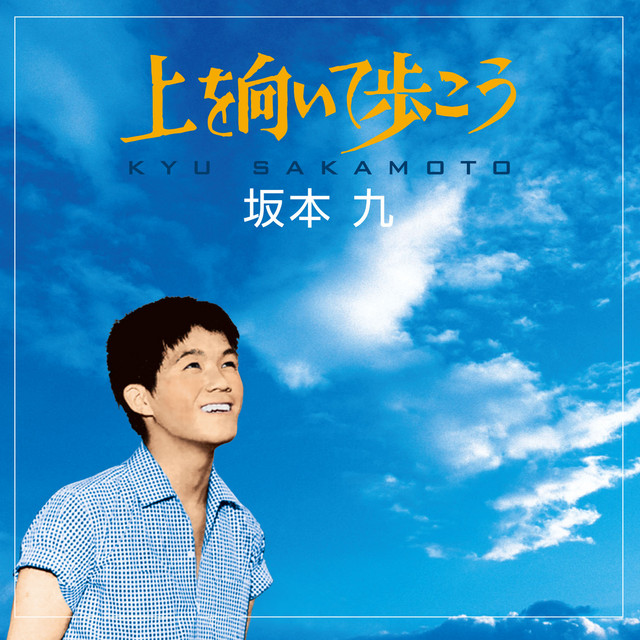
Although Japanese artists have produced quite a variety of quality music, only one Japanese song can claim the honor of rising to the number one spot on the U.S. pop chart. That notable achievement was accomplished in 1963 by the song entitled “Sukiyaki.” The melody of this famous song was composed by Nakamura Hachidai and the lyrics were written by Ei Rokusuke. However, it was the singer, Sakamoto Kyu, who propelled the song to popular heights within Japan and eventually overseas. His jaunty singing style along with powerful interludes of whistling compelled listeners to join in by humming or tapping their feet in rhythm.

Oddly enough, the commonly accepted Western title, “Sukiyaki,” has absolutely no relevance to the actual lyrics of the song. Sukiyaki is a popular dish consisting of thinly sliced beef and vegetables cooked in a pot on the table. In contrast, the lyrics of the song speak vaguely of a lost love that strikes a responsive chord in the hearts of Japanese. The song testifies of deep personal loss, which accounts for its renewed popularity fifty years later among survivors of the 2011 Great East Japan Earthquake.

The actual Japanese title, “Ue o Muite Arukō” (上を向いて歩こう), means “I Look Up When I Walk.” The lyrics are simple, but penetrating, as seen in the following excerpt:

I look up when I walk,

So that tears won’t fall.

Remembering those spring days,

But I am all alone tonight.

Happiness lies beyond the clouds.

Happiness lies in the shadow of the stars.

Sadness lurks in the shadow of the moon.

The phrase that is sung repeatedly throughout the song is “hitori bochi no yoru,” meaning “I am all alone tonight.” It speaks of a profound sense of loneliness where happiness remains elusive, existing somewhere beyond the clouds or hidden in the shadows of the stars and moon. The melancholic words of someone who has to look up to keep tears from falling are heightened even further if one is aware of the tragic circumstances surrounding the death of the singer Sakamoto Kyu. At the young age of 43, along with 519 other passengers, his life was cut short in a tragic aircraft disaster. Japan Airlines flight 123 slammed into the side of a mountain in Gunma Prefecture on August 12, 1963, making it the deadliest single crash in aviation history.

Almost everyone aspires to achieve happiness, but this pursuit often ends with disappointment when it proves to be unobtainable. Ei Rokusuke, the author of the lyrics to Sukiyaki, actually penned the words to the song following his disappointment over the failed outcome of the 1960 protests of the U.S./Japan Security Treaty. This one incident verified that happiness can indeed be stymied by any number of blocked goals and easily lead to heartache and sadness. Happiness is understandably a longing of the human heart, but as the author of Ecclesiastes reminds us (3:12), it is a heavenly gift from God that can only be obtained as we look up to Him while walking on this earth. In contrast to the words of Sukiyaki, we are surely not alone.

You can listen to Sukiyaki at: https://www.youtube.com/watch?v=C35DrtPlUbc  Feel free to whistle along.

Outcasts

“’I will restore you to health and heal your wounds,’ declares the Lord, ‘because you are called an outcast.”  Jeremiah 30:17

Outcasts (2)

When we resided in Japan as foreigners, we had a pretty good idea of what it felt like to be outsiders (see previous blog on aliens), but centuries before we arrived, Japan instituted a class of people who were considered to be outcasts. They were known as the “burakumin” (部落民) which can be translated as “hamlet” or “village people.” This peculiar name stuck because the burakumin tended to live in segregated communities scattered throughout Japan performing what was then regarded as the dirty tasks needed by society. These jobs were typically associated with death and therefore included trades like butchers, tanners, executioners and undertakers. The burakumin were looked down upon as the “defiled ones”; the more derogatory name for them in the feudal era was “eta” (穢多) that meant literally “an abundance of defilement.” Therefore, the areas where they lived were distained and commonly referred to as “etamura,” or “defiled villages.”

This ancient social outcast system surprises many who admire modern Japan as a homogeneous society where equity under the law is a high value and a common practice. Indeed, this is largely true, but the dark strands of burakumin prejudice quietly continue to exist in various forms despite legal injunctions against it. Japanese warlord Toyotomi Hideyoshi (1537-1598) was historically responsible for creating this untouchable class in the 16th century when he divided the entire Japanese population into four hereditary castes in the descending order of samurai, farmer, artisan and merchant. The burakumin were then relegated to a category below this arbitrary caste system and their degraded status was not based on different ethnicity, but exclusively upon the tasks they were required to perform.

Burakumin continued to live for centuries under a cloud of discrimination within Japanese society but this prejudice was officially terminated in 1871 by a law that is now known as the “Emancipation Edict” that granted full legal status to all burakumin and their descendants. However, it took decades for the rights of this historically oppressed group to be fully recognized. Even today, some forms of subtle discrimination continue, particularly when it comes to marriage or in some cases, employment. Several studies indicate that there are over two million burakumin within Japan and 60 percent of the Japanese mafia known as yakuza (see previous blog), are comprised of burakumin. Due to the shameful and delicate nature of this subject, the existence and the plight of the burakumin is even now rarely acknowledged in Japan.

A common phrase in the Old Testament, particularly in the Pentateuch, is “outside the camp.” This phrase refers to a status of uncleanness where certain sacrifices, ritually unclean individuals and evil doers were deliberately separated from the community of God’s people with the goal of maintaining holiness within the community. When individuals were expelled to life outside of the camp, it was generally viewed as a temporary measure, not a permanent banishment or form of discrimination, as the ultimate objective was their full restoration to the community.

The author of Hebrews (chapter 13) picks up this complex theme and noted that “Jesus also suffered outside of the city gate to make the people holy through his own blood,” (v.12) and that we should “go to him outside the camp, bearing the disgrace he bore.” (v.13) Such an amazing response turns human contrived caste systems and prejudicial attitudes on their head as it declares that no one is outside the grace of God. We are all outcasts and defiled by our sins, but God loves us so much, He figuratively went outside of the camp to redeem us. Let us therefore join Jesus “outside the camp,” taking on the scorn of others, to minister to a hurting world.

Empty Foundations

For he was looking forward to the city with foundations, whose architect and builder is God.”   Hebrews 11:10

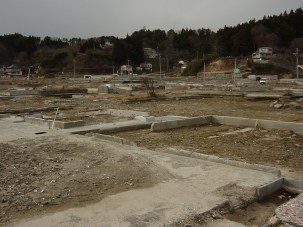
Empty FoundationsFollowing the Great East Japan Earthquake in March 2011, a familiar sight along the 500-kilometer (310 miles) stretch of devastated coastline were empty foundations in field after field where bustling towns and villages once stood. Over several months, mountains of debris caused by the tsunami were painstakingly removed and the only remaining evidence of prior human habitation were thousands of vacant concrete slabs. Vegetation slowly took over and the seemingly empty fields eventually begin to appear like ancient archeological ruins lingering from a previous civilization. Long stretches of collapsed sea walls usually accompanied these sites, offering muted testimony of their failure to protect the inhabitants against the destructive forces of nature.

Most of the survivors from this massive disaster were relocated to hastily assembled temporary housing units that were tucked further inland on higher ground. There, the survivors stoically waited for months and then years for the return of normalcy and some form of permanence in their lives. Each community worked with government officials to develop master plans for rebuilding and renewal as they struggled to recover from the past and yet still dreamed of future prospects.

This process understandably took time, and transpired in phases as mammoth machines moved earth and rubble to give way to a new infrastructure, hosting new communities. As part of this transition process, temporary buildings sprang up everywhere, almost like weeds, providing a variety of badly needed services. Temporary grocery stores, gas stations, drinking establishments, restaurants, local shops, business offices, clinics, police stations and even a public bath dotted the landscape, reminding everyone of past and present hardships while fostering hope of a better future. Some businesses managed to reopen on the top floors of badly damaged structures that would later be demolished. All of this served as a constant reminder that we lived in the midst of a deeply stricken community desperately struggling to survive.

Living in such a prefab world only served to increase our thirst for things of a permanent and even eternal nature. As we tread carefully among the rubble of people’s lives, our thoughts were often lifted heavenward and we began to “look forward to a city with foundations, whose architect and builder is God.” (Hebrews 11:10) Much like our spiritual father Abraham and other heroes of the faith, many of whose lives are chronicled in that same chapter, the incompleteness or temporary nature of things characterizing our lives reminded us daily of heavenly realities that yet awaited us. As we often pondered on what those empty foundations represented in the past, they also served as a powerful reminder of much greater things that were only visible through eyes of faith. That’s the city we should seek in the midst of life’s storms.

Bushidō

“The Lord is a warrior; the Lord is his name.” Exodus 15:3

Samurai

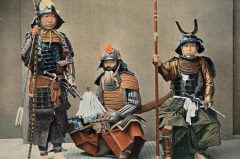
When I was a member of Boy Scouts, part of the routine of our weekly meetings was to stand at attention and recite the Boy Scout Oath. The oath was basically a list of virtues that we aspired to implement in our lives. Although bushido is far more complex and historically much older, it roughly served the same purpose for several centuries in Japan among the warrior class. Bushidō (武士道) is translated literally as the “way of the warrior” and it is a vaguely defined ethical code for samurai that instructed them on how to live lives characterized by honor and virtue. It has many parallels with the more familiar concept of chivalry, which was common among European knights in the Middle Ages.

Going far beyond the normal fighting skills typically demanded of a warrior, bushidō is essentially an unwritten moral code of conduct that seeks to inspire a samurai to aspire to something much higher in his actions and attitudes. Bushidō has religious undertones as it draws influence from three major schools of thoughts associated with Buddhism, Shintoism and Confucianism. The earliest written record of the term “bushidō” appears in 1616. Over the centuries, variations of what it actually means have been propagated by its adherents. A common list of the virtues normally associated with bushidō includes righteousness, courage, compassion, respect, honesty, honor, loyalty and self-control.

The Edo Period (1603-1867), which was characterized as a time of peace, stability and economic growth in Japan, created an atmosphere that fostered the advancement of bushidō among the warrior class and refined many of its tenets. Following this, the Meiji restoration (1868-1912) brought an end to the military rule of the shogunate and with it, the abolishment of the samurai. However, the precepts of bushidō survived in the new geopolitical conditions and continue to manifest themselves in corporate, political and military behavior even to this day. When the military reemerged with even greater influence on the political landscape prior to World War Two, bushidō was overtly encouraged with special emphasis given to the virtues of loyalty and self-sacrifice for the empire.

Many of the historical events recorded in the Old Testament center around warfare, a theme that has largely fallen out of favor in modern societies that often value peace above all else. According to this overly simplified line of thinking, warfare is frequently equated with barbarism, brutality, inhumanity and violence so it should be rejected in all forms. However, such a simplistic approach tends to naively ignore the biblical metanarrative of the conflict between good and evil in both earthly and spiritual domains. While it is good to seek peace and other virtues, such worthwhile goals are often not obtained without struggle and even bloodshed. Nothing illustrates this clearer than the Cross, where evil was conquered through great sacrifice and personal conflict. This truth is why God is repeatedly described as a “Warrior” (Zephaniah 3:17) who fights on our behalf and why the deeds of “mighty men” who stand against evil forces and authorities are highly extolled (I Chronicles 11). God does call us to engage in battles in the spiritual realm and sometimes, even in the physical realm, but thankfully He goes before us, equips us (Ephesians 6:10-17) and ultimately, leads us to victory. “The Lord is a warrior; the Lord is his name.”

Dolls Festival

He [Jesus] sacrificed for their sins once for all when he offered himself.”  Hebrews 7:27b

Girls Day2

Every year on March 3rd, countless girls across Japan celebrate Hina Matsuri (ひな祭り) which means literally “doll festival,” but is commonly referred to as “Girls’ Day.” The custom originated in the early 17th century, where usually a red, multi-tiered platform (hina dan) is set up and on it a collection of special dolls (hina ningyō) and related furniture are put on display prior to the hina matsuri. These ornamental dolls are typically clothed in the traditional court dress of the Heian Period (794-1185) and represent the emperor, empress, various court attendants and musicians. The dolls are not intended as items for play and many sets are actually quite expensive with a value of several thousand dollars for the more elaborate versions. Some hina matsuri collections are passed on from one generation to another as treasured heirlooms and are therefore handled with great care.

Hina matsuri is also associated with the initial blooming of peach blossoms in certain parts of Japan with the coming of spring and as such symbolically celebrates the health and happiness of girls within a family. According to custom, immediately following Girls’ Day, these special dolls are supposed to be put away immediately or parents risk inviting the bad luck of a late marriage for their daughter. The city of Konosu hosts the largest display of hina ningyō in Japan every year on a 23-foot (7 meter) pyramid with more than 1,800 exquisite dolls artfully arranged on 31 levels.

Another ceremony often connected with hina matsuri is nagashi bina, which is roughly translated as “doll floating.” Participants in this unusual rite make cheaper versions of the hina dolls from paper or straw and set them adrift on a river, regarding them as a sort of talisman that will remove their sins, impurities and any demonic influences.

The obvious intention of Girls’ Day is to provide families an annual opportunity to celebrate the lives of their girls while wishing for them to have health and happiness. But the older and deeper traditions associated with hina matsuri point to something far more important that is largely ignored in modern celebrations. What is conveniently overlooked is the universal problem of sin and our personal culpability before a Holy and Righteous God. While all parents understandably seek health and happiness for their children in this temporary world, there is nothing they can do to eradicate the eternal consequences of the sins and misdeeds of themselves and their children in the world to come. Recognizing this problem, previous generations of Japanese set dolls afloat on nearby rivers in a vain attempt to purge them and their loved ones of personal guilt. But such shallow efforts, no matter how well intended they may be, sunk ineffectively in deep waters along with the dolls as they drifted downstream. Another, more effective solution than floating dolls was needed and God Himself has provided the perfect substitute for our sins in the form of His Son. The author of Hebrews succinctly describes this amazing provision when he writes, “He [Jesus] sacrificed for their sins once for all when he offered himself.” (7:27b) This substitute is indeed an amazing treasure, not to be put on a shelf and casually admired, but to be fully embraced and celebrated daily.