
Omikuji

“but God has surely listened and has heard my prayer.” Psalm 66:19

The neatly folded strips of paper carefully arrayed in the temple grounds fluttered in the gentle breeze like hundreds of white-winged butterflies moving in unison. Written on them were the prayers or predictions for visitors who sought a change in their fortune or a glimpse of their future. Good health. New love. Success in business. Physical protection. High test score. Well-paying job. Recovery of a lost item. Healthy children. Nice housing. Profitable investments. The list of wants and needs by the serious believer to even the most casual devotee are both varied and endless. Everybody wants something for a minimal investment.

Known as omikuji (御御籤), these strips of paper offering guidance or predictions, are available throughout Japan in both Shinto shrines and Buddhist temples. Meaning literally “sacred lot,” omikuji are acquired by contributing a small donation. They are particularly popular around New Year’s when people are keen to ascertain their fortune for the coming year. The omikuji, with their previously recorded transcriptions, are dutifully placed in a special box and from there randomly chosen by a fortune seeker. These days it is now quite common to purchase omikuji dispensed through conveniently located vending machines. Possible fortunes written on the omikuji fall within the following categories:

  • Great blessing (dai kichi)
  • Blessing (kichi)
  • Small blessing (shō-kichi)
  • Half-blessing (han-kichi)
  • Future blessing (sue-kichi)
  • Future small blessing (sue-shō-kichi)
  • Misfortune (kyō)

If a person is unfortunate to draw an omikuji that portends bad news, they are likely to rid themselves of the ill fortune by attaching the paper to a nearby pine tree or a specially prepared place within the temple or shrine grounds alongside other unfavorable predictions. The desired outcome is that the bad luck, in an obvious play on words, will wait (待つmatsu) by the tree (松matsu) rather than attach itself to the bearer. If the fortune is good, the owner may likewise choose to leave their omikuji in a designated sacred area for greater effect or take it home for good luck.

The power of the omikuji is considered to be effective for only one year, at which time it must be properly destroyed. The origin of omikuji is traditionally dated back to the Heian period to a monk named Ryōgen, who lived from 912-985, but the custom started to flourish in the Kamakura period (1185-1333) as omikuji were increasingly used for making decisions.

Having been made in the image of God, the natural inclination of the human heart from the beginning of time is to seek communion with God. Not only do we have practical needs that we want filled, as social creatures, we also long to be seen and heard by an all-knowing and all-caring God. As a result, we tend to create and maintain inadequate traditions to facilitate communication with God (or gods). In Japan, omikuji is a popular form to enhance dialogue between mortals and the immortal. But the Bible does not portray a God who needs to be coerced or helped in communicating with His creation. Instead, by His very nature, God delights to hear our prayers and act upon them because of His boundless love for us. Such care is not random, limited by time and certainly cannot be manipulated. As the psalmist testifies: “God has surely listened and has heard my prayer.” (Psalm 66:19)

Obon

Remember Jesus Christ, raised from the dead, descended from David. This is my gospel.”                II Timothy 2:8

The festive atmosphere associated with the local bon odori beckoned our young family to join in, but we held back, wondering if we should participate in this unfamiliar cultural activity. However, the sound of laughter and merry music were like a magnet pulling us in as we watched neighbors of all ages dancing in rhythm while wearing colorful, traditional attire. From previous research, we understood that the celebration historically centered on acknowledging the return of one’s dead ancestors. However, the majority of the participants were probably unaware of the festival’s origins. Over the years, obon had steadily evolved into a quasi-family reunion where people return to their ancestral homes to pay homage to their deceased ancestors and reconnect with family.

The exact etymology of the term bon (盆) remains unclear and the “o” is an honorific prefix that was added at some point. This annual celebration primarily traces its roots outside of Japan, as it includes elements of Buddhism and Daoism. Many scholars believe “bon” is actually a transliteration of an ancient Sanskrit word. Similar festivals in other cultures are commonly called “lantern festivals” and that same terminology is sometimes used in association with obon practices in Japan. The Japan version usually spans a three-day period in the middle of August, but the exact starting date differs slightly from region to region. Obon is generally regarded as a time when ancestral spirits visit their respective household altars and graves, which prompts relatives to make preparations to welcome them back. Such preparations will include the gathering of family members, cleaning family graves and stocking them with food and flowers. In addition, communities throughout Japan host obon dances, called bon odori to invite the spirits home. The participants in the dance typically wear a yukata, which is a light cotton kimono, and in addition to dancing, they enjoy simple carnival games and local foods served for the crowd.

At the outset of obon, small fires are often lit to guide the spirits home and at the conclusion of the three days another fire is used to send the spirits back. Some localities may sponsor a much larger communal fire for the same purpose while others customarily place floating lanterns in bodies of water to help the spirits return to their world. People who have lost a family member within the past year may give special attention to the annual obon preparations and take extra measures to attend.

Although few Japanese believe in the religious overtones of obon, many continue to dutifully follow the traditions handed down to them by their family and everyone enjoys the rare three-day break from work routines. Technically, obon is not a public holiday, but most businesses give their employees the time off, which in turn results in massive transportation issues with large numbers of people seeking to travel home at the same time.

While it is a good thing to acknowledge and express thankfulness for the lives of ancestors who contributed to our present existence, we must be careful in where we draw the lines in such activities. Well-intended celebrations and ceremonies centered on deceased loved ones can easily spill over into alternative forms of idolatry that the Scriptures clearly forbid. For example, attending a graveside ceremony can be an acceptable sign of respect and love, but the offering of food or incense to the dead crosses a line that morphs into an act of worship and betrays our devotion to the One True God. But there is one exception to this practice who we much clearly remember and honor. (II Timothy 2:8) Jesus Christ was truly raised from the dead. This is our gospel. His life and death are worth celebrating and sharing.

Jizō Statues

“You, Lord, will keep the needy safe and will protect us forever from the wicked.”             Psalm 12:7

Jizo

My first encounter with jizō statues occurred while driving on a winding, forested road circling a scenic volcanic lake. The silent and gnome-like stone sentries along the road easily blended into their natural setting, but their conspicuous bright red clothing and caps managed to catch my attention. In spite of the frozen half-smiles fixed upon their faces, these solitary figures portrayed a sense of loneliness incongruent with their colorful attire. I had no idea what they were but it was obvious that these stone carvings served some sort of religious purpose. I later learned that they were called jizō (地蔵) or “womb of the earth,” but are often honorifically referred to as ojizō-sama.

Jizō are commonly found on minor roads, in temple gardens, along public footpaths and even outside of busy train stations. They are often housed within a primitive wooden hut to provide a symbolic protection from the elements. These statues are considered to be representatives of a Bosatsu, a Buddhist adherent who sacrificially postponed his own transition to Nirvana in order to aid others on their spiritual journey towards enlightenment. The Jizō variety of Bosatsu are regarded as the protectors of travelers and children, which accounts for their deliberate placement in areas associated with travel. Devotees often dress these jizō statues in red bibs and hats as red is believed to be a color that wards off evil or danger. Legends say that the jizō also protect children who have prematurely died from evil spirits by hiding them in their clothing, thus enabling them to complete their spiritual pilgrimage.

But these seemingly innocuous statues often hide a darker purpose designed to fill deep emotional wounds of women who have miscarried in pregnancy or have chosen to abort the life of their unborn child. Memorial services are offered for those who have experienced such loss in which prayers are offered to the jizō for a dead or unborn child. Such services also provide a form of emotional closure for the grieving or guilt-ridden parent. The origins of this custom may date back as far as the 14th century and is designed to assure the well-being of a child who did not have sufficient opportunity to accrue good karma on earth.

Gazing upon jizō statues, it is not hard to imagine the natural longing of the human heart to seek protection for one’s self or for a deceased loved one. After all, God is continually portrayed in Scriptures as the One who protects His people and several metaphors are used to capture this important concept. That is why God is frequently described as a rock, a hiding place, a stronghold, a shield and even as a mother hen guarding her chicks. But this also raises the question of who are the needy and from what do they need protection?

The Bible often singles out widows, the fatherless and foreigners who are in special need of protection because of their vulnerable social and economic status (Psalm 146:9). However, these examples of needy individuals serve to remind us that any of us at any given time can become weakened and left defenseless by dire circumstances in life or through the devious actions of others. Therefore, we all need a Protector to whom we can flee for safety that no stone statue can begin to provide. In stark contrast, the Maker of Heaven and Earth beckons us to turn to Him for whatever help we may need in whatever crisis we may face. As we travel through life, only God can “keep the needy safe and will protect us forever from the wicked.” (Psalm 12:7) He is no silent stone statue which is impotent to protect us.

Unlucky #4

“Have nothing to do with godless myths and old wives’ tales; rather, train yourself to be godly.” I Timothy 4:7

unlucky 4

When I occasionally ventured downtown with my parents as a child and entered an elevator in a skyscraper, I often noticed a curious thing: there was no 13th floor in many of the buildings. When I pointed out this anomaly to my parents, they explained that there was actually a 13th floor, but because many people considered the number to be unlucky, it was commonly omitted from the selection of buttons indicating floor levels. Despite this widely held belief, my grandfather, who was a bit of a contrarian, decided to name his ranch “Lucky 13.” We consequently used the brand L13 to identify all his cattle so this particular number was vividly branded in my memory.

Instead of the number thirteen, Japanese traditionally considered the number 4 to be very unlucky because it can be pronounced as “shi” (四), which is also used for the word “death” (死), even though the Chinese characters identifying them are quite different. Like America, where the number 13 was often omitted, many hospitals and hotels in Japan similarly skipped the number 4 when indicating floors in their buildings. “Tetraphobia” is an actual psychological term coined to describe the practice of avoiding instances of the digit 4 as this ancient superstition also exists in other parts of Asia. This unfounded fear can be applied in numerous ways, such as avoiding the mention of the number four around an ill family member, giving four of something as a gift or scheduling something important on April 4th, the fourth day of the fourth month.

Like other cultures, there are many other superstitions that linger in Japan. For example, whistling at night may invite snakes to come out. You should hide your thumbs if a funeral hearse passes nearby. Children are warned to cover their belly buttons in a thunder storm. Chopsticks should never be placed upright in a bowl of rice. A person’s name should not be written in red ink. It is not advisable to kill a spider in the morning, but it is expedient to do so at night. A person should avoid cutting fingernails or toenails in the evening. One should avoid sleeping with his head positioned towards the north. Food is not to be passed chopstick-to-chopstick. The list continues and each of these forbidden actions could possibly invite death or adverse circumstances due to their connections with other terms, mythological stories or current cultural practices. Go to the following link for a further explanation: https://www.cotoclub.com/16-common-japanese-superstitions/.

In mentoring his young disciple Timothy, Paul advised him to avoid dwelling on such myths and superstitions in the course of his ministry (I Timothy 4:7). Instead, he was encouraged to focus on godly character and truth in his own life and in shepherding others. As a mature believer, Paul understood that superstitions are essentially grounded in fear instead of faith and the proponents of such an approach to life cling to a faulty understanding of God that must be discarded. While God is certainly to be feared (Deuteronomy 10:12), He is not a whimsical, cosmic being who can be induced or manipulated to protect us from life’s calamities. This God is not limited by any temples we may erect to contain Him, idols we may form to worship Him or any silly practices we may promote to control Him. This was the message Paul preached to the superstitious Greeks on Mars Hill who needed to correctly understand the vastness, power and nature of God (Acts 17). This is the truth that needs to be branded on our hearts and heeded while living in a world full of misinformation and deceit.

Gods on Parade

“No one can reveal it to the king except the gods, and they do not live among humans.” Daniel 2:11b

Osaka,,Japan,-,July,25,2017:,The,Traditional,And,Historical

The festival crowd cheered enthusiastically at the sight of the local shrine’s mikoshi as it snaked its way along the town’s designated parade route. The uniformly clad bearers of the mikoshi swayed in a set pattern as they chanted in unison “wasshoi” (和緒一), which aptly means “together in harmony.” With rhythmic precision, they shouldered an ornate miniature replica of the nearby Shinto shrine, known as an omikoshi (the additional “o” is honorific) on two long poles for transport. According to tradition, a mikoshi temporarily houses the local deity of the area who will, hopefully, ward off any potential misfortune or evil and invite happiness to the local residents.

The word mikoshi (神輿) is a combination of the Chinese characters for “god” and a “palanquin,” which was historically used to transport people of noble rank. But in this case, the occupant of the palanquin is considered to be a god, who is being taken for a tour of his community. Shintoism is the indigenous, pantheistic religion of Japan where gods are regarded as being everywhere and in everything. This ancient religion teaches that there are roughly 8 million gods who watch over Japan (that number is specifically chosen because it is similar to the term used for infinity). Since these gods, or spirits known as kami (神), are believed to be everywhere, they are usually venerated in shrines scattered throughout Japan in scenic locations where such gods are believed to dwell.

The typical mikoshi may weigh as much as a ton and is typically carried by a team of around 30-50 people who are specially trained in how to transport it. The bearers follow a traditionally prescribed choreography unique to their area, stopping at key points along the route, which in some cases includes entering a nearby body of water such as a river, lake or ocean. One or two scantily clad men often stand on the palanquin with the omikoshi shouting out instructions to the transporters below adding to the overall spectacle. A carving of a phoenix, as an ancient symbol of good fortune, hope and peace, usually occupies the top of a mikoshi. The heaviest omikoshi on record weighs 4.5 tons and requires a massive team of 300 people to carry it.

From the beginning of time, mankind has superstitiously sought the favor of gods through numerous means shaped by their varied perceptions of the gods they worship. A low or inaccurate understanding of God perceives Him as someone who can be bent to one’s will through prescribed acts or rituals in order to receive favor in the form of wealth, power, health, influence or progeny. Such gods often come in the form of idols constructed by men who then absurdly bow before these objects, pleading “Save me! You are my god!” (Isaiah 44:17) Such foolish thinking and actions are mocked repeatedly in Scripture and stand in contrast to the God who made the heavens and earth, who “does whatever pleases Him” (Psalm 115:3) and exists far beyond the attempted manipulations of men who strive to limit Him to their own advantage.

The wise men of the Babylonian court in Daniel’s era had a partially correct view of God (Daniel 2:11) as they perceived Him as beyond their control, but they erred in regarding God as disengaged from the activities of humans. In contrast to this, the entire Book of Daniel testifies of a transcendent but involved, all-powerful, all-knowing God who cannot be confined to a mikoshi and moved at a whim to incur blessing. This God dwells above the nations, all history and the universe itself, moving according to His counsel alone. This means that we are merely bystanders, and at best worshipers, but never transporters.

Christmas Trees

“Therefore, as we have opportunity, let us do good to all people.”  Galatians 6:10a

Christmas trees3

It was a bit of a challenge to procure our first Christmas tree in 1984 in Japan, but we had the opposite problem 27 years later when we almost had too many Christmas trees. Let me explain. Over the years, Christmas has steadily grown in popularity in Japan. Therefore, Christmas decorations, presents, and Christmas music have now become quite common, particularly in the more urban areas. But for many who lost everything in the 2011 tsunami, things looked pretty bleak as December 25th drew near. Most people in the area were unemployed and lived in temporary housing units with minimal possessions in very cramped quarters. Morale was understandably low, so the Japanese government decided to do something in an attempt to improve the situation. They provided Christmas trees. Literally dozens of Christmas trees were placed in each of the makeshift community rooms located among the many temporary dwelling sites scattered along the devastated coastline. While their intentions were good, this presented a problem. No one knew what to do with these trees. That is where we entered the picture.

Just a few months earlier, we had spearheaded a relief work along a significant stretch of the affected area but increasingly, we sensed God was calling us to limit our efforts to a particular location. But we wondered how we could possibly gain acceptance within this shattered community and earn their trust that would in turn, enhance our effectiveness. The unexpected solution… Christmas trees! The local governmental agency in charge of the area had heard of our work and knew we were Christians. Therefore, they asked if we would be willing to help with the decoration of these trees that were languishing unattended in all the community rooms. Recognizing an amazing provision by God, we leapt into action and along with many volunteers, initiated a frenzy of Christmas tree decoration activities.

We quickly put a serious dent in the local supplies of Christmas decorations from still-existing stores and immediately sent out a call for volunteers from across Japan to bring more when they came to help. We organized Christmas parties at each location and disaster victims eagerly embraced the opportunity to experience community again while decorating a tree. They chatted with neighbors while Christmas music played in the background and consumed the hundreds of Christmas cookies volunteers also brought with them. We distributed small gifts, played fun games, sang Christmas carols and hundreds heard the amazing story of God’s provision of a Savior for the very first time. Light entered into their darkness and it all began with a simple Christmas tree. Sometimes we did three to four parties a day racing from one location to another in what felt like an endless loop. But in the midst of our exhaustion we were awed and humbled to be part of these unexpected developments. It was a powerful lesson that the God who dramatically interjected Himself into history in a manger continues to intervene in human affairs through something as mundane as a Christmas tree. Each of those trees served as a vivid reminder that God loves people and cares passionately for the brokenness of our world.

Over the course of many months, we learned that the nature of relief work centers on opportunities to do good for people, which is actually a biblical command (Galatians 6:10). Good works come in many forms, almost always demanding some kind of sacrifice from us, but they all begin with an opportunity that is uniquely provided by God to accomplish His divine purposes. Our willingness to respond in faith and obedience is all He asks of us. He will provide the Christmas trees.

Bushidō

“The Lord is a warrior; the Lord is his name.” Exodus 15:3

Samurai

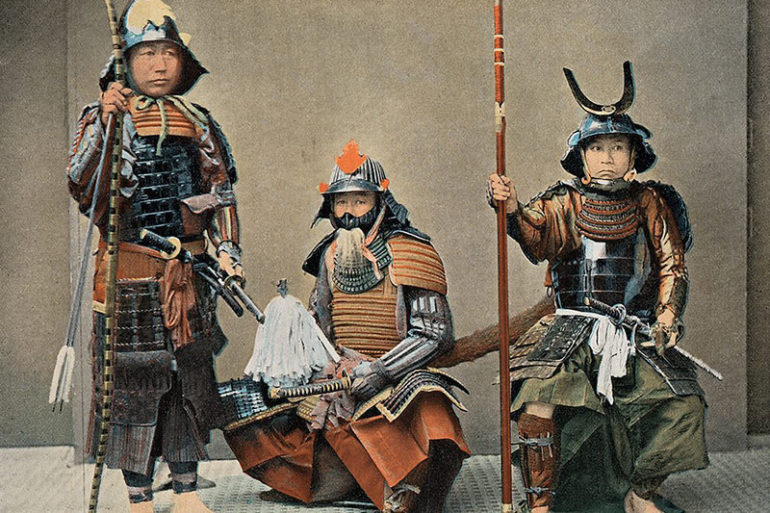
When I was a member of Boy Scouts, part of the routine of our weekly meetings was to stand at attention and recite the Boy Scout Oath. The oath was basically a list of virtues that we aspired to implement in our lives. Although bushido is far more complex and historically much older, it roughly served the same purpose for several centuries in Japan among the warrior class. Bushidō (武士道) is translated literally as the “way of the warrior” and it is a vaguely defined ethical code for samurai that instructed them on how to live lives characterized by honor and virtue. It has many parallels with the more familiar concept of chivalry, which was common among European knights in the Middle Ages.

Going far beyond the normal fighting skills typically demanded of a warrior, bushidō is essentially an unwritten moral code of conduct that seeks to inspire a samurai to aspire to something much higher in his actions and attitudes. Bushidō has religious undertones as it draws influence from three major schools of thoughts associated with Buddhism, Shintoism and Confucianism. The earliest written record of the term “bushidō” appears in 1616. Over the centuries, variations of what it actually means have been propagated by its adherents. A common list of the virtues normally associated with bushidō includes righteousness, courage, compassion, respect, honesty, honor, loyalty and self-control.

The Edo Period (1603-1867), which was characterized as a time of peace, stability and economic growth in Japan, created an atmosphere that fostered the advancement of bushidō among the warrior class and refined many of its tenets. Following this, the Meiji restoration (1868-1912) brought an end to the military rule of the shogunate and with it, the abolishment of the samurai. However, the precepts of bushidō survived in the new geopolitical conditions and continue to manifest themselves in corporate, political and military behavior even to this day. When the military reemerged with even greater influence on the political landscape prior to World War Two, bushidō was overtly encouraged with special emphasis given to the virtues of loyalty and self-sacrifice for the empire.

Many of the historical events recorded in the Old Testament center around warfare, a theme that has largely fallen out of favor in modern societies that often value peace above all else. According to this overly simplified line of thinking, warfare is frequently equated with barbarism, brutality, inhumanity and violence so it should be rejected in all forms. However, such a simplistic approach tends to naively ignore the biblical metanarrative of the conflict between good and evil in both earthly and spiritual domains. While it is good to seek peace and other virtues, such worthwhile goals are often not obtained without struggle and even bloodshed. Nothing illustrates this clearer than the Cross, where evil was conquered through great sacrifice and personal conflict. This truth is why God is repeatedly described as a “Warrior” (Zephaniah 3:17) who fights on our behalf and why the deeds of “mighty men” who stand against evil forces and authorities are highly extolled (I Chronicles 11). God does call us to engage in battles in the spiritual realm and sometimes, even in the physical realm, but thankfully He goes before us, equips us (Ephesians 6:10-17) and ultimately, leads us to victory. “The Lord is a warrior; the Lord is his name.”

Daruma

“So we make it our goal to please him.”  II Corinthians 5:9a   

Daruma

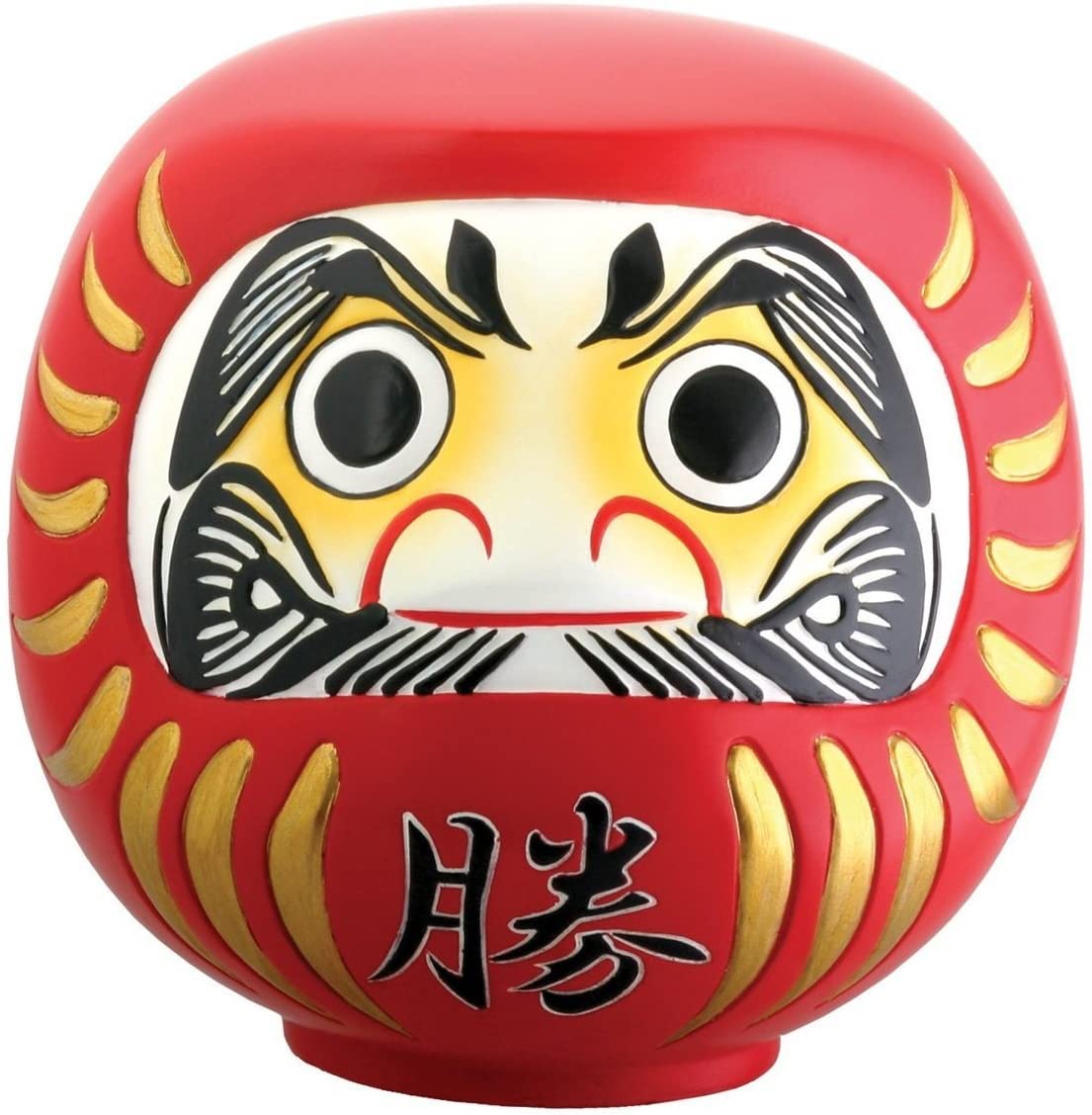
The one-eyed daruma (達磨) doll, with its unusual shape, appeared almost comical as it seemed to stare at me from its perch on the shelf. I later learned that when initially purchased, all daruma dolls have blank spots in the place of eyes, which are added later according to custom. The dolls are traditionally brightly colored, made of papier-mâché into a rotund shape, and are often weighted at the bottom so that they will return to an upright position when tipped over. Some say this tendency to remain upright symbolizes success and the ability to overcome adversity. The typical daruma has eyebrows in the shape of a crane and a beard resembling the vague form of a tortoise as both creatures represent longevity in Japanese culture.

Darumas trace their origin to Bodhidharma, who is recognized as the founder of the Zen tradition of Buddhism. Bodhidharma lived around the 6th century and several legends are associated with his ascetic lifestyle. For example, it is said that he stared at a wall in meditation for nine years without moving, which caused his arms and legs to atrophy and eventually fall off through disuse. This odd bit of folklore supposedly explains why daruma dolls have no arms or legs. Another legend connected to this famous Buddhist monk is that he once fell asleep during his meditation and became so angry at his failure to stay awake that he cut off his eyelids to prevent such a reoccurrence. Perhaps this fable accounts for the attention given to the eyes of a daruma.

Although some consider daruma dolls to be just a toy, they are widely regarded as a sort of talisman that can bring the owner good luck. The general practice when purchasing an eyeless daruma is to paint in one of the eyes after identifying a desired goal. Once that goal comes to pass, it is customary to paint in the other eye. It is believed that this unusual process will motivate the daruma to grant one’s wish since he will regain full sight once the goal is achieved. This curious custom also serves to remind the owner of their intended goal every time they see the one-eyed daruma sitting on the shelf. It is no surprise then that people running for a political office often purchase a daruma and paint in one eye when announcing their candidacy and then paint in the other eye if they are elected. At the close of the year, people customarily return their daruma to the temple where it was purchased and then priests will burn it in a formal ceremony.

Darumas are associated with achieving a stated goal or desire, but such objectives are typically self-centered. These goals can include such things as success in the financial world, a favorable outcome in a desired relationship, good grades on an exam, a victory in a sporting activity or advancement at work. Such desires are certainly understandable and in many cases commendable, but as the people of God, we are called to seek something higher. Stated simply, our overarching goal should be to please God and everything else in life must be made subservient to this heavenly objective. This focus requires us to remove self from the center of our personal universe and let God take His rightful place as “we make it our goal to please Him.” (II Corinthians 5:9a) Such a recalibration of our heart and mind does not require us to purchase and reconfigure a talisman to achieve our goal. Rather, it involves the simple act of surrender of our will to the All-Seeing, All-Powerful God of the universe who does not need us to create eyes for Him.

Dolls Festival

He [Jesus] sacrificed for their sins once for all when he offered himself.”  Hebrews 7:27b

Girls Day2

Every year on March 3rd, countless girls across Japan celebrate Hina Matsuri (ひな祭り) which means literally “doll festival,” but is commonly referred to as “Girls’ Day.” The custom originated in the early 17th century, where usually a red, multi-tiered platform (hina dan) is set up and on it a collection of special dolls (hina ningyō) and related furniture are put on display prior to the hina matsuri. These ornamental dolls are typically clothed in the traditional court dress of the Heian Period (794-1185) and represent the emperor, empress, various court attendants and musicians. The dolls are not intended as items for play and many sets are actually quite expensive with a value of several thousand dollars for the more elaborate versions. Some hina matsuri collections are passed on from one generation to another as treasured heirlooms and are therefore handled with great care.

Hina matsuri is also associated with the initial blooming of peach blossoms in certain parts of Japan with the coming of spring and as such symbolically celebrates the health and happiness of girls within a family. According to custom, immediately following Girls’ Day, these special dolls are supposed to be put away immediately or parents risk inviting the bad luck of a late marriage for their daughter. The city of Konosu hosts the largest display of hina ningyō in Japan every year on a 23-foot (7 meter) pyramid with more than 1,800 exquisite dolls artfully arranged on 31 levels.

Another ceremony often connected with hina matsuri is nagashi bina, which is roughly translated as “doll floating.” Participants in this unusual rite make cheaper versions of the hina dolls from paper or straw and set them adrift on a river, regarding them as a sort of talisman that will remove their sins, impurities and any demonic influences.

The obvious intention of Girls’ Day is to provide families an annual opportunity to celebrate the lives of their girls while wishing for them to have health and happiness. But the older and deeper traditions associated with hina matsuri point to something far more important that is largely ignored in modern celebrations. What is conveniently overlooked is the universal problem of sin and our personal culpability before a Holy and Righteous God. While all parents understandably seek health and happiness for their children in this temporary world, there is nothing they can do to eradicate the eternal consequences of the sins and misdeeds of themselves and their children in the world to come. Recognizing this problem, previous generations of Japanese set dolls afloat on nearby rivers in a vain attempt to purge them and their loved ones of personal guilt. But such shallow efforts, no matter how well intended they may be, sunk ineffectively in deep waters along with the dolls as they drifted downstream. Another, more effective solution than floating dolls was needed and God Himself has provided the perfect substitute for our sins in the form of His Son. The author of Hebrews succinctly describes this amazing provision when he writes, “He [Jesus] sacrificed for their sins once for all when he offered himself.” (7:27b) This substitute is indeed an amazing treasure, not to be put on a shelf and casually admired, but to be fully embraced and celebrated daily. 

Funerals & Feasting

“It is better to go to a house of mourning than to go to a house of feasting, for death is the destiny of every man; the living should take this to heart. “     Ecclesiastes 7:2

Overhead view family toasting wine glasses at candlelight Christmas turkey dinner at table

As a few of us solemnly gathered around the shrouded body of a church member who had just tragically taken his own life, I was asked, “Did you drive here in your van?” I thought it was an odd question considering the circumstances. Less than an hour later, I found myself driving that same van with a corpse wrapped in my old car blanket and a grieving widow sitting beside me in the front seat, numbly holding her husband’s death certificate. This unusual scenario launched my initiation into performing my first funeral in Japan.

My immediate education began with assisting the undertaker in preparing the deceased’s body for burial. The body had to be washed, dressed and the face even shaved as hair continues to grow for a while following death. Rigor mortis had already set in, which proved to be a problem as the casket was a bit small, requiring us to manipulate the limbs to ensure the body would fit. While my attention was briefly diverted by a few important phone calls, a well-meaning Buddhist neighbor had convinced the deceased’s wife, who was also a Christian, to surround her husband’s body with things that he would like to enjoy in the afterlife. Even though I was inexperienced in such matters, this arrangement didn’t seem right. A quick phone call to a local Japanese pastor confirmed my suspicions and gave me the confidence to persuade them to remove such objectionable items.

The next few days were a blur accompanied by minimal sleep as I undertook a crash course in Japanese funeral protocol and vocabulary, made countless funeral arrangements, prepared messages, and comforted grieving family and church members. As a young and inexperienced missionary, I felt completely overwhelmed by the situation. While struggling to pull my thoughts together for a message that would somehow convey hope in the face of so much loss, I was led to a previously overlooked verse in the Bible where Solomon advises: “It is better to go to a house of mourning than to go to a house of feasting, for death is the destiny of every man; the living should take this to heart.” (Ecclesiastes 7:2)

I lived in the house of mourning during those dark, distressing days. I mourned the loss of a member of my church plant who was under my care. I mourned my inadequacies as a missionary. I mourned my inability to comfort family and church members. I mourned my own sinfulness. If granted a choice, I would have greatly preferred to linger in the house of feasting, but that was not an option.

We live our lives trying to ignore the inevitability of death and its cold reality. We dress it up when forced to confront it at funerals. In our daily lives, we do our best to minimalize death and pretend it isn’t there, always waiting for us unseen around the corner. Some go out of their way to redefine death and somehow tame it with new age sentiment and terminology. But Solomon saw immense value in visiting the house of mourning in contrast to the house of feasting. For it is only when we come within proximity of death that we are able to gain a healthy perspective of eternity. In such moments, we are also given a glimpse of God’s heavenly purpose in whatever days He has allotted for us. While I reluctantly resided in the house of mourning, I was able to feast on who God is, what He has done, and most important of all, what He will someday do.