
Airport Opposition

“Now there was no water for the community, and the people gathered in opposition to Moses and Aaron.”                                                                                                                        Numbers 20:22
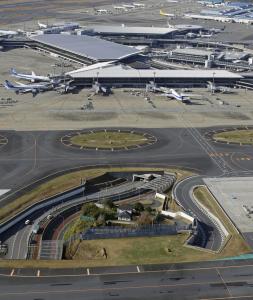
In the middle of Narita Airport, Japan’s busiest air transportation hub, sits an isolated building on a piece of farmland, like a tiny island lost in a vast ocean. This plot of land, like a few others scattered within the massive airport complex, is one of the few remaining holdovers from a decades-long fight against the airfield’s construction, known as the Sanrizuka Struggle. Our first personal experience with this prolonged controversy was back in the 1980s when we took a bus to Narita Airport to fly home to America. At that time, we were unexpectedly stopped by heavily armed police near the airport, allowing them to board and examine each passenger’s identification and belongings before entering the contested area.

This ongoing conflict traces its origin to the rapid expansion of Japan’s airline travel and the realization that Tokyo’s Haneda Airport would soon reach its capacity to keep up with ever-growing demands. As a result, the government decided in 1966 to construct an additional international airport near Tokyo. The predominantly agricultural area of Sanrizuka in Chiba Prefecture was chosen as the site for this ambitious venture. The imperial family owned and offered a substantial amount of farmland in the designated region, so it was assumed that loyal local farmers and residents would quietly fall in line and support the project. That proved to be a huge miscalculation.

An unanticipated series of clashes led by farmers, local residents and various left-leaning groups quickly united under a common cause and soon escalated to open conflict. Significant delays to the construction project shortly followed and even a number of fatalities occurred as the strife continued to intensify. The failure of the government to adequately consult the people who would be directly impacted by the project, coupled with its aggressive efforts to displace them from their land, further served to heighten tensions and deepen mistrust. However, in spite of the many delays and violent clashes between opposing sides, the airport finally began operations in May 1978. Even now, almost fifty years later, vestiges of this once forceful resistance are still visible as evidenced by a small handful of intractable landowners whose isolated properties stubbornly cling to their existence within the extensive airport complex.

Opposition to the construction of the Narita Airport enlisted passionate sympathizers on both sides which led to a prolonged and destructive conflict. The nature of such oppositional efforts can be obscure when they occur, but history can sometimes provide a helpful perspective and may serve to identify which side’s cause was just or misguided. However, an accurate appraisal of some struggles, even with the passing of time, is often difficult to discern. But this is certainly not true for the majority of conflicts recorded in the Bible that typically involve a stark contrast between good and evil.

The turmoil between tribes, individuals, families and nations are typically recorded in the Bible in a bifurcated manner to warn God’s people of the folly of opposing God in comparison to the benefits of obeying Him. This dichotomy is captured clearly in Numbers 22 when the Israelites lacked water to quench their thirst, which drove them to openly oppose the leadership of Moses and Aaron. While securing water for themselves and their livestock was certainly a valid concern, the people’s knee-jerk reaction was to foolishly oppose God and His appointed leaders. Their flagrant disobedience serves as a reminder that we live in a world that tends to divide all too quickly into opposing camps, but we must choose our sides carefully and make sure that our objectives align with God’s.

Tunnels

“In his hand are the depths of the earth, and the mountain peaks belong to him.” Psalm 95:4

Soon after we arrived in Japan in 1984, we noticed several flashy billboards dotting the countryside of Hokkaido featuring a sleek bullet train racing through a tunnel under the ocean. The signs heralded a coming new age in transportation with the construction of the Seikan Tunnel. When completed, this remarkable tunnel would dramatically improve access to Japan’s northernmost island by traversing the large body of water known as the Tsugaru Strait located between Japan’s two largest islands, Honshῡ and Hokkaidō. In a country crisscrossed by tunnels because of its widespread mountainous terrain, the Seikan Tunnel was championed as the ultimate in engineering achievement, incorporating the latest in Japanese technology and financed by a booming economy.

According to historical records, Japan’s first man-made tunnel was built almost 400 years ago. By March 2024, the number of tunnels in Japan had skyrocketed to 10,922, second only to China. Although difficult and expensive to build, tunnels provide shortcuts that can significantly reduce travel time. Throughout the country, cars and trains now routinely pass through vast stretches of roads and rails embedded in an ever-expanding underground network. Japan has become one of the world’s leaders in tunnel construction technology and can boast of several achievements in this area. For example, the Gotthard Base Tunnel bored through the Alps in Switzerland is officially the longest tunnel in the world, but the Seikan Tunnel is recognized as the longest undersea tunnel at 33.5 miles (54 km).* Japan also set the standard for underwater tunnels by digging the first undersea railroad tunnel in 1942 and more recently, the world’s longest undersea road tunnel spanning the Tokyo Bay.

It actually took a natural disaster in 1954 to stimulate a plan for building a previously inconceivable tunnel that would link up Japan’s main island of Honshῡ with Hokkaidō. At that time, a powerful typhoon swept through these same two islands and sank five ferry boats resulting in the tragic loss of 1,430 lives. Amidst national grief, the Japanese public clamored for a safer means of transportation between these two population centers. Due to unstable weather patterns and geographic conditions, a bridge seemed too risky so the novel concept of constructing a tunnel was eventually proposed and adopted. Construction started for the ambitious project in 1971 and the first train passengers made the historic journey 17 years later through this man-made wonder. The tunnel now accommodates approximately fifty trains per day and from 2016 special tracks were installed for high-speed bullet trains. Ironically, since the innovative idea of building the Seikan Tunnel was first proposed, flights to Hokkaido have become much more common, faster and notably cheaper, prompting most people to fly rather than take a train. However, preliminary plans are now being considered for constructing another tunnel specifically designed for cars and trucks.

The increasing advancement of civilization and accompanying technology have led to even more ambitious projects as mankind continues to extend its dominion over the earth. While some such exploits extend to the heavens, they also take us to the depths of the earth reflecting the ingenuity and industriousness of man. But these efforts pale in comparison to the works of God as the Psalmist notes in wonder: “My frame was not hidden from you when I was made in the secret place, when I was woven together in the depths of the earth.” (Psalm 139:15) We may applaud the achievements of men who build tunnels in the depths of the earth, but only God can build people.

* The Seikan Tunnel is officially longer than the Chunnel, connecting England and France, but the Chunnel has a longer underwater segment.

Wheels

“So I went down to the potter’s house, and I saw him working at the wheel.” Jeremiah 18:3

Wheels

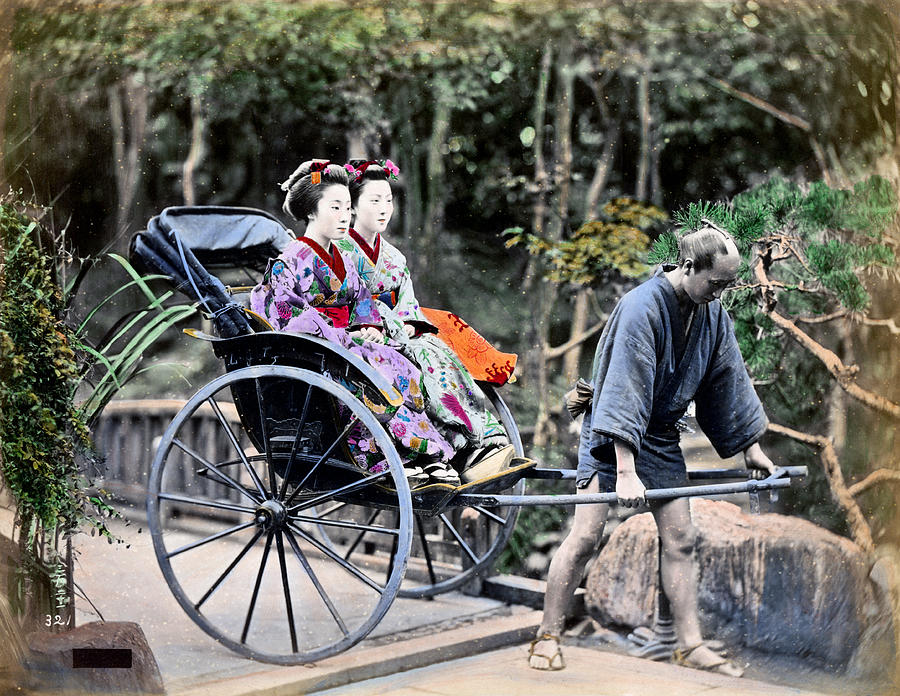
Japan is a land of many unique happenings, including an interesting historical oddity when the general usage of the wheel was banned during the Edo Period (1603-1867). This unusual law was reputedly enacted by Tokugawa Ieyasu, a powerful shogun (a supreme military leader), following a century of brutal conflict that culminated with the ascendency of the Tokugawa clan to absolute rule. Numerous theories have been proposed to account for this unusual measure involving the restriction of wheels, but it is probably a combination of two major factors. One theory is that a law prohibiting the usage of wheels throughout Japan likely discouraged competing feudal lords from opposing the shogunate rule since the ability to swiftly transport warriors, weaponry and supplies would be significantly hampered. Other historians conjecture that the mountainous terrain characteristic of Japan made wheels difficult to use unless a network of roads was constructed, which would require a huge financial outlay by the governmental authorities. Therefore, nobility were usually carried in palanquins and all supplies were transported by human labor under the rule of subsequent shoguns.

It is believed that the origins of the wheel in Japan came via China at some point in the sixth or seventh century. In other parts of the world, wheels were customarily convenient to use where there was an expanse of level ground or in major urban areas. But they often proved to be impractical in the predominant mountainous landscape of Japan. Therefore, the transportation of goods over long distances was usually done on major rivers or by sea faring ships that hugged the coastlines. The term “wheel” in Japanese is kuruma, but now the word is more commonly used for a car. The Japanese character for kuruma (車) is frequently incorporated in words denoting numerous forms of transportation that involve wheels, such as bicycles, carts, trains, wheelbarrows and unicycles.

In this modern era, it is admittedly hard to imagine a Japan without wheels. The preponderance of cars, motorcycles, planes, trains, buses, bicycles and other forms of transit all use wheels. Wheels are now considered to be essential to the clockwork precision by which people and materials are easily moved from one end of the country to the other. The ancient network of roads, like the famous Tōkaidō, that were originally constructed for travelers on foot or horseback, eventually gave way to modern transportation routes featuring the predominance of the wheel.

Wheels have other purposes besides transportation as the prophet Jeremiah pointed out through his powerful analogy centered on a potter’s wheel. In chapter 18 of the Book of Jeremiah, God is compared to a potter who takes a lump of clay, representing His people, and expertly reshapes it into a vessel suited for His eternal purposes. This illustration is a helpful reminder that each of us is a unique creation in the hands of God as He forms us into useful vessels to reflect His glory. Such a process is often painful as it calls for deconstruction of the clay vessel before it is reconstructed into something much more serviceable for the Master’s purposes. A wheel is intended to take us to places where we want to go and similarly, as pieces of clay on the Heavenly Potter’s wheel, we are lovingly prepared for the places where God leads and for the things He desires. (verse 4) This is one wheel that should never be outlawed but instead, be embraced in faith by every child of God.

Left Side–Right Side

“He guides me along the right paths for his name’s sake.” Psalm 23:3

Helyhatározók gyakorlása – Vidám tanár

In light of certain studies, some neuroscientists claim that people are apt to be either left-side or right-side dominant in their brain. As a result, this tendency may have significant impact on a person’s personality, preferences, and capabilities. While this concept is still subject to debate, we often felt like right-brain people operating in a left-brain world while living in Japan. As newcomers, we knew to expect differences in language and culture, but a steering wheel located on the right side of the car just felt wrong initially. This departure from our “normal” was to be expected because everyone drives on the left-hand side of the road in Japan. Therefore, as part of our eventual transition, we soon learned to shift gears with our left hand, remembered we were crossing traffic when making right hand turns and ceased activating our windshield wipers when attempting to a make a turn (they are opposite).

This mental transition from a right-side world to a left-side world took time, but we eventually mastered it. We did so to such a degree that now we may occasionally start out driving on the wrong side of the road in America under certain conditions, particularly if there is no oncoming traffic to help orientate our brains. Unfortunately, the juxtaposition of the windshield wiper and turn signal controls still proves to be a stumbling block at times if our thoughts drift to Japan while driving. We have also entertained more than a few people when we mistakenly attempted to enter the driver’s door when getting into their car as a passenger.

There are many theories that attempt to explain why one particular side of the road is preferred for traveling, but it is interesting to observe that even though roughly 90 percent of the general population is right-handed, fully one-third of the world routinely employs a left-hand traffic system. Specifically, 165 countries drive on the right and 75 countries drive on the left. A closer examination of the details reveals that a large percentage of the left side dominant countries were formerly part of the British Empire so that partially explains a left side orientation. However, this does not account for countries like Japan that were never under British influence. Historians can prove that the propensity to maintain a left side traffic flow in Japan goes back to at least the Edo Period (1603-1868) and the establishment of the Japanese railroad system in the late 1800s locked this pattern into place.

Every sovereign country is certainly entitled to legislate the flow of traffic within its own borders. In a similar manner, a sovereign God who created this world and all of its inhabitants, has ordained the paths and the manner in which we should walk as we live out our lives here on Earth. Since these rules of the road are eternal in nature and intended for our good, we would do well to know and diligently observe them. Time and time again, Scripture teaches us that God delights in guiding us along a determined path that will provide us blessing and safety from evil, both in this life and in the world to come.

As one travels the world, it is interesting to note the variety and disparity of rules that regulate the lives of the respective citizens in different countries. As citizens of a heavenly country, God has called us to walk along the right paths He has ordained for us as we seek to successfully navigate the roads of life before us. Each country has determined the correct side of the road on a national basis, but there is no uniformity in such matters on an international level. But in things of an eternal nature, we must carefully observe God’s rules of the road.

Rail Pass

“Jesus traveled about from one town and village to another, proclaiming the good news of the kingdom of God.”

Luke 8: 1

Rail Pass

Trains are widely regarded as the cheapest and simplest form of travel for newcomers when they visit Japan. This popular form of transport is greatly facilitated by the purchase of what is known as a rail pass that is only available for visitors to Japan. These passes are sold online at a reasonable cost in 1-3 week increments and are a tremendous bargain designed to maximize one’s time in Japan.

But before hopping on a Japanese train, it is good to be aware of what is considered to be good manners for passengers. For example, it is customary to wait for all the passengers to disembark from the train before boarding. Once on board, set your smart phone to silent mode and avoid talking on the phone while in transit. Eating on a train is generally considered to be impolite except on the bullet trains, which typically involve a longer journey. Courteous behavior calls for one to be mindful of their seating posture so as not to take up too much room or inconvenience other passengers. Any bags should be placed or carried in such a way to not interfere with the movement of others entering or attempting to leave the train. In addition, one should avoid using priority seats set aside for the handicapped, elderly or pregnant women.

It is good to keep these tips in mind, but one must also understand that riding on a train in Japan is much more than getting from one point to another and observing proper etiquette. While Japan is famous for the sheer volume of passengers its transportation system accommodates, and the amazing network of rail lines, it also offers a number of unique entertaining train experiences for all ages. In fact, a prime-time TV show, called the NHK Railway Journal, regularly features some of these fascinating train lines. For example, there is a “Pokémon with You” train line in Iwate Prefecture full of Pikachu images and hosts several creative play areas designed to please young fans of this famous cartoon. The “Toreiyu Tsubasa” bullet train, that travels between Fukushima and Yamagata Prefectures, offers artfully decorated footbaths for passengers to soak tired feet while enjoying the beautiful scenery on the journey. The “Sagano Romantic Train” near Kyoto features large glass viewing areas and one fully open car to enhance the breathtaking views of the picturesque countryside and exquisite foliage for which the area is famous. Children are thrilled to ride on the “Hello Kitty Shinkansen” bullet train, “Thomas the Tank Engine” train, and the “SL Ginga” steam locomotive or other “character trains” as they are commonly called. A popular train among adults is the “High Rail 1375” which runs through Nagano Prefecture and ascends to the height of 1,375 meters (4,511 feet). The route of this train includes panoramic mountain scenes or star gazing at night and even an onboard mini planetarium.

Travel seems to be a necessary element in biblical events, particularly in the Books of the Pentateuch, which feature the birth of the nation Israel, and in the Book of Acts, which focuses on the birth of the church. Jesus’ ministry was also characterized by extensive travel as he went from town to town to share the good news of the kingdom of God. (Luke 8:1) Of course, travel was much more difficult in those days without the convenience, comfort and speed of modern trains. Perhaps this is why the concept of travel is a common metaphor when applied to characterizing the people of God and how we are to relate to the world around us. Many Bible translations use the term “sojourner” to describe our position in our present life. The word melds together the ideas of foreigner, temporality and movement. A biblical sojourner then is someone who has been granted a “rail pass” to temporarily engage in this present world, fulfilling the purposes of God, while remembering that another, more perfect world is our final destination. All aboard!

Special Delivery

“Carry each other’s burdens, and in this way you will fulfill the law of Christ.”  Galatians 6:2

1200px-toyota_qd200_201

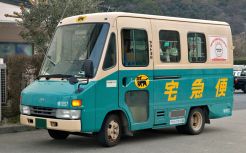
Often unnoticed by the casual visitor to Japan, takkyūbin provides an amazing assistance in a country famous for its punctuality and efficiency. Takkyūbin (宅急便) means “speedy home delivery” and it furnishes a complimentary service to Japan’s outstanding public transportation system by offering a better alternative to transporting cumbersome baggage on trains, subways and buses. A customer simply fills out a standard form that includes the shipping address, and their luggage is promptly picked up at their home. It is then delivered the next day within a designated two-hour window for a very reasonable fee (roughly $17). This remarkable service is available throughout Japan to every major Japanese transportation hub and each individual residence. While the transport of luggage meets a huge need, people increasingly use takkyūbin to send all kinds of goods across the country because of its convenience, low cost and dependability.

The concept of takkyūbin originated in 1975 when Yamato Transport, an established shipping firm, decided to extend its services across the country to every address. Such a massive expansion was quite an ambitious undertaking, but due to its high standards and reliability, the company’s new services were enthusiastically received. Yamato now boasts of a workforce of almost 200,000 employees manning roughly 45,000 vehicles in hundreds of offices scattered throughout the country. Its distinctive logo is that of a yellow oval centered on a black cat carrying a kitten in its mouth, representing the company’s promise to take care of items entrusted to them. Therefore, the company is often colloquially referred to as “Kuroneko,” meaning “black cat.”

Although Yamato now has other competitors, its popular services are so ubiquitous that the term coined by the company, takkyūbin, has largely replaced the previous term, takuhaibin, in everyday language. This changed usage pattern was further established when the famous Studio Ghibli anime film, “Kiki’s Delivery Service,” was released in 1985. Co-produced by Yamato, the popular movie used the word takkyūbin in its title and featured a black cat as one of the characters.

The business of takkyūbin was created to deal with the logistical problem of transporting physical burdens, but there are burdens of a vastly different nature that no commercial enterprise can ever resolve. In general, a burden can be simply defined as “a load that one must carry” and such encumbrances are considered to be heavy or challenging to bear. A burden can be physical in nature, but it can also be anything that invites stress, pain, anxiety, or hardship as we bear it for ourselves or for the sake of others. The Bible addresses quite a variety of such burdens offering different solutions.

The daily burdens of life are often very difficult, if not impossible to carry alone, as Moses himself recognized in his leadership role when he complained to God: “I cannot carry all these people by myself; the burden is too heavy for me.” (Numbers 11:14) The Psalmist spoke of another type of burden when he lamented, “My guilt has overwhelmed me like a burden too heavy to bear.” (Psalm 38:4)

Thankfully, God “daily bears our burdens” (Psalm 68:19) and Jesus invites us to lay our heavy load upon His shoulders that will in turn provide genuine rest of a spiritual nature that we all crave. (Matthew 11:28-30) But to the degree that we are able and available, we are exhorted to help carry the burdens of others, which exemplifies the heart of God and the nature of the church. (Galatians 6:2) We all need help with our baggage.

Parking

“For the Lord your God is bringing you into a good land…a land where bread will not be scarce and you will lack nothing.”  Deuteronomy 8:7-9

Parking

When one considers the many facets of parking a car in Japan, scarcity is probably the key concept that underlies all related discussion on the topic. Since land is a premium in overcrowded Japan, there is a scarcity of parking spaces in a country that increasingly depends upon the automobile. Despite Japan’s incredibly efficient mass transportation system, the number of cars on the road continues to multiply and this increase creates the problem of where and how to park these cars when not in use. This ongoing parking problem creates an environment where strict controls, parking manners and creative technological solutions work together to manage the situation.

The regulation of parking in Japan begins with the purchase of a vehicle. To obtain legal ownership of a car, everyone is required to have the local police confirm that you actually have a designated place to park it. To discourage illegal parking, fines are quite exorbitant and may cost over $200 plus additional fees depending on the circumstances. Paid parking lots tend to be rather pricey, which explains why some drivers are tempted to look for inexpensive or even illegal alternatives. In the more congested areas, some parking spaces may cost as much as one dollar for every ten minutes. This of course is in addition to the $100-300 a month one may already be paying for a personal parking space near their residence. When we moved to Tokyo and were looking for a place to live, someone tried to interest us in their apartment which had a “cheap” parking spot for $250 a month and was “conveniently” located only a half mile away!

The scarcity of land and potential parking places has given rise to a few innovations to ease this chronic problem. For example, modern parking garages that are typically several stories high will automatically place your car on an elevator for storage. Upon your return, it is easily located and retrieved through a computerized identification system. Unmanned local parking lots often feature a wheel lock device that rises from the ground, which is released when you pay your fee at the nearby machine. Some apartments come equipped with individual two-tiered parking lifts that double their parking capacity. Many who live in older neighborhoods not designed to house modern automobiles painstakingly park their cars in almost impossible tiny spaces. Major shopping complexes often offer two hours of free parking for customers who make purchases and then charge a set fee for any extra time. Parking spaces throughout Japan are generally narrower and designed to accommodate smaller cars.

To facilitate traffic flow in cramped parking lots, most drivers meticulously back their cars into an empty spot for easy exit and enhanced visibility when they pull out. All newer cars come equipped with a button to retract outside mirrors to minimize potential impediments for others trying to reach their parked car and these are routinely used. Here is a link to a video that captures most of these practices: https://www.youtube.com/watch?v=EQj_a6ByEhA

While scarcity of parking is a common annoyance in many parts of Japan, we are often faced with other shortages in life that can be far more distressing. A lack of employment, housing, transportation, clothing, finances or education can invite a sense of desperation that all too easily leads to despair and hopelessness. But just as God led his people, the Israelites, to a “good land” where they “lacked nothing” (Deuteronomy 8:7-9), He delights in providing what we need as we learn to trust Him… even a parking space.

Security

 “It is God who arms me with strength and keeps my way secure.” II Samuel 22:33

Security

I was running late to catch my flight from Sapporo to Tokyo, so I failed to take the usual precautions to prepare for my journey. This lapse became evident when I entered the airport security line and fumbled to remove the loose items in my pocket. To my chagrin, I discovered that I was still carrying my ever-present pocket knife. When I retrieved my laptop from my backpack, I noticed the bottled drink in an outside pocket that I had mindlessly purchased for the trip minutes earlier. No problem. I was in Japan. The security personnel took my knife, apologized profusely and proceeded to place it in a sealed envelope, promising to return it once I disembarked from my plane in Tokyo. The offending plastic bottle of water was removed, examined by a special machine, and put back in place by the efficient white-gloved agent. As I walked through the metal detector, my footwear apparently triggered an alarm. I was therefore politely asked to remove my shoes, step into the provided slippers, and quickly passed through the screening device a second time. Upon exiting, my shoes were placed neatly in front of me with additional apologies.

Following this incident a few months later, I was once again standing in an airport security line, but this time it was back in the States preparing to return to Japan. Like before, I had neglected to remove my treasured pocket knife. Without any evidence of pity, a TSA agent harshly instructed me to toss my keepsake into a nearby barrel along with the illicit possessions of other inattentive travelers. He also promptly declared my medium-sized tube of toothpaste and a freshly purchased can of shaving cream to be contraband, so I reluctantly fed them to the insatiable barrel, joining my knife. While I was still grieving the loss of these items, I hesitantly followed the example of all the other passengers in front of me who were routinely removing their shoes for inspection. I trudged behind them with great reluctance on the unsanitary floor before me in socked feet.

Security was obviously the common goal in these two very diverse experiences, but cultural values and practices shaped it in radically different ways. People in general are understandably driven to pursue security, which is why it is often identified as being a basic human need. However, many of the forms of security we frequently seek easily lend themselves to becoming false gods that potentially lead us astray from the purposes of God. For example, our cravings for financial security, physical security, emotional security, relational security and political security in an unstable world are certainly reasonable, but God does not necessarily promise such things this side of eternity. King David exclaimed in praise that God “keeps my way secure” (II Samuel 22:33), but the events in previous chapters reveal the context in which this was said. They indicate that David had repeatedly refused to take certain measures in his own hands to ensure his personal safety against the schemes of those who sought to take his life. His personal security lay entirely in God’s hands, not his own devices.

Many terms are used to describe God as our source of security, such as our fortress, our rock, our strong tower, our shield, our refuge, our hiding place, and most poignantly, our shepherd. All of these descriptions center on the very character and power of God, without any of them being conditional on who we are or what we do. These are powerful truths we would do well to bear in mind while standing in airport security lines or on other occasions where we are reminded our lives are not in our control.

Bicycles

“In those days it was not safe to travel about,” II Chronicles 15:5a

Long before the advent of the popular minivan and SUV, my wife adapted her bike to fill basically the same purposes, at a greatly reduced cost. Strapping a baby on her back, with our oldest son sitting behind her in a child seat and our middle child riding in another seat attached to the handlebars, she would head off to the local grocery store to do our shopping. She rode what is commonly called a mamachari, which is translated as a “mom bicycle,” getting its name from the slang terms for mother and bike.  A mamachari is a basic bike that typically comes equipped with a chain guard, fenders, a dynamo light, a basket, a simple lock and a rear rack. These inexpensive bikes are extremely practical for transporting small children and local purchases over short distances. They are popular not just with moms, but also with businessmen commuting to work, students heading to school and elderly people running local errands.

There are over 80 million bicycles (called jitensha—自転車) in Japan, which ranks among the top worldwide in bikes per capita. Oddly, though, Japan is not known as being a particularly bike-friendly nation. Bicycle lanes are almost non-existent, forcing pedestrians, bicyclists and cars to often share the same space. In addition, designated parking areas for bikes located near stations and shopping areas are often grossly inadequate. Even then, fees are routinely charged for such services and hefty fines levied for parking violations. Thievery is uncommon in Japan, but bikes seem to be an exception to this rule, with the majority of bikes stolen for reasons of convenience rather than profit. We learned this lesson the hard way many years ago when my wife’s newly purchased bike was swiped from a public parking lot in front of a large department store. To combat such crimes, everyone is now required to register their bike with the police for a one-time fee.

Japan is a country that has rules for many things and this also includes bikes. The use of cell phones, umbrellas and headphones while cycling is prohibited, as well as any kind of alcoholic consumption prior to bicycling, due to the safety risks these activities invite. Riding on sidewalks is also illegal, but these rules are often conveniently ignored by the general populace and usually overlooked by the police. In a safety-conscious country, it is interesting to observe that helmets are optional but their usage is gradually becoming more prevalent among school children. E-bikes (electric bikes) have been quite common for a number of years among young mothers who use them year-round to taxi their children to and from day care centers. I have been left in a trail of dust on many occasions by a mom or elderly woman zipping by me as I strenuously labored to climb a steep hill on my more conventional bike.

Travel takes many forms and each one is accompanied by its own set of risks. Each time a person ventures forth from his or her home via bike, bus, car, train or plane, they are entering into additional circumstances where many elements are beyond their control. King Asa of Judah was confronted by such perils during his tumultuous reign when it was said, “In those days it was not safe to travel about.” (II Chronicles 15:5a) Despite having at his disposal an army comprised of over half a million fighting men (II Chronicles 14:8) and having achieved many great victories, King Asa and his people continued to be vulnerable to a multitude of dangers. Although he undertook many additional measures to secure his kingdom and protect his subjects, King Asa is primarily praised for grasping the limitations of his power and leaning into God who can “help the powerless against the mighty.” (v.11) While it is common sense to take practical measures to protect ourselves while traveling, no helmet, safety belt or life preserver can provide the safeguard we really need.

Counting Cars

“Lift up your eyes and look to the heavens: Who created all these? He who brings out the starry host one by one and calls forth each of them by name. Because of his great power and mighty strength, not one of them is missing.”  Isaiah 40:26

Counting Cars

One day, while making our way to our office in Tokyo, I noticed a man oddly sitting in a chair beside a busy intersection engaged in some mysterious activity. As I looked up, I spotted another person seated on the opposite corner who seemed to be equally preoccupied with the same task. Having witnessed this oddity before, I had a pretty good idea as to what these people were doing. They were manually counting the cars that passed by in order to determine the volume of traffic at that particular intersection. Over the next few days as we bicycled along the same route, we noticed different teams of people engaged in the same exercise at numerous major intersections. This practice always strikes me as a very labor-intensive method to gather knowledge and, on top of that, it is often performed in adverse weather conditions. Hopefully, someone will use that painstakingly collected data to make well-informed decisions that will later improve the flow of traffic in those respective areas.

Japan’s penchant for organization and details never ceases to amaze me, but I am still surprised whenever I wander through a city park or stroll along a sidewalk and note that every public tree is numbered. This phenomenon indicates that somewhere in the bowels of local Japanese government bureaucracies, someone is tracking each of these individual trees, just like counting cars. I suppose such information could be useful when it comes to identifying and locating a particular tree that needs attention or to be removed. However, the sheer logistics of maintaining this extensive database of knowledge and making it available for practical purposes is rather mind numbing. This practice indicates that some civil servant, or more likely, a team of government employees, are apparently charged with counting, marking and recording each one of those trees. In some aspects, it is a rather impressive undertaking when one pauses to reflect on this overarching objective.

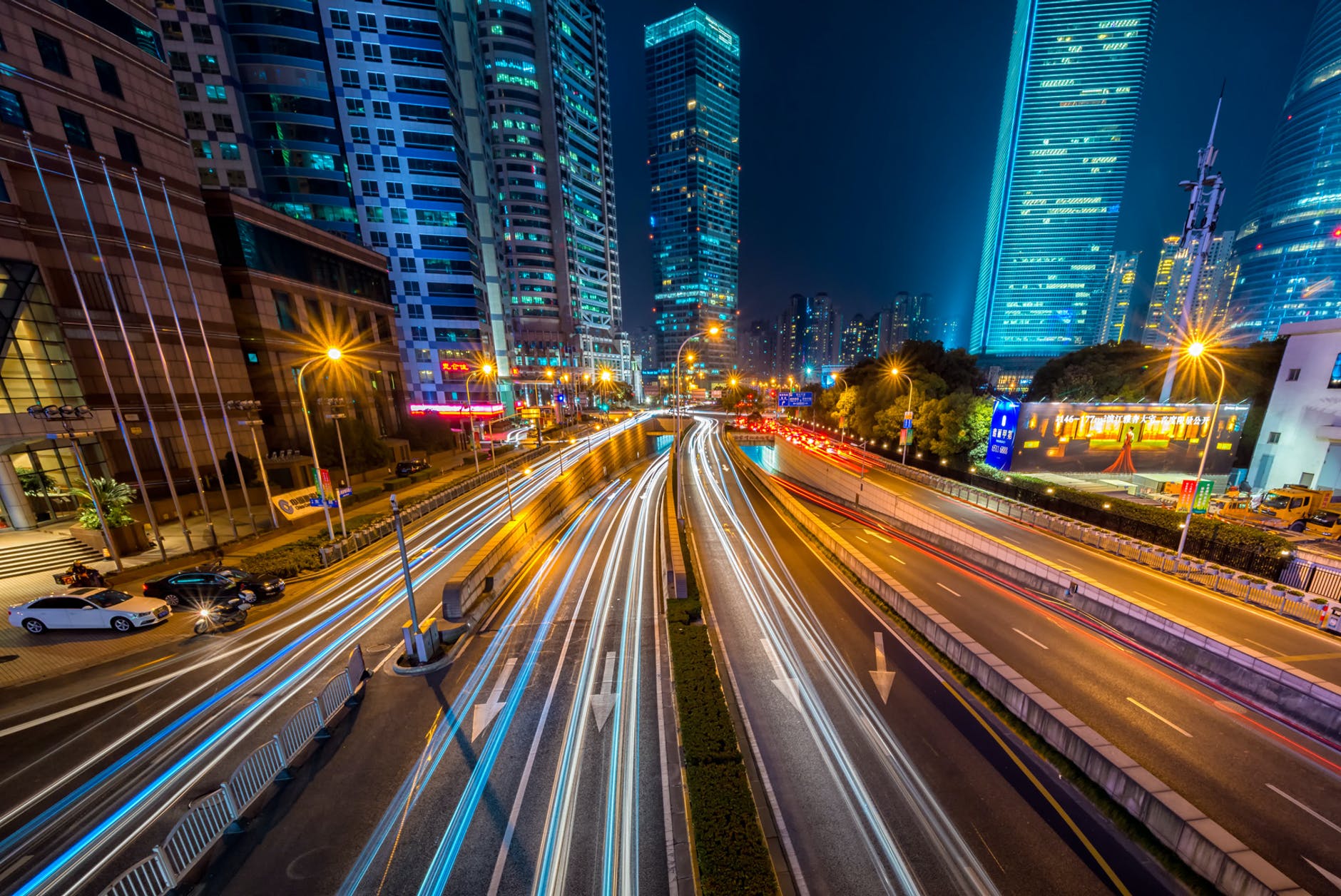
However, much more impressive is the fact that God’s knowledge is unlimited by time and encompasses our most individual, intricate details, extending to the furthest expanse of the heavenly hosts. (Isaiah 40:26) God not only counts His creation, He amazingly cares for it, which is a tremendously comforting thought. Some days, the traffic of our lives seems to be moving by so fast with such volume that we cannot begin to count the endless stream of cars that whiz by as we strive to keep up and deal with the many demands of life. Perhaps this is why Moses prayed that God would “teach us to number our days, that we may gain a heart of wisdom.” (Psalm 90:12) This verse is a great reminder that true wisdom comes not from counting our activities, but by counting the quality of our lives as we strive to align our days with God’s purposes. No matter how much we count or what we count, the numbers only make sense when we include God in our mathematical equation.