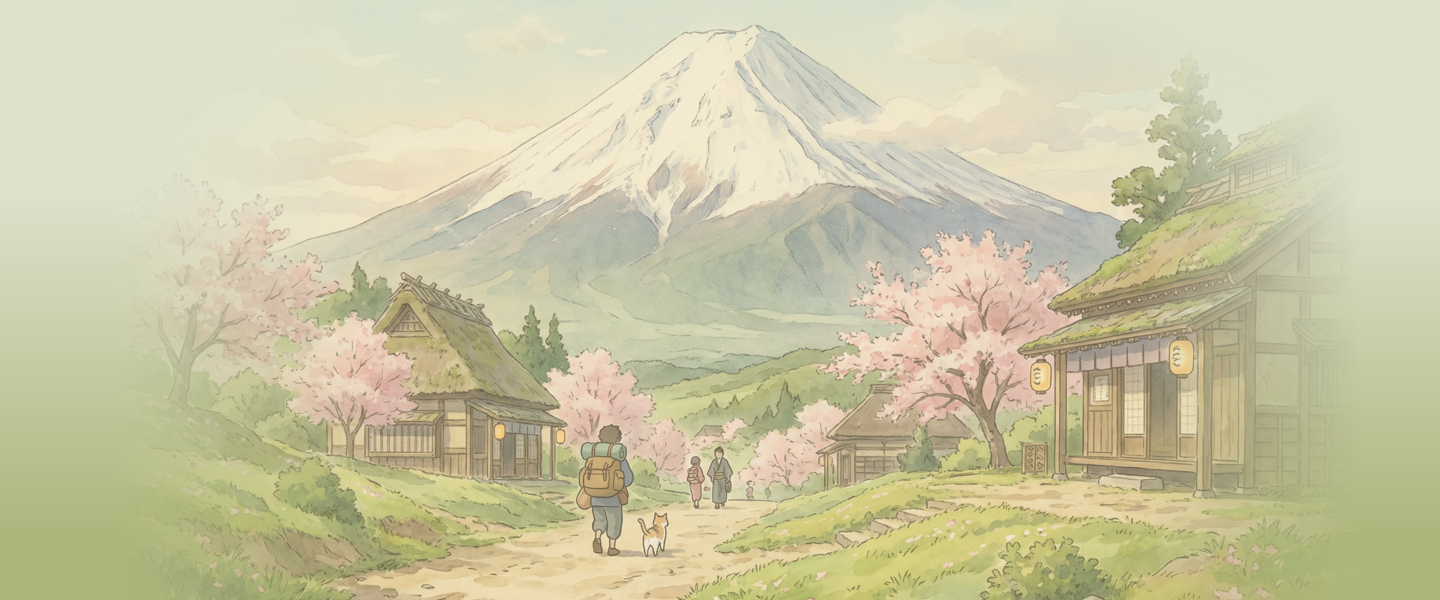

Broken Pieces

Yet you, Lord, are our Father. We are the clay, you are the potter; we are all the work of your hand.”                                                                                                                          Isaiah 64:8

kintsugi

We often hear the phrase “beauty is in the eyes of the beholder.” This statement is certainly a valid assumption with regard to individual appraisals, but it is also true on a cultural level. A clear example of this concept can be seen in the unique Japanese pottery technique known as kintsugi (金継ぎ), which means “joining with gold.” Unlike normal pottery creations that strive for perfection and uniformity, kintsugi begins with brokenness. This ancient artform centers on joining broken pottery pieces together using a special lacquer-based glue mixed with powdered gold. The intended overall effect is to enhance the aesthetic appeal of the object despite its obvious repairs.

Kintsugi is a deliberate form of flawed beauty which captures the ancient Japanese aesthetic principle known as wabi-sabi, where the values of imperfection, transience and incompleteness are integral elements in artistic creation. For example, Japanese flower arrangements (ikebana), gardens, paintings and tea ceremonies often incorporate these rather unusual qualities.

The art of kintsugi serves as a visual reminder that we can turn life’s adversities and brokenness into something that is beautiful and resilient. Rather than attempting to hide or disguise damage, repairs are purposefully highlighted in this special artform. As such, kintsugi is a powerful object lesson that exhorts us to embrace our imperfections and find solace that our wounds, whatever they may be, can serve a worthwhile purpose. God can take broken people and broken plans to accomplish His perfect and eternal objectives.

A prime example of this is the captivating story portrayed in the Book of Esther. The events described in this brief book take place after the golden age of King Solomon had faded to a distant memory. The magnificent temple of God and Jerusalem have both been reduced to rubble and God’s people are enslaved in the foreign land of Persia. While this powerful story has many unexpected twists and turns as the plot unfolds, it shines a spotlight on God and His divine purposes without ever mentioning His name. It is a compelling tale of redemption, where God takes a broken people and restores them to prominence among the nations through a series of very unusual but exciting events. In this story a commoner named Esther becomes queen and her Jewish protector, Mordecai, is unexpectedly elevated to a position of authority second only to the king himself. “For such a time as this” (Esther 4:14), a young woman was sovereignly used by God to repair the fortunes of a shattered people to demonstrate to the surrounding nations God’s incredible handiwork of mercy and power. Like the art of kintsugi, God redeems what is broken and makes it even more beautiful in a fallen world.

It is good to recall that God is engaged in the business of redeeming people as broken objects and re-creating them as vessels of grace and beauty for His eternal purposes. “For such a time as this,” God reassembles the fragmented parts of our lives in ways unimaginable and often unseen, in order to bestow His unmerited blessings upon a needy world. Beauty is indeed in the eyes of the beholder and by the grace of God it comes from our broken pieces. As the master potter, God does all the work and He gets all the glory.

Evaporated People

What is your life? You are a mist that appears for a little while and then vanishes.” James 4:14b

Invisible People

When Takahashi san* was laid off from his high paying job without warning, he was ashamed to tell anyone so he continued to pretend every day that he was going to work. After a few weeks, Mr. Takahashi could no longer maintain the charade so instead of disclosing the situation or committing suicide as some might choose to do, he simply disappeared. In doing so, Takahashi san joined the company of many others like him who in colloquial Japanese are referred to as “jōhatsusha” (蒸発者) or, the “evaporated ones.” Each year roughly 100,000 Japanese disappear in a similar manner with a number of factors accounting for such an extreme reaction. Some are fleeing abusive marriages, others seek to escape financial obligations such as unpaid loans or gambling debts, while many simply cannot face real or perceived expectations they have failed to meet.

The term jōhatsusha was first coined in the 1960s when many individuals started to disappear in order to escape broken marriages to avoid public and expensive divorce proceedings. This new social trend escalated even further in the 1990s when the economic bubble burst and a multitude of people, particularly men, suddenly lost the security and benefits of lifetime employment. Seeking a reset in life, many changed their names and often refused entitled public benefits in order to maintain their anonymity. These “evaporated people” quietly entered into a burgeoning shadow economy by taking on low-paying day jobs to make ends meet and increasingly congregated in urban areas of Japan often dominated by Japanese yakuza (mafia). In most cases, it is possible for jōhatsusha to hide in plain sight because of strict Japanese privacy laws that protect their identities. As time slips by, many families cease looking for them altogether and slowly start to regard them as being “dead.” In addition, police have no obligation or interest in tracking jōhatsusha down unless they have committed some kind of crime. Once someone steps out of line in Japan it is very difficult to reenter normal societal patterns, even if one has a change in heart. Second chances are rare in Japan so those who initially choose to evaporate tend to remain in an invisible state, even if they eventually regret that choice.

Since this social phenomenon is widespread and continues to quietly increase, shady companies have steadily emerged alongside this trend to assist those wishing to disappear. These new enterprises are referred to as “yonigeya” (夜逃げや), which is roughly translated as “night flight relocators.” For a set fee, depending upon the service rendered and risks involved, these dubious companies provide the practical logistics needed to help people evaporate. This assistance may include moving possessions, creating false documentation, dealing with loan sharks, offering physical protection, providing transportation or finding a new living location. In addition to yonigeya, published guidelines are easily available to assist those who are considering a jōhatsusha lifestyle.

The choice to evaporate and disappear from life is for many a form of self-preservation. For some it even includes an element of altruism that provides an alternative so they can avoid inflicting any further pain upon loved ones. However, most jōhatsusha would probably acknowledge that adopting a vaporous lifestyle is an inadequate solution that may solve some problems but also creates others. Such acts of desperation inevitably remind us of the transient nature of life itself apart from God and living according to His purposes. James describes such a life as being like a “mist that appears for a little while and then vanishes.” (James 4:14b) We may be able to evaporate from the pursuit of men but never from the presence of God. Unlike a vapor, a life of obedience lingers for eternity.

*Fictional name and incident

Looking Up

“I know that there is nothing better for people than to be happy and to do good while they live.”    Ecclesiastes 3:12

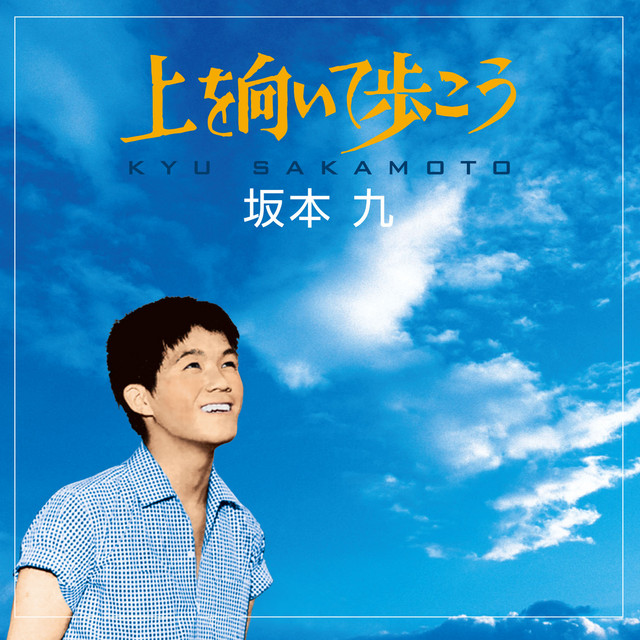
Although Japanese artists have produced quite a variety of quality music, only one Japanese song can claim the honor of rising to the number one spot on the U.S. pop chart. That notable achievement was accomplished in 1963 by the song entitled “Sukiyaki.” The melody of this famous song was composed by Nakamura Hachidai and the lyrics were written by Ei Rokusuke. However, it was the singer, Sakamoto Kyu, who propelled the song to popular heights within Japan and eventually overseas. His jaunty singing style along with powerful interludes of whistling compelled listeners to join in by humming or tapping their feet in rhythm.

Oddly enough, the commonly accepted Western title, “Sukiyaki,” has absolutely no relevance to the actual lyrics of the song. Sukiyaki is a popular dish consisting of thinly sliced beef and vegetables cooked in a pot on the table. In contrast, the lyrics of the song speak vaguely of a lost love that strikes a responsive chord in the hearts of Japanese. The song testifies of deep personal loss, which accounts for its renewed popularity fifty years later among survivors of the 2011 Great East Japan Earthquake.

The actual Japanese title, “Ue o Muite Arukō” (上を向いて歩こう), means “I Look Up When I Walk.” The lyrics are simple, but penetrating, as seen in the following excerpt:

I look up when I walk,

So that tears won’t fall.

Remembering those spring days,

But I am all alone tonight.

Happiness lies beyond the clouds.

Happiness lies in the shadow of the stars.

Sadness lurks in the shadow of the moon.

The phrase that is sung repeatedly throughout the song is “hitori bochi no yoru,” meaning “I am all alone tonight.” It speaks of a profound sense of loneliness where happiness remains elusive, existing somewhere beyond the clouds or hidden in the shadows of the stars and moon. The melancholic words of someone who has to look up to keep tears from falling are heightened even further if one is aware of the tragic circumstances surrounding the death of the singer Sakamoto Kyu. At the young age of 43, along with 519 other passengers, his life was cut short in a tragic aircraft disaster. Japan Airlines flight 123 slammed into the side of a mountain in Gunma Prefecture on August 12, 1963, making it the deadliest single crash in aviation history.

Almost everyone aspires to achieve happiness, but this pursuit often ends with disappointment when it proves to be unobtainable. Ei Rokusuke, the author of the lyrics to Sukiyaki, actually penned the words to the song following his disappointment over the failed outcome of the 1960 protests of the U.S./Japan Security Treaty. This one incident verified that happiness can indeed be stymied by any number of blocked goals and easily lead to heartache and sadness. Happiness is understandably a longing of the human heart, but as the author of Ecclesiastes reminds us (3:12), it is a heavenly gift from God that can only be obtained as we look up to Him while walking on this earth. In contrast to the words of Sukiyaki, we are surely not alone.

You can listen to Sukiyaki at: https://www.youtube.com/watch?v=C35DrtPlUbc  Feel free to whistle along.

Different Deaths

 “Who can live and not see death, or who can escape the power of the grave?” Psalm 89:4

Different Deaths

Mr. Watanabe* was only 39 years old when he suddenly passed away, shocking everyone who knew him. In contrast, Mr. Suzuki’s* death at age 64 was not particularly unusual, but it shocked people for different reasons. Further details revealed that Mr. Watanabe probably died from karōshi (“death from overwork”) and the circumstances associated with Mr. Suzuki’s death classified it as a “solitary death,” or kodokushi. The common Japanese character in both of these terms for death is shi (死). It is often used in association with other characters to indicate the particular nature of a person’s demise, such as death from starvation, disease, suicide or battle.

The term karōshi, was coined in 1978 to describe the increasingly reported phenomenon of relatively young adults dying prematurely and the cause of their deaths being primarily linked to extreme overwork. Most of these individuals labored for long hours over an extended period of time with no days off until they eventually collapsed due to a combination of stress, exhaustion and poor dietary habits. Heart attacks and strokes were the most common results and many resorted to taking their own lives in desperation. Some surviving relatives began to file lawsuits against companies that were guilty of forcing impossible working conditions upon their employees. The disturbing trend of such deaths eventually came to the attention of public authorities and prompted government intervention. Karōshi hotlines were set up to offer help, laws were enacted to limit overtime and companies were educated to implement frequent health checks and better working conditions for employees. Workers were also encouraged to take their allotted days off and personal vacation time which many had previously foregone due to work pressures. 

Kodokushi, or “lonely death,” points to a different sociological problem where people become isolated from communities for various reasons and die alone in their residence with their bodies remaining undiscovered for long periods of time. This social anomaly was identified in the 1980s and came to the nation’s attention following the Great Hanshin earthquake in 1995, when thousands of elderly Japanese were relocated to isolated residences and many mysteriously started to die alone with their deaths going unreported. Further research reveals that this alarming trend is almost unique to men who are over fifty, unemployed, live isolated lives and have minimal contact with family. In some cases, the bodies of such individuals remain undiscovered for years until their bank accounts eventually become depleted, triggering a cessation of automatic payments for their rent and utilities. Toru Koremura, who operates a specialized cleaning company that deals with the unpleasant after effects from such deaths ironically commented, “Dead people have taught me how to live better.” Read the article “The Lonely End” by Matthew Bremner for a sobering account of this phenomenon.  

Regardless of the circumstances of one’s death or the cause of death, there is one common denominator of truth that is universally avoided: we will all eventually die. Some deaths may be unusually tragic, others heroic and some barely noticed, but no one is exempt. Everyone dies, but paradoxically, we generally live our lives pretending otherwise, as the alternative is too frightening. This approach explains why death is described as our ultimate enemy in I Corinthians 15:26, but the passage goes on to announce the glorious news that the power of death is eternally broken by the sacrificial death of God’s own Son (vv. 55-57). Koremura is correct in observing that we can learn much from death, but we need not fear it. I have stood before many graves and read the powerful words “Where, O death, is your victory? Where, O death, is your sting?” The answer? It has been defeated by the Cross.

*Both are fictional characters

Empty Foundations

For he was looking forward to the city with foundations, whose architect and builder is God.”   Hebrews 11:10

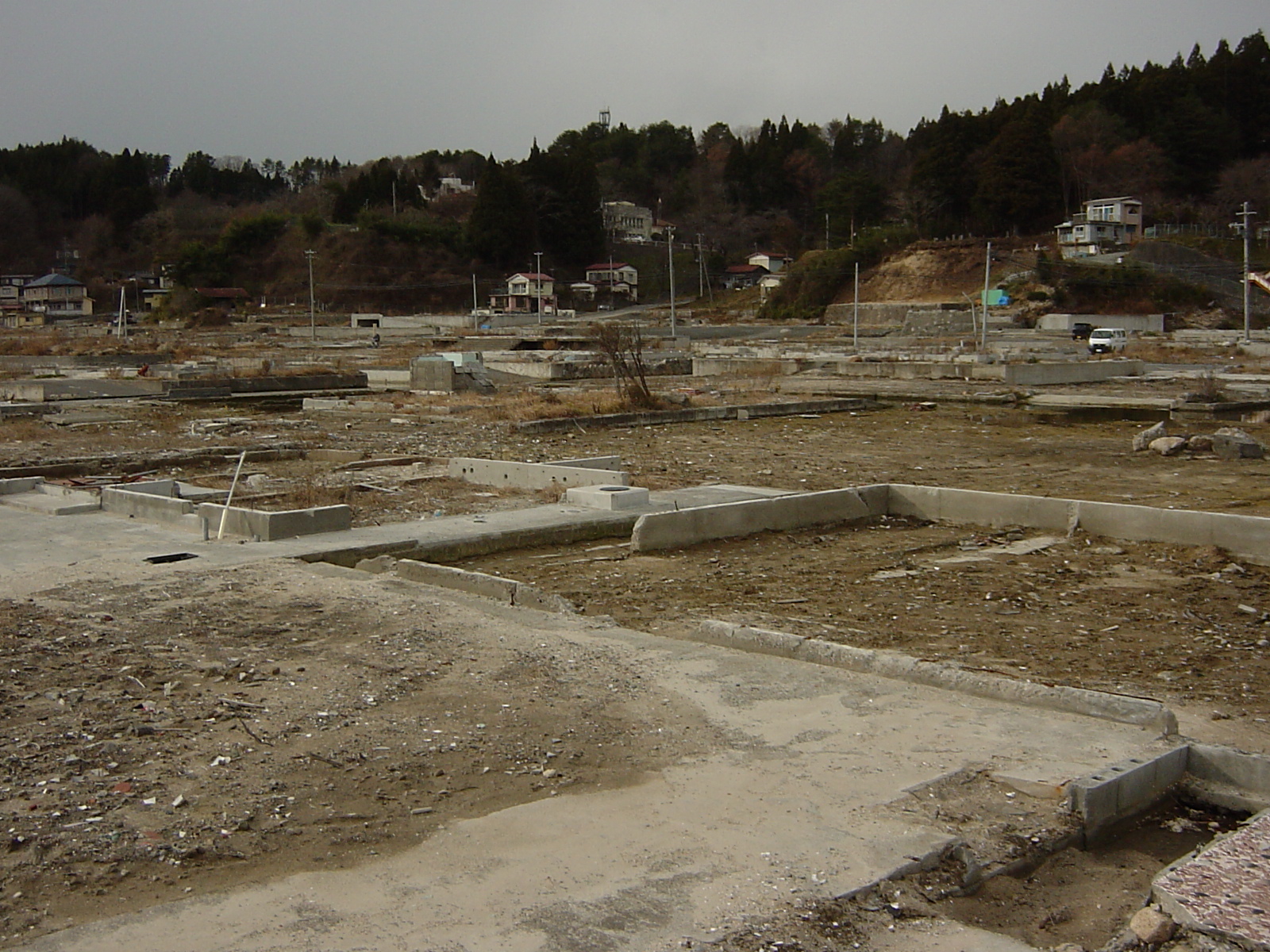
Empty FoundationsFollowing the Great East Japan Earthquake in March 2011, a familiar sight along the 500-kilometer (310 miles) stretch of devastated coastline were empty foundations in field after field where bustling towns and villages once stood. Over several months, mountains of debris caused by the tsunami were painstakingly removed and the only remaining evidence of prior human habitation were thousands of vacant concrete slabs. Vegetation slowly took over and the seemingly empty fields eventually begin to appear like ancient archeological ruins lingering from a previous civilization. Long stretches of collapsed sea walls usually accompanied these sites, offering muted testimony of their failure to protect the inhabitants against the destructive forces of nature.

Most of the survivors from this massive disaster were relocated to hastily assembled temporary housing units that were tucked further inland on higher ground. There, the survivors stoically waited for months and then years for the return of normalcy and some form of permanence in their lives. Each community worked with government officials to develop master plans for rebuilding and renewal as they struggled to recover from the past and yet still dreamed of future prospects.

This process understandably took time, and transpired in phases as mammoth machines moved earth and rubble to give way to a new infrastructure, hosting new communities. As part of this transition process, temporary buildings sprang up everywhere, almost like weeds, providing a variety of badly needed services. Temporary grocery stores, gas stations, drinking establishments, restaurants, local shops, business offices, clinics, police stations and even a public bath dotted the landscape, reminding everyone of past and present hardships while fostering hope of a better future. Some businesses managed to reopen on the top floors of badly damaged structures that would later be demolished. All of this served as a constant reminder that we lived in the midst of a deeply stricken community desperately struggling to survive.

Living in such a prefab world only served to increase our thirst for things of a permanent and even eternal nature. As we tread carefully among the rubble of people’s lives, our thoughts were often lifted heavenward and we began to “look forward to a city with foundations, whose architect and builder is God.” (Hebrews 11:10) Much like our spiritual father Abraham and other heroes of the faith, many of whose lives are chronicled in that same chapter, the incompleteness or temporary nature of things characterizing our lives reminded us daily of heavenly realities that yet awaited us. As we often pondered on what those empty foundations represented in the past, they also served as a powerful reminder of much greater things that were only visible through eyes of faith. That’s the city we should seek in the midst of life’s storms.

Minister of Loneliness

“Turn to me and be gracious to me, for I am lonely and afflicted.”   Psalm 25:16

Loneliness

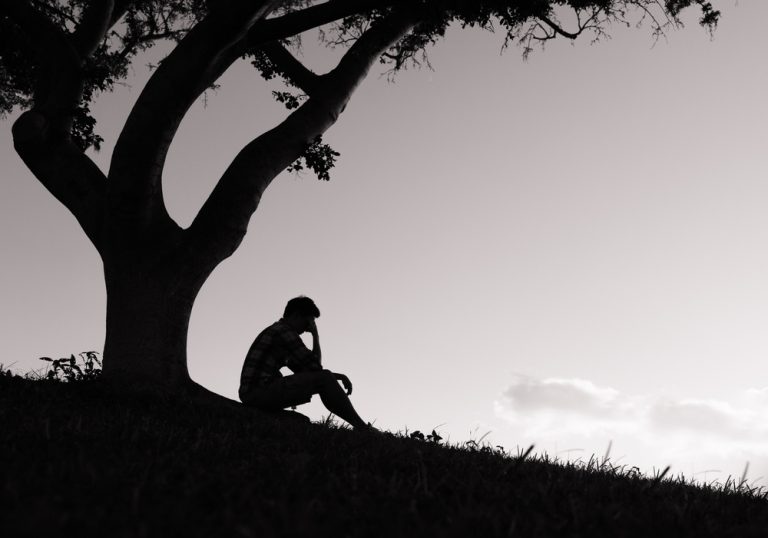
Japan has a parliamentary form of government where the chief executive, known as the Prime Minister, appoints ministers to assist him in his various responsibilities. These important officials traditionally include the Minister of Foreign Affairs, the Minister of Justice, the Minister of Finance, the Minister of Defense, the Minister of Health and other well-known positions. However, on February 12, 2021, the media announced the surprise appointment of Tetsushi Sakamoto to fill a newly created cabinet position in response to recent troubling trends. In an attempt to reduce widespread loneliness, social isolation and increased suicide rates accelerated by the restrictions of COVID-19, Mr. Sakamoto now serves as the official Minister of Loneliness.

This new position is called kodoku mondai tantō kokumu daijin in Japanese, which is a rather lengthy title, but the key words in it are “kodoku” and “mondai.” Together, they mean “loneliness problem,” which is admittedly, an unusual title for a government official, but these are unusual times. Loneliness had already been identified as a growing problem among the Japanese populace in previous years, but the extreme measures recently taken to curb the spread of COVID-19 only served to hasten this harmful trend. For the first time in eleven years, there has been a rise in the number of suicides in Japan after several years of decline due to various public campaigns. In fact, more people died from suicide in one month than the total number of deaths associated with COVID-19 in all of Japan in 2020. Loneliness has also been linked to other serious health issues such as heart disease, eating disorders and mental instability to name a few. Women and the elderly have been particularly affected by recent job losses and the implementation of draconian social limitations. The prolonged depression of the Japanese economy and an alarming decline in birthrate are symptomatic of related social dysfunctions that seem to be eating away at the heart of the country. It can be said that loneliness is one of many elements contributing to these negative patterns.

While innovative government initiatives to reverse this destructive trend of loneliness are commendable, a sustainable and truly effective solution to such a deep-rooted problem lies well beyond the authority and power of political leaders. From the very beginning of time, when God created man in His own image as a relational being, He declared that “it is not good for the man to be alone.” (Genesis 2:18) Recognizing this inherent need for relationship, God created the first woman to fill Adam’s social, physical and emotional needs and through them, mankind continued to expand while living in community.

However, such communities were chronically dysfunctional because of man’s fallen state which gave way to broken and imperfect relationships. Even though mankind was created for fellowship and relationship with others, the presence or risk of pain has prompted many to withdraw and restrict their social contacts with the purpose of self-preservation. For many, this withdrawal is a deliberate choice, but for countless others, such a response has been forced upon them by circumstances not of their choosing. The end result is loneliness, which if left unaddressed, can lead to a destructive, downward spiral in other critical areas. While there are no simple remedies for such heartaches, we would be wise, like the psalmist, to turn to the Creator of man’s heart when such burdens seem too heavy to carry alone. “Turn to me and be gracious to me, for I am lonely and afflicted.” (Psalm 25:16)

Disaster Kits

“Have not these disasters come on us because our God is not with us?” Deuteronomy 31:17b

Emergency kit

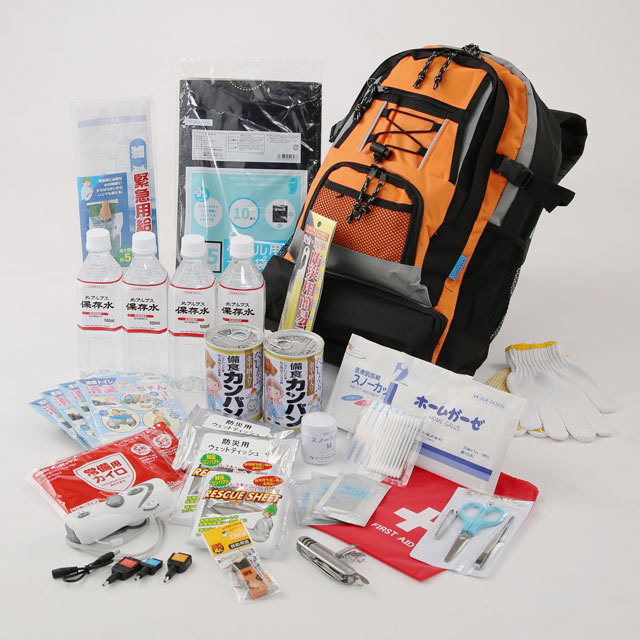
Members of our mission organization typically receive a personal emergency evacuation backpack when they first arrive in Japan. This unusual item is a standard provision because a wide variety of natural disasters such as typhoons, earthquakes, tsunamis, volcanic eruptions, landslides and floods frequently hit Japan and they often occur with minimal warning. These disaster kits are to be kept handy in the event of an emergency and we are frequently reminded by the government to periodically conduct an inventory of the contents to make sure batteries and other perishable items are kept up to date.

The recommended standard contents for an emergency bag would include such items as food and water for three days, a flashlight, a lighter, cash, a radio, a first aid kit, rope, toiletry items, extra batteries, a change of clothing, a multi-purpose tool, copies of important documents (passport, driver’s license, etc.) and essential medications. No one knows when a disaster will strike, so it is always good to be prepared. As part of that preparation, the Japanese government regularly conducts emergency drills in local communities, schools and places of business.

However, disasters, by their very definition, often occur without much warning and at irregular intervals so it is human nature to become lax in preparedness. The important emergency evacuation bag might get shoved to the back of a closet so its location easily slips from one’s memory. In addition, carefully stored food can become stale or spoiled, making it inedible. Batteries corrode over time and become useless. Copies of important documents can become out of date and fail to serve their intended purpose. The often-quoted proverb, “Out of sight, out of mind,” applies to this natural tendency to push recognized priorities aside while focusing on more immediate, visible matters.

The term “disaster,” actually covers a wide gamut of unexpected and unwelcome circumstances that can wreak havoc in our lives. The death of a loved one. The loss of employment. Financial ruin. A burned-out home. War. A pandemic. Failing health. A broken relationship. Food shortages. A natural emergency. Or as Texas recently experienced, a prolonged ice storm. It is during these times of extreme calamity where life seems overwhelming and we feel that we have lost all control over the events cascading around us. Such disasters generally interrupt our patterns of normalcy and many unfortunately, have life-long consequences. These unexpected catastrophes can either drive us to utter despair or to increased dependence on God who is somehow sovereign over all such occurrences.

This truth points to the reality that there are often deeper elements or purposes behind many of the calamities that alter our lives. Some are self-inflicted, and the resultant consequence was often rightly perceived in the Old Testament as a form of punishment from God for willful disobedience. (Deuteronomy 31:17b) But other disasters seem to come out of nowhere and devastate both the wicked and the godly with impartiality. While such things are difficult to comprehend and even harder to embrace, they serve as a critical reminder to turn to the only emergency kit that will suffice in such adverse circumstances. That is God Himself. “Therefore, we will not fear, though the earth give way and the mountains fall into the heart of the sea.”  (Psalm 46:2) “I will take refuge in the shadow of your wings until the disaster is passed.” (Psalm 57:1b) This is the true emergency evacuation bag we must keep close at hand to sustain us in times of trouble.

Firm Foundations

“Everyone who hears these words of mine and puts them into practice is like a wise man who built his house on the rock.” Matthew 7:24

Foundations4

Due to the frequency of earthquakes in Japan, a lot of attention in building construction is given to the design and materials used for foundations. Even the simplest of houses requires construction techniques that are quite different from what we normally observe in the West. In addition, they are quite labor intensive, which adds to a building’s overall price tag. Several disasters and the subsequent collapse of numerous buildings in the past prompted the government to eventually enact strict anti-seismic structural standards that are constantly upgraded as technology improves. The building codes for skyscrapers are even more stringent, employing specially designed shock absorbers known as isolators embedded throughout the structure. Such modifications are developed through detailed research and placed according to precise calculations. Because of these many innovations, Japan is now considered to be among the world’s leaders in earthquake-resistant technology.

Of course the research behind all of this progress and the special materials and labor used to erect these buildings significantly raises construction costs. This has tempted some unscrupulous companies to take illegal shortcuts. The most famous of these scandals came to light in 2005 when it was discovered that the Aneha Architectural Design Company had falsified earthquake design calculations, violating numerous building codes in order to cut expenses. Hidetsugu Aneha admitted that due to pressure from developers, many of his building designs intentionally concealed potentially catastrophic defects, solely for the purpose of saving investors money. As a result, several newly constructed hotels were abandoned and many condominium owners had to vacate their recently purchased residences due to safety concerns. Many of these empty structures still stand as a dubious testimony to the dishonesty and greed of man.

Foundations are important. Therefore, Jesus used this subject as a powerful illustration at the conclusion of His famous message known as the Sermon on the Mount. After Jesus initially taught the gathered crowd some of God’s kingdom values known as the Beatitudes, He then proceeded to elaborate on these concepts through addressing the subjects of persecution, hypocrisy, reconciliation, retribution, pursuit of wealth, worry, judging others and the importance of prayer. Jesus then concludes His talk by using the analogy of two foundations and two builders. One builder was described as being “wise” and the other was depicted as being “foolish.” The wise builder constructed his house on rock which withstood the destructive elements of nature. However, the foolish builder used sand under his foundation, which ended in disaster under the same climatic elements. The intended lesson was that we must carefully choose what we build our lives upon. To put it simply, a life not built upon God’s values invites destruction. But those who deliberately center their lives around God’s Word and heed His instructions, reap eternal life. To avoid a disaster, choose your foundation carefully.