
Apprenticeship

“The things you have heard me say in the presence of many witnesses entrust to reliable people who will also be qualified to teach others.”  II Timothy 2:2

apprentice

Every culture has a vested interest in transferring knowledge from one generation to the next as part of the essential process of preserving its own uniqueness. This passing of the torch often involves the retention of certain skills and expertise that acquire considerable time and effort to acquire. For this reason, the concept of apprenticeship was widely practiced for centuries in certain trades and crafts to ensure the continuity of valuable services, goods, information and techniques. Much of this transference of knowledge occurred within a semi-indentured form of relationship from an acknowledged master to a novice. But over the last century, these former feudalistic and austere tendencies of ancient apprenticeship practices have largely given way to a modern system of employment that allows for much more individual freedom. Despite this shift, Japan still retains a certain element of apprenticeship that is more obvious in certain vocations.

This proclivity in Japan towards acquiring a particular skill through a rigorous, time demanding and low paying training program was brought to our attention a few years ago by a long-time friend. Trained in the field of medicine, this individual was seeking a complete change in life and had settled upon making customized surfboards for a living. When we inquired about the process, we learned that our friend would receive a very minimal salary and was expected to devote long hours for several years with hardly any days off for the privilege of mastering this modern craft. This apprenticeship-like arrangement for mastering a particular skill was very similar to what we had heard about master sword makers, professional sushi chefs, tea ceremony teachers, kabuki actors, trained calligraphers and other areas where one desires to become an expert in certain arts and crafts.

For example, if someone wants to become a recognized sushi chef in a high-end restaurant, they usually must start at the bottom washing dishes. Then, after a period of time, they may be entrusted with the correct preparation of the rice and eventually, they begin their more formal apprenticeship training using knives. The whole process may require up to a decade under strictly guided tutelage. Upon completion of their contractual service, these former apprentices are recognized as fully trained professionals and are qualified to start their own business or seek employment elsewhere.

The concept of biblical discipleship in many aspects mirrors the idea of apprenticeship in its objectives, but certainly not in many of its methods. The goal is to train others in godliness, faithfulness and truth and Jesus provided a pattern of a newer and improved model of discipleship that was built on love. A disciple, called a deshi (弟子) in Japanese, is generally an individual who is committed to certain goals. To achieve their objectives, they follow someone wiser and more experienced who is commonly referred to as a sensei (先生), or teacher in Japanese. This was similar to the strategy Paul laid out to his own disciple, Timothy, who was exhorted to implement the same patterns with other like-minded and reliable God followers who would, hopefully, influence others. (II Timothy 2:2) Heavenly and eternal objectives should spur us to apprentice ourselves to others more mature than ourselves, who can assist us in our spiritual journey. Assuming that we are good pupils, we should also aspire to become good teachers. In the way of the Cross, the deshi becomes the sensei, all by the grace of God.

Leading Meetings

Moses’ father-in-law replied, ‘What you are doing is not good.” Exodus 18:17

Leading meetings

As I surveyed the blank faces of the people assembled around the room for a church meeting, I wondered how to proceed. It was challenging enough leading a meeting in a language not my own, but it was also evident that the rules of engagement within a Japanese context were very different. Obviously, I would need to employ a different leadership style that did not come natural to me. Moments earlier, in what now seemed like an eternity, I had presented a topic, asked some questions, and then waited for a robust discussion that was apparently not forthcoming.

In retrospect, after many years of experience, I can more readily identify the different dynamics that typically characterize a Japanese meeting. I’ve also come to understand that the bedrock value that seems to drive many of the distinctives of such meetings in Japan is the primary objective of striving to achieve a clear consensus among all the participants. With this in mind, it is helpful to remember that people are often reluctant to express individual opinions that might interfere with the unstated, but overarching goal of unity. Therefore, the leader must be careful not to unnecessarily single out people and put them in an awkward position while encouraging them to voice their opinions. Meetings also tend to be rather lengthy in Japan because it often takes an inordinate amount of time to arrive at a consensus and ensure that everyone is in agreement. To facilitate this process, the leader must be careful not to interject their opinion inappropriately or prematurely, but instead, allow sufficient time for diverse views to emerge among even the most reluctant participants. The leader’s wife or husband must also exercise restraint in the same manner as their opinion is considered inseparable from their spouse’s and could carry a disproportionate amount of weight in the discussion.

Ambiguity, which is a commonly used pattern in Japanese conversation, makes communication even more complicated in a group setting, particularly if the leader is not a native speaker. Of course, copious minutes that capture the details of each meeting must be duly taken and preserved as an integral element to this whole process. Through trial and error, I also learned that the most essential factor towards a successful outcome in any given meeting is probably the concept of nemawashi (根回し), which means literally “going around the roots.” This refers to the process of transplanting a tree where one must carefully dig around the roots to enhance sustained growth once it has been relocated. Sometimes nemawashi is loosely translated as “laying the groundwork.” When the concept is applied to meetings, it means that the leader will discretely talk to influential people on the committee prior to meeting for the express purpose of gathering their support and feedback.

Effective and godly leadership in any cultural situation can be difficult to define and even harder to implement. In the Old Testament, Moses struggled with this objective. Some helpful advice from his father-in-law (Jethro) to compensate for his limitations as a leader is recorded for our benefit in Exodus 18:13-26. But the Scriptures are full of examples of leaders who did not lead well and the one fault they all have in common is their failure to purposefully lean into the wisdom of God. Skillful leadership certainly requires sensitivity to the nuances of the culture in which it is exercised, but a godly leader never forgets that “every decision is from the Lord.” (Proverbs 16:33b) As we are called into leadership roles, we must constantly seek to allow God the freedom to do the work of nemawashi on our heart before we attempt to lead others.

Local Pubs

“That each of them may eat and drink, and find satisfaction in all their toil—this is the gift of God.”

 Ecclesiastes 3:13

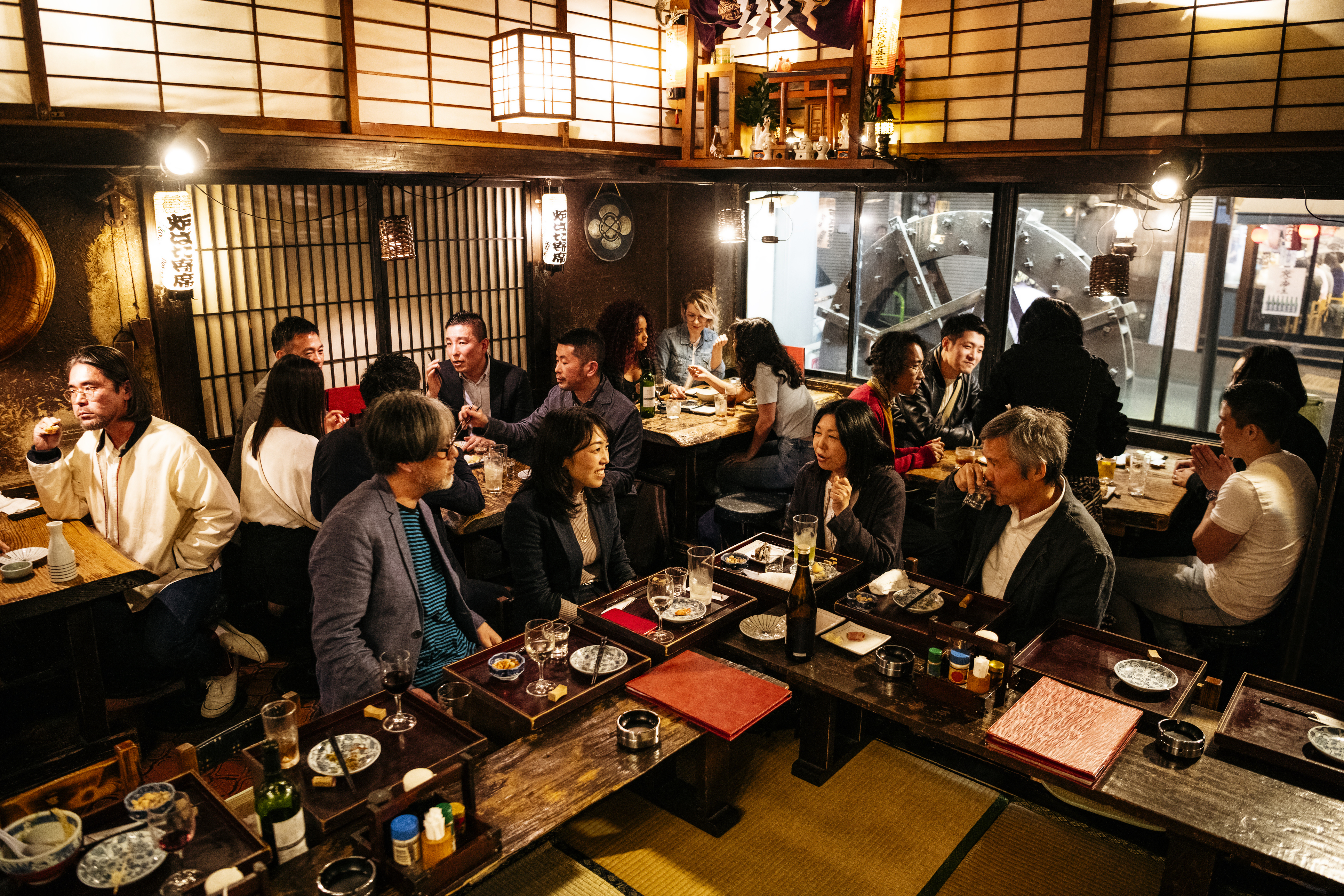
Co-workers relaxing in Japanese restaurant with food and drink

I was a complete novice in what I was about to experience, but as a relative newcomer to Japan, it was a great opportunity to learn about a slice of Japanese culture that was previously hidden from me. With my Japanese friends leading the way, we entered a rather non-descript multi-story building located in an area of town known for its night life. Each floor hosted several business establishments and we chose one that didn’t particularly seem to stand out among any of the others, except that it was obviously well-known to my more experienced friends. We were about to enter what is known as an izakaya.

Translated literally, izakaya (居酒屋) means “stay-saké-shop,” so it is basically a place to consume alcoholic beverages. However, an izakaya is much more than that as it has more resemblance to a British pub where food is served and people gather for social interaction. Sometimes these izakaya are called an akachōchin, or “red lantern” as the proprietors traditionally hang decorative red paper lanterns outside to attract attention. Upon entering the establishment, customers are often seated on the floor at low tables placed on tatami mats, a traditional bar or at western-style tables and chairs. The busier izakayas may also offer a tachi nomi style of dining, which means to drink while standing.

Everyone is customarily given an oshibori or wet towel when they are seated to wipe their hands and this is usually accompanied by a small appetizer such as edamame (soybeans). Food items are generally shared by everyone at the table and many izakaya specialize in certain food choices such as yakitori (grilled chicken on sticks), sashimi, tofu, grilled fish and even french fries (called “furaido poteto”). Some of the larger izakaya offer the dining option of nomi hōdai (all you can drink) or tabe hōdai (all you can eat) at a set price for a determined length of time. The more innovative izakaya come with a particular cosplay theme where the staff wear costumes while waiting on customers. The word “kanpai!” is echoed often as customers lift their glasses and toast one another in merriment. Regular patrons sometimes purchase a particular brand of alcohol and the bottle is placed on a shelf with their name written on it for their next visit. Like the classic TV sitcom “Cheers” that centered on a group of regular customers at a local bar, an izakaya can be a safe place to relax where “everybody knows your name.”

Ironically, some of the purposes for attending an izakaya can also be reflected in the reasons people may attend a local church. Meeting with like-minded people for companionship, encouragement and sharing of information are some of the attractive elements of an izakaya that are usually unavailable at onerous, pressure-driven places of work. When viewed in these terms, izakaya represent for many a form of escape through shallow social interaction and the consumption of alcoholic beverages and food.

While such responses are understandable and even ordained in some circumstances (Ecc. 3:13), there is certainly much more to life. One can also make many bad choices if his or her sole objective is to merely escape from the day-to-day unpleasantries of life. Perhaps this is why the Apostle Paul advised new believers, emerging from previous dark cultural habits, to aim for something higher that would lead to more productive lives that honor their Creator. He said, “Do not get drunk on wine, which leads to debauchery. Instead, be filled with the Spirit.” (Eph. 5:18) Because God knows our name, our choices can lead to eternal blessings.

Robots

“He made himself nothing by taking the very nature of a servant, being made in human likeness.” Philippians 2:7

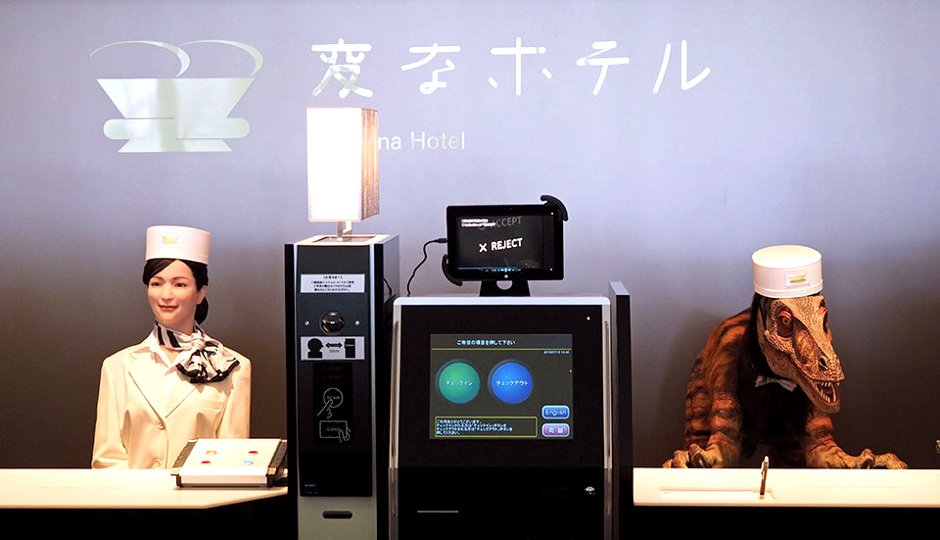
  Robot Hotel  Opened in 2015, the Henn Na Hotel chain in Japan (translated “Weird Hotel”) is largely staffed by robots. Upon entering this unique hotel, guests are initially greeted in the lobby by a female-faced android, followed by a multilingual dinosaur proceeding to check them in. Another robot soon appears to transport the guest’s luggage to their assigned room and a face recognition system conveniently unlocks the door. An assortment of other robots fill various work roles in this impressive semi-automated lodging. However, half of the robotic labor force was recently “laid off” as some of the robots tended to create more work rather than reduce it. Innovation to improve the efficiency and capacity of robots continues to progress, not just within this hotel chain, but throughout Japan where robots are increasingly utilized.
The general purpose of robots, which are called “robotto” (ロボット) in Japanese, is to free up humans from difficult or mundane tasks while vastly improving productivity. This purpose explains why the industrial usage of robots has skyrocketed, with Japan ranking among the world leaders in robotic technology along with South Korea, Germany, Singapore and Taiwan.  Many experts think that the solution to Japan’s chronic shortage of labor, due to population decline, is automation, not immigration. This accounts for the country’s heavy reliance on robot labor. Japan’s love affair with robots is somewhat rooted in its past, echoing back to karakuri ningyo, or mechanical dolls that were developed in the 17th century using imported European clock-making technology. Such ingenious developments eventually led to the creation in 1928 of a robot called “Gakutensoku” by Nishimura Makoto. This robotto could make facial expressions and perform a few rudimentary actions. It was the first of its kind in all of Asia.

Robotic technology now dominates the industrial sector of Japan and android robots are becoming increasingly common, performing a variety of duties in social, medical, security, entertainment, senior care, food service and educational circles. It is not uncommon to discover a robot in airports, places of business or hospitals greeting people and performing some kind of basic service. Aibo, the first mass-produced commercial robotic dog sold on the market by Sony, became the precursor of other robotic inventions designed primarily for entertainment. Life-like robots that perform certain religious functions at temples and shrines have also been deployed and used on a limited basis. The city of Yokohama recently put on display the world’s largest robotto which stands 60 feet in height (18 meters), weighs over 25 tons and is modeled after the Gundam robot from the famous anime series.

The advancements in robotic technology are very impressive as robots continue to improve in their imitation of human skills, intelligence and appearance. However, all such developments pale in comparison to the greatest transformation of all, where God took on full human form to redeem mankind (Philippians 2:6-8). This was no poor imitation like a robot, but rather, God fully submitted Himself to take on all the frailties of human flesh to such a degree that He hungered (Mark 11:12), grew tired (John 4:7) and most telling of all, He wept (John 11:35). As the writer of Hebrews so aptly put it: “He too shared in their humanity so that He might break the power of him who holds the power of death.” (Hebrews 2:14a)

Capsule Hotels

“I will dwell in the house of the Lord forever.” Psalm 23:6b

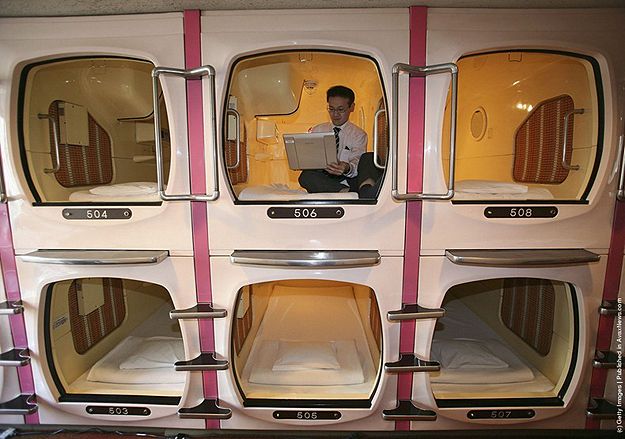
Capsule hotel

In observing a capsule hotel in Japan, one’s initial impressions may be that the capsules resemble drawers designed to store corpses in a morgue or appear to be a collection of human cryogenic vaults depicted in a science fiction movie. Called “kapuseru hoteru” (カプセルホテル) in Japanese, the capsule hotel concept started in Osaka in 1979 before spreading to major cities in Japan and eventually to other parts of the world. Around 300 such hotels now exist in Japan, servicing weary customers who are looking for simple, inexpensive lodging for the night.

Kapuseru hoteru come in various sizes with some hosting up to 700 sleeping units. Each compartment is approximately the size of a single bed with a height of about one meter, allowing sufficient space for the guest to crawl into the chamber and sit up. They are usually made out of plastic, but other materials are also utilized. Amenities in the capsule ordinarily include air conditioning, adjustable lighting, a small TV, WIFI and an electric socket. Upgraded versions are a bit larger, with added perks, and many incorporate a miniature workspace. Toilets, bathing facilities, dining and lounge areas are communally shared like a hostel. Other services, like restaurants, bars and a pool, are provided in the more upscale capsule hotel complexes.

When guests check into a kapuseru hoteru, they usually store their belongings, including their clothing, in lockers and are provided with a yukata (Japanese robe) and slippers. Such hotels routinely cater to Japanese businessmen, who may have missed the last available commuter train from work or were too intoxicated to return home safely. The prices average around ¥2000–4000 ($20-40) a night and they are not recommended for individuals who struggle with claustrophobia. A frequent complaint regarding the older models is that the walls tend to be so thin that noise from neighboring capsules, like snoring, carries easily and may disrupt sleep. One writer, following his first stay in a kapuseru hoteru, wrote in his review: “I’d give this Pillbox Hilton four stars for cleanliness, three stars for efficiency and one meteorite for comfort.” (Mark Schreiber The Japan Times January 16, 2001).

Capsule hotels are obviously, just a temporary and minimal provision for those needing some kind of housing on short notice and working with a limited budget. Comfort, space and other elements that are typically part of a normal residence are either non-existent or are a far cry from one’s usual expectations. But even the most opulent and grandeur lodging available here on earth cannot compare to what awaits us in our eternal home in heaven. The Bible provides some vivid descriptions of what our heavenly “house of the Lord” might look like, but far more important than appearances and creature comforts is what we stand to gain from being in the presence of the Lord. The author of Revelation, in his review of heaven, described such housing in the following manner: “Look! God’s dwelling place is now among the people, and he will dwell with them. They will be his people, and God himself will be with them and be their God. He will wipe every tear from their eyes. There will be no more death or mourning or crying or pain.” (Revelation 21:3-4) That sounds like a great place to get a good night’s sleep and much, much more.

Personal Seal

“A good name is more desirable than great riches;” Proverbs 22:1a

hanko

Shortly after our initial arrival in Japan many years ago, we visited a local shop to have our personal seal or “hanko” (判子) made. We had been informed that a simple signature would no longer suffice to open bank accounts or enter into any contractual relationship, but instead, a personal seal was required for all such transactions in Japan. Once it was decided how our name would be written in Japanese, a hanko was ordered and we were soon ready for business. We used that same seal for 34 years to sign for deliveries, purchase cars, register for health insurance, enter into cell phone contracts, withdraw cash from the bank and sign rental agreements.

Each hanko, like a signature, is unique and they can be made of wood, plastic, ivory or stone. The cheaper ones cost $10-20 USD, but more expensive versions sell for a few hundred dollars. The word inkan (印鑑) is often used interchangeably with hanko, but technically an inkan is the actual stamp on the paper whereas a hanko is the physical object used to make the stamp. Only red ink is used with the hanko and businesses or local government offices generally provide the stamp pad when you are requested to affix your seal to a document. These personal seals are usually protected in specially designed cases and it is important to register your hanko with the local municipal office. The government officials will in turn provide a document called an “inkanshomeisho” (印鑑証明書) required for important transactions, as it serves to verify that is your legal seal.

All businesses, organizations and even churches have their own official seals which are carefully protected due to legal liabilities if they are misused. As the representative of our mission organization, I was required to use a specially designed square hanko to authorize certain official documents. However, our religious registration as a mission changed, which called for the creation of a new hanko that was supposed to be round in shape. This anomaly confirmed what I had long suspected… I was a square peg placed in a round hole!

The author of Proverbs highlights the importance of maintaining a good name (Proverbs 22:1) in reference to our character or reputation. A hanko is designed to represent its owner, but how do our actions, words and attitudes represent us? This is a critical question we must periodically ask ourselves since the possession of a good name is far more valuable than great riches, power or influence. A good name can last well beyond our short existence here on earth and it potentially puts us in a position to in turn, have a meaningful impact on the lives of others. In contrast to this, a person with a bad name, who manifests an ignoble character, is not only judged by men, but by God Himself who alone can accurately evaluate such matters. A hanko serves to represent us legally, but a good heart is the best indicator that we are healthy spiritually. “Let love and faithfulness never leave you; bind them around your neck, write them on the tablet of your heart. Then you will win favor and a good name in the sight of God and man.” (Proverbs 3:3,4)

Business Cards

“You have searched me, Lord, and you know me.” Psalm 139:1

Meishi3

Following a subtle bow of acknowledgement, I pretended to study the information on the card I now held politely with both hands. As the situation demanded, I feigned proper interest in the card and the individual I received it from did the same with mine as we engaged in what I call the “meishi dance”. A meishi (名刺) is a Japanese business card which is routinely exchanged in initial encounters, particularly in business relationships. The work I was currently engaged in involved meeting hundreds of individuals, so over the course of time, I had accumulated quite a stack of meishi along with a jumbled collection of faces those cards represented.

Like many other customs in Japan, there is an established protocol for the exchange of meishi. To fully grasp the subtleties of the meishi dance, it is important to bear in mind that each card serves as an extension of the person whose information is recorded on it. Therefore, the meishi itself should be treated with respect which in turn, has bearing on how the card is received. For example, it is best to stand erect when receiving or presenting a meishi and the information on it must face the recipient, holding the card carefully in the corners so it can be easily read. A respectful bow should precede the passing of the meishi and the card should be received with both hands. The information recorded on the meishi should then be carefully studied, particularly noting titles or status. If you are in a meeting where everyone is seated, the card(s) should be placed in front of you on the table for reference. Upon receiving someone’s meishi, you should never treat it disrespectfully like jamming it into your pocket or writing notes on it. Many businessmen carry around mini cases for protecting their own meishi and for the temporary storage of those they receive.

There is, of course, a limitation as to how much information a person can include on a meishi, even if both sides of the card are used. In brief social or business interactions, our capacity for absorbing details and even caring about the individual standing before us is restricted by our time, energy, mood, circumstances and intellect. But not so with God. The psalmist marvels at the extent that God intimately knows us, not just through observable actions, but from probing our thoughts and intentions from the moment we were conceived up to the minute when we draw our final breath.

This means that I am infinitely more than just a few scraps of information recorded on a card collecting dust in someone’s file. I am a creation of the God of the Universe who knows me far, far more than my most faithful friend, closest relative or intimate love interest and He genuinely and passionately treasures me. Such knowledge and care should provoke me to respond, not in feigned interest, but to bow in adoration and obedience. Perhaps in response, it is best to observe the protocol modeled by the same psalmist in Psalm 139. This is a meishi dance worth emulating:

  • I praise you because I am fearfully and wonderfully made; your works are wonderful. (14)
  • How precious to me are your thoughts, God! How vast is the sum of them! (17)
  • Search me, God, and know my heart; test me and know my anxious thoughts. (23) 
  • See if there is any offensive way in me, and lead me in the way everlasting. (24)

Cash Only

“Do not store up for yourselves treasures on earth…”  Matthew 6:19

money

A tray full of money representing roughly half a million dollars in Japanese cash was nonchalantly placed in front of us like afternoon tea. My colleague and I stared open-mouthed at the mound of money and couldn’t resist taking pictures. We had just purchased a building and of course like everything else in Japan, cash was used to seal the transaction. The seller then proceeded to place his portion of the stack of bills in a paper bag and the bank employee routinely whisked the larger pile back to the bank vault.

We should not have been surprised. After all, cash is routinely used for everything in Japan. All our shopping is done in cash. We pay our rent in cash. Even higher priced items like cars are purchased with cash. Most people routinely carry several ¥10,000 notes (worth roughly $100 each) in their wallets. Although changes are slowly taking place, Japan is basically a cash-driven economy. Cashiers are trained to efficiently return change without mistakes and cash dispensing machines are available everywhere to facilitate this dependency on cash. While Japanese normally adapt quickly to newly emerging trends, they have been slow to wean themselves from using hard currency for daily transactions. In this matter, Japan with its low cashless rate in 2015 of only 18%, stands in marked contrast to neighboring Asian countries like China (60%) and South Korea (89%).

There are many reasons behind this propensity to use cash. Chief among these would be Japan’s antiquated banking system that encourages cash transactions, but also not to be overlooked is the general public distrust in anything other than real currency. The low crime rate in Japan also encourages people to carry around large amounts of money without fear of being robbed. However, the government is trying to change the public’s dependency on cash since it is inefficient and puts Japan at an economic disadvantage compared to other Asian countries. Signs of such changes are increasingly evident as more Japanese are using their smart phones for financial transactions and the use of prepaid cards is becoming much more common.

Jesus taught a lot about money and frequently used it as a topic to drive home important spiritual principles in the form of parables. He never discouraged the usage or accumulation of money, but rather, warned about it capturing our hearts and pushing God out. The things we treasure in this life that Jesus refers to are not limited to just money or material possessions, but include all our resources, such as our time, energy, God-given gifts, expertise and acquired skills. These are not to be hoarded just for our own benefit, but to bless others as God directs. Treasure on earth may last for a lifetime, but treasure in heaven, Jesus taught, lasts for eternity. That is the commodity that should underpin all of life’s transactions.