

“My Father’s house has many rooms…I am going there to prepare a place for you.” John 14:2
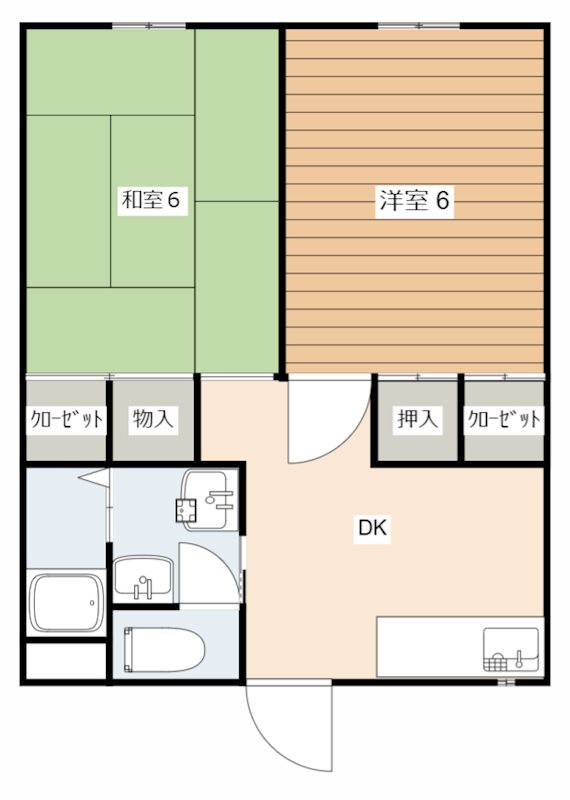
We opened the door of our first home in Japan with great anticipation and curiosity. Upon entering, we immediately encountered the first of many differences between American and Japanese housing. We stood in the tiny cubicle known as the genkan (entry way), where we were promptly instructed to take off our shoes, place them in the nearby getabako (shoe cupboard) and step into the provided slippers. From there we proceeded to explore our new domicile. The overall dimensions underwhelmed us since all the rooms, particularly the kitchen, seemed tiny compared to the American apartment we had recently vacated. There was no sink in the apartment, except for the one in the kitchen, and the single toilet was located far from the bathing area in the coldest corner of the house. The placement of the toy-like washing machine seemed to be an afterthought and the total closet space in the apartment was minimal. Fortunately, we had few possessions at the time and only one child. Going upstairs, we were surprised to discover that the standard tatami (straw) mats we expected to find had been replaced with hard flooring to accommodate the growing Japanese trend of using western furniture.
As the years slipped by, our first apartment in Japan was eventually demolished along with several other places where we previously lived. Understandably, those rather dated edifices gave way to newer, better built, better equipped and better insulated housing alternatives that are presently more common in Japan. This progression explained why older buildings in our neighborhood were routinely torn down and the remaining rubble was then expeditiously hauled away to accommodate a younger generation with different expectations. Ever increasing property prices facilitated the pace of these changes as the land was considered to be far more valuable than the structures previously built upon them.
Current Japanese housing reflects a blend of past patterns with modern conveniences, advanced building materials and newer styles. One indicator of this transition is the usage of the Japanese terms washitsu (和室Japanese style room) and yōshitsu (洋室western style room) to help identify the composition of a particular Japanese home. Likewise, the size or nature of all housing units are usually indicated by placing a numeral in front of the acronyms LDK or DK, which stand for Living/Dining/Kitchen areas or the more space restricted Dining/Kitchen version. The numeral juxtaposed in front of the acronym specifies the number of additional rooms which vary in size. A 4LDK then is a housing unit that has four rooms in addition to a living room, dining room and kitchen area. The size of individual rooms is often indicated by the number of tatami mats (roughly 3 ft x 6 ft) that can fit in the room. However, the number of square meters is now increasingly used as a substitute measurement. Advertisements for a housing unit may include the presence of a balcony, available parking space(s), existence of a special storage area (monōki), accessibility to public transportation and the year the unit was constructed.
Food, clothing and shelter are universally considered to be basic human necessities within the context of a supporting community. As Jesus prepared His followers for His impending departure, He unexpectedly gave them a wonderful promise of an eternal home that they probably did not immediately grasp (John 14:2). Jesus was going to prepare a place for them in the very presence of God for all eternity. Of course, this would only be possible at great cost through the cross, but all who believed in Him would be welcome to reside there. Our present homes on earth come in many forms, but they are all impermanent and inadequate. My home in heaven is forever where I will enjoy unparalleled communion with God and His people. That’s an edifice that will never be torn down.