
Proxy Quitters

“For the kingdom of heaven is like a landowner who went out early in the morning to hire workers for his vineyard.”                                                                                                                      Matthew 20:1
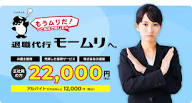
Kimura san* felt trapped. He desperately wanted to leave his job due to unrealistic expectations in his workplace, extremely long working hours and an unreasonable boss, but he found it very difficult to quit. He knew that such an action would immediately prompt an awkward confrontation with his supervisor who, along with the company, would apply enormous pressure on him to suck it up and continue. Therefore, Kimura san chose an alternative route. He engaged the services of a particular company to take care of such unpleasant details by hiring them to resign on his behalf. In taking this step, Kimura san had entered into a contractual relationship with what is now known as a taishoku daikō (退職代行), or a “proxy quitter.” 

Unlike previous generations of workers who usually were committed to lifetime employment with a single company, younger Japanese are now leaving their jobs in increasing numbers. The recent pandemic served to escalate this trend. Coupled with a steadily shrinking workforce, the balance of power between employees and employers has gradually shifted to the employees’ favor. Despite these changes in circumstances, however, the natural tendency of Japanese is to avoid confrontational situations. Terminating one’s employment would likely lead to a pathway full of uncomfortable conversations and unpredictable outcomes, something to be avoided at all costs. This scenario is where the taishoku daikō enter the picture by serving as an important middle man between an exasperated worker and a company hierarchy with completely different objectives. 

New startup companies like Mō Muri, translated “I can’t take it anymore,” now offer a service that benefits such disgruntled workers and provides a helpful passage through the potentially explosive minefield of traditional, cultural and personal hazards. For a reasonable fee of up to ¥50,000 (approximately $350), a professional will be dispatched to the employer and quit on the worker’s behalf, saving face and a potential ugly confrontation for both parties. Taking this unusual course of action is still relatively rare in Japan and is largely restricted to a younger demographic, but perhaps this new social trend will begin to decline as companies become better at compensating and supervising their employees.

The drastic action of hiring a proxy quitter usually arises from an acrimonious or unsatisfying relationship between a seemingly unreasonable boss and a disgruntled employee. On one occasion in the Bible, Jesus used a comparable analogy to describe the kingdom of heaven, introducing radically new values and actions that were quite incongruous with standard business patterns and expectations. In Matthew 20:1-16, he described a landowner, representing God, as paying all of the hired laborers in his vineyard a full day’s wage regardless of the hours they worked. Through this simple but profound parable, Jesus cast a spotlight on the almost scandalous generosity of God, going far beyond traditional applications of fairness rooted within normal contractual relationships. In economic and social constructs where everyone is typically preoccupied with their personal rights, Jesus spoke of a higher way, pointing to a radically different kingdom where “the last will be first, and the first last (v.16).” Just a few days later, Jesus surrendered his life as the supreme example of God’s unmeasurable generosity by becoming our proxy on a cross. Like Kimura san, we were trapped, not by our work circumstances, but by our own sin. We needed a “middle man” to intervene for us. His name is Jesus.

*Fictional character
Tōkyō

“Come, let us build ourselves a city… otherwise we will be scattered.”                            Genesis 11:4

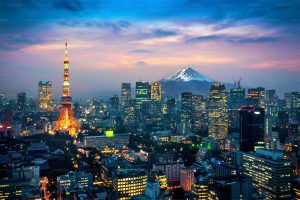
We were somewhat daunted by our initial challenge of driving across Tōkyō after living many years in the more sparsely populated areas of the country. Despite our apprehensions, we pressed forward through the endless maze of skyscrapers and high-rises crammed against one another, blindly trusting our car navigation system to take us safely across a vast sea of humanity. With a population over 37 million people, Greater Tōkyō is recognized as the largest metropolitan center on earth today and also in history. It boasts the busiest intersection in the world at Shibuya, where up to 3,000 pedestrians cross at a time and the busiest train station at Shinjuku that accommodates an average of 3.6 million passengers per day. As Japan’s capital, economic, educational and cultural center, Tōkyō also serves as the nation’s international gateway for millions more visiting the country on an annual basis. The city is a unique blend of the ultramodern with its bright lights, fast pace and creative architecture, while preserving its traditional heritage evidenced by the many historical temples scattered throughout the city and the ancient imperial palace located at its center.

Tōkyō traces its history to a small fishing village called Edo that in 1603 became the seat of the newly formed Tokugawa shogunate when power was centralized throughout Japan. As a result, this once sleepy town began to prosper and rapidly expanded its influence. With the eventual collapse of the shogunate two centuries later and the empowerment of the emperor under the Meiji Restoration, the name Edo was changed to Tōkyō (東京), meaning “Eastern Capital.” Presently, Greater Tōkyō consists of 62 municipalities that includes 23 wards, 26 cities, 5 towns and 8 villages that were absorbed by the ever-increasing sprawl of the original city. Some of Tōkyō’s more famous districts include Ginza, Shibuya, Asakusa, Roppongi, Akihabara, Harajuku and Odaiba, with each one featuring certain attractions that appeal to both international and local visitors.

Despite its immensity, Tōkyō is surprisingly recognized as one of the world’s most livable cities and is regularly listed among the safest places to visit or live. Foreign influences are also conspicuous with many tourists flocking to visit Disney Land, Disney Sea or to dine at one of the many five-star restaurants boasting cuisine from around the world. International customers also enjoy the privilege of tax-free shopping in the many name brand luxury stores. The Tōkyō Tower, another popular tourist attraction, was inspired by the Eiffel Tower but is now dwarfed by the Tōkyō Sky Tree, the second tallest structure in the world. All of these activities are made possible by an incredible transportation system that efficiently moves up to 40 million passengers per day to every corner of this modern urban miracle.

From the lofty perch afforded by the Sky Tree, one cannot help but marvel at the sheer vastness of Tōkyō, the masses of people that call it home and the incredible infrastructure needed to sustain it all. Everywhere you look there are people. It serves as a reminder that God loves people and that one of His initial commands to mankind was to “be fruitful and increase in number; fill the earth and subdue it.” (Genesis 1:28) The record of Genesis traces the partial fulfillment of this decree but also humanity’s intentional refusal to disperse when they said to themselves “Come, let us build ourselves a city… otherwise we will be scattered.” (Genesis 11:4) Their stated objective was to “make a name” for themselves (Genesis 11:4) signifying their self-reliance and deliberate independence from God. Therefore, God intervened and forcibly dispersed them by confusing their language. (Genesis 11:7) This does not mean that God opposes the establishment of cities but rather, He desires nothing to come between Him and people who are created in His image. Tōkyō and all its inhabitants are His.

Respect for the Elderly

Show respect for the elderly and revere your God.”  Leviticus 19:32

Elderly

It was senior discount day at the local ski slope in Japan and for the first time, my wife and I were eligible to receive this special rate. When we bought our tickets, we were pleasantly surprised to discover that an all-day lift pass, which normally costs $65, was reduced to only $15. I quietly congratulated myself on this unexpected boon, thinking that getting older has its perks! As is true in many Asian countries, Japan respects the elderly contingent of its society. It has even set aside one day of the year to honor its senior citizens, calling it Keiro no Hi (敬老の日), meaning “Respect for the Aged Day.”

Japan enjoys the world’s second longest life expectancy (87 years for women, 81 for men) and boasts of the greatest number of centenarians (80,000), with the vast majority (88%) of them being women. This rapidly graying trend in composition of the population makes Japan the fastest-aging country in the world; almost a third of its people are age 65 or older. A seemingly contradictory consequence of this increase among the elderly is an alarming steady decrease in the population, which in turn, puts other negative pressures on an already overburdened economy.

Despite these concerns, the elderly still enjoy a number of privileges in Japan such as special seating on public transportation, substantial senior discounts to various activities and extra time for new forms of leisure targeting this particular group in society. In addition, healthcare is inexpensive and available to all, but obviously, it is the older generation that takes the fullest advantage of this benefit. Many elderly live under a single roof with younger family members who assist with their care and this helps to cut overall costs. While some people may consider this to be a burden, most retirees are treated with a measure of respect and honored in their twilight years for their past sacrifices for their family.

One of the alarming trends in Japanese society closely related to this topic is the rapid aging of church members and the elderly pastors that care for them. Recent surveys reveal that 89% of Japanese pastors are over the age of 50 and almost half (47%) are over the age of 70. While it is certainly beneficial to have a good number of older pastors to care for an increasingly graying church, this does not bode well for the future growth of the church which must include a younger demographic.

Besides the benefits of cheaper ski lift tickets and numerous discounts, getting older in Japan has other meaningful advantages. For example, older pastors and church members have an increased measure of wisdom and maturity that comes from years of experience and this knowledge can be passed on to others for their benefit. This is true in many other areas as the elderly still have much to offer to the younger generation. Fortunately, Japan is a country that does not discount the contributions of the aged in such matters, but at the same time, the elderly must exercise discernment and grace in dispensing their wisdom gleaned over many years. Respect for the elderly is a biblical imperative (Leviticus 19:32) that has the potential to bring blessing to both the old and the young. Obedience to this command is also an indicator of one’s attitude towards God Himself. In that regard, every day should be Keiro no Hi.

Duty-Obligation

“Here is the conclusion of the matter: Fear God and keep his commandments, for this is the duty of all mankind.”                                                                                                          Ecclesiastes 12:13

duty2

Our home phone rang unexpectedly Sunday morning, about an hour before the service started for the church plant we were leading. I wondered who it could be… “Sumimasen, this is Mrs. Takahashi and I regret to inform you that I will be unable to attend church this morning.” A few minutes later the phone rang again. “Sumimasen, this is Mr. Sasaki and I’m sorry to say that none of our family will be at church today.” While I was disappointed by these sudden developments, I was also a bit mystified. I wondered why these church members felt compelled to let me know of their absence. I didn’t have to ponder long to arrive at an answer: Gimu (義務). Roughly translated as “obligation, duty or responsibility,” gimu is a powerful force in Japan that drives a tremendous amount of social interaction.

This vague sense of obligation is frequently imposed by rules and regulations associated with one’s occupation, social status or family position. Giri (義理) is a closely related word that captures a similar sense of duty arising from a person’s place in societal structure and focuses more on the burden or responsibility placed upon an individual. While closely linked to the concepts of loyalty, gratitude and indebtedness, gimu is a key element for maintaining social harmony in Japan. Its earlier manifestations were seen in the responsibilities samurai bore under their feudal lords who provided for their subjects in exchange for their unquestioning devotion. Centuries later, this value of gimu transferred easily to the Japanese workplace environment where new “masters” expected a subtler form of subjectivity. Gimu is often visible in family relationships too, with the prime example being an eldest son who is traditionally expected to shoulder certain responsibilities. The value of gimu is certainly present in the educational system, particularly in teacher-student relationships. Likewise, church can easily be perceived as a similar hierarchical structure, which accounts for the earlier response of our church members.

The awareness of owing something and being put in the position of repaying that obligation accounts for a lot of social behavior in Japan and can have a tremendous upside. However, the darker or more extreme side of gimu was embodied by World War II kamikaze pilots who sacrificed their lives in obligation to their country. But the power of gimu in recent history also inspired many employees at the doomed Fukushima power plant to heroically risk their lives to avert a nuclear disaster following the Great East Japan Earthquake in March 2011.

Another term, ninjō (人情), or the human emotion of sympathy and kindness, often comes into conflict with giri so this is a common theme found in Japanese literature. In a society where the concept of self is often defined through social interaction, an individual can understandably feel trapped between the pressure to fulfill his or her perceived duty and the desire to follow their own emotional impulses.

Duty, or the fulfillment of responsibilities, is certainly a biblical value, thus a substantial amount of teaching is devoted as to how these values should be played out within human relationships and social constructs in a way that honor God. But superseding all human social obligations is our duty to fear God and keep His commandments (Ecclesiastes 12:13). In fact, our duty to daily offer to God everything we are and everything we own cannot be separated from our duties to our fellow man. However, unlike giri, these are not a burden we have to bear; instead, they are the basis for harmony with others, flowing out of relational harmony with God. Stated more simply, our mandate or obligation is to love God and to love others (Luke 10:27). This is where gimu and ninjō seamlessly come together at the foot of the cross.

Evaporated People

What is your life? You are a mist that appears for a little while and then vanishes.” James 4:14b

Invisible People

When Takahashi san* was laid off from his high paying job without warning, he was ashamed to tell anyone so he continued to pretend every day that he was going to work. After a few weeks, Mr. Takahashi could no longer maintain the charade so instead of disclosing the situation or committing suicide as some might choose to do, he simply disappeared. In doing so, Takahashi san joined the company of many others like him who in colloquial Japanese are referred to as “jōhatsusha” (蒸発者) or, the “evaporated ones.” Each year roughly 100,000 Japanese disappear in a similar manner with a number of factors accounting for such an extreme reaction. Some are fleeing abusive marriages, others seek to escape financial obligations such as unpaid loans or gambling debts, while many simply cannot face real or perceived expectations they have failed to meet.

The term jōhatsusha was first coined in the 1960s when many individuals started to disappear in order to escape broken marriages to avoid public and expensive divorce proceedings. This new social trend escalated even further in the 1990s when the economic bubble burst and a multitude of people, particularly men, suddenly lost the security and benefits of lifetime employment. Seeking a reset in life, many changed their names and often refused entitled public benefits in order to maintain their anonymity. These “evaporated people” quietly entered into a burgeoning shadow economy by taking on low-paying day jobs to make ends meet and increasingly congregated in urban areas of Japan often dominated by Japanese yakuza (mafia). In most cases, it is possible for jōhatsusha to hide in plain sight because of strict Japanese privacy laws that protect their identities. As time slips by, many families cease looking for them altogether and slowly start to regard them as being “dead.” In addition, police have no obligation or interest in tracking jōhatsusha down unless they have committed some kind of crime. Once someone steps out of line in Japan it is very difficult to reenter normal societal patterns, even if one has a change in heart. Second chances are rare in Japan so those who initially choose to evaporate tend to remain in an invisible state, even if they eventually regret that choice.

Since this social phenomenon is widespread and continues to quietly increase, shady companies have steadily emerged alongside this trend to assist those wishing to disappear. These new enterprises are referred to as “yonigeya” (夜逃げや), which is roughly translated as “night flight relocators.” For a set fee, depending upon the service rendered and risks involved, these dubious companies provide the practical logistics needed to help people evaporate. This assistance may include moving possessions, creating false documentation, dealing with loan sharks, offering physical protection, providing transportation or finding a new living location. In addition to yonigeya, published guidelines are easily available to assist those who are considering a jōhatsusha lifestyle.

The choice to evaporate and disappear from life is for many a form of self-preservation. For some it even includes an element of altruism that provides an alternative so they can avoid inflicting any further pain upon loved ones. However, most jōhatsusha would probably acknowledge that adopting a vaporous lifestyle is an inadequate solution that may solve some problems but also creates others. Such acts of desperation inevitably remind us of the transient nature of life itself apart from God and living according to His purposes. James describes such a life as being like a “mist that appears for a little while and then vanishes.” (James 4:14b) We may be able to evaporate from the pursuit of men but never from the presence of God. Unlike a vapor, a life of obedience lingers for eternity.

*Fictional name and incident

Crime

“When the sentence for a crime is not quickly carried out, people’s hearts are filled with schemes to do wrong.”  Ecclesiastes 8:12

crime

We were still newbies to Japan when my wife absentmindedly left her newly purchased bike unlocked in the designated parking area of the local supermarket. She returned shortly afterwards to sadly discover that her bike had been stolen, which we duly reported to the local police. We had been operating under the impression that crime was not a major concern in Japan, which is generally true, except when it comes to bicycles as we learned later. Despite this unfortunate incident, we continued to walk the streets at night without fear and often left our house or car unlocked (but not our bikes!).

Japan’s crime rate is indeed remarkably low when compared to other first world countries. For example, according to recent statistics, the rate of violent crime in the United States is 148 times higher than that of Japan. The overall crime rate in Japan is just a fourth of what is recorded in the U.S. This statistical contrast is also reflected in the respective prison populations of both countries, where the number of incarcerated people in the States is fourteen times higher than that of Japan. The most frequent crime in Japan is theft, which makes up more than 70 percent of all illegal activities.

Sociologists point to a number of likely reasons for this vast disparity in criminal incidents between Japan and other modern nations. Some of the more obvious factors are a very visible police presence, widespread community cooperation, a heavy emphasis on teaching moral values in school curriculums and very strict gun control laws. But there are other, more subtle influences present in Japanese culture that serve to effectively suppress criminal activities. One is the power of shame that is deeply rooted in many Asian nations. In contrast to guilt, which underlies much of Western culture and conduct, shame is driven and shaped by outward societal forces that demand conformity from all its members to an unwritten code. The possibility of incurring shame on one’s family, class, company or social circle serves as a powerful deterrent to a significant amount of misconduct and unacceptable behavior. The low crime statistics in Japan are also partially explained by the incredibly high conviction rate of 99 percent in all state prosecutions. Although many are of a dubious nature, confessions comprise a stunning 89 percent of convictions, which helps keep law breakers off the streets and out of trouble.

While we may certainly admire the low crime rate in Japan, none of these elements that keep illegal behavior in check actually address the more important issues of the heart where all criminal aspirations and activities originate. The Psalmist clearly states this connection when he prays, “Do not let my heart be drawn to what is evil so that I take part in wicked deeds.” (Psalm 141:4) This prayer is an accurate acknowledgement that all crime is essentially a spiritual problem. However, this is particularly a challenging truth to communicate in Japan because of the common translation for the word “sin,” which is “tsumi” (罪) in Japanese.

Within the term tsumi, the concepts of crime and sin are used interchangeably, which creates an unfortunate confusion. In normal usage, crime refers to an infraction of societal laws, whereas sin involves the breaking of God’s laws, which is far more serious in nature. The ultimate solution to crime is a belief in the Gospel, or the Good News of Jesus Christ, and a necessary prerequisite to that is an honest appraisal of one’s sinful heart before a holy, just God. Herein lies a significant problem in Japan with the word tsumi. Very few Japanese are willing to think of themselves as sinners because they have not broken any laws (crime) and fail to grasp they have broken the eternal laws of God (sin). Crime may be minimal in Japan, but sin remains unchecked.

Outcasts

“’I will restore you to health and heal your wounds,’ declares the Lord, ‘because you are called an outcast.”  Jeremiah 30:17

Outcasts (2)

When we resided in Japan as foreigners, we had a pretty good idea of what it felt like to be outsiders (see previous blog on aliens), but centuries before we arrived, Japan instituted a class of people who were considered to be outcasts. They were known as the “burakumin” (部落民) which can be translated as “hamlet” or “village people.” This peculiar name stuck because the burakumin tended to live in segregated communities scattered throughout Japan performing what was then regarded as the dirty tasks needed by society. These jobs were typically associated with death and therefore included trades like butchers, tanners, executioners and undertakers. The burakumin were looked down upon as the “defiled ones”; the more derogatory name for them in the feudal era was “eta” (穢多) that meant literally “an abundance of defilement.” Therefore, the areas where they lived were distained and commonly referred to as “etamura,” or “defiled villages.”

This ancient social outcast system surprises many who admire modern Japan as a homogeneous society where equity under the law is a high value and a common practice. Indeed, this is largely true, but the dark strands of burakumin prejudice quietly continue to exist in various forms despite legal injunctions against it. Japanese warlord Toyotomi Hideyoshi (1537-1598) was historically responsible for creating this untouchable class in the 16th century when he divided the entire Japanese population into four hereditary castes in the descending order of samurai, farmer, artisan and merchant. The burakumin were then relegated to a category below this arbitrary caste system and their degraded status was not based on different ethnicity, but exclusively upon the tasks they were required to perform.

Burakumin continued to live for centuries under a cloud of discrimination within Japanese society but this prejudice was officially terminated in 1871 by a law that is now known as the “Emancipation Edict” that granted full legal status to all burakumin and their descendants. However, it took decades for the rights of this historically oppressed group to be fully recognized. Even today, some forms of subtle discrimination continue, particularly when it comes to marriage or in some cases, employment. Several studies indicate that there are over two million burakumin within Japan and 60 percent of the Japanese mafia known as yakuza (see previous blog), are comprised of burakumin. Due to the shameful and delicate nature of this subject, the existence and the plight of the burakumin is even now rarely acknowledged in Japan.

A common phrase in the Old Testament, particularly in the Pentateuch, is “outside the camp.” This phrase refers to a status of uncleanness where certain sacrifices, ritually unclean individuals and evil doers were deliberately separated from the community of God’s people with the goal of maintaining holiness within the community. When individuals were expelled to life outside of the camp, it was generally viewed as a temporary measure, not a permanent banishment or form of discrimination, as the ultimate objective was their full restoration to the community.

The author of Hebrews (chapter 13) picks up this complex theme and noted that “Jesus also suffered outside of the city gate to make the people holy through his own blood,” (v.12) and that we should “go to him outside the camp, bearing the disgrace he bore.” (v.13) Such an amazing response turns human contrived caste systems and prejudicial attitudes on their head as it declares that no one is outside the grace of God. We are all outcasts and defiled by our sins, but God loves us so much, He figuratively went outside of the camp to redeem us. Let us therefore join Jesus “outside the camp,” taking on the scorn of others, to minister to a hurting world.

Different Deaths

 “Who can live and not see death, or who can escape the power of the grave?” Psalm 89:4

Different Deaths

Mr. Watanabe* was only 39 years old when he suddenly passed away, shocking everyone who knew him. In contrast, Mr. Suzuki’s* death at age 64 was not particularly unusual, but it shocked people for different reasons. Further details revealed that Mr. Watanabe probably died from karōshi (“death from overwork”) and the circumstances associated with Mr. Suzuki’s death classified it as a “solitary death,” or kodokushi. The common Japanese character in both of these terms for death is shi (死). It is often used in association with other characters to indicate the particular nature of a person’s demise, such as death from starvation, disease, suicide or battle.

The term karōshi, was coined in 1978 to describe the increasingly reported phenomenon of relatively young adults dying prematurely and the cause of their deaths being primarily linked to extreme overwork. Most of these individuals labored for long hours over an extended period of time with no days off until they eventually collapsed due to a combination of stress, exhaustion and poor dietary habits. Heart attacks and strokes were the most common results and many resorted to taking their own lives in desperation. Some surviving relatives began to file lawsuits against companies that were guilty of forcing impossible working conditions upon their employees. The disturbing trend of such deaths eventually came to the attention of public authorities and prompted government intervention. Karōshi hotlines were set up to offer help, laws were enacted to limit overtime and companies were educated to implement frequent health checks and better working conditions for employees. Workers were also encouraged to take their allotted days off and personal vacation time which many had previously foregone due to work pressures. 

Kodokushi, or “lonely death,” points to a different sociological problem where people become isolated from communities for various reasons and die alone in their residence with their bodies remaining undiscovered for long periods of time. This social anomaly was identified in the 1980s and came to the nation’s attention following the Great Hanshin earthquake in 1995, when thousands of elderly Japanese were relocated to isolated residences and many mysteriously started to die alone with their deaths going unreported. Further research reveals that this alarming trend is almost unique to men who are over fifty, unemployed, live isolated lives and have minimal contact with family. In some cases, the bodies of such individuals remain undiscovered for years until their bank accounts eventually become depleted, triggering a cessation of automatic payments for their rent and utilities. Toru Koremura, who operates a specialized cleaning company that deals with the unpleasant after effects from such deaths ironically commented, “Dead people have taught me how to live better.” Read the article “The Lonely End” by Matthew Bremner for a sobering account of this phenomenon.  

Regardless of the circumstances of one’s death or the cause of death, there is one common denominator of truth that is universally avoided: we will all eventually die. Some deaths may be unusually tragic, others heroic and some barely noticed, but no one is exempt. Everyone dies, but paradoxically, we generally live our lives pretending otherwise, as the alternative is too frightening. This approach explains why death is described as our ultimate enemy in I Corinthians 15:26, but the passage goes on to announce the glorious news that the power of death is eternally broken by the sacrificial death of God’s own Son (vv. 55-57). Koremura is correct in observing that we can learn much from death, but we need not fear it. I have stood before many graves and read the powerful words “Where, O death, is your victory? Where, O death, is your sting?” The answer? It has been defeated by the Cross.

*Both are fictional characters

Super Dads

“Fathers, do not embitter your children, or they will become discouraged.”            Colossians 3:21

Super Dad

The Japanese have an old saying that goes, “Jishin, kaminari, kaji, oyaji” (地震雷火事親父), which translated, means literally, “earthquake, thunder, fire, father.” The implicit concept behind this proverb is that we should fear our fathers just as we are naturally inclined to fear certain forces in nature. This was the manner in which fathers have been traditionally viewed in Japan, but the Japanese government is now determined to change this age-old perception. With this objective in mind, in 2010 the Minister of Health, Labor and Welfare launched the Ikumen Project with the purpose of cultivating a radically new father figure for generations to come.  

Over the centuries, the Japanese father’s primary role was to provide financial security for his family. In modern times, this stereotype was embodied by the salaryman (sarari-man), or white-collar worker, who labored long hours while trying to climb the corporate ladder. This commitment, of course, required extended absences from the home and, consequently, placed an unduly large burden on the mother who was left alone to raise the children and manage the household. These traditional role patterns made it very difficult for married women who wanted to develop their own careers. As a result, many women became increasingly disenchanted with such an unequal division of roles, encouraging many to delay getting married or choosing not to marry at all. Japan’s birth rate, therefore, suffered a precipitous decline, prompting the government to intervene in the form of the Ikumen Project.

The term ‘ikumen” is actually a newly coined term combining the word “ikuji” (childcare) and “ikemen” (hunk; good-looking) to capture the vague meaning of an “attractive man who does it all.” Since the English word “men” is also part of ikumen, that adds another subtle nuance to this increasingly popular expression. The Ikumen Project is basically a government sponsored advertising campaign to reinvent the role of the father. Instead of the traditional distant, workaholic dad, an image of a “new” type of father is proactively promoted through newspapers, magazines, commercials and even mangas. These fathers are smiling, handsome, caring and stylishly dressed. They are typically portrayed as happily helping with household chores and spending meaningful time with their children. Unlike fathers in the past, ikumen delight in cooking, housework and playing with their kids so the overtaxed mom can have more time for other important matters. Through a carefully coordinated campaign, ikumen have become the new super heroes in Japan as they strive to nurture the next generation of workers who will in time deliver Japan from its present economic doldrums. However, some men are starting to protest such expectations as being unrealistic and complain of “ikumen illness,” as they try to meet heavy demands at both work and at home.

The important role of the father is under siege or being redefined in many societies as mores continually change through various cultural influences. While it is taken for granted that the vast majority of fathers love their children and are filled with good intentions, it is not an easy role to consistently fill 24 hours a day, seven days a week. Perhaps the best summary in the Bible of what a dad should aim for is succinctly provided in Ephesians 6:4, where both a restriction and a responsibility are commanded. “Fathers, do not exasperate your children; instead, bring them up in the training and instruction of the Lord.” While ikumen are a carefully constructed ideal, God’s blueprint for the father is a man who strives with all his might to help his children walk in the ways of God. Such a man should be admired, not feared.

Inside/Outside

“Here there is no Gentile or Jew, circumcised or uncircumcised, barbarian, Scythian, slave or free, but Christ is all, and is in all.”  Colossians 3:11

Inside-Outside (2)

In the natural world, it is common for similar species to congregate together for purposes of security and survival. There are quite a variety of names for these different animal clusters. For example, a group of cattle is called a “herd.” Wolves gather in a “pack.” A collection of lions is referred to as a “pride.” Fish swim together in a “school” and penguins huddle side-by-side in a “colony.” Birds fly in a “flock,” baboons live together as a “troop” and an infestation of caterpillars is called an “army.” Along a similar vein, the Japanese tend to identify themselves as belonging to certain social groupings that are described as being either “uchi” (内) or “soto” (外). Uchi means literally “inside” and soto means “outside.”

This uchi/soto distinction is a basic concept woven throughout Japanese society and is even reflected in Japanese language patterns. In contrast to the West, with its focus on the individual, in Japan, inter-social relations and group consciousness take a much higher priority. People generally view themselves as either uchi or soto depending on the particulars of their immediate circumstances and their self-perceived identity within a given setting.

Nowhere is this more evident nor more complex than in the workplace. For example, within a division of a company, one typically regards his or her boss as soto and everyone on their own level as uchi. This perception determines the language patterns one would use when addressing someone considered above you and therefore outside of your group. However, in the case where you are speaking to a person from another company, then you would regard all the personnel of your company as being uchi, which would correspondingly affect your mannerisms and speech patterns. The general idea is that those who are outside of your group should be honored, and those within your group should be humbled. Such patterns of perception and behavior are also evident within schools, clubs, various social circles and even within churches. Obviously, such self-classifications are not static due to ever-changing circumstances, but they do serve to provide one’s need for identity and security within a hierarchical environment.

The concept of uchi and soto is evident on a macro level as well, shaping Japan’s national perception in relation to other countries. It is therefore common practice for the Japanese to refer to themselves as “we Japanese” and all foreigners are classified as “gaijin,” translated literally as “outside person.” While this tendency towards nationalism is common throughout the world, the uchi/soto concept adds another layer of separateness that can make it even more difficult for foreigners to fully integrate into Japanese society.

Such social and ethnic distinctions are certainly not unique to Japan, as the world is rife with divisions based on numerous factors. The message of the Gospel, though, and the establishment of the early church cut across these ancient and discriminatory lines in an unprecedented manner. Even the old barriers between the Jews, or God’s adopted people, and those on the outside known as “Gentiles,” were forever broken down through the power of the cross (Colossians 3:11). More importantly, we were all outside of the grace of God, regarded as “soto,” but in Christ, we are now eternally “uchi.” This stunning change is the miracle of the church and an amazing testimony of the mercy of God.