

Cosplay

“Clothe yourselves with compassion, kindness, humility, gentleness and patience.” Colossians 3:12b

Cosplay

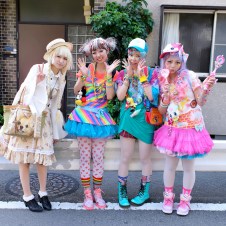
Although we had been told what to expect as we ventured into the fashionable Harajuku district of Tokyo, what we saw still caught us by surprise. As we waded through the crowds of shoppers, onlookers and performers on a pleasant Sunday afternoon, a veritable ocean of color and unparalleled array of fashion styles pummeled our senses. In particular, the popularity of cosplay was on display wherever our eyes wandered, which added to the gaiety of the general atmosphere. Now a world-wide phenomenon, the modern-day custom of cosplay can be traced back to Japan where the term was initially coined. It first appeared in an article by Nobuyuki Takahashi, after he participated in a science fiction convention accompanied by many costumed fans. In an attempt to verbally capture what he had witnessed, Takahashi took the two English words “costume” and “play” and amalgamated them to form a new Japanese word: “cosplay.” That unique term quickly caught on and is now commonly used for the act of dressing up to resemble famous characters from popular anime, manga, movies, video games and TV shows.

Many cosplay fans create their own costumes as they attempt to capture the appearance of a particular character. As part of the outfit, cosplay participants often try to emulate their chosen character’s persona and behavior. Social interaction between cosplay aficionados steadily increased and created a subculture that dominates certain locales and is promulgated through social media. The cosplay world has now mushroomed to such an extent that fans from around the world often participate in major conventions or events where they are judged by celebrity panels. Winners are chosen according to the craftmanship of their costume, accuracy, presentation and audience appeal.

Many cosplayers utilize a type of body suit as the base of their costume which is referred to as a “kigurumi” (着ぐるみ) which means literally “to wear a stuffed animal.”  Animegao (アニメ顔 or “anime face”), which refers to a mask that replicates the face of the character the participant is trying to portray, is becoming increasingly popular within the cosplay world. The more elaborate costumes can be quite expensive and demand a tremendous amount of skill to produce. The increasing popularity of cosplay has given rise to numerous business ventures to meet ever-growing demands and is said to generate over a quarter billion dollars in revenue per year in Japan.

From the dawn of time, clothing has been considered an essential human need, but clothing styles, colors and fabrics are constantly changing in accordance with cultural and generational preferences. However, there is another form of “clothing” that should always be the focal point of our wardrobe choices. The Apostle Paul urged the followers of Jesus to “Clothe yourselves with compassion, kindness, humility, gentleness and patience.” (Colossians 3:12b) He uses this metaphor in an even broader sense in Romans 13:14 where new believers are instructed to “Clothe yourselves with the Lord Jesus Christ.” This powerful imagery captures the thought that the virtues of our Savior should be the same qualities others will hopefully see in us. Just as cosplay fans try to emulate not just the appearance, but also the persona of their favorite character, our goal should be to reflect Jesus in all we say, think and do. But this is not a form of cosplay that we can manufacture or duplicate through our own efforts and God is ultimately the only Judge in such matters. He is also the only one who can truly remove our filthy rags of sinfulness through the cross and clothe us with His righteousness. That is our eternal garment.

Japanese Fads

“God is not human, that he should lie, not a human being, that he should change his mind.”

Numbers 23:19a

Fads

A common characteristic of Japan is a proclivity towards uniformity, which probably accounts for the rapid rise and spread of some rather unique cultural fads. Our first memorable experience of this phenomenon was the ubiquitous appearance of the frilled-neck lizard, an odd species of reptile native to Australia. For reasons unknown to us, this particular creature caught the attention of some advertiser in Japan and within weeks, these strange lizards were seen everywhere in TV commercials and posters and sold as stuffed animals. Then just as suddenly as it appeared, the frilled-neck lizard quietly faded off the scene as Japan moved on to the next popular thing. This experience taught us that Japan is a land of passing fads.

Teenage schoolgirls and young women are probably the biggest trendsetters behind many of the fads that frequently sweep through the nation. New ideas often catch on quickly among the young female segment of society who march in step with the latest passing fancy that ranges anywhere from the most recent popular singing group to strange new fashions and anything else in between. In the area of fashion, we have observed the rise and fall of some interesting styles like the “kogal,” “Lolita” and “ganguro,” that, like the frill-necked lizard, have quickly come and gone. Kogal fashion basically consisted of school girl outfits of short skirts and bulky, rolled up socks held in place by a special glue. Following that and going in a slightly different direction, Lolita fashion was characterized by an abundance of frills, ruffles, makeup, hairstyle and anything that cultivated a child-like image. There are also corollaries of the Lolita style known as “gothic Lolita” and “punk Lolita.” Ganguro fashion calls for an overdone tan (the term means literally “intensely black”), extreme hair dye colors and contrasting pale makeup as a reactionary form to the traditional Japanese image of beauty.

But Japanese fads also originate from other demographic groups and manifest themselves in different forms. For example, the “tamagotchi” (meaning “egg watch”) craze captured the vast majority of school-aged children in the 90s who were driven to purchase and obsessively play a mini egg-shaped computer game featuring an electronic “pet.” These virtual pets had to be fed, played with and cleaned on a regular basis or else they would die. Some children were obviously upset by this irreversible outcome so one innovative temple created a virtual cemetery for these “dead” pets and set up a hotline to console distraught children. However, the zeal for these devices continued unabated until the next fad eventually replaced them. The ensuing hyper excitement over baby pandas, the widespread following to wear Ugg boots, the sudden omnipresence of okra in cuisine, the craze in designer bags and people sporting chapatsu (茶髪) or “tea colored hair” are just a few examples of fads that have made their brief marks on Japanese culture.

Sometimes I am tempted to reflect on these changes as I advance in years and acquire a different perspective of time and culture. From such a vantage point, I’ve observed that inconsistency and inequality are traits that characterize human culture as a whole and are not limited to any particular nationality. These traits manifest themselves in different forms, but serve as key reminders that while we may be made in the image of God, we have significantly strayed from the character and nature of God. Perhaps this is why the author of Numbers, who had observed the disobedient fickleness of God’s people, described God as “not human, that he should lie, not a human being, that he should change his mind.” (Numbers 23:19a). This consistency in character is also used to describe Jesus, who “is the same yesterday and today and forever.” (Hebrews 13:8) God, and the character he expects from us, is not a passing fad.

The Value of Cuteness

“Your beauty should not come from outward adornment.”  I Peter 3:3a

Kawaii

Although we all seem to intuitively grasp the subtle difference in nuance between “cute” and “beautiful,” it is actually a concept that is quite difficult to explain. Japan certainly has a deep appreciation of beauty, which is demonstrated in the diverse mediums of music, traditional arts, cultural ceremonies, fashion, nature and personal physical appearances. But when the idea of cuteness is closely examined, it seems to lurk somewhere else on the spectrum of beauty, including other components that sets it apart as a slightly different value. This vague quality referred to as “cuteness” is highly treasured in Japan and drives many current cultural trends.

Known as “kawaii” (かわいい or 可愛い), this popularly used word is typically translated as “cute,” “loveable” or “adorable.” One often hears excited exclamations of “kawaii!” uttered by giddy young girls in an exaggerated inflection to describe a variety of objects, mannerisms and people. Kawaii has rapidly become one of the most overused words in the Japanese language and it should not be confused with similar sounding terms “kowai” (scary) or “kawaisō” (pitiable) which can lead to some humorous but humiliating language mistakes.

Kawaii comes in many forms in Japan. For example, there are cute forms of handwriting that many girls try to emulate. There is a plethora of kawaii merchandise on sale everywhere often featuring cute anime characters that are typically accompanied by hearts, flowers or rainbows. Cute pop idols seem to appear and disappear overnight, sporting kawaii fashion styles and employing cutesy mannerisms that are soon mimicked by their adoring fans. Kawaii mascots seem to be omnipresent, decorating planes, station platforms, businesses, post offices and other public places. Following this trend, each prefecture in Japan has developed and marketed its own cute mascot to promote tourism in their respective area. This cuteness phenomenon has spread to such an extent that many sociologists claim that kawaii has overtaken the traditional values of beauty and refinement in Japan. Others say that kawaii has even pushed aside some of the more violent elements in Japanese society and serves as a visible indicator of Japan’s steady drift towards a more pacifist national psyche.

Such sweeping generalizations are quite difficult to quantify, but the recent value of kawaii, now firmly embedded in Japanese culture, provides a form of evidence of the younger generation’s unhealthy preoccupation with seemingly shallow and temporal matters. Of course, this tendency to get things out of balance as to how one perceives people or things is certainly not unique to Japan. How we define and value beauty takes many forms around the world and the popularity of kawaii is just one example in how our priorities can become easily skewed.

This is where the concept of beauty seems to take on a different value that requires a closer inspection and a greater appreciation. Genuine beauty delves below the surface to deeper qualities that Peter hints at when he advises wives that their “beauty should not come from outward adornment.” (I Peter 3:3a) Beauty is certainly a sought-after quality, but it seems to have different layers to it, with some being eternal in nature while others are merely temporal. This contrast indicates that we may be tempted to focus on external elements like makeup, fashion, hairstyle or physical attributes as essential components of beauty, but godly character, actions and attitudes comprise the true essence of real beauty that God Himself treasures. That kind of beauty lasts forever, long after cuteness will be forgotten.

Kimonos

you are clothed with splendor and majesty.” Psalm 104:1b

kimonos

We hadn’t been in Japan long when I summoned up my courage and ventured forth to find a suitable birthday present for my wife. Shopping is not one of my favorite activities, but I was rather pleased with my eventual purchase: a stylish yukata. A yukata is an informal (and inexpensive) kimono, consisting of a single layer of cloth that is usually made from cotton. It is particularly popular among young women on festive occasions during the warmer months of the year. Being new to Japan, I thought a yukata would make an excellent gift for my wife, but we were both surprised when she opened her present. The item was advertised as a yukata, but closer inspection revealed that it was just a bolt of cloth.

A kimono (着物), which means literally a “thing to wear,” is a traditional Japanese wrap around, T-shaped garment with large, square sleeves. Kimonos have disappeared from everyday life in modern Japan, but they are still commonly worn at weddings, funerals, graduations and other formal occasions.  A broad sash, called an “obi,” holds the kimono together at the waist and it is further accessorized by special socks called “tabi” that are worn with “zori” sandals. Kimonos were originally introduced from China into Japan many centuries ago and since then have undergone various transformations to the present form. The formal versions are almost always made from silk and the more expensive kimonos may sell for more than US $50,000. While the usage of this traditional Japanese garment steadily declines, the expensive, colorful cloth of older kimonos is often repurposed for other fashion designs.

As I belatedly discovered at my wife’s birthday, kimonos are usually sold as a single bolt of cloth which is shaped, without cutting, and stitched together by an experienced seamstress to a desired size. In the past, when the garment became dirty, the stitches were removed to clean the kimono and then it would be sewn back together to its original shape or to another size. Patterns and styles of kimonos differ according to the age, gender and marital status of the wearer or the season of the year. Women’s kimonos come in a variety of styles, colors and decorations, whereas men’s kimonos are generally much more subdued, using darker colors with minimal patterns. Those who are inexperienced in wearing a formal kimono may pay a professional to help them correctly put the entire kimono ensemble in place. The left side of the kimono is always wrapped over the right side, except in the case of a funeral, where the deceased’s garment is wrapped right over left.

Appropriate clothing that reflects one’s particular status or a specific occasion is a common topic in the Scriptures. For example, the ornate clothing of royalty or the priesthood is sometimes described in great detail, but the same is true for the garments of the contrite or those in mourning who choose to wear sackcloth as an expression of their grief. The subject of clothing is also frequently used in a figurative sense to describe the majesty of God (Psalm 104:1b) or the spiritually impoverished state of man who is depicted as wearing “filthy rags” before a holy God. (Isaiah 64:6) Sometimes a double and deeper meaning is intended, such as in the case where God clothed Adam and Eve with animal skins following their disobedience (Genesis 3:21). This same God mercifully clothes us with His righteousness (Isaiah 61:10) through the death of His Son. Revelation 3:19 testifies that the people of God will one day be clothed in white but while we linger here on earth, we are exhorted to “clothe yourselves with compassion, kindness, humility, gentleness and patience.” (Colossians 3:12b) This godly fashion will never go out of style.