
Group Photos

“I will remember the deeds of the Lord.”   Psalm 77:11a

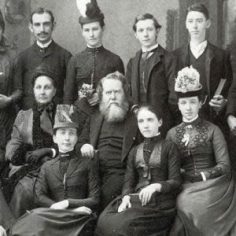
1888-Team-James-Hudson-Taylor-300x300    Long before the term “selfie” carved out a unique niche in our lexicons, the Japanese used an alternative word that eventually became a part of our personal vocabulary and history. It is called “kinen shashin” (記念写真) and it is roughly translated as “commemorative photograph.” Whenever a group assembles for a particular occasion, someone inevitably calls for a kinen shashin to be taken to commemorate the event. If you browse through our personal photo albums (back in the day when we collected physical photographs), you will discover quite a few of these kinen shashin scattered among other pictures portraying family and friends in various locations and activities.
A few of these kinen shashin are now framed and hang on our walls, or sit on our shelves, reminding us of days gone by and God’s grace in our lives. Such events may include baptisms, church anniversaries, a farewell of a coworker, training events, a church dedication, a wedding, an induction of a pastor, a graduation, conferences, the launching of a new church plant, a special concert or a group reunion. Each kinen shashin speaks volumes about God’s faithfulness throughout a jumble of times and circumstances as we walked through life and our paths crossed with those of many others.

But this is where the nuance of kinen shashin departs from our typical preoccupation with selfies. A selfie is generally photographic evidence that you did something, ate something, went somewhere or were with someone in particular. The focus is centered more on ME and things that are related to ME at the time the picture was taken. That is undoubtedly why the term “selfie” was coined to capture the essence of this particular form of photography. Of course, there is nothing wrong with this approach and we ourselves frequently take selfies. However, if given a choice, I would much rather be included in a kinen shashin, where my face may be lost in the crowd, but something much greater than me is being recorded as part of my ongoing faith journal.

In the days before the invention of cameras and cell phones, the psalmist testified “I will remember the deeds of the Lord.” (Psalm 77:11a) which is how we are prompted to respond when we view some of the kinen shashin from our past that depict various people and ministries. When we take the time to peruse through such photos, they serve to remind us of the many “deeds of the Lord” that have transpired over the years, but may have slipped from our memories. We would do well to fondly remember such people and events with thankfulness, but also with expectation for the things yet to come that we can only see now through eyes of faith. While it is sometimes unwise to linger too long in the past, we should certainly learn from it and apply those lessons to new challenges ahead. Kinen shashin can serve such a purpose as they beckon us to focus on community and God, which a selfie often fails to capture.

Tea Ceremony

“Whoever drinks the water I give them will never thirst. Indeed, the water I give them will become in them a spring of water welling up to eternal life.”     John 4:14

Tea ceremony

As a lesser evolved member of the human race otherwise known as a “guy,” I sometimes failed to appreciate the subtleties of Japanese culture and nowhere was this more apparent than the intricacies of the Japanese tea ceremony. Growing up in the South, my only experience with this common beverage was ice tea and its preparation was purely functional in nature. In contrast, the formal Japanese tea ceremony known as “sadō” or “chadō” (茶道), meaning literally “the way of tea,” involves a very precise ritual for the brewing and consumption of green tea.

It is believed that tea was first imported to Japan from China around the 9th century through a Buddhist monk and was enjoyed exclusively by the nobility before eventually gaining popularity among the masses. The Japanese tea ceremony that is commonly practiced today was greatly influenced by Zen Buddhism. Four key concepts capture the tea ceremony’s overarching objective. These are “wa” (harmony), “kei” (respect), “sei” (purity) and “jaku” (tranquility) and they are subtly cultivated throughout the sadō ceremony by means of ambiance and carefully orchestrated actions. This includes the construction of the tearoom, display of artful decorations, arrangement and handling of the utensils, specialized vocabulary, scripted etiquette and the formal attire of the tea ceremony master. There are several historical schools of Japanese tea ceremony that differ in procedures and it takes several years of diligent training to qualify as an instructor.

To the untrained eyes of an outsider, the slow, deliberate, yet graceful protocol of a formal Japanese tea ceremony may appear boring and incongruent with the normal pace of life, but the ceremony’s unhurried pace actually serves to highlight its purpose. Some tea ceremonies may last up to four hours, providing participants a rare and needed escape from the noise and demands of everyday life. The following video provides a condensed visual portrayal of the stylistic intricacies that compose a Japanese tea ceremony. https://www.youtube.com/watch?v=4wQVxj_0Mdo

To my knowledge, Jesus never hosted a Japanese tea ceremony, but He did offer liquid refreshment of a different nature to a spiritually thirsty woman. That well-known encounter is recorded in John 4 where Jesus wearily paused by a local well on His journey through Samaria. There Jesus surprisingly initiated a conversation with a Samaritan woman addressing His physical need (water), which He gently turns to her greater spiritual need (salvation). While this encounter was not scripted like a Japanese tea ceremony, the subtleties of God’s passionate love for all manner of people is evident throughout this simple, but profound story. Jesus came to offer us life eternal so that we may never thirst again. That is the overarching objective of Jesus’ life that no tea ceremony, no matter how perfectly executed, could ever provide. Living water is freely available for all who are thirsty.

Humor

“He will yet fill your mouth with laughter and your lips with shouts of joy.”     Job 8:21

humor

A hush settled over the room as I concluded my first Japanese speech. Instead of the expected response of laughter, I was greeted with dead silence. I had just made the painful discovery that Japanese humor was significantly different from American humor. Our assignment that day was to speak on a subject familiar to us, so being raised in Texas, I chose deer hunting. That was a huge mistake, and I compounded the problem even further by using a satirical approach. I thought I had cleverly titled the speech “How I Killed Bambi’s Mother,” but this vain attempt at humor was entirely lost on my horrified audience and as a result, went over like a lead balloon. My effort was doomed from the start as satire is typically not used by the Japanese and the imagery of a missionary bearing weapons to slay cute forest creatures was certainly not a laughable matter.

While the Japanese sometimes like to think of themselves as a serious people (majime ningen), they definitely have a sense of humor. Slapstick forms of humor are often seen on TV, which accounts for Mr. Bean’s huge popularity a number of years ago. Comedy team acts known as manzaishi are quite common in Japan. They are composed of a straight (serious) man (tsukkomi) and a funny man (boke) and their fast-paced jokes are usually centered on misunderstandings, puns and other verbal gags. Interestingly, many of these jocular performers are from the Osaka area of Japan, which has a reputation for comedic wit. Rakugo (落語, meaning literally “fallen words”) is another much subtler form of Japanese humor where a lone storyteller wearing Edo era clothing sits cross-legged on the stage with a paper fan as his only prop. This performer typically shares a gently amusing tale based on the dialogue of two or more characters and it is designed to entertain a more sophisticated audience.

After several failed attempts at humor when preaching in Japanese, I eventually learned that the safest form of joking was to make fun of myself using self-deprecating humor. Japanese may be unsure when a joke is intended, so they will refrain from laughing to avoid possibly embarrassing the speaker. Humor is one of the most subtle and demanding forms of communication as it requires not only refined linguistic skills, but also an in-depth understanding of the culture and one’s immediate context.

Although we know that Jesus wept as He shared the pain of those grieving Lazarus’ death (John 11:35), the Scriptures do not explicitly record that Jesus ever laughed. Yet, Jesus frequently told stories that must have provoked laughter among his listeners as He often used absurd life scenarios to highlight a spiritual truth. Laughter is often portrayed as an indication of God’s blessing (Genesis 21:6) and an expression of joy, which is listed among the fruits of the Spirit (Galatians 5:22). Of course, not all laughter is equal, as some forms are coarse and vulgar, and some so-called entertainment comes at the painful expense of others. This type of laughter does not honor God nor His creation, but the misuse of humor does not diminish our calling to live joy-filled lives that are often evidenced by laughter. True joy that comes from God can powerfully transcend our circumstances and our cultures.

Pachinko

Direct me in the paths of your commands, for there I find delight.”          Psalm 119:35

pachinko

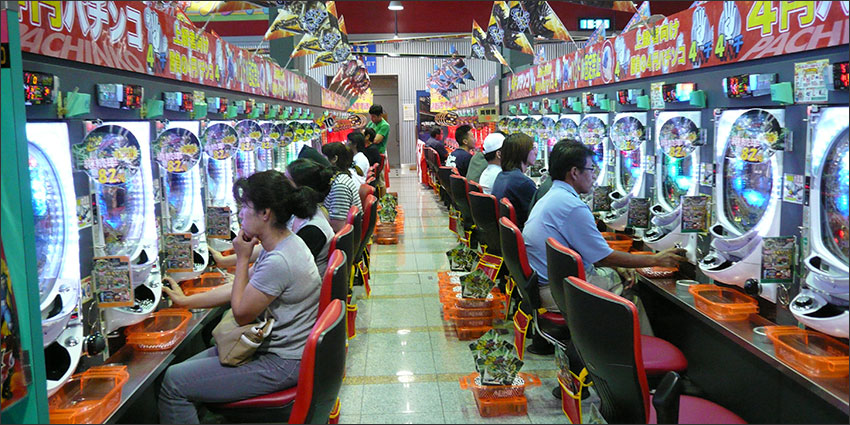
Out of curiosity as a relative newcomer to Japan, I cautiously opened the door to the gaudily decorated establishment and peeked in. I was harshly greeted with an immediate sensory overload of sights, sounds and smells (cigarette smoke) that encouraged me to make a hasty retreat to the comparatively quiet sidewalk. That was my first and only direct experience with the infamous Japanese parlor game known as pachinko (パチンコ). Pachinko is often compared to the arcade game of pinball since it is a mechanical entertainment device that involves the manipulation of steel balls. However, pachinko is significantly different from its Western counterpart in a variety of ways and, on top of that, it is deeply rooted in Japanese gambling culture.

The word “pachinko” is derived from the onomatopoeic sound “pachin,” which is a clicking or snapping noise the machine makes when the balls drop through and this sound is combined with the suffix “ko,” which means “little.” These machines were initially developed in the 1920s as a children’s toy, but within a few years evolved into a popular adult pastime. A pachinko resembles a vertical pinball machine but it utilizes multiple small steel balls that can be slightly directed by the player as they fall through a series of steel pins or nails. The objective is to capture as many balls as possible in the small openings along the course before they reach the bottom.

These balls can then be exchanged for prizes which can in turn be discretely converted into hard currency in compliance with Japan’s prohibition of gambling for cash. As such, these so-called pachinko parlors are a Japanese version of casinos where guests play slot machines. It is estimated that roughly a tenth of the Japanese population frequents one of Japan’s 10,600 pachinko parlors once a week and that the annual gambling revenue from pachinko is thirty times the yearly gambling earnings of Las Vegas. To maintain this delicate balance between winning and losing, pachinko parlors employ “kugushi” (釘師), or “nail adjusters” who expertly adjust or bend the pins within the pachinko machines. This fine-tuning serves to protect profit margins, but at the same time provides a sufficient number of favorable outcomes to attract customers. Some customers will line up at the pachinko parlor entrance several hours before it opens in order to gain access to their favorite machine.

If you closely examine a pachinko machine, you will soon discover that there are countless courses a ball can take as gravity takes over and it makes its way to the bottom. The goal of the player is to manipulate the course or path of the ball to his advantage. In the game of life, most of us would like to be in the position where we can influence the path ahead of us for a favorable outcome. Even though such power lies beyond our means, this limitation fails to quench our ever-present desire to control our own destiny where we naively believe happiness awaits us. Scripture tells us that such joy or delight is certainly available, but it only comes as we follow the commands or course laid out for us by an all-knowing, all-powerful God. (Psalm 119:35) As our heavenly kugushi, God lovingly and flawlessly adjusts the various “nails” in our lives in line with His desired outcome. Our only response therefore should be faithful obedience as we submit to the course uniquely laid out for us. Our reward is not a cheap trinket or even a cash prize, but rather, a meaningful and purposeful life that brings glory to God and delight to us. When we obey, we come out winners.

Karaoke

“But let all who take refuge in you be glad; let them ever sing for joy.”  Psalm 5:11a

Karaoke

The distinguished members of the local Japanese Rotary Club had just finished their sumptuous meal which would shortly be followed by a mild case of indigestion. The source of their discomfort that evening was not what they ate, but was actually on stage holding a microphone doing a poor Elvis impersonation. The culprit was me, and that was my introduction to karaoke. As the token foreign guest for the occasion, I was obliged to “honor” the assembled members with a song. In a state of sheer terror, I chose to sing “I Can’t Help Falling in Love with You” by the King of Rock himself, since it was the only song in English on the provided playlist. As an impromptu romantic gesture, I also dedicated the song to my lovely wife, who, understandably, was desperately looking for a place to hide!

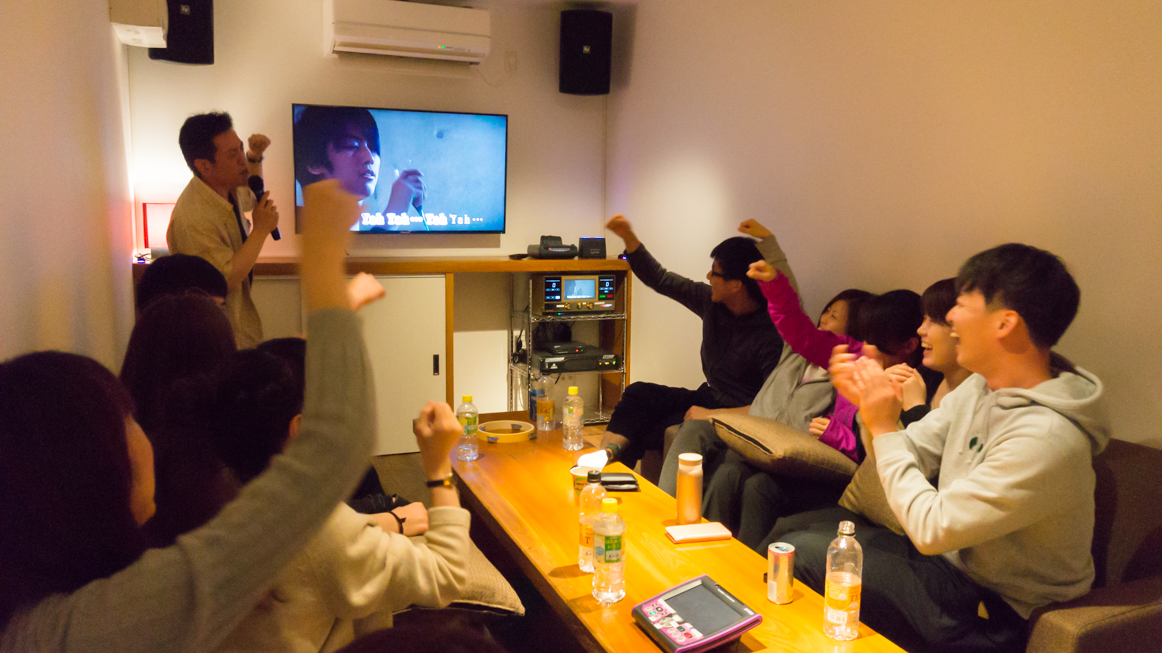
Karaoke (カラオケ) is now a world-wide phenomenon, and the correct pronunciation is not “keh-ree-oh-kee,” as it is widely used in the West, but is instead, “kah-rah-oh-keh.” Karaoke is actually a blend of two words — kara (meaning “empty”) and oke (which is an abbreviation for “orchestra”). Taken together, karaoke means literally “empty orchestra,” or music that is missing the lead melody and vocals. That melody is provided by an amateur vocalist who sings along with a microphone to the recorded instrumental music following the lyrics provided on a video screen.

Daisuke Inoue, a Japanese musician, is generally credited with inventing karaoke in 1971 when he developed the equipment that helped launch its huge popularity. As a result, venues advertising “karaoke boxes” are now quite common throughout Japan. These are basically soundproofed private rooms rented by the hour that come equipped with karaoke machines, comfortable lounge furniture and refreshments available to order.

For many Japanese, karaoke is a great means to relief stress and enjoy relatively inexpensive fun with friends. We witnessed the unusual power of karaoke years later while doing relief work. We had gathered a number of people displaced by the huge tsunami that struck portions of Japan and facilitated an event centered on karaoke. Not wanting to destroy the ambiance of another public gathering with my vocal skills, I gladly refrained from joining the many performers. Instead, my wife and I enjoyed our front row seats to a magical evening of observing those who had lost so much, coming together as a community for a few moments of frivolity and much needed healing.

That event was a vivid reminder that we are designed by our Creator to sing. Music offers a unique opportunity to express deep feelings and thoughts that, in turn, can bring joy and healing to the participant. Heaven is described as a place where music abounds, but the focal point there is on God Himself as everyone offers up praise to Him. While our participation in such heavenly choirs still awaits us, we are encouraged to recall the greatness, mercies and deeds of God and express them in song while we linger here on earth. Instruments and skilled musicians can certainly help facilitate such singing, much like a karaoke machine, but the joy such music brings comes not through our expertise, but from a thankful heart. The Bible calls this worship and this is the kind of singing that brings delight to God (John 4:21-24).

Forget the Year Parties

“Forgetting what is behind and straining toward what is ahead, I press on toward the goal to win the prize for which God has called me heavenward in Christ Jesus.”            Philippians 3:13b-14

bonenkai3

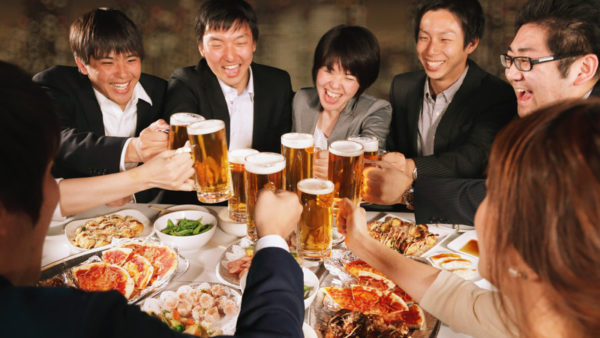
When I was invited to attend my first bōnenkai as a new missionary, I was rather flattered to be included, but I was clueless as to what would actually transpire. Immediately after my arrival for the event, my two Japanese friends seemed quite determined to ply me with alcohol while they got steadily plastered themselves and consequently, became increasingly silly. These friends also persisted in asking me quite personal questions that were rather out of character for these normally dignified businessmen. Previously, I had naively thought that a bōnenkai was a simple end-of-year party with close friends, but I later learned that the Japanese characters for bōnenkai (忘年会) mean literally, “forget the year gathering.” In other words, it is essentially a Japanese drinking party for co-workers or friends where everyone is encouraged to let their hair down through the consumption of alcohol and, in the process, collectively forget the troubles of the past year. Even the normal lines that separate the boss from his business subordinates are temporarily erased during the festivities and whatever is said or done under the influence of alcohol is conveniently overlooked the following day.

Bōnenkai do not take place on any specific day, although they are usually held in December. They are not to be confused with New Year’s parties, which are referred to as “shinnenkai” (新年会 ) and are celebrated in the new year. Companies often sponsor bōnenkai for their employees, but circles of friends frequently organize their own forget-the-year gatherings. This tradition is said to have originated somewhere around the 16th century when groups of samurai lords gathered locally to commemorate their achievements of the past year. Following the abolishment of the feudal ruling system in the late 19th century and the rise of lifetime employment in the business world, companies began to incorporate and revise this old custom. What was previously an event exclusively reserved for the ruling caste eventually became a routinely scheduled gathering for all company employees in the yearly calendar. The following popular song, 今夜はHearty Party (“Tonight, Hearty Party”), by the famous pop singer Mariya Takeuchi, captures the ambiance or atmosphere of a typical Japanese bōnenkai. https://www.youtube.com/watch?v=lWlgvzXI8eY

Forgetting the past is often a helpful approach as we pursue a godly lifestyle and mindset that will honor God. The Apostle Paul alludes to the importance of sometimes “forgetting what is behind” (Philippians 3:13) because an unhealthy preoccupation with our failures in the past can impede God’s redemptive work in the present. Recognition of personal sin is certainly a healthy starting point, but a myopic focus on such matters can unintentionally blind us to the amazing truth of grace. This infatuation on past failures could in turn paralyze us with guilt, rather than motivating us to move forward in life as objects of God’s love. Everyone has committed acts of which they are ashamed, but through the power of the cross, we are released from the burdens of our past and set free to fulfill our eternal calling in Christ Jesus. Like a bōnenkai, we are exhorted to forget the troubles from our past, but as redeemed individuals, we must not neglect to celebrate in faith new and better things to come, while remembering where we came from. Our new life in Jesus compels us to forget, but at the same time, remember.

Superheroes

“The Lord will fight for you; you need only to be still.”             Exodus 14:14

Godzilla & UltramanIn 1954, Godzilla emerged ferociously from the depths of the ocean, paving the way for other monsters, known as “kaijū” (怪獣), who seemed to be oddly obsessed with destroying downtown Tokyo. Pronounced in Japanese as “Gojira,” this famous cinematic creature actually gets his name from combining the Japanese words for gorilla (gorira) and whale (kujira), representing his unique size, power and aquatic origin. Following in the path of Godzilla, other kaijū have routinely made their way to the shores of Japan to wreak havoc as well.

To combat these monsters, super villains, and aliens bent on mass destruction, a steady stream of superheroes was invented to rescue the terrorized masses in Japan. In so doing, a whole new entertainment industry came into being creating hordes of fans worldwide. Millions of plastic toys representing both good guy and bad guy genres, were also sold with several populating our own toy box. Ultraman and his pals, known as the Ultra Crusaders, were among the first in a long line of superheroes called upon to save Earth, making their first appearance in 1966. Each Ultra Crusader possessed specific super powers used to protect the planet and fight the perpetrators of evil. However, these particular superheroes had their limitations as they could only stay on Earth for a few minutes before their solar powered energy was used up, forcing them to return to space to recharge.

The Ultra Crusaders were later assisted in this never ending task by a series of other superheroes such as the Power Rangers (known initially as the “Super Sentai”), Sailor Moon and her teenage girl gang, Transformer action figures, and the Kamen Riders, who had insect-like heads and battled the bad guys from motorcycles. Astro Boy, a powerful android with human emotions in the shape of a boy, actually outdates them all as he initially got his start as a comic book hero in 1952. Astro Boy is now remembered not just for his impeccable resume in fighting evil, but he is also credited for launching the huge anime and manga industry that exists today.

Even in a world without such fanciful monsters, it is not uncommon to look for a hero of some sort to save us from whatever crisis we may be currently facing. Like the terrorized masses of Tokyo fleeing the path of the latest kaijū bent on destruction, we realize we are helpless to solve our problems or achieve security without the assistance of Someone greater than ourselves. We need a superhero. We need someone who will fight for us. Similar to the panic stricken Israelites who were trapped between the Red Sea and the army of Pharaoh seeking their destruction, we cry out for someone to intervene on our behalf. However, such help does not come in the form of a fictional superhero who must pause to recharge his batteries or deal with other limitations. Instead, we have the Almighty God, the Maker Heaven and Earth, fighting on our behalf and victory is already assured. The only required response from us is “to be still” and trust Him.