
Unlucky #4

“Have nothing to do with godless myths and old wives’ tales; rather, train yourself to be godly.” I Timothy 4:7

unlucky 4

When I occasionally ventured downtown with my parents as a child and entered an elevator in a skyscraper, I often noticed a curious thing: there was no 13th floor in many of the buildings. When I pointed out this anomaly to my parents, they explained that there was actually a 13th floor, but because many people considered the number to be unlucky, it was commonly omitted from the selection of buttons indicating floor levels. Despite this widely held belief, my grandfather, who was a bit of a contrarian, decided to name his ranch “Lucky 13.” We consequently used the brand L13 to identify all his cattle so this particular number was vividly branded in my memory.

Instead of the number thirteen, Japanese traditionally considered the number 4 to be very unlucky because it can be pronounced as “shi” (四), which is also used for the word “death” (死), even though the Chinese characters identifying them are quite different. Like America, where the number 13 was often omitted, many hospitals and hotels in Japan similarly skipped the number 4 when indicating floors in their buildings. “Tetraphobia” is an actual psychological term coined to describe the practice of avoiding instances of the digit 4 as this ancient superstition also exists in other parts of Asia. This unfounded fear can be applied in numerous ways, such as avoiding the mention of the number four around an ill family member, giving four of something as a gift or scheduling something important on April 4th, the fourth day of the fourth month.

Like other cultures, there are many other superstitions that linger in Japan. For example, whistling at night may invite snakes to come out. You should hide your thumbs if a funeral hearse passes nearby. Children are warned to cover their belly buttons in a thunder storm. Chopsticks should never be placed upright in a bowl of rice. A person’s name should not be written in red ink. It is not advisable to kill a spider in the morning, but it is expedient to do so at night. A person should avoid cutting fingernails or toenails in the evening. One should avoid sleeping with his head positioned towards the north. Food is not to be passed chopstick-to-chopstick. The list continues and each of these forbidden actions could possibly invite death or adverse circumstances due to their connections with other terms, mythological stories or current cultural practices. Go to the following link for a further explanation: https://www.cotoclub.com/16-common-japanese-superstitions/.

In mentoring his young disciple Timothy, Paul advised him to avoid dwelling on such myths and superstitions in the course of his ministry (I Timothy 4:7). Instead, he was encouraged to focus on godly character and truth in his own life and in shepherding others. As a mature believer, Paul understood that superstitions are essentially grounded in fear instead of faith and the proponents of such an approach to life cling to a faulty understanding of God that must be discarded. While God is certainly to be feared (Deuteronomy 10:12), He is not a whimsical, cosmic being who can be induced or manipulated to protect us from life’s calamities. This God is not limited by any temples we may erect to contain Him, idols we may form to worship Him or any silly practices we may promote to control Him. This was the message Paul preached to the superstitious Greeks on Mars Hill who needed to correctly understand the vastness, power and nature of God (Acts 17). This is the truth that needs to be branded on our hearts and heeded while living in a world full of misinformation and deceit.

Gods on Parade

“No one can reveal it to the king except the gods, and they do not live among humans.” Daniel 2:11b

Osaka,,Japan,-,July,25,2017:,The,Traditional,And,Historical

The festival crowd cheered enthusiastically at the sight of the local shrine’s mikoshi as it snaked its way along the town’s designated parade route. The uniformly clad bearers of the mikoshi swayed in a set pattern as they chanted in unison “wasshoi” (和緒一), which aptly means “together in harmony.” With rhythmic precision, they shouldered an ornate miniature replica of the nearby Shinto shrine, known as an omikoshi (the additional “o” is honorific) on two long poles for transport. According to tradition, a mikoshi temporarily houses the local deity of the area who will, hopefully, ward off any potential misfortune or evil and invite happiness to the local residents.

The word mikoshi (神輿) is a combination of the Chinese characters for “god” and a “palanquin,” which was historically used to transport people of noble rank. But in this case, the occupant of the palanquin is considered to be a god, who is being taken for a tour of his community. Shintoism is the indigenous, pantheistic religion of Japan where gods are regarded as being everywhere and in everything. This ancient religion teaches that there are roughly 8 million gods who watch over Japan (that number is specifically chosen because it is similar to the term used for infinity). Since these gods, or spirits known as kami (神), are believed to be everywhere, they are usually venerated in shrines scattered throughout Japan in scenic locations where such gods are believed to dwell.

The typical mikoshi may weigh as much as a ton and is typically carried by a team of around 30-50 people who are specially trained in how to transport it. The bearers follow a traditionally prescribed choreography unique to their area, stopping at key points along the route, which in some cases includes entering a nearby body of water such as a river, lake or ocean. One or two scantily clad men often stand on the palanquin with the omikoshi shouting out instructions to the transporters below adding to the overall spectacle. A carving of a phoenix, as an ancient symbol of good fortune, hope and peace, usually occupies the top of a mikoshi. The heaviest omikoshi on record weighs 4.5 tons and requires a massive team of 300 people to carry it.

From the beginning of time, mankind has superstitiously sought the favor of gods through numerous means shaped by their varied perceptions of the gods they worship. A low or inaccurate understanding of God perceives Him as someone who can be bent to one’s will through prescribed acts or rituals in order to receive favor in the form of wealth, power, health, influence or progeny. Such gods often come in the form of idols constructed by men who then absurdly bow before these objects, pleading “Save me! You are my god!” (Isaiah 44:17) Such foolish thinking and actions are mocked repeatedly in Scripture and stand in contrast to the God who made the heavens and earth, who “does whatever pleases Him” (Psalm 115:3) and exists far beyond the attempted manipulations of men who strive to limit Him to their own advantage.

The wise men of the Babylonian court in Daniel’s era had a partially correct view of God (Daniel 2:11) as they perceived Him as beyond their control, but they erred in regarding God as disengaged from the activities of humans. In contrast to this, the entire Book of Daniel testifies of a transcendent but involved, all-powerful, all-knowing God who cannot be confined to a mikoshi and moved at a whim to incur blessing. This God dwells above the nations, all history and the universe itself, moving according to His counsel alone. This means that we are merely bystanders, and at best worshipers, but never transporters.

Presentation vs. Palate

“On the outside you appear to people as righteous but on the inside you are full of hypocrisy and wickedness.”  Matthew 23:28

Presentation-Palate

The slice of cake carefully set before us by our kind hostess looked exquisite. It was decorated with luscious, flawless strawberries and topped with artfully applied whipped cream on a precisely cut piece of cake displayed on beautiful china. My wife and I felt like royalty as we gazed upon the delicacy offered for our consumption. “This is going to be amazing,” I thought to myself as I eagerly took my first bite. However, I soon discovered that the taste did not quite match the anticipation. While it was tasty, the edible artwork before me served as evidence that presentation often takes precedence over palate in Japan.

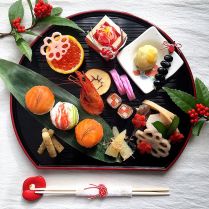
Food presentation, known as moritsuke (盛り付け) in Japanese, means literally “arrangement of food on a dish.” The objective is to engage the aesthetic senses of the diner and draw them in, much like someone admiring a work of art. In the Western world, this is often referred to as “plating,” where the symmetry of food on a plate is the primary focus in meal presentation. However, in Japan, moritsuke points to portions of a meal artfully placed in a variety of dishes and embellished with decorative garnishing. These presentations often have a seasonal theme and the decorations, known as mukimono, are typically intricate creations of flowers, animals, fish or dragons carved from various vegetables and fruits that are not necessarily intended to be eaten, but exist as one aspect of the overall culinary picture.

This emphasis on the appearance of food is most often evident in the display of sushi and sashimi in the more extravagant Japanese meals that serve to make one’s dining experience a memorable occasion. The Japanese language certainly has words to cover a whole range of tastes such as sweet (amai), spicy (karai), bitter (nigai), sour (suppai) and salty (shoppai), but the appearance of food is also an important element in food preparation. After a few months of living in Japan, we started to wonder how the vegetables and fruits for sale in the stores always seemed to be perfectly shaped and colored. This mystery was solved one day when we discovered a number of misshapen, but perfectly good potatoes being sold by a local farmer for a pittance of their normal value as they could not sell them in the open market. Appearance is valued in all stages of the food preparation process.

Focus on appearance is not necessarily a bad thing, and in fact, we routinely give a great deal of attention to image over substance in a number of areas. This focus on image can be seen in the clothing we wear, the manner in which we style our hair, the diets or exercise we endure to achieve a certain body shape, the material goods we accumulate or the manner in which we communicate. We want to look good in front of others and consequently, we devote a considerable amount of time, effort and resources to that end.

But how we appear before God, who sees beyond external trappings, should compel us to examine ourselves so that we might live lives guided by a higher standard, a heavenly standard. Jesus saved his harshest criticisms for the religious leaders because they valued rules over people, physical practices over spiritual presence and religion over relationship. He compared them to whitewashed tombs full of decay or dirty dishes that had only been cleaned on the outside. (Matthew 23) Hypocrisy may be rampant in the world around us, but heavenly moritsuke calls for aligning our lives with the heart of God who is not distracted or deceived by appearances. In the spiritual realm, presentation should never take precedence over palate.

Haircut Time

“Even the very hairs on your head are numbered.”  Matthew 10:30

haircut

After being away a few years from our adopted home of Japan, I was very much looking forward to our recent visit. High on my priority list were of course spending time with friends and family, visiting a Japanese hot spring, eating all my favorite foods, riding on Japanese trains, taking trips to scenic locations and… getting a haircut. Despite our packed schedule, I was able to squeeze in an outing to the barber our second day back in Japan and again on the day of our departure. I settled into the barber chair, gave a few instructions and then proceeded to enjoy my much-anticipated experience. Wanting to maximize this unique opportunity, for a few hundred more yen, I even allowed myself the extra luxury of a shave.

The feathery touch of the barber seemed almost imperceptible to me as the quiet rhythmic snipping of his scissors, uninterrupted by mechanical devices, was like a sleep-inducing drug. I faintly recalled in my semi-comatose state that Japanese hairdressers pay exorbitant amounts of money for quality scissors made from the finest German or Japanese steel. Considering the cost, the scissors are regarded among their most prize possessions. Content to let me doze, the barber spoke only when necessary as he knows that I’m not there for just a haircut, but also to relax. In addition to cutting my hair, he silently moved on to removing other unwanted hair as part of the routine. Unibrows are divided into two equally matched eyebrows. Nose hairs are discreetly trimmed. Unsightly ear hairs are efficiently clipped into submission. Even one’s forehead is shaved as the barber leaves no stone unturned or any stray hair neglected in his never-ending quest for perfection.

The proprietor of the shop and chief barber was busy with another customer during my visit but he kept an eagle eye on his young apprentice attending me. Every few minutes the boss leaned in, inspected the ongoing masterpiece, and snipped a single hair as a subtle rebuke to the novice. All kinds of hair tonics, creams and gel were then offered to complete the experience. On occasion, concerned barbers in the past would kindly suggest a temporary remedy to help disguise my ever-growing bald spot. As I can’t see my own barren patch, I have little concern for this supposed flaw, but instead, I prepare to enjoy the climax of my Japanese haircut experience: a soothing scalp and shoulder massage. When money was tight, I sometimes frequented the much cheaper 10-minute express haircut establishments. Among other shortcuts, they literally vacuum the customer’s head at the end to save on time. But over the years, I learned to appreciate the traditional barber as one of life’s little luxuries.

When I eventually arose from the barber’s chair, I was surprised to notice the preponderance of gray hair scattered on the floor beneath me and the increasing scarcity of what was just removed. Both are a testimony of my advancing years, but the clumps of discarded hair also serve to remind me of the intricacies of God’s knowledge and amazing concern for me. (Matthew 10:30) The God of the universe, the Maker of Heaven and Earth (Psalm 121:2) who calls out each star by name (Isaiah 40:26) knows exactly how many hairs still remain on my head. Jesus used this powerful illustration to comfort his disciples when they were inclined to worry about circumstances beyond their control or things beyond their knowledge. He assured them, and us, that absolutely nothing escapes God’s notice and no one is beyond His care. He knows my hair and he knows my heart. The reminder of this precious truth was the best part of my haircut. 

When Yes Means No

“our message to you is not ‘Yes’ and ‘No.’” II Corinthians 1:18b

YesNo2Still a stranger to the unique ways of Japan, I visited the largest ski shop in Sapporo, completely unaware of the rabbit hole I was about to enter. It all began with a simple question: “Do you have any men’s ski boots in size 29 centimeters under ¥20,000?” (around $200) Much to my surprise and satisfaction, the salesman immediately replied “hai,” which I understood to mean, “yes.” I was then instructed to sit down while he disappeared in the back to retrieve the boots.

A few minutes later the salesman emerged triumphantly bearing a nice pair of men’s boots in the correct size, so I started to quietly congratulate myself on my successful shopping foray. But my premature celebration came to a screeching halt when I noticed the price tag dangling from one of the boots: ¥85,000! After catching my breath, I reminded the salesman of my meager ¥20,000 budget. Seemingly nonplussed by my intransigence, he proudly told me that they were willing to make the boots available at a special price of only ¥70,000. After a few more enquiries and direct negotiation with the manager, I soon learned that this was the ONLY pair of men’s ski boots the store had in my size. I was now trapped in a quasi life and death struggle as the bargaining continued. The price soon dropped to ¥60,000, and then ¥50,000 as I kept politely insisting that I only had ¥20,000 for the purchase. The store personnel probably thought this was a clever bargaining ploy on my part and didn’t fully grasp that I actually had only ¥20,000 for the purchase. By now I was just looking for an avenue to escape my predicament as all the salesmen repeatedly huddled together to discuss their strategy. Approximately one hour later and exhausted by the experience, I eventually walked out the front door with my new pair of ski boots purchased for only ¥20,000. I was completely befuddled as to what had transpired inside.

First of all, hai can simply mean “I hear you,” or “I acknowledge what you said.” So, the salesman never actually promised that the store had what I was looking for at the price I had requested. Secondly, to complicate things even further, it is considered impolite to tell a customer “no,” implying that they can’t help you. Unknown to me, I had unwittingly placed the store management in an awkward position of being unable to refuse my request. Upon further reflection, I think we all learned something that day as I was possibly the first foreigner to ever shop at their store. As the years went by, I continued to use those boots, which served as a reminder that “yes” can sometimes mean “no” and that I had much to learn about communication in Japan.

I seriously doubt that the Apostle Paul ever tried to purchase ski boots and was faced with a similar quandary, but he was charged on one occasion of inconsistency in his messaging. It appeared that his “yes” and “no” were in contradiction with one another as Paul had previously stated his intention to visit the Corinthian church on his way to Macedonia (II Corinthians 1). However, for reasons not stated, Paul was forced to cancel those plans which led to unfair criticisms of his character. After rebuffing these somewhat trivial arguments in his letter to the Corinthian Church, Paul used this theme to emphasize the surety of the promises of God in Christ. “For no matter how many promises God has made, they are ‘Yes’ in Christ.” (v.20) This is a great reminder that there can be confusion among people in communication, and there may even be confusion regarding one’s character, but God’s message and His plan of redemption through His Son are unequivocally clear. God’s “yes” in Christ is an eternal game changer for all who believe.

Practice, Practice, Practice

 “This has been my practice: I obey your precepts.”  Psalm 119:56

Practice3

The teachers and parents at the local Japanese elementary school are hoping to pull off a flawless annual sports day. What do they consider to be the critical factor for success? Practice rehearsals!  The government wants to educate the public on proper responses to future possible disasters. Their solution? Practice drills! The university graduation ceremony is coming up in a few weeks so what is the number one focus for all the participants? Practice walk-throughs!

In a land that admirably strives for perfection, it often seems that the one-word solution to success for every endeavor is “practice.” While practice is certainly an important element in achieving anything of note, the Japanese seem to go beyond merely tolerating its necessity to the point of actually embracing it. This hyper focus on practice is readily apparent in almost all levels of Japanese society, ranging from business, athletics, hobbies, music, trade skills and ceremonial events. The Japanese word “renshū” (練習) is the most frequently used term to capture this idea of practice combining the actions of “repetition” and “learn.” It is believed that a particular skill or behavior learned through repetition fosters refinement in technique and, presumably, produces improved results. This emphasis on practice explains why an aspiring young sushi chef will unquestionably labor for five years as a lowly apprentice before being entrusted with the seemingly simple task of preparing the sushi rice. The same concept applies to a junior high student who joins the school badminton club, but has to practice their swing for several weeks before being introduced to an actual racquet.

Perhaps this value of renshū is best illustrated by the life of the famous baseball player, Ichiro Suzuki, who set a number of records in the Major Leagues after he was traded from Japan. From the age of seven, rain or shine, Ichiro’s father enforced a daily, rigorous practice routine on him that included throwing 50 pitches, hitting 200 live pitches, fielding 100 balls and hitting 300 pitches from a machine. As Ichiro got older, this daily regimen began to include hurling car tires and hitting wiffleballs with a heavy shovel to increase his strength. Renshū certainly accounted for a large portion of Ichiro’s success as a baseball player, but he later admitted it came at a heavy price.

Practice can certainly have its onerous aspects, even when not taken to extremes, but it is usually a necessary component to success in any meaningful endeavor. One obviously, does not become a skilled musician, chef or athlete without the investment of many hours into polishing their craft. Renshū at its very heart, usually has this worthy objective in mind, but sometimes it is obscured by the oppressive daily grind that typically accompanies such practice patterns.

In the Bible, many uses of the term “practice” have an extremely negative connotation. On numerous occasions the practices of God’s people are described as “detestable;” other negative adjectives like “evil,” “unclean,” “worthless” or “corrupt” are also commonly juxtaposed with the term. However, to do the opposite and live in obedience to God, David testifies to the importance of a positive form of practice in Psalm 119:56. Even Jesus declared the importance of this kind of renshū if our objective is to live lives worthy of God. “But everyone who hears these words of mine and puts them into practice is like a wise man who built his house on the rock.” (Matthew 7:24) However, at the same time, we must never forget that while practice cannot make us perfect, the Cross redeems all our imperfections and failures.

Local Pubs

“That each of them may eat and drink, and find satisfaction in all their toil—this is the gift of God.”

 Ecclesiastes 3:13

Co-workers relaxing in Japanese restaurant with food and drink

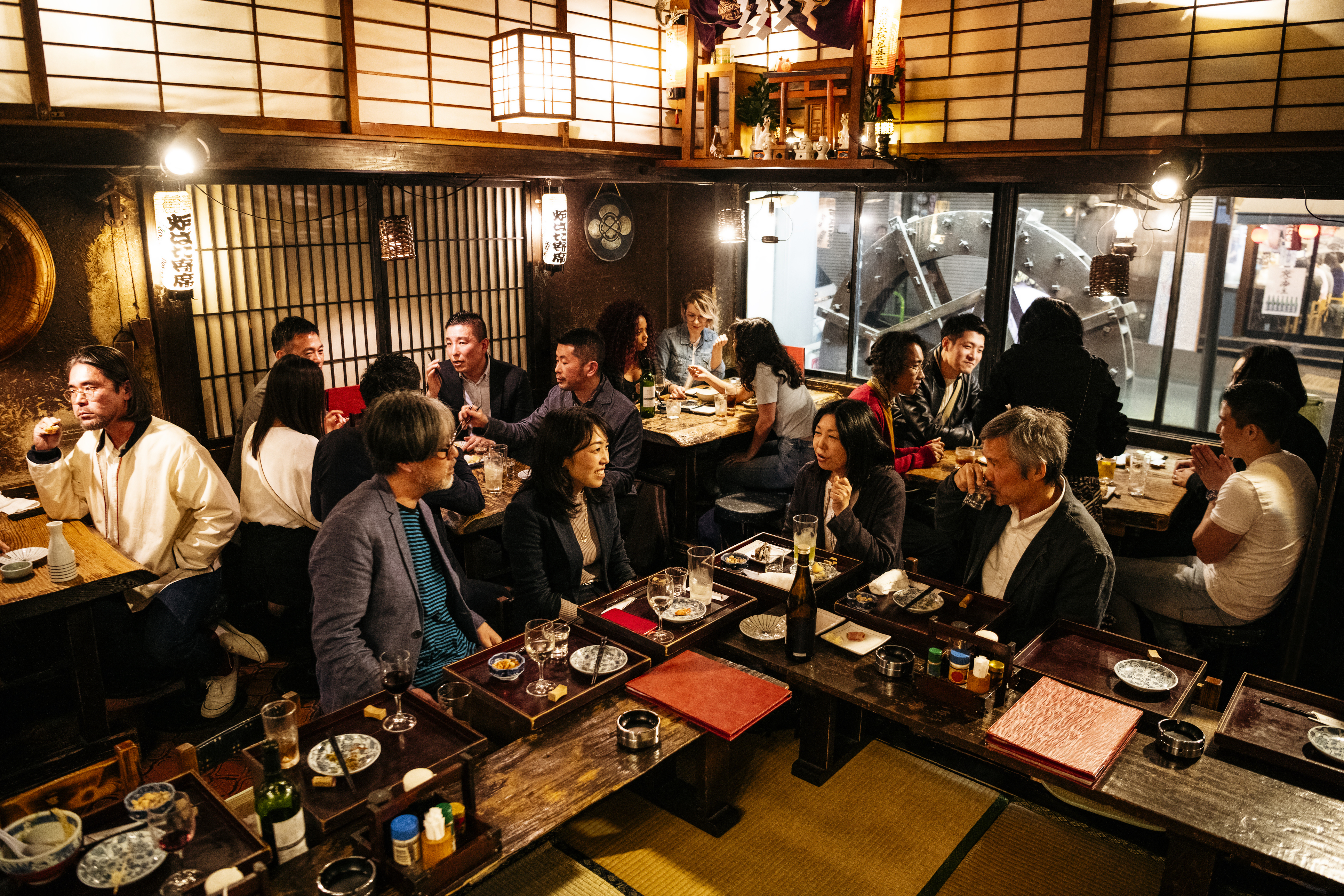
I was a complete novice in what I was about to experience, but as a relative newcomer to Japan, it was a great opportunity to learn about a slice of Japanese culture that was previously hidden from me. With my Japanese friends leading the way, we entered a rather non-descript multi-story building located in an area of town known for its night life. Each floor hosted several business establishments and we chose one that didn’t particularly seem to stand out among any of the others, except that it was obviously well-known to my more experienced friends. We were about to enter what is known as an izakaya.

Translated literally, izakaya (居酒屋) means “stay-saké-shop,” so it is basically a place to consume alcoholic beverages. However, an izakaya is much more than that as it has more resemblance to a British pub where food is served and people gather for social interaction. Sometimes these izakaya are called an akachōchin, or “red lantern” as the proprietors traditionally hang decorative red paper lanterns outside to attract attention. Upon entering the establishment, customers are often seated on the floor at low tables placed on tatami mats, a traditional bar or at western-style tables and chairs. The busier izakayas may also offer a tachi nomi style of dining, which means to drink while standing.

Everyone is customarily given an oshibori or wet towel when they are seated to wipe their hands and this is usually accompanied by a small appetizer such as edamame (soybeans). Food items are generally shared by everyone at the table and many izakaya specialize in certain food choices such as yakitori (grilled chicken on sticks), sashimi, tofu, grilled fish and even french fries (called “furaido poteto”). Some of the larger izakaya offer the dining option of nomi hōdai (all you can drink) or tabe hōdai (all you can eat) at a set price for a determined length of time. The more innovative izakaya come with a particular cosplay theme where the staff wear costumes while waiting on customers. The word “kanpai!” is echoed often as customers lift their glasses and toast one another in merriment. Regular patrons sometimes purchase a particular brand of alcohol and the bottle is placed on a shelf with their name written on it for their next visit. Like the classic TV sitcom “Cheers” that centered on a group of regular customers at a local bar, an izakaya can be a safe place to relax where “everybody knows your name.”

Ironically, some of the purposes for attending an izakaya can also be reflected in the reasons people may attend a local church. Meeting with like-minded people for companionship, encouragement and sharing of information are some of the attractive elements of an izakaya that are usually unavailable at onerous, pressure-driven places of work. When viewed in these terms, izakaya represent for many a form of escape through shallow social interaction and the consumption of alcoholic beverages and food.

While such responses are understandable and even ordained in some circumstances (Ecc. 3:13), there is certainly much more to life. One can also make many bad choices if his or her sole objective is to merely escape from the day-to-day unpleasantries of life. Perhaps this is why the Apostle Paul advised new believers, emerging from previous dark cultural habits, to aim for something higher that would lead to more productive lives that honor their Creator. He said, “Do not get drunk on wine, which leads to debauchery. Instead, be filled with the Spirit.” (Eph. 5:18) Because God knows our name, our choices can lead to eternal blessings.

Different Deaths

 “Who can live and not see death, or who can escape the power of the grave?” Psalm 89:4

Different Deaths

Mr. Watanabe* was only 39 years old when he suddenly passed away, shocking everyone who knew him. In contrast, Mr. Suzuki’s* death at age 64 was not particularly unusual, but it shocked people for different reasons. Further details revealed that Mr. Watanabe probably died from karōshi (“death from overwork”) and the circumstances associated with Mr. Suzuki’s death classified it as a “solitary death,” or kodokushi. The common Japanese character in both of these terms for death is shi (死). It is often used in association with other characters to indicate the particular nature of a person’s demise, such as death from starvation, disease, suicide or battle.

The term karōshi, was coined in 1978 to describe the increasingly reported phenomenon of relatively young adults dying prematurely and the cause of their deaths being primarily linked to extreme overwork. Most of these individuals labored for long hours over an extended period of time with no days off until they eventually collapsed due to a combination of stress, exhaustion and poor dietary habits. Heart attacks and strokes were the most common results and many resorted to taking their own lives in desperation. Some surviving relatives began to file lawsuits against companies that were guilty of forcing impossible working conditions upon their employees. The disturbing trend of such deaths eventually came to the attention of public authorities and prompted government intervention. Karōshi hotlines were set up to offer help, laws were enacted to limit overtime and companies were educated to implement frequent health checks and better working conditions for employees. Workers were also encouraged to take their allotted days off and personal vacation time which many had previously foregone due to work pressures. 

Kodokushi, or “lonely death,” points to a different sociological problem where people become isolated from communities for various reasons and die alone in their residence with their bodies remaining undiscovered for long periods of time. This social anomaly was identified in the 1980s and came to the nation’s attention following the Great Hanshin earthquake in 1995, when thousands of elderly Japanese were relocated to isolated residences and many mysteriously started to die alone with their deaths going unreported. Further research reveals that this alarming trend is almost unique to men who are over fifty, unemployed, live isolated lives and have minimal contact with family. In some cases, the bodies of such individuals remain undiscovered for years until their bank accounts eventually become depleted, triggering a cessation of automatic payments for their rent and utilities. Toru Koremura, who operates a specialized cleaning company that deals with the unpleasant after effects from such deaths ironically commented, “Dead people have taught me how to live better.” Read the article “The Lonely End” by Matthew Bremner for a sobering account of this phenomenon.  

Regardless of the circumstances of one’s death or the cause of death, there is one common denominator of truth that is universally avoided: we will all eventually die. Some deaths may be unusually tragic, others heroic and some barely noticed, but no one is exempt. Everyone dies, but paradoxically, we generally live our lives pretending otherwise, as the alternative is too frightening. This approach explains why death is described as our ultimate enemy in I Corinthians 15:26, but the passage goes on to announce the glorious news that the power of death is eternally broken by the sacrificial death of God’s own Son (vv. 55-57). Koremura is correct in observing that we can learn much from death, but we need not fear it. I have stood before many graves and read the powerful words “Where, O death, is your victory? Where, O death, is your sting?” The answer? It has been defeated by the Cross.

*Both are fictional characters

Super Dads

“Fathers, do not embitter your children, or they will become discouraged.”            Colossians 3:21

Super Dad

The Japanese have an old saying that goes, “Jishin, kaminari, kaji, oyaji” (地震雷火事親父), which translated, means literally, “earthquake, thunder, fire, father.” The implicit concept behind this proverb is that we should fear our fathers just as we are naturally inclined to fear certain forces in nature. This was the manner in which fathers have been traditionally viewed in Japan, but the Japanese government is now determined to change this age-old perception. With this objective in mind, in 2010 the Minister of Health, Labor and Welfare launched the Ikumen Project with the purpose of cultivating a radically new father figure for generations to come.  

Over the centuries, the Japanese father’s primary role was to provide financial security for his family. In modern times, this stereotype was embodied by the salaryman (sarari-man), or white-collar worker, who labored long hours while trying to climb the corporate ladder. This commitment, of course, required extended absences from the home and, consequently, placed an unduly large burden on the mother who was left alone to raise the children and manage the household. These traditional role patterns made it very difficult for married women who wanted to develop their own careers. As a result, many women became increasingly disenchanted with such an unequal division of roles, encouraging many to delay getting married or choosing not to marry at all. Japan’s birth rate, therefore, suffered a precipitous decline, prompting the government to intervene in the form of the Ikumen Project.

The term ‘ikumen” is actually a newly coined term combining the word “ikuji” (childcare) and “ikemen” (hunk; good-looking) to capture the vague meaning of an “attractive man who does it all.” Since the English word “men” is also part of ikumen, that adds another subtle nuance to this increasingly popular expression. The Ikumen Project is basically a government sponsored advertising campaign to reinvent the role of the father. Instead of the traditional distant, workaholic dad, an image of a “new” type of father is proactively promoted through newspapers, magazines, commercials and even mangas. These fathers are smiling, handsome, caring and stylishly dressed. They are typically portrayed as happily helping with household chores and spending meaningful time with their children. Unlike fathers in the past, ikumen delight in cooking, housework and playing with their kids so the overtaxed mom can have more time for other important matters. Through a carefully coordinated campaign, ikumen have become the new super heroes in Japan as they strive to nurture the next generation of workers who will in time deliver Japan from its present economic doldrums. However, some men are starting to protest such expectations as being unrealistic and complain of “ikumen illness,” as they try to meet heavy demands at both work and at home.

The important role of the father is under siege or being redefined in many societies as mores continually change through various cultural influences. While it is taken for granted that the vast majority of fathers love their children and are filled with good intentions, it is not an easy role to consistently fill 24 hours a day, seven days a week. Perhaps the best summary in the Bible of what a dad should aim for is succinctly provided in Ephesians 6:4, where both a restriction and a responsibility are commanded. “Fathers, do not exasperate your children; instead, bring them up in the training and instruction of the Lord.” While ikumen are a carefully constructed ideal, God’s blueprint for the father is a man who strives with all his might to help his children walk in the ways of God. Such a man should be admired, not feared.

Radio Exercises

 “Run in such a way as to get the prize.” I Corinthians 9:24b

Radio Exercises

One day while on an early morning walk through the local park, I stumbled upon a random cluster of people who appeared to have assembled for a specific purpose. The group consisted of mainly older Japanese, but among them was also a smattering of middle-aged members and even a few children. Someone had brought a portable radio and placed it on a nearby bench, which was obviously the focal point of the gathering. They all seemed to be waiting for something to happen. Then at exactly 6:30am, a jaunty piano tune boomed from the radio along with the pronounced chant “ichi, ni, san…” (1, 2, 3…). Mesmerized, I watched as young and old alike proceeded in unison to move their arms, legs, heads and waists in rhythmic motion dutifully obeying the commands blaring forth from the radio. From my vantage point, they looked like marionettes on strings controlled by an invisible puppeteer. I was witnessing rajio taisō (ラジオ体操) in action.

Rajio taisō means literally “radio exercises” and it is basically a series of warm-up calisthenics that are practiced routinely across Japan on a daily basis. School children, random groups of people and even employees at many companies gather daily for this brief three-minute exercise routine designed to promote good health and community relationships. Many others opt to do the program in the privacy of their own home by tuning in to the same broadcast by NHK on either radio or TV. Recent surveys indicate that approximately 27 million Japanese participate in this scripted morning calisthenics program more than twice a week.

The concept of rajio taisō, which was an imported idea from overseas, was introduced to Japan in 1928 following the commencement of Emperor Hirohito’s reign. As part of its advertising strategy, a well-known American life insurance program had just launched the idea of mass calisthenics by sponsoring a 15-minute radio broadcast in several major cities. In Japan, this novel idea was adopted and initially utilized to improve the health and morale of Japanese soldiers. This early manifestation probably explains why similar rajio taisō programs continue to exist in formerly Japanese-occupied nations of Taiwan and China. Following Japan’s defeat in World War II, these seemingly harmless exercises were deemed to be too militaristic in nature by the occupying powers so they were temporarily banned. However, NHK radio (Nippon Hōsō Kyōkai—Japan Broadcasting Corporation) revived the custom in 1951 with some alterations under the guidance of the Ministries of Health and Education. It is now broadcast four times a day with the exception of Sunday.

Exercise is obviously a worthy goal as it promotes physical and emotional health as we seek to live productive lives for the glory of God. But there is a higher level of exercise or training that better equips an individual for something better than just athletic competitions. The Apostle Paul alludes to this in I Corinthians 9:24 where he exhorts the people of God to take their spiritual walk seriously, similar to a trained athlete competing for a prize. This daily commitment to the things of God demands training, purposefulness and discipline, just like an athlete striving to win first place in their respective competition. Like rajio taisō, both young and old can join in this worthy endeavor and the spiritual benefits are many. Ichi, ni, san

Watch this link for more information: https://www.youtube.com/watch?v=hIW2PKqwXQc

Participate in rajio taisō by while watching: https://www.youtube.com/watch?v=GM3d3QP3ylM