

Convenience Stores

“But godliness with contentment is great gain.“                               I Timothy 6:6
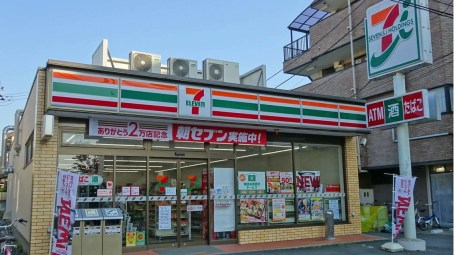
konbini2

In recent years, Japan has assimilated many English words into its vocabulary, often altering them and then pouring a distinctive new meaning into the newly created term. A prime example of this is the word “konbini,” which is a derivative of the word “convenience.” Konbini are essentially the modern variation of local mom and pop stores, which used to service most of Japan but are now rapidly moving towards extinction. Numbering over 50,000 stores in Japan, konbini are still increasing at a torrid pace and these stores are aptly named as they truly provide a convenient service to the local communities.

In America, we are accustomed to a plethora of snacks and a few basic commodities being sold where we purchase gasoline, but the konbini stands on its own, offering a wide variety of services and products within its limited space. Did you forget your lunch? The konbini offers a wide selection of both hot and cold foods, with much of it prepared on site. Do you need to pay your utility bills? Just hand over your invoice and the required cash to the person working at the register. Traveling to the airport by public transportation and don’t want to lug your heavy suitcase on crowded trains? Drop it off at the konbini, pay the fee and your baggage will be waiting for you at the airport the next day. Need some extra cash or a copy of an important document? Every konbini has its own ATM and copy machine. Is there a movie, play or concert you want to attend? Tickets for upcoming events can be easily purchased at the konbini. Need a café latte and a pastry to get you through your day? No problem. The konbini is there to serve you. The staff at each konbini are well trained and immediately spring into action whenever a customer approaches the counter needing service.

For the weary traveler seeking a pit stop or for those walking in the neighborhood, clean toilet facilities are a standard and very welcome feature. For the local patron who walks or bikes to the konbini, most of the basic essentials found in a large grocery store are kept in stock and sold 24/7. Young neighborhood children are safe on their own to purchase last minute items for a busy mom while neighbors and groups of students mingle inside or outside of the store. The konbini is increasingly playing an important role within the local community.

A word somewhat linked to convenience is the word “contentment,” which is a virtue closely associated with godliness. While the konbini provides an invaluable service of convenience to individuals and the community, its popular emergence reveals our desire for a world where everything is readily available within reach of our fingertips and in plentiful supply. Convenience is normally a good thing, but in this life we will inevitably experience inconvenience, when we lack certain items or services. If we are not on guard, this disparity between our desires and reality can subtly lead to feelings of discontentment when we are inconvenienced. Contentment, not convenience, should be at the top of our “shopping list,” as it reflects a faith in God to provide whatever we need, whenever we need it. Such a perspective is not for sale at the local konbini, but is worth all we have to offer.

Fake Food

“My food,” said Jesus, “is to do the will of him who sent me and to finish his work.”            John 4:34

fake food samples2

Unable to read the menu, I managed to coax the waitress to the front of the restaurant through a series of charades and broken Japanese and pointed to what I wanted to order. Enclosed in a glass case was the entire food repertoire appealingly displayed, but none of it was real. Known as shokuhin sampuru (食品サンプル), or “food samples,” these are exact replicas of dishes offered by the restaurant.

The production of these food models has evolved into an art form over time and it was initially pioneered in the late 1920s by Japanese artisans who used paraffin for their creations. These fake food samples enabled customers to order food without the use of menus, but over time, paraffin proved to be an inadequate medium as the colors slowly faded when exposed to heat or sunlight. Now constructed using a synthetic resin called polyvinyl chloride, these shokuhin sampuru can last indefinitely. This improvement in technique has unwittingly hurt the fake food industry so it has tried to expand its market outside of Japan.

There is a great deal of craftsmanship required to produce these fake food models, so plastic food manufacturers fiercely guard their trade secrets to protect their share of the market. Models are often custom tailored to the individual menus of each restaurant, which makes them quite expensive. Most customers are unaware that the plastic food they casually survey behind the glass typically cost the proprietor of the restaurant several thousand dollars. Their attention is naturally focused on satisfying their hunger and hopefully, something on the menu will fill that need.

What then is real food? Ask a man, and he might say steak and potatoes. Ask a vegan, and they might say quinoa and kale. Ask a Japanese, and they might say rice and fish. But when Jesus was asked a similar question, He gave a totally different reply. He said: “My food is to do the will of him who sent me and to finish his work.” Obviously, Jesus was not talking about real food, or even plastic food, but a different kind of nourishment that is essential for our spiritual well-being. While we are certainly flesh and blood beings that need physical nourishment, our spiritual natures require sustenance as well. We were created to fill the purposes of God, not just fill the physical desires or needs of the flesh. As Jesus famously expressed in the Sermon on the Mount, we are to hunger and thirst after righteousness (Matt. 5:6). We need both physical and spiritual food as part of a healthy diet. At the same time, we need to be cautious of the many “fake foods” that can entice us away from the greater things of God. Bon appetit!

Obligatory Chocolate

“I am obligated both to Greeks and non-Greeks, both to the wise and the foolish.”         Romans 1:14

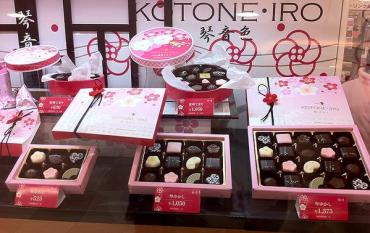
Valentines3

A beautiful arrangement of various chocolates greeted me as I walked into the store, reminding me that Valentine’s Day was right around the corner. If you thought romance was in the air, you would be entirely mistaken. What was on display is actually known as “giri choco” (義理チョコ), which means literally “obligation chocolate.” This chocolate is normally purchased by women and given to their male colleagues, casual acquaintances and others as an expression of their friendship or gratitude. Romantic feelings have nothing to do with it. Giri choco is customarily given by women to the men in their life circles to help them feel appreciated during the nation-wide celebration. But there is another sub-category called “cho-giri choco” meaning “ultra-obligation chocolate.” This is given to certain men solely out of duty because you feel trapped by social circumstances to include them.

It is important to note that giri choco is not to be confused with “honmei choco” (本命チョコ), which is “true feeling chocolate” and is normally given to husbands, boyfriends or even prospective boyfriends. Honmei choco is traditionally a higher grade of chocolate that often comes in special shapes, arranged artistically in ornate confectionary boxes and is considerably more expensive.

The subtle differences between these two types of chocolates helps the recipient to avoid getting his signals crossed and misinterpreting the giver’s intent. While men are the primary recipients of chocolate in Japan on Valentine’s Day, they are certainly not off the hook. In order to sell more chocolate, the National Confectionary Association cleverly designated March 14 as “White Day,” when men must reciprocate by giving chocolate (often white chocolate), cookies, flowers or other small gifts to the women who gave them chocolate exactly one month earlier. Obligation flows in both directions; no one escapes.

“Giri” is a very important value among the Japanese, although it can at times feel oppressive and has even been described as the “burden hardest to bear.” Obligation is certainly a lower form of motivation, but there are good and bad aspects to it that should not be confused. An example of obligation as a good thing can be found in the Bible, when the Apostle Paul gladly accepted the obligation to preach the gospel to others, not viewing it as a burden, but rather as an incredible privilege (Romans 1:15-17). But sometimes even the noblest forms of obligation can subtly morph into patterns of legalism and undermine the very freedoms Jesus purchased on the cross at great cost to Himself. The fine line separating freedom and obligation can at times be hard to discern, but God has provided His Spirit to help us distinguish these matters so that we might offer up our best to Him. After all, Jesus did not enter our world to redeem us because of obligation, but rather, out of love. That is a gift worth celebrating and imitating.

A Dangerous Morsel

“The words of a gossip are like choice morsels; they go down to the inmost parts.”                                                                                                                                                                Proverbs 18:8

Diners at the sushi restaurant admired the paper-thin slices of raw pufferfish sashimi artfully arranged before them on the platter in the shape of a chrysanthemum, while naively ignoring its potential danger. One tiny mistake by the highly trained sushi chef could result in the death of those enjoying this popular Japanese delicacy. A poisonous neurotoxin, located primarily in the liver and ovaries of the pufferfish, is 1,200 times more lethal than cyanide, with no known antidote. More than one hundred people die annually from eating improperly prepared pufferfish, known as “fugu” in Japanese.

Some fugu aficionados actually choose to dine at specialty sushi restaurants where microscopic portions of the poison are purposefully not removed by the chef so that the consumer can experience a bit of a buzz or tingling sensation. As a precaution in such cases, the chef is required to sample the sushi to verify that it is safe. Due to its deadly toxicity, the government has banned the sale of whole pufferfish to the general public and it is the only food the emperor of Japan is forbidden by law to eat in order to ensure his safety.

The Scriptures point to the existence of other dangerous morsels parallel the peculiar culinary habits of eating fugu. The Book of Proverbs compares gossip or slander to a delicious morsel that can be appealing to our sense of taste or sight, but produces deadly effects when consumed. It begins when our sinful nature tempts us to listen to the reports of others’ misfortunes or misdeeds in the form of gossip, which may or may not be grounded in truth. The ingestion of such morsels can produce deep wounds in both the listener and the person who is the center of such malicious gossip. Like a deadly toxin, it has the potential to penetrate one’s inmost being and as a consequence, destroy relationships and reputations. This is why we are instructed to put a guard on our hearts, restricting our diet to things that are true, right, holy and honoring to God. Just as there are healthy and unhealthy food choices we must make every day, gossip has harmful effects on the lives of those who choose to consume it.

Vending Machines

“Who, then, are those who fear the Lord? He will instruct them in the ways they should choose.”    Psalm 25:12

vending machine

Shortly after completing my laborious climb to the peak of Mt. Fuji, Japan’s tallest mountain, I spotted a small and very steep service road to the top. On this perilous route that was more of a path than a road, I noticed a large object slowly and laboriously being transported to the top of the mountain. Out of curiosity, I lingered to learn what could be so important. Emergency equipment of some sort? Water and food for weary travelers? Building materials for shelter from the extreme elements? The heavily perspiring workmen eventually reached the top of the mountain and removed the tarp covering the mysterious object, revealing … a Coca Cola vending machine! Only in Japan, I thought to myself.

Somehow it seemed appropriate to have a vending machine occupying one of the most iconic and yet most inaccessible locations in Japan. There are roughly 5.5 million vending machines scattered across the country, making it the highest number of vending machines per capita in the world. Vandalism is generally not a problem in Japan, so these machines can be located in very isolated situations, ready to quench someone’s thirst or satiate various other needs. Like peddlers marketing their wares to a passerby, it is not unusual to see as many as a dozen or more lined up together in some locations. Japanese vending machines offer a variety of choices and products ranging from drinks (both hot and cold), candy, rice, fruit, soup, hamburgers, ice cream, gum, noodles, beer, books, flowers, cigarettes, toys, toiletries, masks, underwear and even good luck charms. Choice and convenience are obviously the underlying values associated with the placement and plethora of these machines throughout Japan.

As we live in an age of consumerism, we are bombarded daily with possible alternatives of what to eat, wear and do. Unfortunately, this may lead us to falsely conclude that life centers exclusively on our personal preferences. Indeed, such a multiplicity of choices is generally a morally neutral transaction and benign in its consequences. However, a propensity to make decisions based solely upon our personal preferences may encourage us to leave God totally out of the equation when it comes to other, more significant choices. Like items in a vending machine, the scale of importance of these decisions can vary greatly, but they should all be based upon our reverence for God and what He deems to be important. After all, our goal in this life is to please Him, not ourselves, so our choices should reflect that value. It is therefore comforting to remember that as we take time to consult God in the myriad of options before us, He has graciously promised to instruct and guide us in such matters. Ultimately, these choices count for eternity and shape us to serve God’s perfect purposes.