
God Spoke

“In the past God spoke to our ancestors through the prophets at many times and in various ways, but in these last days he has spoken to us by his Son…”  Hebrews 1:1-2a

Emperor Hirohito

On Aug. 15, 1945 a “god” spoke. When Emperor Hirohito of Japan directly addressed his subjects for the very first time, life came to a temporary standstill around the world. Hirohito’s announcement of Japan’s unconditional surrender not only ended a war and brought peace, it ended the myth that the emperor of Japan was divine. He spoke and the world changed.

Because of this historical event, much changed in Japan as well. A new constitution was adopted and war was renounced. Democratic ideas took root in Japan and the emperor was reduced to a figurehead.  Japanese industries flourished and a new middle class rapidly emerged, resulting in a booming economy. The phrase “Made in Japan” stamped on manufactured goods was no longer derided as symbol of cheapness or inferiority, but esteemed as a mark of quality and success. Expensive vacations, quality education, designer clothes and the latest electronic gadgets could be purchased by the masses and it seemed the lone threat to a peaceful, prosperous society was the legendary Godzilla!

Certainly much changed after the emperor spoke, but in some regards nothing changed. The gods of war had only been replaced by the gods of materialism. At the same time, the traditional gods of Japan were still venerated through worship at Shinto god shelves or Buddhist altars in homes throughout the country. Japanese still made periodic pilgrimages to the local shrines or temples for various life events and relied on good luck charms for success and protection. An occasional church could be found in obscure corners of Japan, but temples and shrines remained the symbol of the country and retain a strong grip on Japanese hearts. Everything has changed and yet nothing has changed.

However, according to the Book of Genesis, everything changed when the God of the Universe spoke and the world as we know it came into being. The sun, moon, stars, oceans, dry land, vegetation, life and mankind itself were created by the mere voice and directive of God. But God didn’t stop there. He continued to speak to the hearts of men, as the author of Hebrews explains, calling them to repentance and into a relationship with Himself. This God who speaks ultimately provided eternal reconciliation to mankind, not through superior weapons of war and powerful armies, but through the death of His Son. This ultimate act of love and sacrifice brought eternal change to the world. Through the cross, God offered peace, not just between men, but more importantly, between God and man. The Living God has spoken, and hopefully, people in Japan and around the world will listen.
Unseen Danger

“For we are not fighting against flesh-and-blood enemies, but against evil rulers and authorities of the unseen world,”                                      Ephesians 6:12a (NLT)

radiation monitor

A shroud of silence hung eerily over deserted streets, homes, businesses, schoolyards and other public places that once bustled with activity. Outside of a few lonely security guards wearing protective clothing, there were no normal signs of life. No people, no pets, no stirring. Wherever we looked, nature appeared to be taking over each vacant town as greenery and wildlife seemed to be flourishing unchecked by human interference. It was as if all human life had been squeezed out of the area by an invisible, deadly force. Temporary gates now barred entrances to every street and driveway.

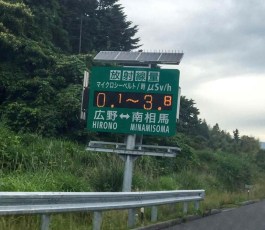
Entering the vicinity, we passed massive dumps filled with radioactive waste and radiation monitors posted along the road flashed cryptic numbers warning us of unseen dangers. We were driving through the Fukushima radiation exclusion zone that had once been the thriving home of 150,000 inhabitants. They had been suddenly forced to flee following the Great East Japan Earthquake of March 2011 and the resultant tsunami that compromised the local nuclear plants.

The radiation exclusion zone was initially off limits to everyone, but several years later, it was now possible to drive through portions of the formerly forbidden region. With the passing of additional time, residents were eventually allowed to return to designated areas that were declared safe for human habitation. As part of a massive decontamination effort, a literal army of government workers had laboriously scrubbed down the more effected areas of those previously deserted towns and even removed thousands of tons of radioactive topsoil and vegetation. The nuclear reactors were also decommissioned and together, the resultant cleanup attempts had served to lower some of the radiation markers. However, despite these large scale endeavors, the majority of the local residents were understandably hesitant to return to their homes and businesses. To lure them back, the government had rebuilt or reopened schools, shopping areas, sports centers, hospitals, housing complexes and offered additional financial incentives. But the scars on both the land and in people’s hearts still stubbornly remained; such wounds will likely take decades to fully heal.

Now, around the world and a couple of years later, silent city streets, daily news postings of COVID-19 related deaths and accompanying fears have an uncanny similarity to that unique experience in Fukushima. Interestingly enough, on that day when we drove through those modern Japanese ghost towns, my thoughts were drawn to other unseen dangers besides the flashing numbers on the radiation monitors. Since we live in a physical world, it is natural to become preoccupied with matters of physical safety. However, the Apostle Paul warned the Ephesian Christians (Ephesians 6:12) that ever present dangers of a different nature were potentially far more lethal. These dangers are the radioactive seeds of pride, selfishness, anger, apathy, strife, slander, lust and greed that are sown unseen by the Evil One himself, silently destroying healthy lives and communities. This form of pandemic can be far more destructive than any physical terror we might have to face in the present or in days to come. Fortunately, God has graciously provided His Word, His Spirit and His people to serve as warning monitors to assist us as we travel through life facing seen and unseen perils. Our safety and well-being are, thankfully, in His hands, but we must give heed to the warnings posted for our protection.

Firm Foundations

“Everyone who hears these words of mine and puts them into practice is like a wise man who built his house on the rock.” Matthew 7:24

Foundations4

Due to the frequency of earthquakes in Japan, a lot of attention in building construction is given to the design and materials used for foundations. Even the simplest of houses requires construction techniques that are quite different from what we normally observe in the West. In addition, they are quite labor intensive, which adds to a building’s overall price tag. Several disasters and the subsequent collapse of numerous buildings in the past prompted the government to eventually enact strict anti-seismic structural standards that are constantly upgraded as technology improves. The building codes for skyscrapers are even more stringent, employing specially designed shock absorbers known as isolators embedded throughout the structure. Such modifications are developed through detailed research and placed according to precise calculations. Because of these many innovations, Japan is now considered to be among the world’s leaders in earthquake-resistant technology.

Of course the research behind all of this progress and the special materials and labor used to erect these buildings significantly raises construction costs. This has tempted some unscrupulous companies to take illegal shortcuts. The most famous of these scandals came to light in 2005 when it was discovered that the Aneha Architectural Design Company had falsified earthquake design calculations, violating numerous building codes in order to cut expenses. Hidetsugu Aneha admitted that due to pressure from developers, many of his building designs intentionally concealed potentially catastrophic defects, solely for the purpose of saving investors money. As a result, several newly constructed hotels were abandoned and many condominium owners had to vacate their recently purchased residences due to safety concerns. Many of these empty structures still stand as a dubious testimony to the dishonesty and greed of man.

Foundations are important. Therefore, Jesus used this subject as a powerful illustration at the conclusion of His famous message known as the Sermon on the Mount. After Jesus initially taught the gathered crowd some of God’s kingdom values known as the Beatitudes, He then proceeded to elaborate on these concepts through addressing the subjects of persecution, hypocrisy, reconciliation, retribution, pursuit of wealth, worry, judging others and the importance of prayer. Jesus then concludes His talk by using the analogy of two foundations and two builders. One builder was described as being “wise” and the other was depicted as being “foolish.” The wise builder constructed his house on rock which withstood the destructive elements of nature. However, the foolish builder used sand under his foundation, which ended in disaster under the same climatic elements. The intended lesson was that we must carefully choose what we build our lives upon. To put it simply, a life not built upon God’s values invites destruction. But those who deliberately center their lives around God’s Word and heed His instructions, reap eternal life. To avoid a disaster, choose your foundation carefully.

Family for Rent

“Whoever does God’s will is my brother and sister and mother.”   Mark 3:35

rental family

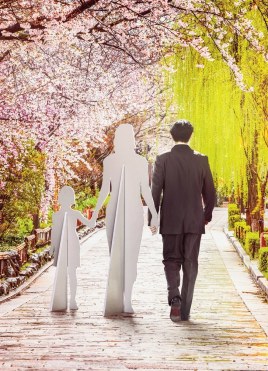
Without warning, Mrs. Tanaka’s* husband left her a year ago and consequently, she struggled to move forward with her shattered life as a young, single mother. She felt abandoned and longed for someone to lean on, and her young daughter needed a father figure in her life. In addition, the kindergarten where Mrs. Tanaka was hoping to enter her child was more inclined to accept children of married couples. Determined to get help, she contacted a professional rental family agency or rentaru kazoku (レンタル家族) to provide a substitute father.

Mrs. Tanaka’s case is not unusual. Estrangement, illness, abuse and death can leave huge gaps within families. Therefore, a new industry has sprung up in Japan to fill these needs. Actors and actresses are hired out by agencies to clients like Mrs. Tanaka to temporarily stand in as substitute parents, spouses, friends or coworkers at one-off social events like weddings. Depending on the situation and need, they may fill a designated role for extended periods of time. For example, an elderly woman may periodically want a substitute grandchild to take out shopping. A bride-to-be longs for a substitute father to walk her down the aisle in her dream wedding. A businessman estranged from his family might rent a part-time wife and child to ease his loneliness. A single woman with marriage-obsessed parents may temporarily rent a fake boyfriend or fiancée to escape their unwanted pressure. The list of social situations lending themselves to recruiting suitable substitutes is surprisingly quite extensive in a society that tends to emphasize appearance over substance.

A single actor can actually play multiple roles in several families at the same time as part of their profession, but it can be extremely difficult to keep personal feelings in check in every situation. However, these role players are instructed to do their best to promote positive outcomes in each assignment and ideally, eventually make themselves redundant in the client’s life. Of course, client dependency is a possible hazard in the family rental business as the customer may desire more from the fabricated relationship than the rental person is able or willing to provide.

The creation of the rentaru kazoku industry is an achingly sad testimony of the many genuinely hurting people who long for healthy, satisfying relationships, which of course is not a problem restricted to Japan. Real families and friends can inevitably disappoint us, so it is only natural to turn to substitutes or other inadequate alternatives to ease our pain. Such wounds are not easily eradicated, but God has offered an amazing life-giving, life-healing relationship through His Son. Jesus welcomes us in our brokenness in a broken world and promises to receive us like a beloved family member if we turn to Him and seek His will. There is no pretense in this relationship and no fees are charged as membership into this exclusive family was purchased at the cross. While God does not promise to redeem all of our earthly relationships, acceptance into His forever family is an amazing gift that is not to be taken lightly. It also means we are members of an extended spiritual family that can bring tremendous comfort in this life and in the world to come.

*Fictitious name and situation

Lost & Found

“if they find lost property…they must return…the lost property they found.”             Leviticus 6:3-5

Wasuremono

Following my usual morning routine, I inserted money into the local vending machine to purchase a can of ice coffee before heading off to work for the day. Later on, I realized to my chagrin that I had neglected to retrieve my ¥900 change, worth almost nine dollars, from the vending machine. When I returned home almost twelve hours later, I checked the vending machine out of curiosity and was pleasantly surprised to discover my money still waiting for me untouched in the coin return. Such stories are actually not unusual in Japan.

Everyday throughout the country, literally thousands of misplaced wallets, cell phones, keys, bikes, umbrellas, bags etc. are turned in by conscientious Japanese at collection points conveniently located in stores, train stations and local police boxes. These lost articles, known as “wasuremono” (忘れ物) or literally “forgotten item,” are dutifully collected, tagged and stored for a period of time with the hope of returning them to their rightful owner. Signs are posted everywhere reminding people not to forget personal items which still inevitably occurs, but fortunately, the Japanese are extremely diligent in returning other people’s property. Amazingly this widespread practice of honesty extends even to lost money, where roughly 75 percent of the cash that is reported as wasuremono is eventually returned to the owner. The Japanese typically keep detailed records of such matters so they know that 26.7 million items were reported to police departments in 2015, highlighting the widespread extent of this practice and also the challenge of practically dealing with it.

Although many are not aware of it, Japan actually has a “Lost Property Law” prompting citizens who find lost items to turn them into the police. Even though they are entitled to a proportional reward from the owner, most people would decline any remuneration if it was offered to them. In cases where the owner is not located within three months, the finder is entitled to keep the lost article as a variation of the more traditional “finders keepers” approach. The question naturally arises as to why Japanese are so diligent in this practice of returning misplaced items when compared to many other cultures. The most likely answer is probably rooted in the moral education commonly taught and practiced in schools and then reinforced in countless ways on the public consciousness.

Many Japanese would consider keeping a lost item to be the moral equivalent of stealing, which aligns closely with scriptural teaching on this topic (Leviticus 6). The concept of “lostness” actually taps into a deep, yet central theological theme pointing to our need for a Savior. In Isaiah 53:6, the whole of mankind is described as sheep that “have gone astray,” wandering away from the purposes and heart of God, their Shepherd. This theme is reiterated in other passages and powerfully illustrated by Jesus Himself through three parables in Luke 15 where He uses the analogy of a lost sheep, a lost coin and a lost son to teach about His Heavenly Father’s passion for restoring what is lost, namely us. In fact, Jesus identifies this as being the very purpose of His coming to Earth when He said “For the Son of Man came to seek and to save the lost” (Luke 19:10). This means that God has by grace enacted His own “Lost Property Law” when He offered His Son on a cross, so that we might be restored to God, our rightful owner. As the famous line of the hymn “Amazing Grace” so aptly phrases it, “I once was lost, but now I’m found.

Funerals & Finality

“Just as people are destined to die once, and after that to face judgment.”                   Hebrews 9:27

Funeral

As I joined the immediate family in the crematorium, I was rather surprised when chopsticks were solemnly distributed to everyone present. “We’ve just eaten,” I thought to myself. “What are these for?” My question was soon answered as the partially cremated remains of the deceased were wheeled into the room and we proceeded to carefully place the bones, from the feet up, into the provided urn. I stole an irked glance at my more experienced senior coworker who had inexplicably neglected to communicate this unusual detail in Japanese funeral procedures.

Japanese funerals are, from beginning to end, quite different from the traditional funeral practices of the West. The differences are partially due to the Buddhist emphasis which views death as merely a passage from one life to the next, but that does not account for all the peculiarities of Japanese funeral procedures. For example, the deceased receives a new Buddhist name (called a kaimyō) in Chinese characters, with the length of the name determined by the amount of money donated to the temple. All participants at the ceremony are expected to wear black and bring a gift of money in a special envelope. In many funerals, the attendees will be expected to offer incense to the dead and make prayers on his or her behalf to assist them in their journey. The casket is surrounded by flowers, traditionally chrysanthemums, with a large picture of the deceased loved one prominently displayed. When the ceremony is over and the priest has finished the chants from a Buddhist sutra, each participant will then place a flower in the casket before it is closed. Only the immediate family and a few close friends will accompany the body to the crematorium, usually riding together on a chartered bus.

Instead of the American practice of embalming, the corpse is placed on dry ice and minimal makeup is applied to restore a natural appearance. The body is dressed in formal attire and placed in a simple wooden casket since it too will be incinerated. In some cases, a few favorite items of the deceased will be placed in the casket to accompany the deceased on their final journey.

Japanese funerals are actually comprised of many different ceremonies, beginning with a wake, known as an otsuya, or “passing of the night,” followed by the main funeral and then a final service at the crematorium. The funeral urn is then taken home and eventually placed in the family grave or some other alternative. Depending on local customs and the desires of the family, smaller ceremonies are subsequently conducted by priests on the 7th, 49th and 100th days commemorating the deceased’s death. Escalating costs of funerals coupled with shrinking families and a rapidly aging population are creating significant changes in the funeral industry, altering some of these traditional practices.

While ceremonies related to death vary from culture to culture, every funeral serves as a stark reminder of our finiteness in light of eternity. We should certainly mourn the loss of a loved one, but such events also provide a valuable opportunity to reflect on our own status before a Holy God who holds our destiny, both in this present life and the one to come, in the palm of His hand. In the West, we are embedded in a culture that worships at the altars of youth, beauty and strength, but all of these things will eventually fade, no matter how much we strive to deny it. This is why the author of Ecclesiastes wisely said: “It is better to go to a house of mourning than to go to a house of feasting, for death is the destiny of everyone; the living should take this to heart.” (7:2) While all of us would certainly prefer to dwell in the house of feasting, it is in the house of mourning that we are more prone to ponder on the deeper things of God, including His defeat of death through the power of the cross.

My Protection

“Blessed are all who take refuge in him.”    Psalm 2:12

omamori2

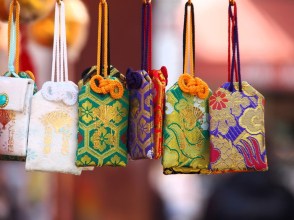
During my first taxi ride in Japan, I couldn’t help but notice an elaborate ornament swinging back and forth on the rear view mirror as the driver navigated through traffic. I later learned that this and a whole array of similar talismans or amulets are called “omamori” (お守り), which literally means “protection.” These small good luck charms are typically made from paper or wood and are usually protected inside an ornate bag along with a written prayer. They are sold at temples and shrines throughout the country with the promise that they will bring good fortune or protection to the bearer, but cynics largely view them as a clever means to raise money.

These omamori can be spotted on bags, hanging in cars, attached to various objects and are even used as cellphone straps. They come in many shapes, sizes and colors and different ones are advertised to possess different powers. Some offer businessmen success in the financial realm while others promise students a good outcome in their test scores. Other omamori guarantee general prosperity, protection from evil, happiness, traffic safety, good health, fertility, and a happy love life. The simple thought behind such charms is that the power and strength of the gods is somehow invested in these brocaded bags so they are not to be opened, as the blessing could be released and thereby lost.

It is generally understood that the shelf life of an omamori is only good for one year, which means a replacement must be purchased, conveniently bringing additional revenue to the local shrine or temple. These “expired” good luck charms must be properly disposed of, usually by burning, preferably at the place they were originally purchased. Eager to grab a share of the enormous profits in the good luck industry, it is now common for stores to sell generic omamori featuring the images of Hello Kitty, Mickey Mouse, Snoopy and other popular characters.

The search to obtain protection from harm or to procure good fortune is a natural inclination of the human heart. Such a quest can take many forms and it is often shaped by our culture, circumstances and worldview. But all such attempts to manipulate one’s personal future are doomed to failure because they are based on the false assumption that we are in control of our own fate. We all seek desired outcomes in life that avoid pain and bring pleasure, but it is arrogant to think that we are in control of such matters, or that we possess the discernment to always know what is actually good or bad for us. Our uncomfortableness with the unpredictability of life is in fact a reminder that we should seek protection and refuge in God, who is our only omamori, or real source of protection. Everything else is a mere trinket.

Safety First!

“The Lord is my rock, my fortress and my deliverer; my God is my rock, in whom I take refuge, my shield and the horn of my salvation, my stronghold.”  safety first   Psalm 18:2


安全第一, meaning “Safety First,” is a sign commonly posted near construction sites and other locations where accidents could possibly occur. To make safety a priority in these areas, a small army of traffic directors are regularly employed throughout Japan to help drivers, bicyclists and pedestrians safely navigate around potential hazards. Since Japan is also a land frequented by natural disasters, emergency drills are routinely conducted to guide people in their response in the event of an earthquake, tsunami, typhoon, landslide or volcanic eruption. Evacuation routes and emergency shelters are clearly identified in every city and roles are assigned to minimize the loss of life when there is an emergency. To increase public awareness of such matters, September 1 is designated as Japan’s Disaster Prevention Day (防災の日). On that day, emergency drills are practiced across the country in memory of the Great Kanto Earthquake of 1923, when over 100,000 residents in the Greater Tokyo area perished.

Despite this propensity towards natural disasters, Japan is surprisingly acknowledged to be one of the safest countries in the world, largely due to its diligent efforts to promote safety. Currently, only New Zealand and Iceland rank higher as “safe” destinations for tourists. This focus on safety is to be commended, particularly for those living in Japan, but the pursuit of safety to the exclusion of other worthy goals can possibly invite dangers of a different sort. For example, Japan also has a reputation as being a risk averse society, where any danger or possible unwanted results are avoided at all costs. While such an approach to life is certainly understandable, it can foster an unhealthy imbalance and lead to consequences that are equally unsatisfactory.

As Christians, we are called to live somewhere in the middle as we flesh out life on a daily basis. Unfortunately, there are no guaranteed outcomes when it comes to such matters as raising children, standing against the tide of a self-centered culture or sharing one’s faith in an ungodly world. Our natural inclination is to seek safety and security, but God has not promised such things to us in this life. Instead, we are called to walk by faith in a world fraught with dangers and uncontrollable results. While we must take reasonable measures to protect ourselves from undue harm, our safety, reputations, families and jobs are ultimately in God’s hands. He is our Rock, our Fortress, our Refuge and our Shield. We would be unwise to place our trust in anything else.