

“…though you are evil, know how to give good gifts to your children…” Luke 11:13a

Christmas was over for our children, but they soon reaped an unexpected, additional windfall with the onset of the Japanese new year. They would receive otoshidama. Over the next few days, several of our Japanese friends kindly gave our kids small envelopes of money that they were to use for themselves. This custom supposedly dates back to the Edo period (1603-1868), when wealthy individuals gave mochi (rice cakes) to others at New Year’s and presented some as offerings at the local Shinto shrine. These treats were called “toshidama” (年玉), which meant literally “rice ball/treasure.” Over the course of time, these presents of mochi were replaced by small toys to children which eventually were substituted by cash gifts.
Otoshidama is typically given to school age children by immediate relatives, close family friends and in some cases, even neighbors. The amount of money generally varies upon the nature of the relationship with the child and the child’s age. For example, elementary children average ¥2-3,000 ($20-30) per envelope, junior high kids ¥5,000 and high school students ¥10,000. The money is traditionally placed in a miniature envelope called a puchibukuro that is decorated with a popular anime figure, cartoon character or an animal matching that year’s Chinese zodiac. Only new bills of money are included and it is neatly folded into thirds before being placed in the envelope.
Surveys indicate that most children use these monetary gifts to purchase video games, manga, or toys, but some set part of the money aside for future purposes. It is considered impolite for children to open the puchibukuro in front of others and the majority of parents carefully monitor the otoshidama to ensure it is spent appropriately. We certainly did so with our children as we helped guide them with purchases that were usually beyond our limited resources and we also encouraged them to save a portion of this special new year money.
In teaching His disciples about prayer, as recorded in Luke 11, Jesus used the simple analogy of a father giving good and appropriate gifts to his children to drive home an important point. Just as parents are eager to provide for their children, God delights in providing for us as His children. Therefore, we are to confidently approach our Heavenly Father to ask, because it will be given to us. To seek, and we will find. To knock, and the door will be opened to us (v.9). However, like children entrusted with sizable sums of cash, we are also obligated to use the bountiful gifts of God wisely, in line with His eternal purposes and life-giving guidelines. We may not get all the toys and trinkets that this world has to offer, but God places into each of our envelopes exactly what we need. Otoshidama come only once a year and end altogether when one reaches adulthood. But the gifts of God come unexpectedly in many forms and without limit. Every day is a new year with God.


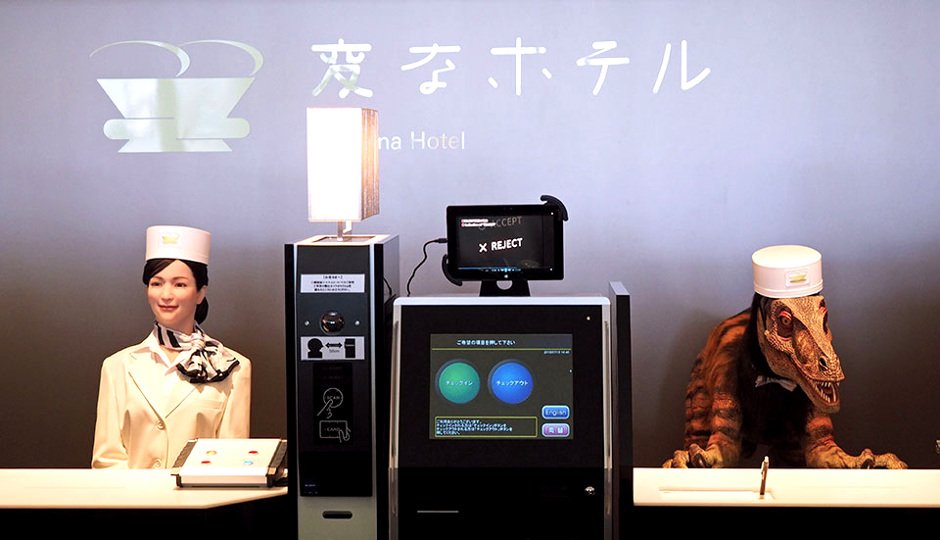 Opened in 2015, the Henn Na Hotel chain in Japan (translated “Weird Hotel”) is largely staffed by robots. Upon entering this unique hotel, guests are initially greeted in the lobby by a female-faced android, followed by a multilingual dinosaur proceeding to check them in. Another robot soon appears to transport the guest’s luggage to their assigned room and a face recognition system conveniently unlocks the door. An assortment of other robots fill various work roles in this impressive semi-automated lodging. However, half of the robotic labor force was recently “laid off” as some of the robots tended to create more work rather than reduce it. Innovation to improve the efficiency and capacity of robots continues to progress, not just within this hotel chain, but throughout Japan where robots are increasingly utilized.


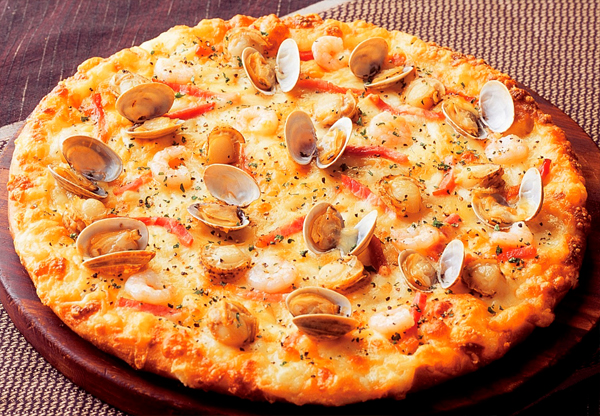 After a few months in Japan, I was starving for some familiar American junk food. McDonald’s (pronounced “Makudonarudo”) was already fairly common at that time, but my friends and I were particularly hungry for pizza. When someone informed us that there was a Shakey’s Pizza located downtown that offered an all-you-can-eat buffet for only ¥500, we immediately organized an expedition to satisfy our pent-up cravings. Upon arrival, we strategically located ourselves at a table closest to the serving counter so we could be the first to pounce on the fresh pizzas as they were brought out. A couple of minutes later, when a pizza was pulled out of the oven and sliced up for the waiting customers, we sprang into action. To our dismay, the main topping on this particular pizza was corn, so we reluctantly returned to our table to wait for a better offering. Shortly afterwards, we leapt into action when another pizza was served, but this one was covered with octopus tentacles so again, we took a pass. The next one looked like a cheese pizza which we hungrily scooped up, but one bite revealed the “cheese” was actually mayonnaise! We were eventually rewarded with some pizzas that looked and tasted more familiar, but that day served as a reminder that common foods back home may be mixed with some uncommon ingredients in Japan.

