
Leading Meetings

Moses’ father-in-law replied, ‘What you are doing is not good.” Exodus 18:17

Leading meetings

As I surveyed the blank faces of the people assembled around the room for a church meeting, I wondered how to proceed. It was challenging enough leading a meeting in a language not my own, but it was also evident that the rules of engagement within a Japanese context were very different. Obviously, I would need to employ a different leadership style that did not come natural to me. Moments earlier, in what now seemed like an eternity, I had presented a topic, asked some questions, and then waited for a robust discussion that was apparently not forthcoming.

In retrospect, after many years of experience, I can more readily identify the different dynamics that typically characterize a Japanese meeting. I’ve also come to understand that the bedrock value that seems to drive many of the distinctives of such meetings in Japan is the primary objective of striving to achieve a clear consensus among all the participants. With this in mind, it is helpful to remember that people are often reluctant to express individual opinions that might interfere with the unstated, but overarching goal of unity. Therefore, the leader must be careful not to unnecessarily single out people and put them in an awkward position while encouraging them to voice their opinions. Meetings also tend to be rather lengthy in Japan because it often takes an inordinate amount of time to arrive at a consensus and ensure that everyone is in agreement. To facilitate this process, the leader must be careful not to interject their opinion inappropriately or prematurely, but instead, allow sufficient time for diverse views to emerge among even the most reluctant participants. The leader’s wife or husband must also exercise restraint in the same manner as their opinion is considered inseparable from their spouse’s and could carry a disproportionate amount of weight in the discussion.

Ambiguity, which is a commonly used pattern in Japanese conversation, makes communication even more complicated in a group setting, particularly if the leader is not a native speaker. Of course, copious minutes that capture the details of each meeting must be duly taken and preserved as an integral element to this whole process. Through trial and error, I also learned that the most essential factor towards a successful outcome in any given meeting is probably the concept of nemawashi (根回し), which means literally “going around the roots.” This refers to the process of transplanting a tree where one must carefully dig around the roots to enhance sustained growth once it has been relocated. Sometimes nemawashi is loosely translated as “laying the groundwork.” When the concept is applied to meetings, it means that the leader will discretely talk to influential people on the committee prior to meeting for the express purpose of gathering their support and feedback.

Effective and godly leadership in any cultural situation can be difficult to define and even harder to implement. In the Old Testament, Moses struggled with this objective. Some helpful advice from his father-in-law (Jethro) to compensate for his limitations as a leader is recorded for our benefit in Exodus 18:13-26. But the Scriptures are full of examples of leaders who did not lead well and the one fault they all have in common is their failure to purposefully lean into the wisdom of God. Skillful leadership certainly requires sensitivity to the nuances of the culture in which it is exercised, but a godly leader never forgets that “every decision is from the Lord.” (Proverbs 16:33b) As we are called into leadership roles, we must constantly seek to allow God the freedom to do the work of nemawashi on our heart before we attempt to lead others.
Local Pubs

“That each of them may eat and drink, and find satisfaction in all their toil—this is the gift of God.”

 Ecclesiastes 3:13

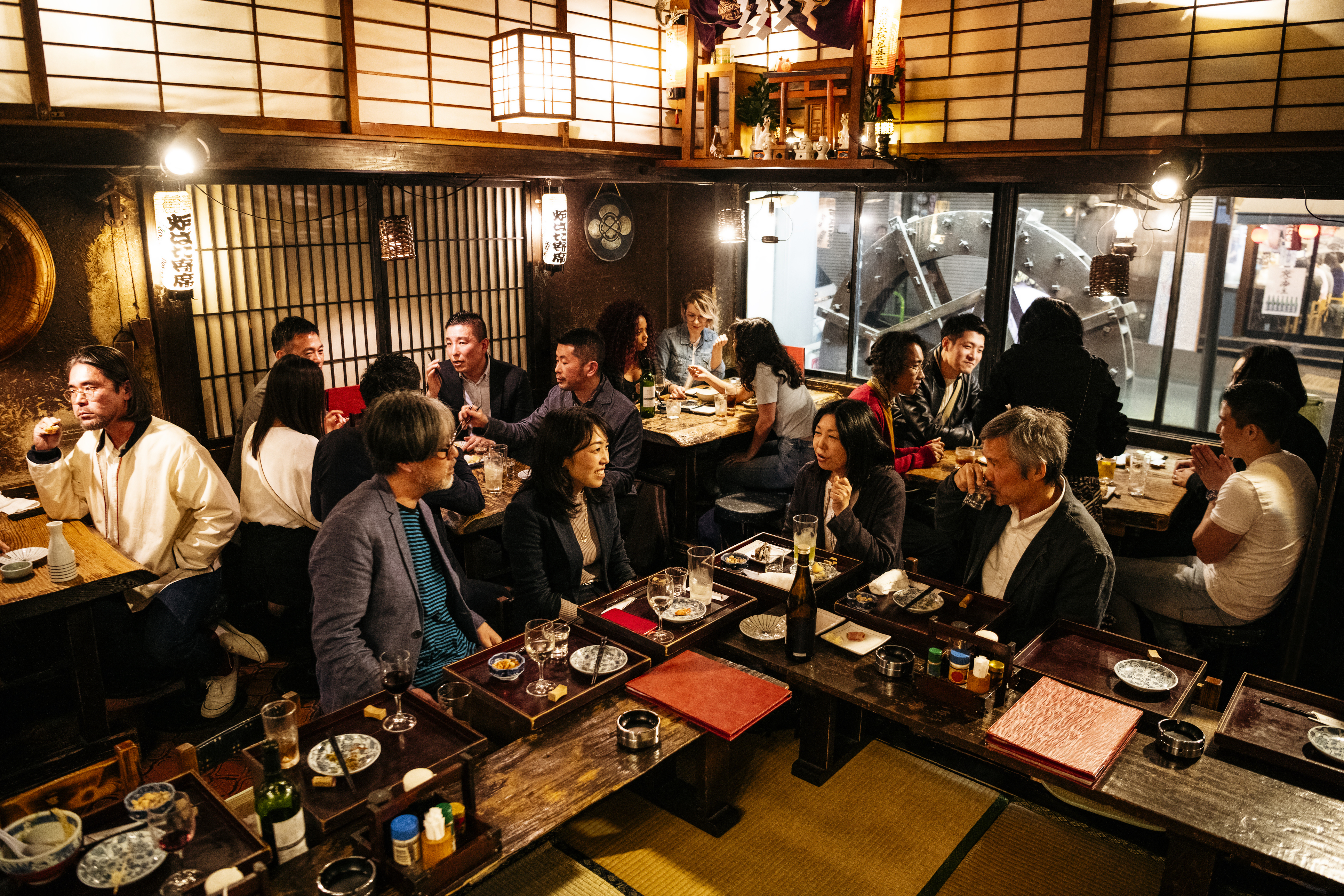
Co-workers relaxing in Japanese restaurant with food and drink

I was a complete novice in what I was about to experience, but as a relative newcomer to Japan, it was a great opportunity to learn about a slice of Japanese culture that was previously hidden from me. With my Japanese friends leading the way, we entered a rather non-descript multi-story building located in an area of town known for its night life. Each floor hosted several business establishments and we chose one that didn’t particularly seem to stand out among any of the others, except that it was obviously well-known to my more experienced friends. We were about to enter what is known as an izakaya.

Translated literally, izakaya (居酒屋) means “stay-saké-shop,” so it is basically a place to consume alcoholic beverages. However, an izakaya is much more than that as it has more resemblance to a British pub where food is served and people gather for social interaction. Sometimes these izakaya are called an akachōchin, or “red lantern” as the proprietors traditionally hang decorative red paper lanterns outside to attract attention. Upon entering the establishment, customers are often seated on the floor at low tables placed on tatami mats, a traditional bar or at western-style tables and chairs. The busier izakayas may also offer a tachi nomi style of dining, which means to drink while standing.

Everyone is customarily given an oshibori or wet towel when they are seated to wipe their hands and this is usually accompanied by a small appetizer such as edamame (soybeans). Food items are generally shared by everyone at the table and many izakaya specialize in certain food choices such as yakitori (grilled chicken on sticks), sashimi, tofu, grilled fish and even french fries (called “furaido poteto”). Some of the larger izakaya offer the dining option of nomi hōdai (all you can drink) or tabe hōdai (all you can eat) at a set price for a determined length of time. The more innovative izakaya come with a particular cosplay theme where the staff wear costumes while waiting on customers. The word “kanpai!” is echoed often as customers lift their glasses and toast one another in merriment. Regular patrons sometimes purchase a particular brand of alcohol and the bottle is placed on a shelf with their name written on it for their next visit. Like the classic TV sitcom “Cheers” that centered on a group of regular customers at a local bar, an izakaya can be a safe place to relax where “everybody knows your name.”

Ironically, some of the purposes for attending an izakaya can also be reflected in the reasons people may attend a local church. Meeting with like-minded people for companionship, encouragement and sharing of information are some of the attractive elements of an izakaya that are usually unavailable at onerous, pressure-driven places of work. When viewed in these terms, izakaya represent for many a form of escape through shallow social interaction and the consumption of alcoholic beverages and food.

While such responses are understandable and even ordained in some circumstances (Ecc. 3:13), there is certainly much more to life. One can also make many bad choices if his or her sole objective is to merely escape from the day-to-day unpleasantries of life. Perhaps this is why the Apostle Paul advised new believers, emerging from previous dark cultural habits, to aim for something higher that would lead to more productive lives that honor their Creator. He said, “Do not get drunk on wine, which leads to debauchery. Instead, be filled with the Spirit.” (Eph. 5:18) Because God knows our name, our choices can lead to eternal blessings.

Inside/Outside

“Here there is no Gentile or Jew, circumcised or uncircumcised, barbarian, Scythian, slave or free, but Christ is all, and is in all.”  Colossians 3:11

Inside-Outside (2)

In the natural world, it is common for similar species to congregate together for purposes of security and survival. There are quite a variety of names for these different animal clusters. For example, a group of cattle is called a “herd.” Wolves gather in a “pack.” A collection of lions is referred to as a “pride.” Fish swim together in a “school” and penguins huddle side-by-side in a “colony.” Birds fly in a “flock,” baboons live together as a “troop” and an infestation of caterpillars is called an “army.” Along a similar vein, the Japanese tend to identify themselves as belonging to certain social groupings that are described as being either “uchi” (内) or “soto” (外). Uchi means literally “inside” and soto means “outside.”

This uchi/soto distinction is a basic concept woven throughout Japanese society and is even reflected in Japanese language patterns. In contrast to the West, with its focus on the individual, in Japan, inter-social relations and group consciousness take a much higher priority. People generally view themselves as either uchi or soto depending on the particulars of their immediate circumstances and their self-perceived identity within a given setting.

Nowhere is this more evident nor more complex than in the workplace. For example, within a division of a company, one typically regards his or her boss as soto and everyone on their own level as uchi. This perception determines the language patterns one would use when addressing someone considered above you and therefore outside of your group. However, in the case where you are speaking to a person from another company, then you would regard all the personnel of your company as being uchi, which would correspondingly affect your mannerisms and speech patterns. The general idea is that those who are outside of your group should be honored, and those within your group should be humbled. Such patterns of perception and behavior are also evident within schools, clubs, various social circles and even within churches. Obviously, such self-classifications are not static due to ever-changing circumstances, but they do serve to provide one’s need for identity and security within a hierarchical environment.

The concept of uchi and soto is evident on a macro level as well, shaping Japan’s national perception in relation to other countries. It is therefore common practice for the Japanese to refer to themselves as “we Japanese” and all foreigners are classified as “gaijin,” translated literally as “outside person.” While this tendency towards nationalism is common throughout the world, the uchi/soto concept adds another layer of separateness that can make it even more difficult for foreigners to fully integrate into Japanese society.

Such social and ethnic distinctions are certainly not unique to Japan, as the world is rife with divisions based on numerous factors. The message of the Gospel, though, and the establishment of the early church cut across these ancient and discriminatory lines in an unprecedented manner. Even the old barriers between the Jews, or God’s adopted people, and those on the outside known as “Gentiles,” were forever broken down through the power of the cross (Colossians 3:11). More importantly, we were all outside of the grace of God, regarded as “soto,” but in Christ, we are now eternally “uchi.” This stunning change is the miracle of the church and an amazing testimony of the mercy of God.

Neighborhood News

“And who is my neighbor?” Luke 10:29b

Kairanban

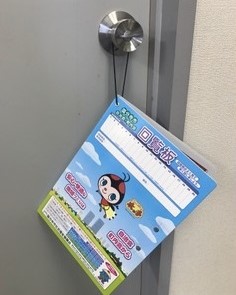
We had not lived in Japan very long before we discovered that community is an important value and good communication within the local neighborhood is considered a critical element for a healthy community. To facilitate this worthwhile objective, we paid a “voluntary” monthly fee to the local neighborhood association for the privilege of membership. This membership kept us in the information loop through a periodic circular notice folder, called a kairanban (回覧板), that is dutifully passed on from neighbor to neighbor. The contents of this folder varied each time, touching on a number of different topics. Some examples of this are local road construction news, dates for public health screenings, information on the neighborhood cleanup day, safety precaution advisories, any changes in garbage collection procedures, notification of local festivals, appeals for charities, local school news, reports of unusual criminal activity, scheduled senior events, and advertisements for local businesses. Most important of all was the routine announcement of the next neighborhood association meeting and the not-so-subtle reminder to attend.

We normally skimmed through the enclosed sheaves of papers, making sure we weren’t missing anything critical in nature, and then stamped our personal seal on it along with the date. This verified that we received the neighborhood news before passing it on to the next person on the list. Although it could be bothersome at times, the kairanban did serve as an additional reminder that we were not just a collection of individuals, but were part of a community.

Since we frequently moved, we were members of many communities in Japan over the years. The strength of our bonds within these communities varied, depending on how long we lived in a particular place, the age of our children and our time availability. In time, we increasingly came to appreciate this structured sense of belonging where neighbors were encouraged to look out for each other and personally invest in the community. We also realized that as foreigners, we were probably under the neighborhood microscope more than the typical Japanese resident. This reality was brought to our attention when a neighbor expressed her sadness at our impending departure, noting that we always put our trash out on the correct days, were diligent in our snow removal, kept our garden up and spoke politely to everyone!  This interaction confirmed what we had long suspected, that as foreigners in the neighborhood, we lived in a goldfish bowl with many people observing us. While this was somewhat intimidating, it was also reassuring that members of the community genuinely cared about us.

 In hosting his long running children’s TV show, “Mr. Rogers’ Neighborhood,” Fred Rogers always opened the show with a corny song titled “Won’t You be My Neighbor?”  Through this simple ditty and for the duration of the show, Mr. Rogers emphasized the importance of being a good neighbor. But when another man, from a different era, asked Jesus a similar question, “Who is my neighbor?” (Luke 10:29b) we are told that his real intent wasn’t to promote neighborly behavior, but rather, to justify himself. (v.29a) In response to the man’s question, Jesus proceeded to tell the famous parable of “The Good Samaritan.” (vv. 30-37) This seemingly simple story took the concept of being a neighbor to a much deeper level, revealing the compassionate heart of God and the natural inclination towards self-centeredness in man. Now that we live in the States, a kairanban is no longer delivered to our door but we still have abundant opportunities to practice community on a daily basis. The good Samaritan and Mr. Rogers serve to remind us that our love for God should be reflected in our love for others. This truth is not just a lesson for children. Won’t you be my neighbor?

Story Telling

“Then I said, ‘Here I am, I have come—it is written about me in the scroll.” Psalm 40:7

Manga

Perhaps you can guess what the following titles have in common: Bleach, Full Metal Alchemist, One Piece, Dragon Ball, Slam Dunk, Sailor Moon, Death Note, Nausicaä and My Hero Academia. If you haven’t guessed already, these are all famous Japanese manga series. Manga (漫画) are Japanese comics or graphic novels and the word means literally “whimsical or impromptu pictures.” Although the concept of manga is centuries old, the present form originated in the 19th century and is now available in a variety of genres, including adventure, comedy, drama, history, science fiction, mystery, sports and fantasy. The popularity of these Japanese comics exploded in post-war Japan and the early series of Astro Boy and Sazae-san were the initial best sellers in a rapidly expanding market. People of all ages now read these graphic novels as an increasing variety of manga series are written to appeal to diverse demographic groups.

The popularity of such simple pictorial stories has given rise to the establishment of manga cafes throughout Japan where customers leisurely sip on their drinks and enjoy the vast inventory of mangas provided for their reading pleasure. These Japanese comics are typically printed in black and white on low quality paper to make them more affordable and range from 200 to 800 pages in length. The more popular manga series are often animated into TV shows or full-length movies and several have worldwide appeal. The term “manga” is now fully incorporated into the English language to describe this unique genre of Japanese literature.

A prevalent theme in many manga is that of a hero who overcomes incredible obstacles and challenges to achieve some noteworthy objective. This common heroic motif often found in manga recently served to spur a Japanese Christian publisher to develop and produce a pictorial Bible series based on the life of Christ, entitled “Manga Messiah.”

Many hints of God’s coming Chosen One are scattered throughout another written record now familiarly known to us as the Bible. In one of Jesus’ early public appearances in his hometown of Nazareth, we are told that he stood up in the local synagogue and deliberately selected and then proceeded to read a well-known messianic prophecy recorded in Isaiah 61: “The Spirit of the Lord is on me, because he has anointed me to proclaim good news to the poor. He has sent me to proclaim freedom for the prisoners and recovery of sight for the blind, to set the oppressed free, to proclaim the year of the Lord’s favor.” (Luke 4:18-19) Upon the completion of this reading, Jesus handed the scroll back to the synagogue official and shockingly announced to the assembled audience that, “Today this scripture is fulfilled in your hearing.” (v.21)

Jesus’ journey from that point on was marked by triumph and trials and at first glance, his story seemed to end in tragedy as he followed the lonely path ordained for him by his Heavenly Father. Though recognized by few and reviled by many, Jesus heroically conquered death and sin through His selfless sacrifice on the cross. In so doing, this became the greatest story ever told that ended not at a cross, but with an empty tomb. Even better, this is no mere fanciful tale recorded by a creative mind for a new manga series. In this story, God is both the author and the principal character who achieved the supreme goal for all mankind–forgiveness of sins. That’s a story worth retelling.

Indebtedness

“And forgive us our debts, as we also have forgiven our debtors.”  Matthew 6:12

Debt2   Christmas was drawing near and as newcomers to our neighborhood, we thought it would be a nice gesture to take a gift of homemade Christmas cookies to each of our neighbors. We should have known better. Within hours of dispensing our holiday goodies, our doorbell started ringing. It was payback time. Through our unsolicited gifts, we had unintentionally obligated our neighbors to correspond in kind. Therefore, several of them responded to our meager gift by reciprocating with something of equal value. In Japan, no one wants to be put in the awkward position of indebtedness to someone else.

After many years of living in Japan, we were well aware of this value, but we didn’t think the rule would apply to a half dozen home made cookies that cost us almost nothing to produce. Instead, my wife’s cookies were received as works of art that were created through great personal sacrifice, so the principle of “kaesu” kicked in and each recipient felt indebted to match our gesture. Kaesu (返す) means literally “to return” or “give something back” to another person as there are other words that express the related concept of simply putting something back in place. In many cases, kaesu also has the underlying meaning of repaying a debt when you give something to return a favor.

Kaesu is a powerful force in Japan and accounts for much of the gift giving that is grounded more in the complex motives of obligation and duty, rather than uncomplicated generosity. The act of kaesu relieves one of lingering too long in the undesired position of being indebted to another person and serves to restores equilibrium in the relationship. This concept was vividly made real to me when I stopped one day to assist a woman who had been in a traffic accident and was desperately trying to retrieve her dog despite her own injuries. She profusely thanked me for my efforts and then I resumed my travel once the police and ambulance arrived. Less than 24 hours later, a package was delivered to our doorstep which contained some expensive cookies and a note of appreciation sent from the hospital. That was kaesu in action and a good reminder of the need for wisdom in walking the very fine line of genuinely helping people without unnecessarily placing the heavy burden of kaesu upon them. Sometimes this is unavoidable, but it is good to think through the possible repercussions of our well-intended actions.

Although the concept of indebtedness manifests itself differently from culture to culture, as a general principle, no one likes the idea of owing something to someone else for an extended period of time. Debts of both a financial nature and other forms can become a heavy burden that have the potential to harm relationships and restrict freedom. The most serious form of debt, though, is to sin against another person and God Himself. There is no simple kaesu in any culture for these kinds of deficits or transgressions. We may seek forgiveness of these debts through various means, but in the end, mercy plays a critical role in any such transaction. We certainly cannot easily erase our own personal debts and sins, but we have the power to offer forgiveness to others if we are so inclined. That is why Jesus taught His disciples to pray: “forgive us our debts, as we also have forgiven our debtors.” (Matthew 6:12) This act is a much higher form of kaesu, where something of much greater value is given without merit or any expectation of reciprocation. In any culture, that is called grace.

Japanese/English

“In the beginning was the Word…” John 1:1a

Japanese.Eng3    Japanese has a reputation for being a very difficult language for native English speakers to master, but it actually incorporates a considerable number of English words in its vocabulary. Unfortunately, many of these words are often unrecognizable. Called gairaigo (外来語), meaning literally “words from outside,” these loanwords are usually written in the special katakana alphabet that is exclusively used for adopted foreign words. All such borrowed words undergo an initial form of transformation just to fit the standard Japanese pronunciation pattern of consonant-vowel-consonant-vowel which in itself tends to elongate the original word. An example of this is the single syllable word “desk” which becomes “de-su-ku” in Japanese. In addition to this adaptation, certain English sounds are not available in the Japanese language so this invites an even further departure from the original pronunciation. A good portion of this borrowed vocabulary is also truncated and often uniquely combined with other gairaigo to form an entirely new word not normally found in English lexicons. The now internationally used term “cosplay” (コスプレ), which is used to describe the practice of dressing up as a character in a movie or comic book, was created by the Japanese using a combination of the English terms “costume” and “play.” Perhaps the following story, using a number of gairaigo terms, will serve to illustrate how the Japanese curiously incorporate English into their everyday speech.

A day in the life

I left my apa-to1 and got on my baiku2 to go shopping at the depa-to3. On the way, I stopped at the gasorinstando4 to get gas and then pulled into the local konbini5 to pick up a snack and a carton of miruku6. After parking my baiku at the station, I purchased a chiketto7, waited at the correct ho-mu8 for my train, and along with the other sarari-man9, I was careful not to sit in the designated shiruba-shito10 located in every train car. At the depa-to, I found several ba-gen11 and bought some hankachi12 for my father. In the electronic section of the store, I briefly watched a show featuring my favorite aidoru13 and then using the rimokon14, I switched channels to an amefuto14 game on the large screen terebi15. So much shopping made me tired, so I went to the food court, ordered a sarada16, drank some ko-hi-17 and munched on some furaidopoteto18 while enjoying the eakon19 as it was hot outside. On the way home, I passed many biru20 and then went to work on my pasukon21 while enjoying a cold bi-ru22.

Words are essential to effective communication no matter what language we use. This is why Jesus is called the “Word” (John 1:1) as God amazingly sought to communicate with mankind and freely offered redemption through His Son. In many ways, this form of communication seems like a foreign language to those of us who think we can earn God’s favor by our actions and efforts. Instead, God extends grace and truth through the Word, who became flesh and dwelt among us to convey God’s message of love (John 1:14) for all people. This is truly an utterance that speaks to the desperate needs of our heart in any language.

 apa-to1 (apartment)

baiku2 (motorbike)

depa-to3 (department store)

gasorinstando4 (gas station)

konbini5 (convenience store)

miruku6 (milk)

chiketto7 (ticket)

ho-mu8 (home-platform)

sarari-man9 (salary men)

shiruba-shito10 (silver/elderly seating)

ba-gen11 (bargain)

hankachi12 (handkerchief)

aidoru13 (idol-singer)

rimokon14 (remote control)

amefuto14 (American football)

terebi15 (TV)

sarada16 (salad)

ko-hi-17 (coffee)

furaidopoteto18 (fried potato-french fries)

eakon19 (air conditioning)

biru20 (buildings)

pasukon21 (personal computer)

bi-ru22 (beer

Boasting

“In God we make our boast all day long, and we will praise your name forever.”   Psalm 44:8

Boasting   Soon after our initial arrival in Japan, we were a little bewildered by some things we observed when we joined a Japanese family who had kindly invited us over for a meal. Before we even sat down to eat, the husband proceeded to demean his wife’s efforts in cooking and house cleaning. Unlike the typical American domicile, we didn’t notice any family photos capturing activities of the children or anything commemorating their individual achievements. Little mention was actually made of the children outside of our hosts’ minimal responses to our polite inquiries. We also thought it odd when they referred to their son as a “baka musuko” (stupid son). We went home that evening rather puzzled by our experience, but later learned that it is considered socially taboo to praise one’s own family.


This experience certainly cut across the grain of what we had been taught to do within Christian circles in the West, where praise and encouragement of family members is actively promoted. While it may be acceptable to directly compliment people you are close to, in Japan, it is perceived as boasting when you make such comments to others outside of your personal circle. One may have a beautiful wife, who’s a great cook, and intelligent children who excel in many activities, but it would be interpreted as bragging or arrogant to express such sentiments to others. This explains why many Japanese adopt a self-depreciating attitude and communication pattern when it comes to the accomplishments of one’s family and even employer.

This tendency to avoid self-promotion is enhanced by humble Japanese language patterns that are routinely used in certain social settings and one is expected to downplay any personal action that might have benefited others. It is quite common in Japan to give a gift when someone has done something for you, but we soon learned the appropriate phrases to be said when presenting such items are: “tsumaranai mono desu ga…” (“this is a boring, uninteresting item…”) or “sasayakana mono desu ga…” (“this is something very meager…”). There is obviously a very fine line between truth telling and false humility, but in Japan, we learned it is better to err on the latter end of the spectrum when communicating with others.

Boasting is usually associated with pride, which is frowned upon in most cultures and certainly condemned in the Bible. For example, boasting is an identifying characteristic of the beast (Daniel 7:11) who is the antithesis of all that God represents. When the Apostle Paul succinctly defines the nature of love in I Corinthians 13, he used a number of negative behaviors to describe what love is not, and among them is a propensity to boast (v. 4). Boasting about one’s own righteousness to claim good standing before a holy God is equally castigated (Romans 3:27-28) as we all stand impoverished in the presence of God because of our sinfulness.

The root motivation behind an inclination to boast is self-promotion, but there is another form of boasting that is actually encouraged in the Scriptures: the promotion of God instead of self. In taking up the topic of boasting again in the 2nd Letter to the Corinthians, Paul advises: “Let the one who boasts boast in the Lord.” (10:17) Such boasting is another form of praise as we ascribe credit to God for all His works and gifts on our behalf, instead of claiming anything for ourselves. This is not false humility, but rather, an honest declaration of who we are and what we have been given before a gracious and generous God.

Saving Face

“Do your best to present yourself to God as one approved, a worker who does not need to be ashamed.”

II Timothy 2:15

Saving Face

Like many men, I am not inclined to linger long in front of a mirror for visual inspections. However, during the long, cold winters in northern Japan when I often let my beard grow, I became more preoccupied with my face as it required more attention. Most Japanese give a lot of attention to another kind of “face” that is sociological in nature. In this usage, “face” represents the honor, dignity, status or reputation of an individual that one strives to protect or maintain at all costs. This concept is somewhat similar to what we refer to as “having a good name” in western culture.

In Japan, one can save face (menboku o tomatsu—面目を保つ), lose face (menboku o ushinau—面目を失う), give face, show face, fix face and even loan face. All of these variations are centered on the personal goal of maintaining respect or the opposite incentive of avoiding shame and humiliation. Japan’s shame culture, which is also prevalent in other parts of Asia, is perhaps the main driving force that prompts this extensive preoccupation with one’s “face.” No one wants to lose face or be embarrassed in front of others, which also motivates people to be careful to maintain the face of others. Therefore, public disagreements are often avoided as someone could lose face in such an encounter. One might refrain from asking direct questions or making requests that may inconvenience the other person. It is also generally considered socially unacceptable to publicly declare someone has made a mistake. Personal relationships and social harmony are considered to be the bedrock of Japanese society, so great care is usually taken to protect each other’s face.

Such a concern for others is commendable in many regards, but taken too far, this kind of superficial interaction can lead to potential misunderstandings and fractured relationships. In the famous song “Eleanor Rigby,” the Beatles sang of a woman who “wore a face in a jar that she kept by the door,” that somewhat reflects the common practice in Japan to put on different faces for different situations. One’s “face” then, is not just what other’s see, but what we want them to see. This projected face may not be in true alignment with the feelings and thoughts that lie underneath, which in turn, makes the art of saving face and maintaining relationships in Japan a rather complex endeavor.

Behind the efforts to save one’s personal face or reputation is often a latent desire to earn the approval of others which can unwittingly invite other negative, or even sinful outcomes. While it is good to be considerate of others, taking into account their opinions and feelings, we must be careful as to who and to what extent we empower with such control over our lives. Our efforts to save face, or not to lose face, can lead us down a dangerous path where the approval of others becomes more important than the approval of our Creator. As the Apostle Paul reminds his young protégé Timothy, there is no shame if we have the approval of God (II Timothy 2:15). This “face” requires our utmost attention and should never be placed in a jar by the door.

Minister of Loneliness

“Turn to me and be gracious to me, for I am lonely and afflicted.”   Psalm 25:16

Loneliness

Japan has a parliamentary form of government where the chief executive, known as the Prime Minister, appoints ministers to assist him in his various responsibilities. These important officials traditionally include the Minister of Foreign Affairs, the Minister of Justice, the Minister of Finance, the Minister of Defense, the Minister of Health and other well-known positions. However, on February 12, 2021, the media announced the surprise appointment of Tetsushi Sakamoto to fill a newly created cabinet position in response to recent troubling trends. In an attempt to reduce widespread loneliness, social isolation and increased suicide rates accelerated by the restrictions of COVID-19, Mr. Sakamoto now serves as the official Minister of Loneliness.

This new position is called kodoku mondai tantō kokumu daijin in Japanese, which is a rather lengthy title, but the key words in it are “kodoku” and “mondai.” Together, they mean “loneliness problem,” which is admittedly, an unusual title for a government official, but these are unusual times. Loneliness had already been identified as a growing problem among the Japanese populace in previous years, but the extreme measures recently taken to curb the spread of COVID-19 only served to hasten this harmful trend. For the first time in eleven years, there has been a rise in the number of suicides in Japan after several years of decline due to various public campaigns. In fact, more people died from suicide in one month than the total number of deaths associated with COVID-19 in all of Japan in 2020. Loneliness has also been linked to other serious health issues such as heart disease, eating disorders and mental instability to name a few. Women and the elderly have been particularly affected by recent job losses and the implementation of draconian social limitations. The prolonged depression of the Japanese economy and an alarming decline in birthrate are symptomatic of related social dysfunctions that seem to be eating away at the heart of the country. It can be said that loneliness is one of many elements contributing to these negative patterns.

While innovative government initiatives to reverse this destructive trend of loneliness are commendable, a sustainable and truly effective solution to such a deep-rooted problem lies well beyond the authority and power of political leaders. From the very beginning of time, when God created man in His own image as a relational being, He declared that “it is not good for the man to be alone.” (Genesis 2:18) Recognizing this inherent need for relationship, God created the first woman to fill Adam’s social, physical and emotional needs and through them, mankind continued to expand while living in community.

However, such communities were chronically dysfunctional because of man’s fallen state which gave way to broken and imperfect relationships. Even though mankind was created for fellowship and relationship with others, the presence or risk of pain has prompted many to withdraw and restrict their social contacts with the purpose of self-preservation. For many, this withdrawal is a deliberate choice, but for countless others, such a response has been forced upon them by circumstances not of their choosing. The end result is loneliness, which if left unaddressed, can lead to a destructive, downward spiral in other critical areas. While there are no simple remedies for such heartaches, we would be wise, like the psalmist, to turn to the Creator of man’s heart when such burdens seem too heavy to carry alone. “Turn to me and be gracious to me, for I am lonely and afflicted.” (Psalm 25:16)