
Group Photos

“I will remember the deeds of the Lord.”   Psalm 77:11a
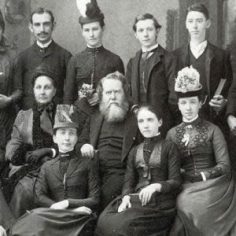
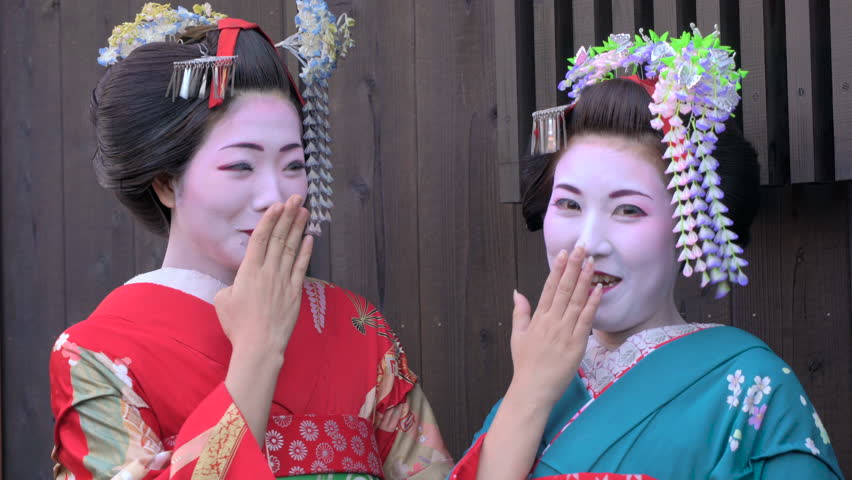
1888-Team-James-Hudson-Taylor-300x300    Long before the term “selfie” carved out a unique niche in our lexicons, the Japanese used an alternative word that eventually became a part of our personal vocabulary and history. It is called “kinen shashin” (記念写真) and it is roughly translated as “commemorative photograph.” Whenever a group assembles for a particular occasion, someone inevitably calls for a kinen shashin to be taken to commemorate the event. If you browse through our personal photo albums (back in the day when we collected physical photographs), you will discover quite a few of these kinen shashin scattered among other pictures portraying family and friends in various locations and activities.

A few of these kinen shashin are now framed and hang on our walls, or sit on our shelves, reminding us of days gone by and God’s grace in our lives. Such events may include baptisms, church anniversaries, a farewell of a coworker, training events, a church dedication, a wedding, an induction of a pastor, a graduation, conferences, the launching of a new church plant, a special concert or a group reunion. Each kinen shashin speaks volumes about God’s faithfulness throughout a jumble of times and circumstances as we walked through life and our paths crossed with those of many others.

But this is where the nuance of kinen shashin departs from our typical preoccupation with selfies. A selfie is generally photographic evidence that you did something, ate something, went somewhere or were with someone in particular. The focus is centered more on ME and things that are related to ME at the time the picture was taken. That is undoubtedly why the term “selfie” was coined to capture the essence of this particular form of photography. Of course, there is nothing wrong with this approach and we ourselves frequently take selfies. However, if given a choice, I would much rather be included in a kinen shashin, where my face may be lost in the crowd, but something much greater than me is being recorded as part of my ongoing faith journal.

In the days before the invention of cameras and cell phones, the psalmist testified “I will remember the deeds of the Lord.” (Psalm 77:11a) which is how we are prompted to respond when we view some of the kinen shashin from our past that depict various people and ministries. When we take the time to peruse through such photos, they serve to remind us of the many “deeds of the Lord” that have transpired over the years, but may have slipped from our memories. We would do well to fondly remember such people and events with thankfulness, but also with expectation for the things yet to come that we can only see now through eyes of faith. While it is sometimes unwise to linger too long in the past, we should certainly learn from it and apply those lessons to new challenges ahead. Kinen shashin can serve such a purpose as they beckon us to focus on community and God, which a selfie often fails to capture.
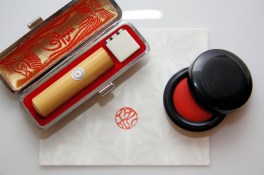
Personal Seal

“A good name is more desirable than great riches;” Proverbs 22:1a

hanko

Shortly after our initial arrival in Japan many years ago, we visited a local shop to have our personal seal or “hanko” (判子) made. We had been informed that a simple signature would no longer suffice to open bank accounts or enter into any contractual relationship, but instead, a personal seal was required for all such transactions in Japan. Once it was decided how our name would be written in Japanese, a hanko was ordered and we were soon ready for business. We used that same seal for 34 years to sign for deliveries, purchase cars, register for health insurance, enter into cell phone contracts, withdraw cash from the bank and sign rental agreements.

Each hanko, like a signature, is unique and they can be made of wood, plastic, ivory or stone. The cheaper ones cost $10-20 USD, but more expensive versions sell for a few hundred dollars. The word inkan (印鑑) is often used interchangeably with hanko, but technically an inkan is the actual stamp on the paper whereas a hanko is the physical object used to make the stamp. Only red ink is used with the hanko and businesses or local government offices generally provide the stamp pad when you are requested to affix your seal to a document. These personal seals are usually protected in specially designed cases and it is important to register your hanko with the local municipal office. The government officials will in turn provide a document called an “inkanshomeisho” (印鑑証明書) required for important transactions, as it serves to verify that is your legal seal.

All businesses, organizations and even churches have their own official seals which are carefully protected due to legal liabilities if they are misused. As the representative of our mission organization, I was required to use a specially designed square hanko to authorize certain official documents. However, our religious registration as a mission changed, which called for the creation of a new hanko that was supposed to be round in shape. This anomaly confirmed what I had long suspected… I was a square peg placed in a round hole!

The author of Proverbs highlights the importance of maintaining a good name (Proverbs 22:1) in reference to our character or reputation. A hanko is designed to represent its owner, but how do our actions, words and attitudes represent us? This is a critical question we must periodically ask ourselves since the possession of a good name is far more valuable than great riches, power or influence. A good name can last well beyond our short existence here on earth and it potentially puts us in a position to in turn, have a meaningful impact on the lives of others. In contrast to this, a person with a bad name, who manifests an ignoble character, is not only judged by men, but by God Himself who alone can accurately evaluate such matters. A hanko serves to represent us legally, but a good heart is the best indicator that we are healthy spiritually. “Let love and faithfulness never leave you; bind them around your neck, write them on the tablet of your heart. Then you will win favor and a good name in the sight of God and man.” (Proverbs 3:3,4)

Real Truth

“Do not swear—not by heaven or by earth or by anything else. All you need to say is a simple “Yes” or “No.” Otherwise you will be condemned.”   James 5:12

truth3

Every husband, who values his well-being, knows the correct answer if his wife asks him the paradoxical question: “How do I look?” The stock answer of “You look fine dear!” is certainly the safest reply, but it may not necessarily be the most truthful one. This is what the Japanese call a “tatemae” answer and they have elevated this form of communication to an art form that many foreigners find difficult to comprehend. Tatemae (建前) means literally “built in front” or “façade,” in contrast to its opposite term, “honne” (本音), which can be translated “true sound.” Honne, simply put, is one’s true feelings and opinions, whereas tatemae is what one perceives others want to hear. In this sense, honne is the real “sound” or voice of an individual, but for various social or personal reasons, the speaker deems it best to express a safer alternative, or tatemae, answer as a form of protection. This “safer” response could be intended to protect a personal or working relationship, and it is certainly common in diplomatic communication, which can lead to all sorts of misunderstandings.

Some consider the use of tatemae as a subtle form of lying, but in reality, every culture employs a certain degree of such communication to avoid needlessly hurting or offending those around us. In English, we may call a slight stretching or distortion of the truth a “white lie,” but such falsehoods often stem from selfish, ulterior motives. In contrast, the Japanese propensity towards using tatemae responses is generally far more complex. In Japan, the group usually takes precedence over the individual so there is an invisible, but widespread pressure to ensure that things go smoothly. Therefore, great care is taken not to potentially disturb harmony in relationships. Avoiding possible conflict is a high value in Japan and tatemae answers can be very useful to that end.

However, such a practice can lead to other challenges where one is constantly required to discern when an invitation, compliment or offer is genuine or just a tatemae response. This intentional vagueness is why sociologists classify Japan as being a high-context culture, meaning that communication is often implicit and relies heavily on context. Direct answers are often eschewed and ambiguous, innocuous replies like “daijoubu” (it’s all right), “omoshiroi” (interesting) or “yōji ga aru” (I have something to do) are frequently employed in everyday conversations. Most people are reluctant to state a contrary opinion and stand out, so they “build a wall” using tatemae, which serves to ward off unwanted scrutiny.

Because of people’s natural propensity to tell lies and not follow through on their promises, oath taking became a common practice to demonstrate the veracity or trustworthiness of an individual in both ancient and modern times. While culture can certainly complicate the best of intentions towards honesty, as a general principle, God’s people should be characterized as truth tellers. James exhorts (James 5:12) us to avoid the taking of oaths by simply being people of our word. This verse is almost a direct quote lifted from Jesus’ famous Sermon on the Mount (Matthew 5:33-37) where He challenged His listeners to strive for a higher, God-honoring form of communication. A “true sound,” or honne, flows naturally from a true heart that belongs to God.

Humor

“He will yet fill your mouth with laughter and your lips with shouts of joy.”     Job 8:21

humor

A hush settled over the room as I concluded my first Japanese speech. Instead of the expected response of laughter, I was greeted with dead silence. I had just made the painful discovery that Japanese humor was significantly different from American humor. Our assignment that day was to speak on a subject familiar to us, so being raised in Texas, I chose deer hunting. That was a huge mistake, and I compounded the problem even further by using a satirical approach. I thought I had cleverly titled the speech “How I Killed Bambi’s Mother,” but this vain attempt at humor was entirely lost on my horrified audience and as a result, went over like a lead balloon. My effort was doomed from the start as satire is typically not used by the Japanese and the imagery of a missionary bearing weapons to slay cute forest creatures was certainly not a laughable matter.

While the Japanese sometimes like to think of themselves as a serious people (majime ningen), they definitely have a sense of humor. Slapstick forms of humor are often seen on TV, which accounts for Mr. Bean’s huge popularity a number of years ago. Comedy team acts known as manzaishi are quite common in Japan. They are composed of a straight (serious) man (tsukkomi) and a funny man (boke) and their fast-paced jokes are usually centered on misunderstandings, puns and other verbal gags. Interestingly, many of these jocular performers are from the Osaka area of Japan, which has a reputation for comedic wit. Rakugo (落語, meaning literally “fallen words”) is another much subtler form of Japanese humor where a lone storyteller wearing Edo era clothing sits cross-legged on the stage with a paper fan as his only prop. This performer typically shares a gently amusing tale based on the dialogue of two or more characters and it is designed to entertain a more sophisticated audience.

After several failed attempts at humor when preaching in Japanese, I eventually learned that the safest form of joking was to make fun of myself using self-deprecating humor. Japanese may be unsure when a joke is intended, so they will refrain from laughing to avoid possibly embarrassing the speaker. Humor is one of the most subtle and demanding forms of communication as it requires not only refined linguistic skills, but also an in-depth understanding of the culture and one’s immediate context.

Although we know that Jesus wept as He shared the pain of those grieving Lazarus’ death (John 11:35), the Scriptures do not explicitly record that Jesus ever laughed. Yet, Jesus frequently told stories that must have provoked laughter among his listeners as He often used absurd life scenarios to highlight a spiritual truth. Laughter is often portrayed as an indication of God’s blessing (Genesis 21:6) and an expression of joy, which is listed among the fruits of the Spirit (Galatians 5:22). Of course, not all laughter is equal, as some forms are coarse and vulgar, and some so-called entertainment comes at the painful expense of others. This type of laughter does not honor God nor His creation, but the misuse of humor does not diminish our calling to live joy-filled lives that are often evidenced by laughter. True joy that comes from God can powerfully transcend our circumstances and our cultures.

Protocol Priorities

“Let us then approach God’s throne of grace with confidence, so that we may receive mercy and find grace to help us in our time of need.”        Hebrews 4:16

sports day2

We felt like royalty as we entered the large Japanese department store. All the staff and salespeople were formally lined up on both sides of the aisle, bowing low to welcome us. The store had just opened for the day, but it was standard protocol to greet the initial customers, even though we were accompanied by a dozen hyper children who seemed oblivious to the expected decorum. This experience was just one of many reminders that Japan is a country built upon proper protocol for various situations and everyone is expected to know and abide by these set guidelines to ensure a well-ordered society.

School graduations, admission ceremonies and sports days, in addition to funerals, weddings and company entrance events, are among the most common social occasions that have established procedures which everyone must dutifully follow. Underlying all of these activities are a multitude of other traditional protocols or values that facilitate smooth programs, constructive relationships and desired outcomes. Such protocols would include: being on time, extensive practice, multiple preparatory meetings, a flawlessly scripted schedule, a well-thought out seating plan, trained volunteers and recognition of all attending dignitaries. Of course, all participants would be appropriately attired and use honorific language befitting their social position. These values and expectations spill over into countless other daily routines that make Japan appear at times as one great well-oiled machine that always performs at peak efficiency.

This rigid adherence to proper protocol was once put to the test many years ago by an acquaintance at a local McDonald’s. It is customary for all McDonald’s employees working at the front of the premises to welcome every customer with a deep bow and extend a greeting of “irasshimase,” meaning, “welcome.” On this particular day, my somewhat mischievous colleague impetuously decided to exit the restaurant and immediately enter again. As expected, he received the same attention as if he had entered for the first time. Continuing with his somewhat rude social experiment, he exited and returned again, receiving the same treatment from the conscientious McDonald employees. After repeating this cycle several times, he finally gave up, realizing these meticulously trained workers could not depart from their established protocols for corporate behavior. These and other similar protocols are part of the unique underpinnings that hold Japanese society together.

In stark contrast, America can be generally regarded as a land of spontaneity and freedom where protocols can be much more easily dismissed or adapted to fit a particular situation. Perhaps because of this, the incredible significance of the invitation to approach the very throne of God (Hebrews 4:16) can be lost on a society where inviolable protocol is a lesser value. We are totally unqualified and unworthy to appear before an Almighty, Most Holy God, but the invitation is genuine and we are welcome not because of our position, but because of His grace. God’s protocol demands that we enter by means of the cross, where mercy replaces judgment and we are amazingly received as sons and daughters.

Language Bloopers

“But who can discern their own errors? Forgive my hidden faults.”             Psalm 19:12

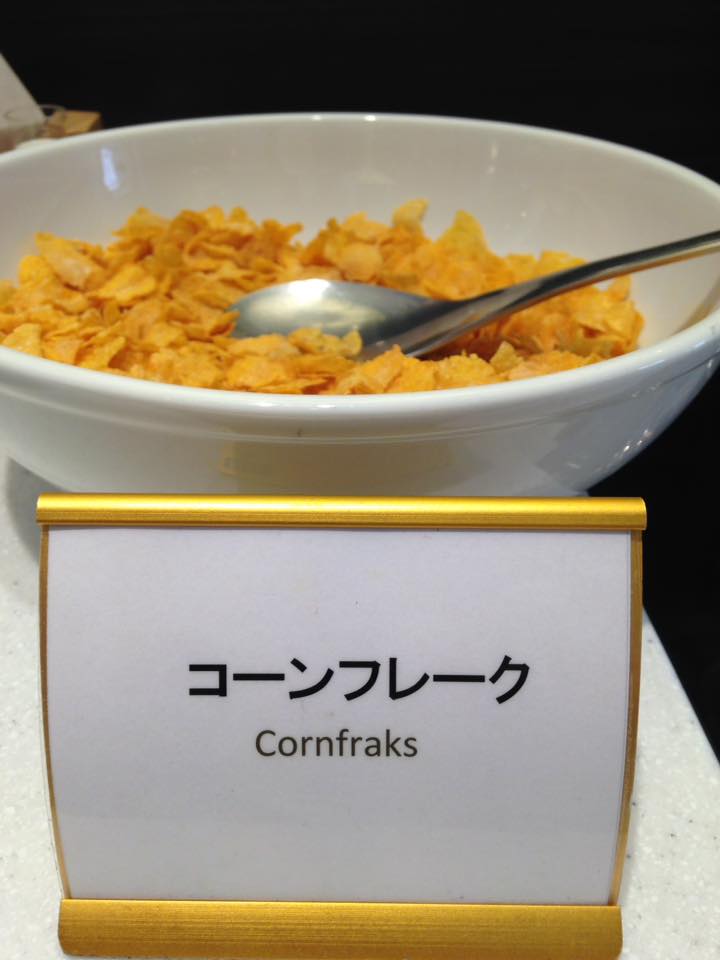
lang blooper
lang blooper2Before I traveled back to the States for a visit many years ago, the members of our Japanese church kindly made a number of decorative bookmarks (called “shiori”) for us to give out as gifts to our friends. Shiori was a new vocabulary term to me so it was not yet deeply entrenched in my language repertoire. This became rather obvious after I returned to Japan and stood up in church to announce how everyone was very appreciative of the derrieres (“oshiri”) from the church. Immediately realizing my mistake, I made a hasty retreat for the exit, but my loving colleagues would in the future sometimes refer to the infamous “bookmark incident” to keep me humble.

For anyone learning a new language, such bloopers are part of the inevitable and sometimes painful process of acquiring a totally different form of communication. Over the years, we have collected many such examples. Maybe one of the most commonly made mistakes in Japan is the confusion of the word “human” (ningen) with “carrot” (ninjin), which has led to many hilarious encounters. Running a close second to this frequent language blooper is probably the mistake of calling a baby “kowai” (scary) instead of using the intended adjective “kawaii” (cute). One time, upon hearing the news of the tragic death of friend’s relative, I sympathetically offered to pray for that person. Unfortunately, instead of asking God to comfort the family (nagusameru), I beseeched the Lord to knock off (nakunaru) the remaining members of the family. Since this blunder occurred in the course of a prayer, no one seemed to smirk, but I suspect a few were stifled with great difficulty. One of the better gaffes I recall hearing was that of a young single missionary handing out flyers at a train station. He passionately implored each recipient to “please become my bride” (oyome kudasai) instead of the well-rehearsed line “please read this” (oyomi kudasai). He did eventually get married, but probably not from using this technique!

However, sometimes the shoe is on the other foot. I’ll never forget wandering into a small town supermarket in which areas of the store were impressively labeled in English, but each sign was hilariously bungled. The meat section was identified as “MEET.” The fruit section was marked “FLUTE.” If rice was on your shopping list, you could find it under “LICE,” and so it continued as if someone had played a cruel joke on the unsuspecting storeowner. Following this gamut of bad English, one might be tempted to purchase an adult beverage in the “LICKER” section! The website engrish.com is dedicated to the collection of the butchering of English around the world, which only partially compensates for the extensive damage I did to the Japanese language in my early years. However, one of the challenges of learning Japanese is that the Japanese people are so polite that they will rarely point out even the most egregious mistakes we unwittingly force upon them.

Although language mistakes are annoying and at times embarrassing, they can usually be conveniently or politely overlooked. Such is not true of transgressions of the human heart and personal sin. We hurt others, bring shame upon our community, invite disastrous consequences, degrade ourselves and worst of all, rebel against a holy God. We may strive to live in denial of such misdeeds, but like a bad language blooper, everything will eventually come to light and much more than personal embarrassment is at stake. Perfect life fluency is not possible as we all sin, but amazingly, there is forgiveness available for every blooper imaginable. That is grace in any language.

Manner Mode

“Whatever happens, conduct yourselves in a manner worthy of the gospel of Christ.” Philippians 1:27a

manner-mode

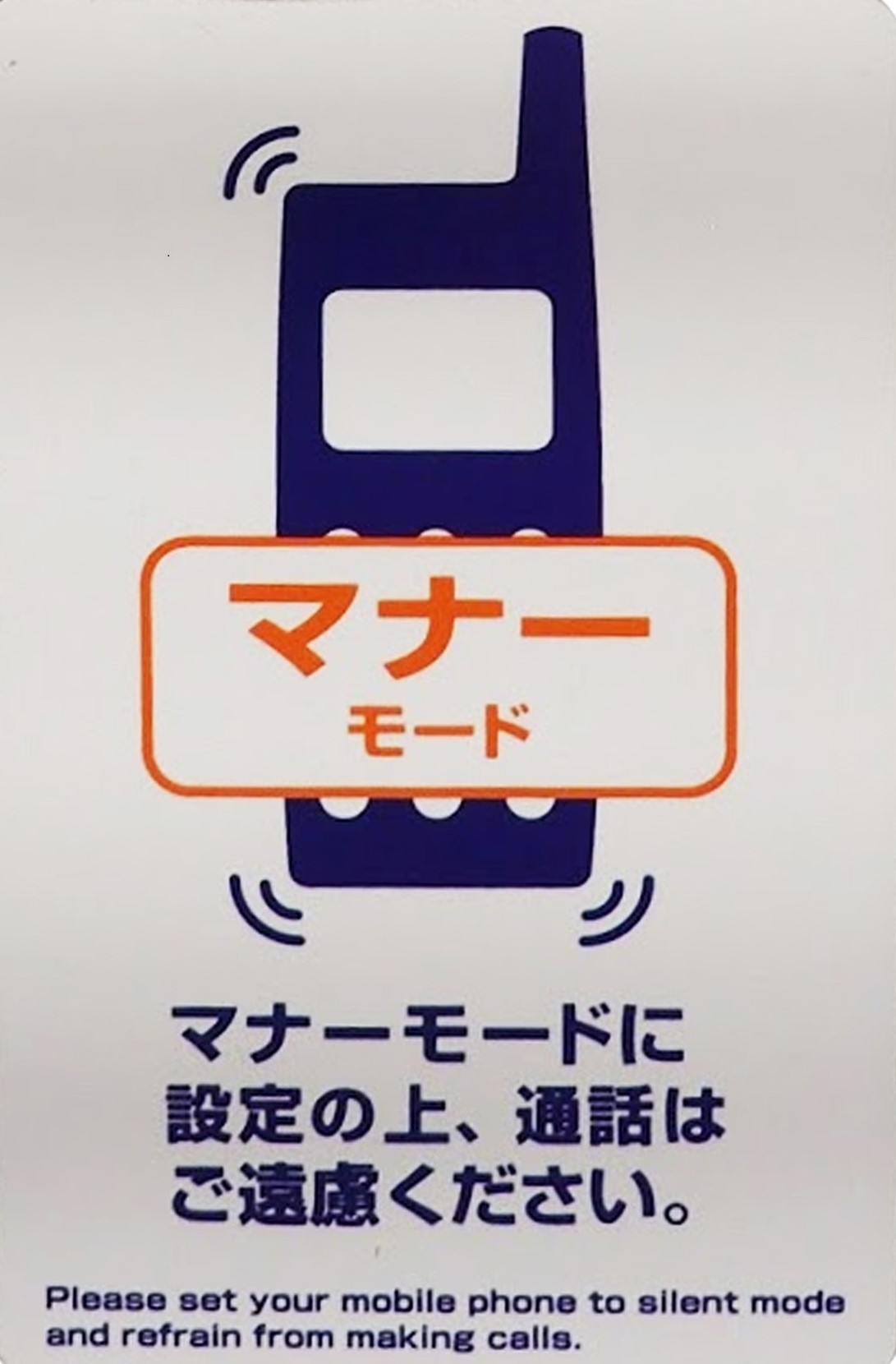
Many mothers around the world battle incessantly to instill good manners in their children, so they should be impressed to learn that cell phones used in Japan include a “Manner Mode” or “Māna Mōdo” (マナーモード) button. Unfortunately, these same mothers will be disappointed to discover that pushing this particular button doesn’t eradicate all poor behavior by the user. However, it does prevent one’s phone from ringing or making other distracting sounds once it is activated. Passengers on public transport are frequently reminded through announcements and signs to put their phones on māna mōdo to avoid disturbing others. Loud talking, ringing phones and audible music are quietly frowned upon by those nearby, so everyone is expected to exercise good manners in such situations. While almost all the passengers are typically engrossed in their own cell phones, no one uses them for talking while riding on the train as it is considered to be very rude behavior.

Good manners in Japan come in many different forms. For example, returning to the theme of train etiquette, priority seating is provided in every train car for the elderly, handicapped and pregnant mothers that should be strictly observed. Passengers waiting to get on a train are also expected to dutifully line up in an orderly fashion on the station platform and allow people to disembark before attempting to board. When riding an escalator, it is good manners to stand on the left side so others in a hurry can move past you. If you are dining with others, it is considered impolite to pour your own drink. You must also refrain from picking up food from a common plate using the end of the chopsticks that you use for eating. Below are some other cultural blunders to avoid:

  • Don’t eat or drink while moving around.
  • Avoid chewing gum in the company of others.
  • Try not to blow your nose in a public setting.
  • Resist using your car horn unless absolutely necessary.
  • Avoid pointing at others or objects.
  • Don’t treat another person’s business card with disrespect.
  • Refrain from public displays of affection.

Every culture has it peculiar lists of do’s and don’ts that subtly demand our adherence, but sadly, many Christians mistakenly import such a simplistic approach to their spiritual walk. The Christian life, when viewed in such terms, is reduced to a mere list of rules that focuses on the prohibition of certain behaviors. History teaches us that many of these ideals of Christian “manners,” fall by the wayside over time, only to be replaced by other rules that will in turn eventually give way to a new set of injunctions.

While rules are certainly necessary, and there are several lists of obvious sins laid out in the Bible, the whole concept of what constitutes “good manners” spills over into gray areas that are not so easily defined. As citizens of earthly kingdoms, we must be mindful and respectful of cultural manners, but as citizens of a heavenly kingdom, we are bound by a higher set of “manners” that must not impinge upon the nature or intent of the gospel. Rather than rules, the chief characteristic of the gospel is grace, which should be our life māna mōdo.

Yellow Tiles

“I will lead the blind by ways they have not known, along unfamiliar paths I will guide them; I will turn the darkness into light before them and make the rough places smooth.”  Isaiah 42:16a

Yellow Tiles

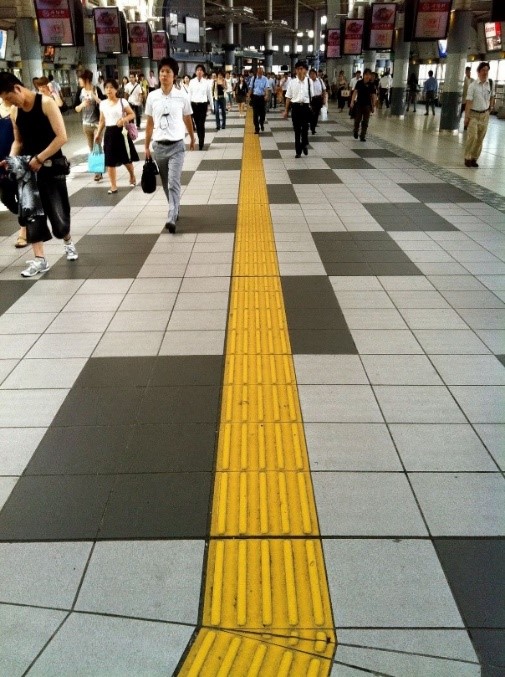
New visitors to Japan are initially puzzled by the bright yellow lines of tile that often line certain streets and intersections. They are even more common near train and bus stations. These lines are technically known as “tactile ground surface indicators” (TGSI); in layman’s terms, they serve as a hazard guide for the visually impaired.  These special tiles are designed to be used by blind people as a means to navigate crowded public places by feeling the texture of the tiles with the help of a cane or through the soles of their shoes.  Differences in the tiles help to indicate directions and potential hazards.  The bright yellow color also serves as a useful reminder to others to be considerate of those who may be visually handicapped.

A closer examination of the tiles reveals that there are two major varieties. One has straight raised lines and the other type has raised circular bumps. Tiles with straight lines indicate it is safe to proceed forward in the direction of the lines. However, when one encounters tiles with bumps, it is a warning to stop or to proceed with caution. Some form of obstruction or potential danger like an intersection, stairs or a train platform edge typically lies beyond this type of tiles. In addition to the yellow tiles, many intersections in Japan play set songs or sounds to indicate which direction is safe for crossing. Braille signage is also quite common for the visually impaired.

When one observes these tiles, it is only natural to recall the classic movie, “The Wizard of Oz,” where Dorothy and her traveling companions are instructed to follow the yellow brick road to reach the Emerald City, where all their problems will be resolved. While none of those famous characters were visually impaired, the purpose of the yellow bricks was the same as Japan’s yellow tiles… to help travelers arrive at their intended destination without incident.

Most of us do not need yellow tiles to aid us in our daily travels, but in a spiritual sense, we are all visually impaired. It is certainly a good thing to be aware of the physical handicaps of others and take measures to assist them, but more importantly, we must acknowledge our own blindness to the things of God that can potentially lead us down paths of destruction. From the Bible, we know that the nation of Israel had turned its back on God and in its blindness, fell into sinful thinking and behavior that invited the wrath of God. But thankfully, God also cares for the spiritually impaired and took extreme measures to assist them… He sent His Only Son Jesus, to die on a cross, in order to save them and us from eternal destruction. In this manner God “will lead the blind by ways they have not known, along unfamiliar paths…” (Isaiah 42:16a). God Himself became our “yellow brick road” to deliver us from harm. An eternal city awaits those who travel upon it.

God Spoke

“In the past God spoke to our ancestors through the prophets at many times and in various ways, but in these last days he has spoken to us by his Son…”  Hebrews 1:1-2a

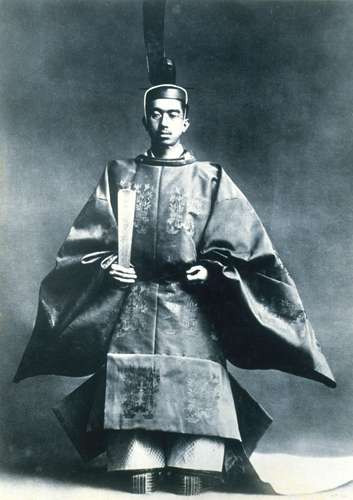
Emperor Hirohito

On Aug. 15, 1945 a “god” spoke. When Emperor Hirohito of Japan directly addressed his subjects for the very first time, life came to a temporary standstill around the world. Hirohito’s announcement of Japan’s unconditional surrender not only ended a war and brought peace, it ended the myth that the emperor of Japan was divine. He spoke and the world changed.

Because of this historical event, much changed in Japan as well. A new constitution was adopted and war was renounced. Democratic ideas took root in Japan and the emperor was reduced to a figurehead.  Japanese industries flourished and a new middle class rapidly emerged, resulting in a booming economy. The phrase “Made in Japan” stamped on manufactured goods was no longer derided as symbol of cheapness or inferiority, but esteemed as a mark of quality and success. Expensive vacations, quality education, designer clothes and the latest electronic gadgets could be purchased by the masses and it seemed the lone threat to a peaceful, prosperous society was the legendary Godzilla!

Certainly much changed after the emperor spoke, but in some regards nothing changed. The gods of war had only been replaced by the gods of materialism. At the same time, the traditional gods of Japan were still venerated through worship at Shinto god shelves or Buddhist altars in homes throughout the country. Japanese still made periodic pilgrimages to the local shrines or temples for various life events and relied on good luck charms for success and protection. An occasional church could be found in obscure corners of Japan, but temples and shrines remained the symbol of the country and retain a strong grip on Japanese hearts. Everything has changed and yet nothing has changed.

However, according to the Book of Genesis, everything changed when the God of the Universe spoke and the world as we know it came into being. The sun, moon, stars, oceans, dry land, vegetation, life and mankind itself were created by the mere voice and directive of God. But God didn’t stop there. He continued to speak to the hearts of men, as the author of Hebrews explains, calling them to repentance and into a relationship with Himself. This God who speaks ultimately provided eternal reconciliation to mankind, not through superior weapons of war and powerful armies, but through the death of His Son. This ultimate act of love and sacrifice brought eternal change to the world. Through the cross, God offered peace, not just between men, but more importantly, between God and man. The Living God has spoken, and hopefully, people in Japan and around the world will listen.

Traffic Mirrors

“’For I know the plans I have for you. ‘declares the Lord, ‘plans to prosper you and not to harm you, plans to give you hope and a future.’”                        Jeremiah 29:11

Curved Mirror

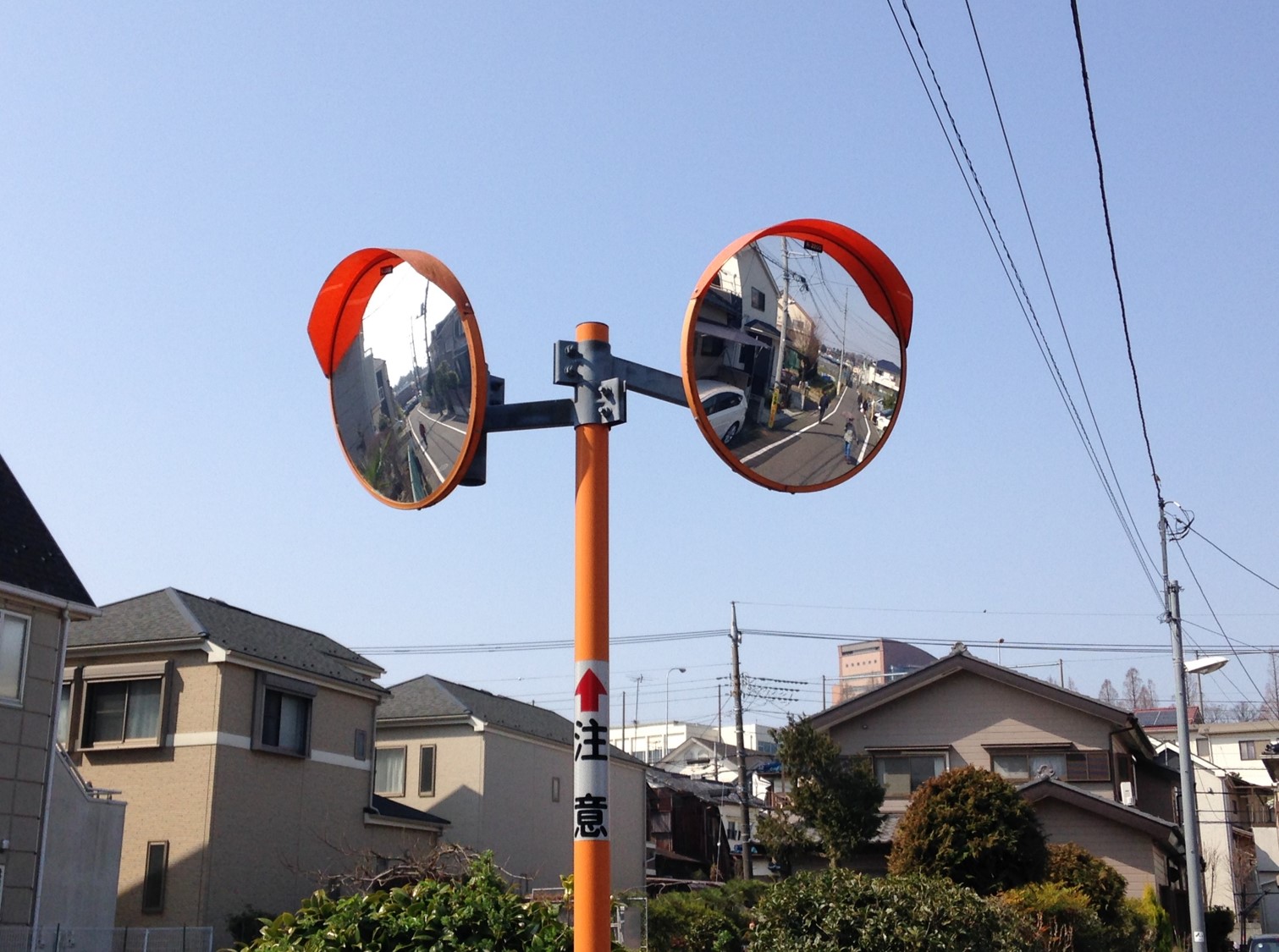
The urban sprawl of Tokyo has grown slowly over the centuries on top of an ancient network of roads, hilly terrain and even encompasses over a hundred river and canal arteries. Many of Tokyo’s streets were originally little more than footpaths and presently bear more resemblance to a wide sidewalk or an alley rather than a conventional thoroughfare. These minor roads snake through residential areas and many of them are reduced to a single lane, allowing passage for only one car at a time. On top of this, they are generally fraught with numerous curves, severely limiting vision of what lies ahead. This makes navigation quite challenging and even dangerous at times as drivers can’t anticipate oncoming cars, bicyclists and pedestrians.

Because of these difficult conditions, Japanese traffic engineers have developed and implemented an ingenious, yet simple device to help facilitate safety. It is called a “kābu mirā “(カーブミラー), which is basically a large convex (curved) mirror mounted at the top of a pole. These special mirrors enable drivers to literally see around the blind corner or sharp bends in the road to determine if it is safe to proceed. We relied on these mirrors daily when bicycling or driving to the office from our home and I’m sure they prevented countless accidents for us and many others.

Unfortunately, we don’t have the luxury of such mirrors to help us navigate the inevitable unknowns of life. There are no kābu mirā that reveal the coming of major health problems, employment setbacks, relationship breakdowns, financial challenges or natural disasters such as the recent COVID-19 pandemic. As a result, our lives often seem to be unpredictable, chaotic and without purpose as we feel victimized by one crisis after another.

But this is not what the Bible teaches. The God who created life is depicted time and time again as the same God who knows, sustains and directs our lives and the affairs of this world (Psalm 139:1-18). God reassures His own people of this truth while they were living in exile in a foreign land as a result of their disobedience. “’For I know the plans I have for you. ‘declares the Lord, ‘plans to prosper you and not to harm you, plans to give you hope and a future.’”  This verse is not a promise that all their problems will immediately disappear, but rather, an offering of hope in the midst of despair. That hope is not placed in the possibility of coveted changed circumstances, but instead, in the very person of God. A God who loves us. A God who will do what is best for us. A God who reigns above the forces of evil and calamities that sometimes seem to dominate this world.

God has a plan for the nations and He has a plan for us. That plan is good. But saints of old were only provided glimpses and hints of how those plans would unfold. Like us, they could not see beyond the curve in the road, so they just continued to drive forward in faith. Fears of turmoil, dire consequences and impending economic collapse currently dominate the news cycles and social media, but as people of faith, our well-being and future are not dependent on the affairs of this world. Therefore, we would do well to emulate the Psalmist and pray in this way: “Search me, God, and know my heart; test me and know my anxious thoughts. See if there is any offensive way in me, and lead me in the way everlasting.” (Psalm 139:23-24) If God is visible in your kābu mirā, that is all you need.