
Big Cleaning

“Wash away all my iniquity and cleanse me from my sin.” Psalm 51:2

大扫除(中国传统民俗之一)_搜狗百科

A major end of year ritual for many Japanese is “ōsōji” (大掃除), which means “big cleaning.” It involves a thorough cleaning of one’s residence, a practice that has obvious practical benefits and has quasi spiritual origins. In ancient times, according to Shinto beliefs, it was considered important to purify one’s home of clutter and dust in order to welcome the kami or local gods with the coming of a new year. This annual ablution represents a hopeful beginning for the next year with the removal of any accumulated dirt and negative energy remaining from the previous year. During our early years in Japan, it was customary to observe neighbors cleaning their windows, beating the dust out of carpets draped over laundry poles and dragging tatami mats and futons outside to air in the sun. Although hidden from view, we surmised that many of these same neighbors were also dutifully scrubbing the inside of their houses from top to bottom.

The traditional practice of ōsōji has declined somewhat in recent years, but the term has expanded to include other “big cleaning” activities. For example, it is quite common for schools to promote periodic ōsōjis to give the school and school grounds a solid cleaning, deploying students and teachers for a substantial portion of the labor. Everyone is expected to pitch in and help. Neighborhoods routinely host fall and spring ōsōji events to clean up local parks and public areas. On these designated days, an army of residents assemble at the appointed time to pull weeds, trim bushes, pick up trash, rake leaves, sweep sidewalks and take on any menial task that helps beautify their immediate area. This activity also serves to promote a sense of community and provides an opportunity to build positive relationships with one’s neighbors. Businesses and churches also schedule such cooperative cleaning days as an unstated responsibility for all those whose lives center upon those respective facilities.

The Japanese have a high value on hygiene and cleanliness that encourages them to generally embrace the tradition of ōsōji and its various manifestations. However, probably only a few of the participants are aware of the ancient spiritual aspects that once shaped this now common practice. We ourselves implemented the custom of ōsōji at our organizational headquarters and at the churches where we served. Besides the obvious objective of improving and cleaning one’s immediate environment, we came to equally appreciate the esprit de corps it often fostered.

The concept of “big cleaning” has very important spiritual overtones throughout Scripture, in both prescribed ceremonial practices and the state of one’s heart before a holy, sinless God. Such cleaning frequently includes the nuance of purification, where the primary objective is not just physical, but spiritual in nature. Even a cursory reading of the Old Testament reveals that although there are many physical purification rites expected of God’s people, the ultimate objective of these ceremonies was to nurture a pure heart for God that produced a holy pattern in one’s life.

But here is where a huge dilemma presents itself. No one is clean and there is no available ceremony through which one could become truly clean. The author of Proverbs (20:9) drives this point home when he declares, “Who can say, ‘I have kept my heart pure; I am clean and without sin?’” The obvious answer to this question is “no one.” This means that all those rituals were not instituted as a means to an end, but rather, to reveal our critical need for a “big cleaning” of our hearts that only Jesus could provide. – the ultimate ōsōji.

Bentō Boxes

“In vain you rise early and stay up late, toiling for food to eat…” Psalm 127:2a

Bento box

My generation has made its fair share of contributions to American culture and one of these was the advancement in lunchbox décor. With the invention of the television, the bland monochromatic colors of previous lunchboxes gave way to colorful depictions of popular TV shows and cartoons. For example, I vividly recall my Lone Ranger box accompanying me to the school lunchroom everyday where it competed with the Jetsons, Davy Crockett, Superman, Yogi Bear and a host of other beloved characters portrayed on other kids’ lunchboxes. However, the boring contents of my lunch, which consisted primarily of a PBJ or a bologna sandwich, some carrot sticks, an apple and a thermos of milk remained relatively unchanged. Unknown to me at that time, on the other side of the world, the Japanese had already developed a separate lunch box culture centuries earlier. It was called an obentō.

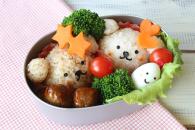
An obentō is an individual-sized portion and well-balanced meal designed for easy transport and consumption. It consists of a starch such as rice or noodles, a protein (meat, fish), some kind of vegetable and, often, a fruit side dish. It traditionally includes a set of chopsticks and comes in both disposable or reusable containers that are divided into smaller compartments. The more durable boxes are sold in many forms ranging from expensive hand-crafted lacquerware to plastic cutesy boxes in the shape of trains or a favorite anime character. The actual term, bentō (弁当), is derived from the Japanese word for “convenient” and is often prefaced with an “o” used in honorific speech patterns.

These Japanese lunch boxes are sold throughout Japan in convenience stores, train stations, grocery stores and specialty bentō shops. The general cost of a bentō is often less than US $5, but there are pricier versions that include more expensive or larger amounts of food. Japanese wives and mothers are generally responsible for preparing their children’s or husband’s bentō, which is a task they take quite seriously. Among mothers, there is an unspoken competition in designing and creating a visually attractive and nutritious meal. The ingredients are often prepared the night before and then assembled in the morning. Great care is given to include certain color combinations and many mothers take the extra time to shape and decorate food to resemble people, flowers, animals or favorite cartoon characters to the delight of their children. In Japan, the contents of a child’s lunch box, fair or not, is often viewed as a reflection of their parental care, which can put considerable pressure on some mothers who are overly preoccupied with such expectations.

As an adult, I now better appreciate my mother’s selfless labor in preparing my lunch every day, but I don’t think she put the same amount of effort into it as we witnessed in Japan. Preparing lunches is one thing, but the pressure to daily provide and prepare food for one’s family is no small feat that is a challenge in every culture. However, there is an important perspective that should be kept in mind in the midst of such responsibilities. That being, God is the ultimate provider for whatever is placed upon our table, cooked on our stove, stored in our pantry, cooled in our refrigerator or packed away in a lunch box.

Feasting is a common motif in the Bible and it is often used to describe intimate and joyous fellowship with God who provides all that we need as represented by the abundance of the banquet He spreads before us (Isaiah 25:6). We labor and strive for such things on earth, and in so doing, we are foolishly tempted to think we alone are responsible for such matters. But He who faithfully provided manna for His people in the wilderness calls us to seek His kingdom above all else because He shall provide for our needs (Matthew 6:33). You may have the best obentō before you, but an eternal feast awaits us.

Unlucky #4

“Have nothing to do with godless myths and old wives’ tales; rather, train yourself to be godly.” I Timothy 4:7

unlucky 4

When I occasionally ventured downtown with my parents as a child and entered an elevator in a skyscraper, I often noticed a curious thing: there was no 13th floor in many of the buildings. When I pointed out this anomaly to my parents, they explained that there was actually a 13th floor, but because many people considered the number to be unlucky, it was commonly omitted from the selection of buttons indicating floor levels. Despite this widely held belief, my grandfather, who was a bit of a contrarian, decided to name his ranch “Lucky 13.” We consequently used the brand L13 to identify all his cattle so this particular number was vividly branded in my memory.

Instead of the number thirteen, Japanese traditionally considered the number 4 to be very unlucky because it can be pronounced as “shi” (四), which is also used for the word “death” (死), even though the Chinese characters identifying them are quite different. Like America, where the number 13 was often omitted, many hospitals and hotels in Japan similarly skipped the number 4 when indicating floors in their buildings. “Tetraphobia” is an actual psychological term coined to describe the practice of avoiding instances of the digit 4 as this ancient superstition also exists in other parts of Asia. This unfounded fear can be applied in numerous ways, such as avoiding the mention of the number four around an ill family member, giving four of something as a gift or scheduling something important on April 4th, the fourth day of the fourth month.

Like other cultures, there are many other superstitions that linger in Japan. For example, whistling at night may invite snakes to come out. You should hide your thumbs if a funeral hearse passes nearby. Children are warned to cover their belly buttons in a thunder storm. Chopsticks should never be placed upright in a bowl of rice. A person’s name should not be written in red ink. It is not advisable to kill a spider in the morning, but it is expedient to do so at night. A person should avoid cutting fingernails or toenails in the evening. One should avoid sleeping with his head positioned towards the north. Food is not to be passed chopstick-to-chopstick. The list continues and each of these forbidden actions could possibly invite death or adverse circumstances due to their connections with other terms, mythological stories or current cultural practices. Go to the following link for a further explanation: https://www.cotoclub.com/16-common-japanese-superstitions/.

In mentoring his young disciple Timothy, Paul advised him to avoid dwelling on such myths and superstitions in the course of his ministry (I Timothy 4:7). Instead, he was encouraged to focus on godly character and truth in his own life and in shepherding others. As a mature believer, Paul understood that superstitions are essentially grounded in fear instead of faith and the proponents of such an approach to life cling to a faulty understanding of God that must be discarded. While God is certainly to be feared (Deuteronomy 10:12), He is not a whimsical, cosmic being who can be induced or manipulated to protect us from life’s calamities. This God is not limited by any temples we may erect to contain Him, idols we may form to worship Him or any silly practices we may promote to control Him. This was the message Paul preached to the superstitious Greeks on Mars Hill who needed to correctly understand the vastness, power and nature of God (Acts 17). This is the truth that needs to be branded on our hearts and heeded while living in a world full of misinformation and deceit.

Presentation vs. Palate

“On the outside you appear to people as righteous but on the inside you are full of hypocrisy and wickedness.”  Matthew 23:28

Presentation-Palate

The slice of cake carefully set before us by our kind hostess looked exquisite. It was decorated with luscious, flawless strawberries and topped with artfully applied whipped cream on a precisely cut piece of cake displayed on beautiful china. My wife and I felt like royalty as we gazed upon the delicacy offered for our consumption. “This is going to be amazing,” I thought to myself as I eagerly took my first bite. However, I soon discovered that the taste did not quite match the anticipation. While it was tasty, the edible artwork before me served as evidence that presentation often takes precedence over palate in Japan.

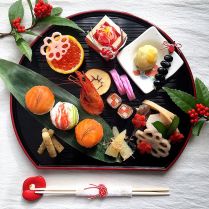
Food presentation, known as moritsuke (盛り付け) in Japanese, means literally “arrangement of food on a dish.” The objective is to engage the aesthetic senses of the diner and draw them in, much like someone admiring a work of art. In the Western world, this is often referred to as “plating,” where the symmetry of food on a plate is the primary focus in meal presentation. However, in Japan, moritsuke points to portions of a meal artfully placed in a variety of dishes and embellished with decorative garnishing. These presentations often have a seasonal theme and the decorations, known as mukimono, are typically intricate creations of flowers, animals, fish or dragons carved from various vegetables and fruits that are not necessarily intended to be eaten, but exist as one aspect of the overall culinary picture.

This emphasis on the appearance of food is most often evident in the display of sushi and sashimi in the more extravagant Japanese meals that serve to make one’s dining experience a memorable occasion. The Japanese language certainly has words to cover a whole range of tastes such as sweet (amai), spicy (karai), bitter (nigai), sour (suppai) and salty (shoppai), but the appearance of food is also an important element in food preparation. After a few months of living in Japan, we started to wonder how the vegetables and fruits for sale in the stores always seemed to be perfectly shaped and colored. This mystery was solved one day when we discovered a number of misshapen, but perfectly good potatoes being sold by a local farmer for a pittance of their normal value as they could not sell them in the open market. Appearance is valued in all stages of the food preparation process.

Focus on appearance is not necessarily a bad thing, and in fact, we routinely give a great deal of attention to image over substance in a number of areas. This focus on image can be seen in the clothing we wear, the manner in which we style our hair, the diets or exercise we endure to achieve a certain body shape, the material goods we accumulate or the manner in which we communicate. We want to look good in front of others and consequently, we devote a considerable amount of time, effort and resources to that end.

But how we appear before God, who sees beyond external trappings, should compel us to examine ourselves so that we might live lives guided by a higher standard, a heavenly standard. Jesus saved his harshest criticisms for the religious leaders because they valued rules over people, physical practices over spiritual presence and religion over relationship. He compared them to whitewashed tombs full of decay or dirty dishes that had only been cleaned on the outside. (Matthew 23) Hypocrisy may be rampant in the world around us, but heavenly moritsuke calls for aligning our lives with the heart of God who is not distracted or deceived by appearances. In the spiritual realm, presentation should never take precedence over palate.

Haircut Time

“Even the very hairs on your head are numbered.”  Matthew 10:30

haircut

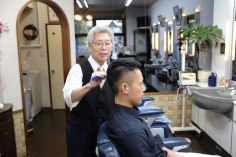
After being away a few years from our adopted home of Japan, I was very much looking forward to our recent visit. High on my priority list were of course spending time with friends and family, visiting a Japanese hot spring, eating all my favorite foods, riding on Japanese trains, taking trips to scenic locations and… getting a haircut. Despite our packed schedule, I was able to squeeze in an outing to the barber our second day back in Japan and again on the day of our departure. I settled into the barber chair, gave a few instructions and then proceeded to enjoy my much-anticipated experience. Wanting to maximize this unique opportunity, for a few hundred more yen, I even allowed myself the extra luxury of a shave.

The feathery touch of the barber seemed almost imperceptible to me as the quiet rhythmic snipping of his scissors, uninterrupted by mechanical devices, was like a sleep-inducing drug. I faintly recalled in my semi-comatose state that Japanese hairdressers pay exorbitant amounts of money for quality scissors made from the finest German or Japanese steel. Considering the cost, the scissors are regarded among their most prize possessions. Content to let me doze, the barber spoke only when necessary as he knows that I’m not there for just a haircut, but also to relax. In addition to cutting my hair, he silently moved on to removing other unwanted hair as part of the routine. Unibrows are divided into two equally matched eyebrows. Nose hairs are discreetly trimmed. Unsightly ear hairs are efficiently clipped into submission. Even one’s forehead is shaved as the barber leaves no stone unturned or any stray hair neglected in his never-ending quest for perfection.

The proprietor of the shop and chief barber was busy with another customer during my visit but he kept an eagle eye on his young apprentice attending me. Every few minutes the boss leaned in, inspected the ongoing masterpiece, and snipped a single hair as a subtle rebuke to the novice. All kinds of hair tonics, creams and gel were then offered to complete the experience. On occasion, concerned barbers in the past would kindly suggest a temporary remedy to help disguise my ever-growing bald spot. As I can’t see my own barren patch, I have little concern for this supposed flaw, but instead, I prepare to enjoy the climax of my Japanese haircut experience: a soothing scalp and shoulder massage. When money was tight, I sometimes frequented the much cheaper 10-minute express haircut establishments. Among other shortcuts, they literally vacuum the customer’s head at the end to save on time. But over the years, I learned to appreciate the traditional barber as one of life’s little luxuries.

When I eventually arose from the barber’s chair, I was surprised to notice the preponderance of gray hair scattered on the floor beneath me and the increasing scarcity of what was just removed. Both are a testimony of my advancing years, but the clumps of discarded hair also serve to remind me of the intricacies of God’s knowledge and amazing concern for me. (Matthew 10:30) The God of the universe, the Maker of Heaven and Earth (Psalm 121:2) who calls out each star by name (Isaiah 40:26) knows exactly how many hairs still remain on my head. Jesus used this powerful illustration to comfort his disciples when they were inclined to worry about circumstances beyond their control or things beyond their knowledge. He assured them, and us, that absolutely nothing escapes God’s notice and no one is beyond His care. He knows my hair and he knows my heart. The reminder of this precious truth was the best part of my haircut. 

Practice, Practice, Practice

 “This has been my practice: I obey your precepts.”  Psalm 119:56

Practice3

The teachers and parents at the local Japanese elementary school are hoping to pull off a flawless annual sports day. What do they consider to be the critical factor for success? Practice rehearsals!  The government wants to educate the public on proper responses to future possible disasters. Their solution? Practice drills! The university graduation ceremony is coming up in a few weeks so what is the number one focus for all the participants? Practice walk-throughs!

In a land that admirably strives for perfection, it often seems that the one-word solution to success for every endeavor is “practice.” While practice is certainly an important element in achieving anything of note, the Japanese seem to go beyond merely tolerating its necessity to the point of actually embracing it. This hyper focus on practice is readily apparent in almost all levels of Japanese society, ranging from business, athletics, hobbies, music, trade skills and ceremonial events. The Japanese word “renshū” (練習) is the most frequently used term to capture this idea of practice combining the actions of “repetition” and “learn.” It is believed that a particular skill or behavior learned through repetition fosters refinement in technique and, presumably, produces improved results. This emphasis on practice explains why an aspiring young sushi chef will unquestionably labor for five years as a lowly apprentice before being entrusted with the seemingly simple task of preparing the sushi rice. The same concept applies to a junior high student who joins the school badminton club, but has to practice their swing for several weeks before being introduced to an actual racquet.

Perhaps this value of renshū is best illustrated by the life of the famous baseball player, Ichiro Suzuki, who set a number of records in the Major Leagues after he was traded from Japan. From the age of seven, rain or shine, Ichiro’s father enforced a daily, rigorous practice routine on him that included throwing 50 pitches, hitting 200 live pitches, fielding 100 balls and hitting 300 pitches from a machine. As Ichiro got older, this daily regimen began to include hurling car tires and hitting wiffleballs with a heavy shovel to increase his strength. Renshū certainly accounted for a large portion of Ichiro’s success as a baseball player, but he later admitted it came at a heavy price.

Practice can certainly have its onerous aspects, even when not taken to extremes, but it is usually a necessary component to success in any meaningful endeavor. One obviously, does not become a skilled musician, chef or athlete without the investment of many hours into polishing their craft. Renshū at its very heart, usually has this worthy objective in mind, but sometimes it is obscured by the oppressive daily grind that typically accompanies such practice patterns.

In the Bible, many uses of the term “practice” have an extremely negative connotation. On numerous occasions the practices of God’s people are described as “detestable;” other negative adjectives like “evil,” “unclean,” “worthless” or “corrupt” are also commonly juxtaposed with the term. However, to do the opposite and live in obedience to God, David testifies to the importance of a positive form of practice in Psalm 119:56. Even Jesus declared the importance of this kind of renshū if our objective is to live lives worthy of God. “But everyone who hears these words of mine and puts them into practice is like a wise man who built his house on the rock.” (Matthew 7:24) However, at the same time, we must never forget that while practice cannot make us perfect, the Cross redeems all our imperfections and failures.

Parking

“For the Lord your God is bringing you into a good land…a land where bread will not be scarce and you will lack nothing.”  Deuteronomy 8:7-9

Parking

When one considers the many facets of parking a car in Japan, scarcity is probably the key concept that underlies all related discussion on the topic. Since land is a premium in overcrowded Japan, there is a scarcity of parking spaces in a country that increasingly depends upon the automobile. Despite Japan’s incredibly efficient mass transportation system, the number of cars on the road continues to multiply and this increase creates the problem of where and how to park these cars when not in use. This ongoing parking problem creates an environment where strict controls, parking manners and creative technological solutions work together to manage the situation.

The regulation of parking in Japan begins with the purchase of a vehicle. To obtain legal ownership of a car, everyone is required to have the local police confirm that you actually have a designated place to park it. To discourage illegal parking, fines are quite exorbitant and may cost over $200 plus additional fees depending on the circumstances. Paid parking lots tend to be rather pricey, which explains why some drivers are tempted to look for inexpensive or even illegal alternatives. In the more congested areas, some parking spaces may cost as much as one dollar for every ten minutes. This of course is in addition to the $100-300 a month one may already be paying for a personal parking space near their residence. When we moved to Tokyo and were looking for a place to live, someone tried to interest us in their apartment which had a “cheap” parking spot for $250 a month and was “conveniently” located only a half mile away!

The scarcity of land and potential parking places has given rise to a few innovations to ease this chronic problem. For example, modern parking garages that are typically several stories high will automatically place your car on an elevator for storage. Upon your return, it is easily located and retrieved through a computerized identification system. Unmanned local parking lots often feature a wheel lock device that rises from the ground, which is released when you pay your fee at the nearby machine. Some apartments come equipped with individual two-tiered parking lifts that double their parking capacity. Many who live in older neighborhoods not designed to house modern automobiles painstakingly park their cars in almost impossible tiny spaces. Major shopping complexes often offer two hours of free parking for customers who make purchases and then charge a set fee for any extra time. Parking spaces throughout Japan are generally narrower and designed to accommodate smaller cars.

To facilitate traffic flow in cramped parking lots, most drivers meticulously back their cars into an empty spot for easy exit and enhanced visibility when they pull out. All newer cars come equipped with a button to retract outside mirrors to minimize potential impediments for others trying to reach their parked car and these are routinely used. Here is a link to a video that captures most of these practices: https://www.youtube.com/watch?v=EQj_a6ByEhA

While scarcity of parking is a common annoyance in many parts of Japan, we are often faced with other shortages in life that can be far more distressing. A lack of employment, housing, transportation, clothing, finances or education can invite a sense of desperation that all too easily leads to despair and hopelessness. But just as God led his people, the Israelites, to a “good land” where they “lacked nothing” (Deuteronomy 8:7-9), He delights in providing what we need as we learn to trust Him… even a parking space.

New Year Money

“…though you are evil, know how to give good gifts to your children…” Luke 11:13a

Otoshidama2

Christmas was over for our children, but they soon reaped an unexpected, additional windfall with the onset of the Japanese new year. They would receive otoshidama. Over the next few days, several of our Japanese friends kindly gave our kids small envelopes of money that they were to use for themselves. This custom supposedly dates back to the Edo period (1603-1868), when wealthy individuals gave mochi (rice cakes) to others at New Year’s and presented some as offerings at the local Shinto shrine. These treats were called “toshidama” (年玉), which meant literally “rice ball/treasure.” Over the course of time, these presents of mochi were replaced by small toys to children which eventually were substituted by cash gifts.

Otoshidama is typically given to school age children by immediate relatives, close family friends and in some cases, even neighbors. The amount of money generally varies upon the nature of the relationship with the child and the child’s age. For example, elementary children average ¥2-3,000 ($20-30) per envelope, junior high kids ¥5,000 and high school students ¥10,000. The money is traditionally placed in a miniature envelope called a puchibukuro that is decorated with a popular anime figure, cartoon character or an animal matching that year’s Chinese zodiac. Only new bills of money are included and it is neatly folded into thirds before being placed in the envelope.

Surveys indicate that most children use these monetary gifts to purchase video games, manga, or toys, but some set part of the money aside for future purposes. It is considered impolite for children to open the puchibukuro in front of others and the majority of parents carefully monitor the otoshidama to ensure it is spent appropriately. We certainly did so with our children as we helped guide them with purchases that were usually beyond our limited resources and we also encouraged them to save a portion of this special new year money.

In teaching His disciples about prayer, as recorded in Luke 11, Jesus used the simple analogy of a father giving good and appropriate gifts to his children to drive home an important point. Just as parents are eager to provide for their children, God delights in providing for us as His children. Therefore, we are to confidently approach our Heavenly Father to ask, because it will be given to us. To seek, and we will find. To knock, and the door will be opened to us (v.9). However, like children entrusted with sizable sums of cash, we are also obligated to use the bountiful gifts of God wisely, in line with His eternal purposes and life-giving guidelines. We may not get all the toys and trinkets that this world has to offer, but God places into each of our envelopes exactly what we need. Otoshidama come only once a year and end altogether when one reaches adulthood. But the gifts of God come unexpectedly in many forms and without limit. Every day is a new year with God.

Foreign Holidays

“This is a day you are to commemorate;” Exodus 12:14a

Christmas in Japan

It was our first Christmas Day in Japan and everything felt wrong when I surveyed the world around me. Children were in school, the banks were open and the stores were full of customers. Besides the beautiful blanket of snow covering the ground, there was no visible evidence of Christmas. In the preceding weeks, we had managed to procure a Christmas tree, wrapped our collection of gifts and even tracked down a place that sold turkeys as part of our preparation to celebrate Jesus’ birth. But Christmas was obviously not a major event in Japan.

Many years later, Christmas is still not recognized as a national holiday in Japan, but it is certainly on the nation’s radar. For example, Christmas music is now commonly played in numerous venues. Christmas trees and decorations are sold everywhere. People are increasingly putting up Christmas lights on their homes and giant light displays known as “iruminēshon” (illumination) have become popular attractions. Christmas Eve is generally considered to be a romantic time for young couples in love who celebrate the occasion by going out for a special meal, exchanging gifts and visiting a local iruminēshon. Japanese have even developed their own genre of Christmas music composed and performed by famous artists. A sample of this is a song by Takeuchi Mariya called “Sutekina Kurisumasu” (“Lovely Christmas”). Local merchants are naturally very enthusiastic about anything that puts more money in their pockets, which also accounts for the increasing popularity of other foreign special days like Easter, Valentine’s Day and, more recently, Halloween. Tokyo Disneyland has particularly capitalized on these trends featuring special events, displays, menu items and merchandise that match these festive occasions.

Of course, Japan has its own standard holidays like Constitution Day, Sports Day, Children’s Day, Respect for the Elderly Day, the Emperor’s Birthday, Labor Day, Marine Day and Vernal Equinox, but these do not easily lend themselves to celebratory events. Churches throughout Japan are understandably keen to capitalize on people’s interest in Christmas, so they typically sponsor a variety of meetings designed to share the true meaning of Christmas and the wonder of God’s visitation to Earth.

Special days are often set aside around the world to commemorate significant historical events and this was also true of God’s people. Following the miraculous phenomenon associated with their liberation from Egyptian bondage, God instructed the Israelites to commemorate the penultimate plague, Passover, with a unique celebration that was to be observed on an annual basis (Exodus 12). As God continued on other occasions to intervene in history to deliver His people, additional festive events were instituted and observed by generations that followed. The stated purpose of these special days was to recall the mighty deeds of God as an act of worship. But God’s ultimate intervention in the affairs of man went unnoticed by all except for a handful of shepherds and a few faithful individuals who longed for His appearing. Unexpectedly, and inexplicably, God voluntarily took on human flesh and dwelt among us. Jesus came to “save his people from their sins” (Matthew 1:21) and this arrival is the wondrous event we commemorate with every Christmas season. Immanuel. God is with us. Let us bow in worship.

Bicycles

“In those days it was not safe to travel about,” II Chronicles 15:5a

Long before the advent of the popular minivan and SUV, my wife adapted her bike to fill basically the same purposes, at a greatly reduced cost. Strapping a baby on her back, with our oldest son sitting behind her in a child seat and our middle child riding in another seat attached to the handlebars, she would head off to the local grocery store to do our shopping. She rode what is commonly called a mamachari, which is translated as a “mom bicycle,” getting its name from the slang terms for mother and bike.  A mamachari is a basic bike that typically comes equipped with a chain guard, fenders, a dynamo light, a basket, a simple lock and a rear rack. These inexpensive bikes are extremely practical for transporting small children and local purchases over short distances. They are popular not just with moms, but also with businessmen commuting to work, students heading to school and elderly people running local errands.

There are over 80 million bicycles (called jitensha—自転車) in Japan, which ranks among the top worldwide in bikes per capita. Oddly, though, Japan is not known as being a particularly bike-friendly nation. Bicycle lanes are almost non-existent, forcing pedestrians, bicyclists and cars to often share the same space. In addition, designated parking areas for bikes located near stations and shopping areas are often grossly inadequate. Even then, fees are routinely charged for such services and hefty fines levied for parking violations. Thievery is uncommon in Japan, but bikes seem to be an exception to this rule, with the majority of bikes stolen for reasons of convenience rather than profit. We learned this lesson the hard way many years ago when my wife’s newly purchased bike was swiped from a public parking lot in front of a large department store. To combat such crimes, everyone is now required to register their bike with the police for a one-time fee.

Japan is a country that has rules for many things and this also includes bikes. The use of cell phones, umbrellas and headphones while cycling is prohibited, as well as any kind of alcoholic consumption prior to bicycling, due to the safety risks these activities invite. Riding on sidewalks is also illegal, but these rules are often conveniently ignored by the general populace and usually overlooked by the police. In a safety-conscious country, it is interesting to observe that helmets are optional but their usage is gradually becoming more prevalent among school children. E-bikes (electric bikes) have been quite common for a number of years among young mothers who use them year-round to taxi their children to and from day care centers. I have been left in a trail of dust on many occasions by a mom or elderly woman zipping by me as I strenuously labored to climb a steep hill on my more conventional bike.

Travel takes many forms and each one is accompanied by its own set of risks. Each time a person ventures forth from his or her home via bike, bus, car, train or plane, they are entering into additional circumstances where many elements are beyond their control. King Asa of Judah was confronted by such perils during his tumultuous reign when it was said, “In those days it was not safe to travel about.” (II Chronicles 15:5a) Despite having at his disposal an army comprised of over half a million fighting men (II Chronicles 14:8) and having achieved many great victories, King Asa and his people continued to be vulnerable to a multitude of dangers. Although he undertook many additional measures to secure his kingdom and protect his subjects, King Asa is primarily praised for grasping the limitations of his power and leaning into God who can “help the powerless against the mighty.” (v.11) While it is common sense to take practical measures to protect ourselves while traveling, no helmet, safety belt or life preserver can provide the safeguard we really need.