
Daruma

“So we make it our goal to please him.”  II Corinthians 5:9a   
Daruma

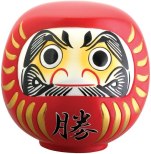
The one-eyed daruma (達磨) doll, with its unusual shape, appeared almost comical as it seemed to stare at me from its perch on the shelf. I later learned that when initially purchased, all daruma dolls have blank spots in the place of eyes, which are added later according to custom. The dolls are traditionally brightly colored, made of papier-mâché into a rotund shape, and are often weighted at the bottom so that they will return to an upright position when tipped over. Some say this tendency to remain upright symbolizes success and the ability to overcome adversity. The typical daruma has eyebrows in the shape of a crane and a beard resembling the vague form of a tortoise as both creatures represent longevity in Japanese culture.

Darumas trace their origin to Bodhidharma, who is recognized as the founder of the Zen tradition of Buddhism. Bodhidharma lived around the 6th century and several legends are associated with his ascetic lifestyle. For example, it is said that he stared at a wall in meditation for nine years without moving, which caused his arms and legs to atrophy and eventually fall off through disuse. This odd bit of folklore supposedly explains why daruma dolls have no arms or legs. Another legend connected to this famous Buddhist monk is that he once fell asleep during his meditation and became so angry at his failure to stay awake that he cut off his eyelids to prevent such a reoccurrence. Perhaps this fable accounts for the attention given to the eyes of a daruma.

Although some consider daruma dolls to be just a toy, they are widely regarded as a sort of talisman that can bring the owner good luck. The general practice when purchasing an eyeless daruma is to paint in one of the eyes after identifying a desired goal. Once that goal comes to pass, it is customary to paint in the other eye. It is believed that this unusual process will motivate the daruma to grant one’s wish since he will regain full sight once the goal is achieved. This curious custom also serves to remind the owner of their intended goal every time they see the one-eyed daruma sitting on the shelf. It is no surprise then that people running for a political office often purchase a daruma and paint in one eye when announcing their candidacy and then paint in the other eye if they are elected. At the close of the year, people customarily return their daruma to the temple where it was purchased and then priests will burn it in a formal ceremony.

Darumas are associated with achieving a stated goal or desire, but such objectives are typically self-centered. These goals can include such things as success in the financial world, a favorable outcome in a desired relationship, good grades on an exam, a victory in a sporting activity or advancement at work. Such desires are certainly understandable and in many cases commendable, but as the people of God, we are called to seek something higher. Stated simply, our overarching goal should be to please God and everything else in life must be made subservient to this heavenly objective. This focus requires us to remove self from the center of our personal universe and let God take His rightful place as “we make it our goal to please Him.” (II Corinthians 5:9a) Such a recalibration of our heart and mind does not require us to purchase and reconfigure a talisman to achieve our goal. Rather, it involves the simple act of surrender of our will to the All-Seeing, All-Powerful God of the universe who does not need us to create eyes for Him.
Group Photos

“I will remember the deeds of the Lord.”   Psalm 77:11a

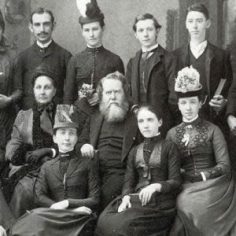
1888-Team-James-Hudson-Taylor-300x300    Long before the term “selfie” carved out a unique niche in our lexicons, the Japanese used an alternative word that eventually became a part of our personal vocabulary and history. It is called “kinen shashin” (記念写真) and it is roughly translated as “commemorative photograph.” Whenever a group assembles for a particular occasion, someone inevitably calls for a kinen shashin to be taken to commemorate the event. If you browse through our personal photo albums (back in the day when we collected physical photographs), you will discover quite a few of these kinen shashin scattered among other pictures portraying family and friends in various locations and activities.
A few of these kinen shashin are now framed and hang on our walls, or sit on our shelves, reminding us of days gone by and God’s grace in our lives. Such events may include baptisms, church anniversaries, a farewell of a coworker, training events, a church dedication, a wedding, an induction of a pastor, a graduation, conferences, the launching of a new church plant, a special concert or a group reunion. Each kinen shashin speaks volumes about God’s faithfulness throughout a jumble of times and circumstances as we walked through life and our paths crossed with those of many others.

But this is where the nuance of kinen shashin departs from our typical preoccupation with selfies. A selfie is generally photographic evidence that you did something, ate something, went somewhere or were with someone in particular. The focus is centered more on ME and things that are related to ME at the time the picture was taken. That is undoubtedly why the term “selfie” was coined to capture the essence of this particular form of photography. Of course, there is nothing wrong with this approach and we ourselves frequently take selfies. However, if given a choice, I would much rather be included in a kinen shashin, where my face may be lost in the crowd, but something much greater than me is being recorded as part of my ongoing faith journal.

In the days before the invention of cameras and cell phones, the psalmist testified “I will remember the deeds of the Lord.” (Psalm 77:11a) which is how we are prompted to respond when we view some of the kinen shashin from our past that depict various people and ministries. When we take the time to peruse through such photos, they serve to remind us of the many “deeds of the Lord” that have transpired over the years, but may have slipped from our memories. We would do well to fondly remember such people and events with thankfulness, but also with expectation for the things yet to come that we can only see now through eyes of faith. While it is sometimes unwise to linger too long in the past, we should certainly learn from it and apply those lessons to new challenges ahead. Kinen shashin can serve such a purpose as they beckon us to focus on community and God, which a selfie often fails to capture.

Dolls Festival

He [Jesus] sacrificed for their sins once for all when he offered himself.”  Hebrews 7:27b

Girls Day2

Every year on March 3rd, countless girls across Japan celebrate Hina Matsuri (ひな祭り) which means literally “doll festival,” but is commonly referred to as “Girls’ Day.” The custom originated in the early 17th century, where usually a red, multi-tiered platform (hina dan) is set up and on it a collection of special dolls (hina ningyō) and related furniture are put on display prior to the hina matsuri. These ornamental dolls are typically clothed in the traditional court dress of the Heian Period (794-1185) and represent the emperor, empress, various court attendants and musicians. The dolls are not intended as items for play and many sets are actually quite expensive with a value of several thousand dollars for the more elaborate versions. Some hina matsuri collections are passed on from one generation to another as treasured heirlooms and are therefore handled with great care.

Hina matsuri is also associated with the initial blooming of peach blossoms in certain parts of Japan with the coming of spring and as such symbolically celebrates the health and happiness of girls within a family. According to custom, immediately following Girls’ Day, these special dolls are supposed to be put away immediately or parents risk inviting the bad luck of a late marriage for their daughter. The city of Konosu hosts the largest display of hina ningyō in Japan every year on a 23-foot (7 meter) pyramid with more than 1,800 exquisite dolls artfully arranged on 31 levels.

Another ceremony often connected with hina matsuri is nagashi bina, which is roughly translated as “doll floating.” Participants in this unusual rite make cheaper versions of the hina dolls from paper or straw and set them adrift on a river, regarding them as a sort of talisman that will remove their sins, impurities and any demonic influences.

The obvious intention of Girls’ Day is to provide families an annual opportunity to celebrate the lives of their girls while wishing for them to have health and happiness. But the older and deeper traditions associated with hina matsuri point to something far more important that is largely ignored in modern celebrations. What is conveniently overlooked is the universal problem of sin and our personal culpability before a Holy and Righteous God. While all parents understandably seek health and happiness for their children in this temporary world, there is nothing they can do to eradicate the eternal consequences of the sins and misdeeds of themselves and their children in the world to come. Recognizing this problem, previous generations of Japanese set dolls afloat on nearby rivers in a vain attempt to purge them and their loved ones of personal guilt. But such shallow efforts, no matter how well intended they may be, sunk ineffectively in deep waters along with the dolls as they drifted downstream. Another, more effective solution than floating dolls was needed and God Himself has provided the perfect substitute for our sins in the form of His Son. The author of Hebrews succinctly describes this amazing provision when he writes, “He [Jesus] sacrificed for their sins once for all when he offered himself.” (7:27b) This substitute is indeed an amazing treasure, not to be put on a shelf and casually admired, but to be fully embraced and celebrated daily. 

Personal Seal

“A good name is more desirable than great riches;” Proverbs 22:1a

hanko

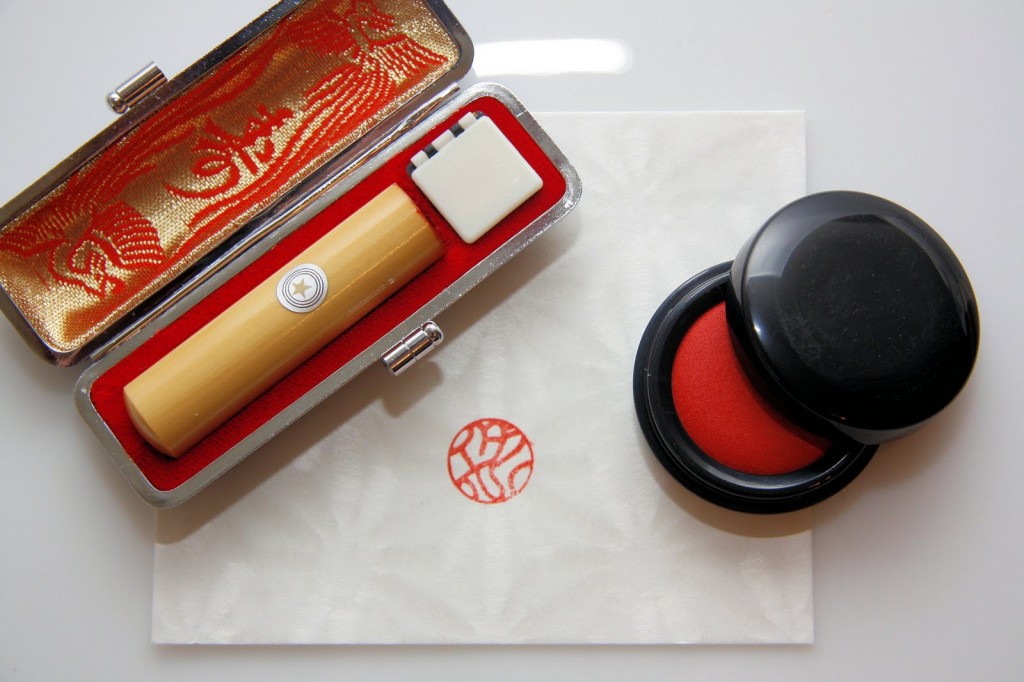
Shortly after our initial arrival in Japan many years ago, we visited a local shop to have our personal seal or “hanko” (判子) made. We had been informed that a simple signature would no longer suffice to open bank accounts or enter into any contractual relationship, but instead, a personal seal was required for all such transactions in Japan. Once it was decided how our name would be written in Japanese, a hanko was ordered and we were soon ready for business. We used that same seal for 34 years to sign for deliveries, purchase cars, register for health insurance, enter into cell phone contracts, withdraw cash from the bank and sign rental agreements.

Each hanko, like a signature, is unique and they can be made of wood, plastic, ivory or stone. The cheaper ones cost $10-20 USD, but more expensive versions sell for a few hundred dollars. The word inkan (印鑑) is often used interchangeably with hanko, but technically an inkan is the actual stamp on the paper whereas a hanko is the physical object used to make the stamp. Only red ink is used with the hanko and businesses or local government offices generally provide the stamp pad when you are requested to affix your seal to a document. These personal seals are usually protected in specially designed cases and it is important to register your hanko with the local municipal office. The government officials will in turn provide a document called an “inkanshomeisho” (印鑑証明書) required for important transactions, as it serves to verify that is your legal seal.

All businesses, organizations and even churches have their own official seals which are carefully protected due to legal liabilities if they are misused. As the representative of our mission organization, I was required to use a specially designed square hanko to authorize certain official documents. However, our religious registration as a mission changed, which called for the creation of a new hanko that was supposed to be round in shape. This anomaly confirmed what I had long suspected… I was a square peg placed in a round hole!

The author of Proverbs highlights the importance of maintaining a good name (Proverbs 22:1) in reference to our character or reputation. A hanko is designed to represent its owner, but how do our actions, words and attitudes represent us? This is a critical question we must periodically ask ourselves since the possession of a good name is far more valuable than great riches, power or influence. A good name can last well beyond our short existence here on earth and it potentially puts us in a position to in turn, have a meaningful impact on the lives of others. In contrast to this, a person with a bad name, who manifests an ignoble character, is not only judged by men, but by God Himself who alone can accurately evaluate such matters. A hanko serves to represent us legally, but a good heart is the best indicator that we are healthy spiritually. “Let love and faithfulness never leave you; bind them around your neck, write them on the tablet of your heart. Then you will win favor and a good name in the sight of God and man.” (Proverbs 3:3,4)

Pounding Rice

“By the sweat of your brow you will eat your food until you return to the ground…” Genesis 3:19a

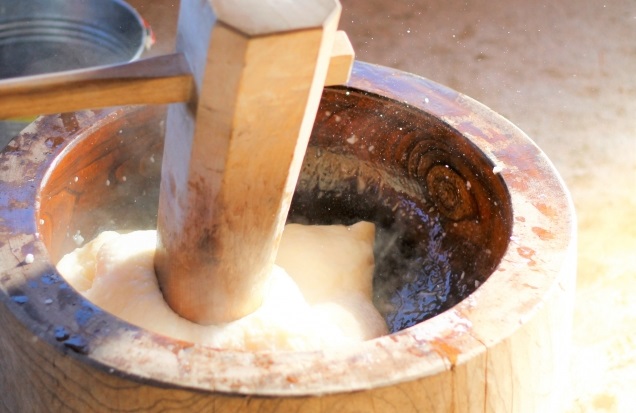
Mochitsuki   We watched with admiration at the efficiency and precision of two people engaged in the Japanese tradition of making mochi. Mochi is a rice cake made from a particular strain of rice and it is customary to eat it with the coming of the new year. The traditional method for making it is called mochitsuki (餅つき), where one individual rhythmically beats the rice placed in a large mortar (usu) with a two-handed wooden mallet (kine) while the other person deftly turns the rice anticipating the next blow.
The preparation of mochi actually begins the previous day by soaking the rice for several hours before steaming it. Then, the ritual pounding begins, usually taking place in a festive atmosphere at schools or neighborhood gatherings. When the rice has reached the right consistency and no individual grains remain, it is finally removed and divided into edible portions. This ancient form of preparation is usually associated with the new year, but mochi is actually eaten year-round and modern machinery has for the most part replaced the more traditional, labor-intensive process. Hundreds of years ago, mochi was offered as a special food to the gods in Shinto rituals and the practice still continues today in many homes and shrines.

Mochi is often eaten as a form of dessert, along with a sweet red bean paste (anko) and various confectionary powders are typically added. One of the most famous variations is the sakuramochi, or “cherry blossom” mochi, sold in the spring with the onset of cherry blossom season. Because of its thick consistency, mochi presents a potential choking hazard, so it is not uncommon to hear of fatalities connected to its consumption.

The general activity of eating seems to be an important theme at the outset of human history as indicated in the early chapters of Genesis. For example, the first created humans, Adam and Eve, were told by God that they were “free to eat from any tree in the garden” (2:16) but then an additional instruction warned them that they “must not eat from the tree of the knowledge of good and evil.” (2:17) After their disobedience, the serpent who tempted them, is cursed and is doomed to eat dust” for the remainder of its existence. (3:14) Following that, the ground itself is cursed because of the man and woman’s disregard for God’s command and it is only “through painful toil [they] will eat food from it.” (3:17) Before they are cast out of the Garden of Eden they are told once again: “By the sweat of your brow you will eat your food until you return to the ground.” (3:19)

Anyone who watches the traditional process of mochitsuki will certainly take away the impression that considerable toil is a prerequisite to actually eating it. Since that initial sin in the Garden, the same is essentially true for everything we consume, as it is only through our labor that we have money to purchase food or the physical labor of others to produce and prepare it. Taken in this light, our daily consumption of food and other necessities in life serves as a subtle reminder of the consequences of sin and how the choices we make can reverberate for eternity. Sadly, every year, some people will die from eating mochi and much more sadly, many  more will perish because of their utter disregard for God’s truth.

Lucky Bags

“He who did not spare his own Son, but gave him up for us all—how will he not also, along with him, graciously give us all things?”  Romans 8:32

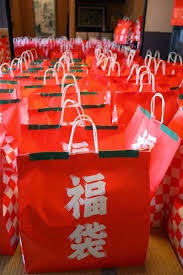
Lucky BagsJapan has a popular New Year’s custom where stores offer sealed bags filled with random contents and sell them for a substantial discount. These special bags, known as “fukubukuro” (福袋) or “lucky bags,” are eagerly snatched up by customers who flock to the stores on New Year’s Day looking for a bargain. This established promotion is actually a clever means by which merchants unload excess or unwanted merchandise from the previous year. Obviously, this practice serves the dual purpose of attracting customers into the store to hopefully make additional purchases. The fukubukuro tradition also loosely ties into the Japanese superstition of starting the year with a clean slate as it clears the store of a number of unwanted items.


These goodie bags can contain a variety of items, but in major department stores, the contents are usually restricted to things sold in the specific department in which the bags are located. Prices for fukubukuro vary widely, depending on the store and the quality of the items they contain. The contents may include anything ranging from food, clothing, cosmetics, electronics, jewelry and miscellaneous household goods. It is essentially a form of gambling as some bags may prove to be duds while others may be an excellent bargain. Hence, they are called “lucky bags” and are widely used as gifts to family members and friends.

 As one would expect, the contents of a fukubukuro can be hit or miss, and even Santa’s legendary bag can leave many recipients dissatisfied come Christmas morning. However, there is nothing insufficient or inadequate in what God provided for us on that first Christmas. From His infinite storehouse of treasures, God spared nothing and gave us, not His leftovers, but the greatest gift of all—His Son. This is why the Japanese character for “lucky” (福) is also used as part of the very important biblical word “fukuin” (福音) which means “good news” or the “gospel.” It is, however, critical to understand that the good news of eternal salvation has nothing to do with our traditional concept of luck, but rather, is rooted entirely in the grace and goodness of God. The gift of eternal life and forgiveness of sins is a “lucky bag” that God alone can provide and its value far exceeds anything else this world has to offer. Best of all, the purchase price has already been paid by God at the cross. This is indeed fukuin, or good news.

Funerals & Feasting

“It is better to go to a house of mourning than to go to a house of feasting, for death is the destiny of every man; the living should take this to heart. “     Ecclesiastes 7:2

Overhead view family toasting wine glasses at candlelight Christmas turkey dinner at table

As a few of us solemnly gathered around the shrouded body of a church member who had just tragically taken his own life, I was asked, “Did you drive here in your van?” I thought it was an odd question considering the circumstances. Less than an hour later, I found myself driving that same van with a corpse wrapped in my old car blanket and a grieving widow sitting beside me in the front seat, numbly holding her husband’s death certificate. This unusual scenario launched my initiation into performing my first funeral in Japan.

My immediate education began with assisting the undertaker in preparing the deceased’s body for burial. The body had to be washed, dressed and the face even shaved as hair continues to grow for a while following death. Rigor mortis had already set in, which proved to be a problem as the casket was a bit small, requiring us to manipulate the limbs to ensure the body would fit. While my attention was briefly diverted by a few important phone calls, a well-meaning Buddhist neighbor had convinced the deceased’s wife, who was also a Christian, to surround her husband’s body with things that he would like to enjoy in the afterlife. Even though I was inexperienced in such matters, this arrangement didn’t seem right. A quick phone call to a local Japanese pastor confirmed my suspicions and gave me the confidence to persuade them to remove such objectionable items.

The next few days were a blur accompanied by minimal sleep as I undertook a crash course in Japanese funeral protocol and vocabulary, made countless funeral arrangements, prepared messages, and comforted grieving family and church members. As a young and inexperienced missionary, I felt completely overwhelmed by the situation. While struggling to pull my thoughts together for a message that would somehow convey hope in the face of so much loss, I was led to a previously overlooked verse in the Bible where Solomon advises: “It is better to go to a house of mourning than to go to a house of feasting, for death is the destiny of every man; the living should take this to heart.” (Ecclesiastes 7:2)

I lived in the house of mourning during those dark, distressing days. I mourned the loss of a member of my church plant who was under my care. I mourned my inadequacies as a missionary. I mourned my inability to comfort family and church members. I mourned my own sinfulness. If granted a choice, I would have greatly preferred to linger in the house of feasting, but that was not an option.

We live our lives trying to ignore the inevitability of death and its cold reality. We dress it up when forced to confront it at funerals. In our daily lives, we do our best to minimalize death and pretend it isn’t there, always waiting for us unseen around the corner. Some go out of their way to redefine death and somehow tame it with new age sentiment and terminology. But Solomon saw immense value in visiting the house of mourning in contrast to the house of feasting. For it is only when we come within proximity of death that we are able to gain a healthy perspective of eternity. In such moments, we are also given a glimpse of God’s heavenly purpose in whatever days He has allotted for us. While I reluctantly resided in the house of mourning, I was able to feast on who God is, what He has done, and most important of all, what He will someday do.

Tea Ceremony

“Whoever drinks the water I give them will never thirst. Indeed, the water I give them will become in them a spring of water welling up to eternal life.”     John 4:14

Tea ceremony

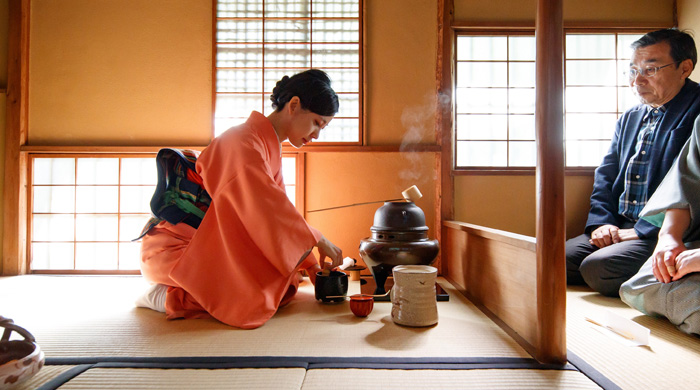
As a lesser evolved member of the human race otherwise known as a “guy,” I sometimes failed to appreciate the subtleties of Japanese culture and nowhere was this more apparent than the intricacies of the Japanese tea ceremony. Growing up in the South, my only experience with this common beverage was ice tea and its preparation was purely functional in nature. In contrast, the formal Japanese tea ceremony known as “sadō” or “chadō” (茶道), meaning literally “the way of tea,” involves a very precise ritual for the brewing and consumption of green tea.

It is believed that tea was first imported to Japan from China around the 9th century through a Buddhist monk and was enjoyed exclusively by the nobility before eventually gaining popularity among the masses. The Japanese tea ceremony that is commonly practiced today was greatly influenced by Zen Buddhism. Four key concepts capture the tea ceremony’s overarching objective. These are “wa” (harmony), “kei” (respect), “sei” (purity) and “jaku” (tranquility) and they are subtly cultivated throughout the sadō ceremony by means of ambiance and carefully orchestrated actions. This includes the construction of the tearoom, display of artful decorations, arrangement and handling of the utensils, specialized vocabulary, scripted etiquette and the formal attire of the tea ceremony master. There are several historical schools of Japanese tea ceremony that differ in procedures and it takes several years of diligent training to qualify as an instructor.

To the untrained eyes of an outsider, the slow, deliberate, yet graceful protocol of a formal Japanese tea ceremony may appear boring and incongruent with the normal pace of life, but the ceremony’s unhurried pace actually serves to highlight its purpose. Some tea ceremonies may last up to four hours, providing participants a rare and needed escape from the noise and demands of everyday life. The following video provides a condensed visual portrayal of the stylistic intricacies that compose a Japanese tea ceremony. https://www.youtube.com/watch?v=4wQVxj_0Mdo

To my knowledge, Jesus never hosted a Japanese tea ceremony, but He did offer liquid refreshment of a different nature to a spiritually thirsty woman. That well-known encounter is recorded in John 4 where Jesus wearily paused by a local well on His journey through Samaria. There Jesus surprisingly initiated a conversation with a Samaritan woman addressing His physical need (water), which He gently turns to her greater spiritual need (salvation). While this encounter was not scripted like a Japanese tea ceremony, the subtleties of God’s passionate love for all manner of people is evident throughout this simple, but profound story. Jesus came to offer us life eternal so that we may never thirst again. That is the overarching objective of Jesus’ life that no tea ceremony, no matter how perfectly executed, could ever provide. Living water is freely available for all who are thirsty.

Getting it Right

“Be perfect, therefore, as your heavenly Father is perfect.”            Matthew 5:48

Getting it Right4

The ringing doorbell surprised us as we were guests at a vacation home and there was a horrific blizzard howling outside. “Who could it be?” we wondered and opened the door to be greeted by a local postal worker covered in snow bowing in apology. Through his shivering explanation, we learned that the local post office had mistakenly overcharged us 30 yen (23¢) for a letter we mailed the day before. He asked us to accept their sincere apology for the error and dutifully handed over the money with additional bows. Thoroughly impressed, but slightly amused, we assured the conscientious civil servant that all was forgiven and that we were satisfied with the outcome. He then bowed several more times, before turning to trudge back to the post office in knee-deep snow. That little snapshot from our past serves to capture the Japanese value of getting it right.

Perhaps this tendency is best summed up in the Japanese word “kaizen” (改善), which combines the two concepts of “change” (kai) and “good” (zen). Taken together, the equivalent translation comes out as “change for the better,” or “continuous improvement.” The application of kaizen then becomes an ongoing attempt to eliminate defects in a product or to improve a process with the ultimate goal to achieve better results. This requires an extreme attention to details, which can easily morph into a form of perfectionism in a ceaseless attempt to get it right. This approach can be seen on many levels within Japan, such as in the areas of food preparation, manufacturing, athletics, Japanese arts and transportation. Toyota has actually adopted the concept of kaizen as one of its core values, where all its employees are encouraged to constantly look for ways to improve their operations and products, which accounts for the company’s sterling reputation.

The extra effort it takes to build dependable cars, produce aesthetic masterpieces, achieve athletic success, or attain scholastic recognition is a highly commendable trait that generally produces good results. This is the primary reason why we personally purchase Japanese made vehicles. We want quality and dependability in a car that a commitment to kaizen principles is more likely to produce.

While such a lofty standard is understandably desired for inanimate objects and procedures, it is totally unrealistic when applied to human beings, including myself. Perfection is a worthy goal to aim for, but it remains forever out of reach no matter how hard we strive to attain it. Jesus taught His followers a new standard in His famous Sermon on the Mount (Matthew 5-7) where He set the bar of God’s righteousness or perfection much higher than they previously imagined. This standard is what we are challenged to aim for, but no amount of commitment to kaizen can possibly take us there. We cannot “be perfect, as our heavenly Father is perfect” (Matt.5:48), but there is One who was “once made perfect, and became the source of eternal salvation for all who obey Him” (Hebrews 5:9). That is Jesus. Because of Jesus’ perfect goodness (zen), we can be eternally changed (kai) and that is a kaizen work that only God can achieve, not through our efforts, but by His grace.

Manner Mode

“Whatever happens, conduct yourselves in a manner worthy of the gospel of Christ.” Philippians 1:27a

manner-mode

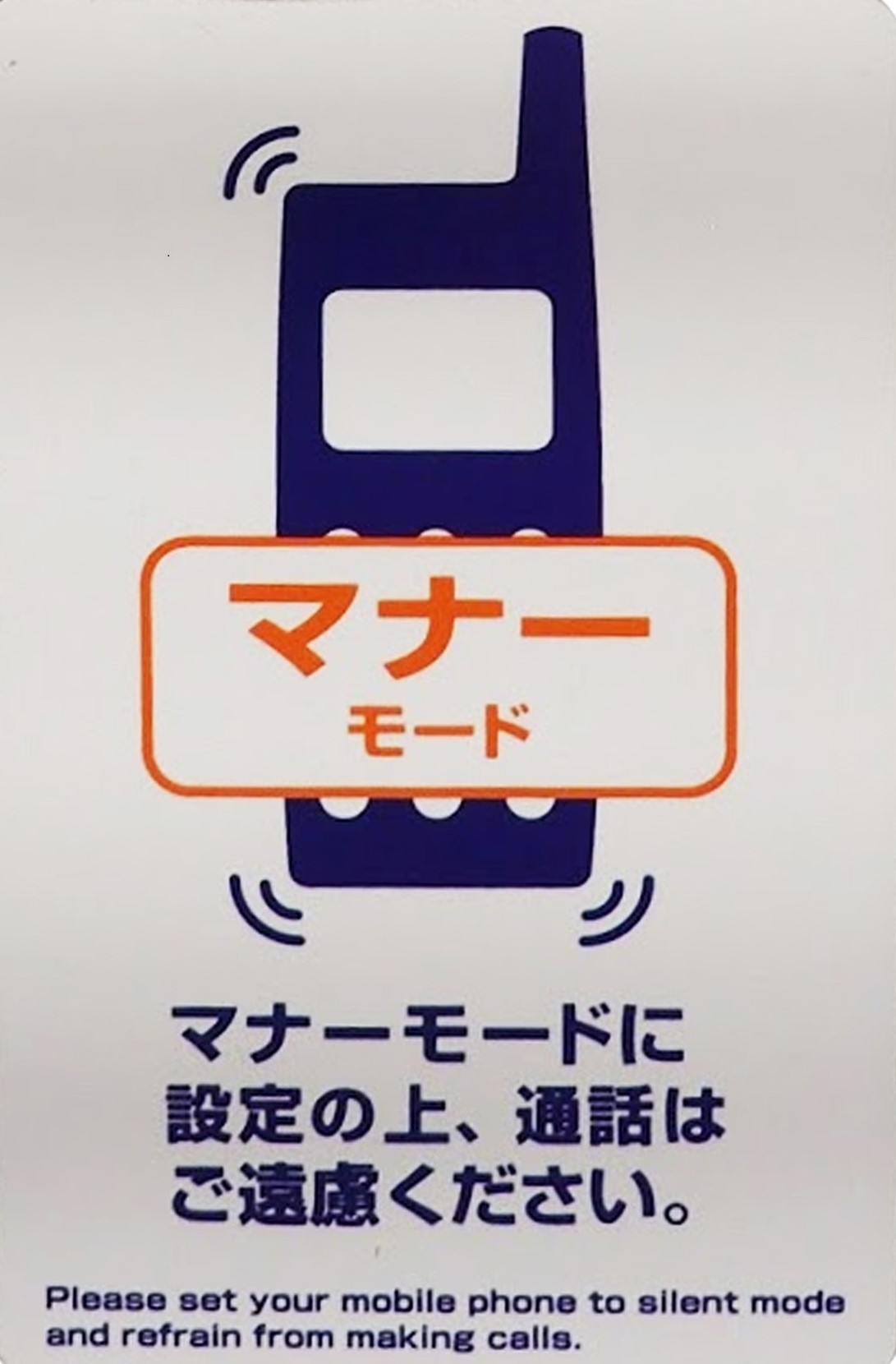
Many mothers around the world battle incessantly to instill good manners in their children, so they should be impressed to learn that cell phones used in Japan include a “Manner Mode” or “Māna Mōdo” (マナーモード) button. Unfortunately, these same mothers will be disappointed to discover that pushing this particular button doesn’t eradicate all poor behavior by the user. However, it does prevent one’s phone from ringing or making other distracting sounds once it is activated. Passengers on public transport are frequently reminded through announcements and signs to put their phones on māna mōdo to avoid disturbing others. Loud talking, ringing phones and audible music are quietly frowned upon by those nearby, so everyone is expected to exercise good manners in such situations. While almost all the passengers are typically engrossed in their own cell phones, no one uses them for talking while riding on the train as it is considered to be very rude behavior.

Good manners in Japan come in many different forms. For example, returning to the theme of train etiquette, priority seating is provided in every train car for the elderly, handicapped and pregnant mothers that should be strictly observed. Passengers waiting to get on a train are also expected to dutifully line up in an orderly fashion on the station platform and allow people to disembark before attempting to board. When riding an escalator, it is good manners to stand on the left side so others in a hurry can move past you. If you are dining with others, it is considered impolite to pour your own drink. You must also refrain from picking up food from a common plate using the end of the chopsticks that you use for eating. Below are some other cultural blunders to avoid:

  • Don’t eat or drink while moving around.
  • Avoid chewing gum in the company of others.
  • Try not to blow your nose in a public setting.
  • Resist using your car horn unless absolutely necessary.
  • Avoid pointing at others or objects.
  • Don’t treat another person’s business card with disrespect.
  • Refrain from public displays of affection.

Every culture has it peculiar lists of do’s and don’ts that subtly demand our adherence, but sadly, many Christians mistakenly import such a simplistic approach to their spiritual walk. The Christian life, when viewed in such terms, is reduced to a mere list of rules that focuses on the prohibition of certain behaviors. History teaches us that many of these ideals of Christian “manners,” fall by the wayside over time, only to be replaced by other rules that will in turn eventually give way to a new set of injunctions.

While rules are certainly necessary, and there are several lists of obvious sins laid out in the Bible, the whole concept of what constitutes “good manners” spills over into gray areas that are not so easily defined. As citizens of earthly kingdoms, we must be mindful and respectful of cultural manners, but as citizens of a heavenly kingdom, we are bound by a higher set of “manners” that must not impinge upon the nature or intent of the gospel. Rather than rules, the chief characteristic of the gospel is grace, which should be our life māna mōdo.