
Pachinko

Direct me in the paths of your commands, for there I find delight.”          Psalm 119:35
pachinko

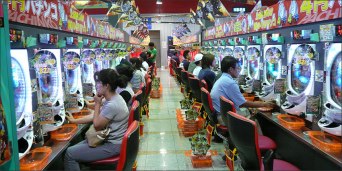
Out of curiosity as a relative newcomer to Japan, I cautiously opened the door to the gaudily decorated establishment and peeked in. I was harshly greeted with an immediate sensory overload of sights, sounds and smells (cigarette smoke) that encouraged me to make a hasty retreat to the comparatively quiet sidewalk. That was my first and only direct experience with the infamous Japanese parlor game known as pachinko (パチンコ). Pachinko is often compared to the arcade game of pinball since it is a mechanical entertainment device that involves the manipulation of steel balls. However, pachinko is significantly different from its Western counterpart in a variety of ways and, on top of that, it is deeply rooted in Japanese gambling culture.

The word “pachinko” is derived from the onomatopoeic sound “pachin,” which is a clicking or snapping noise the machine makes when the balls drop through and this sound is combined with the suffix “ko,” which means “little.” These machines were initially developed in the 1920s as a children’s toy, but within a few years evolved into a popular adult pastime. A pachinko resembles a vertical pinball machine but it utilizes multiple small steel balls that can be slightly directed by the player as they fall through a series of steel pins or nails. The objective is to capture as many balls as possible in the small openings along the course before they reach the bottom.

These balls can then be exchanged for prizes which can in turn be discretely converted into hard currency in compliance with Japan’s prohibition of gambling for cash. As such, these so-called pachinko parlors are a Japanese version of casinos where guests play slot machines. It is estimated that roughly a tenth of the Japanese population frequents one of Japan’s 10,600 pachinko parlors once a week and that the annual gambling revenue from pachinko is thirty times the yearly gambling earnings of Las Vegas. To maintain this delicate balance between winning and losing, pachinko parlors employ “kugushi” (釘師), or “nail adjusters” who expertly adjust or bend the pins within the pachinko machines. This fine-tuning serves to protect profit margins, but at the same time provides a sufficient number of favorable outcomes to attract customers. Some customers will line up at the pachinko parlor entrance several hours before it opens in order to gain access to their favorite machine.

If you closely examine a pachinko machine, you will soon discover that there are countless courses a ball can take as gravity takes over and it makes its way to the bottom. The goal of the player is to manipulate the course or path of the ball to his advantage. In the game of life, most of us would like to be in the position where we can influence the path ahead of us for a favorable outcome. Even though such power lies beyond our means, this limitation fails to quench our ever-present desire to control our own destiny where we naively believe happiness awaits us. Scripture tells us that such joy or delight is certainly available, but it only comes as we follow the commands or course laid out for us by an all-knowing, all-powerful God. (Psalm 119:35) As our heavenly kugushi, God lovingly and flawlessly adjusts the various “nails” in our lives in line with His desired outcome. Our only response therefore should be faithful obedience as we submit to the course uniquely laid out for us. Our reward is not a cheap trinket or even a cash prize, but rather, a meaningful and purposeful life that brings glory to God and delight to us. When we obey, we come out winners.
Shinto Blessings

“From the Lord comes deliverance. May your blessing be on your people.”  Psalm 3:8

shinto blessing2

While sitting in the office of the local Shinto priest, my gaze fixed upon a placard on the wall which advertised (in Japanese) set charges for services rendered:

  • ¥10,000 for a car blessing
  • ¥5,000 for a school entrance exam blessing
  • ¥10,000 for a baby blessing
  • ¥15,000 for a new home blessing
  • ¥10,000 for a marriage blessing

The whole concept stunned me on many levels and several questions came to mind as I chatted with my gracious host in a very unfamiliar setting. “How can mere mortal men place themselves in the position of dispensing blessings on behalf of the gods?” was something I asked myself. I did my best to politely nibble around the edges of this concept as I conversed with the Shinto priest. He explained, according to the Shinto religion, that nearly all objects, including both animate and inanimate, possess a spiritual essence known as kami (神). These kami are everywhere, but they are not regarded as omnipotent, omniscient, or even immortal. The term “Shinto” (神道) means literally “way of the kami” and they reportedly number over eight million. These spirits are duly venerated across Japan at various public shrines and private god shelves. It is believed by many adherents that kami have the power to dispense blessing on their devotees through rituals, good luck charms and designated intermediaries such as the priests.

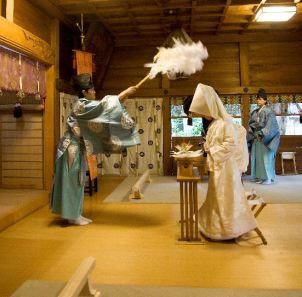
As I sat in the office of the local priest, other questions continued to fill my mind such as: “How can one charge money for a blessing?” From my perspective, such a practice seemed to reduce religion to a mere business transaction. This thought led naturally to another related question, which was, “Why would people actually participate in such obvious duplicity?” Perhaps the explanation to this conundrum resides in the standard practice of Shinto religious ceremonial procedures, where devotees have a sense that they cannot approach the kami with a request without some form of ritual purification to remedy their unclean state. This rite of purification is called harae (祓) and it usually begins with a symbolic washing using water near the shrine entrance. The next phase in absolution is conveniently performed by the priest (for a fee!), who rhythmically waves a large paper shaker called an ōnusa (also referred to as a haraegushi) over the object or person to be purified and blessed. Only after these procedures are performed can one approach the kami and hope to have their request granted.

Lying at the heart of the many intricate rituals of Shintoism is the basic human desire to be blessed by something or someone greater than one’s self. We want a healthy baby, success on a test, protection from infectious diseases, safety on the road, a good paying job, and a happy marriage, but such objectives often elude us because they lie beyond our control. Therefore, we are tempted to turn to a higher power to obtain them. Fortunately for us, there is a Higher Power who graciously dispenses such blessings on His people (Psalm 3:8) despite our unclean condition. We are beckoned to approach this God to request such favors, not because of our worthiness or the intercession of others, but because of the forgiveness provided through the cross by His Only Son. No fee is charged; God has paid it all. A few years later, this same priest reached the same conclusion and turned to Jesus for eternal absolution.

Counting Bowls

Teach us to number our days, that we may gain a heart of wisdom.” Psalm 90:12

wanko soba

Iwate Prefecture has many cultural distinctives and I happened to witness one first hand while eating my lunch and waiting to board a bullet train bound for Tokyo. I silently watched as a waitress in the restaurant hovered over one particular customer who was rapidly slamming down bowls of buckwheat soba noodles in front of him as fast as he could consume them. This bizarre scene continued for a period of time with the bowls stacking up until the man eventually halted his eating frenzy by placing a lid on his final bowl as an obvious indication of surrender.

I later learned that this unique custom is called “wanko soba” where wanko means “bowl” and soba is the Japanese word for buckwheat noodles. At a recent eating competition, the winner consumed 383 bowls of noodles in ten minutes. Apparently many people who visit Iwate are eager to experience the wanko soba challenge and even leave with a certificate verifying how many bowls they ate as a souvenir of their unique experience. While the whole scene was rather entertaining, I was not tempted to participate, but rather, quietly ate my own lunch of noodles at an unhurried pace before proceeding on my journey without indigestion.

No one is quite sure of the origin of this unusual custom, although several theories abound. Probably one of the most common is that of a powerful lord whom locals were suddenly asked to entertain when he passed through their territory. Embarrassed that their local cuisine was not up to their special guest’s usual standards, they served the nobleman just a small portion of their common fare of noodles in addition to other standard dishes. To their surprise, he demanded more noodles so they kept providing additional servings in small bowls until he was finally satisfied.

We don’t know if this particular account is historically accurate, but at least it is an entertaining explanation of why the locals count bowls of consumed noodles. Of course, it is human nature to keep track of things by counting them, but it is important to remember that God has a different perspective, and therefore a different way of counting or evaluating things in certain circumstances. For example, we are told that with God a day is like a thousand years and a thousand years is like a day (II Pet. 3:8). He is also the Good Shepherd who zealously searches for the one lost sheep (Luke 15:4) while our focus would more likely be on the remaining ninety-nine. God identifies trillions of stars by name and unerringly knows the number of hairs on our head and the grains of sand on every seashore. Yet, not even a sparrow falling to the ground escapes His notice (Matt. 10:29). God can amazingly see the vast whole and the intricate details of the most seemingly insignificant matter all in one glance without the constraints of time and space.

It is critical to bear such truths in mind when newscasters announce the latest numbers of COVID-19 cases. At the same time, we anxiously track the economic plunge of our hard-earned investments while worriedly taking note of our dwindling supply of goods needed for daily life. We are by nature prone to panic and anxiety about matters beyond our control, but God’s peace and provision in the midst of such extreme circumstances comes as we learn to lean into Him. We certainly need to count, but we would be wise to do so with a heavenly perspective. Like Moses, we should pray: “Teach us to number our days, that we may gain a heart of wisdom.” (Psalm 90:12) Rather than counting bowls, we are called to count each day for eternity and trust the God who knows the very hairs on our head and loves each of us as the one lost sheep.

Neighborhood Music

“For we know that if the earthly tent we live in is destroyed, we have a building from God, an eternal house in heaven, not built by human hands.”       II Corinthians 5:1

5pm chime2 Throughout Japan, usually at 5 pm, a standard melody is played over loudspeakers placed strategically within the local communities. Known affectionately as the 五時のチャイムor “5 pm Chime,” it is officially part of the Municipal Disaster Management Radio Communication Network (it is quite a mouthful in Japanese as well).
This network of speakers is part of a nationwide system designed to warn residents in the event of an emergency due to a natural disaster or even the launch of missiles from North Korea. These warnings almost became routine to us while working in a disaster zone where we experienced repeated aftershocks and tsunami warnings following the Great East Japan Earthquake of 2011. In addition to emergency announcements, many communities utilize this system to notify residents of local events or to report the presence of suspicious persons and even wildlife. It was quite common for us to receive loudspeaker warnings of local bear sightings when we lived in a more rural area.

Some residents regard these daily announcements as an annoyance, particularly if your house is located within close proximity of one of the speakers and your neighborhood adds a 6 am “wake up song” to its repertoire. The 5 pm Chime song that is played most frequently is an instrumental version of “Yuyaku Koyake,” roughly translated as “Sunset,” and is a famous Japanese children’s folk song with the lyrics dating back to 1919. (Antonin Dvorak actually composed the song as part of his Symphony No. 9 and when words were added, it was given the title “Going Home.”) You can go here to listen to it as we would experience on a daily basis:  https://www.youtube.com/watch?v=OFWZ5-bd7nQ. Some communities play alternative songs, including well-known western tunes such as “Edelweiss,” “Auld Lang Syne” and “Moon River.”

The stated purpose of the 5 pm chime is to ensure that the broadcast system is working correctly, but it also serves to remind children that playtime is over and that they should return home with the setting sun. However, for people like us and for many Japanese as well, this melancholic melody that was once a part of our daily routine prompts feelings of nostalgia for days gone by full of friends and related activities.

It is actually quite normal to long for places, people and for circumstances that no longer exist when faced with unwelcome challenges and an uncertain future. We are naturally inclined to seek permanence and peace that somehow eludes us in the present, so we mistakenly convince ourselves that we possessed such things in the past. But God has created us for something else that is beyond our past and present experiences. Our permanent home awaits us in eternity. So the temporary joys of our present, as well as our past life, are only a dim shadow of things to come. The 5 pm chime is a reminder that we are just presently camping. We have yet to occupy our eternal home in heaven.

Gods on a Shelf

“How long will you love delusions and seek false gods?”                Psalm 4:2b

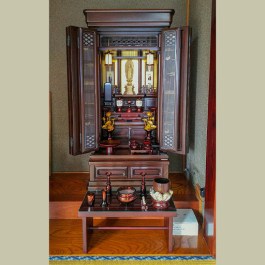
Butsudan2

We watched silently as the flames steadily consumed the butsudan (仏壇), or Buddhist altar that represented the gathered family’s dramatic break from the false gods they and generations before them had previously served. A butsudan is a shrine commonly found in temples and homes in Japan. It basically consists of an ornate wooden cabinet that typically houses a Buddhist religious icon and other accessories known as butsugu. These items are usually candlesticks, bells, incense burners and elaborate dishes where rice, tea or fruit are placed as an offering to deceased ancestors. A photo, memorial tablet (ihai), or ashes of a venerated family member are often placed within the butsudan, which represents a unique combination of traditional Buddhism and ancestral worship. Local Buddhist priests are usually called in to conduct periodic formal ceremonies in front of the butsudan, as determined by the date of the deceased’s death. Many households also maintain a simple daily ritual at the Buddhist altar of offering prayers, putting out food or burning incense; this responsibility usually falls on the wife.

Worship before the butsudan was traditionally viewed as an essential element in Japanese life, as it represented the center of a family’s spiritual faith and their historical heritage. While this practice is still quite common in the more rural areas of Japan, the responsibility of maintaining the family Buddhist altar is a burden modern Japanese are increasingly unwilling to bear as their religious convictions and lifestyles continue to evolve. The high price of these butsudan and the space they require in crowded homes are additional deterrents to owning one.

The butsudan is not to be confused with a kamidana (神棚), which is a Shinto god shelf and represents an entirely different religion unique to Japan. Many Japanese adhere to both Buddhist and Shinto practices. In contrast to the butsudan, kamidana are much more simplistic in appearance and are even sold as inexpensive kits at the local hardware store if you want to construct your own. The general purpose of a Shinto god shelf is to house a local Japanese kami or spirits, which are believed to inhabit all things. According to Japanese mythology, there are eight million of these quasi spirits who should be properly venerated.

Unlike a butsudan, a kamidana is typically placed high on a wall above eye level in a place where people will not walk under it. The Shinto god shelf contains a variety of items, but the most important one is the shintai. This is an object designed to house a particular kami, by providing a physical form to enhance worship. A shintai is usually a small circular mirror, but it can also be a stone, jewel or some other object with symbolic value. Worship at a kamidana is believed to invite success or good fortune, so is it is quite common to see Shinto god shelves on prominent display in places of business.

Idolatry actually comes in many forms and is not limited to images or objects commonly condemned in the Bible and currently present in Japan. The Ten Commandments begin with a prohibition of placing any other gods before the One True God where one constructs images of such gods or bows in worship before them. While very few of us place such obvious idols in our homes and worship them, our hearts are unfortunately inclined to value people, things, or objectives ahead of God and wrongfully give ourselves to them. Such “gods” should have no place on the shelves of our lives.

Protruding Nails

“Let your light shine before others, that they may see your good deeds and glorify your Father in heaven.” Matthew 5:16

protruding nail

Many years ago I took a number of Japanese visitors to an event in the United States where the performers on stage tried to recruit volunteers from the audience to participate in the action. Everyone around us eagerly thrust their hands into the air begging to be chosen, but my Japanese guests shrunk back, doing their best to become invisible. I was slightly amused as I witnessed this contrast in reactions and obvious clash of cultures. My Japanese friends were equally puzzled by the circumstances and later asked me, “Why are Americans so eager to rush on the stage and make fools of themselves?” To which I casually replied, “It’s the American way!” While my answer was rather shallow and primarily intended to draw laughter, it did partially capture the vast differences that often separate us as different cultures defined by different values.

The Japanese have a famous proverb that goes, “The nail that sticks out gets hammered in” *(出る釘は打たれる), which succinctly captures the previously described scenario. Due to Japan’s centuries of intentional isolation as an island nation and its mono-ethnic makeup, diversity is generally not encouraged. This serves as a stark contrast to the melting pot of cultures and ethnic groups that typically characterizes the United States, where individuality and the expression of it is considered a high value. However, in Japan, deviance from the norm is often met with resistance, like a protruding nail that is routinely hammered in so it will match the others. Group mentality and the pressure to “fit in” encourages conformity on many levels in Japan, so few are willing to face criticism and risk being singled out. This mindset can be a powerful tool to mobilize effort and energy into a cohesive direction for a particular objective, but it has the drawback of shutting down independent thought and action that sometimes might lead to better outcomes.

Of course, there are exceptions to this trend and nowhere is this more evident than the variety of street fashions in the Harajuku district of Tokyo, where young people express their individuality through unusual clothing and makeup combinations. In addition, some public figures may shun conformity in order to achieve success and are ironically admired for their boldness and innovation. But among the general masses, the desire for safety and tranquility continues to drive responses and few are willing to take the risks that come from being a nail that sticks out.

Jesus, however, essentially called His followers to be that protruding nail. While this presents unique challenges for Japanese believers seeking to live out their faith in a non-Christian culture, it is a problem that all true followers of Christ must wrestle with as the Kingdom of God inevitably clashes with the kingdoms of this world. As the people of God, we are to be actively engaged in a spiritual battle where our good deeds and testimony bear witness to the greatness and mercies of God to others around us. This way of life, of course, leaves little room for shrinking back into a self-protective mode for fear of criticism or rejection. Our light must shine as we become protruding nails within the cultural context where God has uniquely placed us. After all, the ultimate hammer resides in God’s hand and it is His judgment that matters in light of eternity.

* The proverb originally stated, “The stake that sticks out gets pounded,” which doesn’t significantly change the current nuance.

Coming of Age

“But solid food is for the mature, who by constant use have trained themselves to distinguish good from evil.”                                                               Hebrews 5:14

seijinshiki

The young men and women were in a festive mood and looked resplendent in their formal attire as they gathered at the local public hall to celebrate their coming of age. The ceremony is known as a “seijinshiki” (成人式) and is held once a year to congratulate those who have entered into adulthood by turning twenty years old. Young ladies are typically happy to use the occasion as an excuse to dress up in an exquisite, rented furisode style of kimono that is considered appropriate for unmarried young women. Many of the young men may opt to don the traditional dress of a dark kimono with a hakama, but the majority now seem to prefer formal Western clothing such as a suit and tie.

Following the public ceremony, these new adults will often separate into groups with their friends to attend parties where they may celebrate their newly acquired legal freedom to drink alcoholic beverages. At some point in the day, many will accompany their families to a local shrine to pray for health and success as they pass this significant life milestone. It is also common to sit for a formal portrait picture to commemorate the occasion.

The roots of the seijinshiki are reportedly traced back to the eighth century, when a famous young nobleman sported new clothing and a hairstyle to mark his passage into adulthood. However, the formal holiday was not established until centuries later in 1948 when January 15 was set aside as “Seijin-no-Hi,” or “Coming of Age Day.” This annual holiday was recently changed to the second Monday of January to create a three-day weekend. Japan also recently lowered the legal age of adulthood from 20 to 18 years of age, which will take effect in 2022. This alteration in the law will grant the newly created younger class of adults permission to marry, sign contracts and take out loans without parental approval. However, smoking, drinking and gambling will still be prohibited until the traditional age of 20.

The Japanese characters for seijin (成人) are loosely translated as “coming of age,” but they mean literally to “become a person.” In a sense, we are all engaged in the daily act of “becoming,” regardless of our age, as none of us are what we should be, or eventually will be, because change is an integral aspect of life. Hopefully, such changes are of a positive nature where we are progressing in character, abilities and life skills to become contributing members of society. However, such progression to higher things and nobler character cannot be taken for granted in the physical world and the same is true in the spiritual world. As children of God, we are exhorted to press on to maturity where we can discern good from evil and increasingly choose the former as we move deeper into spiritual adulthood. Just as all parents long to witness progress toward adulthood in their offspring, God desires to see a movement towards spiritual maturity in all His children. In that sense, every day is a “Coming of Age Day” for the children of God as we aspire to become all that God intends for us to be.

Forget the Year Parties

“Forgetting what is behind and straining toward what is ahead, I press on toward the goal to win the prize for which God has called me heavenward in Christ Jesus.”            Philippians 3:13b-14

bonenkai3

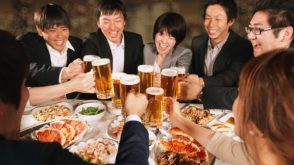
When I was invited to attend my first bōnenkai as a new missionary, I was rather flattered to be included, but I was clueless as to what would actually transpire. Immediately after my arrival for the event, my two Japanese friends seemed quite determined to ply me with alcohol while they got steadily plastered themselves and consequently, became increasingly silly. These friends also persisted in asking me quite personal questions that were rather out of character for these normally dignified businessmen. Previously, I had naively thought that a bōnenkai was a simple end-of-year party with close friends, but I later learned that the Japanese characters for bōnenkai (忘年会) mean literally, “forget the year gathering.” In other words, it is essentially a Japanese drinking party for co-workers or friends where everyone is encouraged to let their hair down through the consumption of alcohol and, in the process, collectively forget the troubles of the past year. Even the normal lines that separate the boss from his business subordinates are temporarily erased during the festivities and whatever is said or done under the influence of alcohol is conveniently overlooked the following day.

Bōnenkai do not take place on any specific day, although they are usually held in December. They are not to be confused with New Year’s parties, which are referred to as “shinnenkai” (新年会 ) and are celebrated in the new year. Companies often sponsor bōnenkai for their employees, but circles of friends frequently organize their own forget-the-year gatherings. This tradition is said to have originated somewhere around the 16th century when groups of samurai lords gathered locally to commemorate their achievements of the past year. Following the abolishment of the feudal ruling system in the late 19th century and the rise of lifetime employment in the business world, companies began to incorporate and revise this old custom. What was previously an event exclusively reserved for the ruling caste eventually became a routinely scheduled gathering for all company employees in the yearly calendar. The following popular song, 今夜はHearty Party (“Tonight, Hearty Party”), by the famous pop singer Mariya Takeuchi, captures the ambiance or atmosphere of a typical Japanese bōnenkai. https://www.youtube.com/watch?v=lWlgvzXI8eY

Forgetting the past is often a helpful approach as we pursue a godly lifestyle and mindset that will honor God. The Apostle Paul alludes to the importance of sometimes “forgetting what is behind” (Philippians 3:13) because an unhealthy preoccupation with our failures in the past can impede God’s redemptive work in the present. Recognition of personal sin is certainly a healthy starting point, but a myopic focus on such matters can unintentionally blind us to the amazing truth of grace. This infatuation on past failures could in turn paralyze us with guilt, rather than motivating us to move forward in life as objects of God’s love. Everyone has committed acts of which they are ashamed, but through the power of the cross, we are released from the burdens of our past and set free to fulfill our eternal calling in Christ Jesus. Like a bōnenkai, we are exhorted to forget the troubles from our past, but as redeemed individuals, we must not neglect to celebrate in faith new and better things to come, while remembering where we came from. Our new life in Jesus compels us to forget, but at the same time, remember.

KFC & Christmas Traditions

For life is more than food, and the body more than clothes.” Luke 12:23

KFC Xmas

The presence of a life-sized plastic statue of Colonel Sanders dressed in a Santa suit in front of a Kentucky Fried Chicken store marked our initial realization that Christmas was celebrated differently in Japan. While we associate Christmas with many traditions in the West, dining on KFC chicken is not one them. However, in Japan, eating Kentucky Fried chicken is widely considered to be the meal of choice for Christmas. This unusual tradition began in 1974 when KFC promoted fried chicken as a Christmas meal calling it “Kentucky Christmas” (ケンタッキークリスマス) as part of a clever advertising campaign. Since Japan had few established Christmas traditions at the time, and turkey was generally unavailable, the idea quickly caught on and became part of the Japanese psyche of how Christmas should be properly celebrated. This custom became so popular that approximately 3.6 million Japanese families now order their Kentucky Christmas weeks in advance and then endure long lines to pick up their holiday meal. Perhaps this link to a KFC commercial with a popular Japanese Christmas song will make you want to rush out and order your own Kentucky Christmas! https://youtu.be/umHfb1JHovA

Christmas Day is not designated as a national holiday in Japan, which alters some of the rhythms we normally associate with Christmas. For example, the Kentucky Christmas, or some other substitute, is generally eaten on Christmas Eve after all the members of the family have returned from work or school. The meal is almost always followed by what is called a “Christmas cake,” which is traditionally a sponge cake decorated with strawberries and whipped cream. Some say this custom began when strawberries were difficult to purchase at that time of year, so they represented economic prosperity and the red color was associated with Christmas. In recent years, Pizza Hut has tried to start its own Christmas campaign and was successful to such an extent that pizza is now considered acceptable Christmas cuisine. With the passage of time and through increasing influence from the West, the concept of Christmas has become wildly popular in Japan, as evidenced by the presence of Christmas decorations and music in most stores, special Christmas light displays, and an exchange of presents. In addition, many families now purchase and decorate their own Christmas tree.

Lost in this commercialized holiday shuffle is a genuine understanding of the true meaning of Christmas. Thanks to Japanese merchants eager to capitalize on the event and misconceptions imported from abroad, Christmas in Japan has largely become a shallow celebration rooted in self-indulgence earmarked by food, fun music, appealing decorations and shopping. While these things may be enjoyed and none of them are essentially bad, an overemphasis on the trappings of Christmas can easily lead one to lose a balanced perspective that “life is more than food” (Luke 12:23). In reality, we have far greater needs that can ever be filled through commercial promises of food, festivities and even family. Christmas represents something much deeper that only God could provide. Rather than a Kentucky Christmas, God’s campaign to redeem mankind began with a Bethlehem Christmas, which is a story worth retelling and certainly celebrating. This is “food” that will satisfy for eternity.

Getting Clean

“Who can say, “I have kept my heart pure; I am clean and without sin”?” Proverbs 20:9

onsen

Japan is located on the Pacific Ring of Fire, a 2,500-mile geographic arc notorious for destructive volcanic activity and earthquakes, but it is accompanied by a major benefit… a preponderance of onsens. Onsens (温泉) are geothermally heated springs, found throughout Japan, and they are widely used for bathing. Because of the abundance of such naturally heated water, the act of bathing is deeply rooted in Japanese culture and has become a popular form of relaxation, not just a utilitarian exercise in hygiene. The entire economy of some small towns is driven by the availability of onsens in their area, attracting thousands of tourists eager to test the local waters. Large onsen hotels draw customers by offering a variety of baths in an attractive venue and serving a special meal. Almost all of the onsens, whether they are large or small, feature an outdoor portion called a “rotenburo,” which is usually situated in a peaceful, natural setting to enhance relaxation.

Onsens are not to be confused with a sento, which is also a public bath, but the water in a sento is heated artificially and therefore doesn’t contain any local minerals which onsen operators eagerly advertise to attract customers. The universal symbol for hot springs in Japan is the simple mark ♨, but as alternative, the Japanese characters 湯 or more simply ゆ are frequently used. These symbols guide eager patrons searching for a place to unwind from the stress of everyday life while serving the dual purpose of getting clean.

The procedure for using such bathing facilities is universal in Japan and instructions for the inexperienced foreigner are often posted. Bathing stations come equipped with stools, showers, faucets, a portable basin and usually, soap and shampoo, although many customers choose to bring their own, along with a small hand towel for washing. The ritual of bathing MUST be performed before entering the pools shared with others and many bathers discretely use their personal hand towel as a form of modesty. Once a popular practice, mixed bathing has almost disappeared in Japan, but many places still prohibit tattoos in an effort to discourage members of the yakuza (Japanese mafia) from coming. Some older Japanese apartments did not have their own bath or shower, so people who resided in such places routinely used the neighborhood “mom and pop” onsen or sento to get clean. These, too, are rapidly becoming relics of the past as the trend is towards larger venues offering a variety of options, including a restaurant and shops selling local merchandise.

People frequent onsens for a variety of reasons, but the basic objective remains the same: to get clean. However, there is an essential form of cleanliness that is not available at the local hot spring or through any human endeavor. That is a cleansing of the heart. No amount of scrubbing, soap or hot water can rid us of our sinful thoughts, words and actions before a holy, righteous God. Recognizing this conundrum, the author of Proverbs 20:9 wrote in despair: “Who can say, “I have kept my heart pure; I am clean and without sin”?” The obvious, yet unsettling answer to his question is: “no one.” But fortunately, there is one exception to this rule. That is Jesus, the Son of God, who alone lived a sinless life and through His sacrificial death, provided cleansing and forgiveness for all. Therefore, the Apostle John could declare with boldness: “If we confess our sins, he [God] is faithful and just and will forgive us our sins and purify (cleanse) us from all unrighteousness.” (I John 1:9) That is real cleansing.