
Fake Food

“My food,” said Jesus, “is to do the will of him who sent me and to finish his work.”            John 4:34

fake food samples2

Unable to read the menu, I managed to coax the waitress to the front of the restaurant through a series of charades and broken Japanese and pointed to what I wanted to order. Enclosed in a glass case was the entire food repertoire appealingly displayed, but none of it was real. Known as shokuhin sampuru (食品サンプル), or “food samples,” these are exact replicas of dishes offered by the restaurant.

The production of these food models has evolved into an art form over time and it was initially pioneered in the late 1920s by Japanese artisans who used paraffin for their creations. These fake food samples enabled customers to order food without the use of menus, but over time, paraffin proved to be an inadequate medium as the colors slowly faded when exposed to heat or sunlight. Now constructed using a synthetic resin called polyvinyl chloride, these shokuhin sampuru can last indefinitely. This improvement in technique has unwittingly hurt the fake food industry so it has tried to expand its market outside of Japan.

There is a great deal of craftsmanship required to produce these fake food models, so plastic food manufacturers fiercely guard their trade secrets to protect their share of the market. Models are often custom tailored to the individual menus of each restaurant, which makes them quite expensive. Most customers are unaware that the plastic food they casually survey behind the glass typically cost the proprietor of the restaurant several thousand dollars. Their attention is naturally focused on satisfying their hunger and hopefully, something on the menu will fill that need.

What then is real food? Ask a man, and he might say steak and potatoes. Ask a vegan, and they might say quinoa and kale. Ask a Japanese, and they might say rice and fish. But when Jesus was asked a similar question, He gave a totally different reply. He said: “My food is to do the will of him who sent me and to finish his work.” Obviously, Jesus was not talking about real food, or even plastic food, but a different kind of nourishment that is essential for our spiritual well-being. While we are certainly flesh and blood beings that need physical nourishment, our spiritual natures require sustenance as well. We were created to fill the purposes of God, not just fill the physical desires or needs of the flesh. As Jesus famously expressed in the Sermon on the Mount, we are to hunger and thirst after righteousness (Matt. 5:6). We need both physical and spiritual food as part of a healthy diet. At the same time, we need to be cautious of the many “fake foods” that can entice us away from the greater things of God. Bon appetit!

My Protection

“Blessed are all who take refuge in him.”    Psalm 2:12

omamori2

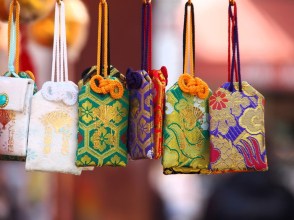
During my first taxi ride in Japan, I couldn’t help but notice an elaborate ornament swinging back and forth on the rear view mirror as the driver navigated through traffic. I later learned that this and a whole array of similar talismans or amulets are called “omamori” (お守り), which literally means “protection.” These small good luck charms are typically made from paper or wood and are usually protected inside an ornate bag along with a written prayer. They are sold at temples and shrines throughout the country with the promise that they will bring good fortune or protection to the bearer, but cynics largely view them as a clever means to raise money.

These omamori can be spotted on bags, hanging in cars, attached to various objects and are even used as cellphone straps. They come in many shapes, sizes and colors and different ones are advertised to possess different powers. Some offer businessmen success in the financial realm while others promise students a good outcome in their test scores. Other omamori guarantee general prosperity, protection from evil, happiness, traffic safety, good health, fertility, and a happy love life. The simple thought behind such charms is that the power and strength of the gods is somehow invested in these brocaded bags so they are not to be opened, as the blessing could be released and thereby lost.

It is generally understood that the shelf life of an omamori is only good for one year, which means a replacement must be purchased, conveniently bringing additional revenue to the local shrine or temple. These “expired” good luck charms must be properly disposed of, usually by burning, preferably at the place they were originally purchased. Eager to grab a share of the enormous profits in the good luck industry, it is now common for stores to sell generic omamori featuring the images of Hello Kitty, Mickey Mouse, Snoopy and other popular characters.

The search to obtain protection from harm or to procure good fortune is a natural inclination of the human heart. Such a quest can take many forms and it is often shaped by our culture, circumstances and worldview. But all such attempts to manipulate one’s personal future are doomed to failure because they are based on the false assumption that we are in control of our own fate. We all seek desired outcomes in life that avoid pain and bring pleasure, but it is arrogant to think that we are in control of such matters, or that we possess the discernment to always know what is actually good or bad for us. Our uncomfortableness with the unpredictability of life is in fact a reminder that we should seek protection and refuge in God, who is our only omamori, or real source of protection. Everything else is a mere trinket.

Clean Living

“Who may ascend the mountain of the Lord? The one who has clean hands and a pure heart.”                    Psalm 24:3-4a

Water purification 2

Whoever coined the phrase “cleanliness is next to godliness” would have loved Japan. Every morning, like clockwork, one can witness innumerable home owners and shop keepers vigilantly removing every trace of offending dirt, trash or stray leaf that invaded their designated territory overnight. Venture into the nearby train station, and there you can observe an army of cleaning personnel engaged in the never-ending task of mopping floors, polishing walls and windows and wiping down escalator handrails. Outside, white gloved taxi drivers maintain spotlessly clean vehicles for their customers and inside, the Japan Rail staff scurry around tidying up bullet trains in under seven minutes . To acquire these important life skills, students are required to clean their own classrooms and scrub the hallways as a part of their school curriculum.

Neighborhoods periodically schedule an o-sōji (大掃除), or “big cleanup” using volunteers to spruce up their local parks and common areas. Local churches and many small businesses follow the same pattern by routinely putting o-sōji’s on their calendar and everyone is expected to participate. Perhaps some of this emphasis on cleanliness is derived from the Shinto religion, which places great emphasis on purity, where visitors are encouraged to wash their hands and face before entering a shrine to worship. This practice, referred to as “harae” (祓), is a form of purification that attempts to establish a pure soul and mind in the worshipper. This is done through a symbolic washing with water or by having a Shinto priest shake a carefully constructed wand of white paper streamers over a person, place or object for good fortune. The rudimentary idea is that if you want to enter the presence of the gods and seek their blessing on you or your possessions, cleanliness is a prerequisite.

As the psalmist meditated on the holiness and purity of God, he wondered how it was possible for anyone to approach the Creator of the Universe, in whom not the slightest trace of impurity or defilement existed. Such a quest seems impossible, like the scaling of a lofty, inaccessible mountaintop. Only those with clean hands and a pure heart dare to attempt such a climb, but the uniform testimony of scripture is that no one has such qualifications as no one is without sin (Romans 3:23). In addition, no religious ritual can remedy this shortcoming. Thankfully, by the grace of God, in spite of our dirty hands and impure hearts, we are able to enter into God’s presence through the death and resurrection of His Son, the Lord Jesus Christ, who serves as the appointed mediator between God and man. (I Timothy 2:5) His cross testifies of the love of God to redeem us and an empty tomb provides proof of His power to make that a reality. Cleanliness is indeed next to godliness, but only God can provide the cleaning we so desperately need.

Sorting Out the Trash


“But whatever were gains to me I now consider loss for the sake of Christ. What is more, I consider everything a loss because of the surpassing worth of knowing Christ Jesus my Lord.”             Philippians 3:7-8a

gomi3

Everyday life in Japan can present quite a few challenges for newcomers. For example, the correct separation of the trash (called “gomi” in Japanese) is a ritual that foreigners must learn in order to live in harmony with their neighbors and demonstrate cultural sensitivity.

In Japan, gomi is classified into many different categories. Herein lies the immediate challenge for a novice. First of all, it is essential to know the basic genres of gomi, which are burnable, unburnable and recyclable. In addition, there is often a separate category for clean plastics and another one for hazardous waste items like batteries, thermometers etc. Additional fees are charged for the pickup of larger stuff ranging from furniture to refrigerators. Collection days for differing categories of gomi, using specific collection bags, vary according to one’s local neighborhood and city regulations. The list of rules defining such matters is endless. For example, aerosol cans must be carefully punctured, newspapers and clean milk cartons should be tied up with a specific string, fluorescent tubes must be placed in their original boxes and branches must be bundled in tidy piles not exceeding a certain length etc. etc.

The classification of certain items can differ from area to area and the breakdown of recyclable categories can be even more complicated. Thick pamphlets are produced and duly distributed to insure compliance and protect well-intentioned people from folly. Any gomi that is incorrectly prepared or deposited on the wrong day is rejected by the trash collectors with a large X sticker, with the expectation that the gomi transgressor will shamefully haul it back home. As a consequence of all these regulations, everyone maintains multiple garbage cans in their homes designated for different types of gomi. All members of the household are well drilled on what gomi goes out on what day and everyone (incredibly) cooperates.

In Philippians 3, the Apostle Paul gave great advice about sorting out “trash” of a different sort that we would do well to heed. He testified that there are many things this world has to offer that we may be tempted to value or collect, but we must constantly evaluate them with a heavenly perspective. Upon closer inspection, they pale in value when compared to the eternal worth of knowing Jesus. Like sorting out the trash, we need to be good stewards of what has been entrusted to us while also exercising diligence in disposing of anything in our lives not closely aligned with God’s purposes.

Cash Only

“Do not store up for yourselves treasures on earth…”  Matthew 6:19

money

A tray full of money representing roughly half a million dollars in Japanese cash was nonchalantly placed in front of us like afternoon tea. My colleague and I stared open-mouthed at the mound of money and couldn’t resist taking pictures. We had just purchased a building and of course like everything else in Japan, cash was used to seal the transaction. The seller then proceeded to place his portion of the stack of bills in a paper bag and the bank employee routinely whisked the larger pile back to the bank vault.

We should not have been surprised. After all, cash is routinely used for everything in Japan. All our shopping is done in cash. We pay our rent in cash. Even higher priced items like cars are purchased with cash. Most people routinely carry several ¥10,000 notes (worth roughly $100 each) in their wallets. Although changes are slowly taking place, Japan is basically a cash-driven economy. Cashiers are trained to efficiently return change without mistakes and cash dispensing machines are available everywhere to facilitate this dependency on cash. While Japanese normally adapt quickly to newly emerging trends, they have been slow to wean themselves from using hard currency for daily transactions. In this matter, Japan with its low cashless rate in 2015 of only 18%, stands in marked contrast to neighboring Asian countries like China (60%) and South Korea (89%).

There are many reasons behind this propensity to use cash. Chief among these would be Japan’s antiquated banking system that encourages cash transactions, but also not to be overlooked is the general public distrust in anything other than real currency. The low crime rate in Japan also encourages people to carry around large amounts of money without fear of being robbed. However, the government is trying to change the public’s dependency on cash since it is inefficient and puts Japan at an economic disadvantage compared to other Asian countries. Signs of such changes are increasingly evident as more Japanese are using their smart phones for financial transactions and the use of prepaid cards is becoming much more common.

Jesus taught a lot about money and frequently used it as a topic to drive home important spiritual principles in the form of parables. He never discouraged the usage or accumulation of money, but rather, warned about it capturing our hearts and pushing God out. The things we treasure in this life that Jesus refers to are not limited to just money or material possessions, but include all our resources, such as our time, energy, God-given gifts, expertise and acquired skills. These are not to be hoarded just for our own benefit, but to bless others as God directs. Treasure on earth may last for a lifetime, but treasure in heaven, Jesus taught, lasts for eternity. That is the commodity that should underpin all of life’s transactions.


Paper Drivers

“For we are God’s handiwork, created in Christ Jesus to do good works…”                               Ephesians 2:10a

On the morning of my 16th birthday, I was first in line to take my driver’s license test, but promptly failed my initial attempt. Eager to gain my freedom through driving, I returned the following day and this time managed to bring home the coveted prize. Obtaining a driver’s license was viewed as a major step towards adulthood, almost like a rite of passage. The Japanese, however, seem to be much more ambivalent about achieving this goal. In fact, many who have obtained their driver’s license don’t even use it. In Japan, they are called “paper drivers” (ペーパード­ライバー), indicating that although they possess the paperwork certifying their right to drive, they choose not to exercise it.

When we first heard of this phenomenon, it struck us as rather odd, particularly in light of the time, expense and effort required to obtain such a license in Japan. But as we settled more deeply into the Japanese culture, we realized there are many reasons why some people may elect not drive, despite being authorized to do so. For example, many Japanese, especially those living in urban areas, simply do not need to drive due to the availability of efficient and economical public transportation systems. In space-starved areas (of which there are many), parking is also very pricey, so this can further discourage car ownership. These are significant factors, but perhaps the main reason for becoming a paper driver is a matter of confidence, or lack of it. Venturing out on crowded, narrow roads is not for the faint of heart, especially when alternative modes of transportation are readily available.

When we gaze across the church landscape around the world, it seems that the same phenomenon, in a different form, exists in many churches. Sadly enough, many believers dutifully report at their appointed time Sunday after Sunday, but neglect to exercise their full calling and privileges as the redeemed people of God. They are what we might call “paper Christians.” They have a license to drive, but they choose not to. Although they were created to fulfill the purposes of God, they lead measured lives, refusing to venture out and trust God for whatever lies ahead. In this regard, there is a “paper driver” in all of us, but we must resist our natural inclination to live primarily for ourselves. Instead, we were created to do good works. While there may be many valid reasons for not driving a car in Japan, we are entrusted with all the authority and power we need to fully accomplish God’s purposes on earth. We walk, and drive, by faith.

Scattered Petals

“He has made everything beautiful in its time. He has also set eternity in the human heart; yet no one can fathom what God has done from beginning to end.”            Ecclesiastes 3:11

cherry blossoms 6

The normally clear, flowing stream below me was covered with a carpet of freshly fallen cherry blossoms slowly making their way downstream. While maintaining my perch on an ancient footbridge, I raised my gaze to an equally mesmerizing random cascade of petals falling from the trees lining the water’s edge. The incredibly beautiful blossoms from only a week ago were now quickly scattering like snowflakes in the wind, affirming once again the brevity and fragility of all things. Thoughts on life, death and renewal seemed to disperse to the edges of my mind like the scattered petals all around me.

The cherry blossom is the unofficial national flower of Japan; it permeates art, poetry and the national consciousness of the Japanese people on various levels. Called “sakura” (桜) in Japanese, this delicate flower explodes upon the landscape every spring throughout Japan. Its greatly anticipated arrival is celebrated as the cherry blossoms begin to bloom in the southernmost parts of Japan in mid-March and usually complete their annual cycle around early May in the northern prefecture of Hokkaido. The advent of the sakura is a major news event and thousands flock across Japan to nearby parks to picnic (called “hanami”) under these gorgeous trees. There they revel in the temporal beauty of cherry blossoms representing the renewed glories of spring.

The author of Ecclesiastes likewise marveled at the beauty of creation and in so doing his thoughts were drawn beyond himself to the Creator of all things. It is typically not easy to move from the shallow things of life to deeper, eternal thoughts, as so much seems to get in the way. Therefore, to assist us in this all important journey, God has endowed the world around us with visible reminders of His presence and benevolent care. Such displays are worth celebrating and reflecting upon as they have the power to draw us away from the mundane, or routines of this life, to the greater things of God. As God has placed eternity in our hearts, the beauty of this created world beckons us to slow down and meditate on His existence.

Toilet Technology

“…they realized they were naked; so they sewed fig leaves together and made coverings for themselves.”         Genesis 3:7b

Toilet 4

Japan had a problem, so researchers and innovators solved it in a uniquely Japanese way—they invented the Otohime (Sound Princess) toilet accessory. Back in the 1980s, Japanese environmentalists were alarmed when they discovered that women across the country were wasting water in public restrooms by flushing the toilet multiple times in order to mask bodily noises. Initially, an education campaign to save on water was launched to solve this problem, but it had minimal impact. In response to this crisis, Toto, a major Japanese toilet manufacturer, developed a toilet noise masker, which helped women preserve their dignity and the country to conserve water. These simple electronic devices were initially mounted in bathroom stalls where the occupant could easily activate it by simply pressing a button, producing the equivalent sound of a flushing toilet. Soon, pocket-sized versions were sold that could be taken anywhere, which are now being replaced by a phone app that serves the same purpose.

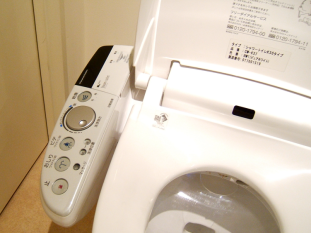
This is only one example of how Japan remains on the cutting edge of toilet technology as the traditional “squatty potty,” once commonly used throughout the country, heads towards extinction and gives way to the multi-faceted “washlet toilet.” These modern bathroom marvels exhibit several functions, ranging from seat warmer, pulsating water jets for bidet and posterior wash, automatic lid opening, automatic flushing and a blow dryer. Some versions even play relaxing music for the user. It is predicted that more advanced models will soon include medical sensors that will be able to measure blood sugar, pulse, blood pressure and even the body fat of those sitting upon them. Talking toilets that greet the occupant and accept verbal commands are also in the development stage. Fortunately, most buttons on these ceramic wonders are now identified by pictograms, as earlier Japanese only models led to some rather comical situations for foreigners unable to decipher the instructions.

While we may admire such technology that deals with unpleasant situations, it certainly has its limits. Like Adam and Eve who vainly tried to hide their disobedience to God through makeshift clothing, all attempts to cover our sins before our Maker are comparable to a toilet noise masker. He is not deceived by what goes on behind the closed doors of our lives while we make futile efforts to preserve or promote a false virtuosity to others. Improved technology can certainly help prevent the wasting of water, but only full obedience and an open heart to the things of God can avert the wasting of our lives.

An Uncluttered Life

“Let us throw off everything that hinders and the sin that so easily entangles. And let us run with perseverance the race marked out for us.”  Hebrews 12:1b

Clutter

The United States and many other countries have a problem, so a diminutive, young Japanese woman is ready to help. Her name is Marie Kondo and she is an expert in assisting people to declutter their lives. She recently rocketed to fame through her popular book, “The Life-Changing Magic of Tidying Up” and is now recognized worldwide as an organizing consultant. In countless seminars, and now through a Netflix TV series, Ms. Kondo preaches that if one tidies their personal space, it will transform their life. She explains that her philosophy of organization is partly inspired by the Japanese Shinto religion, with its emphasis on purity and cleanliness.

Popularly called the “KonMari” method, Marie Kondo’s approach to decluttering basically consists of gathering all of one’s possessions, one category at a time, and keeping only the items that “spark joy” in the owner. The items that remain are then neatly organized in a system to help maintain an uncluttered lifestyle. However, I must confess that my understanding of this methodology is still incomplete because most men, like myself, probably have a few old T-shirts that bring them “joy”, but such items likely spark different feelings from their wives! Perhaps Marie has an answer for this marital dilemma somewhere within the pages of her book.

Some popular US TV reality shows, particularly Hoarders, offer a revealing glimpse into the psychological depth and physical extremes a cluttered lifestyle can reach if left unchecked. But such extremes do not discount the real need for the majority of us to rid our lives of unneeded possessions that steadily fill our closets, drawers, garages and even rented storage units. While this appears to be an escalating problem in affluent countries, the greater need for decluttering occurs on a spiritual level and is common to all cultures. Left unchecked, overt sin, materialism, worry, jealousy, bitterness, anger and a host of other heart issues can dominate our lives, weigh us down and prevent us from running our spiritual race well, as the author of Hebrews points out.

Jesus warned His followers often about the danger of a life focused on possessions or anything else that could potentially distract us from our heavenly calling to pursue God and the things He values (Matthew 6:19-34). Marie Kondo likes to say “Tidy your space, transform your life,” which is certainly true on a limited, physical level. However, eternal, life-changing transformation, is a work of God that goes hand in hand with a heart set on accruing eternal treasure.

For more information on Marie Kondo, check out the following trailer:  https://www.youtube.com/watch?v=WvyeapVBLWY

Snow Country

“Wash me, and I will be whiter than snow.” Psalm51:7b

Snow CountryWhen we experienced our first major snowfall in northern Japan as new missionaries, we took lots of pictures and videos thinking, “This is a lot of snow!” However, with each successive snowfall over the following months and many rolls of film later, we finally grasped what a “lot of snow” really was. As a snow country novice raised in Texas, I was clueless. We had been forewarned about what to expect by our senior colleagues, but that was no substitute for actually experiencing firsthand drastic winter conditions. Over twenty feet of snow per year is a LOT of snow.

Northern Japan actually boasts of having the top two snowiest cities in the world, Aomori City and Sapporo, the later in which we resided for many years. The major city of Sapporo spends almost 200 million dollars every winter for snow removal as it struggles to keep 3,355 miles of public roads and sidewalks clear for vehicles and pedestrians. Gigantic snow removal machines prowl the city streets at night like nocturnal animals carving out tunnels as they battle the icy elements. Over the course of winter, enormous snow mountains several stories high begin to emerge throughout the city in the form of ancient ziggurats, standing as dramatic monuments to the challenges of winter weather.

Individuals are armed with their own weapons for winter warfare, which are conveniently sold in most stores. These would include snow shovels in various sizes and colors, snow blowers, and the so called “mama dump,” which is a large two-handed scoop used for hauling away the unwanted snow. Many houses now come with heated parking spaces, eliminating the need for snow removal; snow melting machines are also quite common. These innovations are quite useful since places to dump all the white stuff are scarce and highly contested. Families are keen to live next door to local parks where their kids can play, but these locations are also highly coveted as a dumping ground by veteran snow removers. Playground equipment soon disappears, eventually reemerging in the spring.

One important lesson we learned early in our snow removal career was to ALWAYS leave one’s snow shovel standing upright in the snow to avoid losing it during the next blizzard. The same principle applies to anything of value, as it will quickly disappear in an unexpected snowstorm and will likely remain lost until the spring, when the accumulated snow finally recedes.

Like objects hidden in the snow, the most blatant and ugliest of sins can be hidden from public view. Certainly no one but God knows the depravity of our hearts. Fresh snowfalls may cover a multitude of eyesores, but they eventually melt away revealing the unsightly reality that often lays beneath. This is why the Psalmist prays not to have his sins covered by snow, but to be white like snow. There is a huge difference between these two approaches. True repentance and holy living is not just a cover up or denial of past misdeeds, but rather, a complete forgiveness based upon the amazing power of the cross. While men can remove snow, only God can remove sin.