
Obligatory Chocolate

“I am obligated both to Greeks and non-Greeks, both to the wise and the foolish.”         Romans 1:14

Valentines3

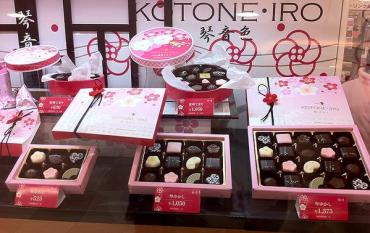
A beautiful arrangement of various chocolates greeted me as I walked into the store, reminding me that Valentine’s Day was right around the corner. If you thought romance was in the air, you would be entirely mistaken. What was on display is actually known as “giri choco” (義理チョコ), which means literally “obligation chocolate.” This chocolate is normally purchased by women and given to their male colleagues, casual acquaintances and others as an expression of their friendship or gratitude. Romantic feelings have nothing to do with it. Giri choco is customarily given by women to the men in their life circles to help them feel appreciated during the nation-wide celebration. But there is another sub-category called “cho-giri choco” meaning “ultra-obligation chocolate.” This is given to certain men solely out of duty because you feel trapped by social circumstances to include them.

It is important to note that giri choco is not to be confused with “honmei choco” (本命チョコ), which is “true feeling chocolate” and is normally given to husbands, boyfriends or even prospective boyfriends. Honmei choco is traditionally a higher grade of chocolate that often comes in special shapes, arranged artistically in ornate confectionary boxes and is considerably more expensive.

The subtle differences between these two types of chocolates helps the recipient to avoid getting his signals crossed and misinterpreting the giver’s intent. While men are the primary recipients of chocolate in Japan on Valentine’s Day, they are certainly not off the hook. In order to sell more chocolate, the National Confectionary Association cleverly designated March 14 as “White Day,” when men must reciprocate by giving chocolate (often white chocolate), cookies, flowers or other small gifts to the women who gave them chocolate exactly one month earlier. Obligation flows in both directions; no one escapes.

“Giri” is a very important value among the Japanese, although it can at times feel oppressive and has even been described as the “burden hardest to bear.” Obligation is certainly a lower form of motivation, but there are good and bad aspects to it that should not be confused. An example of obligation as a good thing can be found in the Bible, when the Apostle Paul gladly accepted the obligation to preach the gospel to others, not viewing it as a burden, but rather as an incredible privilege (Romans 1:15-17). But sometimes even the noblest forms of obligation can subtly morph into patterns of legalism and undermine the very freedoms Jesus purchased on the cross at great cost to Himself. The fine line separating freedom and obligation can at times be hard to discern, but God has provided His Spirit to help us distinguish these matters so that we might offer up our best to Him. After all, Jesus did not enter our world to redeem us because of obligation, but rather, out of love. That is a gift worth celebrating and imitating.

Sleeping on Trains

“In peace I will lie down and sleep, for you alone, Lord, make me dwell in safety.” Psalm 4:8

men-sleeping-on-train

As I made my way across Tokyo to my destination, I quietly congratulated myself for securing a seat on a very crowded commuter train. However, I soon had misgivings about my good fortune when a stranger’s head awkwardly started to nestle on my right shoulder and the passenger slumped on my left began to snore. Momentarily trapped by my weary traveling companions, I studied the other passengers on the train. Approximately half of them were in a semi-comatose state and the others, while awake, were equally detached from life around them as they silently focused on their mobile devices. For a moment, it felt like I had mistakenly boarded a zombie train in an apocalyptic world and I would soon become one of them!

This scenario is actually quite common in Japan, which explains why it is often described as a nation of sleep deprived people. Multiple surveys confirm this assessment, revealing that Japanese workers average only six hours and 22 minutes of sleep on work nights—the lowest in any industrial nation. Therefore, it is not unusual to see people taking catnaps in cars, restaurants, public transportation, classrooms and park benches as they try to catch a few moments of rest so they can press on with the unrelenting demands of life. The Japanese word for “nap” is 居眠り(inemuri) which means literally “sleeping while present,” a description that underscores one’s ongoing attempt to engage with life while at the same time momentarily checking out. Such napping is often considered a sign of diligence in Japan and is quietly accepted by employers and fellow citizens as an unavoidable fact of life. This propensity to sleeping in opportune moments on trains can create comical scenes often posted on social media. Many have even mastered the art of sleeping while in a standing position and almost everyone seems to intuitively know when to stir from their slumber as their stop approaches.

Obviously, continued sleep deprivation is not a healthy habit for anyone, but sometimes it is unavoidable due to the demands of family, health issues or work responsibilities. Some of these elements are beyond our control and can lead to chronic sleeplessness. However, there is often a spiritual aspect to this problem that we should keep in mind. That’s why we must frequently remind ourselves that God reigns supreme in the affairs of our lives so we should learn to rest in Him. Framed in these terms, sleep becomes almost a spiritual exercise as once again we place our burdens of the day and worries for tomorrow in the hands of a loving, all powerful God. That can lead to true rest.

Safety First!

“The Lord is my rock, my fortress and my deliverer; my God is my rock, in whom I take refuge, my shield and the horn of my salvation, my stronghold.”  safety first   Psalm 18:2


安全第一, meaning “Safety First,” is a sign commonly posted near construction sites and other locations where accidents could possibly occur. To make safety a priority in these areas, a small army of traffic directors are regularly employed throughout Japan to help drivers, bicyclists and pedestrians safely navigate around potential hazards. Since Japan is also a land frequented by natural disasters, emergency drills are routinely conducted to guide people in their response in the event of an earthquake, tsunami, typhoon, landslide or volcanic eruption. Evacuation routes and emergency shelters are clearly identified in every city and roles are assigned to minimize the loss of life when there is an emergency. To increase public awareness of such matters, September 1 is designated as Japan’s Disaster Prevention Day (防災の日). On that day, emergency drills are practiced across the country in memory of the Great Kanto Earthquake of 1923, when over 100,000 residents in the Greater Tokyo area perished.

Despite this propensity towards natural disasters, Japan is surprisingly acknowledged to be one of the safest countries in the world, largely due to its diligent efforts to promote safety. Currently, only New Zealand and Iceland rank higher as “safe” destinations for tourists. This focus on safety is to be commended, particularly for those living in Japan, but the pursuit of safety to the exclusion of other worthy goals can possibly invite dangers of a different sort. For example, Japan also has a reputation as being a risk averse society, where any danger or possible unwanted results are avoided at all costs. While such an approach to life is certainly understandable, it can foster an unhealthy imbalance and lead to consequences that are equally unsatisfactory.

As Christians, we are called to live somewhere in the middle as we flesh out life on a daily basis. Unfortunately, there are no guaranteed outcomes when it comes to such matters as raising children, standing against the tide of a self-centered culture or sharing one’s faith in an ungodly world. Our natural inclination is to seek safety and security, but God has not promised such things to us in this life. Instead, we are called to walk by faith in a world fraught with dangers and uncontrollable results. While we must take reasonable measures to protect ourselves from undue harm, our safety, reputations, families and jobs are ultimately in God’s hands. He is our Rock, our Fortress, our Refuge and our Shield. We would be unwise to place our trust in anything else.

Vending Machines

“Who, then, are those who fear the Lord? He will instruct them in the ways they should choose.”    Psalm 25:12

vending machine

Shortly after completing my laborious climb to the peak of Mt. Fuji, Japan’s tallest mountain, I spotted a small and very steep service road to the top. On this perilous route that was more of a path than a road, I noticed a large object slowly and laboriously being transported to the top of the mountain. Out of curiosity, I lingered to learn what could be so important. Emergency equipment of some sort? Water and food for weary travelers? Building materials for shelter from the extreme elements? The heavily perspiring workmen eventually reached the top of the mountain and removed the tarp covering the mysterious object, revealing … a Coca Cola vending machine! Only in Japan, I thought to myself.

Somehow it seemed appropriate to have a vending machine occupying one of the most iconic and yet most inaccessible locations in Japan. There are roughly 5.5 million vending machines scattered across the country, making it the highest number of vending machines per capita in the world. Vandalism is generally not a problem in Japan, so these machines can be located in very isolated situations, ready to quench someone’s thirst or satiate various other needs. Like peddlers marketing their wares to a passerby, it is not unusual to see as many as a dozen or more lined up together in some locations. Japanese vending machines offer a variety of choices and products ranging from drinks (both hot and cold), candy, rice, fruit, soup, hamburgers, ice cream, gum, noodles, beer, books, flowers, cigarettes, toys, toiletries, masks, underwear and even good luck charms. Choice and convenience are obviously the underlying values associated with the placement and plethora of these machines throughout Japan.

As we live in an age of consumerism, we are bombarded daily with possible alternatives of what to eat, wear and do. Unfortunately, this may lead us to falsely conclude that life centers exclusively on our personal preferences. Indeed, such a multiplicity of choices is generally a morally neutral transaction and benign in its consequences. However, a propensity to make decisions based solely upon our personal preferences may encourage us to leave God totally out of the equation when it comes to other, more significant choices. Like items in a vending machine, the scale of importance of these decisions can vary greatly, but they should all be based upon our reverence for God and what He deems to be important. After all, our goal in this life is to please Him, not ourselves, so our choices should reflect that value. It is therefore comforting to remember that as we take time to consult God in the myriad of options before us, He has graciously promised to instruct and guide us in such matters. Ultimately, these choices count for eternity and shape us to serve God’s perfect purposes.


Masks


“Nothing in all creation is hidden from God’s sight. Everything is uncovered and laid bare before the eyes of him to whom we must give account.”   Hebrews 4:13

As maskI boarded a crowded train one morning in Tokyo I felt like I had stumbled into the middle of a hospital operating theater.  Almost everyone was wearing a surgical mask. Obviously, the flu season was at its height in Japan so people were taking precautionary measures to protect both themselves and others from the spread of unwanted germs.  In allergy season, the usage of such masks is even more widespread as newer versions claim to block out pollens that cause many victims to suffer. Due to increasing demand, masks are now sold in various shapes, sizes, colors, materials and even aromas, with sales tripling in the past decade.  Witnessing such a phenomenon, outsiders might wrongly jump to the conclusion that Japanese are germaphobes, but that is largely not the case. The usage of such masks primarily reflects their consideration of others as they press on with the daily demands of life, despite not feeling well.

However, sociologists have recently identified an additional reason for the Japanese propensity to wear surgical masks in public, referring to it as “mask dependency”.  Many people, particularly those in their 30s and 40s, will only venture into the public square if they can hide behind a mask and headphones. Wearing a mask enables them to shut out others while mingling among the unavoidable masses of humanity in crowded cities.  Young women may also use masks when they don’t have time to apply makeup, but others may don a mask to cover self-perceived flaws or imperfections that might invite hurtful stares and comments. In such cases, masks become like a security blanket and can easily be used to keep other people at arms’ length, reflecting similar trends in social media.  Wearing a mask allows a person to function with a large degree of anonymity while still participating in the required routines of life.

While those who refuse to veil their faces in public may find this tendency a bit odd, they overlook their own hypocrisies as they practice this on a daily basis in their relationship with God.  Like Adam and Eve covering themselves with makeshift clothing after their disobedience, we are all naturally inclined to hide our faults and failures, foolishly believing that the masks we put on to deceive others will be equally effective with God. However, Scripture reminds us that “everything is uncovered and laid bare before the eyes of him to whom we must give account.”  This is both a terrifying and reassuring truth. But it also serves as a warning about the masks we might be tempted to wear, not just before people, but before our Creator, who sees and knows everything.