

“Lift up your eyes and look to the heavens: Who created all these? He who brings out the starry host one by one and calls forth each of them by name. Because of his great power and mighty strength, not one of them is missing.” Isaiah 40:26

One day, while making our way to our office in Tokyo, I noticed a man oddly sitting in a chair beside a busy intersection engaged in some mysterious activity. As I looked up, I spotted another person seated on the opposite corner who seemed to be equally preoccupied with the same task. Having witnessed this oddity before, I had a pretty good idea as to what these people were doing. They were manually counting the cars that passed by in order to determine the volume of traffic at that particular intersection. Over the next few days as we bicycled along the same route, we noticed different teams of people engaged in the same exercise at numerous major intersections. This practice always strikes me as a very labor-intensive method to gather knowledge and, on top of that, it is often performed in adverse weather conditions. Hopefully, someone will use that painstakingly collected data to make well-informed decisions that will later improve the flow of traffic in those respective areas.
Japan’s penchant for organization and details never ceases to amaze me, but I am still surprised whenever I wander through a city park or stroll along a sidewalk and note that every public tree is numbered. This phenomenon indicates that somewhere in the bowels of local Japanese government bureaucracies, someone is tracking each of these individual trees, just like counting cars. I suppose such information could be useful when it comes to identifying and locating a particular tree that needs attention or to be removed. However, the sheer logistics of maintaining this extensive database of knowledge and making it available for practical purposes is rather mind numbing. This practice indicates that some civil servant, or more likely, a team of government employees, are apparently charged with counting, marking and recording each one of those trees. In some aspects, it is a rather impressive undertaking when one pauses to reflect on this overarching objective.
However, much more impressive is the fact that God’s knowledge is unlimited by time and encompasses our most individual, intricate details, extending to the furthest expanse of the heavenly hosts. (Isaiah 40:26) God not only counts His creation, He amazingly cares for it, which is a tremendously comforting thought. Some days, the traffic of our lives seems to be moving by so fast with such volume that we cannot begin to count the endless stream of cars that whiz by as we strive to keep up and deal with the many demands of life. Perhaps this is why Moses prayed that God would “teach us to number our days, that we may gain a heart of wisdom.” (Psalm 90:12) This verse is a great reminder that true wisdom comes not from counting our activities, but by counting the quality of our lives as we strive to align our days with God’s purposes. No matter how much we count or what we count, the numbers only make sense when we include God in our mathematical equation.
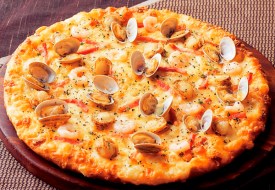 After a few months in Japan, I was starving for some familiar American junk food. McDonald’s (pronounced “Makudonarudo”) was already fairly common at that time, but my friends and I were particularly hungry for pizza. When someone informed us that there was a Shakey’s Pizza located downtown that offered an all-you-can-eat buffet for only ¥500, we immediately organized an expedition to satisfy our pent-up cravings. Upon arrival, we strategically located ourselves at a table closest to the serving counter so we could be the first to pounce on the fresh pizzas as they were brought out. A couple of minutes later, when a pizza was pulled out of the oven and sliced up for the waiting customers, we sprang into action. To our dismay, the main topping on this particular pizza was corn, so we reluctantly returned to our table to wait for a better offering. Shortly afterwards, we leapt into action when another pizza was served, but this one was covered with octopus tentacles so again, we took a pass. The next one looked like a cheese pizza which we hungrily scooped up, but one bite revealed the “cheese” was actually mayonnaise! We were eventually rewarded with some pizzas that looked and tasted more familiar, but that day served as a reminder that common foods back home may be mixed with some uncommon ingredients in Japan.
 Christmas was drawing near and as newcomers to our neighborhood, we thought it would be a nice gesture to take a gift of homemade Christmas cookies to each of our neighbors. We should have known better. Within hours of dispensing our holiday goodies, our doorbell started ringing. It was payback time. Through our unsolicited gifts, we had unintentionally obligated our neighbors to correspond in kind. Therefore, several of them responded to our meager gift by reciprocating with something of equal value. In Japan, no one wants to be put in the awkward position of indebtedness to someone else.
 Japanese has a reputation for being a very difficult language for native English speakers to master, but it actually incorporates a considerable number of English words in its vocabulary. Unfortunately, many of these words are often unrecognizable. Called
  Soon after our initial arrival in Japan, we were a little bewildered by some things we observed when we joined a Japanese family who had kindly invited us over for a meal. Before we even sat down to eat, the husband proceeded to demean his wife’s efforts in cooking and house cleaning. Unlike the typical American domicile, we didn’t notice any family photos capturing activities of the children or anything commemorating their individual achievements. Little mention was actually made of the children outside of our hosts’ minimal responses to our polite inquiries. We also thought it odd when they referred to their son as a “baka musuko” (stupid son). We went home that evening rather puzzled by our experience, but later learned that it is considered socially taboo to praise one’s own family.
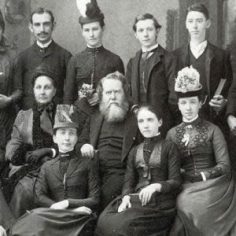 Long before the term “selfie” carved out a unique niche in our lexicons, the Japanese used an alternative word that eventually became a part of our personal vocabulary and history. It is called “kinen shashin” (記念写真) and it is roughly translated as “commemorative photograph.” Whenever a group assembles for a particular occasion, someone inevitably calls for a kinen shashin to be taken to commemorate the event. If you browse through our personal photo albums (back in the day when we collected physical photographs), you will discover quite a few of these kinen shashin scattered among other pictures portraying family and friends in various locations and activities.


