
Real Truth

“Do not swear—not by heaven or by earth or by anything else. All you need to say is a simple “Yes” or “No.” Otherwise you will be condemned.”   James 5:12

truth3

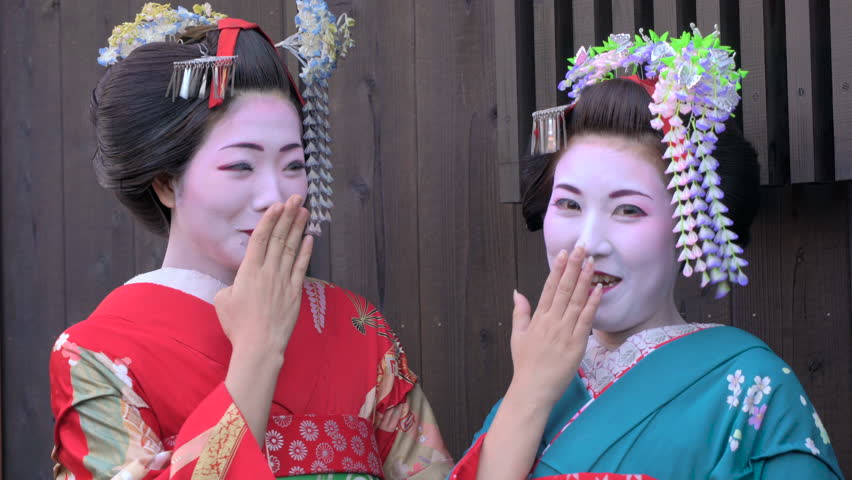
Every husband, who values his well-being, knows the correct answer if his wife asks him the paradoxical question: “How do I look?” The stock answer of “You look fine dear!” is certainly the safest reply, but it may not necessarily be the most truthful one. This is what the Japanese call a “tatemae” answer and they have elevated this form of communication to an art form that many foreigners find difficult to comprehend. Tatemae (建前) means literally “built in front” or “façade,” in contrast to its opposite term, “honne” (本音), which can be translated “true sound.” Honne, simply put, is one’s true feelings and opinions, whereas tatemae is what one perceives others want to hear. In this sense, honne is the real “sound” or voice of an individual, but for various social or personal reasons, the speaker deems it best to express a safer alternative, or tatemae, answer as a form of protection. This “safer” response could be intended to protect a personal or working relationship, and it is certainly common in diplomatic communication, which can lead to all sorts of misunderstandings.

Some consider the use of tatemae as a subtle form of lying, but in reality, every culture employs a certain degree of such communication to avoid needlessly hurting or offending those around us. In English, we may call a slight stretching or distortion of the truth a “white lie,” but such falsehoods often stem from selfish, ulterior motives. In contrast, the Japanese propensity towards using tatemae responses is generally far more complex. In Japan, the group usually takes precedence over the individual so there is an invisible, but widespread pressure to ensure that things go smoothly. Therefore, great care is taken not to potentially disturb harmony in relationships. Avoiding possible conflict is a high value in Japan and tatemae answers can be very useful to that end.

However, such a practice can lead to other challenges where one is constantly required to discern when an invitation, compliment or offer is genuine or just a tatemae response. This intentional vagueness is why sociologists classify Japan as being a high-context culture, meaning that communication is often implicit and relies heavily on context. Direct answers are often eschewed and ambiguous, innocuous replies like “daijoubu” (it’s all right), “omoshiroi” (interesting) or “yōji ga aru” (I have something to do) are frequently employed in everyday conversations. Most people are reluctant to state a contrary opinion and stand out, so they “build a wall” using tatemae, which serves to ward off unwanted scrutiny.

Because of people’s natural propensity to tell lies and not follow through on their promises, oath taking became a common practice to demonstrate the veracity or trustworthiness of an individual in both ancient and modern times. While culture can certainly complicate the best of intentions towards honesty, as a general principle, God’s people should be characterized as truth tellers. James exhorts (James 5:12) us to avoid the taking of oaths by simply being people of our word. This verse is almost a direct quote lifted from Jesus’ famous Sermon on the Mount (Matthew 5:33-37) where He challenged His listeners to strive for a higher, God-honoring form of communication. A “true sound,” or honne, flows naturally from a true heart that belongs to God.

Humor

“He will yet fill your mouth with laughter and your lips with shouts of joy.”     Job 8:21

humor

A hush settled over the room as I concluded my first Japanese speech. Instead of the expected response of laughter, I was greeted with dead silence. I had just made the painful discovery that Japanese humor was significantly different from American humor. Our assignment that day was to speak on a subject familiar to us, so being raised in Texas, I chose deer hunting. That was a huge mistake, and I compounded the problem even further by using a satirical approach. I thought I had cleverly titled the speech “How I Killed Bambi’s Mother,” but this vain attempt at humor was entirely lost on my horrified audience and as a result, went over like a lead balloon. My effort was doomed from the start as satire is typically not used by the Japanese and the imagery of a missionary bearing weapons to slay cute forest creatures was certainly not a laughable matter.

While the Japanese sometimes like to think of themselves as a serious people (majime ningen), they definitely have a sense of humor. Slapstick forms of humor are often seen on TV, which accounts for Mr. Bean’s huge popularity a number of years ago. Comedy team acts known as manzaishi are quite common in Japan. They are composed of a straight (serious) man (tsukkomi) and a funny man (boke) and their fast-paced jokes are usually centered on misunderstandings, puns and other verbal gags. Interestingly, many of these jocular performers are from the Osaka area of Japan, which has a reputation for comedic wit. Rakugo (落語, meaning literally “fallen words”) is another much subtler form of Japanese humor where a lone storyteller wearing Edo era clothing sits cross-legged on the stage with a paper fan as his only prop. This performer typically shares a gently amusing tale based on the dialogue of two or more characters and it is designed to entertain a more sophisticated audience.

After several failed attempts at humor when preaching in Japanese, I eventually learned that the safest form of joking was to make fun of myself using self-deprecating humor. Japanese may be unsure when a joke is intended, so they will refrain from laughing to avoid possibly embarrassing the speaker. Humor is one of the most subtle and demanding forms of communication as it requires not only refined linguistic skills, but also an in-depth understanding of the culture and one’s immediate context.

Although we know that Jesus wept as He shared the pain of those grieving Lazarus’ death (John 11:35), the Scriptures do not explicitly record that Jesus ever laughed. Yet, Jesus frequently told stories that must have provoked laughter among his listeners as He often used absurd life scenarios to highlight a spiritual truth. Laughter is often portrayed as an indication of God’s blessing (Genesis 21:6) and an expression of joy, which is listed among the fruits of the Spirit (Galatians 5:22). Of course, not all laughter is equal, as some forms are coarse and vulgar, and some so-called entertainment comes at the painful expense of others. This type of laughter does not honor God nor His creation, but the misuse of humor does not diminish our calling to live joy-filled lives that are often evidenced by laughter. True joy that comes from God can powerfully transcend our circumstances and our cultures.

Passing Zones

“How good and pleasant it is when God’s people live together in unity.”   Psalm 133:1

Magokoro Zone 2

One of the various adjustments required of us in relocating to the Greater Tokyo area was getting used to the narrowness of many roads. Some streets appear to be little more than wide sidewalks, but they are actually intended to accommodate two-way traffic, which seems almost impossible. Driving on these extremely narrow thoroughfares requires a considerable amount of patience, anticipation and a willingness to yield to oncoming cars or gridlock will immediately occur. We’ve experienced such an impasse a few times where an impatient driver barges ahead and brings everything to a standstill with cars unable to move forward or backward. Such incidents can prove to be extremely frustrating.

To help prevent this from happening, we observed in our community the strategic placement of “magokoro” zones (まごころ/真心) to facilitate two-way traffic in some of the more challenging locations. Translated literally, this means “true heart,” which seems like an odd name for a road alteration designed to improve traffic flow. These zones encompass a short length of roadway (approximately 20 feet), creating a wider area enabling two cars to pass one another. Apparently, these are places where “hearts” figuratively come together as we all seek cooperation with the common goal to keep traffic moving. 

We had previously encountered a similar problem in Japan’s northern island of Hokkaido. During long, snowy winters, wide streets are often reduced to a single lane as massive walls of snow created by snowplows steadily encroach upon large portions of the roadway. Enormous snow removal machines would periodically reclaim this lost road space, but until then, drivers were forced to anticipate oncoming traffic and pull over into side streets so they could pass each other. This predicament requires the constant exercise of courtesy and cooperation so traffic can keep flowing, enabling everyone to arrive safely at their intended destination.

When one pauses to survey the current political, social and cultural landscape of America and in other places in the world, it is obvious that the “traffic” is not flowing smoothly. Varying perspectives, opinions and values now deeply divide a nation historically comprised of many diverse factions, bringing things to a standstill. Like angry drivers creating a bottleneck through their own inconsiderate actions, many are unwilling to yield to others on the road, such that no one can move forward. Government services are disrupted, judicial systems are overwhelmed, personal freedoms are restricted, economic structures fail to meet demands and in worst-case scenarios, destructive riots occur. Because there is no meeting of hearts, everyone loses. These bottlenecks now routinely dominate our daily news cycles, creating an ever-increasing atmosphere of fear, mistrust, anger, vilification of those holding differing opinions and even violence. Under such adverse conditions, we cannot move forward as a nation.

However, the people of God are to be guided by a different set of principles that have the power to break such bottlenecks. We are not to be driven by selfish motives or ambitions, but rather, we are called to unity. Unity, even in the most optimal circumstances, is not an easily achieved goal, which is why the psalmist marvels when he observes it in action (Psalm 133:1). The combining of hearts to attain such unity can only occur when one’s heart belongs to God and pursues His rules for the road. That is the magokoro zone where true peace can be found.

Protocol Priorities

“Let us then approach God’s throne of grace with confidence, so that we may receive mercy and find grace to help us in our time of need.”        Hebrews 4:16

sports day2

We felt like royalty as we entered the large Japanese department store. All the staff and salespeople were formally lined up on both sides of the aisle, bowing low to welcome us. The store had just opened for the day, but it was standard protocol to greet the initial customers, even though we were accompanied by a dozen hyper children who seemed oblivious to the expected decorum. This experience was just one of many reminders that Japan is a country built upon proper protocol for various situations and everyone is expected to know and abide by these set guidelines to ensure a well-ordered society.

School graduations, admission ceremonies and sports days, in addition to funerals, weddings and company entrance events, are among the most common social occasions that have established procedures which everyone must dutifully follow. Underlying all of these activities are a multitude of other traditional protocols or values that facilitate smooth programs, constructive relationships and desired outcomes. Such protocols would include: being on time, extensive practice, multiple preparatory meetings, a flawlessly scripted schedule, a well-thought out seating plan, trained volunteers and recognition of all attending dignitaries. Of course, all participants would be appropriately attired and use honorific language befitting their social position. These values and expectations spill over into countless other daily routines that make Japan appear at times as one great well-oiled machine that always performs at peak efficiency.

This rigid adherence to proper protocol was once put to the test many years ago by an acquaintance at a local McDonald’s. It is customary for all McDonald’s employees working at the front of the premises to welcome every customer with a deep bow and extend a greeting of “irasshimase,” meaning, “welcome.” On this particular day, my somewhat mischievous colleague impetuously decided to exit the restaurant and immediately enter again. As expected, he received the same attention as if he had entered for the first time. Continuing with his somewhat rude social experiment, he exited and returned again, receiving the same treatment from the conscientious McDonald employees. After repeating this cycle several times, he finally gave up, realizing these meticulously trained workers could not depart from their established protocols for corporate behavior. These and other similar protocols are part of the unique underpinnings that hold Japanese society together.

In stark contrast, America can be generally regarded as a land of spontaneity and freedom where protocols can be much more easily dismissed or adapted to fit a particular situation. Perhaps because of this, the incredible significance of the invitation to approach the very throne of God (Hebrews 4:16) can be lost on a society where inviolable protocol is a lesser value. We are totally unqualified and unworthy to appear before an Almighty, Most Holy God, but the invitation is genuine and we are welcome not because of our position, but because of His grace. God’s protocol demands that we enter by means of the cross, where mercy replaces judgment and we are amazingly received as sons and daughters.

Getting it Right

“Be perfect, therefore, as your heavenly Father is perfect.”            Matthew 5:48

Getting it Right4

The ringing doorbell surprised us as we were guests at a vacation home and there was a horrific blizzard howling outside. “Who could it be?” we wondered and opened the door to be greeted by a local postal worker covered in snow bowing in apology. Through his shivering explanation, we learned that the local post office had mistakenly overcharged us 30 yen (23¢) for a letter we mailed the day before. He asked us to accept their sincere apology for the error and dutifully handed over the money with additional bows. Thoroughly impressed, but slightly amused, we assured the conscientious civil servant that all was forgiven and that we were satisfied with the outcome. He then bowed several more times, before turning to trudge back to the post office in knee-deep snow. That little snapshot from our past serves to capture the Japanese value of getting it right.

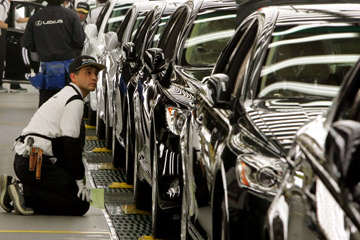
Perhaps this tendency is best summed up in the Japanese word “kaizen” (改善), which combines the two concepts of “change” (kai) and “good” (zen). Taken together, the equivalent translation comes out as “change for the better,” or “continuous improvement.” The application of kaizen then becomes an ongoing attempt to eliminate defects in a product or to improve a process with the ultimate goal to achieve better results. This requires an extreme attention to details, which can easily morph into a form of perfectionism in a ceaseless attempt to get it right. This approach can be seen on many levels within Japan, such as in the areas of food preparation, manufacturing, athletics, Japanese arts and transportation. Toyota has actually adopted the concept of kaizen as one of its core values, where all its employees are encouraged to constantly look for ways to improve their operations and products, which accounts for the company’s sterling reputation.

The extra effort it takes to build dependable cars, produce aesthetic masterpieces, achieve athletic success, or attain scholastic recognition is a highly commendable trait that generally produces good results. This is the primary reason why we personally purchase Japanese made vehicles. We want quality and dependability in a car that a commitment to kaizen principles is more likely to produce.

While such a lofty standard is understandably desired for inanimate objects and procedures, it is totally unrealistic when applied to human beings, including myself. Perfection is a worthy goal to aim for, but it remains forever out of reach no matter how hard we strive to attain it. Jesus taught His followers a new standard in His famous Sermon on the Mount (Matthew 5-7) where He set the bar of God’s righteousness or perfection much higher than they previously imagined. This standard is what we are challenged to aim for, but no amount of commitment to kaizen can possibly take us there. We cannot “be perfect, as our heavenly Father is perfect” (Matt.5:48), but there is One who was “once made perfect, and became the source of eternal salvation for all who obey Him” (Hebrews 5:9). That is Jesus. Because of Jesus’ perfect goodness (zen), we can be eternally changed (kai) and that is a kaizen work that only God can achieve, not through our efforts, but by His grace.

Manner Mode

“Whatever happens, conduct yourselves in a manner worthy of the gospel of Christ.” Philippians 1:27a

manner-mode

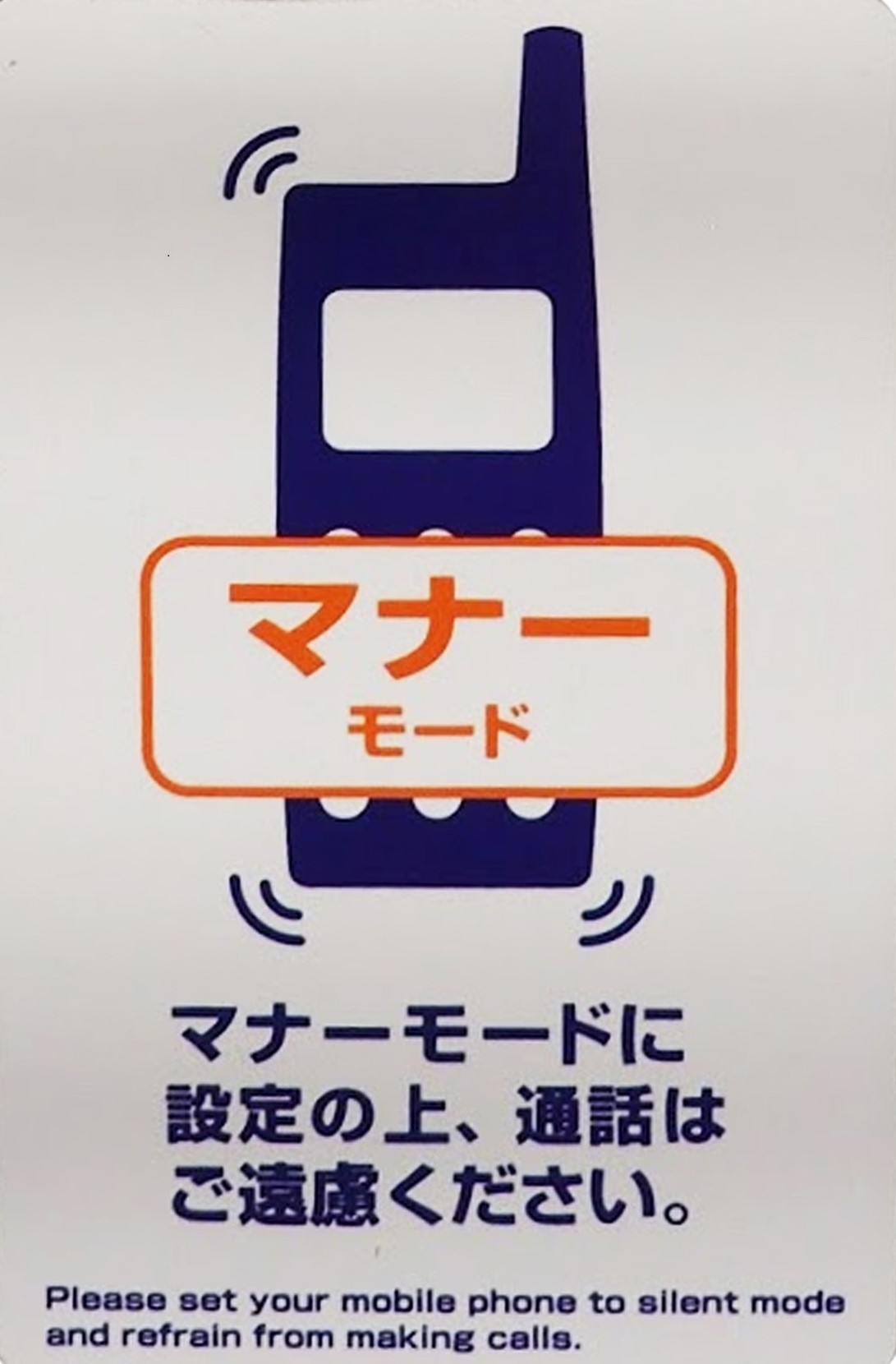
Many mothers around the world battle incessantly to instill good manners in their children, so they should be impressed to learn that cell phones used in Japan include a “Manner Mode” or “Māna Mōdo” (マナーモード) button. Unfortunately, these same mothers will be disappointed to discover that pushing this particular button doesn’t eradicate all poor behavior by the user. However, it does prevent one’s phone from ringing or making other distracting sounds once it is activated. Passengers on public transport are frequently reminded through announcements and signs to put their phones on māna mōdo to avoid disturbing others. Loud talking, ringing phones and audible music are quietly frowned upon by those nearby, so everyone is expected to exercise good manners in such situations. While almost all the passengers are typically engrossed in their own cell phones, no one uses them for talking while riding on the train as it is considered to be very rude behavior.

Good manners in Japan come in many different forms. For example, returning to the theme of train etiquette, priority seating is provided in every train car for the elderly, handicapped and pregnant mothers that should be strictly observed. Passengers waiting to get on a train are also expected to dutifully line up in an orderly fashion on the station platform and allow people to disembark before attempting to board. When riding an escalator, it is good manners to stand on the left side so others in a hurry can move past you. If you are dining with others, it is considered impolite to pour your own drink. You must also refrain from picking up food from a common plate using the end of the chopsticks that you use for eating. Below are some other cultural blunders to avoid:

  • Don’t eat or drink while moving around.
  • Avoid chewing gum in the company of others.
  • Try not to blow your nose in a public setting.
  • Resist using your car horn unless absolutely necessary.
  • Avoid pointing at others or objects.
  • Don’t treat another person’s business card with disrespect.
  • Refrain from public displays of affection.

Every culture has it peculiar lists of do’s and don’ts that subtly demand our adherence, but sadly, many Christians mistakenly import such a simplistic approach to their spiritual walk. The Christian life, when viewed in such terms, is reduced to a mere list of rules that focuses on the prohibition of certain behaviors. History teaches us that many of these ideals of Christian “manners,” fall by the wayside over time, only to be replaced by other rules that will in turn eventually give way to a new set of injunctions.

While rules are certainly necessary, and there are several lists of obvious sins laid out in the Bible, the whole concept of what constitutes “good manners” spills over into gray areas that are not so easily defined. As citizens of earthly kingdoms, we must be mindful and respectful of cultural manners, but as citizens of a heavenly kingdom, we are bound by a higher set of “manners” that must not impinge upon the nature or intent of the gospel. Rather than rules, the chief characteristic of the gospel is grace, which should be our life māna mōdo.

Pachinko

Direct me in the paths of your commands, for there I find delight.”          Psalm 119:35

pachinko

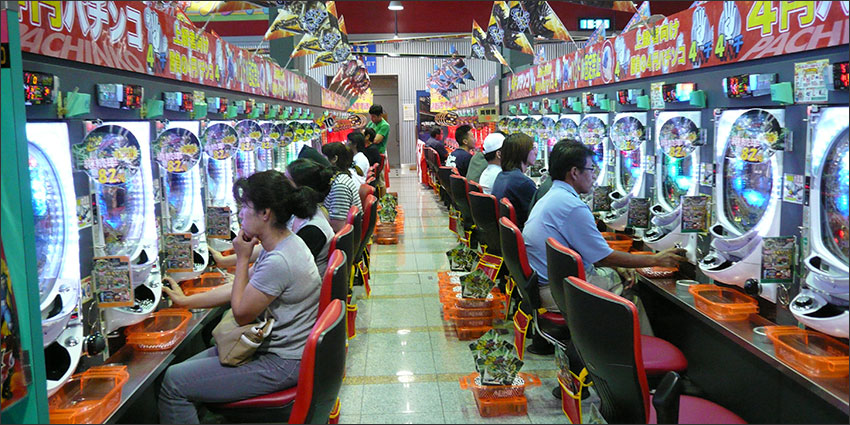
Out of curiosity as a relative newcomer to Japan, I cautiously opened the door to the gaudily decorated establishment and peeked in. I was harshly greeted with an immediate sensory overload of sights, sounds and smells (cigarette smoke) that encouraged me to make a hasty retreat to the comparatively quiet sidewalk. That was my first and only direct experience with the infamous Japanese parlor game known as pachinko (パチンコ). Pachinko is often compared to the arcade game of pinball since it is a mechanical entertainment device that involves the manipulation of steel balls. However, pachinko is significantly different from its Western counterpart in a variety of ways and, on top of that, it is deeply rooted in Japanese gambling culture.

The word “pachinko” is derived from the onomatopoeic sound “pachin,” which is a clicking or snapping noise the machine makes when the balls drop through and this sound is combined with the suffix “ko,” which means “little.” These machines were initially developed in the 1920s as a children’s toy, but within a few years evolved into a popular adult pastime. A pachinko resembles a vertical pinball machine but it utilizes multiple small steel balls that can be slightly directed by the player as they fall through a series of steel pins or nails. The objective is to capture as many balls as possible in the small openings along the course before they reach the bottom.

These balls can then be exchanged for prizes which can in turn be discretely converted into hard currency in compliance with Japan’s prohibition of gambling for cash. As such, these so-called pachinko parlors are a Japanese version of casinos where guests play slot machines. It is estimated that roughly a tenth of the Japanese population frequents one of Japan’s 10,600 pachinko parlors once a week and that the annual gambling revenue from pachinko is thirty times the yearly gambling earnings of Las Vegas. To maintain this delicate balance between winning and losing, pachinko parlors employ “kugushi” (釘師), or “nail adjusters” who expertly adjust or bend the pins within the pachinko machines. This fine-tuning serves to protect profit margins, but at the same time provides a sufficient number of favorable outcomes to attract customers. Some customers will line up at the pachinko parlor entrance several hours before it opens in order to gain access to their favorite machine.

If you closely examine a pachinko machine, you will soon discover that there are countless courses a ball can take as gravity takes over and it makes its way to the bottom. The goal of the player is to manipulate the course or path of the ball to his advantage. In the game of life, most of us would like to be in the position where we can influence the path ahead of us for a favorable outcome. Even though such power lies beyond our means, this limitation fails to quench our ever-present desire to control our own destiny where we naively believe happiness awaits us. Scripture tells us that such joy or delight is certainly available, but it only comes as we follow the commands or course laid out for us by an all-knowing, all-powerful God. (Psalm 119:35) As our heavenly kugushi, God lovingly and flawlessly adjusts the various “nails” in our lives in line with His desired outcome. Our only response therefore should be faithful obedience as we submit to the course uniquely laid out for us. Our reward is not a cheap trinket or even a cash prize, but rather, a meaningful and purposeful life that brings glory to God and delight to us. When we obey, we come out winners.

Yellow Tiles

“I will lead the blind by ways they have not known, along unfamiliar paths I will guide them; I will turn the darkness into light before them and make the rough places smooth.”  Isaiah 42:16a

Yellow Tiles

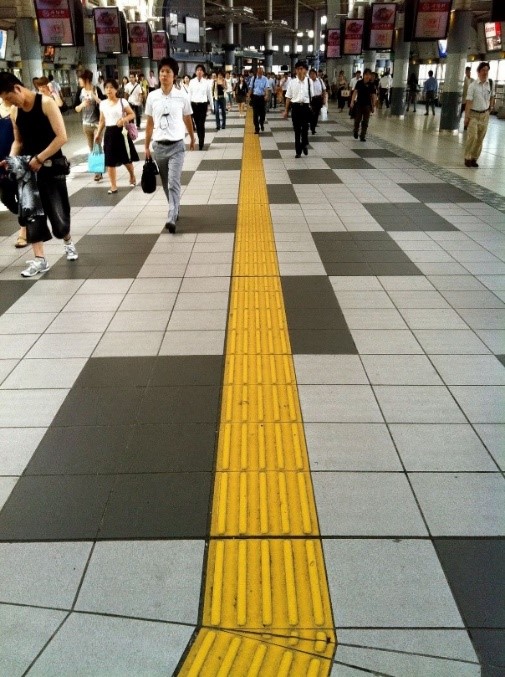
New visitors to Japan are initially puzzled by the bright yellow lines of tile that often line certain streets and intersections. They are even more common near train and bus stations. These lines are technically known as “tactile ground surface indicators” (TGSI); in layman’s terms, they serve as a hazard guide for the visually impaired.  These special tiles are designed to be used by blind people as a means to navigate crowded public places by feeling the texture of the tiles with the help of a cane or through the soles of their shoes.  Differences in the tiles help to indicate directions and potential hazards.  The bright yellow color also serves as a useful reminder to others to be considerate of those who may be visually handicapped.

A closer examination of the tiles reveals that there are two major varieties. One has straight raised lines and the other type has raised circular bumps. Tiles with straight lines indicate it is safe to proceed forward in the direction of the lines. However, when one encounters tiles with bumps, it is a warning to stop or to proceed with caution. Some form of obstruction or potential danger like an intersection, stairs or a train platform edge typically lies beyond this type of tiles. In addition to the yellow tiles, many intersections in Japan play set songs or sounds to indicate which direction is safe for crossing. Braille signage is also quite common for the visually impaired.

When one observes these tiles, it is only natural to recall the classic movie, “The Wizard of Oz,” where Dorothy and her traveling companions are instructed to follow the yellow brick road to reach the Emerald City, where all their problems will be resolved. While none of those famous characters were visually impaired, the purpose of the yellow bricks was the same as Japan’s yellow tiles… to help travelers arrive at their intended destination without incident.

Most of us do not need yellow tiles to aid us in our daily travels, but in a spiritual sense, we are all visually impaired. It is certainly a good thing to be aware of the physical handicaps of others and take measures to assist them, but more importantly, we must acknowledge our own blindness to the things of God that can potentially lead us down paths of destruction. From the Bible, we know that the nation of Israel had turned its back on God and in its blindness, fell into sinful thinking and behavior that invited the wrath of God. But thankfully, God also cares for the spiritually impaired and took extreme measures to assist them… He sent His Only Son Jesus, to die on a cross, in order to save them and us from eternal destruction. In this manner God “will lead the blind by ways they have not known, along unfamiliar paths…” (Isaiah 42:16a). God Himself became our “yellow brick road” to deliver us from harm. An eternal city awaits those who travel upon it.

Karaoke

“But let all who take refuge in you be glad; let them ever sing for joy.”  Psalm 5:11a

Karaoke

The distinguished members of the local Japanese Rotary Club had just finished their sumptuous meal which would shortly be followed by a mild case of indigestion. The source of their discomfort that evening was not what they ate, but was actually on stage holding a microphone doing a poor Elvis impersonation. The culprit was me, and that was my introduction to karaoke. As the token foreign guest for the occasion, I was obliged to “honor” the assembled members with a song. In a state of sheer terror, I chose to sing “I Can’t Help Falling in Love with You” by the King of Rock himself, since it was the only song in English on the provided playlist. As an impromptu romantic gesture, I also dedicated the song to my lovely wife, who, understandably, was desperately looking for a place to hide!

Karaoke (カラオケ) is now a world-wide phenomenon, and the correct pronunciation is not “keh-ree-oh-kee,” as it is widely used in the West, but is instead, “kah-rah-oh-keh.” Karaoke is actually a blend of two words — kara (meaning “empty”) and oke (which is an abbreviation for “orchestra”). Taken together, karaoke means literally “empty orchestra,” or music that is missing the lead melody and vocals. That melody is provided by an amateur vocalist who sings along with a microphone to the recorded instrumental music following the lyrics provided on a video screen.

Daisuke Inoue, a Japanese musician, is generally credited with inventing karaoke in 1971 when he developed the equipment that helped launch its huge popularity. As a result, venues advertising “karaoke boxes” are now quite common throughout Japan. These are basically soundproofed private rooms rented by the hour that come equipped with karaoke machines, comfortable lounge furniture and refreshments available to order.

For many Japanese, karaoke is a great means to relief stress and enjoy relatively inexpensive fun with friends. We witnessed the unusual power of karaoke years later while doing relief work. We had gathered a number of people displaced by the huge tsunami that struck portions of Japan and facilitated an event centered on karaoke. Not wanting to destroy the ambiance of another public gathering with my vocal skills, I gladly refrained from joining the many performers. Instead, my wife and I enjoyed our front row seats to a magical evening of observing those who had lost so much, coming together as a community for a few moments of frivolity and much needed healing.

That event was a vivid reminder that we are designed by our Creator to sing. Music offers a unique opportunity to express deep feelings and thoughts that, in turn, can bring joy and healing to the participant. Heaven is described as a place where music abounds, but the focal point there is on God Himself as everyone offers up praise to Him. While our participation in such heavenly choirs still awaits us, we are encouraged to recall the greatness, mercies and deeds of God and express them in song while we linger here on earth. Instruments and skilled musicians can certainly help facilitate such singing, much like a karaoke machine, but the joy such music brings comes not through our expertise, but from a thankful heart. The Bible calls this worship and this is the kind of singing that brings delight to God (John 4:21-24).

Traffic Mirrors

“’For I know the plans I have for you. ‘declares the Lord, ‘plans to prosper you and not to harm you, plans to give you hope and a future.’”                        Jeremiah 29:11

Curved Mirror

The urban sprawl of Tokyo has grown slowly over the centuries on top of an ancient network of roads, hilly terrain and even encompasses over a hundred river and canal arteries. Many of Tokyo’s streets were originally little more than footpaths and presently bear more resemblance to a wide sidewalk or an alley rather than a conventional thoroughfare. These minor roads snake through residential areas and many of them are reduced to a single lane, allowing passage for only one car at a time. On top of this, they are generally fraught with numerous curves, severely limiting vision of what lies ahead. This makes navigation quite challenging and even dangerous at times as drivers can’t anticipate oncoming cars, bicyclists and pedestrians.

Because of these difficult conditions, Japanese traffic engineers have developed and implemented an ingenious, yet simple device to help facilitate safety. It is called a “kābu mirā “(カーブミラー), which is basically a large convex (curved) mirror mounted at the top of a pole. These special mirrors enable drivers to literally see around the blind corner or sharp bends in the road to determine if it is safe to proceed. We relied on these mirrors daily when bicycling or driving to the office from our home and I’m sure they prevented countless accidents for us and many others.

Unfortunately, we don’t have the luxury of such mirrors to help us navigate the inevitable unknowns of life. There are no kābu mirā that reveal the coming of major health problems, employment setbacks, relationship breakdowns, financial challenges or natural disasters such as the recent COVID-19 pandemic. As a result, our lives often seem to be unpredictable, chaotic and without purpose as we feel victimized by one crisis after another.

But this is not what the Bible teaches. The God who created life is depicted time and time again as the same God who knows, sustains and directs our lives and the affairs of this world (Psalm 139:1-18). God reassures His own people of this truth while they were living in exile in a foreign land as a result of their disobedience. “’For I know the plans I have for you. ‘declares the Lord, ‘plans to prosper you and not to harm you, plans to give you hope and a future.’”  This verse is not a promise that all their problems will immediately disappear, but rather, an offering of hope in the midst of despair. That hope is not placed in the possibility of coveted changed circumstances, but instead, in the very person of God. A God who loves us. A God who will do what is best for us. A God who reigns above the forces of evil and calamities that sometimes seem to dominate this world.

God has a plan for the nations and He has a plan for us. That plan is good. But saints of old were only provided glimpses and hints of how those plans would unfold. Like us, they could not see beyond the curve in the road, so they just continued to drive forward in faith. Fears of turmoil, dire consequences and impending economic collapse currently dominate the news cycles and social media, but as people of faith, our well-being and future are not dependent on the affairs of this world. Therefore, we would do well to emulate the Psalmist and pray in this way: “Search me, God, and know my heart; test me and know my anxious thoughts. See if there is any offensive way in me, and lead me in the way everlasting.” (Psalm 139:23-24) If God is visible in your kābu mirā, that is all you need.