
Unseen Danger

“For we are not fighting against flesh-and-blood enemies, but against evil rulers and authorities of the unseen world,”                                      Ephesians 6:12a (NLT)
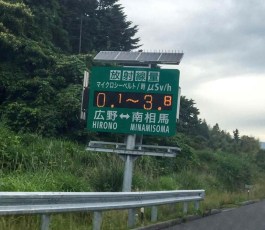
radiation monitor

A shroud of silence hung eerily over deserted streets, homes, businesses, schoolyards and other public places that once bustled with activity. Outside of a few lonely security guards wearing protective clothing, there were no normal signs of life. No people, no pets, no stirring. Wherever we looked, nature appeared to be taking over each vacant town as greenery and wildlife seemed to be flourishing unchecked by human interference. It was as if all human life had been squeezed out of the area by an invisible, deadly force. Temporary gates now barred entrances to every street and driveway.

Entering the vicinity, we passed massive dumps filled with radioactive waste and radiation monitors posted along the road flashed cryptic numbers warning us of unseen dangers. We were driving through the Fukushima radiation exclusion zone that had once been the thriving home of 150,000 inhabitants. They had been suddenly forced to flee following the Great East Japan Earthquake of March 2011 and the resultant tsunami that compromised the local nuclear plants.

The radiation exclusion zone was initially off limits to everyone, but several years later, it was now possible to drive through portions of the formerly forbidden region. With the passing of additional time, residents were eventually allowed to return to designated areas that were declared safe for human habitation. As part of a massive decontamination effort, a literal army of government workers had laboriously scrubbed down the more effected areas of those previously deserted towns and even removed thousands of tons of radioactive topsoil and vegetation. The nuclear reactors were also decommissioned and together, the resultant cleanup attempts had served to lower some of the radiation markers. However, despite these large scale endeavors, the majority of the local residents were understandably hesitant to return to their homes and businesses. To lure them back, the government had rebuilt or reopened schools, shopping areas, sports centers, hospitals, housing complexes and offered additional financial incentives. But the scars on both the land and in people’s hearts still stubbornly remained; such wounds will likely take decades to fully heal.

Now, around the world and a couple of years later, silent city streets, daily news postings of COVID-19 related deaths and accompanying fears have an uncanny similarity to that unique experience in Fukushima. Interestingly enough, on that day when we drove through those modern Japanese ghost towns, my thoughts were drawn to other unseen dangers besides the flashing numbers on the radiation monitors. Since we live in a physical world, it is natural to become preoccupied with matters of physical safety. However, the Apostle Paul warned the Ephesian Christians (Ephesians 6:12) that ever present dangers of a different nature were potentially far more lethal. These dangers are the radioactive seeds of pride, selfishness, anger, apathy, strife, slander, lust and greed that are sown unseen by the Evil One himself, silently destroying healthy lives and communities. This form of pandemic can be far more destructive than any physical terror we might have to face in the present or in days to come. Fortunately, God has graciously provided His Word, His Spirit and His people to serve as warning monitors to assist us as we travel through life facing seen and unseen perils. Our safety and well-being are, thankfully, in His hands, but we must give heed to the warnings posted for our protection.
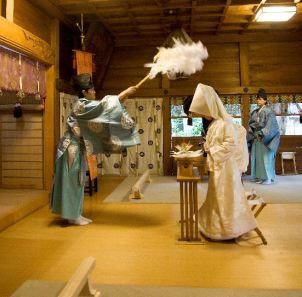
Shinto Blessings

“From the Lord comes deliverance. May your blessing be on your people.”  Psalm 3:8

shinto blessing2

While sitting in the office of the local Shinto priest, my gaze fixed upon a placard on the wall which advertised (in Japanese) set charges for services rendered:

  • ¥10,000 for a car blessing
  • ¥5,000 for a school entrance exam blessing
  • ¥10,000 for a baby blessing
  • ¥15,000 for a new home blessing
  • ¥10,000 for a marriage blessing

The whole concept stunned me on many levels and several questions came to mind as I chatted with my gracious host in a very unfamiliar setting. “How can mere mortal men place themselves in the position of dispensing blessings on behalf of the gods?” was something I asked myself. I did my best to politely nibble around the edges of this concept as I conversed with the Shinto priest. He explained, according to the Shinto religion, that nearly all objects, including both animate and inanimate, possess a spiritual essence known as kami (神). These kami are everywhere, but they are not regarded as omnipotent, omniscient, or even immortal. The term “Shinto” (神道) means literally “way of the kami” and they reportedly number over eight million. These spirits are duly venerated across Japan at various public shrines and private god shelves. It is believed by many adherents that kami have the power to dispense blessing on their devotees through rituals, good luck charms and designated intermediaries such as the priests.

As I sat in the office of the local priest, other questions continued to fill my mind such as: “How can one charge money for a blessing?” From my perspective, such a practice seemed to reduce religion to a mere business transaction. This thought led naturally to another related question, which was, “Why would people actually participate in such obvious duplicity?” Perhaps the explanation to this conundrum resides in the standard practice of Shinto religious ceremonial procedures, where devotees have a sense that they cannot approach the kami with a request without some form of ritual purification to remedy their unclean state. This rite of purification is called harae (祓) and it usually begins with a symbolic washing using water near the shrine entrance. The next phase in absolution is conveniently performed by the priest (for a fee!), who rhythmically waves a large paper shaker called an ōnusa (also referred to as a haraegushi) over the object or person to be purified and blessed. Only after these procedures are performed can one approach the kami and hope to have their request granted.

Lying at the heart of the many intricate rituals of Shintoism is the basic human desire to be blessed by something or someone greater than one’s self. We want a healthy baby, success on a test, protection from infectious diseases, safety on the road, a good paying job, and a happy marriage, but such objectives often elude us because they lie beyond our control. Therefore, we are tempted to turn to a higher power to obtain them. Fortunately for us, there is a Higher Power who graciously dispenses such blessings on His people (Psalm 3:8) despite our unclean condition. We are beckoned to approach this God to request such favors, not because of our worthiness or the intercession of others, but because of the forgiveness provided through the cross by His Only Son. No fee is charged; God has paid it all. A few years later, this same priest reached the same conclusion and turned to Jesus for eternal absolution.

Population in Peril

“God blessed them and said, “Be fruitful and increase in number.” Genesis 1:22

pop decline

Japan is shrinking. Not the land mass, but rather, the number of Japanese who live there. In contrast to other countries in the world, the population of Japan actually peaked in 2010 at roughly 127 million and has been steadily declining since then. At the current rate, experts predict that by 2050 the population will drop to 97 million people as the percentage of elderly continues to increase disproportionately to the number of births. As a sad testimony of this trend, the sales of adult diapers now exceeds the sales of diapers for babies. Another indicator of changing demographics can be seen in the annual closure of roughly 400 schools due to the lack of students. Many of these facilities are then repurposed to function as care centers for the elderly.

Japan consistently ranks at the top of the list for longevity among its citizens, but when this admirable trend is coupled with a steadily declining birth rate, it triggers significant concerns about the future of the country. A natural byproduct of an aging and shrinking population is a declining workforce which can in turn stymie economic growth, endanger the solvency of the national pension program and overwhelm healthcare services.

Sociologists point out a number of economic and cultural factors that are likely contributing to this decline in childbirth throughout Japan. Long working hours, a rising percentage of women in the work force, later and fewer marriages and the high cost of raising children are just a few of the many components to this multi-layered problem. This precipitous decrease in the population has of course alarmed the Japanese government, which has implemented a number of proactive measures to reverse this downward spiral. As part of this strategy, couples are encouraged to have children through the promise of generous subsidies, extended maternity leave and numerous other benefits. However, despite these incentives, many still continue to shun the perceived burdens of parenthood (in addition, marriage itself is on the decline). Another controversial solution is to promote immigration as a means to compensate for labor shortages and tax revenue, but such an approach raises other fears regarding the future of Japan.

One of the first commands given to mankind was to “be fruitful and multiply,” which is a verse loaded with meaning. Obviously, for the first man Adam and his wife Eve, this command had literal implications as mankind would quickly go into extinction if this initial couple failed to reproduce. Since that time, physical multiplication has been the natural order of things and has continued over the centuries with few exceptions. However, the biblical concept of fruitfulness extends roots beyond mere physical reproduction to a deeper, spiritual level indicating the type of people God longs for us to become. Therefore, the theme of fruitfulness appears repeatedly in the Old Testament and then Jesus brings it powerfully to the foreground through His famous analogy in John 15, where He instructs His followers to abide in Him as our Vine, so that we might produce fruits of righteousness. The Apostle Paul also teaches about fruitfulness in Galatians 5:22-23 where he identifies the “fruit of the Spirit” that should characterize our lives. While the Japanese are facing a potential population crisis related to physical multiplication, the Bible reminds us to seek spiritual fruitfulness, which is rooted in a relationship with our Creator. God’s original intent in creating us was that we should bear fruit, and by doing so, we honor Him with our lives.

Firm Foundations

“Everyone who hears these words of mine and puts them into practice is like a wise man who built his house on the rock.” Matthew 7:24

Foundations4

Due to the frequency of earthquakes in Japan, a lot of attention in building construction is given to the design and materials used for foundations. Even the simplest of houses requires construction techniques that are quite different from what we normally observe in the West. In addition, they are quite labor intensive, which adds to a building’s overall price tag. Several disasters and the subsequent collapse of numerous buildings in the past prompted the government to eventually enact strict anti-seismic structural standards that are constantly upgraded as technology improves. The building codes for skyscrapers are even more stringent, employing specially designed shock absorbers known as isolators embedded throughout the structure. Such modifications are developed through detailed research and placed according to precise calculations. Because of these many innovations, Japan is now considered to be among the world’s leaders in earthquake-resistant technology.

Of course the research behind all of this progress and the special materials and labor used to erect these buildings significantly raises construction costs. This has tempted some unscrupulous companies to take illegal shortcuts. The most famous of these scandals came to light in 2005 when it was discovered that the Aneha Architectural Design Company had falsified earthquake design calculations, violating numerous building codes in order to cut expenses. Hidetsugu Aneha admitted that due to pressure from developers, many of his building designs intentionally concealed potentially catastrophic defects, solely for the purpose of saving investors money. As a result, several newly constructed hotels were abandoned and many condominium owners had to vacate their recently purchased residences due to safety concerns. Many of these empty structures still stand as a dubious testimony to the dishonesty and greed of man.

Foundations are important. Therefore, Jesus used this subject as a powerful illustration at the conclusion of His famous message known as the Sermon on the Mount. After Jesus initially taught the gathered crowd some of God’s kingdom values known as the Beatitudes, He then proceeded to elaborate on these concepts through addressing the subjects of persecution, hypocrisy, reconciliation, retribution, pursuit of wealth, worry, judging others and the importance of prayer. Jesus then concludes His talk by using the analogy of two foundations and two builders. One builder was described as being “wise” and the other was depicted as being “foolish.” The wise builder constructed his house on rock which withstood the destructive elements of nature. However, the foolish builder used sand under his foundation, which ended in disaster under the same climatic elements. The intended lesson was that we must carefully choose what we build our lives upon. To put it simply, a life not built upon God’s values invites destruction. But those who deliberately center their lives around God’s Word and heed His instructions, reap eternal life. To avoid a disaster, choose your foundation carefully.

Hope for the Hopeless

“Where then is my hope—who can see any hope for me?” Job 17:15

Man leaning hands against wall

The train came to an unexpected stop and was shortly followed by the vague announcement: “We regret to inform you that this train has been delayed by a human accident.” While the passengers were annoyed by the sudden inconvenience that likely affected thousands of commuters, no one appeared to be surprised. They all instinctively knew that someone had chosen to take their life by jumping in front of a train. When I first experienced this, I didn’t know which was more shocking… that a person had committed suicide in close proximity to us, or that no one seemed to care. While one life came to a sudden end, life in Japan continued to move on.

Suicide has long been a national issue in Japan as it continues to rank towards the top among countries with high suicide rates. The root causes are many, such as the loss of employment, broken relationships, bullying in school, health issues and financial hardships. In most cases, varying degrees of depression are closely linked with these life calamities. Historically, the incidence of suicide is much higher among men than women in Japan. The high incidence of suicide in Japan may be partly due to a somewhat noble tradition associated with the act of taking one’s own life, particularly in military service. For example, samurai warriors would sometimes commit “seppuku,” using a short sword to avoid dishonor. In WWII, “kamikaze” pilots sacrificed their lives by crashing their planes into enemy ships, and ground troops sometimes launched suicidal “banzai” charges in the face of impossible odds for the higher honor of serving their country. In similar fashion, the modern “warrior,” or Japanese businessman, sometimes feels obligated to take his life in the face of personal failure or an exposed company scandal.

In present times, a large wooded area dubiously dubbed “Suicide Forest,” located at the base of Mt. Fuji, has become a popular place for many hurting souls to end their lives in a natural setting. Leaping onto railroad tracks is another venue frequently used in suicide attempts, but Japan Rail (JR) is implementing measures to curtail this trend. Track barriers are now installed in many stations, notices are posted on the platform urging those considering suicide to contact a special hotline and blue-tinted lights, which supposedly have a calming effect on people, are placed strategically throughout stations.

Research reveals that suicide rates in Japan have moderately declined in recent years, but this does not mask the many underlying problems that lead some to such a point of desperation. Several surveys indicate that Japanese in general, when compared to other people groups, have a more pessimistic outlook on life and therefore, lack a meaningful sense of hope. Despite being a country of affluence and safety, many seem to identify with the biblical character Job, who in the depth of his pain piteously cried out to his unsympathetic friends: “Where then is my hope—who can see any hope for me?”

The pain that flows from the inevitable hardships of life can destructively cause us to turn inward and lead to despair. But as the people of God we are called to turn outward in the midst of such challenges and look up to God, the true source of hope. This hope is not grounded in our feelings, the actions of others or altered circumstances, but in God Himself, who seeks our good and acts on our behalf for His eternal purposes. Therefore, we can genuinely pray with the psalmist “Yes, my soul, find rest in God; my hope comes from him.” (Psalm 62:5) In Him, there is hope for the hopeless.

A High Place

“He makes my feet like the feet of a deer; he causes me to stand on the heights.”            Psalm 18:33

high ground 2

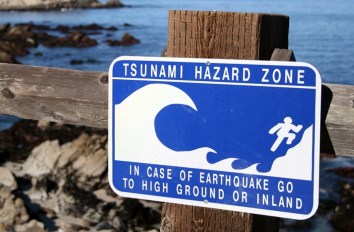
The importance of being located near a high place or “takadai” (高台) in a tsunami prone area became vividly real to us shortly after we arrived to assist with relief efforts following the cataclysmic Great East Japan Earthquake of 2011. At the bottom of one particular set of stairs leading up a steep hill in a tsunami ravished town, we were puzzled to discover a jumble of carts typically used for transporting small children. When we raised our eyes to survey the landscape below us, we soon noticed what remained of a Japanese preschool that had been obliterated just a few days earlier by the massive onslaught of water. Then we understood the mystery of the jumbled carts. Following the siren warnings of a coming tsunami, teachers at that school had obviously snatched up all the children in their care and fled to the nearest takadai for safety. Later, we were thankful to learn that only one child from that particular school perished that day, but stories up and down the coast were far more sobering.

As many of the towns and villages in that part of Japan are forced to hug the coastline due to adjacent mountains, inhabitants can become easily trapped by an incoming tsunami. Therefore, it is important to know where a nearby takadai is located and how to access it. Evacuation signs to higher ground are common place in these areas and sets of stairs that often seemingly lead to nowhere are part of the proactive measures taken to save lives in the event of another disaster.

Much of the energy on those ravaged coastlines continues to be focused on ensuring the safety of residents against future calamities. In some localities, major construction projects are raising the level of towns while leveling nearby mountains for fill dirt, that in turn become alternative sites for rebuilding on higher ground. Crumbled seawalls are also being demolished and reconstructed according to taller specifications, as the general aim is to move everything higher. The quest for a takadai understandably seems to be the preoccupation of most surviving local residents who seek to rebuild their homes, businesses, schools and hospitals on higher ground. There they would have assurance of safety, security, normalcy, and more importantly, a measure of control over their lives which they dramatically lost on March 11, 2011.

Under such circumstances, one can easily understand the desire to obtain a takadai, but an imbalanced pursuit of safety and security in a world full of potential threats can actually lead us astray. As we struggle with the inevitable challenges of life, we may be tempted, apart from God, to seek “higher ground” upon which to build our lives, with safety and security being our sole objectives. God does not guarantee such things in our present life but instead, we are exhorted to flee to Him when life seems dangerous or out of control. He alone is our takadai or higher ground. There is no place safer.

Funerals & Finality

“Just as people are destined to die once, and after that to face judgment.”                   Hebrews 9:27

Funeral

As I joined the immediate family in the crematorium, I was rather surprised when chopsticks were solemnly distributed to everyone present. “We’ve just eaten,” I thought to myself. “What are these for?” My question was soon answered as the partially cremated remains of the deceased were wheeled into the room and we proceeded to carefully place the bones, from the feet up, into the provided urn. I stole an irked glance at my more experienced senior coworker who had inexplicably neglected to communicate this unusual detail in Japanese funeral procedures.

Japanese funerals are, from beginning to end, quite different from the traditional funeral practices of the West. The differences are partially due to the Buddhist emphasis which views death as merely a passage from one life to the next, but that does not account for all the peculiarities of Japanese funeral procedures. For example, the deceased receives a new Buddhist name (called a kaimyō) in Chinese characters, with the length of the name determined by the amount of money donated to the temple. All participants at the ceremony are expected to wear black and bring a gift of money in a special envelope. In many funerals, the attendees will be expected to offer incense to the dead and make prayers on his or her behalf to assist them in their journey. The casket is surrounded by flowers, traditionally chrysanthemums, with a large picture of the deceased loved one prominently displayed. When the ceremony is over and the priest has finished the chants from a Buddhist sutra, each participant will then place a flower in the casket before it is closed. Only the immediate family and a few close friends will accompany the body to the crematorium, usually riding together on a chartered bus.

Instead of the American practice of embalming, the corpse is placed on dry ice and minimal makeup is applied to restore a natural appearance. The body is dressed in formal attire and placed in a simple wooden casket since it too will be incinerated. In some cases, a few favorite items of the deceased will be placed in the casket to accompany the deceased on their final journey.

Japanese funerals are actually comprised of many different ceremonies, beginning with a wake, known as an otsuya, or “passing of the night,” followed by the main funeral and then a final service at the crematorium. The funeral urn is then taken home and eventually placed in the family grave or some other alternative. Depending on local customs and the desires of the family, smaller ceremonies are subsequently conducted by priests on the 7th, 49th and 100th days commemorating the deceased’s death. Escalating costs of funerals coupled with shrinking families and a rapidly aging population are creating significant changes in the funeral industry, altering some of these traditional practices.

While ceremonies related to death vary from culture to culture, every funeral serves as a stark reminder of our finiteness in light of eternity. We should certainly mourn the loss of a loved one, but such events also provide a valuable opportunity to reflect on our own status before a Holy God who holds our destiny, both in this present life and the one to come, in the palm of His hand. In the West, we are embedded in a culture that worships at the altars of youth, beauty and strength, but all of these things will eventually fade, no matter how much we strive to deny it. This is why the author of Ecclesiastes wisely said: “It is better to go to a house of mourning than to go to a house of feasting, for death is the destiny of everyone; the living should take this to heart.” (7:2) While all of us would certainly prefer to dwell in the house of feasting, it is in the house of mourning that we are more prone to ponder on the deeper things of God, including His defeat of death through the power of the cross.

My Protection

“Blessed are all who take refuge in him.”    Psalm 2:12

omamori2

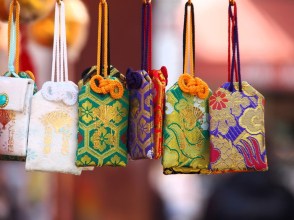
During my first taxi ride in Japan, I couldn’t help but notice an elaborate ornament swinging back and forth on the rear view mirror as the driver navigated through traffic. I later learned that this and a whole array of similar talismans or amulets are called “omamori” (お守り), which literally means “protection.” These small good luck charms are typically made from paper or wood and are usually protected inside an ornate bag along with a written prayer. They are sold at temples and shrines throughout the country with the promise that they will bring good fortune or protection to the bearer, but cynics largely view them as a clever means to raise money.

These omamori can be spotted on bags, hanging in cars, attached to various objects and are even used as cellphone straps. They come in many shapes, sizes and colors and different ones are advertised to possess different powers. Some offer businessmen success in the financial realm while others promise students a good outcome in their test scores. Other omamori guarantee general prosperity, protection from evil, happiness, traffic safety, good health, fertility, and a happy love life. The simple thought behind such charms is that the power and strength of the gods is somehow invested in these brocaded bags so they are not to be opened, as the blessing could be released and thereby lost.

It is generally understood that the shelf life of an omamori is only good for one year, which means a replacement must be purchased, conveniently bringing additional revenue to the local shrine or temple. These “expired” good luck charms must be properly disposed of, usually by burning, preferably at the place they were originally purchased. Eager to grab a share of the enormous profits in the good luck industry, it is now common for stores to sell generic omamori featuring the images of Hello Kitty, Mickey Mouse, Snoopy and other popular characters.

The search to obtain protection from harm or to procure good fortune is a natural inclination of the human heart. Such a quest can take many forms and it is often shaped by our culture, circumstances and worldview. But all such attempts to manipulate one’s personal future are doomed to failure because they are based on the false assumption that we are in control of our own fate. We all seek desired outcomes in life that avoid pain and bring pleasure, but it is arrogant to think that we are in control of such matters, or that we possess the discernment to always know what is actually good or bad for us. Our uncomfortableness with the unpredictability of life is in fact a reminder that we should seek protection and refuge in God, who is our only omamori, or real source of protection. Everything else is a mere trinket.

A Soldier’s Duty

“No one serving as a soldier gets entangled in civilian affairs, but rather tries to please his commanding officer.”  II Timothy 2:4

Yokoi Shoichi

In 1944, as the Japanese army faced certain defeat in the second battle for Guam, Sergeant Shoichi Yokoi and nine other Japanese soldiers escaped into the dense surrounding jungle rather than endure the disgrace of surrender. Twenty-eight years later and long after the war had ended, Yokoi san was eventually captured by some local fishermen. Shoichi Yokoi’s protracted war was finally over. Soon afterwards in a news interview where he faced a curious public, Yokoi san famously said: “It is with much embarrassment that I return.”

It was later revealed that Yokoi san had survived those many years by hunting and making his own clothing, venturing out only at night from his dug out cave hidden deep in the jungle. The last eight years of Yokoi’s elusive life were lived in solitude as he eventually lost contact with his fellow soldiers. Even though he learned in 1952 that the war had ended, Yokoi san continued to take extreme measures to avoid capture, as he later said “We Japanese soldiers were told to prefer death to the disgrace of getting captured alive.” One of the few items in Sgt. Yokoi’s possession at the time of his apprehension was a rusty and useless rifle, which he hoped to one day present in person to Emperor Hirohito.

Yokoi san was soon welcomed back to Japan as a hero as many Japanese admired his tenacity and resourcefulness that kept him alive for so many years. Despite his struggle to transition back to normal life in modern Japan, Yokoi san did his best to assume ordinary routines and even entered into an arranged marriage. Afterwards, he and his wife settled in Yokoi san’s home city of Nagoya, where he went on to become a popular television personality and an advocate for austere living before passing away in 1977 at the age of 82.

The circumstances of Yokoi san’s survival story are quite remarkable, but what is even more unusual are the motives that drove him to live such an extreme life. Sgt. Yokoi’s rationale to avoid capture was certainly complex, but one of the key factors in making that decision was his passion to please his commanding officers, and thereby avoid shame.

As the people of God, we are sometimes compared in Scripture to military conscripts who are called to serve in God’s army. Therefore, our primary duty is not to please ourselves, but rather, our Commanding Officer. Such a lifestyle of commitment to God can often be contradictory to the world’s usual pattern of living for one’s self, and in turn, may invite curiosity and even opposition from those who are guided by a very different value system. However, it is ironic that those who pursue personal freedom to the exclusion of everything else are actually captives to sin. But God in His mercy, sent Jesus to this earth to set such captives free. They in turn are used as part of God’s eternal rescue mission to free others from their self-imposed prisons.