
Local Pubs

“That each of them may eat and drink, and find satisfaction in all their toil—this is the gift of God.”

 Ecclesiastes 3:13
Co-workers relaxing in Japanese restaurant with food and drink

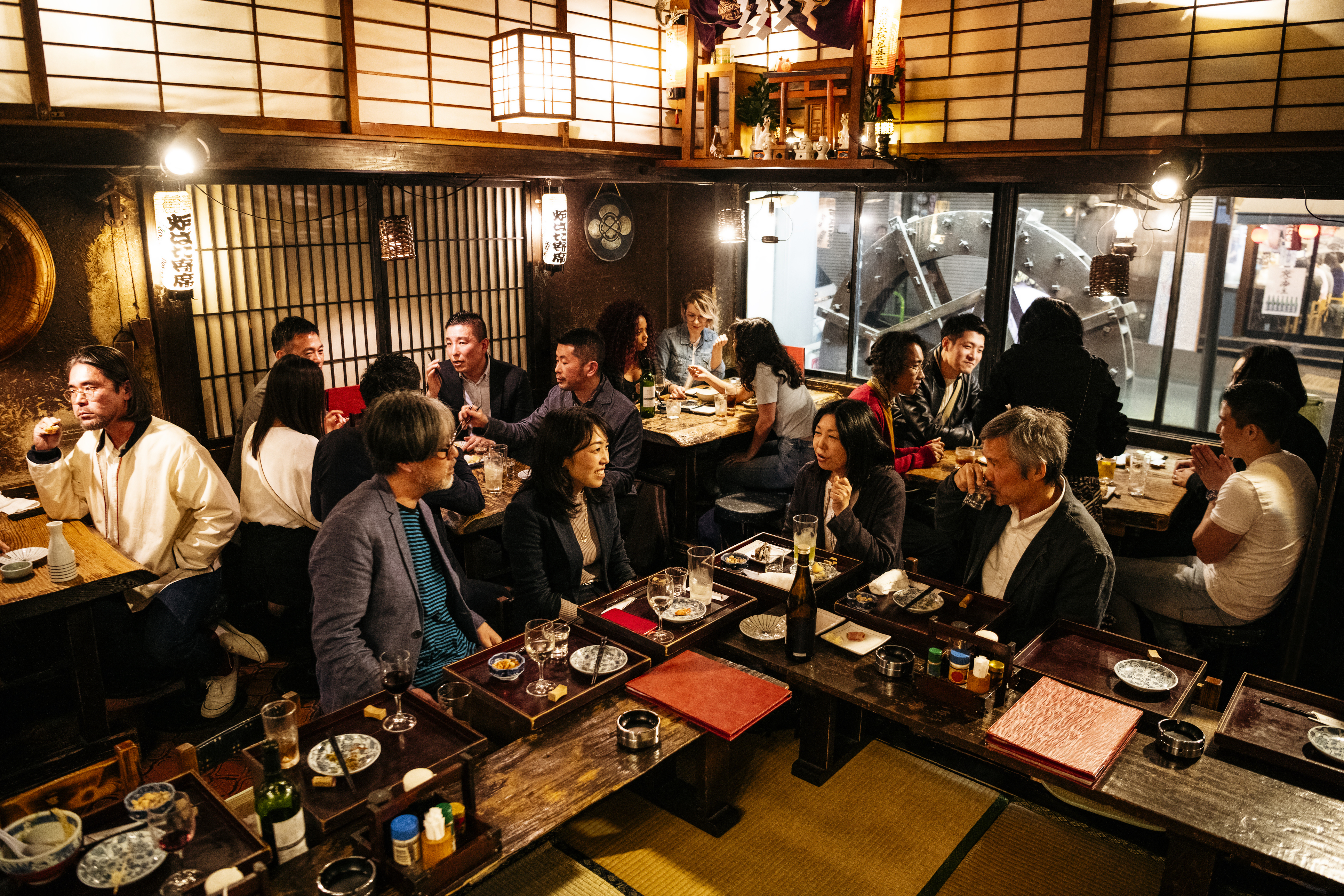
I was a complete novice in what I was about to experience, but as a relative newcomer to Japan, it was a great opportunity to learn about a slice of Japanese culture that was previously hidden from me. With my Japanese friends leading the way, we entered a rather non-descript multi-story building located in an area of town known for its night life. Each floor hosted several business establishments and we chose one that didn’t particularly seem to stand out among any of the others, except that it was obviously well-known to my more experienced friends. We were about to enter what is known as an izakaya.

Translated literally, izakaya (居酒屋) means “stay-saké-shop,” so it is basically a place to consume alcoholic beverages. However, an izakaya is much more than that as it has more resemblance to a British pub where food is served and people gather for social interaction. Sometimes these izakaya are called an akachōchin, or “red lantern” as the proprietors traditionally hang decorative red paper lanterns outside to attract attention. Upon entering the establishment, customers are often seated on the floor at low tables placed on tatami mats, a traditional bar or at western-style tables and chairs. The busier izakayas may also offer a tachi nomi style of dining, which means to drink while standing.

Everyone is customarily given an oshibori or wet towel when they are seated to wipe their hands and this is usually accompanied by a small appetizer such as edamame (soybeans). Food items are generally shared by everyone at the table and many izakaya specialize in certain food choices such as yakitori (grilled chicken on sticks), sashimi, tofu, grilled fish and even french fries (called “furaido poteto”). Some of the larger izakaya offer the dining option of nomi hōdai (all you can drink) or tabe hōdai (all you can eat) at a set price for a determined length of time. The more innovative izakaya come with a particular cosplay theme where the staff wear costumes while waiting on customers. The word “kanpai!” is echoed often as customers lift their glasses and toast one another in merriment. Regular patrons sometimes purchase a particular brand of alcohol and the bottle is placed on a shelf with their name written on it for their next visit. Like the classic TV sitcom “Cheers” that centered on a group of regular customers at a local bar, an izakaya can be a safe place to relax where “everybody knows your name.”

Ironically, some of the purposes for attending an izakaya can also be reflected in the reasons people may attend a local church. Meeting with like-minded people for companionship, encouragement and sharing of information are some of the attractive elements of an izakaya that are usually unavailable at onerous, pressure-driven places of work. When viewed in these terms, izakaya represent for many a form of escape through shallow social interaction and the consumption of alcoholic beverages and food.

While such responses are understandable and even ordained in some circumstances (Ecc. 3:13), there is certainly much more to life. One can also make many bad choices if his or her sole objective is to merely escape from the day-to-day unpleasantries of life. Perhaps this is why the Apostle Paul advised new believers, emerging from previous dark cultural habits, to aim for something higher that would lead to more productive lives that honor their Creator. He said, “Do not get drunk on wine, which leads to debauchery. Instead, be filled with the Spirit.” (Eph. 5:18) Because God knows our name, our choices can lead to eternal blessings.

Super Dads

“Fathers, do not embitter your children, or they will become discouraged.”            Colossians 3:21

Super Dad

The Japanese have an old saying that goes, “Jishin, kaminari, kaji, oyaji” (地震雷火事親父), which translated, means literally, “earthquake, thunder, fire, father.” The implicit concept behind this proverb is that we should fear our fathers just as we are naturally inclined to fear certain forces in nature. This was the manner in which fathers have been traditionally viewed in Japan, but the Japanese government is now determined to change this age-old perception. With this objective in mind, in 2010 the Minister of Health, Labor and Welfare launched the Ikumen Project with the purpose of cultivating a radically new father figure for generations to come.  

Over the centuries, the Japanese father’s primary role was to provide financial security for his family. In modern times, this stereotype was embodied by the salaryman (sarari-man), or white-collar worker, who labored long hours while trying to climb the corporate ladder. This commitment, of course, required extended absences from the home and, consequently, placed an unduly large burden on the mother who was left alone to raise the children and manage the household. These traditional role patterns made it very difficult for married women who wanted to develop their own careers. As a result, many women became increasingly disenchanted with such an unequal division of roles, encouraging many to delay getting married or choosing not to marry at all. Japan’s birth rate, therefore, suffered a precipitous decline, prompting the government to intervene in the form of the Ikumen Project.

The term ‘ikumen” is actually a newly coined term combining the word “ikuji” (childcare) and “ikemen” (hunk; good-looking) to capture the vague meaning of an “attractive man who does it all.” Since the English word “men” is also part of ikumen, that adds another subtle nuance to this increasingly popular expression. The Ikumen Project is basically a government sponsored advertising campaign to reinvent the role of the father. Instead of the traditional distant, workaholic dad, an image of a “new” type of father is proactively promoted through newspapers, magazines, commercials and even mangas. These fathers are smiling, handsome, caring and stylishly dressed. They are typically portrayed as happily helping with household chores and spending meaningful time with their children. Unlike fathers in the past, ikumen delight in cooking, housework and playing with their kids so the overtaxed mom can have more time for other important matters. Through a carefully coordinated campaign, ikumen have become the new super heroes in Japan as they strive to nurture the next generation of workers who will in time deliver Japan from its present economic doldrums. However, some men are starting to protest such expectations as being unrealistic and complain of “ikumen illness,” as they try to meet heavy demands at both work and at home.

The important role of the father is under siege or being redefined in many societies as mores continually change through various cultural influences. While it is taken for granted that the vast majority of fathers love their children and are filled with good intentions, it is not an easy role to consistently fill 24 hours a day, seven days a week. Perhaps the best summary in the Bible of what a dad should aim for is succinctly provided in Ephesians 6:4, where both a restriction and a responsibility are commanded. “Fathers, do not exasperate your children; instead, bring them up in the training and instruction of the Lord.” While ikumen are a carefully constructed ideal, God’s blueprint for the father is a man who strives with all his might to help his children walk in the ways of God. Such a man should be admired, not feared.

Inside/Outside

“Here there is no Gentile or Jew, circumcised or uncircumcised, barbarian, Scythian, slave or free, but Christ is all, and is in all.”  Colossians 3:11

Inside-Outside (2)

In the natural world, it is common for similar species to congregate together for purposes of security and survival. There are quite a variety of names for these different animal clusters. For example, a group of cattle is called a “herd.” Wolves gather in a “pack.” A collection of lions is referred to as a “pride.” Fish swim together in a “school” and penguins huddle side-by-side in a “colony.” Birds fly in a “flock,” baboons live together as a “troop” and an infestation of caterpillars is called an “army.” Along a similar vein, the Japanese tend to identify themselves as belonging to certain social groupings that are described as being either “uchi” (内) or “soto” (外). Uchi means literally “inside” and soto means “outside.”

This uchi/soto distinction is a basic concept woven throughout Japanese society and is even reflected in Japanese language patterns. In contrast to the West, with its focus on the individual, in Japan, inter-social relations and group consciousness take a much higher priority. People generally view themselves as either uchi or soto depending on the particulars of their immediate circumstances and their self-perceived identity within a given setting.

Nowhere is this more evident nor more complex than in the workplace. For example, within a division of a company, one typically regards his or her boss as soto and everyone on their own level as uchi. This perception determines the language patterns one would use when addressing someone considered above you and therefore outside of your group. However, in the case where you are speaking to a person from another company, then you would regard all the personnel of your company as being uchi, which would correspondingly affect your mannerisms and speech patterns. The general idea is that those who are outside of your group should be honored, and those within your group should be humbled. Such patterns of perception and behavior are also evident within schools, clubs, various social circles and even within churches. Obviously, such self-classifications are not static due to ever-changing circumstances, but they do serve to provide one’s need for identity and security within a hierarchical environment.

The concept of uchi and soto is evident on a macro level as well, shaping Japan’s national perception in relation to other countries. It is therefore common practice for the Japanese to refer to themselves as “we Japanese” and all foreigners are classified as “gaijin,” translated literally as “outside person.” While this tendency towards nationalism is common throughout the world, the uchi/soto concept adds another layer of separateness that can make it even more difficult for foreigners to fully integrate into Japanese society.

Such social and ethnic distinctions are certainly not unique to Japan, as the world is rife with divisions based on numerous factors. The message of the Gospel, though, and the establishment of the early church cut across these ancient and discriminatory lines in an unprecedented manner. Even the old barriers between the Jews, or God’s adopted people, and those on the outside known as “Gentiles,” were forever broken down through the power of the cross (Colossians 3:11). More importantly, we were all outside of the grace of God, regarded as “soto,” but in Christ, we are now eternally “uchi.” This stunning change is the miracle of the church and an amazing testimony of the mercy of God.

Neighborhood News

“And who is my neighbor?” Luke 10:29b

Kairanban

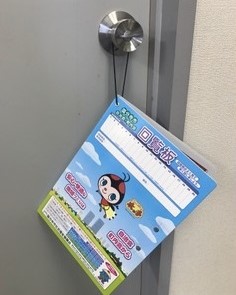
We had not lived in Japan very long before we discovered that community is an important value and good communication within the local neighborhood is considered a critical element for a healthy community. To facilitate this worthwhile objective, we paid a “voluntary” monthly fee to the local neighborhood association for the privilege of membership. This membership kept us in the information loop through a periodic circular notice folder, called a kairanban (回覧板), that is dutifully passed on from neighbor to neighbor. The contents of this folder varied each time, touching on a number of different topics. Some examples of this are local road construction news, dates for public health screenings, information on the neighborhood cleanup day, safety precaution advisories, any changes in garbage collection procedures, notification of local festivals, appeals for charities, local school news, reports of unusual criminal activity, scheduled senior events, and advertisements for local businesses. Most important of all was the routine announcement of the next neighborhood association meeting and the not-so-subtle reminder to attend.

We normally skimmed through the enclosed sheaves of papers, making sure we weren’t missing anything critical in nature, and then stamped our personal seal on it along with the date. This verified that we received the neighborhood news before passing it on to the next person on the list. Although it could be bothersome at times, the kairanban did serve as an additional reminder that we were not just a collection of individuals, but were part of a community.

Since we frequently moved, we were members of many communities in Japan over the years. The strength of our bonds within these communities varied, depending on how long we lived in a particular place, the age of our children and our time availability. In time, we increasingly came to appreciate this structured sense of belonging where neighbors were encouraged to look out for each other and personally invest in the community. We also realized that as foreigners, we were probably under the neighborhood microscope more than the typical Japanese resident. This reality was brought to our attention when a neighbor expressed her sadness at our impending departure, noting that we always put our trash out on the correct days, were diligent in our snow removal, kept our garden up and spoke politely to everyone!  This interaction confirmed what we had long suspected, that as foreigners in the neighborhood, we lived in a goldfish bowl with many people observing us. While this was somewhat intimidating, it was also reassuring that members of the community genuinely cared about us.

 In hosting his long running children’s TV show, “Mr. Rogers’ Neighborhood,” Fred Rogers always opened the show with a corny song titled “Won’t You be My Neighbor?”  Through this simple ditty and for the duration of the show, Mr. Rogers emphasized the importance of being a good neighbor. But when another man, from a different era, asked Jesus a similar question, “Who is my neighbor?” (Luke 10:29b) we are told that his real intent wasn’t to promote neighborly behavior, but rather, to justify himself. (v.29a) In response to the man’s question, Jesus proceeded to tell the famous parable of “The Good Samaritan.” (vv. 30-37) This seemingly simple story took the concept of being a neighbor to a much deeper level, revealing the compassionate heart of God and the natural inclination towards self-centeredness in man. Now that we live in the States, a kairanban is no longer delivered to our door but we still have abundant opportunities to practice community on a daily basis. The good Samaritan and Mr. Rogers serve to remind us that our love for God should be reflected in our love for others. This truth is not just a lesson for children. Won’t you be my neighbor?

New Year Money

“…though you are evil, know how to give good gifts to your children…” Luke 11:13a

Otoshidama2

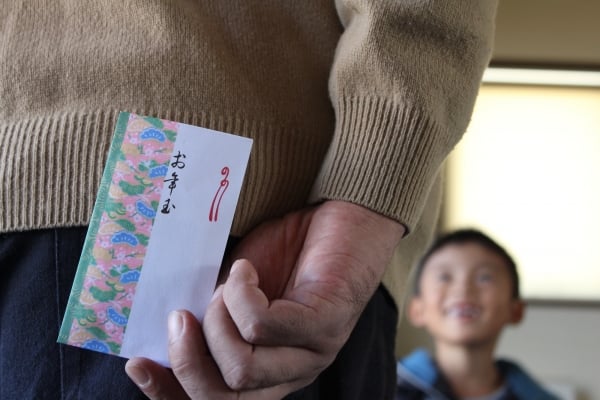
Christmas was over for our children, but they soon reaped an unexpected, additional windfall with the onset of the Japanese new year. They would receive otoshidama. Over the next few days, several of our Japanese friends kindly gave our kids small envelopes of money that they were to use for themselves. This custom supposedly dates back to the Edo period (1603-1868), when wealthy individuals gave mochi (rice cakes) to others at New Year’s and presented some as offerings at the local Shinto shrine. These treats were called “toshidama” (年玉), which meant literally “rice ball/treasure.” Over the course of time, these presents of mochi were replaced by small toys to children which eventually were substituted by cash gifts.

Otoshidama is typically given to school age children by immediate relatives, close family friends and in some cases, even neighbors. The amount of money generally varies upon the nature of the relationship with the child and the child’s age. For example, elementary children average ¥2-3,000 ($20-30) per envelope, junior high kids ¥5,000 and high school students ¥10,000. The money is traditionally placed in a miniature envelope called a puchibukuro that is decorated with a popular anime figure, cartoon character or an animal matching that year’s Chinese zodiac. Only new bills of money are included and it is neatly folded into thirds before being placed in the envelope.

Surveys indicate that most children use these monetary gifts to purchase video games, manga, or toys, but some set part of the money aside for future purposes. It is considered impolite for children to open the puchibukuro in front of others and the majority of parents carefully monitor the otoshidama to ensure it is spent appropriately. We certainly did so with our children as we helped guide them with purchases that were usually beyond our limited resources and we also encouraged them to save a portion of this special new year money.

In teaching His disciples about prayer, as recorded in Luke 11, Jesus used the simple analogy of a father giving good and appropriate gifts to his children to drive home an important point. Just as parents are eager to provide for their children, God delights in providing for us as His children. Therefore, we are to confidently approach our Heavenly Father to ask, because it will be given to us. To seek, and we will find. To knock, and the door will be opened to us (v.9). However, like children entrusted with sizable sums of cash, we are also obligated to use the bountiful gifts of God wisely, in line with His eternal purposes and life-giving guidelines. We may not get all the toys and trinkets that this world has to offer, but God places into each of our envelopes exactly what we need. Otoshidama come only once a year and end altogether when one reaches adulthood. But the gifts of God come unexpectedly in many forms and without limit. Every day is a new year with God.

Indebtedness

“And forgive us our debts, as we also have forgiven our debtors.”  Matthew 6:12

Debt2   Christmas was drawing near and as newcomers to our neighborhood, we thought it would be a nice gesture to take a gift of homemade Christmas cookies to each of our neighbors. We should have known better. Within hours of dispensing our holiday goodies, our doorbell started ringing. It was payback time. Through our unsolicited gifts, we had unintentionally obligated our neighbors to correspond in kind. Therefore, several of them responded to our meager gift by reciprocating with something of equal value. In Japan, no one wants to be put in the awkward position of indebtedness to someone else.

After many years of living in Japan, we were well aware of this value, but we didn’t think the rule would apply to a half dozen home made cookies that cost us almost nothing to produce. Instead, my wife’s cookies were received as works of art that were created through great personal sacrifice, so the principle of “kaesu” kicked in and each recipient felt indebted to match our gesture. Kaesu (返す) means literally “to return” or “give something back” to another person as there are other words that express the related concept of simply putting something back in place. In many cases, kaesu also has the underlying meaning of repaying a debt when you give something to return a favor.

Kaesu is a powerful force in Japan and accounts for much of the gift giving that is grounded more in the complex motives of obligation and duty, rather than uncomplicated generosity. The act of kaesu relieves one of lingering too long in the undesired position of being indebted to another person and serves to restores equilibrium in the relationship. This concept was vividly made real to me when I stopped one day to assist a woman who had been in a traffic accident and was desperately trying to retrieve her dog despite her own injuries. She profusely thanked me for my efforts and then I resumed my travel once the police and ambulance arrived. Less than 24 hours later, a package was delivered to our doorstep which contained some expensive cookies and a note of appreciation sent from the hospital. That was kaesu in action and a good reminder of the need for wisdom in walking the very fine line of genuinely helping people without unnecessarily placing the heavy burden of kaesu upon them. Sometimes this is unavoidable, but it is good to think through the possible repercussions of our well-intended actions.

Although the concept of indebtedness manifests itself differently from culture to culture, as a general principle, no one likes the idea of owing something to someone else for an extended period of time. Debts of both a financial nature and other forms can become a heavy burden that have the potential to harm relationships and restrict freedom. The most serious form of debt, though, is to sin against another person and God Himself. There is no simple kaesu in any culture for these kinds of deficits or transgressions. We may seek forgiveness of these debts through various means, but in the end, mercy plays a critical role in any such transaction. We certainly cannot easily erase our own personal debts and sins, but we have the power to offer forgiveness to others if we are so inclined. That is why Jesus taught His disciples to pray: “forgive us our debts, as we also have forgiven our debtors.” (Matthew 6:12) This act is a much higher form of kaesu, where something of much greater value is given without merit or any expectation of reciprocation. In any culture, that is called grace.

Boasting

“In God we make our boast all day long, and we will praise your name forever.”   Psalm 44:8

Boasting   Soon after our initial arrival in Japan, we were a little bewildered by some things we observed when we joined a Japanese family who had kindly invited us over for a meal. Before we even sat down to eat, the husband proceeded to demean his wife’s efforts in cooking and house cleaning. Unlike the typical American domicile, we didn’t notice any family photos capturing activities of the children or anything commemorating their individual achievements. Little mention was actually made of the children outside of our hosts’ minimal responses to our polite inquiries. We also thought it odd when they referred to their son as a “baka musuko” (stupid son). We went home that evening rather puzzled by our experience, but later learned that it is considered socially taboo to praise one’s own family.


This experience certainly cut across the grain of what we had been taught to do within Christian circles in the West, where praise and encouragement of family members is actively promoted. While it may be acceptable to directly compliment people you are close to, in Japan, it is perceived as boasting when you make such comments to others outside of your personal circle. One may have a beautiful wife, who’s a great cook, and intelligent children who excel in many activities, but it would be interpreted as bragging or arrogant to express such sentiments to others. This explains why many Japanese adopt a self-depreciating attitude and communication pattern when it comes to the accomplishments of one’s family and even employer.

This tendency to avoid self-promotion is enhanced by humble Japanese language patterns that are routinely used in certain social settings and one is expected to downplay any personal action that might have benefited others. It is quite common in Japan to give a gift when someone has done something for you, but we soon learned the appropriate phrases to be said when presenting such items are: “tsumaranai mono desu ga…” (“this is a boring, uninteresting item…”) or “sasayakana mono desu ga…” (“this is something very meager…”). There is obviously a very fine line between truth telling and false humility, but in Japan, we learned it is better to err on the latter end of the spectrum when communicating with others.

Boasting is usually associated with pride, which is frowned upon in most cultures and certainly condemned in the Bible. For example, boasting is an identifying characteristic of the beast (Daniel 7:11) who is the antithesis of all that God represents. When the Apostle Paul succinctly defines the nature of love in I Corinthians 13, he used a number of negative behaviors to describe what love is not, and among them is a propensity to boast (v. 4). Boasting about one’s own righteousness to claim good standing before a holy God is equally castigated (Romans 3:27-28) as we all stand impoverished in the presence of God because of our sinfulness.

The root motivation behind an inclination to boast is self-promotion, but there is another form of boasting that is actually encouraged in the Scriptures: the promotion of God instead of self. In taking up the topic of boasting again in the 2nd Letter to the Corinthians, Paul advises: “Let the one who boasts boast in the Lord.” (10:17) Such boasting is another form of praise as we ascribe credit to God for all His works and gifts on our behalf, instead of claiming anything for ourselves. This is not false humility, but rather, an honest declaration of who we are and what we have been given before a gracious and generous God.

Saving Face

“Do your best to present yourself to God as one approved, a worker who does not need to be ashamed.”

II Timothy 2:15

Saving Face

Like many men, I am not inclined to linger long in front of a mirror for visual inspections. However, during the long, cold winters in northern Japan when I often let my beard grow, I became more preoccupied with my face as it required more attention. Most Japanese give a lot of attention to another kind of “face” that is sociological in nature. In this usage, “face” represents the honor, dignity, status or reputation of an individual that one strives to protect or maintain at all costs. This concept is somewhat similar to what we refer to as “having a good name” in western culture.

In Japan, one can save face (menboku o tomatsu—面目を保つ), lose face (menboku o ushinau—面目を失う), give face, show face, fix face and even loan face. All of these variations are centered on the personal goal of maintaining respect or the opposite incentive of avoiding shame and humiliation. Japan’s shame culture, which is also prevalent in other parts of Asia, is perhaps the main driving force that prompts this extensive preoccupation with one’s “face.” No one wants to lose face or be embarrassed in front of others, which also motivates people to be careful to maintain the face of others. Therefore, public disagreements are often avoided as someone could lose face in such an encounter. One might refrain from asking direct questions or making requests that may inconvenience the other person. It is also generally considered socially unacceptable to publicly declare someone has made a mistake. Personal relationships and social harmony are considered to be the bedrock of Japanese society, so great care is usually taken to protect each other’s face.

Such a concern for others is commendable in many regards, but taken too far, this kind of superficial interaction can lead to potential misunderstandings and fractured relationships. In the famous song “Eleanor Rigby,” the Beatles sang of a woman who “wore a face in a jar that she kept by the door,” that somewhat reflects the common practice in Japan to put on different faces for different situations. One’s “face” then, is not just what other’s see, but what we want them to see. This projected face may not be in true alignment with the feelings and thoughts that lie underneath, which in turn, makes the art of saving face and maintaining relationships in Japan a rather complex endeavor.

Behind the efforts to save one’s personal face or reputation is often a latent desire to earn the approval of others which can unwittingly invite other negative, or even sinful outcomes. While it is good to be considerate of others, taking into account their opinions and feelings, we must be careful as to who and to what extent we empower with such control over our lives. Our efforts to save face, or not to lose face, can lead us down a dangerous path where the approval of others becomes more important than the approval of our Creator. As the Apostle Paul reminds his young protégé Timothy, there is no shame if we have the approval of God (II Timothy 2:15). This “face” requires our utmost attention and should never be placed in a jar by the door.

Minister of Loneliness

“Turn to me and be gracious to me, for I am lonely and afflicted.”   Psalm 25:16

Loneliness

Japan has a parliamentary form of government where the chief executive, known as the Prime Minister, appoints ministers to assist him in his various responsibilities. These important officials traditionally include the Minister of Foreign Affairs, the Minister of Justice, the Minister of Finance, the Minister of Defense, the Minister of Health and other well-known positions. However, on February 12, 2021, the media announced the surprise appointment of Tetsushi Sakamoto to fill a newly created cabinet position in response to recent troubling trends. In an attempt to reduce widespread loneliness, social isolation and increased suicide rates accelerated by the restrictions of COVID-19, Mr. Sakamoto now serves as the official Minister of Loneliness.

This new position is called kodoku mondai tantō kokumu daijin in Japanese, which is a rather lengthy title, but the key words in it are “kodoku” and “mondai.” Together, they mean “loneliness problem,” which is admittedly, an unusual title for a government official, but these are unusual times. Loneliness had already been identified as a growing problem among the Japanese populace in previous years, but the extreme measures recently taken to curb the spread of COVID-19 only served to hasten this harmful trend. For the first time in eleven years, there has been a rise in the number of suicides in Japan after several years of decline due to various public campaigns. In fact, more people died from suicide in one month than the total number of deaths associated with COVID-19 in all of Japan in 2020. Loneliness has also been linked to other serious health issues such as heart disease, eating disorders and mental instability to name a few. Women and the elderly have been particularly affected by recent job losses and the implementation of draconian social limitations. The prolonged depression of the Japanese economy and an alarming decline in birthrate are symptomatic of related social dysfunctions that seem to be eating away at the heart of the country. It can be said that loneliness is one of many elements contributing to these negative patterns.

While innovative government initiatives to reverse this destructive trend of loneliness are commendable, a sustainable and truly effective solution to such a deep-rooted problem lies well beyond the authority and power of political leaders. From the very beginning of time, when God created man in His own image as a relational being, He declared that “it is not good for the man to be alone.” (Genesis 2:18) Recognizing this inherent need for relationship, God created the first woman to fill Adam’s social, physical and emotional needs and through them, mankind continued to expand while living in community.

However, such communities were chronically dysfunctional because of man’s fallen state which gave way to broken and imperfect relationships. Even though mankind was created for fellowship and relationship with others, the presence or risk of pain has prompted many to withdraw and restrict their social contacts with the purpose of self-preservation. For many, this withdrawal is a deliberate choice, but for countless others, such a response has been forced upon them by circumstances not of their choosing. The end result is loneliness, which if left unaddressed, can lead to a destructive, downward spiral in other critical areas. While there are no simple remedies for such heartaches, we would be wise, like the psalmist, to turn to the Creator of man’s heart when such burdens seem too heavy to carry alone. “Turn to me and be gracious to me, for I am lonely and afflicted.” (Psalm 25:16)

Group Photos

“I will remember the deeds of the Lord.”   Psalm 77:11a

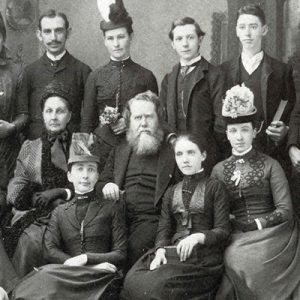
1888-Team-James-Hudson-Taylor-300x300    Long before the term “selfie” carved out a unique niche in our lexicons, the Japanese used an alternative word that eventually became a part of our personal vocabulary and history. It is called “kinen shashin” (記念写真) and it is roughly translated as “commemorative photograph.” Whenever a group assembles for a particular occasion, someone inevitably calls for a kinen shashin to be taken to commemorate the event. If you browse through our personal photo albums (back in the day when we collected physical photographs), you will discover quite a few of these kinen shashin scattered among other pictures portraying family and friends in various locations and activities.

A few of these kinen shashin are now framed and hang on our walls, or sit on our shelves, reminding us of days gone by and God’s grace in our lives. Such events may include baptisms, church anniversaries, a farewell of a coworker, training events, a church dedication, a wedding, an induction of a pastor, a graduation, conferences, the launching of a new church plant, a special concert or a group reunion. Each kinen shashin speaks volumes about God’s faithfulness throughout a jumble of times and circumstances as we walked through life and our paths crossed with those of many others.

But this is where the nuance of kinen shashin departs from our typical preoccupation with selfies. A selfie is generally photographic evidence that you did something, ate something, went somewhere or were with someone in particular. The focus is centered more on ME and things that are related to ME at the time the picture was taken. That is undoubtedly why the term “selfie” was coined to capture the essence of this particular form of photography. Of course, there is nothing wrong with this approach and we ourselves frequently take selfies. However, if given a choice, I would much rather be included in a kinen shashin, where my face may be lost in the crowd, but something much greater than me is being recorded as part of my ongoing faith journal.

In the days before the invention of cameras and cell phones, the psalmist testified “I will remember the deeds of the Lord.” (Psalm 77:11a) which is how we are prompted to respond when we view some of the kinen shashin from our past that depict various people and ministries. When we take the time to peruse through such photos, they serve to remind us of the many “deeds of the Lord” that have transpired over the years, but may have slipped from our memories. We would do well to fondly remember such people and events with thankfulness, but also with expectation for the things yet to come that we can only see now through eyes of faith. While it is sometimes unwise to linger too long in the past, we should certainly learn from it and apply those lessons to new challenges ahead. Kinen shashin can serve such a purpose as they beckon us to focus on community and God, which a selfie often fails to capture.