
Omotenashi*

Offer hospitality to one another without grumbling.” I Peter 4:9

Omotenashi

Upon our arrival in Japan, we were initially surprised by the many small extras that were routinely extended to customers, reflecting a level of service and care we had previously not experienced in the States. For example, upon entering a large department store elevator, a perfectly coiffed woman in a smart uniform politely greeted us with a bow and pushed the button of the floor we wanted. Whenever we pulled into a gas station, attendants scurried around our car offering various forms of service and bowed in unison as we departed. When invited over for a meal, our hostess unfailingly laid out slippers for us and then proceeded to quietly turn our outdoor shoes around to easily step into in preparation for our departure.

All such efforts are part of what the Japanese loosely call “omotenashi,” a word usually translated as “hospitality.” However, such a simple summary does a huge injustice to the deep complexities that underlie the concept of omotenashi. The term itself is very unique in that different Chinese characters (kanji) are employed for the same word, adding subtly different nuances to the meaning. For this reason, omotenashi is most commonly written in the alphabetic hiragana as おもてなし, and avoids usage of the kanji. In its most basic translation, omotenashi means “not having two sides,” implying that one must be wholehearted and single-purposed when offering hospitality or a service to others. But “omote” can also refer to one’s public face or the way you present yourself to the world and “nashi” means “nothing.” This aspect of omotenashi then suggests that you are to serve others without public pretense, where ego doesn’t get in the way. This idea takes hospitality to a much higher level that goes beyond the expectations of the person being served and perhaps, even beyond the personal preferences of the one doing the serving. This form of omotenashi requires you to pay close attention to the needs of a guest or customer to the exclusion of your own.

The concept of omotenashi extends throughout Japanese society, including the manufacturing of cars. A great example of this is the circumstances that followed the launch in 1989 of the Lexus luxury vehicle model LS-400. After thousands of this particular car were rolled off of the assembly line and sold, Lexus received two very minor complaints from a couple of disgruntled customers. The company’s response? Lexus recalled all the cars and issued every owner a detailed letter of apology. In that letter, Lexus offered to come to every customer’s home, pick up their car, leave them a free loaner car, repair the car for free, wash it and then return it with a full tank of gas and an expensive gift. That’s omotenashi. Such incredible service closely aligns with the old Japanese proverb, “Okyakusama wa Kamisama,” which means, “the customer is god.”

While the values and practices of hospitality vary widely from culture to culture, we should remember that omotenashi is something all Christians are commanded to do. (Romans 12:13) On top of that, we must keep a close guard on our attitudes that accompany such acts of service as the Apostle Peter warns they are to be offered “without grumbling.” (I Peter 4:9) Biblical hospitality is not driven solely by an absence of self, like omotenashi; rather, it is spurred by higher motives: love of God and love of others. For a good example of this, we need look no further than the precedent Jesus laid down for His disciples when He washed their feet shortly before He was taken away to be tortured and crucified. That is God’s version of omotenashi.

*The idea for this blog comes from Malcolm Gladwell’s Revisionist History podcast “Go and See” on March 5, 2020.

Know Your Place

“There is neither Jew nor Gentile, neither slave nor free, nor is there male and female, for you are all one in Christ Jesus.”  Galatians 3:28

sumo

America is generally, a land of informalities as evidenced by our dress, speech and lack of class distinctions. Therefore, the somewhat hierarchical nature of Japan was a new experience for us when we first arrived. This distinction became obvious once we commenced language study, where we learned that communication patterns in Japan vary according to one’s social position and the person with whom you are speaking. There are respectful language forms (sonkeigo 尊敬語), humble language patterns (kenjōgo 謙譲語), and polite language forms (teineigo 丁寧語), that, together, reflect a person’s social standing in relation to their conversational partner.

When we made our first visit to the city ward office, this tendency towards hierarchy was also conspicuous in the working world as we observed the unusual layout of the employees’ work places. In typical Japanese fashion, there were no partitions or cubicles, but instead, everyone’s desk was neatly positioned among rows of other desks facing the manager’s working area so he could easily monitor them. We also learned that it is common to use both name and title when addressing superiors within one’s company, where everyone knows their place. This ranges from the chairman, or the kaichō (会長), who is often an elderly figurehead, down to the lowest staff member known as a shain (社員). In between these two extremes, you have the president (shachō), general manager (buchō), section manager (kachō), team leader (kakarichō) and supervisor (shunin) with many additional sub categories. These positions are clearly indicated using nametags, desk name plates and personal business cards.

This proclivity towards ranking is particularly noticeable in the traditional sport of sumo. There are six divisions of sumo with multiple ranks within them. Life in the sumo world is akin to a commune where all the wrestlers live, work and eat together. However, there are huge distinctions in privileges and duties between higher and lower ranked wrestlers. The differences are evident in the clothing they are allowed to wear, free time allotted to them, required chores, the degree of privacy they enjoy and training opportunities. These distinctions reflect the general sense of senior (sempai) and junior (kohai) relationships that permeate all levels of Japanese society.

In ancient cultures and still in many countries, the tendency to draw lines between people based on factors such as economics, ethnicity, power, religion and gender is not unusual, and sometimes, it is even necessary. But it becomes a problem when individual rights are violated and those deemed to be at the top of this artificially constructed pyramid take advantage of those considered beneath them. Jesus came to break down such biased barriers that can disrupt relationships and lead to divisiveness. Of course, the greatest barrier of all is the one that existed between men and God, which Jesus broke down through His sacrificial death on the cross. In so doing, He also offers healing to the nations, the removal of prejudicial classifications and the redemption of damaged relationships. While it is important to know our place in this world, it is far more important to know our place in the world to come.

Real Truth

“Do not swear—not by heaven or by earth or by anything else. All you need to say is a simple “Yes” or “No.” Otherwise you will be condemned.”   James 5:12

truth3

Every husband, who values his well-being, knows the correct answer if his wife asks him the paradoxical question: “How do I look?” The stock answer of “You look fine dear!” is certainly the safest reply, but it may not necessarily be the most truthful one. This is what the Japanese call a “tatemae” answer and they have elevated this form of communication to an art form that many foreigners find difficult to comprehend. Tatemae (建前) means literally “built in front” or “façade,” in contrast to its opposite term, “honne” (本音), which can be translated “true sound.” Honne, simply put, is one’s true feelings and opinions, whereas tatemae is what one perceives others want to hear. In this sense, honne is the real “sound” or voice of an individual, but for various social or personal reasons, the speaker deems it best to express a safer alternative, or tatemae, answer as a form of protection. This “safer” response could be intended to protect a personal or working relationship, and it is certainly common in diplomatic communication, which can lead to all sorts of misunderstandings.

Some consider the use of tatemae as a subtle form of lying, but in reality, every culture employs a certain degree of such communication to avoid needlessly hurting or offending those around us. In English, we may call a slight stretching or distortion of the truth a “white lie,” but such falsehoods often stem from selfish, ulterior motives. In contrast, the Japanese propensity towards using tatemae responses is generally far more complex. In Japan, the group usually takes precedence over the individual so there is an invisible, but widespread pressure to ensure that things go smoothly. Therefore, great care is taken not to potentially disturb harmony in relationships. Avoiding possible conflict is a high value in Japan and tatemae answers can be very useful to that end.

However, such a practice can lead to other challenges where one is constantly required to discern when an invitation, compliment or offer is genuine or just a tatemae response. This intentional vagueness is why sociologists classify Japan as being a high-context culture, meaning that communication is often implicit and relies heavily on context. Direct answers are often eschewed and ambiguous, innocuous replies like “daijoubu” (it’s all right), “omoshiroi” (interesting) or “yōji ga aru” (I have something to do) are frequently employed in everyday conversations. Most people are reluctant to state a contrary opinion and stand out, so they “build a wall” using tatemae, which serves to ward off unwanted scrutiny.

Because of people’s natural propensity to tell lies and not follow through on their promises, oath taking became a common practice to demonstrate the veracity or trustworthiness of an individual in both ancient and modern times. While culture can certainly complicate the best of intentions towards honesty, as a general principle, God’s people should be characterized as truth tellers. James exhorts (James 5:12) us to avoid the taking of oaths by simply being people of our word. This verse is almost a direct quote lifted from Jesus’ famous Sermon on the Mount (Matthew 5:33-37) where He challenged His listeners to strive for a higher, God-honoring form of communication. A “true sound,” or honne, flows naturally from a true heart that belongs to God.

Protocol Priorities

“Let us then approach God’s throne of grace with confidence, so that we may receive mercy and find grace to help us in our time of need.”        Hebrews 4:16

sports day2

We felt like royalty as we entered the large Japanese department store. All the staff and salespeople were formally lined up on both sides of the aisle, bowing low to welcome us. The store had just opened for the day, but it was standard protocol to greet the initial customers, even though we were accompanied by a dozen hyper children who seemed oblivious to the expected decorum. This experience was just one of many reminders that Japan is a country built upon proper protocol for various situations and everyone is expected to know and abide by these set guidelines to ensure a well-ordered society.

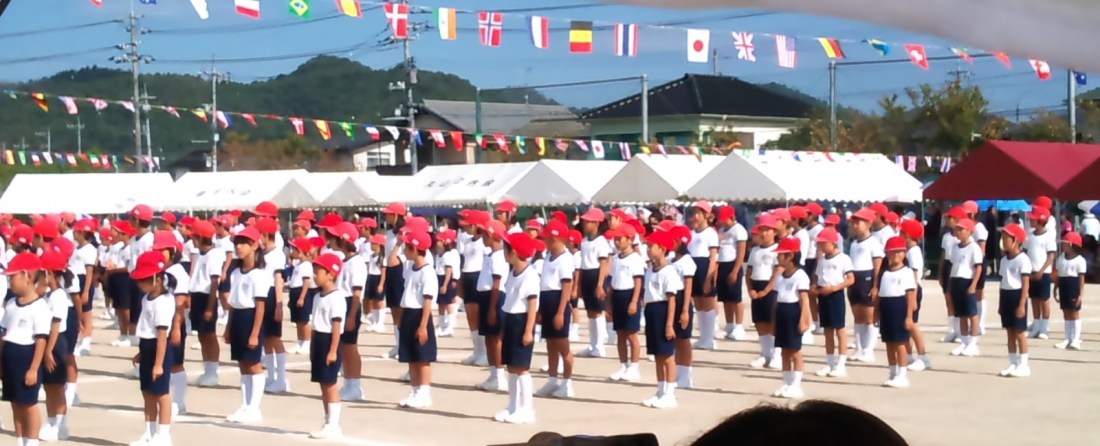
School graduations, admission ceremonies and sports days, in addition to funerals, weddings and company entrance events, are among the most common social occasions that have established procedures which everyone must dutifully follow. Underlying all of these activities are a multitude of other traditional protocols or values that facilitate smooth programs, constructive relationships and desired outcomes. Such protocols would include: being on time, extensive practice, multiple preparatory meetings, a flawlessly scripted schedule, a well-thought out seating plan, trained volunteers and recognition of all attending dignitaries. Of course, all participants would be appropriately attired and use honorific language befitting their social position. These values and expectations spill over into countless other daily routines that make Japan appear at times as one great well-oiled machine that always performs at peak efficiency.

This rigid adherence to proper protocol was once put to the test many years ago by an acquaintance at a local McDonald’s. It is customary for all McDonald’s employees working at the front of the premises to welcome every customer with a deep bow and extend a greeting of “irasshimase,” meaning, “welcome.” On this particular day, my somewhat mischievous colleague impetuously decided to exit the restaurant and immediately enter again. As expected, he received the same attention as if he had entered for the first time. Continuing with his somewhat rude social experiment, he exited and returned again, receiving the same treatment from the conscientious McDonald employees. After repeating this cycle several times, he finally gave up, realizing these meticulously trained workers could not depart from their established protocols for corporate behavior. These and other similar protocols are part of the unique underpinnings that hold Japanese society together.

In stark contrast, America can be generally regarded as a land of spontaneity and freedom where protocols can be much more easily dismissed or adapted to fit a particular situation. Perhaps because of this, the incredible significance of the invitation to approach the very throne of God (Hebrews 4:16) can be lost on a society where inviolable protocol is a lesser value. We are totally unqualified and unworthy to appear before an Almighty, Most Holy God, but the invitation is genuine and we are welcome not because of our position, but because of His grace. God’s protocol demands that we enter by means of the cross, where mercy replaces judgment and we are amazingly received as sons and daughters.

Getting it Right

“Be perfect, therefore, as your heavenly Father is perfect.”            Matthew 5:48

Getting it Right4

The ringing doorbell surprised us as we were guests at a vacation home and there was a horrific blizzard howling outside. “Who could it be?” we wondered and opened the door to be greeted by a local postal worker covered in snow bowing in apology. Through his shivering explanation, we learned that the local post office had mistakenly overcharged us 30 yen (23¢) for a letter we mailed the day before. He asked us to accept their sincere apology for the error and dutifully handed over the money with additional bows. Thoroughly impressed, but slightly amused, we assured the conscientious civil servant that all was forgiven and that we were satisfied with the outcome. He then bowed several more times, before turning to trudge back to the post office in knee-deep snow. That little snapshot from our past serves to capture the Japanese value of getting it right.

Perhaps this tendency is best summed up in the Japanese word “kaizen” (改善), which combines the two concepts of “change” (kai) and “good” (zen). Taken together, the equivalent translation comes out as “change for the better,” or “continuous improvement.” The application of kaizen then becomes an ongoing attempt to eliminate defects in a product or to improve a process with the ultimate goal to achieve better results. This requires an extreme attention to details, which can easily morph into a form of perfectionism in a ceaseless attempt to get it right. This approach can be seen on many levels within Japan, such as in the areas of food preparation, manufacturing, athletics, Japanese arts and transportation. Toyota has actually adopted the concept of kaizen as one of its core values, where all its employees are encouraged to constantly look for ways to improve their operations and products, which accounts for the company’s sterling reputation.

The extra effort it takes to build dependable cars, produce aesthetic masterpieces, achieve athletic success, or attain scholastic recognition is a highly commendable trait that generally produces good results. This is the primary reason why we personally purchase Japanese made vehicles. We want quality and dependability in a car that a commitment to kaizen principles is more likely to produce.

While such a lofty standard is understandably desired for inanimate objects and procedures, it is totally unrealistic when applied to human beings, including myself. Perfection is a worthy goal to aim for, but it remains forever out of reach no matter how hard we strive to attain it. Jesus taught His followers a new standard in His famous Sermon on the Mount (Matthew 5-7) where He set the bar of God’s righteousness or perfection much higher than they previously imagined. This standard is what we are challenged to aim for, but no amount of commitment to kaizen can possibly take us there. We cannot “be perfect, as our heavenly Father is perfect” (Matt.5:48), but there is One who was “once made perfect, and became the source of eternal salvation for all who obey Him” (Hebrews 5:9). That is Jesus. Because of Jesus’ perfect goodness (zen), we can be eternally changed (kai) and that is a kaizen work that only God can achieve, not through our efforts, but by His grace.

Manner Mode

“Whatever happens, conduct yourselves in a manner worthy of the gospel of Christ.” Philippians 1:27a

manner-mode

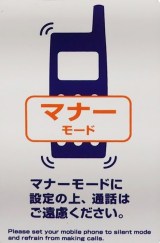
Many mothers around the world battle incessantly to instill good manners in their children, so they should be impressed to learn that cell phones used in Japan include a “Manner Mode” or “Māna Mōdo” (マナーモード) button. Unfortunately, these same mothers will be disappointed to discover that pushing this particular button doesn’t eradicate all poor behavior by the user. However, it does prevent one’s phone from ringing or making other distracting sounds once it is activated. Passengers on public transport are frequently reminded through announcements and signs to put their phones on māna mōdo to avoid disturbing others. Loud talking, ringing phones and audible music are quietly frowned upon by those nearby, so everyone is expected to exercise good manners in such situations. While almost all the passengers are typically engrossed in their own cell phones, no one uses them for talking while riding on the train as it is considered to be very rude behavior.

Good manners in Japan come in many different forms. For example, returning to the theme of train etiquette, priority seating is provided in every train car for the elderly, handicapped and pregnant mothers that should be strictly observed. Passengers waiting to get on a train are also expected to dutifully line up in an orderly fashion on the station platform and allow people to disembark before attempting to board. When riding an escalator, it is good manners to stand on the left side so others in a hurry can move past you. If you are dining with others, it is considered impolite to pour your own drink. You must also refrain from picking up food from a common plate using the end of the chopsticks that you use for eating. Below are some other cultural blunders to avoid:

  • Don’t eat or drink while moving around.
  • Avoid chewing gum in the company of others.
  • Try not to blow your nose in a public setting.
  • Resist using your car horn unless absolutely necessary.
  • Avoid pointing at others or objects.
  • Don’t treat another person’s business card with disrespect.
  • Refrain from public displays of affection.

Every culture has it peculiar lists of do’s and don’ts that subtly demand our adherence, but sadly, many Christians mistakenly import such a simplistic approach to their spiritual walk. The Christian life, when viewed in such terms, is reduced to a mere list of rules that focuses on the prohibition of certain behaviors. History teaches us that many of these ideals of Christian “manners,” fall by the wayside over time, only to be replaced by other rules that will in turn eventually give way to a new set of injunctions.

While rules are certainly necessary, and there are several lists of obvious sins laid out in the Bible, the whole concept of what constitutes “good manners” spills over into gray areas that are not so easily defined. As citizens of earthly kingdoms, we must be mindful and respectful of cultural manners, but as citizens of a heavenly kingdom, we are bound by a higher set of “manners” that must not impinge upon the nature or intent of the gospel. Rather than rules, the chief characteristic of the gospel is grace, which should be our life māna mōdo.

Karaoke

“But let all who take refuge in you be glad; let them ever sing for joy.”  Psalm 5:11a

Karaoke

The distinguished members of the local Japanese Rotary Club had just finished their sumptuous meal which would shortly be followed by a mild case of indigestion. The source of their discomfort that evening was not what they ate, but was actually on stage holding a microphone doing a poor Elvis impersonation. The culprit was me, and that was my introduction to karaoke. As the token foreign guest for the occasion, I was obliged to “honor” the assembled members with a song. In a state of sheer terror, I chose to sing “I Can’t Help Falling in Love with You” by the King of Rock himself, since it was the only song in English on the provided playlist. As an impromptu romantic gesture, I also dedicated the song to my lovely wife, who, understandably, was desperately looking for a place to hide!

Karaoke (カラオケ) is now a world-wide phenomenon, and the correct pronunciation is not “keh-ree-oh-kee,” as it is widely used in the West, but is instead, “kah-rah-oh-keh.” Karaoke is actually a blend of two words — kara (meaning “empty”) and oke (which is an abbreviation for “orchestra”). Taken together, karaoke means literally “empty orchestra,” or music that is missing the lead melody and vocals. That melody is provided by an amateur vocalist who sings along with a microphone to the recorded instrumental music following the lyrics provided on a video screen.

Daisuke Inoue, a Japanese musician, is generally credited with inventing karaoke in 1971 when he developed the equipment that helped launch its huge popularity. As a result, venues advertising “karaoke boxes” are now quite common throughout Japan. These are basically soundproofed private rooms rented by the hour that come equipped with karaoke machines, comfortable lounge furniture and refreshments available to order.

For many Japanese, karaoke is a great means to relief stress and enjoy relatively inexpensive fun with friends. We witnessed the unusual power of karaoke years later while doing relief work. We had gathered a number of people displaced by the huge tsunami that struck portions of Japan and facilitated an event centered on karaoke. Not wanting to destroy the ambiance of another public gathering with my vocal skills, I gladly refrained from joining the many performers. Instead, my wife and I enjoyed our front row seats to a magical evening of observing those who had lost so much, coming together as a community for a few moments of frivolity and much needed healing.

That event was a vivid reminder that we are designed by our Creator to sing. Music offers a unique opportunity to express deep feelings and thoughts that, in turn, can bring joy and healing to the participant. Heaven is described as a place where music abounds, but the focal point there is on God Himself as everyone offers up praise to Him. While our participation in such heavenly choirs still awaits us, we are encouraged to recall the greatness, mercies and deeds of God and express them in song while we linger here on earth. Instruments and skilled musicians can certainly help facilitate such singing, much like a karaoke machine, but the joy such music brings comes not through our expertise, but from a thankful heart. The Bible calls this worship and this is the kind of singing that brings delight to God (John 4:21-24).

Too Close for Comfort

“By this everyone will know that you are my disciples, if you love one another.”               John 13:35

crowded train

Desperate for a distraction from my troublesome circumstances, and partially out of curiosity, I began to count under my breath. “One, two, three, four… eleven.” When I finished, I discovered that I was fairly close to my original estimate, but I was still off by two people. There were actually eleven people touching me in the jam-packed train, including the poor woman whose face was planted in my right armpit. Welcome to the Tokyo rush hour on severely overcrowded trains!

I chastised myself for not planning better as I usually managed to avoid this unpleasant press of people. Fortunately, I don’t commute by train to work, so I generally dodge such circumstances that many have to endure on a daily basis. But on this particular day, I had arranged to meet someone for an early appointment which required me to enter the unwelcome fray of rush hour madness. However, at the more crowded stations in Tokyo, help is available to assist desperate travelers like myself reach their destination on time. These special white gloved assistants are called “oshiya,” (押し屋) which means roughly “professional pusher.” Oshiya are employed part time during peak commuting hours to push people into train cars and ensure that nothing gets caught in the doors, thus enabling the train to depart on time.

The original oshiya were hired to work at the notoriously busy Shinjuku Station and were initially called “ryokaku seiri gakari” (旅客整理係), which meant “passenger arrangement staff.” A lot is certainly being arranged by these dedicated laborers as you can witness for yourself through the following link: https://www.youtube.com/watch?v=E7kor5nHtZQ. My most unforgettable train experience occurred when we were traveling through Tokyo as a family on a crowded train and I hoisted my youngest child above my head with outstretched arms to protect him. The train car suddenly became so packed with people that I was soon trapped in that awkward position, unable to lower my arms. However, my son didn’t seem to mind his lofty perch as he had a great birds eye view of the chaos below while I strained to hold him up for what seemed like an eternity until we finally reached our stop.

While we may not enjoy such close proximity with people when riding on a train, the Word of God teaches us that living in community with one another is actually an essential element in our spiritual growth. The New Testament repeatedly exhorts the people of God to practice the various “one another” commands that promote successful communal life. In so doing, we honor God, who calls us to abandon our natural inclination towards selfishness and beckons us to live together in unity. This is no small task.

Among the many “one another” commands are:                                                               Forgive one another                 Serve one another                                                                 Accept one another                   Comfort one another                                                                Pray for one another                Be kind to one another                                                             Bear one another’s burdens   Encourage one another                                                           Love one another

Like passengers on a crowded train, many of these injunctions seem a little too close for comfort as they demand actions and attitudes of us that run counter to our deeply ingrained sense of self preservation. But as Jesus pointed out in His final exhortation to His disciples, the implementation of these commands is what sets us apart from the world and its modus operandi (John 13:35). Due to the current COVID-19 pandemic, we are rightly advised to temporarily practice social distancing to preserve physical health. But on the other hand, distancing ourselves from others long term invites other potentially deadly consequences. Only love for one another can bring genuine healing to a sick world.

Neighborhood Music

“For we know that if the earthly tent we live in is destroyed, we have a building from God, an eternal house in heaven, not built by human hands.”       II Corinthians 5:1

5pm chime2 Throughout Japan, usually at 5 pm, a standard melody is played over loudspeakers placed strategically within the local communities. Known affectionately as the 五時のチャイムor “5 pm Chime,” it is officially part of the Municipal Disaster Management Radio Communication Network (it is quite a mouthful in Japanese as well).
This network of speakers is part of a nationwide system designed to warn residents in the event of an emergency due to a natural disaster or even the launch of missiles from North Korea. These warnings almost became routine to us while working in a disaster zone where we experienced repeated aftershocks and tsunami warnings following the Great East Japan Earthquake of 2011. In addition to emergency announcements, many communities utilize this system to notify residents of local events or to report the presence of suspicious persons and even wildlife. It was quite common for us to receive loudspeaker warnings of local bear sightings when we lived in a more rural area.

Some residents regard these daily announcements as an annoyance, particularly if your house is located within close proximity of one of the speakers and your neighborhood adds a 6 am “wake up song” to its repertoire. The 5 pm Chime song that is played most frequently is an instrumental version of “Yuyaku Koyake,” roughly translated as “Sunset,” and is a famous Japanese children’s folk song with the lyrics dating back to 1919. (Antonin Dvorak actually composed the song as part of his Symphony No. 9 and when words were added, it was given the title “Going Home.”) You can go here to listen to it as we would experience on a daily basis:  https://www.youtube.com/watch?v=OFWZ5-bd7nQ. Some communities play alternative songs, including well-known western tunes such as “Edelweiss,” “Auld Lang Syne” and “Moon River.”

The stated purpose of the 5 pm chime is to ensure that the broadcast system is working correctly, but it also serves to remind children that playtime is over and that they should return home with the setting sun. However, for people like us and for many Japanese as well, this melancholic melody that was once a part of our daily routine prompts feelings of nostalgia for days gone by full of friends and related activities.

It is actually quite normal to long for places, people and for circumstances that no longer exist when faced with unwelcome challenges and an uncertain future. We are naturally inclined to seek permanence and peace that somehow eludes us in the present, so we mistakenly convince ourselves that we possessed such things in the past. But God has created us for something else that is beyond our past and present experiences. Our permanent home awaits us in eternity. So the temporary joys of our present, as well as our past life, are only a dim shadow of things to come. The 5 pm chime is a reminder that we are just presently camping. We have yet to occupy our eternal home in heaven.

My Hometown

“My people will live in peaceful dwelling places, in secure homes, in undisturbed places of rest.”      Isaiah 32:18

Furusto

Our “choir” for that day featured no gifted singers, but what it lacked in ability was more than compensated for by the heartfelt participation of the predominantly older voices gathered in one of the many temporary housing areas scattered along the northeast coast of Japan. We were serving coffee, tea and homemade cookies to those who had been recently displaced by the tsunami following the Great East Japan Earthquake. A team of volunteers then led everyone in singing the famous Japanese folk song “Furusato,” (故郷) translated “My Hometown.” As my wife and I listened to the well-known words to the song, we were emotionally unable to add our voices to those who had lost so much.

I chased rabbits in those mountains
I fished in that stream
I still dream now and then about those days as a child
How I long for and miss my hometown

How are my father and mother?
Are my old friends okay?
Whenever it is rainy and windy
I recall my happy childhood in my hometown

Some day when I've done what I set out to do,
I will return to what used to be my home
The mountains are green there in my hometown

Described as a song that reflects the heart of Japan, Furusato* is traditionally sung as a wistful contemplation of bygone days with the slight hint of hope that those happier times will someday be recovered. But the words on this occasion seemed empty as they were being mouthed by people who had lost their homes, loved ones, jobs and even their way of life within the span of a few minutes on March 11, 2011. The mountains and streams from their childhood memories still remained, but there would be no returning to the furusato they enthusiastically sang about.

That single moment, among the many we experienced doing relief work, captured for us the uniqueness of the Japanese and their amazing, resilient response to unmitigated, personal disaster. All that remained of many towns and neighborhoods along that coast were vast fields of empty foundations that eerily resembled ancient archeological ruins. Those who remained continued to press on, clinging to the memories of their furusato with little hope of livelihood, and many were still struggling to pay off loans on houses that no longer existed.

Although the song “Furusato” is known by all Japanese, very few are aware that the tune and lyrics were actually written by Christians. As such, the composers used the metaphor of furusato to portray the people of God as sojourners on earth waiting for their eternal, heavenly home. This theme comes out clearly in the last verse where it says “Someday when I’ve done what I set out to do, I will return to what used to be my home.” It is good to keep this worthier objective in mind as we seek to point the way to our eternal furusato to others, while standing shoulder to shoulder with those who have lost their earthly furusato.

*You can listen to the song Furusato through the following link: https://www.youtube.com/watch?v=gcmcXrCihrA