

“God blessed them and said, “Be fruitful and increase in number.” Genesis 1:22

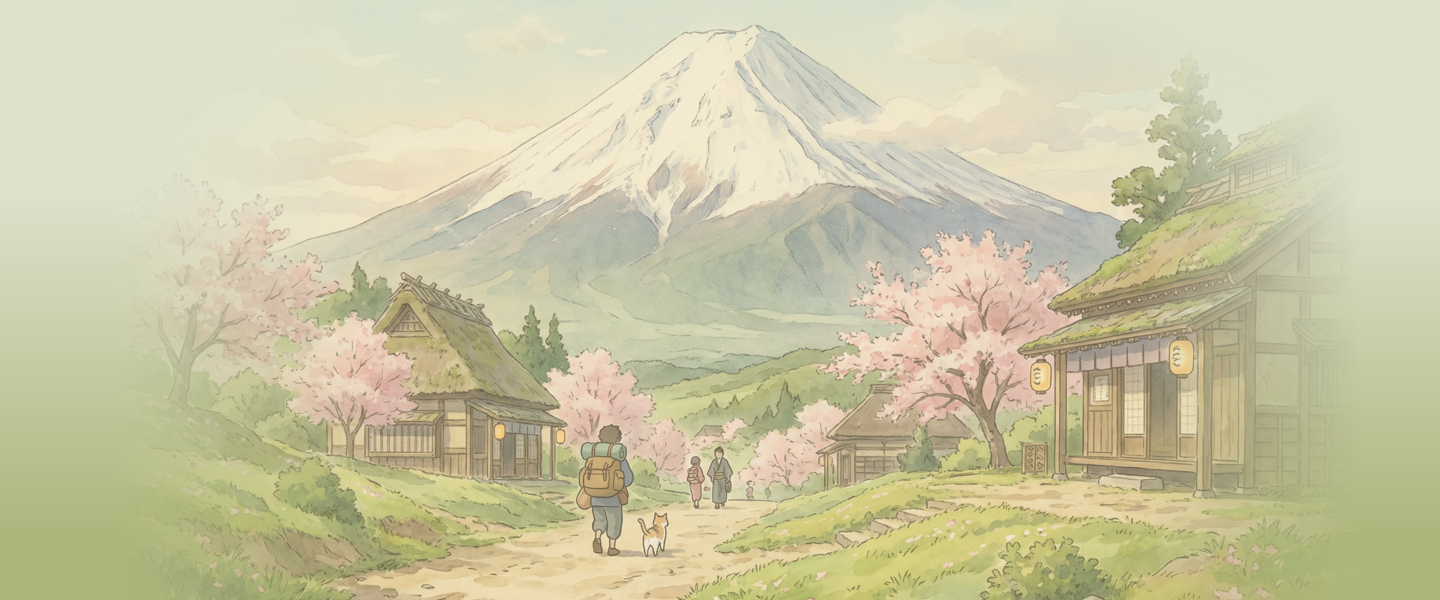
Japan is shrinking. Not the land mass, but rather, the number of Japanese who live there. In contrast to other countries in the world, the population of Japan actually peaked in 2010 at roughly 127 million and has been steadily declining since then. At the current rate, experts predict that by 2050 the population will drop to 97 million people as the percentage of elderly continues to increase disproportionately to the number of births. As a sad testimony of this trend, the sales of adult diapers now exceeds the sales of diapers for babies. Another indicator of changing demographics can be seen in the annual closure of roughly 400 schools due to the lack of students. Many of these facilities are then repurposed to function as care centers for the elderly.
Japan consistently ranks at the top of the list for longevity among its citizens, but when this admirable trend is coupled with a steadily declining birth rate, it triggers significant concerns about the future of the country. A natural byproduct of an aging and shrinking population is a declining workforce which can in turn stymie economic growth, endanger the solvency of the national pension program and overwhelm healthcare services.
Sociologists point out a number of economic and cultural factors that are likely contributing to this decline in childbirth throughout Japan. Long working hours, a rising percentage of women in the work force, later and fewer marriages and the high cost of raising children are just a few of the many components to this multi-layered problem. This precipitous decrease in the population has of course alarmed the Japanese government, which has implemented a number of proactive measures to reverse this downward spiral. As part of this strategy, couples are encouraged to have children through the promise of generous subsidies, extended maternity leave and numerous other benefits. However, despite these incentives, many still continue to shun the perceived burdens of parenthood (in addition, marriage itself is on the decline). Another controversial solution is to promote immigration as a means to compensate for labor shortages and tax revenue, but such an approach raises other fears regarding the future of Japan.
One of the first commands given to mankind was to “be fruitful and multiply,” which is a verse loaded with meaning. Obviously, for the first man Adam and his wife Eve, this command had literal implications as mankind would quickly go into extinction if this initial couple failed to reproduce. Since that time, physical multiplication has been the natural order of things and has continued over the centuries with few exceptions. However, the biblical concept of fruitfulness extends roots beyond mere physical reproduction to a deeper, spiritual level indicating the type of people God longs for us to become. Therefore, the theme of fruitfulness appears repeatedly in the Old Testament and then Jesus brings it powerfully to the foreground through His famous analogy in John 15, where He instructs His followers to abide in Him as our Vine, so that we might produce fruits of righteousness. The Apostle Paul also teaches about fruitfulness in Galatians 5:22-23 where he identifies the “fruit of the Spirit” that should characterize our lives. While the Japanese are facing a potential population crisis related to physical multiplication, the Bible reminds us to seek spiritual fruitfulness, which is rooted in a relationship with our Creator. God’s original intent in creating us was that we should bear fruit, and by doing so, we honor Him with our lives.





 I boarded a crowded train one morning in Tokyo I felt like I had stumbled into the middle of a hospital operating theater. Almost everyone was wearing a surgical mask. Obviously, the flu season was at its height in Japan so people were taking precautionary measures to protect both themselves and others from the spread of unwanted germs. In allergy season, the usage of such masks is even more widespread as newer versions claim to block out pollens that cause many victims to suffer. Due to increasing demand, masks are now sold in various shapes, sizes, colors, materials and even aromas, with sales tripling in the past decade. Witnessing such a phenomenon, outsiders might wrongly jump to the conclusion that Japanese are germaphobes, but that is largely not the case. The usage of such masks primarily reflects their consideration of others as they press on with the daily demands of life, despite not feeling well.
