
Car Names

“and whatever the man called each living creature, that was its name.”  Genesis 2:19b

Car Names

A few years ago, we bought a used two cylinder, 660cc Honda mini car to match our new Tokyo lifestyle.  (Imagine a classic VW Beetle and think smaller.)  The name of our car, N-One, initially puzzled us, but we soon learned that the “N” stood for “New,” “Next,” “Nippon” (“Japan”) and “Norimono” (“vehicle”).  Apparently, we were driving a car with an identity crisis!  We didn’t mind the intriguing name as it was a great car that served us well for several years. We soon nicknamed it “Panda” as the color scheme reminded us of a giant panda. A few years later, I discovered that there are actually websites to help owners come up with nicknames for their cars as they become like members of our families.

Car names in Japan have actually been a continuous source of humor among foreign residents.  We couldn’t help but chuckle sometimes when we pulled up behind a Dunk (Honda), a Scat (Daihatsu) a Lettuce (Mitsubishi), a Homy (Nissan), a Bongo (Mazda), a Joypop (Suzuki), a Noah (Toyota) a That’s (Honda), a Scrum Wagon (Mazda), a Charade (Daihatsu) and the prize-winning, Naked (Daihatsu). I’m sure there were many good reasons for selecting these particular names and the attributes they supposedly represented, but not all such choices successfully stand the test of time.

For a few years we owned a Subaru (スバル) and wondered about the symbolism of its logo on the back of the car. Someone eventually informed us that “Subaru” is the Japanese name for the constellation Pleiades, which is cleverly represented by the six stars in the Subaru logo. A little further investigation into the name origin of various Japanese car companies reveals the following:

  • The Toyota (トヨタ) Company was founded by Kiichiro Toyoda, whose slightly modified surname was used for his new car company founded in 1937. Toyoda means literally “fertile farm field.”
  • The Nissan (日産) name comes from the combination of two Japanese kanji. The first one, 日 (ni), meaning “sun,” is also the first character for Nihon (日本), which means “” The second kanji, 産 (san), means “production.” Taken together, Nissan translates to “made in Japan,” a very appropriate name.
  • Honda (ホンダ) is less interesting as its name is derived from its founder, Soichiro Honda.
  • Mitsubishi (三菱) Motors is actually a collection of companies, which explains why the word “mitsu,” meaning “three,” is incorporated in the name and stylistically represented by the three red diamond Mitsubishi logo.

The power of name giving was one of the first responsibilities God entrusted to Adam when all the animals were brought to him in the Garden of Eden (Genesis 2:19). This ritual symbolized the authority that mankind was granted over all of God’s creation and man’s supreme position, as he alone was created in the image of God. The pattern of name giving is particularly highlighted in the Book of Genesis as each generation gave way to the next one with many of the names steeped in symbolism or prophetic significance. But the unparalleled name of God, “I AM,” first revealed to Moses (Exodus 3:14), stands out among them all. This name is described as “holy,” “majestic,” “powerful,” “glorious,” “praiseworthy,” “awesome,” “fearsome,” “merciful” and “good.” It is a Name we would do well to remember, and to revere.

Shiokari Pass

“Greater love has no one than this: to lay down one’s life for one’s friends.”  John 15:13

Shiokari Pass

Located at the apex of Shiokari Pass in Japan’s northern island of Hokkaido, sits a solitary marker in a desolate spot, commemorating the story of Masao Nagano, a man who sacrificed his life to save others. This newsworthy event took place over one hundred years ago on February 28, 1909. At the time, Nagano san was employed as a railway official in the major city of Asahikawa, where he was highly respected by his superiors and colleagues for his integrity, work ethic and generous spirit. There was one other important fact about this young civil servant that made him stand out to others: he was a Christian. Masao was quite zealous in his faith, even using his own personal funds to help found the Young Railway Men’s Christian Association and was a popular speaker within local Christian circles.

On that particular snowy evening, Nagano san was making his way home from a church meeting on a train that regularly traversed the steep Shiokari Pass. As the train neared the summit, the last carriage in which he and other passengers were riding suddenly became uncoupled from the rest of the train and started to roll backwards downhill towards their certain destruction. Everyone knew the train car would soon pick up speed and likely hurtle off the tracks at the first bend. As an experienced railway worker, Masao Nagano immediately leapt into action and raced to the hand brake at the rear of the carriage. In desperation, he repeatedly turned the brake wheel to stop the descent of the trapped passengers. His efforts succeeded in slowing down the carriage, but not sufficiently to stop their downward movement. However, just when it seemed all was lost, the train car surprisingly came to a stop. All the occupants were saved, but their deliverance had come at a great cost. It was soon discovered that Nagano san had thrown himself under the wheels of the train car and managed to halt its doomed descent.

On Nagano’s body, in the inner pocket of his jacket, authorities discovered a recent copy of his will where, among other things, he had written: “I am equally grateful for all the hardships, happiness, life and death.  With gratitude I offer all I have to God.” He was only 30 years of age, but in his short time on earth, Masao Nagano managed to impact many for the kingdom of God.  Thanks to the efforts of famed Christian novelist, Ayako Miura, Nagano san’s story continues to touch countless lives through her famous novel “Shiokari Pass.” This widely acclaimed book published in 1968 is a fictional story largely based on what is known of Masao Nagano’s life and was later made into a movie.  A candlelight vigil now takes place at Shiokari Pass every year on February 28 to honor the man who selflessly laid down his life for others.

It is generally understood that love of self often impedes empathy of other people’s needs and, consequently, our willingness to take sacrificial action on their behalf. Nowhere is this more evident than our natural penchant to preserve our own life even when other lives are at stake. This tendency is likely why Jesus used the example of sacrificing one’s life for someone else as the supreme demonstration of the meaning of love.  Of course, Jesus later modeled such love on the cross, inspiring one of His disciples to offer up the following challenge: Bottom of Form“This is how we know what love is: Jesus Christ laid down his life for us. And we ought to lay down our lives for our brothers and sisters.” (I John 3:16) We would do well to follow the example of Nagano san, who offered all he had to God at Shiokari Pass.

Passing Zones

“How good and pleasant it is when God’s people live together in unity.”   Psalm 133:1

Magokoro Zone 2

One of the various adjustments required of us in relocating to the Greater Tokyo area was getting used to the narrowness of many roads. Some streets appear to be little more than wide sidewalks, but they are actually intended to accommodate two-way traffic, which seems almost impossible. Driving on these extremely narrow thoroughfares requires a considerable amount of patience, anticipation and a willingness to yield to oncoming cars or gridlock will immediately occur. We’ve experienced such an impasse a few times where an impatient driver barges ahead and brings everything to a standstill with cars unable to move forward or backward. Such incidents can prove to be extremely frustrating.

To help prevent this from happening, we observed in our community the strategic placement of “magokoro” zones (まごころ/真心) to facilitate two-way traffic in some of the more challenging locations. Translated literally, this means “true heart,” which seems like an odd name for a road alteration designed to improve traffic flow. These zones encompass a short length of roadway (approximately 20 feet), creating a wider area enabling two cars to pass one another. Apparently, these are places where “hearts” figuratively come together as we all seek cooperation with the common goal to keep traffic moving. 

We had previously encountered a similar problem in Japan’s northern island of Hokkaido. During long, snowy winters, wide streets are often reduced to a single lane as massive walls of snow created by snowplows steadily encroach upon large portions of the roadway. Enormous snow removal machines would periodically reclaim this lost road space, but until then, drivers were forced to anticipate oncoming traffic and pull over into side streets so they could pass each other. This predicament requires the constant exercise of courtesy and cooperation so traffic can keep flowing, enabling everyone to arrive safely at their intended destination.

When one pauses to survey the current political, social and cultural landscape of America and in other places in the world, it is obvious that the “traffic” is not flowing smoothly. Varying perspectives, opinions and values now deeply divide a nation historically comprised of many diverse factions, bringing things to a standstill. Like angry drivers creating a bottleneck through their own inconsiderate actions, many are unwilling to yield to others on the road, such that no one can move forward. Government services are disrupted, judicial systems are overwhelmed, personal freedoms are restricted, economic structures fail to meet demands and in worst-case scenarios, destructive riots occur. Because there is no meeting of hearts, everyone loses. These bottlenecks now routinely dominate our daily news cycles, creating an ever-increasing atmosphere of fear, mistrust, anger, vilification of those holding differing opinions and even violence. Under such adverse conditions, we cannot move forward as a nation.

However, the people of God are to be guided by a different set of principles that have the power to break such bottlenecks. We are not to be driven by selfish motives or ambitions, but rather, we are called to unity. Unity, even in the most optimal circumstances, is not an easily achieved goal, which is why the psalmist marvels when he observes it in action (Psalm 133:1). The combining of hearts to attain such unity can only occur when one’s heart belongs to God and pursues His rules for the road. That is the magokoro zone where true peace can be found.

Manner Mode

“Whatever happens, conduct yourselves in a manner worthy of the gospel of Christ.” Philippians 1:27a

manner-mode

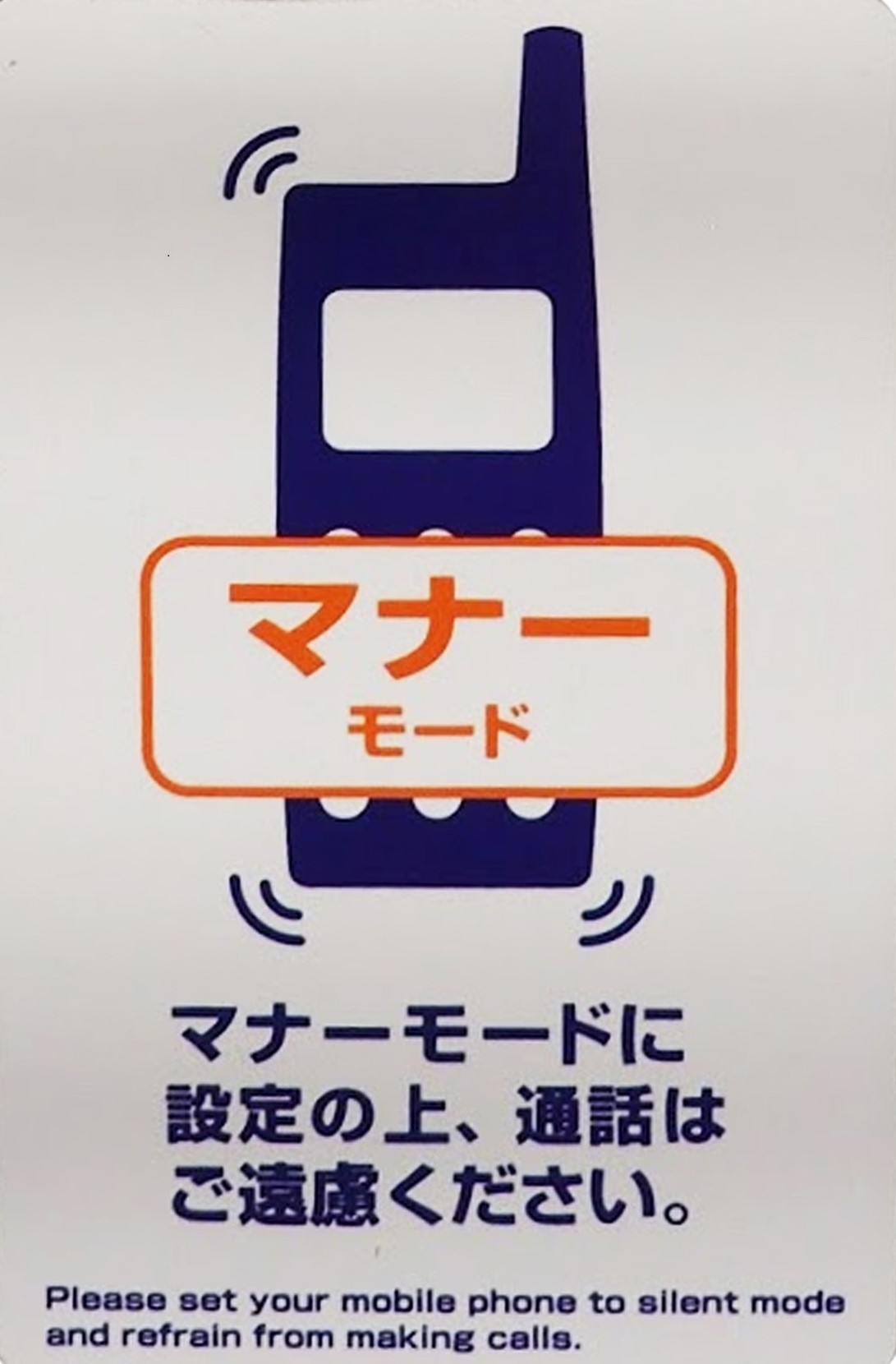
Many mothers around the world battle incessantly to instill good manners in their children, so they should be impressed to learn that cell phones used in Japan include a “Manner Mode” or “Māna Mōdo” (マナーモード) button. Unfortunately, these same mothers will be disappointed to discover that pushing this particular button doesn’t eradicate all poor behavior by the user. However, it does prevent one’s phone from ringing or making other distracting sounds once it is activated. Passengers on public transport are frequently reminded through announcements and signs to put their phones on māna mōdo to avoid disturbing others. Loud talking, ringing phones and audible music are quietly frowned upon by those nearby, so everyone is expected to exercise good manners in such situations. While almost all the passengers are typically engrossed in their own cell phones, no one uses them for talking while riding on the train as it is considered to be very rude behavior.

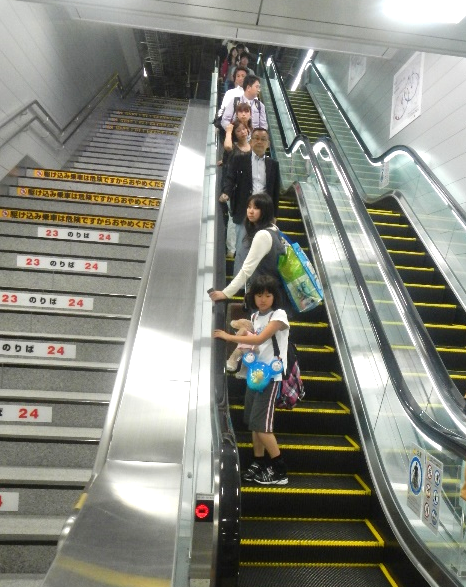
Good manners in Japan come in many different forms. For example, returning to the theme of train etiquette, priority seating is provided in every train car for the elderly, handicapped and pregnant mothers that should be strictly observed. Passengers waiting to get on a train are also expected to dutifully line up in an orderly fashion on the station platform and allow people to disembark before attempting to board. When riding an escalator, it is good manners to stand on the left side so others in a hurry can move past you. If you are dining with others, it is considered impolite to pour your own drink. You must also refrain from picking up food from a common plate using the end of the chopsticks that you use for eating. Below are some other cultural blunders to avoid:

  • Don’t eat or drink while moving around.
  • Avoid chewing gum in the company of others.
  • Try not to blow your nose in a public setting.
  • Resist using your car horn unless absolutely necessary.
  • Avoid pointing at others or objects.
  • Don’t treat another person’s business card with disrespect.
  • Refrain from public displays of affection.

Every culture has it peculiar lists of do’s and don’ts that subtly demand our adherence, but sadly, many Christians mistakenly import such a simplistic approach to their spiritual walk. The Christian life, when viewed in such terms, is reduced to a mere list of rules that focuses on the prohibition of certain behaviors. History teaches us that many of these ideals of Christian “manners,” fall by the wayside over time, only to be replaced by other rules that will in turn eventually give way to a new set of injunctions.

While rules are certainly necessary, and there are several lists of obvious sins laid out in the Bible, the whole concept of what constitutes “good manners” spills over into gray areas that are not so easily defined. As citizens of earthly kingdoms, we must be mindful and respectful of cultural manners, but as citizens of a heavenly kingdom, we are bound by a higher set of “manners” that must not impinge upon the nature or intent of the gospel. Rather than rules, the chief characteristic of the gospel is grace, which should be our life māna mōdo.

Yellow Tiles

“I will lead the blind by ways they have not known, along unfamiliar paths I will guide them; I will turn the darkness into light before them and make the rough places smooth.”  Isaiah 42:16a

Yellow Tiles

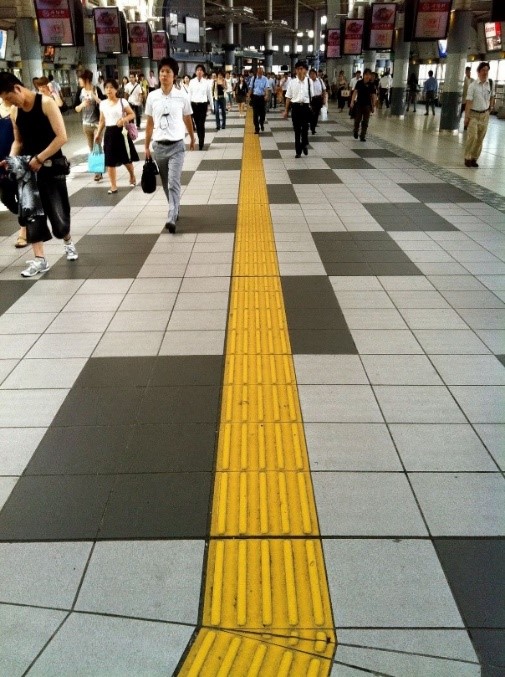
New visitors to Japan are initially puzzled by the bright yellow lines of tile that often line certain streets and intersections. They are even more common near train and bus stations. These lines are technically known as “tactile ground surface indicators” (TGSI); in layman’s terms, they serve as a hazard guide for the visually impaired.  These special tiles are designed to be used by blind people as a means to navigate crowded public places by feeling the texture of the tiles with the help of a cane or through the soles of their shoes.  Differences in the tiles help to indicate directions and potential hazards.  The bright yellow color also serves as a useful reminder to others to be considerate of those who may be visually handicapped.

A closer examination of the tiles reveals that there are two major varieties. One has straight raised lines and the other type has raised circular bumps. Tiles with straight lines indicate it is safe to proceed forward in the direction of the lines. However, when one encounters tiles with bumps, it is a warning to stop or to proceed with caution. Some form of obstruction or potential danger like an intersection, stairs or a train platform edge typically lies beyond this type of tiles. In addition to the yellow tiles, many intersections in Japan play set songs or sounds to indicate which direction is safe for crossing. Braille signage is also quite common for the visually impaired.

When one observes these tiles, it is only natural to recall the classic movie, “The Wizard of Oz,” where Dorothy and her traveling companions are instructed to follow the yellow brick road to reach the Emerald City, where all their problems will be resolved. While none of those famous characters were visually impaired, the purpose of the yellow bricks was the same as Japan’s yellow tiles… to help travelers arrive at their intended destination without incident.

Most of us do not need yellow tiles to aid us in our daily travels, but in a spiritual sense, we are all visually impaired. It is certainly a good thing to be aware of the physical handicaps of others and take measures to assist them, but more importantly, we must acknowledge our own blindness to the things of God that can potentially lead us down paths of destruction. From the Bible, we know that the nation of Israel had turned its back on God and in its blindness, fell into sinful thinking and behavior that invited the wrath of God. But thankfully, God also cares for the spiritually impaired and took extreme measures to assist them… He sent His Only Son Jesus, to die on a cross, in order to save them and us from eternal destruction. In this manner God “will lead the blind by ways they have not known, along unfamiliar paths…” (Isaiah 42:16a). God Himself became our “yellow brick road” to deliver us from harm. An eternal city awaits those who travel upon it.

Traffic Mirrors

“’For I know the plans I have for you. ‘declares the Lord, ‘plans to prosper you and not to harm you, plans to give you hope and a future.’”                        Jeremiah 29:11

Curved Mirror

The urban sprawl of Tokyo has grown slowly over the centuries on top of an ancient network of roads, hilly terrain and even encompasses over a hundred river and canal arteries. Many of Tokyo’s streets were originally little more than footpaths and presently bear more resemblance to a wide sidewalk or an alley rather than a conventional thoroughfare. These minor roads snake through residential areas and many of them are reduced to a single lane, allowing passage for only one car at a time. On top of this, they are generally fraught with numerous curves, severely limiting vision of what lies ahead. This makes navigation quite challenging and even dangerous at times as drivers can’t anticipate oncoming cars, bicyclists and pedestrians.

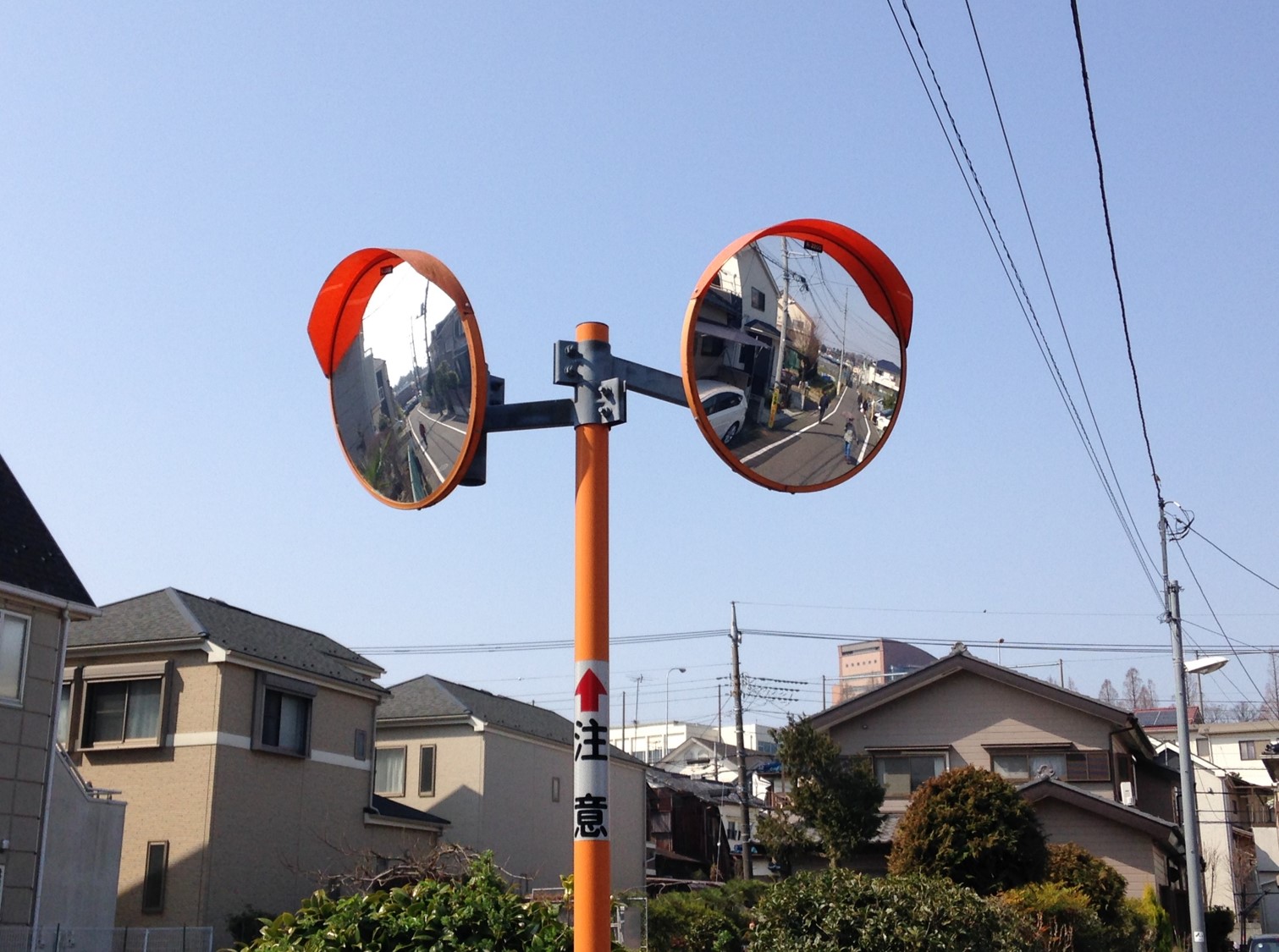
Because of these difficult conditions, Japanese traffic engineers have developed and implemented an ingenious, yet simple device to help facilitate safety. It is called a “kābu mirā “(カーブミラー), which is basically a large convex (curved) mirror mounted at the top of a pole. These special mirrors enable drivers to literally see around the blind corner or sharp bends in the road to determine if it is safe to proceed. We relied on these mirrors daily when bicycling or driving to the office from our home and I’m sure they prevented countless accidents for us and many others.

Unfortunately, we don’t have the luxury of such mirrors to help us navigate the inevitable unknowns of life. There are no kābu mirā that reveal the coming of major health problems, employment setbacks, relationship breakdowns, financial challenges or natural disasters such as the recent COVID-19 pandemic. As a result, our lives often seem to be unpredictable, chaotic and without purpose as we feel victimized by one crisis after another.

But this is not what the Bible teaches. The God who created life is depicted time and time again as the same God who knows, sustains and directs our lives and the affairs of this world (Psalm 139:1-18). God reassures His own people of this truth while they were living in exile in a foreign land as a result of their disobedience. “’For I know the plans I have for you. ‘declares the Lord, ‘plans to prosper you and not to harm you, plans to give you hope and a future.’”  This verse is not a promise that all their problems will immediately disappear, but rather, an offering of hope in the midst of despair. That hope is not placed in the possibility of coveted changed circumstances, but instead, in the very person of God. A God who loves us. A God who will do what is best for us. A God who reigns above the forces of evil and calamities that sometimes seem to dominate this world.

God has a plan for the nations and He has a plan for us. That plan is good. But saints of old were only provided glimpses and hints of how those plans would unfold. Like us, they could not see beyond the curve in the road, so they just continued to drive forward in faith. Fears of turmoil, dire consequences and impending economic collapse currently dominate the news cycles and social media, but as people of faith, our well-being and future are not dependent on the affairs of this world. Therefore, we would do well to emulate the Psalmist and pray in this way: “Search me, God, and know my heart; test me and know my anxious thoughts. See if there is any offensive way in me, and lead me in the way everlasting.” (Psalm 139:23-24) If God is visible in your kābu mirā, that is all you need.

Too Close for Comfort

“By this everyone will know that you are my disciples, if you love one another.”               John 13:35

crowded train

Desperate for a distraction from my troublesome circumstances, and partially out of curiosity, I began to count under my breath. “One, two, three, four… eleven.” When I finished, I discovered that I was fairly close to my original estimate, but I was still off by two people. There were actually eleven people touching me in the jam-packed train, including the poor woman whose face was planted in my right armpit. Welcome to the Tokyo rush hour on severely overcrowded trains!

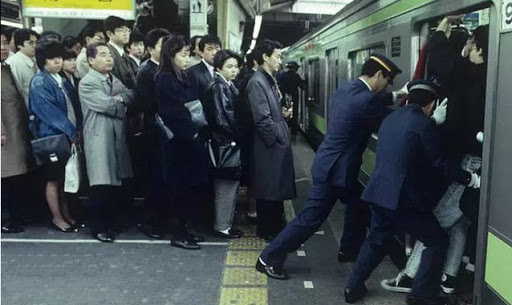
I chastised myself for not planning better as I usually managed to avoid this unpleasant press of people. Fortunately, I don’t commute by train to work, so I generally dodge such circumstances that many have to endure on a daily basis. But on this particular day, I had arranged to meet someone for an early appointment which required me to enter the unwelcome fray of rush hour madness. However, at the more crowded stations in Tokyo, help is available to assist desperate travelers like myself reach their destination on time. These special white gloved assistants are called “oshiya,” (押し屋) which means roughly “professional pusher.” Oshiya are employed part time during peak commuting hours to push people into train cars and ensure that nothing gets caught in the doors, thus enabling the train to depart on time.

The original oshiya were hired to work at the notoriously busy Shinjuku Station and were initially called “ryokaku seiri gakari” (旅客整理係), which meant “passenger arrangement staff.” A lot is certainly being arranged by these dedicated laborers as you can witness for yourself through the following link: https://www.youtube.com/watch?v=E7kor5nHtZQ. My most unforgettable train experience occurred when we were traveling through Tokyo as a family on a crowded train and I hoisted my youngest child above my head with outstretched arms to protect him. The train car suddenly became so packed with people that I was soon trapped in that awkward position, unable to lower my arms. However, my son didn’t seem to mind his lofty perch as he had a great birds eye view of the chaos below while I strained to hold him up for what seemed like an eternity until we finally reached our stop.

While we may not enjoy such close proximity with people when riding on a train, the Word of God teaches us that living in community with one another is actually an essential element in our spiritual growth. The New Testament repeatedly exhorts the people of God to practice the various “one another” commands that promote successful communal life. In so doing, we honor God, who calls us to abandon our natural inclination towards selfishness and beckons us to live together in unity. This is no small task.

Among the many “one another” commands are:                                                               Forgive one another                 Serve one another                                                                 Accept one another                   Comfort one another                                                                Pray for one another                Be kind to one another                                                             Bear one another’s burdens   Encourage one another                                                           Love one another

Like passengers on a crowded train, many of these injunctions seem a little too close for comfort as they demand actions and attitudes of us that run counter to our deeply ingrained sense of self preservation. But as Jesus pointed out in His final exhortation to His disciples, the implementation of these commands is what sets us apart from the world and its modus operandi (John 13:35). Due to the current COVID-19 pandemic, we are rightly advised to temporarily practice social distancing to preserve physical health. But on the other hand, distancing ourselves from others long term invites other potentially deadly consequences. Only love for one another can bring genuine healing to a sick world.

Tokyo Trains

“Show me your ways, Lord, teach me your paths.” Psalm 25:4

Tokyo Train


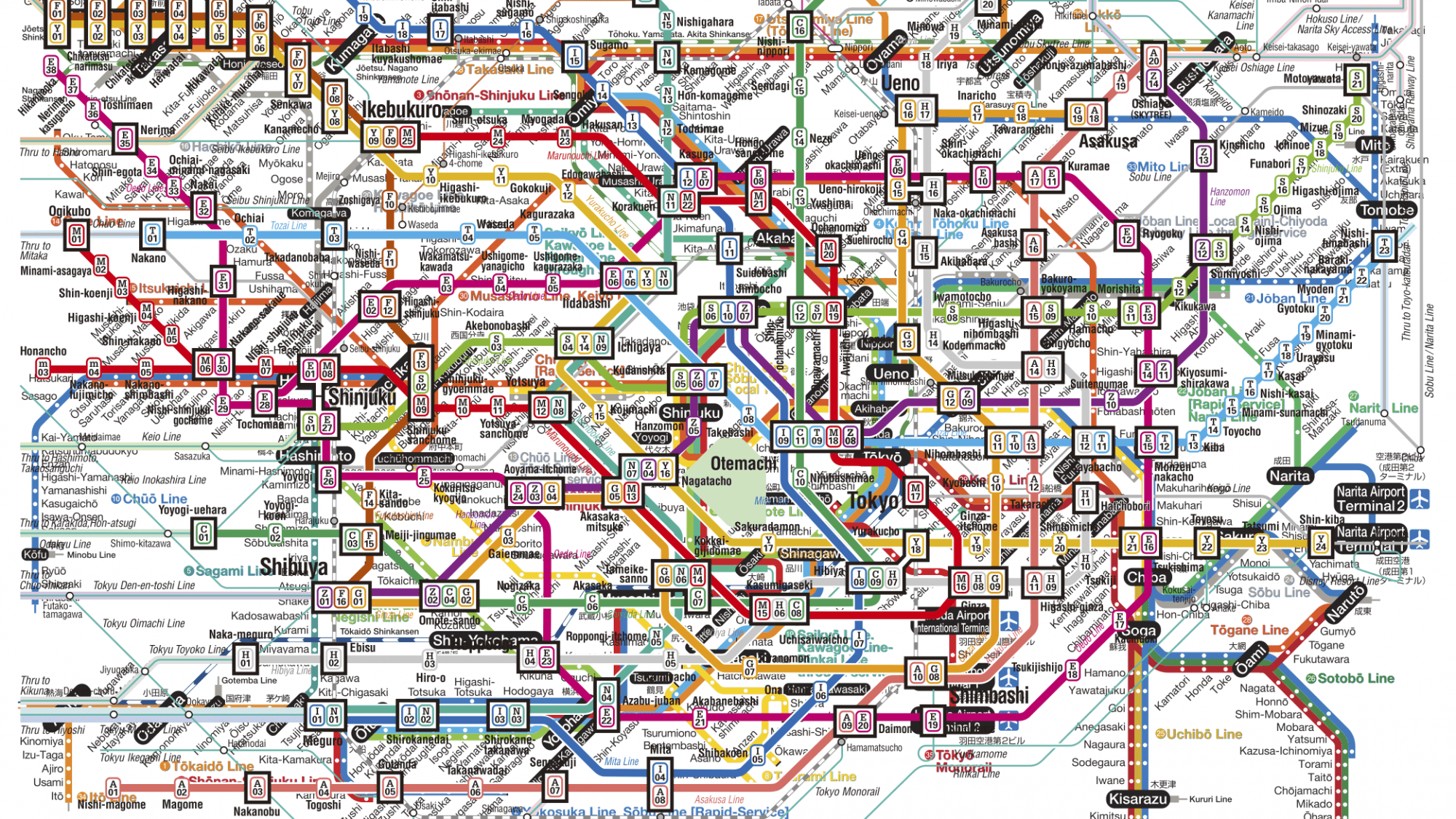
I stared intently at what looked like strands of multi-colored spaghetti thrown on the wall, which were somehow supposed to help me find my way through the labyrinth of Tokyo. I felt utterly lost and confused, and those feelings only intensified as I continued to vainly scrutinize the “helpful” map of Tokyo’s train lines.

Welcome to the world’s most extensive rail network, consisting of 158 separate lines, fed by 2,210 stations, running along 2,930 miles of operational track and servicing roughly 40 million passengers per day. And these figures don’t include Japan’s famous bullet trains that rapidly crisscross the Greater Tokyo area. Over 3.6 million people pass daily through Shinjuku Station, which makes it easily the busiest train station in the world, consisting of 36 platforms with over 200 exits to accommodate the masses of people. The Yamanote Line, which makes a giant loop through the urban sprawl of Tokyo, is one of the most important lines. It connects most of Tokyo’s major stations, operating roughly 20 hours every day with train intervals as short as two minutes during peak usage. Particularly exhausted travelers on the Yamanote frequently fall asleep during their commute, but they can easily disembark and head back in the opposite direction if they miss their stop.

This maze of train lines is also supported by an additional network of buses, trams and monorails, adding thousands of more miles to an already incredibly complicated transportation system. What makes it even more impressive is that it all actually works! Trains flawlessly run on time. Public and private train lines somehow seamlessly cooperate. Equipment operates efficiently with minimal breakdowns. Passengers move from one point to another with few complaints.

To facilitate this daily mass movement of people, most passengers use different variations of what is called an “IC card,” which stands for “integrated circuit.” These are prepaid cards that are simply scanned when passing through the turnstiles on one’s journey. Gone are the days when passengers had to rely on printed train schedules using microscopic print to guide them to their destination. They have been replaced (thankfully) by convenient cell phone apps that remove most of the panic for novices as they bravely venture into the Byzantine network of Tokyo’s rail lines as I experienced many years ago.

Even though it can be intimidating to grasp and utilize the complexities of Tokyo’s transportation system, this difficulty pales in comparison to the greater challenge of navigating through life. How do I determine the best response when presented with many options? What will be the most helpful recourse to take for myself and others affected by my decision? When should I make a commitment to a plan of action even though many elements continue to elude my complete grasp of possible outcomes?

Unlike the map of Tokyo’s train lines, the answer to this question is surprisingly simple: turn to God for guidance. It is almost embarrassing how little we actually do that when confronted by the complexities of life. Far superior to the most sophisticated transportation apps, God asks that we turn to Him throughout the day, and seek His counsel as we travel through life. He delights in showing His ways and revealing the paths that will bring blessing for both us and others. All aboard!

Sleeping on Trains

“In peace I will lie down and sleep, for you alone, Lord, make me dwell in safety.” Psalm 4:8

men-sleeping-on-train

As I made my way across Tokyo to my destination, I quietly congratulated myself for securing a seat on a very crowded commuter train. However, I soon had misgivings about my good fortune when a stranger’s head awkwardly started to nestle on my right shoulder and the passenger slumped on my left began to snore. Momentarily trapped by my weary traveling companions, I studied the other passengers on the train. Approximately half of them were in a semi-comatose state and the others, while awake, were equally detached from life around them as they silently focused on their mobile devices. For a moment, it felt like I had mistakenly boarded a zombie train in an apocalyptic world and I would soon become one of them!

This scenario is actually quite common in Japan, which explains why it is often described as a nation of sleep deprived people. Multiple surveys confirm this assessment, revealing that Japanese workers average only six hours and 22 minutes of sleep on work nights—the lowest in any industrial nation. Therefore, it is not unusual to see people taking catnaps in cars, restaurants, public transportation, classrooms and park benches as they try to catch a few moments of rest so they can press on with the unrelenting demands of life. The Japanese word for “nap” is 居眠り(inemuri) which means literally “sleeping while present,” a description that underscores one’s ongoing attempt to engage with life while at the same time momentarily checking out. Such napping is often considered a sign of diligence in Japan and is quietly accepted by employers and fellow citizens as an unavoidable fact of life. This propensity to sleeping in opportune moments on trains can create comical scenes often posted on social media. Many have even mastered the art of sleeping while in a standing position and almost everyone seems to intuitively know when to stir from their slumber as their stop approaches.

Obviously, continued sleep deprivation is not a healthy habit for anyone, but sometimes it is unavoidable due to the demands of family, health issues or work responsibilities. Some of these elements are beyond our control and can lead to chronic sleeplessness. However, there is often a spiritual aspect to this problem that we should keep in mind. That’s why we must frequently remind ourselves that God reigns supreme in the affairs of our lives so we should learn to rest in Him. Framed in these terms, sleep becomes almost a spiritual exercise as once again we place our burdens of the day and worries for tomorrow in the hands of a loving, all powerful God. That can lead to true rest.