
My Protection

“Blessed are all who take refuge in him.”    Psalm 2:12
omamori2

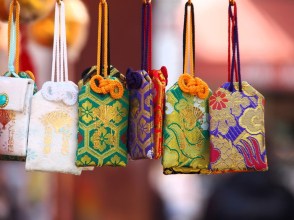
During my first taxi ride in Japan, I couldn’t help but notice an elaborate ornament swinging back and forth on the rear view mirror as the driver navigated through traffic. I later learned that this and a whole array of similar talismans or amulets are called “omamori” (お守り), which literally means “protection.” These small good luck charms are typically made from paper or wood and are usually protected inside an ornate bag along with a written prayer. They are sold at temples and shrines throughout the country with the promise that they will bring good fortune or protection to the bearer, but cynics largely view them as a clever means to raise money.

These omamori can be spotted on bags, hanging in cars, attached to various objects and are even used as cellphone straps. They come in many shapes, sizes and colors and different ones are advertised to possess different powers. Some offer businessmen success in the financial realm while others promise students a good outcome in their test scores. Other omamori guarantee general prosperity, protection from evil, happiness, traffic safety, good health, fertility, and a happy love life. The simple thought behind such charms is that the power and strength of the gods is somehow invested in these brocaded bags so they are not to be opened, as the blessing could be released and thereby lost.

It is generally understood that the shelf life of an omamori is only good for one year, which means a replacement must be purchased, conveniently bringing additional revenue to the local shrine or temple. These “expired” good luck charms must be properly disposed of, usually by burning, preferably at the place they were originally purchased. Eager to grab a share of the enormous profits in the good luck industry, it is now common for stores to sell generic omamori featuring the images of Hello Kitty, Mickey Mouse, Snoopy and other popular characters.

The search to obtain protection from harm or to procure good fortune is a natural inclination of the human heart. Such a quest can take many forms and it is often shaped by our culture, circumstances and worldview. But all such attempts to manipulate one’s personal future are doomed to failure because they are based on the false assumption that we are in control of our own fate. We all seek desired outcomes in life that avoid pain and bring pleasure, but it is arrogant to think that we are in control of such matters, or that we possess the discernment to always know what is actually good or bad for us. Our uncomfortableness with the unpredictability of life is in fact a reminder that we should seek protection and refuge in God, who is our only omamori, or real source of protection. Everything else is a mere trinket.

Paper Drivers

“For we are God’s handiwork, created in Christ Jesus to do good works…”                               Ephesians 2:10a

On the morning of my 16th birthday, I was first in line to take my driver’s license test, but promptly failed my initial attempt. Eager to gain my freedom through driving, I returned the following day and this time managed to bring home the coveted prize. Obtaining a driver’s license was viewed as a major step towards adulthood, almost like a rite of passage. The Japanese, however, seem to be much more ambivalent about achieving this goal. In fact, many who have obtained their driver’s license don’t even use it. In Japan, they are called “paper drivers” (ペーパード­ライバー), indicating that although they possess the paperwork certifying their right to drive, they choose not to exercise it.

When we first heard of this phenomenon, it struck us as rather odd, particularly in light of the time, expense and effort required to obtain such a license in Japan. But as we settled more deeply into the Japanese culture, we realized there are many reasons why some people may elect not drive, despite being authorized to do so. For example, many Japanese, especially those living in urban areas, simply do not need to drive due to the availability of efficient and economical public transportation systems. In space-starved areas (of which there are many), parking is also very pricey, so this can further discourage car ownership. These are significant factors, but perhaps the main reason for becoming a paper driver is a matter of confidence, or lack of it. Venturing out on crowded, narrow roads is not for the faint of heart, especially when alternative modes of transportation are readily available.

When we gaze across the church landscape around the world, it seems that the same phenomenon, in a different form, exists in many churches. Sadly enough, many believers dutifully report at their appointed time Sunday after Sunday, but neglect to exercise their full calling and privileges as the redeemed people of God. They are what we might call “paper Christians.” They have a license to drive, but they choose not to. Although they were created to fulfill the purposes of God, they lead measured lives, refusing to venture out and trust God for whatever lies ahead. In this regard, there is a “paper driver” in all of us, but we must resist our natural inclination to live primarily for ourselves. Instead, we were created to do good works. While there may be many valid reasons for not driving a car in Japan, we are entrusted with all the authority and power we need to fully accomplish God’s purposes on earth. We walk, and drive, by faith.

Sleeping on Trains

“In peace I will lie down and sleep, for you alone, Lord, make me dwell in safety.” Psalm 4:8

men-sleeping-on-train

As I made my way across Tokyo to my destination, I quietly congratulated myself for securing a seat on a very crowded commuter train. However, I soon had misgivings about my good fortune when a stranger’s head awkwardly started to nestle on my right shoulder and the passenger slumped on my left began to snore. Momentarily trapped by my weary traveling companions, I studied the other passengers on the train. Approximately half of them were in a semi-comatose state and the others, while awake, were equally detached from life around them as they silently focused on their mobile devices. For a moment, it felt like I had mistakenly boarded a zombie train in an apocalyptic world and I would soon become one of them!

This scenario is actually quite common in Japan, which explains why it is often described as a nation of sleep deprived people. Multiple surveys confirm this assessment, revealing that Japanese workers average only six hours and 22 minutes of sleep on work nights—the lowest in any industrial nation. Therefore, it is not unusual to see people taking catnaps in cars, restaurants, public transportation, classrooms and park benches as they try to catch a few moments of rest so they can press on with the unrelenting demands of life. The Japanese word for “nap” is 居眠り(inemuri) which means literally “sleeping while present,” a description that underscores one’s ongoing attempt to engage with life while at the same time momentarily checking out. Such napping is often considered a sign of diligence in Japan and is quietly accepted by employers and fellow citizens as an unavoidable fact of life. This propensity to sleeping in opportune moments on trains can create comical scenes often posted on social media. Many have even mastered the art of sleeping while in a standing position and almost everyone seems to intuitively know when to stir from their slumber as their stop approaches.

Obviously, continued sleep deprivation is not a healthy habit for anyone, but sometimes it is unavoidable due to the demands of family, health issues or work responsibilities. Some of these elements are beyond our control and can lead to chronic sleeplessness. However, there is often a spiritual aspect to this problem that we should keep in mind. That’s why we must frequently remind ourselves that God reigns supreme in the affairs of our lives so we should learn to rest in Him. Framed in these terms, sleep becomes almost a spiritual exercise as once again we place our burdens of the day and worries for tomorrow in the hands of a loving, all powerful God. That can lead to true rest.