
Aliens

Consequently, you are no longer foreigners and strangers, but fellow citizens with God’s people and also members of his household,”  Ephesians 2:19
Gaijin

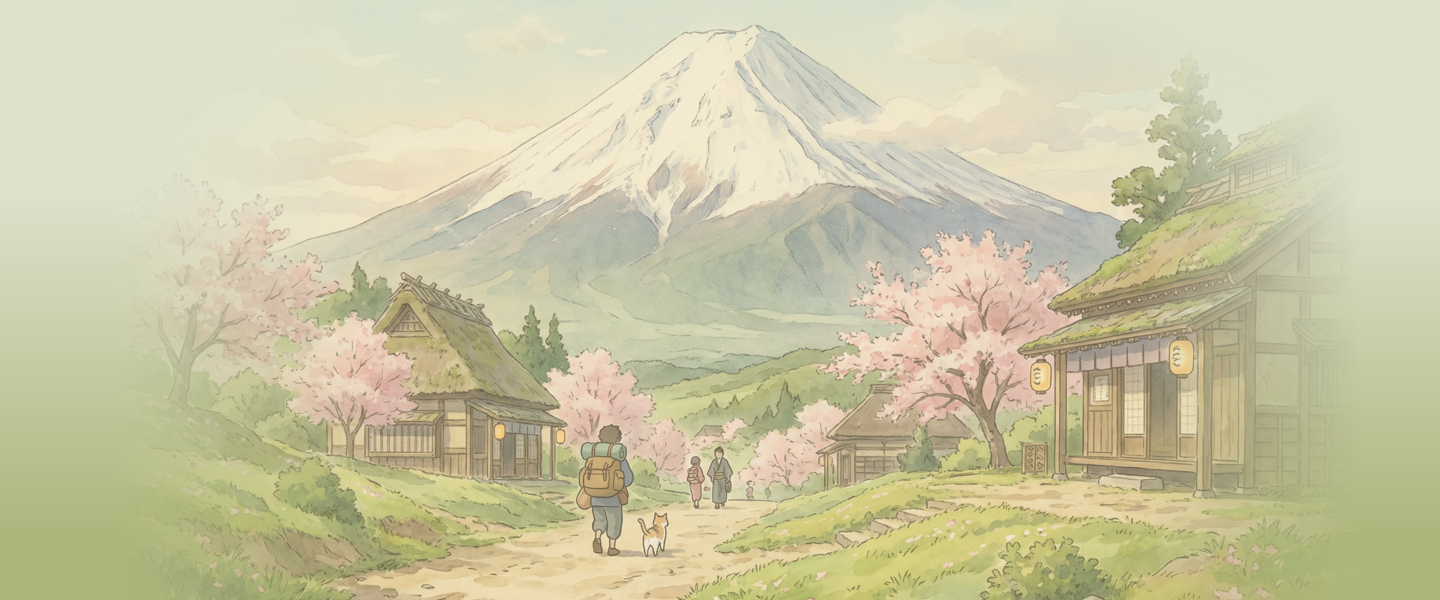
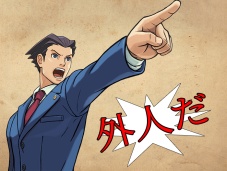
When we arrived in Japan for the first time in 1984, airport immigration officials directed us, along with the other obvious foreigners, to proceed towards the sign marked “ALIENS.” Such was our introduction to Japan. While we were not creatures from another planet, it was abundantly clear to us from the outset that in Japan, we were different. We had expected to stand out in the crowds due to our size, hair color and speech (and my nose!), but we soon realized that we were permanently relegated to a class of non-Japanese known as “gaijin.” Everywhere we went, people typically stared at us, adults wanted to touch our kids’ blond hair and Japanese children excitedly pointed their fingers at us while declaring the obvious, that we were “gaijin.”

The term gaijin (外人) means literally “outside person” and since Japan is an island nation comprised of one predominate ethnic group speaking a uniform language, it is understandable why, historically, all non-Japanese were considered to be outsiders. The Japanese concept of group consciousness also factors into this perception, where one is either “in” or “out” when social and relational lines are routinely drawn within daily interactions.

However, globalization is rapidly changing such attitudes toward the outside world as Japan’s isolation is increasingly penetrated by the onslaught of modern communication and travel. The world has come to Japan. Foreigners are no longer considered a novelty and as a result, we are now rarely singled out as “gaijin.” The finger pointing has largely ceased and the more polite term “gaikokujin” has replaced the somewhat pejorative label of “gaijin.” Foreigners now comprise almost 2% of the population and that percentage will likely continue to increase as Japan becomes steadily more dependent on outside workers to supplement its rapidly shrinking labor force. This is good news for foreigners seeking employment and an improved social status within Japan.

One of the many amazing aspects of the gospel, or the Good News of Jesus Christ, is its power to break down the tribalistic tendencies of mankind that often lead to self-destruction. Our natural inclination is to splinter into warring factions along social, racial, cultural, national, economic and ethnic lines. But the good news is that God took on flesh through His Son and entered into a divided world to offer reconciliation between not only men, but more importantly, between God and men. All of us were gaijin, outside of the presence of God, but now we are offered citizenship in His eternal kingdom and welcomed as family members into His household. Through the cross, the lines that once divided us have been redrawn. We are aliens no more and that is truly Good News!
A High Place

“He makes my feet like the feet of a deer; he causes me to stand on the heights.”            Psalm 18:33

high ground 2

The importance of being located near a high place or “takadai” (高台) in a tsunami prone area became vividly real to us shortly after we arrived to assist with relief efforts following the cataclysmic Great East Japan Earthquake of 2011. At the bottom of one particular set of stairs leading up a steep hill in a tsunami ravished town, we were puzzled to discover a jumble of carts typically used for transporting small children. When we raised our eyes to survey the landscape below us, we soon noticed what remained of a Japanese preschool that had been obliterated just a few days earlier by the massive onslaught of water. Then we understood the mystery of the jumbled carts. Following the siren warnings of a coming tsunami, teachers at that school had obviously snatched up all the children in their care and fled to the nearest takadai for safety. Later, we were thankful to learn that only one child from that particular school perished that day, but stories up and down the coast were far more sobering.

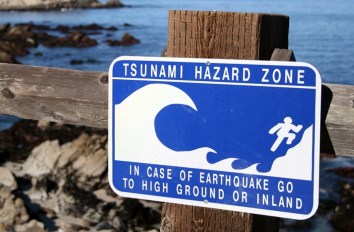
As many of the towns and villages in that part of Japan are forced to hug the coastline due to adjacent mountains, inhabitants can become easily trapped by an incoming tsunami. Therefore, it is important to know where a nearby takadai is located and how to access it. Evacuation signs to higher ground are common place in these areas and sets of stairs that often seemingly lead to nowhere are part of the proactive measures taken to save lives in the event of another disaster.

Much of the energy on those ravaged coastlines continues to be focused on ensuring the safety of residents against future calamities. In some localities, major construction projects are raising the level of towns while leveling nearby mountains for fill dirt, that in turn become alternative sites for rebuilding on higher ground. Crumbled seawalls are also being demolished and reconstructed according to taller specifications, as the general aim is to move everything higher. The quest for a takadai understandably seems to be the preoccupation of most surviving local residents who seek to rebuild their homes, businesses, schools and hospitals on higher ground. There they would have assurance of safety, security, normalcy, and more importantly, a measure of control over their lives which they dramatically lost on March 11, 2011.

Under such circumstances, one can easily understand the desire to obtain a takadai, but an imbalanced pursuit of safety and security in a world full of potential threats can actually lead us astray. As we struggle with the inevitable challenges of life, we may be tempted, apart from God, to seek “higher ground” upon which to build our lives, with safety and security being our sole objectives. God does not guarantee such things in our present life but instead, we are exhorted to flee to Him when life seems dangerous or out of control. He alone is our takadai or higher ground. There is no place safer.

Counting Time

“Teach us to number our days, that we may gain a heart of wisdom.”   Psalm 90:12

Reiwa era

On May 1st of this year, one era ended in Japan and a new one began, now referred to as the Reiwa Era. This major change was precipitated by the abdication of the elderly Emperor Akihito, who was succeeded by his son Naruhito, to ascend to the Chrysanthemum Throne. On that day, Naruhito became the 126th emperor of Japan, and in keeping with several hundred years of tradition, the ceremony was bound by ancient protocols that have guided the oldest continuous hereditary monarchy in the world, supposedly dating back to 660 BC.

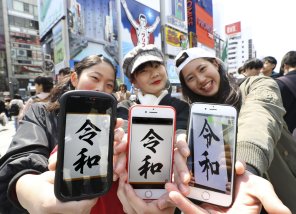
This transfer in leadership ushered in a new era now known as Reiwa (令和), roughly translated as “beautiful harmony.” There are actually five eras in modern Japanese history known as Meiji (1868-1912), Taisho (1912-1926), Showa (1926-1989), Heisei (1989-2019) and the newly established Reiwa Era (2019-?). This change in eras also impacts how time is measured in Japan. For example, instead of the Gregorian calendar year of 2019, we are now in Reiwa Year 1. However, when it comes to counting months and days, nothing has changed, which makes things a bit confusing for those unaccustomed to the Japanese dating system. Following this system, I was born in Showa 28, November 2nd in case you were curious about my age! The order of the dating system also begins with the year, followed by the month and then the day. This traditional pattern for marking the passing of years is still meticulously maintained by city and government offices in their record keeping, but it is steadily falling out of practice among the general population.

Calculating the passage of time is important for many reasons, but in Psalm 90, Moses prayed for wisdom in how to count days, not years. Since we are all bound by time and its demands upon our lives, it is imperative to reflect upon its daily impact and how this ties into God’s eternal purposes for us. After all, God alone stands apart from time, where a thousand years are like a day to Him, according to verse four of the same Psalm. Therefore, like Moses, we should seek God’s assistance in numbering our days with the intent of making each one count for eternity, because faithfulness is rooted in the daily choices we make. To make the right choices, we need God’s timeless and infallible perspective. He alone can teach us to count correctly.

A Soldier’s Duty

“No one serving as a soldier gets entangled in civilian affairs, but rather tries to please his commanding officer.”  II Timothy 2:4

Yokoi Shoichi

In 1944, as the Japanese army faced certain defeat in the second battle for Guam, Sergeant Shoichi Yokoi and nine other Japanese soldiers escaped into the dense surrounding jungle rather than endure the disgrace of surrender. Twenty-eight years later and long after the war had ended, Yokoi san was eventually captured by some local fishermen. Shoichi Yokoi’s protracted war was finally over. Soon afterwards in a news interview where he faced a curious public, Yokoi san famously said: “It is with much embarrassment that I return.”

It was later revealed that Yokoi san had survived those many years by hunting and making his own clothing, venturing out only at night from his dug out cave hidden deep in the jungle. The last eight years of Yokoi’s elusive life were lived in solitude as he eventually lost contact with his fellow soldiers. Even though he learned in 1952 that the war had ended, Yokoi san continued to take extreme measures to avoid capture, as he later said “We Japanese soldiers were told to prefer death to the disgrace of getting captured alive.” One of the few items in Sgt. Yokoi’s possession at the time of his apprehension was a rusty and useless rifle, which he hoped to one day present in person to Emperor Hirohito.

Yokoi san was soon welcomed back to Japan as a hero as many Japanese admired his tenacity and resourcefulness that kept him alive for so many years. Despite his struggle to transition back to normal life in modern Japan, Yokoi san did his best to assume ordinary routines and even entered into an arranged marriage. Afterwards, he and his wife settled in Yokoi san’s home city of Nagoya, where he went on to become a popular television personality and an advocate for austere living before passing away in 1977 at the age of 82.

The circumstances of Yokoi san’s survival story are quite remarkable, but what is even more unusual are the motives that drove him to live such an extreme life. Sgt. Yokoi’s rationale to avoid capture was certainly complex, but one of the key factors in making that decision was his passion to please his commanding officers, and thereby avoid shame.

As the people of God, we are sometimes compared in Scripture to military conscripts who are called to serve in God’s army. Therefore, our primary duty is not to please ourselves, but rather, our Commanding Officer. Such a lifestyle of commitment to God can often be contradictory to the world’s usual pattern of living for one’s self, and in turn, may invite curiosity and even opposition from those who are guided by a very different value system. However, it is ironic that those who pursue personal freedom to the exclusion of everything else are actually captives to sin. But God in His mercy, sent Jesus to this earth to set such captives free. They in turn are used as part of God’s eternal rescue mission to free others from their self-imposed prisons.