
Record Keeping

“However, do not rejoice that the spirits submit to you, but rejoice that your names are written in heaven.” Luke 10:20

construction record3

Japanese seem to have a particular affinity for record keeping. We first noticed this tendency at construction sites, where a worker would routinely pose in front of a project for a picture while holding a chalk board. On that board would be written the date and a brief description of the work they had just completed. The job might involve something as minor as repairing a pothole in the road, but photographic evidence of the completed project was duly recorded. The picture was then probably submitted with a report and filed somewhere with millions of other similar items within the black hole of Japanese archives.

Recording and keeping essential information is a mainstay of modern civilization, but Japan appears to have a particular penchant for this activity. For example, parents are expected to submit regular reports confirming that their children completed assigned homework. During the summer, such reports are expanded to include personal hygiene practices and chores around the house to ensure the maintenance of important routines during school holidays. Zealous new parents can purchase “baby diaries” to record essential information, such as the frequency of diaper changes, bottle feedings, daily temperatures, physical growth, appearance of teeth and the introduction of different foods into the baby’s diet.

Precise record keeping is considered essential for tracking even the most minor lost items. Upon being turned in, the items are routinely tagged, numbered, and documented with the hope of returning them to the rightful owner. Minutes are scrupulously taken at every meeting and there seems to be a form for everything that must be completed and then put on file. As a young church planter, I soon discovered that I was expected to keep a record of everything that took place at the church for future reference. In so doing, I also became a cog in the vast machine storing information for generations to come.

When the seventy-two disciples Jesus sent out returned from their initial ministry experience, they were understandably excited to report the details of what they had seen and experienced (Luke 10). As we constantly engage with life, experiencing its highs and lows, we are naturally inclined to become preoccupied with the details of this world and, consequently, often fail to appreciate the significance of the world to come. This is where Jesus’ reply to His early followers (“do not rejoice that the spirits submit to you, but rejoice that your names are written in heaven” Luke 10:20) serves to put such things in perspective and helps us not to lose sight of the forest of eternity as we wander among the trees of daily life. While we may be inclined to get overly excited or overly disappointed with the details of this life, we should never forget that our names are recorded for eternity in heaven. This means that all that we do, all that we value and all that we experience is grounded in an eternal relationship with God that can never be erased. Our lives have meaning and all that we offer up to God in our worship of Him is recorded for eternity. That is certainly a cause for much rejoicing.

A High Place

“He makes my feet like the feet of a deer; he causes me to stand on the heights.”            Psalm 18:33

high ground 2

The importance of being located near a high place or “takadai” (高台) in a tsunami prone area became vividly real to us shortly after we arrived to assist with relief efforts following the cataclysmic Great East Japan Earthquake of 2011. At the bottom of one particular set of stairs leading up a steep hill in a tsunami ravished town, we were puzzled to discover a jumble of carts typically used for transporting small children. When we raised our eyes to survey the landscape below us, we soon noticed what remained of a Japanese preschool that had been obliterated just a few days earlier by the massive onslaught of water. Then we understood the mystery of the jumbled carts. Following the siren warnings of a coming tsunami, teachers at that school had obviously snatched up all the children in their care and fled to the nearest takadai for safety. Later, we were thankful to learn that only one child from that particular school perished that day, but stories up and down the coast were far more sobering.

As many of the towns and villages in that part of Japan are forced to hug the coastline due to adjacent mountains, inhabitants can become easily trapped by an incoming tsunami. Therefore, it is important to know where a nearby takadai is located and how to access it. Evacuation signs to higher ground are common place in these areas and sets of stairs that often seemingly lead to nowhere are part of the proactive measures taken to save lives in the event of another disaster.

Much of the energy on those ravaged coastlines continues to be focused on ensuring the safety of residents against future calamities. In some localities, major construction projects are raising the level of towns while leveling nearby mountains for fill dirt, that in turn become alternative sites for rebuilding on higher ground. Crumbled seawalls are also being demolished and reconstructed according to taller specifications, as the general aim is to move everything higher. The quest for a takadai understandably seems to be the preoccupation of most surviving local residents who seek to rebuild their homes, businesses, schools and hospitals on higher ground. There they would have assurance of safety, security, normalcy, and more importantly, a measure of control over their lives which they dramatically lost on March 11, 2011.

Under such circumstances, one can easily understand the desire to obtain a takadai, but an imbalanced pursuit of safety and security in a world full of potential threats can actually lead us astray. As we struggle with the inevitable challenges of life, we may be tempted, apart from God, to seek “higher ground” upon which to build our lives, with safety and security being our sole objectives. God does not guarantee such things in our present life but instead, we are exhorted to flee to Him when life seems dangerous or out of control. He alone is our takadai or higher ground. There is no place safer.

Lost & Found

“if they find lost property…they must return…the lost property they found.”             Leviticus 6:3-5

Wasuremono

Following my usual morning routine, I inserted money into the local vending machine to purchase a can of ice coffee before heading off to work for the day. Later on, I realized to my chagrin that I had neglected to retrieve my ¥900 change, worth almost nine dollars, from the vending machine. When I returned home almost twelve hours later, I checked the vending machine out of curiosity and was pleasantly surprised to discover my money still waiting for me untouched in the coin return. Such stories are actually not unusual in Japan.

Everyday throughout the country, literally thousands of misplaced wallets, cell phones, keys, bikes, umbrellas, bags etc. are turned in by conscientious Japanese at collection points conveniently located in stores, train stations and local police boxes. These lost articles, known as “wasuremono” (忘れ物) or literally “forgotten item,” are dutifully collected, tagged and stored for a period of time with the hope of returning them to their rightful owner. Signs are posted everywhere reminding people not to forget personal items which still inevitably occurs, but fortunately, the Japanese are extremely diligent in returning other people’s property. Amazingly this widespread practice of honesty extends even to lost money, where roughly 75 percent of the cash that is reported as wasuremono is eventually returned to the owner. The Japanese typically keep detailed records of such matters so they know that 26.7 million items were reported to police departments in 2015, highlighting the widespread extent of this practice and also the challenge of practically dealing with it.

Although many are not aware of it, Japan actually has a “Lost Property Law” prompting citizens who find lost items to turn them into the police. Even though they are entitled to a proportional reward from the owner, most people would decline any remuneration if it was offered to them. In cases where the owner is not located within three months, the finder is entitled to keep the lost article as a variation of the more traditional “finders keepers” approach. The question naturally arises as to why Japanese are so diligent in this practice of returning misplaced items when compared to many other cultures. The most likely answer is probably rooted in the moral education commonly taught and practiced in schools and then reinforced in countless ways on the public consciousness.

Many Japanese would consider keeping a lost item to be the moral equivalent of stealing, which aligns closely with scriptural teaching on this topic (Leviticus 6). The concept of “lostness” actually taps into a deep, yet central theological theme pointing to our need for a Savior. In Isaiah 53:6, the whole of mankind is described as sheep that “have gone astray,” wandering away from the purposes and heart of God, their Shepherd. This theme is reiterated in other passages and powerfully illustrated by Jesus Himself through three parables in Luke 15 where He uses the analogy of a lost sheep, a lost coin and a lost son to teach about His Heavenly Father’s passion for restoring what is lost, namely us. In fact, Jesus identifies this as being the very purpose of His coming to Earth when He said “For the Son of Man came to seek and to save the lost” (Luke 19:10). This means that God has by grace enacted His own “Lost Property Law” when He offered His Son on a cross, so that we might be restored to God, our rightful owner. As the famous line of the hymn “Amazing Grace” so aptly phrases it, “I once was lost, but now I’m found.

Punctuality

“There is a time for everything, and a season for every activity under the heavens.” Ecclesiastes 3:1

Punctuality

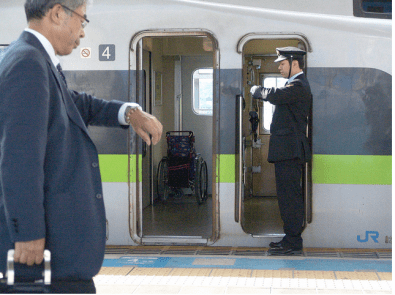
Japan has a well-earned reputation as a country where things run on time. For example, thousands of trains every day across the country, routinely pull into their assigned stations exactly on schedule. Customers send packages or luggage through a nationwide delivery service and then choose a date and four-hour window in which they want their item delivered, which usually occurs without fail. At construction sites for buildings or roadwork, signs are posted notifying when the job will be completed and they are seldom wrong. Fast food service seems effortlessly fast in Japan and repairmen show up as promised on time, if not early.

In the rare cases where a scheduled appointment is broken, service is slow or a train pulls into a station late, extensive apologies are usually expressed with the promise to do better in the future. When a train is unavoidably delayed due to an earthquake or a tragic suicide on the tracks, causing thousands to be inconveniently delayed, rail officials will diligently hand out “late notes” to affected commuters to cover their tardiness at work. One train recently departed from the station 25 seconds early, which became quite a scandal in Japan and called for new measures to prevent a repeat of such a disastrous scenario.

This seemingly obsessive focus on punctuality drives employees to arrive, not just on time at their place of work, but to actually get there early, so they can begin their job precisely as scheduled. No one quite knows when this meticulous focus on time began in Japanese culture, but it was certainly invigorated when Japan joined the family of nations in the 19th century and later took on even greater importance as part of the rebuilding process following WWII. However, companies are discovering that an emphasis on punctuality doesn’t always correspond with increased efficiency. Others who endure endless mind-numbing meetings wonder why there is such a preoccupation with starting on time, but almost an indifference with ending such meetings on time.

To the outsider, Japan seems like a well-oiled machine, where everything works and runs as planned, which for the most part, is a really admirable characteristic. It is a helpful reminder that God is a God of order, who has created a universe that is governed and measured by time. Although He Himself is not bound to the restraints of time, it is one of many resources placed at our disposal and we are expected to be wise stewards as to how we use it. This does not excuse an imbalanced obsession with time, but should rather encourage us to treat each hour, each day and each year as a gift from God that we should use for His eternal purposes and not for our own. We serve the Master of the Universe, and as such we are not slaves to time but rather, time exists to serve us. May we use it wisely.


The Virtue of Gaman

“Let perseverance finish its work so that you may be mature and complete, not lacking anything.”   James 1:4

Gaman2

My wife was in extreme agony from labor pain as we anticipated the imminent arrival of our second child. Desperate for relief, we called the nurse for assistance and she simply replied “gaman dekinai?” The word gaman was new to us, but judging by the nurse’s response, we could tell she wasn’t going to do anything. Later, we learned that gaman (我慢) means “to endure the seemingly unbearable with patience and dignity.” Sometimes it is translated as “perseverance” or “patience, but these words don’t do justice to the complexity of the concept in the Japanese context.

Gaman is considered a virtue in Japan, as it is an indicator of maturity and strength in the face of difficult circumstances. The objective is to bear hardship without complaint and thereby cause minimal inconvenience for those around you. This admired character attribute is evident when Japanese silently squash themselves into packed trains, work extremely long hours, endure brutal sports drills or sit in unheated classrooms. When one perseveres in a negative relationship at home, work or school, he is exercising gaman. When one waits patiently in a long checkout line or in a queue to board public transportation, she is demonstrating the power of gaman. Visitors to Japan may observe these responses in action and mistakenly assume Japanese lack assertiveness or initiative. In so doing, they fail to understand the value of gaman which undergirds all of Japanese society, enabling it to function in an orderly manner. This is why gaman is a common character trait among Japanese heroes who typically overcome huge obstacles while stoically enduring injustice and pain to ultimately triumph.

But gaman does have a dark side. It can impose unrealistic pressure on individuals to conform to expectations at the expense of their own physical or psychological health. It can squash self-expression and the free exchange of ideas that may facilitate corporate or personal growth. Japan’s orderly society comes with a cost and if the virtue of gaman is allowed to reign unchecked, other problems inevitably emerge.

Perseverance is extolled as a godly characteristic in the Scriptures and its practice is also a gateway to other virtues that should characterize God’s people. There is much to be admired in the similar concept of gaman, but we must be careful not to let it falsely shape the nobler attribute of perseverance. Their respective goals and the means for achieving them can be significantly different. Biblical perseverance has God at its center and the goal is to glorify Him through our faith-filled responses regardless of our circumstances. Although gaman promotes the worthy goal of maintaining an orderly community or company, it often comes at the expense of the individual and tends to neglect God altogether. The Bible character Job is perhaps the greatest example of perseverance (James 5:11) and how it eclipses the lesser virtue of gaman. Through his powerful testimony, we learn how Job endured the seemingly unbearable with patience and dignity but his actions are not to be confused with gaman. While Job’s amazing perseverance did bless those around him and generations to follow, his ultimate goal was to worship God through his faith filled response. That is worth emulating.

Bowing

“Come, let us bow down in worship, let us kneel before the Lord our Maker;”                 Psalm 95:6

Bowing

The scene was almost comical as I observed two men greeting each other at the airport. Wanting to adapt to Japanese ways, the foreigner bowed awkwardly, but the Japanese businessman, seeking to accommodate his guest, thrust out his hand expectantly waiting for a handshake. As that brief encounter unfolded before me, I reflected on how much culture had shifted in modern Japan.

Bowing, known as “ojigi” (お辞儀) in Japanese, is still the primary form of greeting throughout Japan. It looks rather simple, but there are actually a number of subtleties involved. The timing, degree and length of the bow depends upon the nature of the relationship. The position of the hands is also different for men and women. A general rule of thumb is that an inferior typically bows longer, deeper and more frequently than the superior.

There are actually three main types of bowing that have specific names with set angles (15˚, 30˚, 45˚), which are determined by the depth of respect one intends to demonstrate. But there is one additional extreme form of bowing known as “dogeza” (土下座) for very serious circumstances where one shows utter acquiescence by getting on his hands and knees and placing his face to the ground. Mastering the finer nuances of these bows is no small task, which is why many companies in the service industry include correct bowing procedures in their training regimen for new recruits.

But with the opening of its doors to the West, Japan has also incorporated some western greeting customs. This now includes handshakes, even between Japanese in some situations, but the closer physical contact of hugging is still not common practice. My wife and I have become so used to the custom of bowing that we have often caught ourselves bowing to people in phone calls, even though they can’t see us! Bowing is essentially a sign of respect that conveys a simple greeting, an expression of gratitude or the acknowledgement of an apology. The very act of lowering one’s head in bowing indicates humility and a recognition of your appreciation for the relationship.

Although the forms varied, bowing was common practice in ancient cultures where there was a significant difference between the superior and the subordinate. For example, when one approached a king, emperor or feudal lord, he did so with eyes lowered and head bowed as an outward sign of reverence and obedience. The same should be true as we approach the Living God, who created the universe and holds our lives in the palm of His hand. This is why bowing is so closely associated with worship. According to Scripture, all the families on earth (Psalm 22:7) and even kings and nations (Psalm 72:11) will one day prostrate themselves in dogeza form before God, acknowledging His majesty and authority over them. If we bow before the sovereigns of this earth, how much more should we humble ourselves before the King of Kings and offer Him our full allegiance and worship.

Reading the Air

“The purposes of a person’s heart are deep waters, but one who has insight draws them out.”  Proverbs 20:5

014k359f

The Japanese have a phrase空気を読む (kūki o yomu) which translates literally as “reading the air.” It means to have an accurate perception of a given situation despite minimal verbal communication. In other words, a person who is good at reading the air has the ability to grasp what is left unsaid. This obviously presents quite the challenge to westerners who are more accustomed to direct communication patterns and are already significantly handicapped by having to operate in a language that is not their own.

The usage of the seemingly simple Japanese word for “yes” orはい (hai) reflects this concept. “Hai” in Japanese can mean anything, ranging from “Yes, I agree with you” to “Yes, I hear you.” Obviously, there is a world of difference between these two nuances, so one must read the air of the context in which it was said in order to discern the speaker’s intended meaning. I recall my initial struggles as an inexperienced missionary leading meetings in Japanese where I often failed to read the air. For example, I might mistakenly interpret everyone’s silent response on a particular topic as meaning they either had no opinion or that everyone was in agreement with me (I wish!). This inevitably led to a few misunderstandings, but people were generally very gracious and forgiving in such situations.

Someone who doesn’t read the air very well and misunderstands a particular social situation is conversely labeled as being a 空気読めない (kūki yomenai) person. Such people typically fail to take a hint, lack common sense, or neglect to read a person’s body language, which causes them to respond inappropriately. Younger Japanese now commonly use the abbreviation KY (Kūki Yomenai) in text messages and social media to describe such individuals. If someone is particularly bad at reading the air, he or she might be called a SKY, which stands for Super Kūki Yomenai!

Communication patterns and language naturally vary from culture to culture, but discerning matters of the heart, calls for a different set of skills that can be quite difficult to master. The desire to be fully understood by others is a longing we all have in common, but the harsh reality is that we often fail to understand ourselves, much less others. Motives, intentions, thoughts and feelings run much deeper than mere spoken words and actions, and are consequently, harder to interpret. Nonetheless, they are essential components in the communication process that we dare not neglect. As the writer of Proverbs points out, great insight is required to discern these deeper matters of the heart and such skills ultimately come from God. Therefore, we would be wise to turn to Him for help. Without His enablement, we would all be SKY people.

Swimming Upstream

“Let perseverance finish its work so that you may be mature and complete, not lacking anything.”        James 1:4

koinoboriThe koinobori fluttered in the spring breeze on the flag pole as a visible reminder that Kodomo no Hi (子供の日), or Children’s Day, was coming soon. Every May 5th, Japanese celebrate this national holiday by attaching bright, colorful streamers in the shape of carp called “koi” to express their well wishes for children. “Nobori” means “climbing” or “ascending”, so juxtaposed the words “koi” and “nobori” are translated to “carp streamers”. The Japanese greatly admire koi since they are a spirited fish that fight their way upstream, demonstrating courage and determination to attain a difficult goal. This imagery is captured by the flapping carp-shaped streamers on flag poles throughout Japan.

Originally, the number of koi flown was determined by the number of males within a household. The father was typically represented by the largest, black colored carp at the top. But in modern times, all the members of the family are now included on the pole, with a pink or red flag standing for the mother.

The koinobori expresses hope that the children of that household will grow up healthy and strong like carp swimming upstream. Larger versions of koinobori are raised in school grounds or near community centers and the timing often coincides with the blooming of nearby cherry trees, adding to the festive atmosphere. Everyone desires their children to be strong and healthy, like vigorous carp swimming upstream, but such qualities are often obtained through the challenges of adversity. It is certainly much easier to swim downstream and float with the current, but this does not produce the needed life attributes of perseverance, self-control, endurance and determination.

Many well-intentioned parents, in their zeal to protect their children to the exclusion of everything else, unwittingly obstruct such needed development and stunt their children’s growth. Swimming upstream may seem counter intuitive to our natural inclination to take the easy route, but it serves to produce strong and healthy children who are better prepared to face the inevitable challenges of life.

God desires the same for His children and as a result, wisely introduces trials, obstacles and hardships into our lives to make us strong. The goal is to help us mature and reach the full potential of all that He has created us to be and do. The Apostle James (James 1:2-4) reminds us that perseverance is a means to a very worthwhile end but many times it is hard to appreciate such long term benefits as we struggle against the current. It is therefore good to recall that we do not swim alone in such efforts and that we are not without aid as we press forward in the circumstances of life. These are truths we must pass on to the next generation as they wrestle with their own challenges and move towards the worthy goal of maturity in Christ.

Sorting Out the Trash


“But whatever were gains to me I now consider loss for the sake of Christ. What is more, I consider everything a loss because of the surpassing worth of knowing Christ Jesus my Lord.”             Philippians 3:7-8a

gomi3

Everyday life in Japan can present quite a few challenges for newcomers. For example, the correct separation of the trash (called “gomi” in Japanese) is a ritual that foreigners must learn in order to live in harmony with their neighbors and demonstrate cultural sensitivity.

In Japan, gomi is classified into many different categories. Herein lies the immediate challenge for a novice. First of all, it is essential to know the basic genres of gomi, which are burnable, unburnable and recyclable. In addition, there is often a separate category for clean plastics and another one for hazardous waste items like batteries, thermometers etc. Additional fees are charged for the pickup of larger stuff ranging from furniture to refrigerators. Collection days for differing categories of gomi, using specific collection bags, vary according to one’s local neighborhood and city regulations. The list of rules defining such matters is endless. For example, aerosol cans must be carefully punctured, newspapers and clean milk cartons should be tied up with a specific string, fluorescent tubes must be placed in their original boxes and branches must be bundled in tidy piles not exceeding a certain length etc. etc.

The classification of certain items can differ from area to area and the breakdown of recyclable categories can be even more complicated. Thick pamphlets are produced and duly distributed to insure compliance and protect well-intentioned people from folly. Any gomi that is incorrectly prepared or deposited on the wrong day is rejected by the trash collectors with a large X sticker, with the expectation that the gomi transgressor will shamefully haul it back home. As a consequence of all these regulations, everyone maintains multiple garbage cans in their homes designated for different types of gomi. All members of the household are well drilled on what gomi goes out on what day and everyone (incredibly) cooperates.

In Philippians 3, the Apostle Paul gave great advice about sorting out “trash” of a different sort that we would do well to heed. He testified that there are many things this world has to offer that we may be tempted to value or collect, but we must constantly evaluate them with a heavenly perspective. Upon closer inspection, they pale in value when compared to the eternal worth of knowing Jesus. Like sorting out the trash, we need to be good stewards of what has been entrusted to us while also exercising diligence in disposing of anything in our lives not closely aligned with God’s purposes.

Cash Only

“Do not store up for yourselves treasures on earth…”  Matthew 6:19

money

A tray full of money representing roughly half a million dollars in Japanese cash was nonchalantly placed in front of us like afternoon tea. My colleague and I stared open-mouthed at the mound of money and couldn’t resist taking pictures. We had just purchased a building and of course like everything else in Japan, cash was used to seal the transaction. The seller then proceeded to place his portion of the stack of bills in a paper bag and the bank employee routinely whisked the larger pile back to the bank vault.

We should not have been surprised. After all, cash is routinely used for everything in Japan. All our shopping is done in cash. We pay our rent in cash. Even higher priced items like cars are purchased with cash. Most people routinely carry several ¥10,000 notes (worth roughly $100 each) in their wallets. Although changes are slowly taking place, Japan is basically a cash-driven economy. Cashiers are trained to efficiently return change without mistakes and cash dispensing machines are available everywhere to facilitate this dependency on cash. While Japanese normally adapt quickly to newly emerging trends, they have been slow to wean themselves from using hard currency for daily transactions. In this matter, Japan with its low cashless rate in 2015 of only 18%, stands in marked contrast to neighboring Asian countries like China (60%) and South Korea (89%).

There are many reasons behind this propensity to use cash. Chief among these would be Japan’s antiquated banking system that encourages cash transactions, but also not to be overlooked is the general public distrust in anything other than real currency. The low crime rate in Japan also encourages people to carry around large amounts of money without fear of being robbed. However, the government is trying to change the public’s dependency on cash since it is inefficient and puts Japan at an economic disadvantage compared to other Asian countries. Signs of such changes are increasingly evident as more Japanese are using their smart phones for financial transactions and the use of prepaid cards is becoming much more common.

Jesus taught a lot about money and frequently used it as a topic to drive home important spiritual principles in the form of parables. He never discouraged the usage or accumulation of money, but rather, warned about it capturing our hearts and pushing God out. The things we treasure in this life that Jesus refers to are not limited to just money or material possessions, but include all our resources, such as our time, energy, God-given gifts, expertise and acquired skills. These are not to be hoarded just for our own benefit, but to bless others as God directs. Treasure on earth may last for a lifetime, but treasure in heaven, Jesus taught, lasts for eternity. That is the commodity that should underpin all of life’s transactions.