
Protruding Nails

“Let your light shine before others, that they may see your good deeds and glorify your Father in heaven.” Matthew 5:16

protruding nail

Many years ago I took a number of Japanese visitors to an event in the United States where the performers on stage tried to recruit volunteers from the audience to participate in the action. Everyone around us eagerly thrust their hands into the air begging to be chosen, but my Japanese guests shrunk back, doing their best to become invisible. I was slightly amused as I witnessed this contrast in reactions and obvious clash of cultures. My Japanese friends were equally puzzled by the circumstances and later asked me, “Why are Americans so eager to rush on the stage and make fools of themselves?” To which I casually replied, “It’s the American way!” While my answer was rather shallow and primarily intended to draw laughter, it did partially capture the vast differences that often separate us as different cultures defined by different values.

The Japanese have a famous proverb that goes, “The nail that sticks out gets hammered in” *(出る釘は打たれる), which succinctly captures the previously described scenario. Due to Japan’s centuries of intentional isolation as an island nation and its mono-ethnic makeup, diversity is generally not encouraged. This serves as a stark contrast to the melting pot of cultures and ethnic groups that typically characterizes the United States, where individuality and the expression of it is considered a high value. However, in Japan, deviance from the norm is often met with resistance, like a protruding nail that is routinely hammered in so it will match the others. Group mentality and the pressure to “fit in” encourages conformity on many levels in Japan, so few are willing to face criticism and risk being singled out. This mindset can be a powerful tool to mobilize effort and energy into a cohesive direction for a particular objective, but it has the drawback of shutting down independent thought and action that sometimes might lead to better outcomes.

Of course, there are exceptions to this trend and nowhere is this more evident than the variety of street fashions in the Harajuku district of Tokyo, where young people express their individuality through unusual clothing and makeup combinations. In addition, some public figures may shun conformity in order to achieve success and are ironically admired for their boldness and innovation. But among the general masses, the desire for safety and tranquility continues to drive responses and few are willing to take the risks that come from being a nail that sticks out.

Jesus, however, essentially called His followers to be that protruding nail. While this presents unique challenges for Japanese believers seeking to live out their faith in a non-Christian culture, it is a problem that all true followers of Christ must wrestle with as the Kingdom of God inevitably clashes with the kingdoms of this world. As the people of God, we are to be actively engaged in a spiritual battle where our good deeds and testimony bear witness to the greatness and mercies of God to others around us. This way of life, of course, leaves little room for shrinking back into a self-protective mode for fear of criticism or rejection. Our light must shine as we become protruding nails within the cultural context where God has uniquely placed us. After all, the ultimate hammer resides in God’s hand and it is His judgment that matters in light of eternity.

* The proverb originally stated, “The stake that sticks out gets pounded,” which doesn’t significantly change the current nuance.


Coming of Age

“But solid food is for the mature, who by constant use have trained themselves to distinguish good from evil.”                                                               Hebrews 5:14

seijinshiki

The young men and women were in a festive mood and looked resplendent in their formal attire as they gathered at the local public hall to celebrate their coming of age. The ceremony is known as a “seijinshiki” (成人式) and is held once a year to congratulate those who have entered into adulthood by turning twenty years old. Young ladies are typically happy to use the occasion as an excuse to dress up in an exquisite, rented furisode style of kimono that is considered appropriate for unmarried young women. Many of the young men may opt to don the traditional dress of a dark kimono with a hakama, but the majority now seem to prefer formal Western clothing such as a suit and tie.

Following the public ceremony, these new adults will often separate into groups with their friends to attend parties where they may celebrate their newly acquired legal freedom to drink alcoholic beverages. At some point in the day, many will accompany their families to a local shrine to pray for health and success as they pass this significant life milestone. It is also common to sit for a formal portrait picture to commemorate the occasion.

The roots of the seijinshiki are reportedly traced back to the eighth century, when a famous young nobleman sported new clothing and a hairstyle to mark his passage into adulthood. However, the formal holiday was not established until centuries later in 1948 when January 15 was set aside as “Seijin-no-Hi,” or “Coming of Age Day.” This annual holiday was recently changed to the second Monday of January to create a three-day weekend. Japan also recently lowered the legal age of adulthood from 20 to 18 years of age, which will take effect in 2022. This alteration in the law will grant the newly created younger class of adults permission to marry, sign contracts and take out loans without parental approval. However, smoking, drinking and gambling will still be prohibited until the traditional age of 20.

The Japanese characters for seijin (成人) are loosely translated as “coming of age,” but they mean literally to “become a person.” In a sense, we are all engaged in the daily act of “becoming,” regardless of our age, as none of us are what we should be, or eventually will be, because change is an integral aspect of life. Hopefully, such changes are of a positive nature where we are progressing in character, abilities and life skills to become contributing members of society. However, such progression to higher things and nobler character cannot be taken for granted in the physical world and the same is true in the spiritual world. As children of God, we are exhorted to press on to maturity where we can discern good from evil and increasingly choose the former as we move deeper into spiritual adulthood. Just as all parents long to witness progress toward adulthood in their offspring, God desires to see a movement towards spiritual maturity in all His children. In that sense, every day is a “Coming of Age Day” for the children of God as we aspire to become all that God intends for us to be.

Forget the Year Parties

“Forgetting what is behind and straining toward what is ahead, I press on toward the goal to win the prize for which God has called me heavenward in Christ Jesus.”            Philippians 3:13b-14

bonenkai3

When I was invited to attend my first bōnenkai as a new missionary, I was rather flattered to be included, but I was clueless as to what would actually transpire. Immediately after my arrival for the event, my two Japanese friends seemed quite determined to ply me with alcohol while they got steadily plastered themselves and consequently, became increasingly silly. These friends also persisted in asking me quite personal questions that were rather out of character for these normally dignified businessmen. Previously, I had naively thought that a bōnenkai was a simple end-of-year party with close friends, but I later learned that the Japanese characters for bōnenkai (忘年会) mean literally, “forget the year gathering.” In other words, it is essentially a Japanese drinking party for co-workers or friends where everyone is encouraged to let their hair down through the consumption of alcohol and, in the process, collectively forget the troubles of the past year. Even the normal lines that separate the boss from his business subordinates are temporarily erased during the festivities and whatever is said or done under the influence of alcohol is conveniently overlooked the following day.

Bōnenkai do not take place on any specific day, although they are usually held in December. They are not to be confused with New Year’s parties, which are referred to as “shinnenkai” (新年会 ) and are celebrated in the new year. Companies often sponsor bōnenkai for their employees, but circles of friends frequently organize their own forget-the-year gatherings. This tradition is said to have originated somewhere around the 16th century when groups of samurai lords gathered locally to commemorate their achievements of the past year. Following the abolishment of the feudal ruling system in the late 19th century and the rise of lifetime employment in the business world, companies began to incorporate and revise this old custom. What was previously an event exclusively reserved for the ruling caste eventually became a routinely scheduled gathering for all company employees in the yearly calendar. The following popular song, 今夜はHearty Party (“Tonight, Hearty Party”), by the famous pop singer Mariya Takeuchi, captures the ambiance or atmosphere of a typical Japanese bōnenkai. https://www.youtube.com/watch?v=lWlgvzXI8eY

Forgetting the past is often a helpful approach as we pursue a godly lifestyle and mindset that will honor God. The Apostle Paul alludes to the importance of sometimes “forgetting what is behind” (Philippians 3:13) because an unhealthy preoccupation with our failures in the past can impede God’s redemptive work in the present. Recognition of personal sin is certainly a healthy starting point, but a myopic focus on such matters can unintentionally blind us to the amazing truth of grace. This infatuation on past failures could in turn paralyze us with guilt, rather than motivating us to move forward in life as objects of God’s love. Everyone has committed acts of which they are ashamed, but through the power of the cross, we are released from the burdens of our past and set free to fulfill our eternal calling in Christ Jesus. Like a bōnenkai, we are exhorted to forget the troubles from our past, but as redeemed individuals, we must not neglect to celebrate in faith new and better things to come, while remembering where we came from. Our new life in Jesus compels us to forget, but at the same time, remember.

Aliens

Consequently, you are no longer foreigners and strangers, but fellow citizens with God’s people and also members of his household,”  Ephesians 2:19

Gaijin

When we arrived in Japan for the first time in 1984, airport immigration officials directed us, along with the other obvious foreigners, to proceed towards the sign marked “ALIENS.” Such was our introduction to Japan. While we were not creatures from another planet, it was abundantly clear to us from the outset that in Japan, we were different. We had expected to stand out in the crowds due to our size, hair color and speech (and my nose!), but we soon realized that we were permanently relegated to a class of non-Japanese known as “gaijin.” Everywhere we went, people typically stared at us, adults wanted to touch our kids’ blond hair and Japanese children excitedly pointed their fingers at us while declaring the obvious, that we were “gaijin.”

The term gaijin (外人) means literally “outside person” and since Japan is an island nation comprised of one predominate ethnic group speaking a uniform language, it is understandable why, historically, all non-Japanese were considered to be outsiders. The Japanese concept of group consciousness also factors into this perception, where one is either “in” or “out” when social and relational lines are routinely drawn within daily interactions.

However, globalization is rapidly changing such attitudes toward the outside world as Japan’s isolation is increasingly penetrated by the onslaught of modern communication and travel. The world has come to Japan. Foreigners are no longer considered a novelty and as a result, we are now rarely singled out as “gaijin.” The finger pointing has largely ceased and the more polite term “gaikokujin” has replaced the somewhat pejorative label of “gaijin.” Foreigners now comprise almost 2% of the population and that percentage will likely continue to increase as Japan becomes steadily more dependent on outside workers to supplement its rapidly shrinking labor force. This is good news for foreigners seeking employment and an improved social status within Japan.

One of the many amazing aspects of the gospel, or the Good News of Jesus Christ, is its power to break down the tribalistic tendencies of mankind that often lead to self-destruction. Our natural inclination is to splinter into warring factions along social, racial, cultural, national, economic and ethnic lines. But the good news is that God took on flesh through His Son and entered into a divided world to offer reconciliation between not only men, but more importantly, between God and men. All of us were gaijin, outside of the presence of God, but now we are offered citizenship in His eternal kingdom and welcomed as family members into His household. Through the cross, the lines that once divided us have been redrawn. We are aliens no more and that is truly Good News!

Business Cards

“You have searched me, Lord, and you know me.” Psalm 139:1

Meishi3

Following a subtle bow of acknowledgement, I pretended to study the information on the card I now held politely with both hands. As the situation demanded, I feigned proper interest in the card and the individual I received it from did the same with mine as we engaged in what I call the “meishi dance”. A meishi (名刺) is a Japanese business card which is routinely exchanged in initial encounters, particularly in business relationships. The work I was currently engaged in involved meeting hundreds of individuals, so over the course of time, I had accumulated quite a stack of meishi along with a jumbled collection of faces those cards represented.

Like many other customs in Japan, there is an established protocol for the exchange of meishi. To fully grasp the subtleties of the meishi dance, it is important to bear in mind that each card serves as an extension of the person whose information is recorded on it. Therefore, the meishi itself should be treated with respect which in turn, has bearing on how the card is received. For example, it is best to stand erect when receiving or presenting a meishi and the information on it must face the recipient, holding the card carefully in the corners so it can be easily read. A respectful bow should precede the passing of the meishi and the card should be received with both hands. The information recorded on the meishi should then be carefully studied, particularly noting titles or status. If you are in a meeting where everyone is seated, the card(s) should be placed in front of you on the table for reference. Upon receiving someone’s meishi, you should never treat it disrespectfully like jamming it into your pocket or writing notes on it. Many businessmen carry around mini cases for protecting their own meishi and for the temporary storage of those they receive.

There is, of course, a limitation as to how much information a person can include on a meishi, even if both sides of the card are used. In brief social or business interactions, our capacity for absorbing details and even caring about the individual standing before us is restricted by our time, energy, mood, circumstances and intellect. But not so with God. The psalmist marvels at the extent that God intimately knows us, not just through observable actions, but from probing our thoughts and intentions from the moment we were conceived up to the minute when we draw our final breath.

This means that I am infinitely more than just a few scraps of information recorded on a card collecting dust in someone’s file. I am a creation of the God of the Universe who knows me far, far more than my most faithful friend, closest relative or intimate love interest and He genuinely and passionately treasures me. Such knowledge and care should provoke me to respond, not in feigned interest, but to bow in adoration and obedience. Perhaps in response, it is best to observe the protocol modeled by the same psalmist in Psalm 139. This is a meishi dance worth emulating:

  • I praise you because I am fearfully and wonderfully made; your works are wonderful. (14)
  • How precious to me are your thoughts, God! How vast is the sum of them! (17)
  • Search me, God, and know my heart; test me and know my anxious thoughts. (23) 
  • See if there is any offensive way in me, and lead me in the way everlasting. (24)

Family for Rent

“Whoever does God’s will is my brother and sister and mother.”   Mark 3:35

rental family

Without warning, Mrs. Tanaka’s* husband left her a year ago and consequently, she struggled to move forward with her shattered life as a young, single mother. She felt abandoned and longed for someone to lean on, and her young daughter needed a father figure in her life. In addition, the kindergarten where Mrs. Tanaka was hoping to enter her child was more inclined to accept children of married couples. Determined to get help, she contacted a professional rental family agency or rentaru kazoku (レンタル家族) to provide a substitute father.

Mrs. Tanaka’s case is not unusual. Estrangement, illness, abuse and death can leave huge gaps within families. Therefore, a new industry has sprung up in Japan to fill these needs. Actors and actresses are hired out by agencies to clients like Mrs. Tanaka to temporarily stand in as substitute parents, spouses, friends or coworkers at one-off social events like weddings. Depending on the situation and need, they may fill a designated role for extended periods of time. For example, an elderly woman may periodically want a substitute grandchild to take out shopping. A bride-to-be longs for a substitute father to walk her down the aisle in her dream wedding. A businessman estranged from his family might rent a part-time wife and child to ease his loneliness. A single woman with marriage-obsessed parents may temporarily rent a fake boyfriend or fiancée to escape their unwanted pressure. The list of social situations lending themselves to recruiting suitable substitutes is surprisingly quite extensive in a society that tends to emphasize appearance over substance.

A single actor can actually play multiple roles in several families at the same time as part of their profession, but it can be extremely difficult to keep personal feelings in check in every situation. However, these role players are instructed to do their best to promote positive outcomes in each assignment and ideally, eventually make themselves redundant in the client’s life. Of course, client dependency is a possible hazard in the family rental business as the customer may desire more from the fabricated relationship than the rental person is able or willing to provide.

The creation of the rentaru kazoku industry is an achingly sad testimony of the many genuinely hurting people who long for healthy, satisfying relationships, which of course is not a problem restricted to Japan. Real families and friends can inevitably disappoint us, so it is only natural to turn to substitutes or other inadequate alternatives to ease our pain. Such wounds are not easily eradicated, but God has offered an amazing life-giving, life-healing relationship through His Son. Jesus welcomes us in our brokenness in a broken world and promises to receive us like a beloved family member if we turn to Him and seek His will. There is no pretense in this relationship and no fees are charged as membership into this exclusive family was purchased at the cross. While God does not promise to redeem all of our earthly relationships, acceptance into His forever family is an amazing gift that is not to be taken lightly. It also means we are members of an extended spiritual family that can bring tremendous comfort in this life and in the world to come.

*Fictitious name and situation

Punctuality

“There is a time for everything, and a season for every activity under the heavens.” Ecclesiastes 3:1

Punctuality

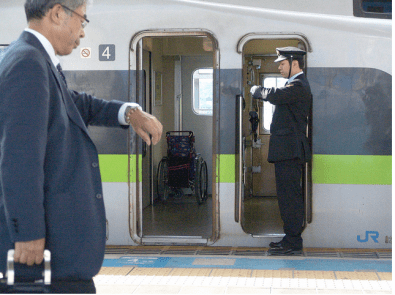
Japan has a well-earned reputation as a country where things run on time. For example, thousands of trains every day across the country, routinely pull into their assigned stations exactly on schedule. Customers send packages or luggage through a nationwide delivery service and then choose a date and four-hour window in which they want their item delivered, which usually occurs without fail. At construction sites for buildings or roadwork, signs are posted notifying when the job will be completed and they are seldom wrong. Fast food service seems effortlessly fast in Japan and repairmen show up as promised on time, if not early.

In the rare cases where a scheduled appointment is broken, service is slow or a train pulls into a station late, extensive apologies are usually expressed with the promise to do better in the future. When a train is unavoidably delayed due to an earthquake or a tragic suicide on the tracks, causing thousands to be inconveniently delayed, rail officials will diligently hand out “late notes” to affected commuters to cover their tardiness at work. One train recently departed from the station 25 seconds early, which became quite a scandal in Japan and called for new measures to prevent a repeat of such a disastrous scenario.

This seemingly obsessive focus on punctuality drives employees to arrive, not just on time at their place of work, but to actually get there early, so they can begin their job precisely as scheduled. No one quite knows when this meticulous focus on time began in Japanese culture, but it was certainly invigorated when Japan joined the family of nations in the 19th century and later took on even greater importance as part of the rebuilding process following WWII. However, companies are discovering that an emphasis on punctuality doesn’t always correspond with increased efficiency. Others who endure endless mind-numbing meetings wonder why there is such a preoccupation with starting on time, but almost an indifference with ending such meetings on time.

To the outsider, Japan seems like a well-oiled machine, where everything works and runs as planned, which for the most part, is a really admirable characteristic. It is a helpful reminder that God is a God of order, who has created a universe that is governed and measured by time. Although He Himself is not bound to the restraints of time, it is one of many resources placed at our disposal and we are expected to be wise stewards as to how we use it. This does not excuse an imbalanced obsession with time, but should rather encourage us to treat each hour, each day and each year as a gift from God that we should use for His eternal purposes and not for our own. We serve the Master of the Universe, and as such we are not slaves to time but rather, time exists to serve us. May we use it wisely.


The Virtue of Gaman

“Let perseverance finish its work so that you may be mature and complete, not lacking anything.”   James 1:4

Gaman2

My wife was in extreme agony from labor pain as we anticipated the imminent arrival of our second child. Desperate for relief, we called the nurse for assistance and she simply replied “gaman dekinai?” The word gaman was new to us, but judging by the nurse’s response, we could tell she wasn’t going to do anything. Later, we learned that gaman (我慢) means “to endure the seemingly unbearable with patience and dignity.” Sometimes it is translated as “perseverance” or “patience, but these words don’t do justice to the complexity of the concept in the Japanese context.

Gaman is considered a virtue in Japan, as it is an indicator of maturity and strength in the face of difficult circumstances. The objective is to bear hardship without complaint and thereby cause minimal inconvenience for those around you. This admired character attribute is evident when Japanese silently squash themselves into packed trains, work extremely long hours, endure brutal sports drills or sit in unheated classrooms. When one perseveres in a negative relationship at home, work or school, he is exercising gaman. When one waits patiently in a long checkout line or in a queue to board public transportation, she is demonstrating the power of gaman. Visitors to Japan may observe these responses in action and mistakenly assume Japanese lack assertiveness or initiative. In so doing, they fail to understand the value of gaman which undergirds all of Japanese society, enabling it to function in an orderly manner. This is why gaman is a common character trait among Japanese heroes who typically overcome huge obstacles while stoically enduring injustice and pain to ultimately triumph.

But gaman does have a dark side. It can impose unrealistic pressure on individuals to conform to expectations at the expense of their own physical or psychological health. It can squash self-expression and the free exchange of ideas that may facilitate corporate or personal growth. Japan’s orderly society comes with a cost and if the virtue of gaman is allowed to reign unchecked, other problems inevitably emerge.

Perseverance is extolled as a godly characteristic in the Scriptures and its practice is also a gateway to other virtues that should characterize God’s people. There is much to be admired in the similar concept of gaman, but we must be careful not to let it falsely shape the nobler attribute of perseverance. Their respective goals and the means for achieving them can be significantly different. Biblical perseverance has God at its center and the goal is to glorify Him through our faith-filled responses regardless of our circumstances. Although gaman promotes the worthy goal of maintaining an orderly community or company, it often comes at the expense of the individual and tends to neglect God altogether. The Bible character Job is perhaps the greatest example of perseverance (James 5:11) and how it eclipses the lesser virtue of gaman. Through his powerful testimony, we learn how Job endured the seemingly unbearable with patience and dignity but his actions are not to be confused with gaman. While Job’s amazing perseverance did bless those around him and generations to follow, his ultimate goal was to worship God through his faith filled response. That is worth emulating.

Bowing

“Come, let us bow down in worship, let us kneel before the Lord our Maker;”                 Psalm 95:6

Bowing

The scene was almost comical as I observed two men greeting each other at the airport. Wanting to adapt to Japanese ways, the foreigner bowed awkwardly, but the Japanese businessman, seeking to accommodate his guest, thrust out his hand expectantly waiting for a handshake. As that brief encounter unfolded before me, I reflected on how much culture had shifted in modern Japan.

Bowing, known as “ojigi” (お辞儀) in Japanese, is still the primary form of greeting throughout Japan. It looks rather simple, but there are actually a number of subtleties involved. The timing, degree and length of the bow depends upon the nature of the relationship. The position of the hands is also different for men and women. A general rule of thumb is that an inferior typically bows longer, deeper and more frequently than the superior.

There are actually three main types of bowing that have specific names with set angles (15˚, 30˚, 45˚), which are determined by the depth of respect one intends to demonstrate. But there is one additional extreme form of bowing known as “dogeza” (土下座) for very serious circumstances where one shows utter acquiescence by getting on his hands and knees and placing his face to the ground. Mastering the finer nuances of these bows is no small task, which is why many companies in the service industry include correct bowing procedures in their training regimen for new recruits.

But with the opening of its doors to the West, Japan has also incorporated some western greeting customs. This now includes handshakes, even between Japanese in some situations, but the closer physical contact of hugging is still not common practice. My wife and I have become so used to the custom of bowing that we have often caught ourselves bowing to people in phone calls, even though they can’t see us! Bowing is essentially a sign of respect that conveys a simple greeting, an expression of gratitude or the acknowledgement of an apology. The very act of lowering one’s head in bowing indicates humility and a recognition of your appreciation for the relationship.

Although the forms varied, bowing was common practice in ancient cultures where there was a significant difference between the superior and the subordinate. For example, when one approached a king, emperor or feudal lord, he did so with eyes lowered and head bowed as an outward sign of reverence and obedience. The same should be true as we approach the Living God, who created the universe and holds our lives in the palm of His hand. This is why bowing is so closely associated with worship. According to Scripture, all the families on earth (Psalm 22:7) and even kings and nations (Psalm 72:11) will one day prostrate themselves in dogeza form before God, acknowledging His majesty and authority over them. If we bow before the sovereigns of this earth, how much more should we humble ourselves before the King of Kings and offer Him our full allegiance and worship.

Funerals & Finality

“Just as people are destined to die once, and after that to face judgment.”                   Hebrews 9:27

Funeral

As I joined the immediate family in the crematorium, I was rather surprised when chopsticks were solemnly distributed to everyone present. “We’ve just eaten,” I thought to myself. “What are these for?” My question was soon answered as the partially cremated remains of the deceased were wheeled into the room and we proceeded to carefully place the bones, from the feet up, into the provided urn. I stole an irked glance at my more experienced senior coworker who had inexplicably neglected to communicate this unusual detail in Japanese funeral procedures.

Japanese funerals are, from beginning to end, quite different from the traditional funeral practices of the West. The differences are partially due to the Buddhist emphasis which views death as merely a passage from one life to the next, but that does not account for all the peculiarities of Japanese funeral procedures. For example, the deceased receives a new Buddhist name (called a kaimyō) in Chinese characters, with the length of the name determined by the amount of money donated to the temple. All participants at the ceremony are expected to wear black and bring a gift of money in a special envelope. In many funerals, the attendees will be expected to offer incense to the dead and make prayers on his or her behalf to assist them in their journey. The casket is surrounded by flowers, traditionally chrysanthemums, with a large picture of the deceased loved one prominently displayed. When the ceremony is over and the priest has finished the chants from a Buddhist sutra, each participant will then place a flower in the casket before it is closed. Only the immediate family and a few close friends will accompany the body to the crematorium, usually riding together on a chartered bus.

Instead of the American practice of embalming, the corpse is placed on dry ice and minimal makeup is applied to restore a natural appearance. The body is dressed in formal attire and placed in a simple wooden casket since it too will be incinerated. In some cases, a few favorite items of the deceased will be placed in the casket to accompany the deceased on their final journey.

Japanese funerals are actually comprised of many different ceremonies, beginning with a wake, known as an otsuya, or “passing of the night,” followed by the main funeral and then a final service at the crematorium. The funeral urn is then taken home and eventually placed in the family grave or some other alternative. Depending on local customs and the desires of the family, smaller ceremonies are subsequently conducted by priests on the 7th, 49th and 100th days commemorating the deceased’s death. Escalating costs of funerals coupled with shrinking families and a rapidly aging population are creating significant changes in the funeral industry, altering some of these traditional practices.

While ceremonies related to death vary from culture to culture, every funeral serves as a stark reminder of our finiteness in light of eternity. We should certainly mourn the loss of a loved one, but such events also provide a valuable opportunity to reflect on our own status before a Holy God who holds our destiny, both in this present life and the one to come, in the palm of His hand. In the West, we are embedded in a culture that worships at the altars of youth, beauty and strength, but all of these things will eventually fade, no matter how much we strive to deny it. This is why the author of Ecclesiastes wisely said: “It is better to go to a house of mourning than to go to a house of feasting, for death is the destiny of everyone; the living should take this to heart.” (7:2) While all of us would certainly prefer to dwell in the house of feasting, it is in the house of mourning that we are more prone to ponder on the deeper things of God, including His defeat of death through the power of the cross.